Document Overview
Document Overview This FCC-SDOC (Supplier’s Declaration of Conformity) certification report validates electromagnetic compatibility compliance for the ETENWOLF S3 cordless tire inflator. The document was issued by Waltek Testing Group HCT (Shenzhen) Co., Ltd., an accredited testing laboratory located in Shenzhen, Guangdong, China. Report Reference Number:…
- Document type
- User Manual
- Prepared by
- Michelle Torres
- Published
- Last reviewed
- Topics
- North America: FCC / UL
Document Overview
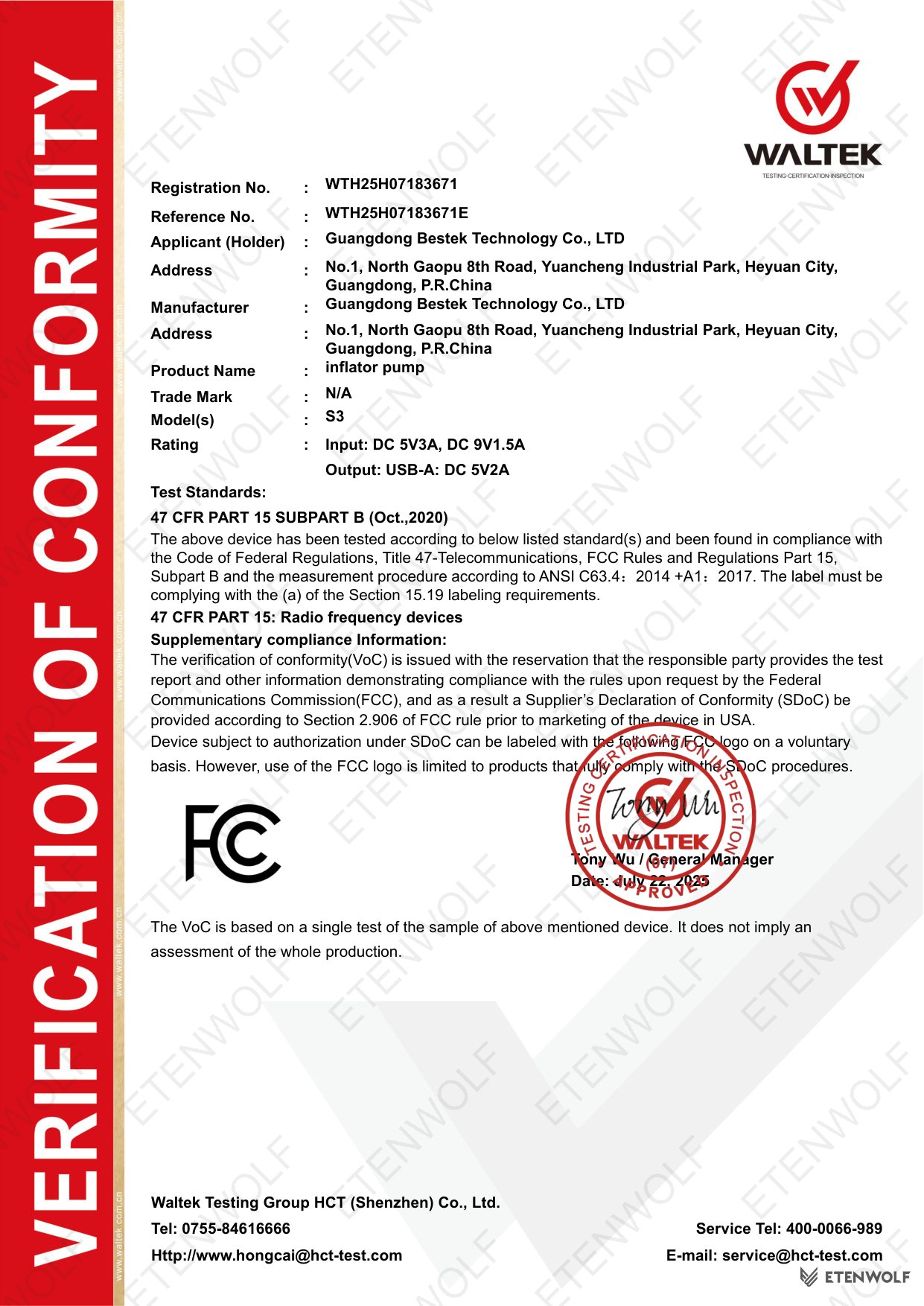
This FCC-SDOC (Supplier’s Declaration of Conformity) certification report validates electromagnetic compatibility compliance for the ETENWOLF S3 cordless tire inflator. The document was issued by Waltek Testing Group HCT (Shenzhen) Co., Ltd., an accredited testing laboratory located in Shenzhen, Guangdong, China.
Report Reference Number: WTH25H07183671E
Report Form Number: HCT/RF-23-21
Date of Issue: July 22, 2025
Testing Period: July 14-16, 2025
Sample Receipt Date: July 11, 2025
The certification scope covers conducted and radiated emissions testing to ensure the device complies with FCC CFR 47 Part 15 Subpart B requirements for unintentional radiators.
Product Information
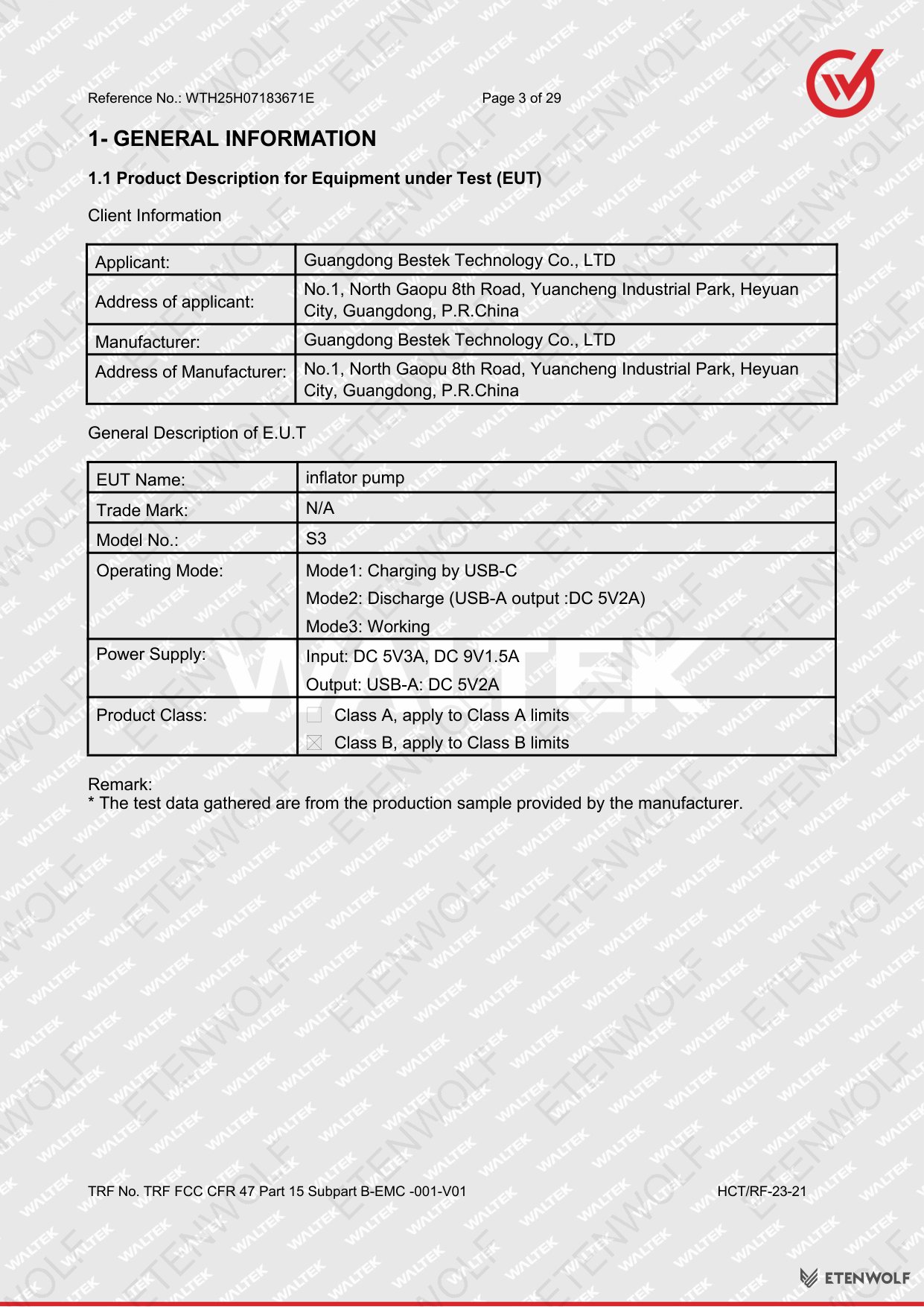
Product Name: Inflator Pump / Cordless Tire Inflator
Model Number: S3
Applicant: Guangdong Bestek Technology Co., LTD
Manufacturer: Guangdong Bestek Technology Co., LTD
Manufacturing Location: No.1, North Gaopu 8th Road, Yuancheng Industrial Park, Heyuan City, Guangdong, P.R.China
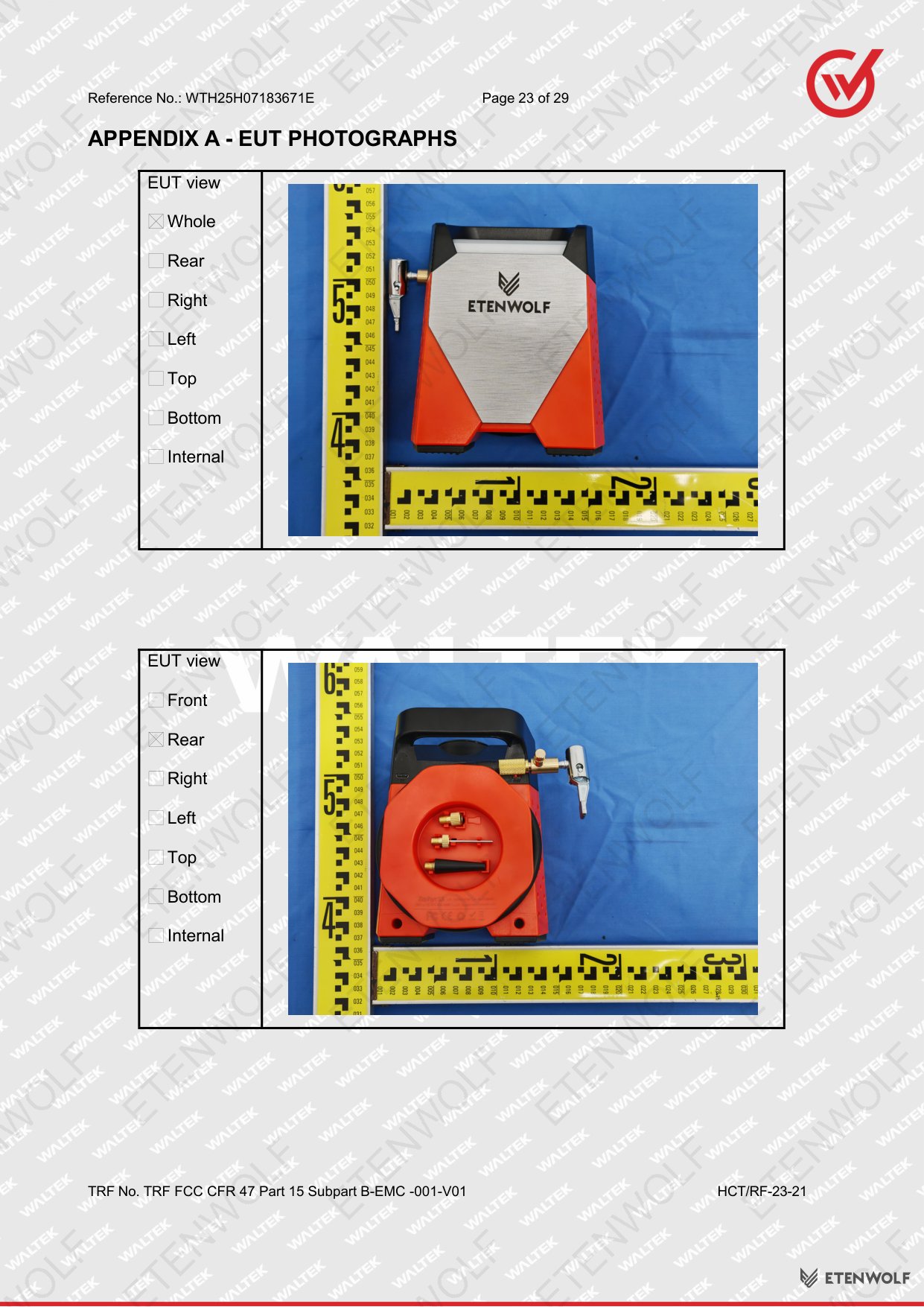
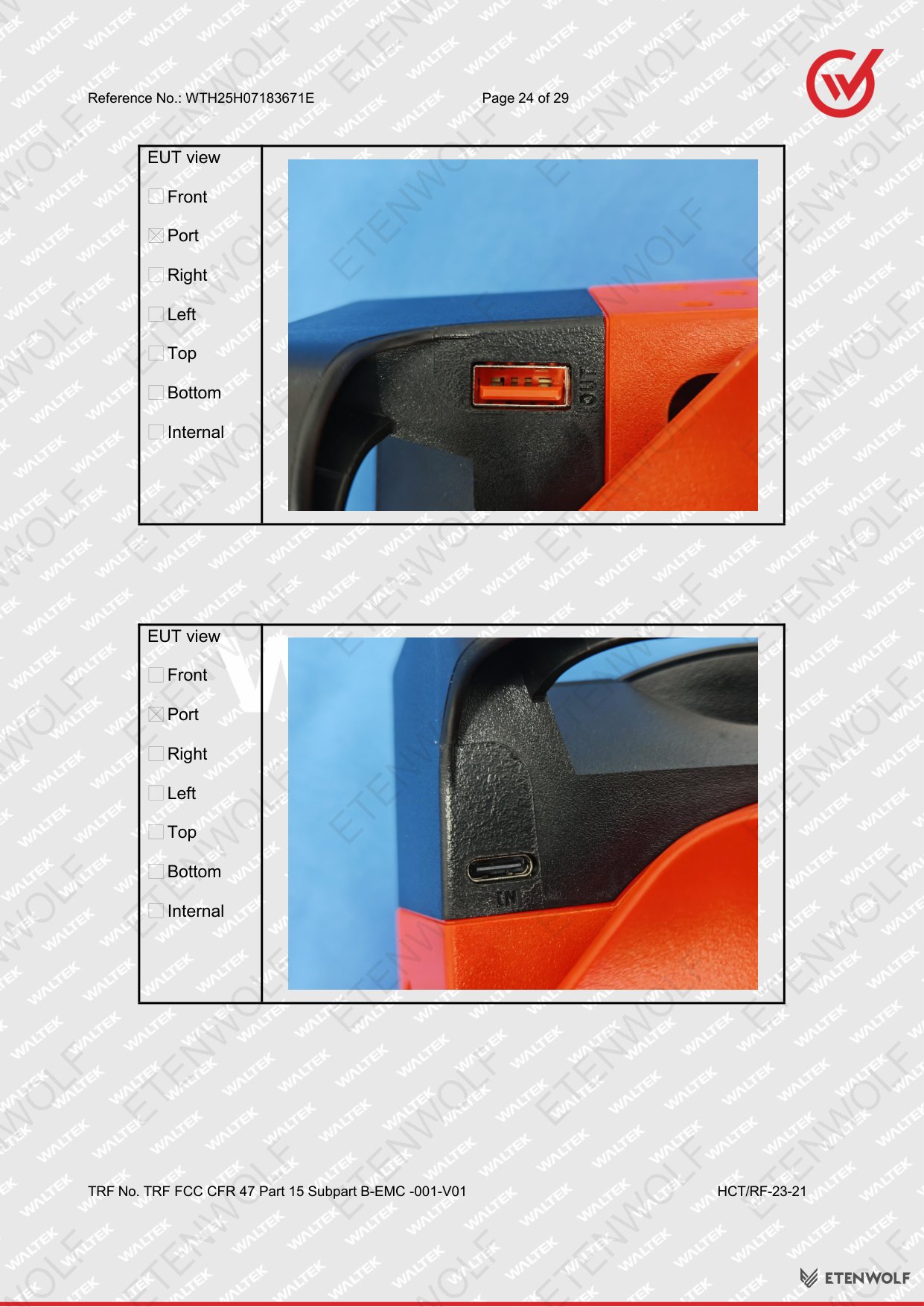
The ETENWOLF S3 is a portable electric inflator pump designed for automotive tire inflation and other air pressure applications. As an electronic device with electrical components, it must comply with FCC regulations governing electromagnetic emissions to prevent interference with radio communications and other electronic equipment.
The device was evaluated in its typical operating configuration to ensure real-world compliance with federal emissions standards applicable to consumer electronic products marketed in the United States.
Key Details
The FCC certification testing evaluated the S3 inflator pump across multiple electromagnetic compatibility parameters:
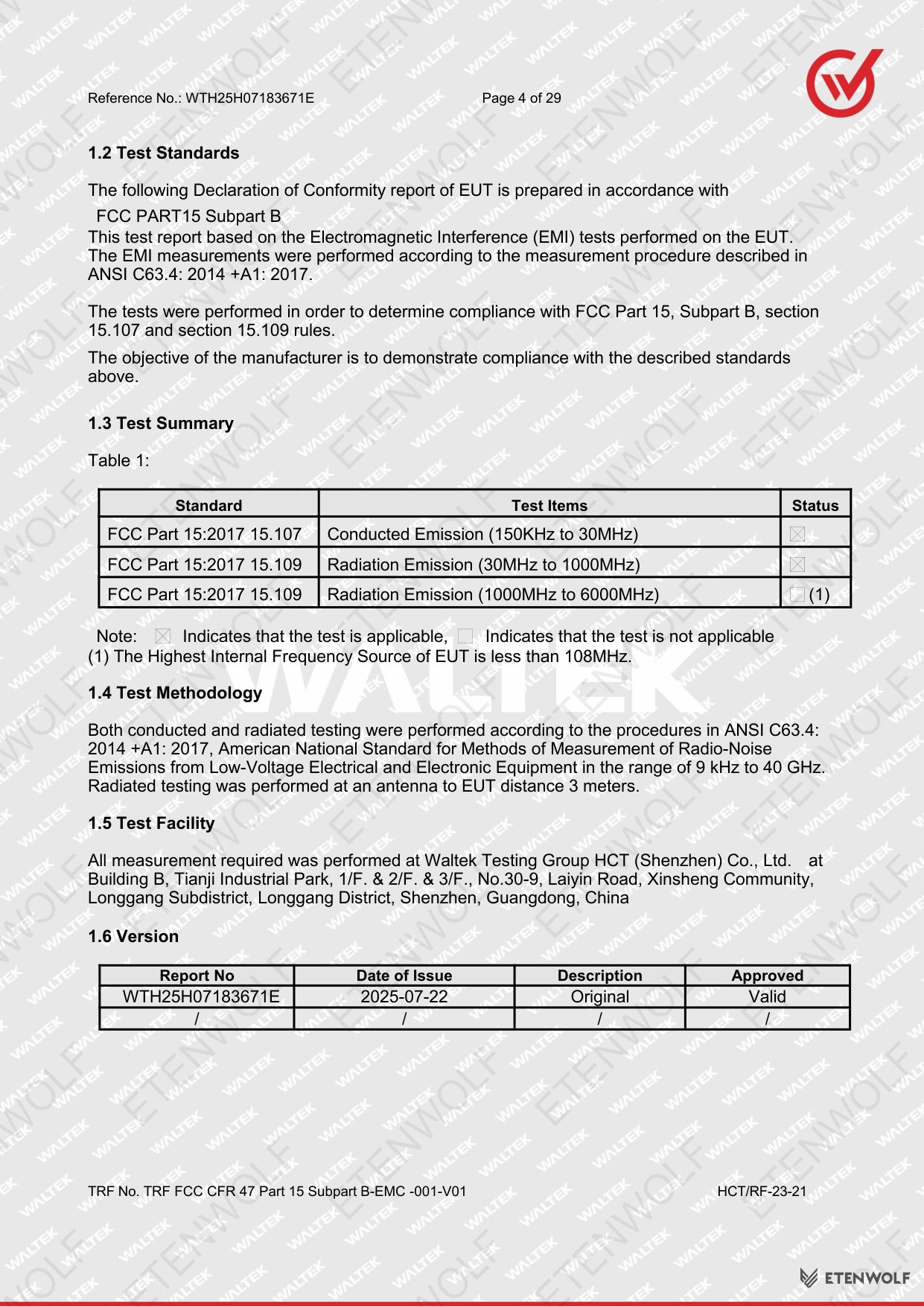
| Test Parameter | Test Standard | Result |
|---|---|---|
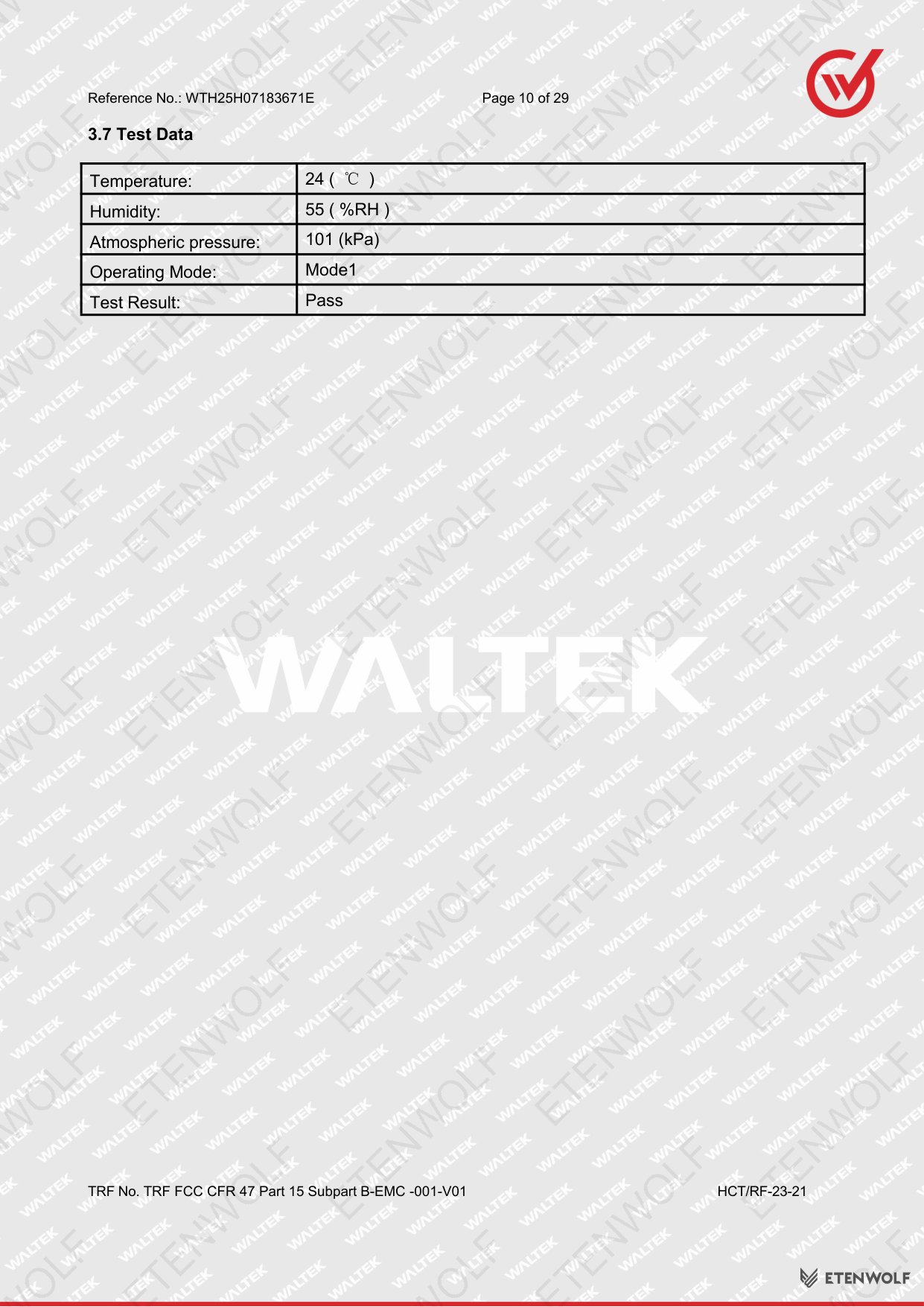
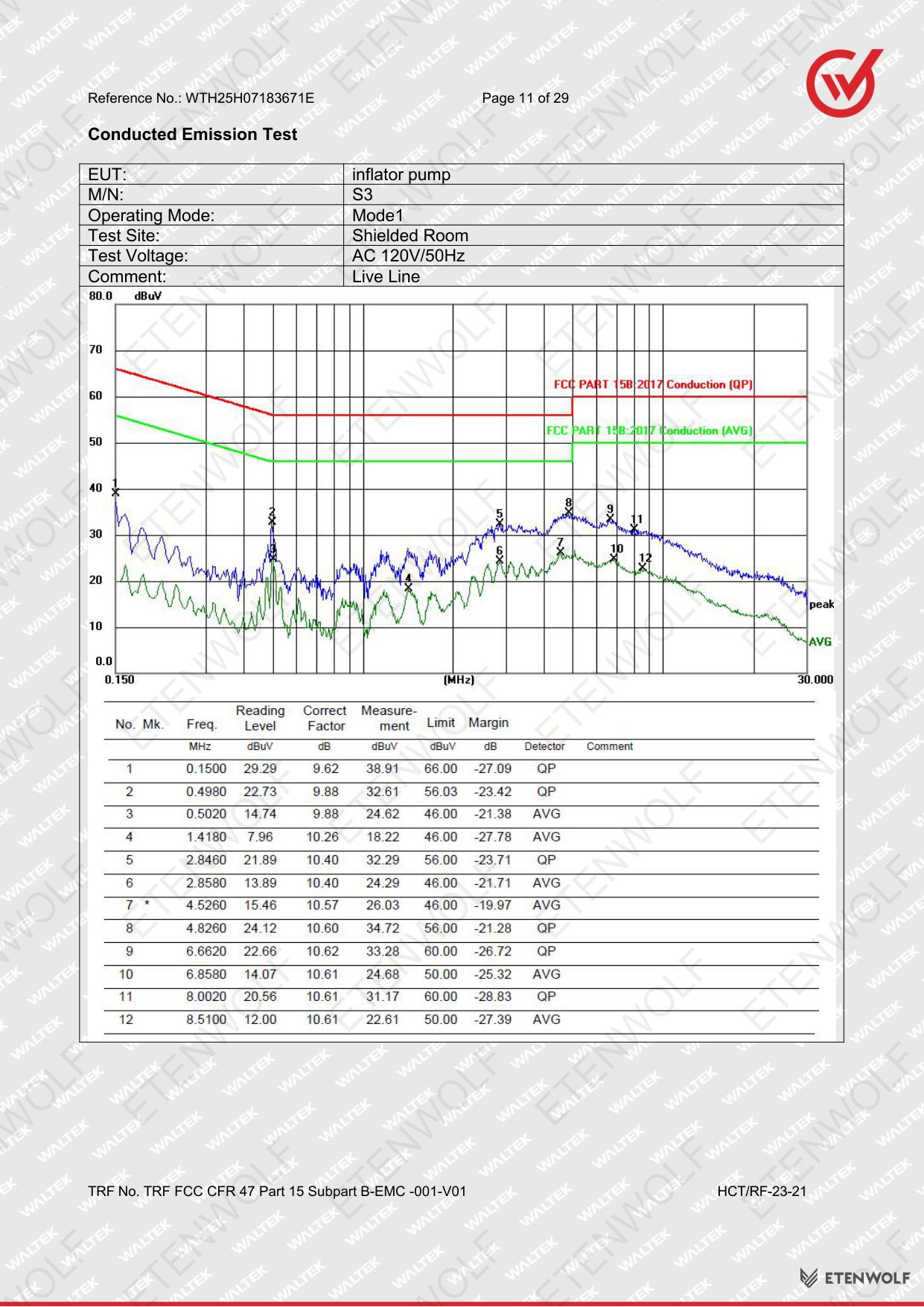
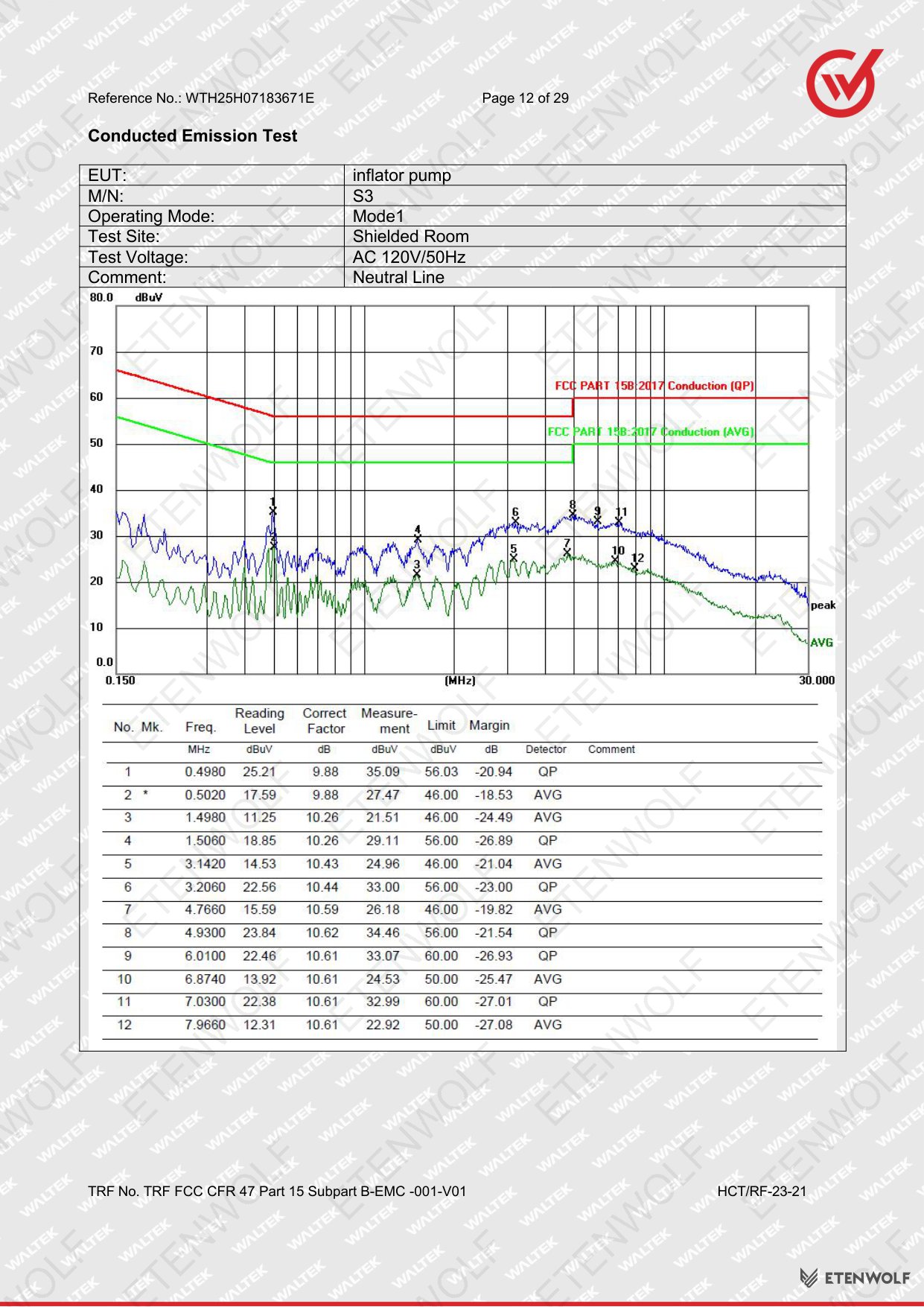
| Conducted Emission | FCC CFR 47 Part 15 Subpart B | Pass |
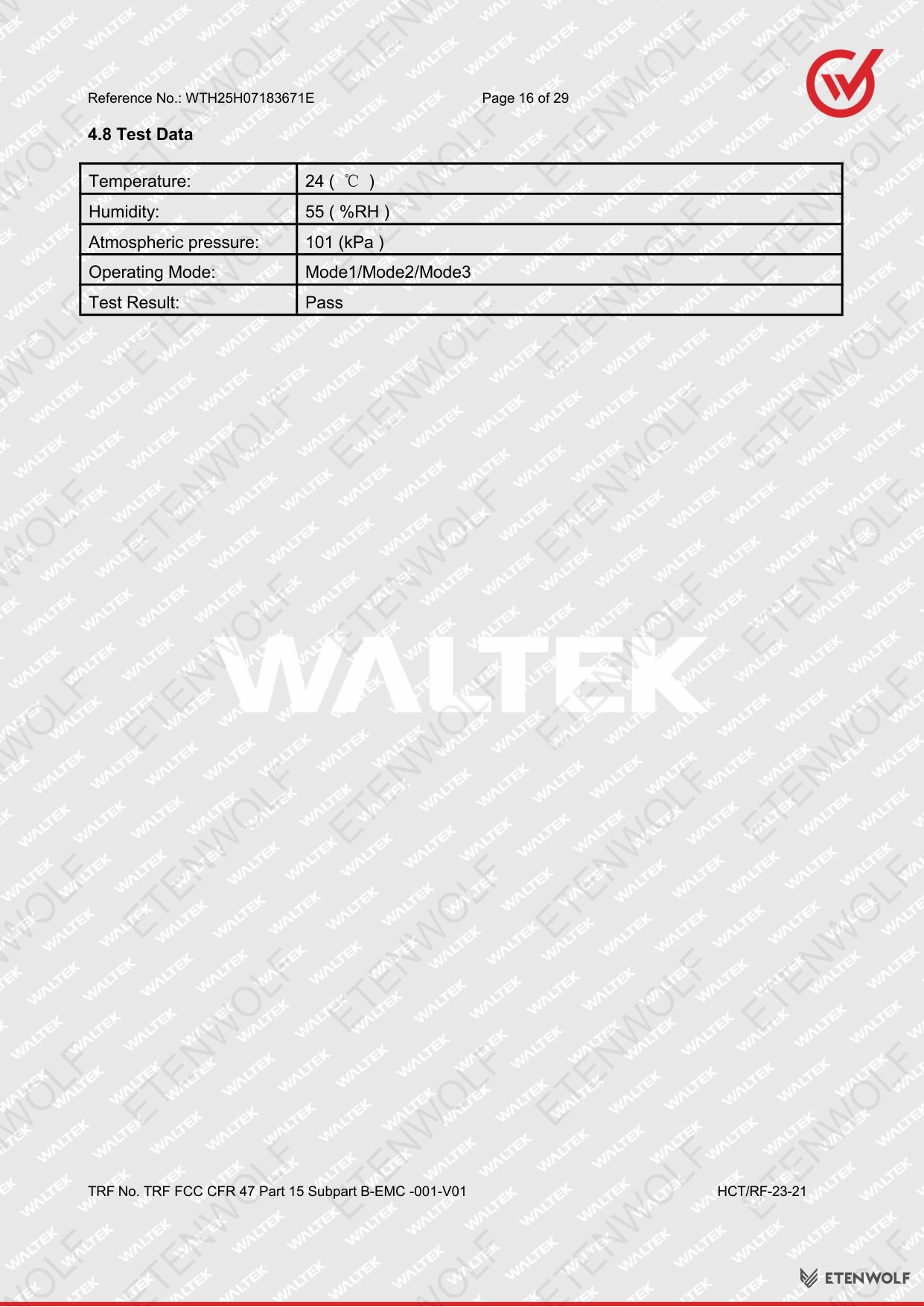
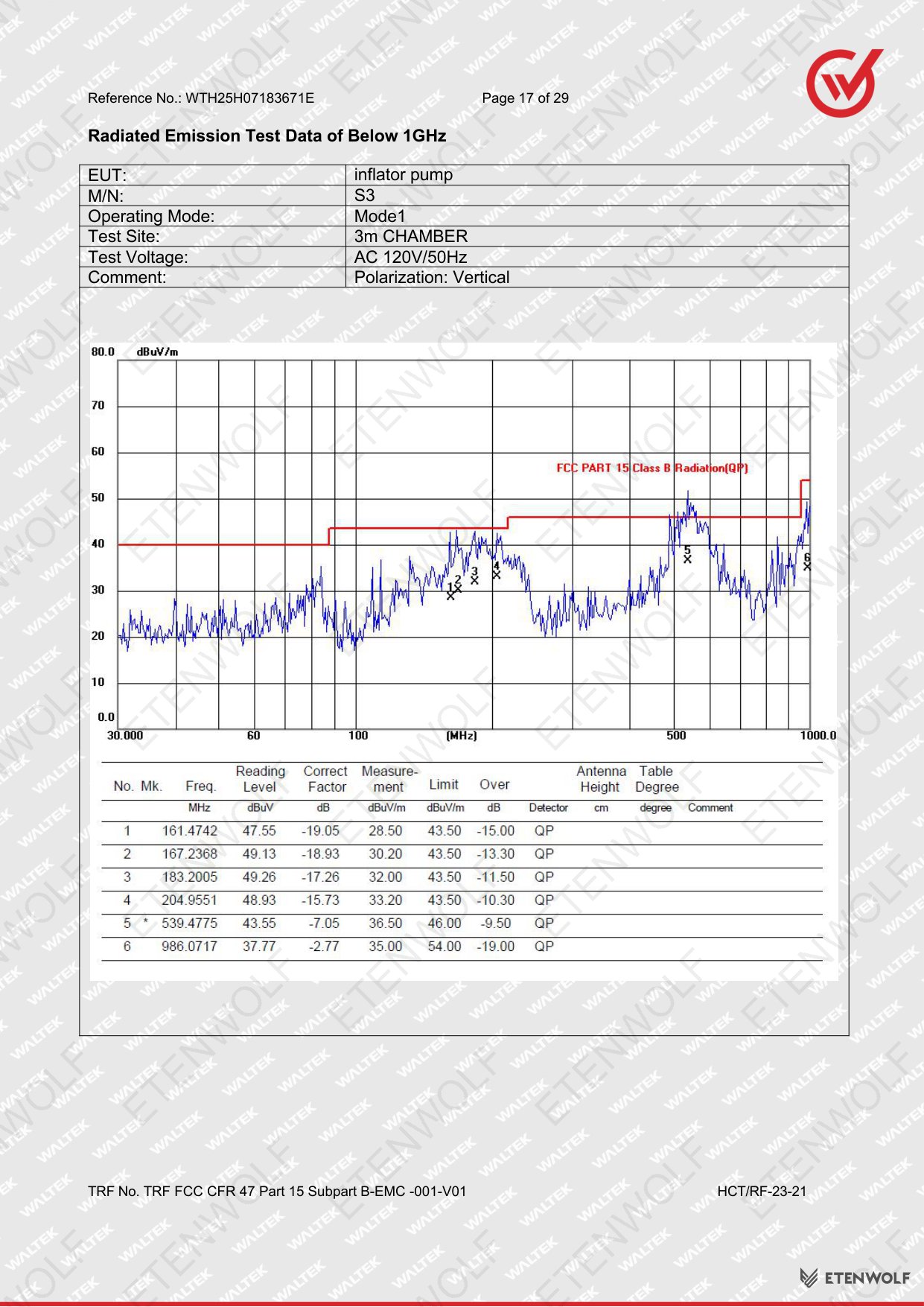
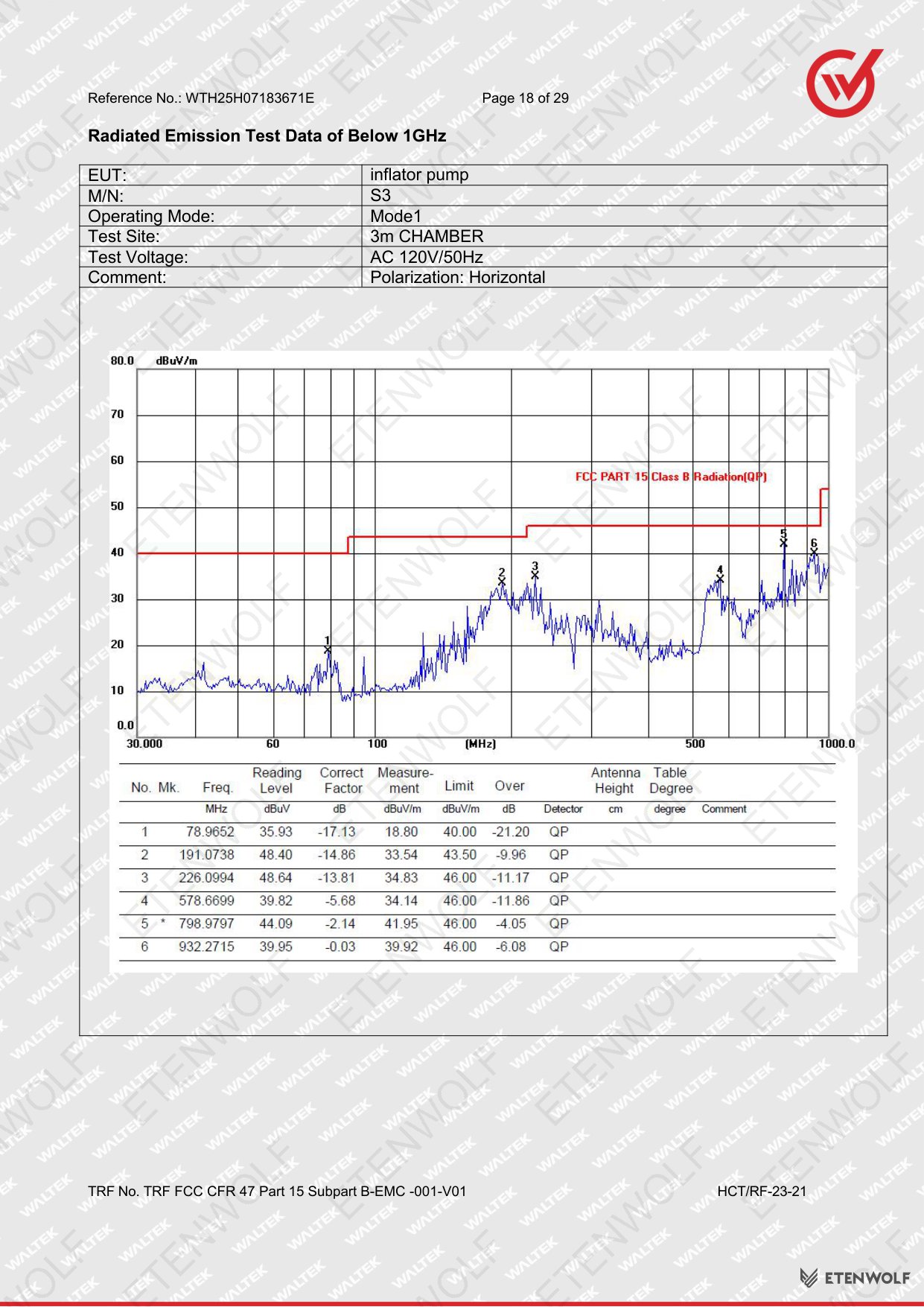
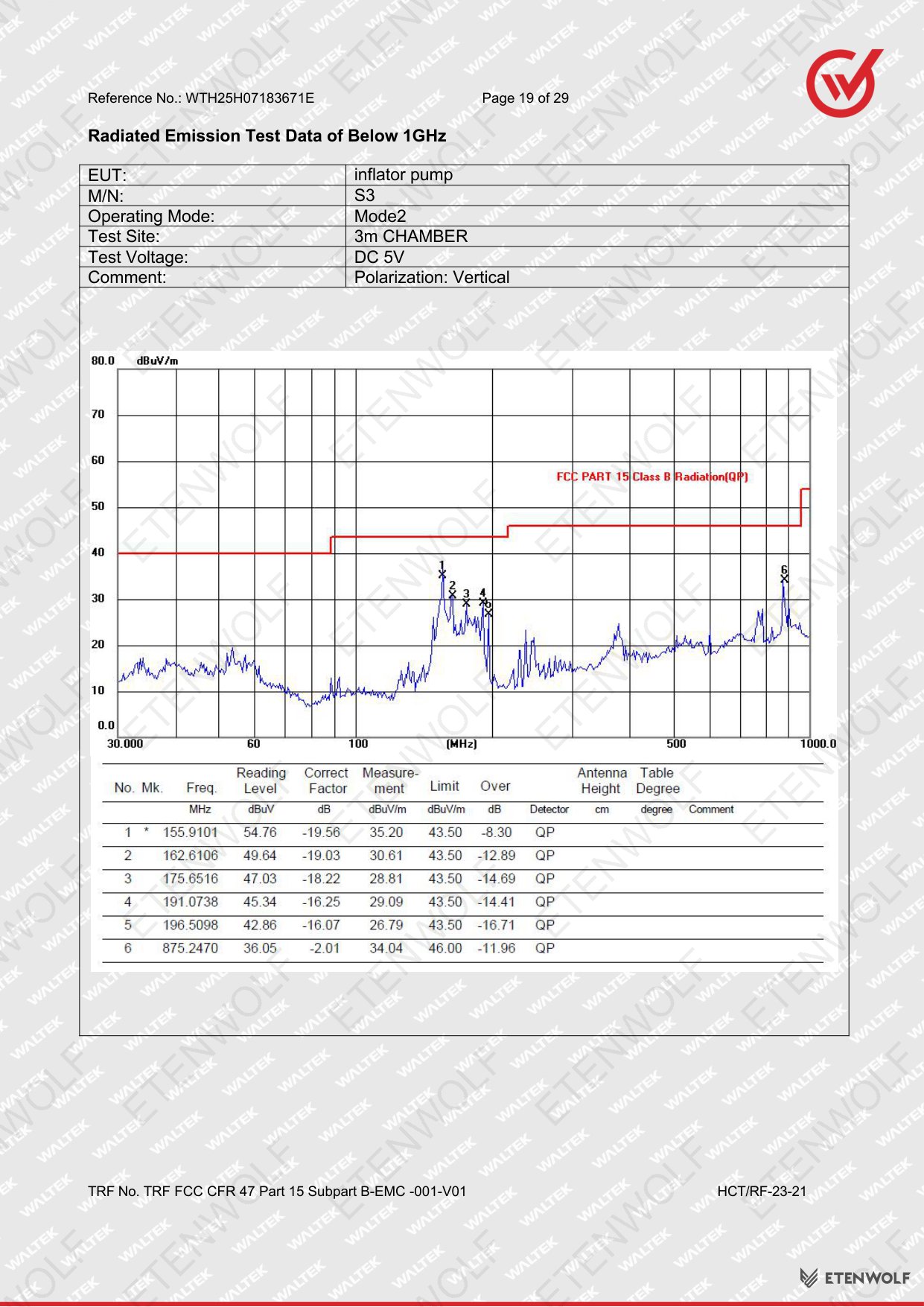
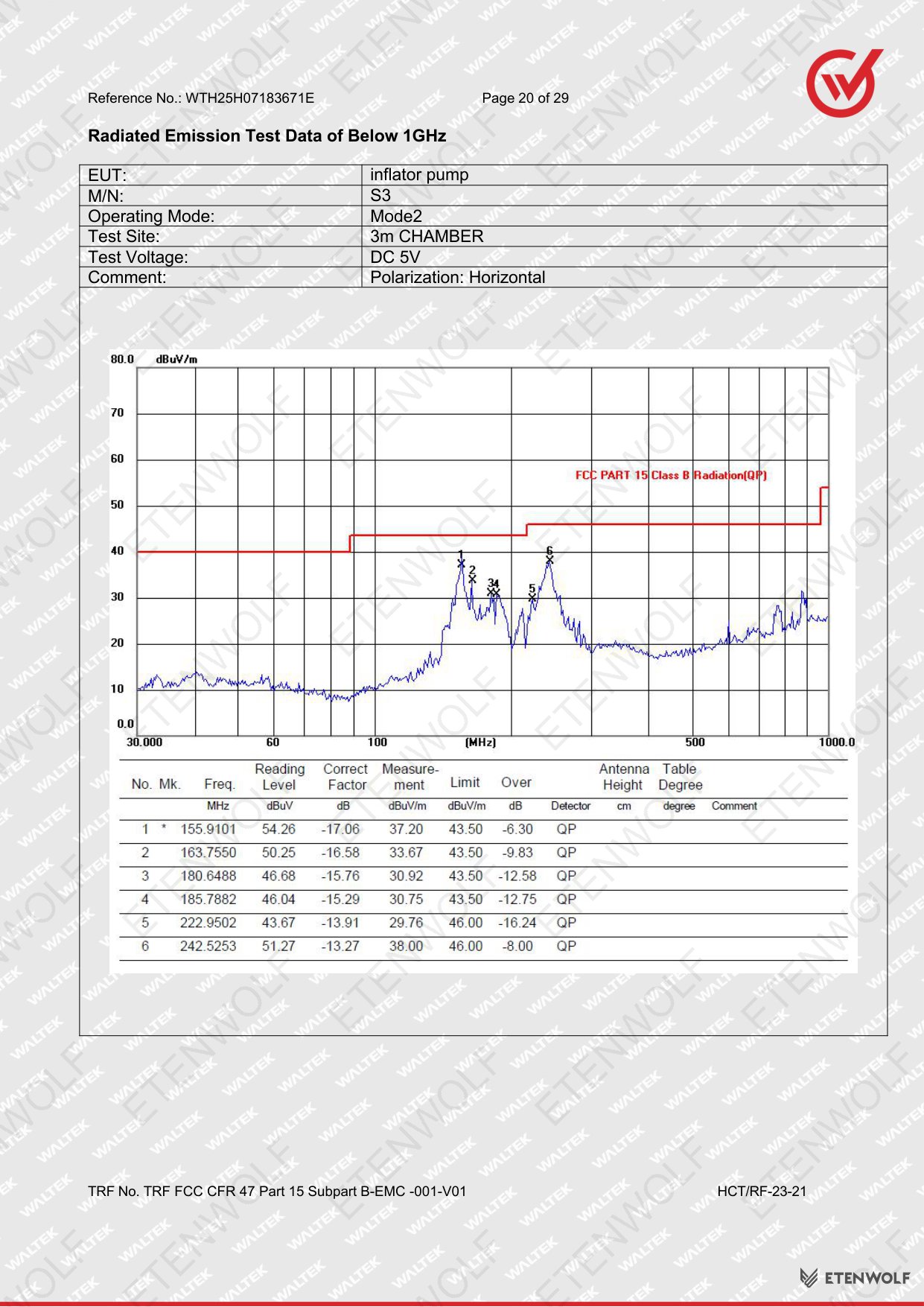
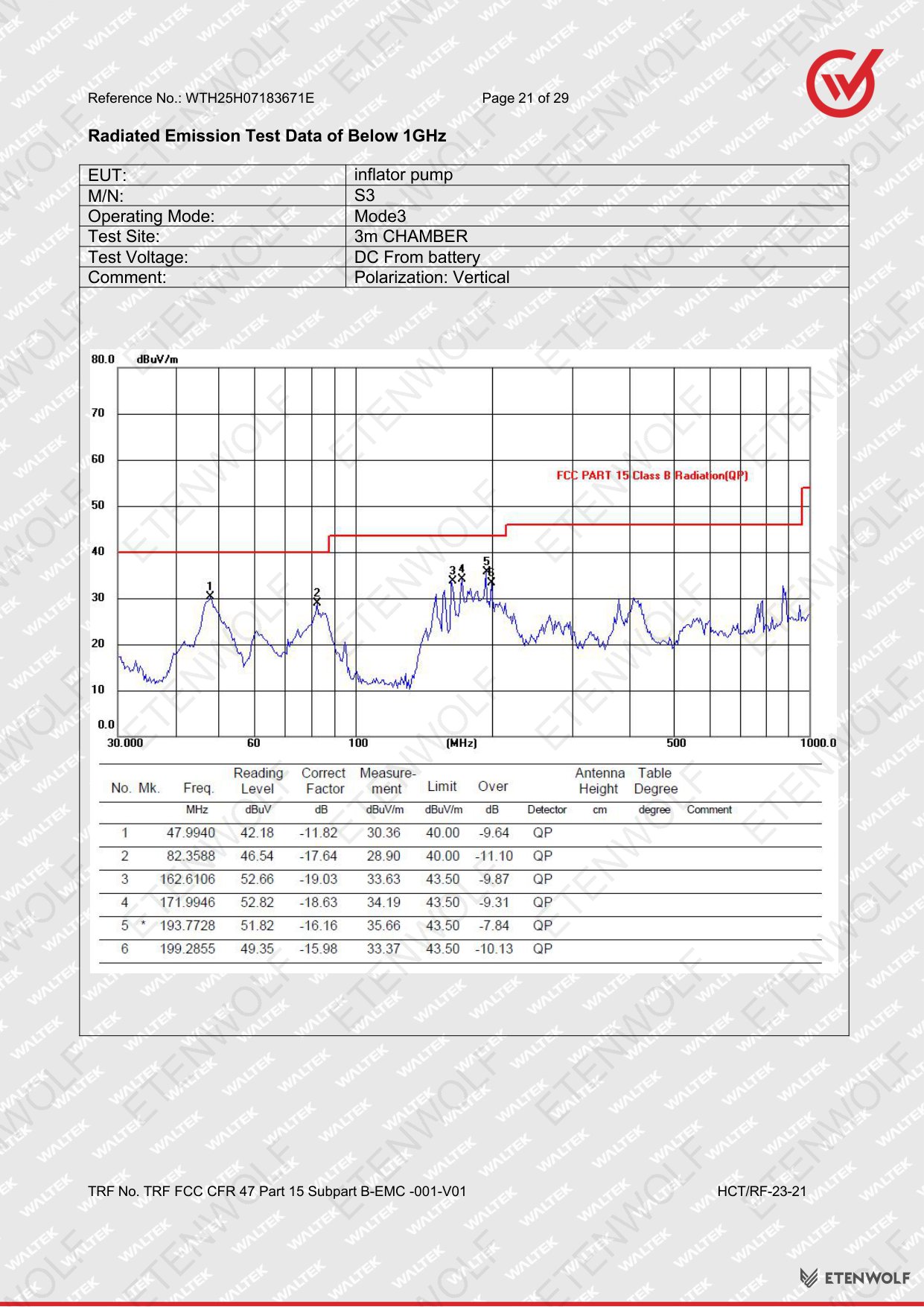
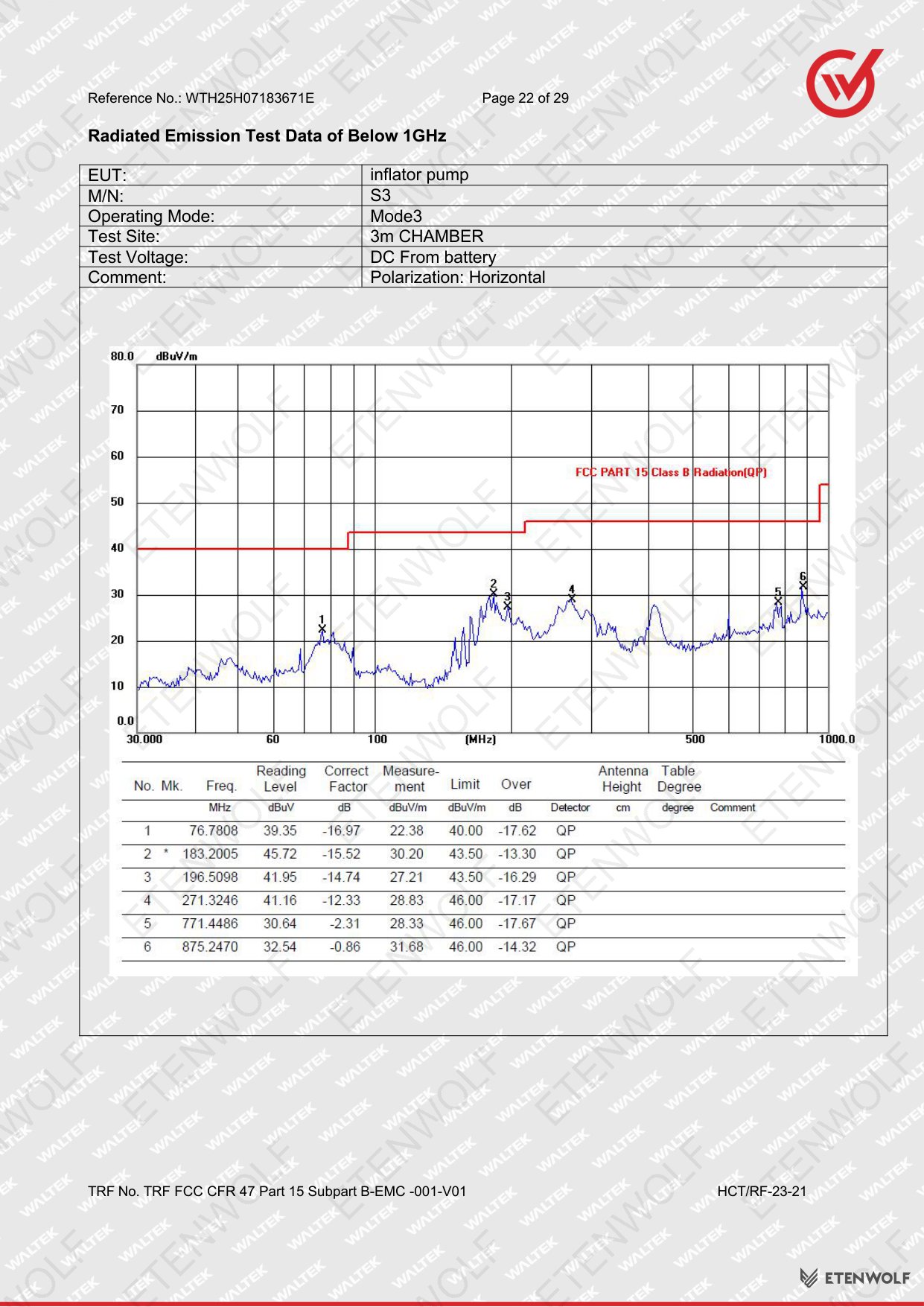
| Radiated Emission | FCC CFR 47 Part 15 Subpart B | Pass |
Overall Test Result: PASS
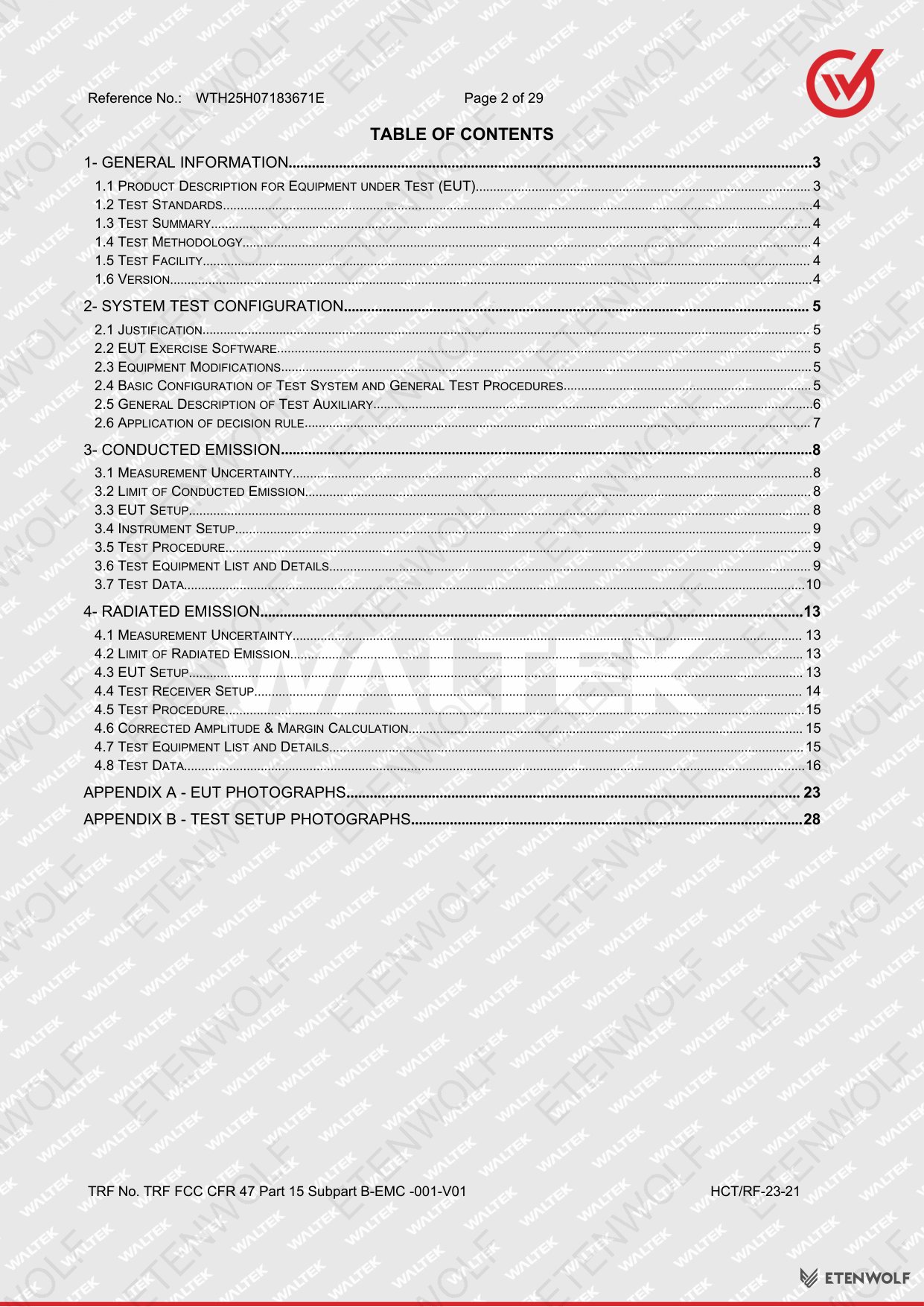
Test Report Form: TRF FCC CFR 47 Part 15 Subpart B-EMC-001-V01
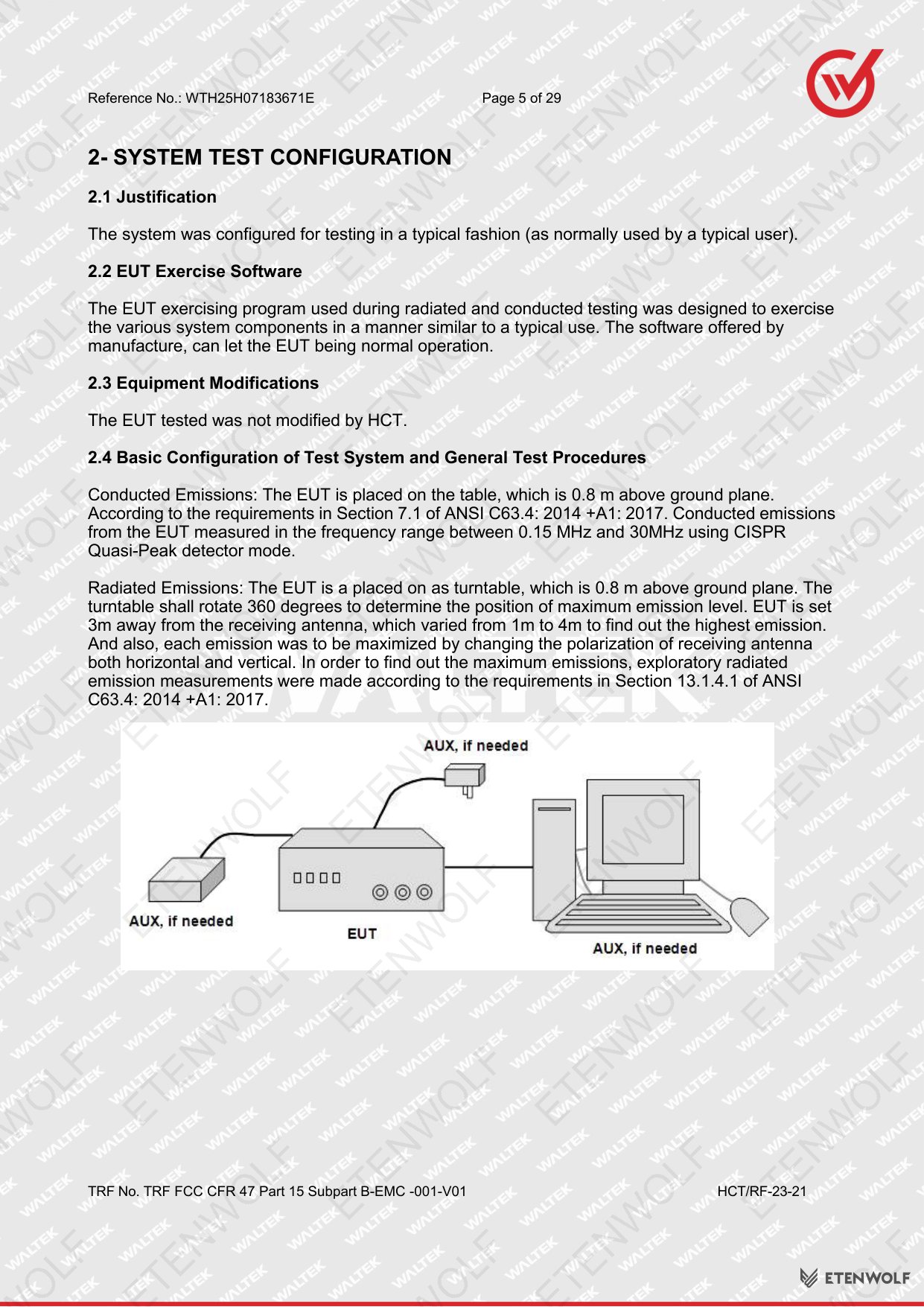
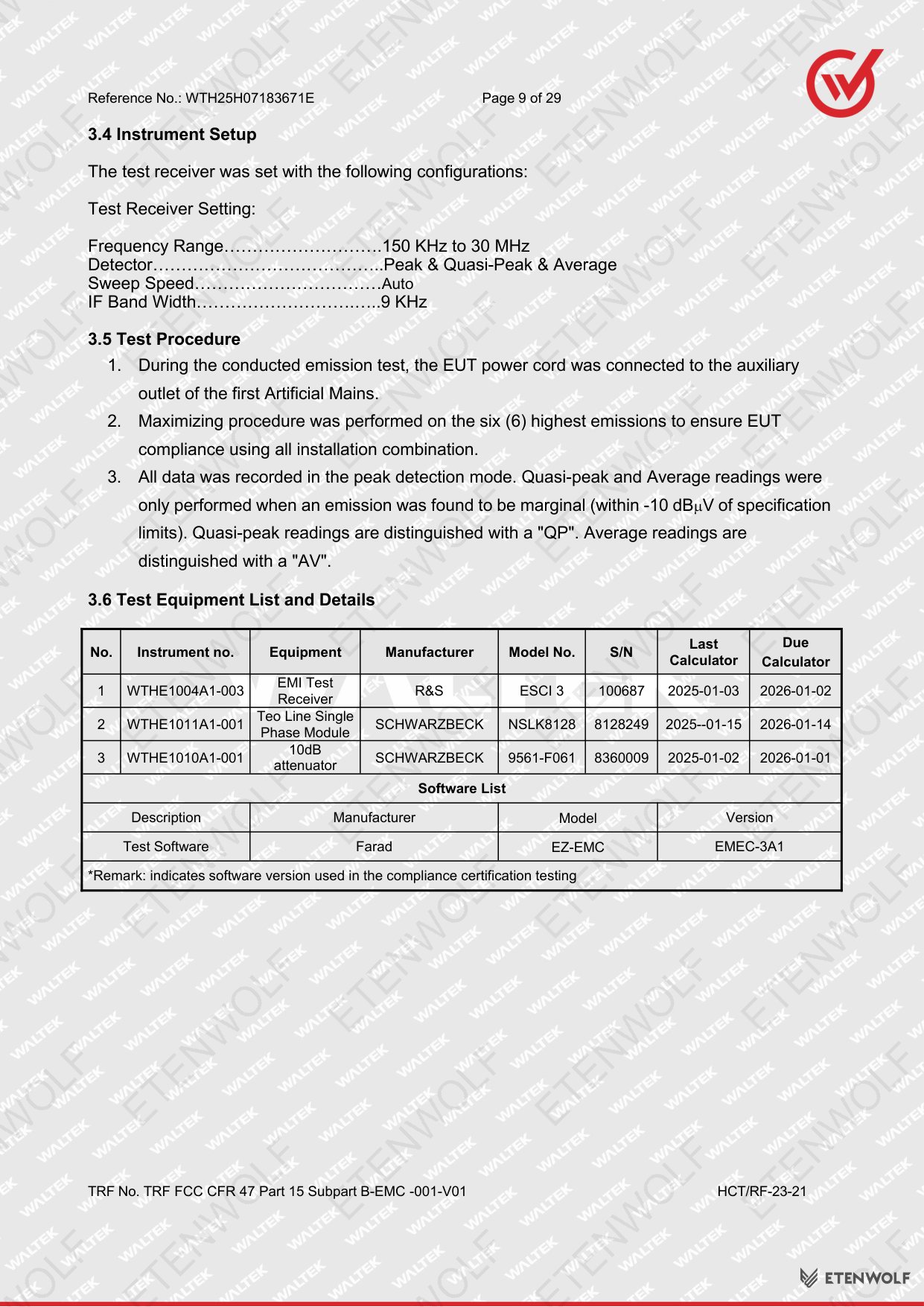
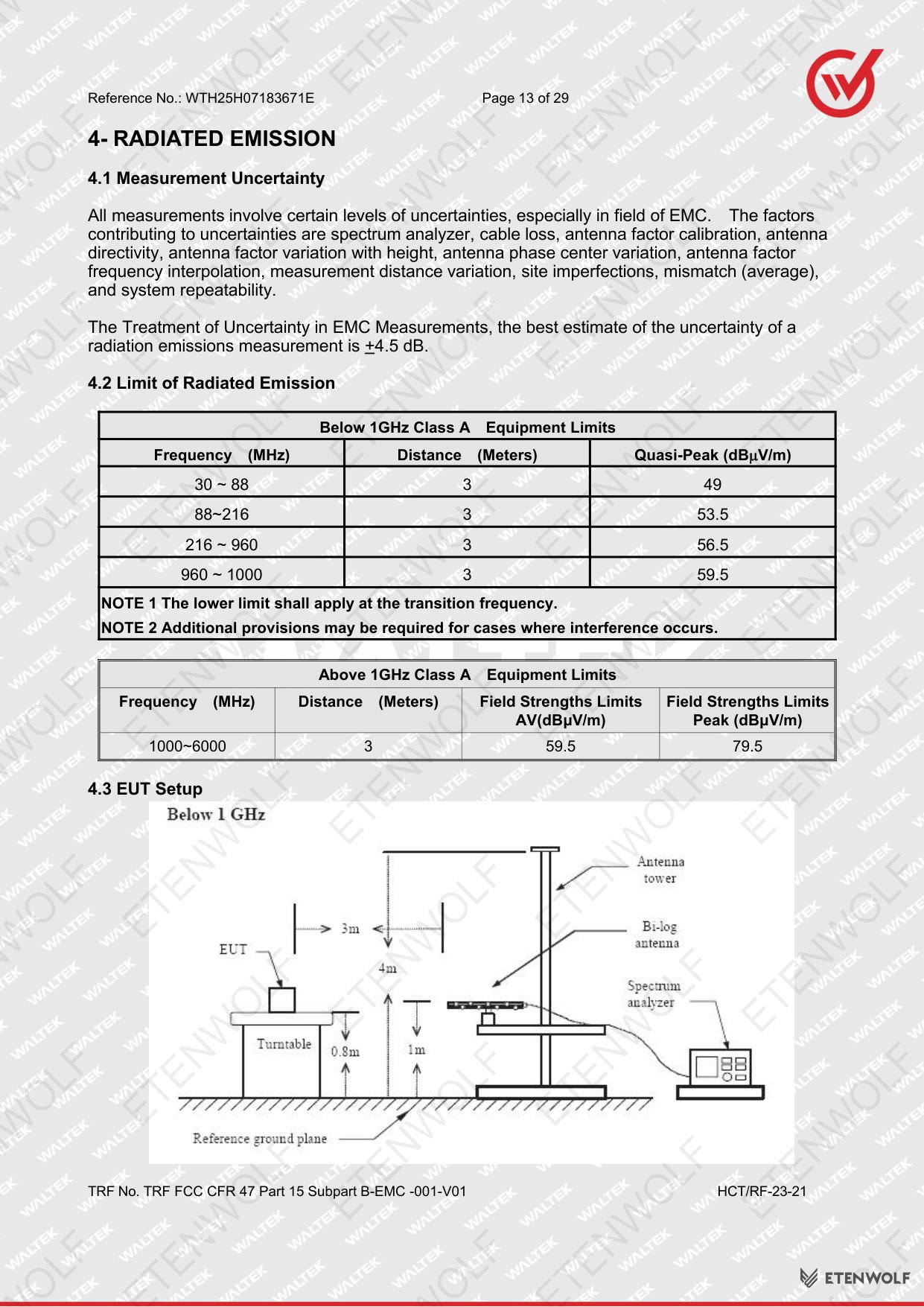
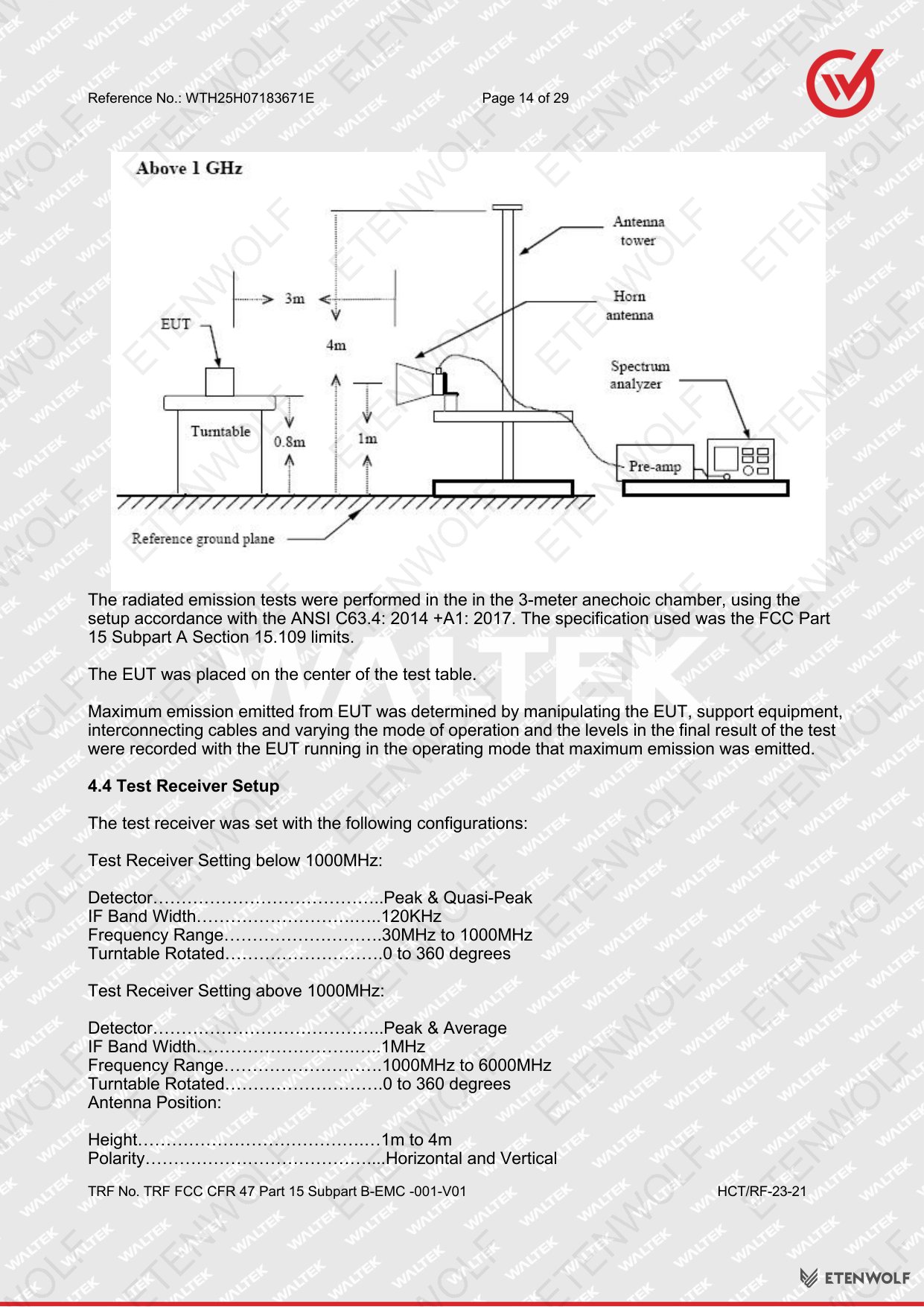
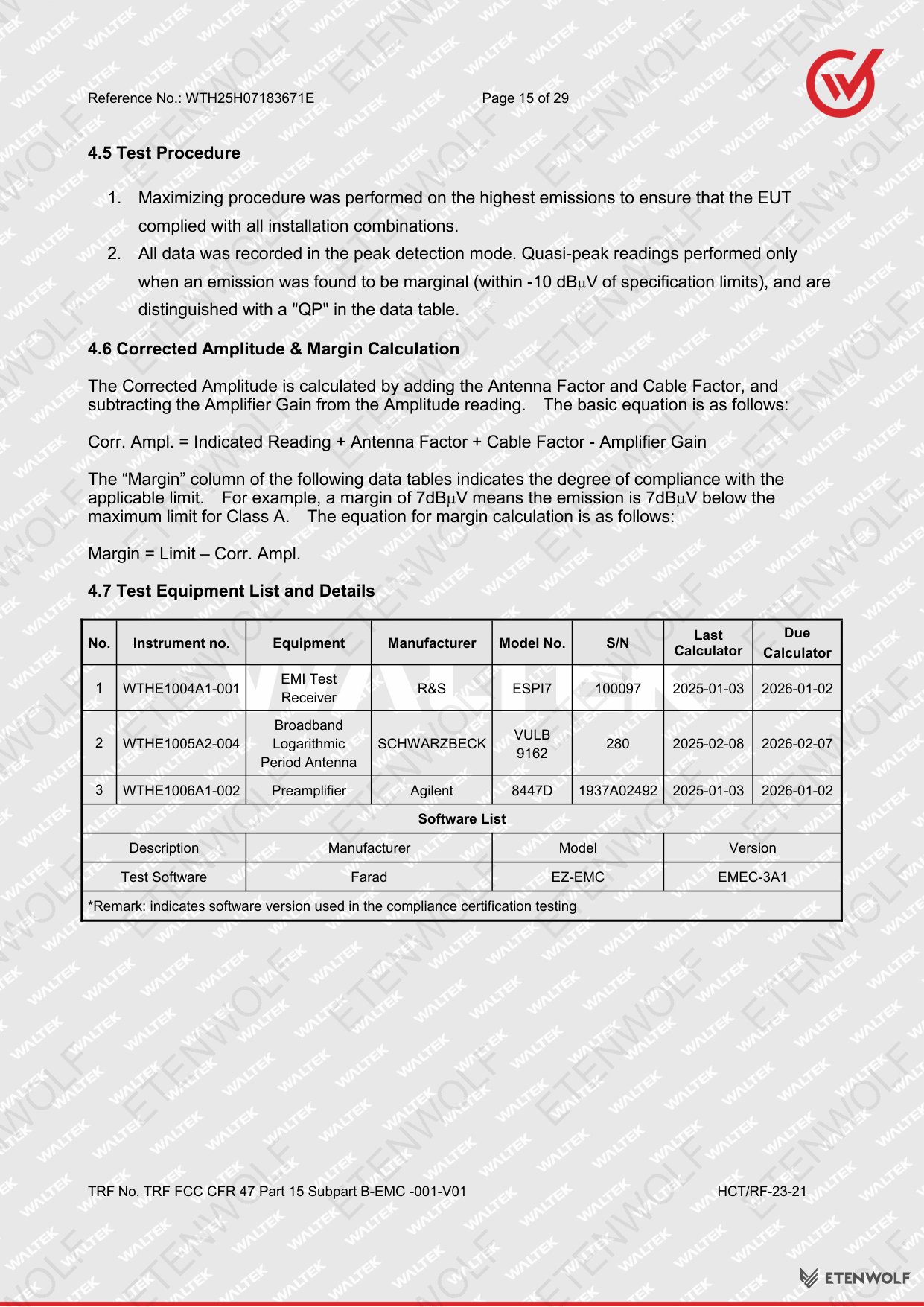
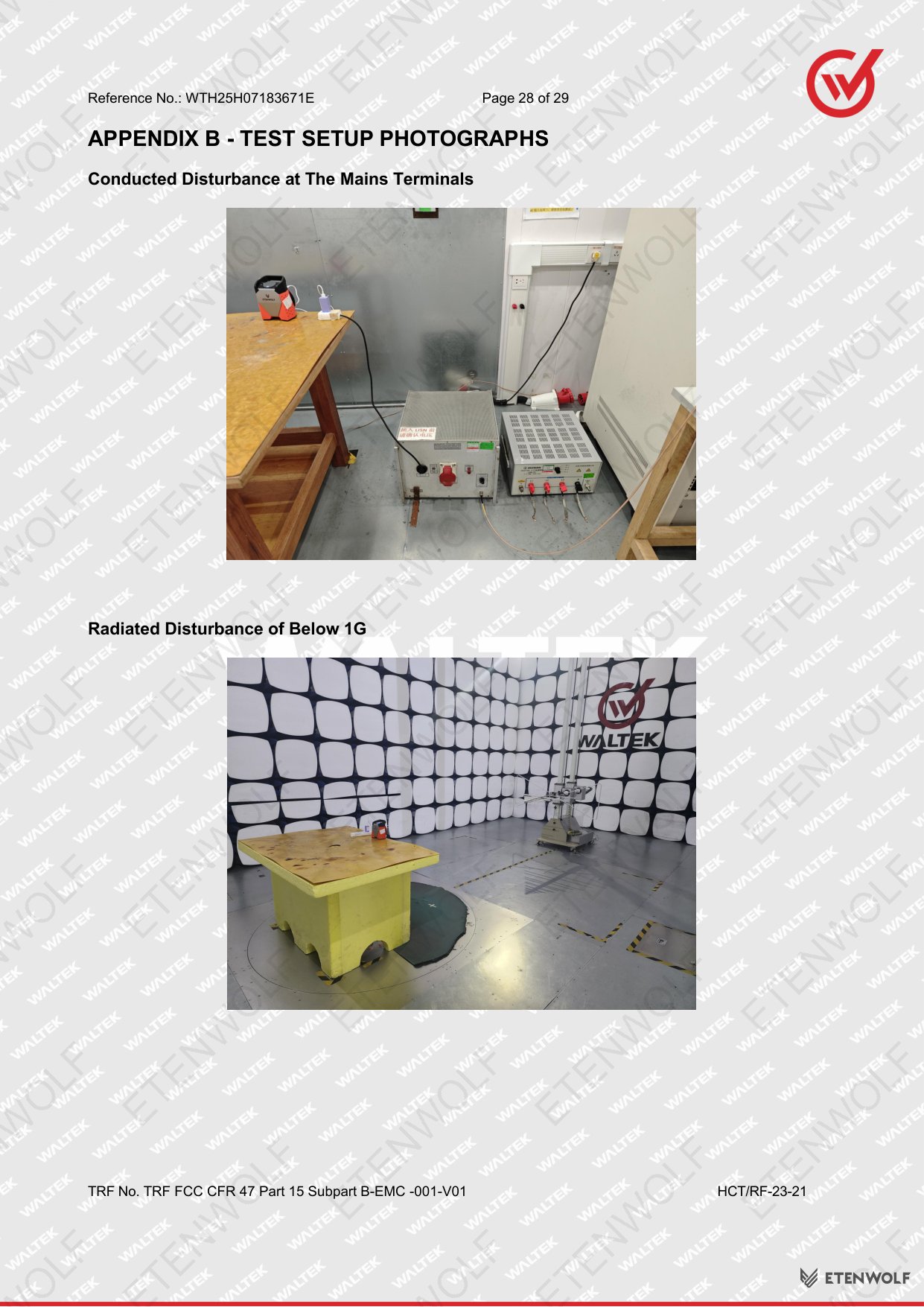
The testing was conducted in accordance with ANSI C63.4 measurement procedures, which define the methods for measuring radio-noise emissions from digital devices. All measurements were performed at an accredited test facility with calibrated equipment traceable to national standards.
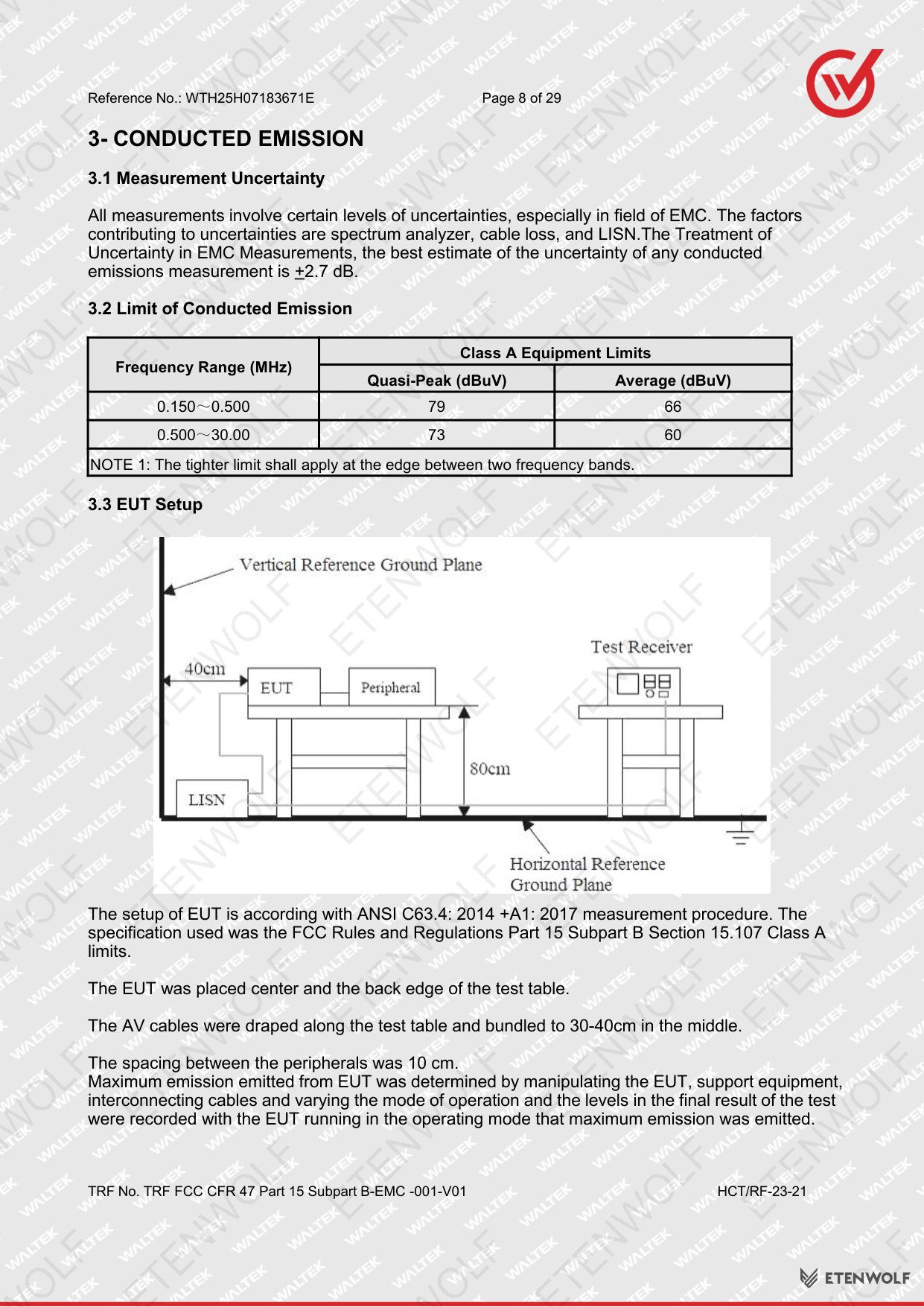
The device demonstrated compliance with applicable limits for both conducted emissions (measured on AC power ports) and radiated emissions (measured at specified distances in an electromagnetically controlled environment).
Standards & Compliance
The certification testing was performed according to the following technical standards and regulatory requirements:
- FCC CFR 47 Part 15 Subpart B: Federal regulations governing unintentional radiators, which are electronic devices that generate radio frequency energy during operation but are not intended to transmit radio signals. This standard sets maximum emission limits to prevent interference with authorized radio services.
- ANSI C63.4: American National Standard for Methods of Measurement of Radio-Noise Emissions from Low-Voltage Electrical and Electronic Equipment in the Range of 9 kHz to 40 GHz. This provides the detailed test procedures and measurement techniques.
- Conducted Emission Limits: Defines maximum allowable electromagnetic interference conducted through power supply lines, typically measured from 150 kHz to 30 MHz.
- Radiated Emission Limits: Specifies maximum electromagnetic field strength at specified distances from the device, typically measured from 30 MHz to several GHz depending on device characteristics.
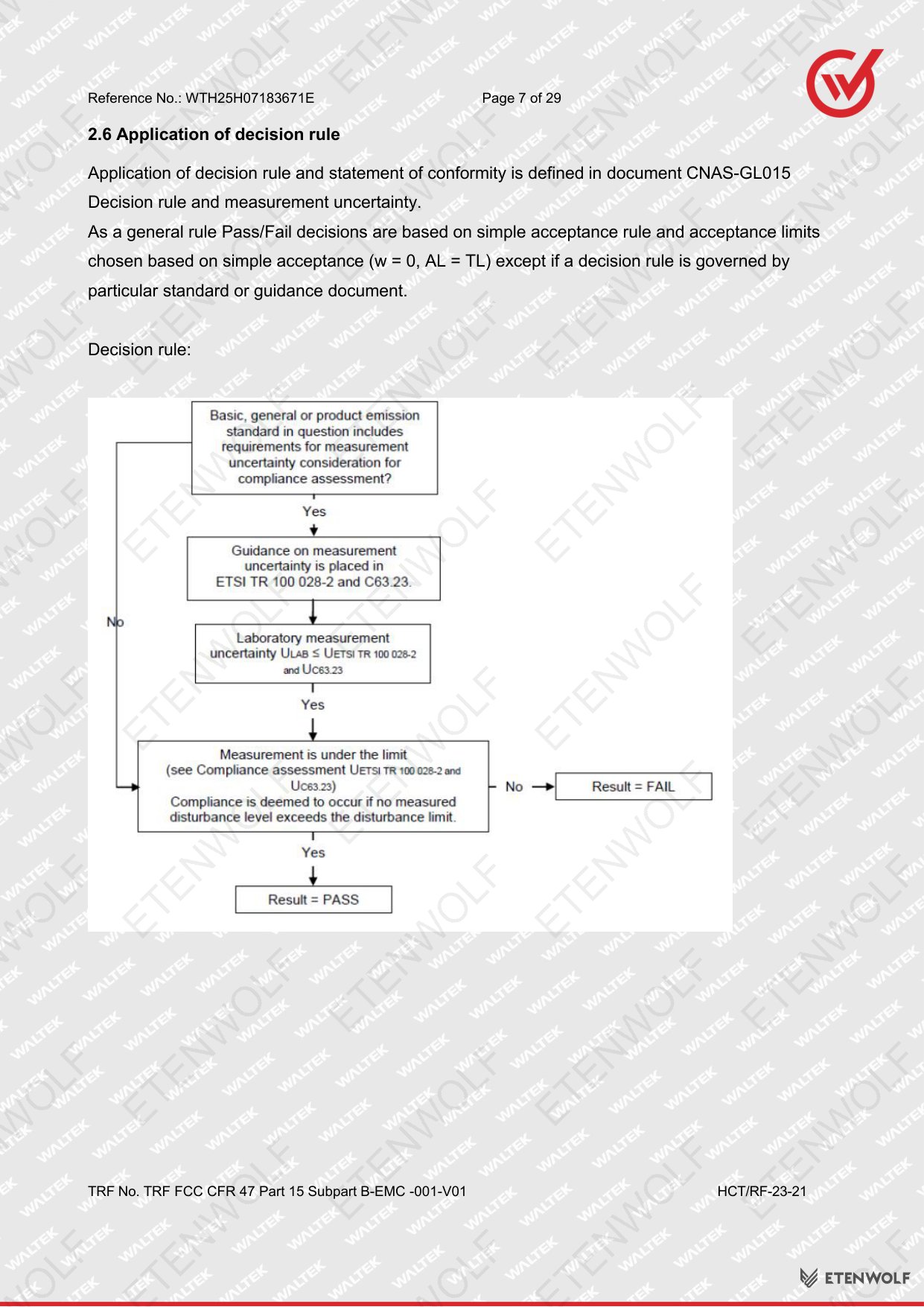
The testing laboratory applied appropriate decision rules accounting for measurement uncertainty to determine pass/fail status. The S3 inflator pump met all applicable limits with margin, ensuring robust compliance under normal operating conditions and manufacturing variations.
Validity & Certification Body
Testing Laboratory: Waltek Testing Group HCT (Shenzhen) Co., Ltd.
Laboratory Address: Building B, Tianji Industrial Park, 1/F. & 2/F. & 3/F., No.30-9, Laiyin Road, Xinsheng Community, Longgang Subdistrict, Longgang District, Shenzhen, Guangdong, China
Contact Information:
- Tel: 0755-84616666
- Service Tel: 400-0066-989
- Email: [email protected]
- Website: http://www.hct-test.com
Report Prepared By: Snow Zeng
Report Approved By: Tony Wu
Validity: This FCC-SDOC certification remains valid as long as the product design, components, and manufacturing processes remain unchanged. Any modifications to the device that could affect electromagnetic emissions characteristics would require re-evaluation and potentially new certification testing.
Waltek Testing Group HCT (Shenzhen) Co., Ltd. is an accredited electromagnetic compatibility testing laboratory with the facilities and expertise to perform FCC compliance testing according to recognized international standards. The laboratory maintains calibrated test equipment with traceability to national metrology institutes.
Frequently Asked Questions
What does FCC-SDOC certification mean for the ETENWOLF S3?
FCC-SDOC (Supplier’s Declaration of Conformity) certification means the ETENWOLF S3 tire inflator has been tested and verified to comply with FCC Part 15 electromagnetic emission requirements. This certification is legally required to market and sell the device in the United States, ensuring it does not cause harmful interference to radio communications.
Do I need to keep this certification document with my S3 inflator?
End users do not need to retain the full certification report. However, the product should display FCC compliance information (typically an FCC ID or declaration statement) on its label or in the user manual. The manufacturer maintains the test report as evidence of compliance for regulatory purposes.
How long is the FCC certification valid?
The FCC certification for report WTH25H07183671E remains valid indefinitely as long as the S3 product design remains unchanged. If the manufacturer modifies the electronic circuitry, changes components that affect emissions, or alters the device configuration, new testing may be required to verify continued compliance.
What tests were performed during FCC certification?
The S3 inflator underwent conducted emission testing (measuring electromagnetic noise on power lines) and radiated emission testing (measuring electromagnetic fields radiated into space). Both tests ensure the device operates within FCC limits and will not interfere with radio, television, or other electronic equipment.
Related Documents
For comprehensive regulatory compliance documentation of the ETENWOLF S3 cordless tire inflator, you may also be interested in these related certification types:
- CE Certification (EMC Directive): European Union electromagnetic compatibility certification equivalent to FCC, required for marketing in EU member states.
- RoHS Compliance Report: Restriction of Hazardous Substances certification verifying the device complies with limits on lead, mercury, cadmium, and other restricted materials.
- UN38.3 Battery Test: If the S3 contains lithium-ion batteries, UN38.3 certification demonstrates safe transport compliance for air, sea, and ground shipping.
- UL/ETL Safety Certification: Product safety testing for electrical hazards, fire risks, and mechanical safety under normal and fault conditions.
- REACH Compliance: European chemical safety regulation ensuring the product does not contain substances of very high concern above threshold limits.
- KC Certification: Korea Communications Commission certification for electromagnetic compatibility and safety, required for the South Korean market.
ETENWOLF maintains comprehensive compliance documentation to ensure the S3 tire inflator meets regulatory requirements across global markets, providing customers with confidence in product quality, safety, and electromagnetic compatibility.
Document Pages