Document Overview
Document Overview This page presents the Material Safety Data Sheet (MSDS) issued under reference number WTH25D09256005B001 for the HB1 lithium-ion battery pack. The document was prepared in accordance with UN38.3 transport safety requirements and serves as the primary safety reference for handling, storage, transport, and…
- Document type
- Certification Report
- Prepared by
- Michelle Torres
- Published
- Last reviewed
- Topics
- International Transportation: CB / MSDS / UN38.3
Document Overview
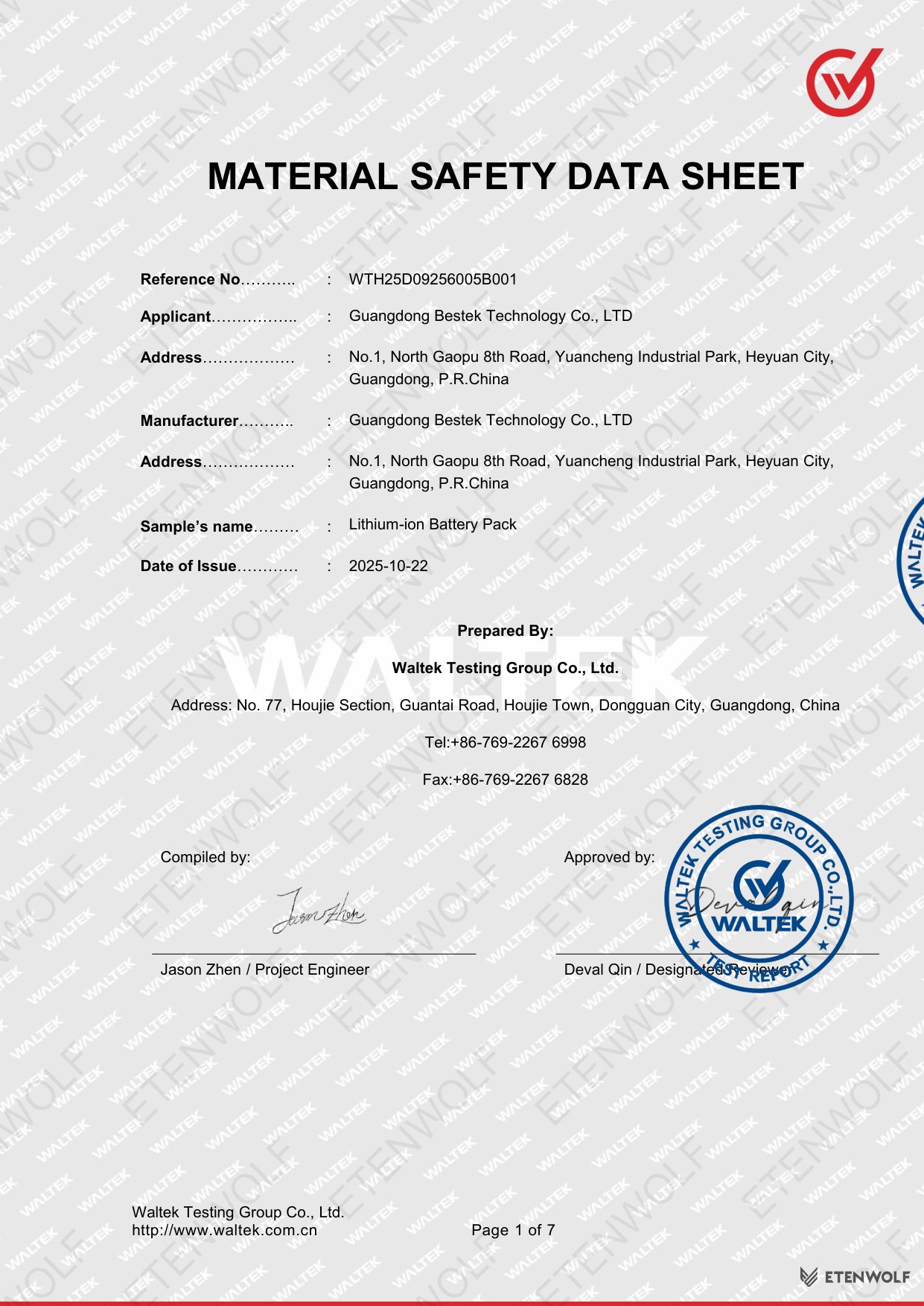
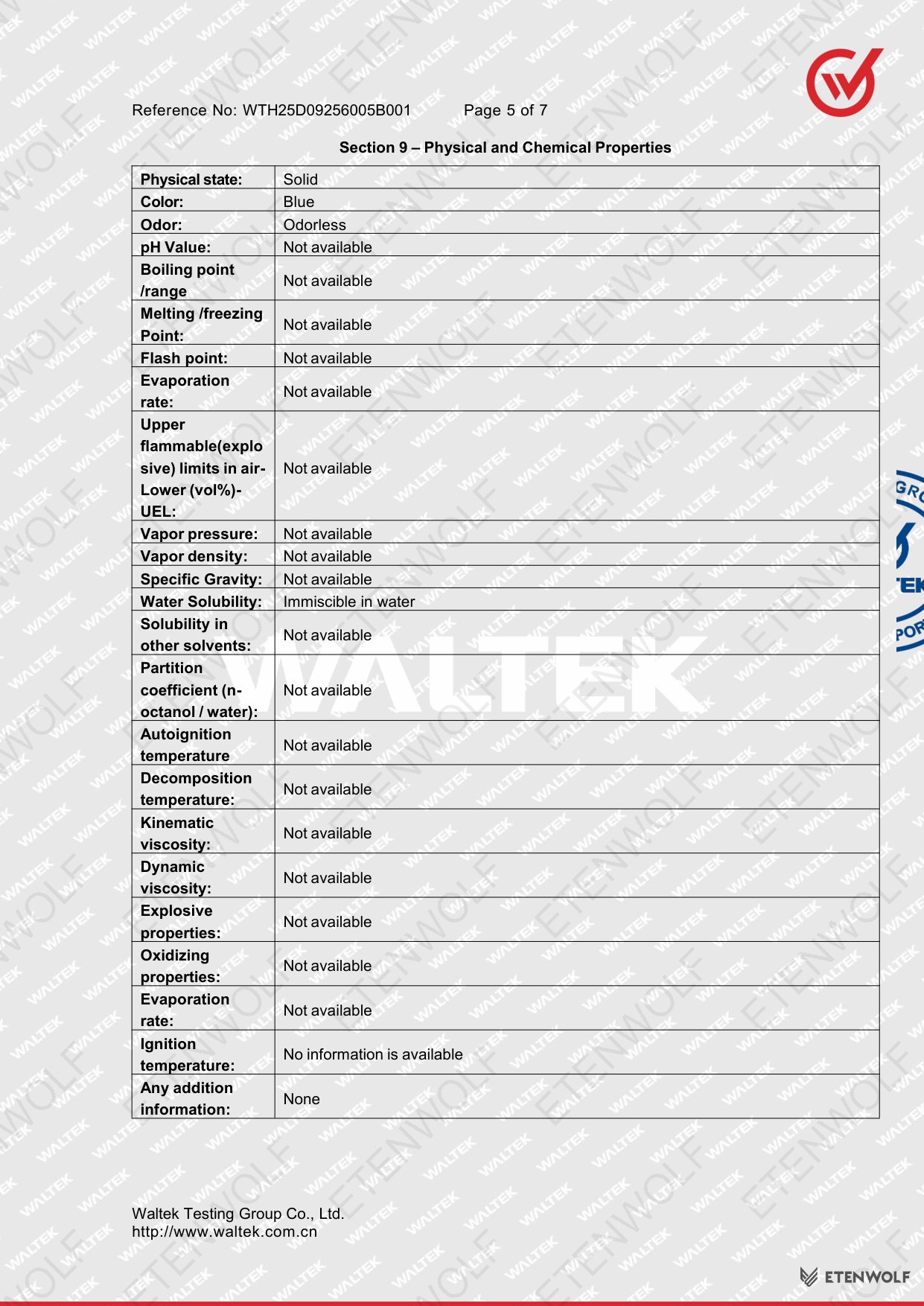
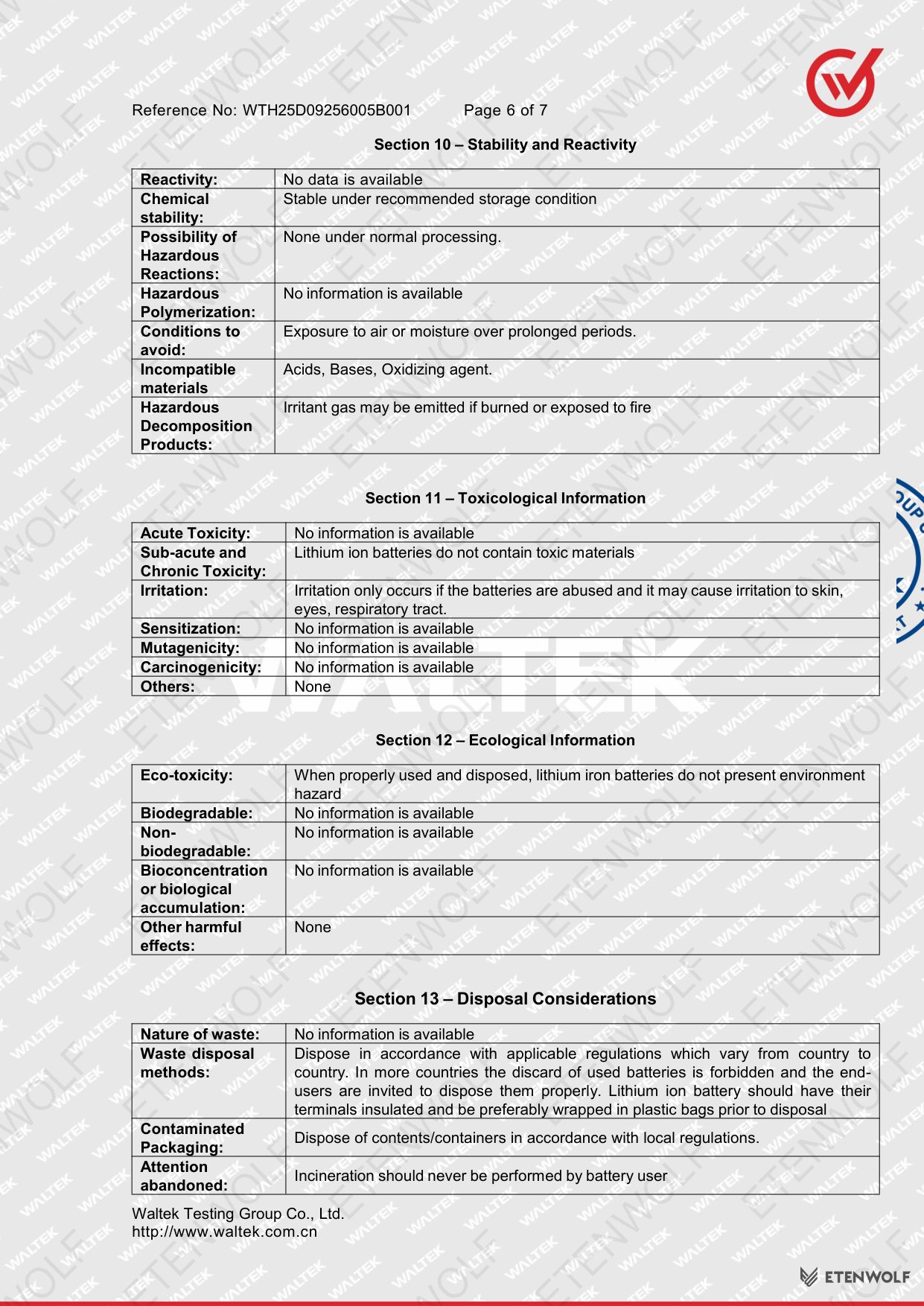
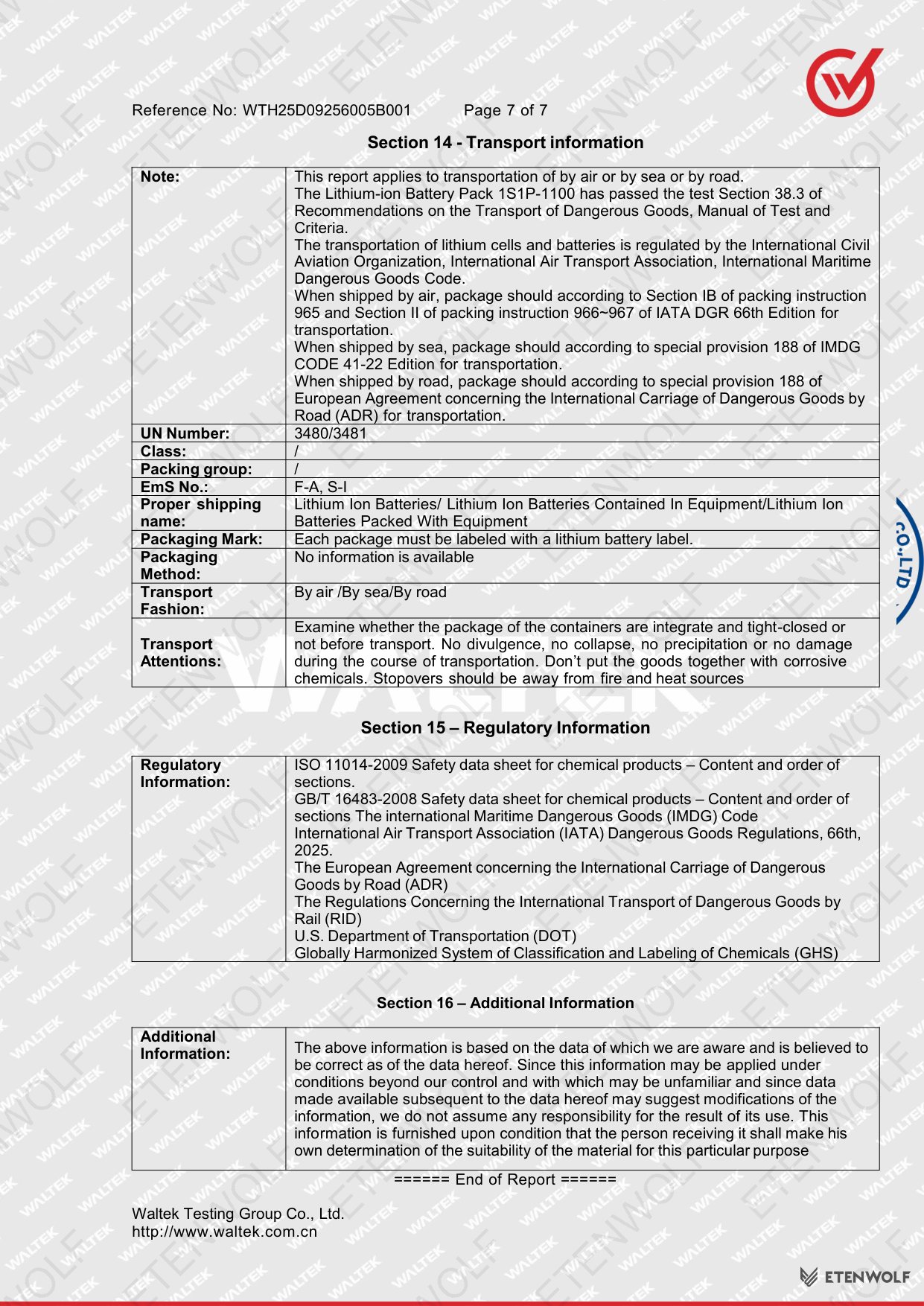
This page presents the Material Safety Data Sheet (MSDS) issued under reference number WTH25D09256005B001 for the HB1 lithium-ion battery pack. The document was prepared in accordance with UN38.3 transport safety requirements and serves as the primary safety reference for handling, storage, transport, and emergency response.
- Document Type: Material Safety Data Sheet (MSDS)
- Reference Number: WTH25D09256005B001
- Issuing Body: Waltek Testing Group Co., Ltd.
- Date of Issue: 2025-10-22
- Prepared By: Jason Zhen, Project Engineer
- Approved By: Deval Qin, Designated Reviewer
- Scope: Chemical composition, hazard identification, first aid, fire fighting, accidental release, handling, storage, and personal protection for a lithium-ion battery pack used in inflation tools and lighting gear products.
Product Information
The battery covered by this MSDS is the core power cell used in the HB1 portable inflation and lighting device manufactured by ETENWOLF. Full product identification details are listed below.
| Field | Details |
|---|---|
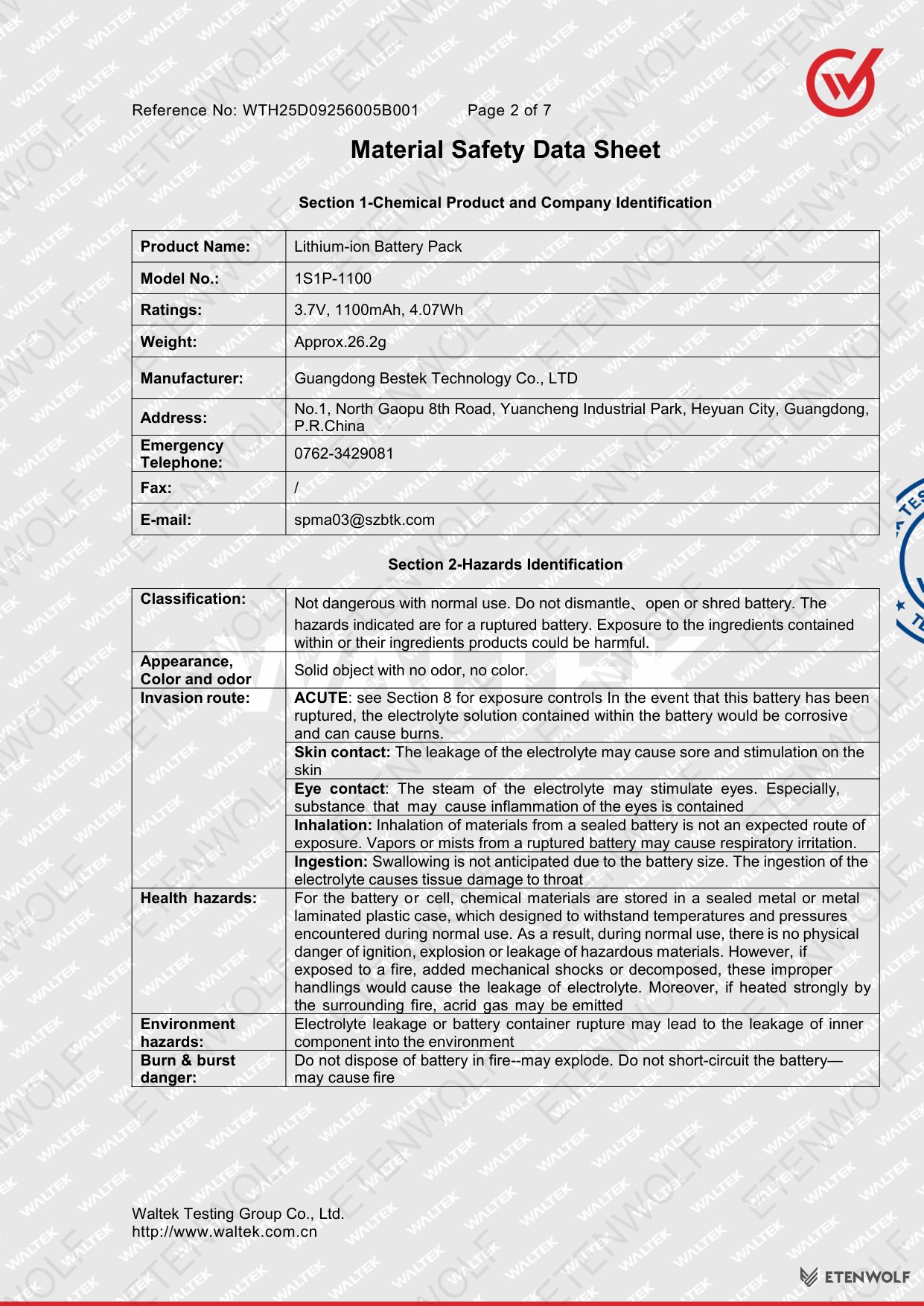
| Product Name | Lithium-ion Battery Pack |
| Model Number | 1S1P-1100 |
| Nominal Voltage | 3.7 V |
| Nominal Capacity | 1100 mAh |
| Energy | 4.07 Wh |
| Approximate Weight | 26.2 g |
| Applicant / Manufacturer | Guangdong Bestek Technology Co., LTD |
| Manufacturer Address | No.1, North Gaopu 8th Road, Yuancheng Industrial Park, Heyuan City, Guangdong, P.R. China |
| Emergency Telephone | 0762-3429081 |
| Contact Email | [email protected] |
Key Details
The following sections summarise the critical safety and chemical information extracted from the MSDS for the HB1 battery pack.
Chemical Composition (Section 3)
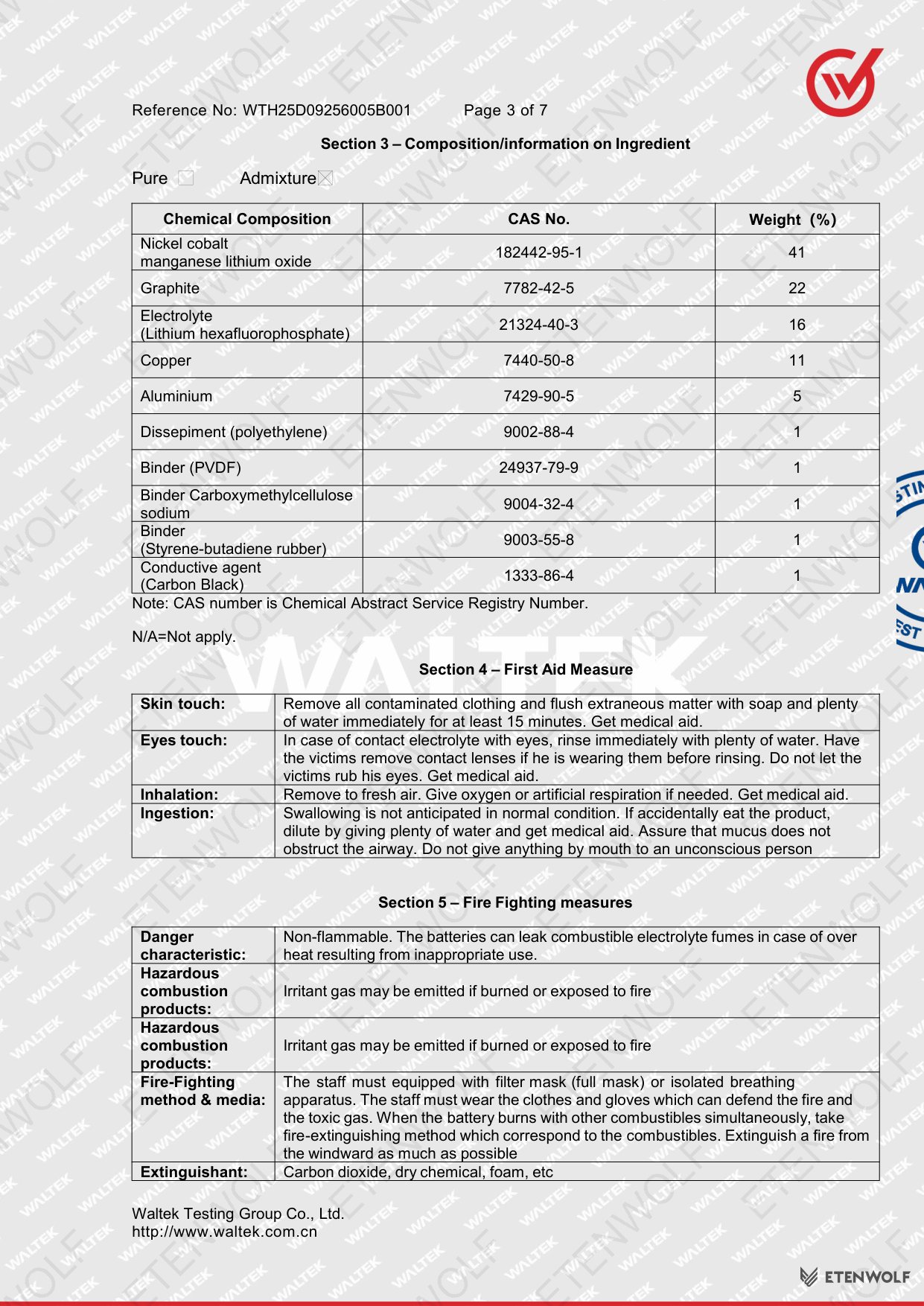
| Chemical Composition | CAS No. | Weight (%) |
|---|---|---|
| Nickel Cobalt Manganese Lithium Oxide (NMC cathode) | 182442-95-1 | 41 |
| Graphite (anode) | 7782-42-5 | 22 |
| Electrolyte – Lithium Hexafluorophosphate (LiPF6) | 21324-40-3 | 16 |
| Copper (current collector) | 7440-50-8 | 11 |
| Aluminium (current collector) | 7429-90-5 | 5 |
| Separator – Polyethylene | 9002-88-4 | 1 |
| Binder – PVDF | 24937-79-9 | 1 |
| Binder – Carboxymethylcellulose Sodium (CMC-Na) | 9004-32-4 | 1 |
| Binder – Styrene-Butadiene Rubber (SBR) | 9003-55-8 | 1 |
| Conductive Agent – Carbon Black | 1333-86-4 | 1 |
Hazards Identification (Section 2)
- General Classification: Not dangerous under normal use. Hazards arise only from a ruptured or improperly handled battery.
- Appearance: Solid object, no odor, no color.
- Skin Contact: Electrolyte leakage may cause irritation and soreness.
- Eye Contact: Electrolyte vapors may cause eye inflammation.
- Inhalation: Vapors or mists from a ruptured battery may cause respiratory irritation.
- Ingestion: Electrolyte ingestion causes tissue damage to the throat.
- Environmental Hazard: Electrolyte leakage or container rupture may release inner components into the environment.
- Fire/Explosion Risk: Do not dispose of in fire — may explode. Do not short-circuit — may cause fire.
First Aid Measures (Section 4)
- Skin Contact: Remove contaminated clothing and flush with soap and plenty of water for at least 15 minutes. Seek medical aid.
- Eye Contact: Rinse immediately with plenty of water. Remove contact lenses before rinsing. Do not rub eyes. Seek medical aid.
- Inhalation: Move to fresh air. Provide oxygen or artificial respiration if needed. Seek medical aid.
- Ingestion: Dilute by drinking plenty of water. Seek medical aid. Do not give anything by mouth to an unconscious person.
Handling and Storage Guidelines (Section 7)
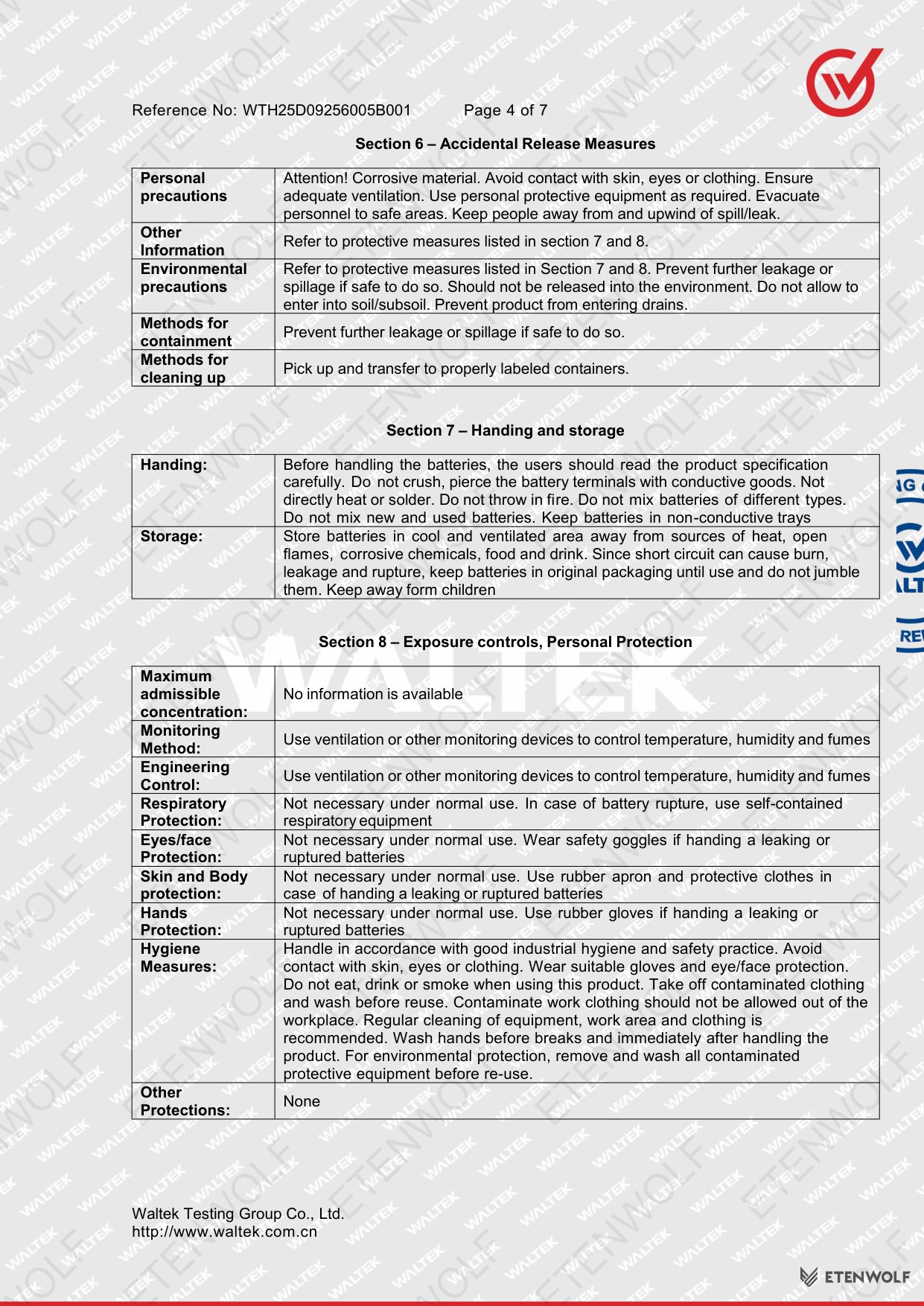
- Read the product specification carefully before handling.
- Do not crush, pierce, or short-circuit battery terminals.
- Do not directly heat, solder, or throw into fire.
- Do not mix batteries of different types or mix new and used batteries.
- Store in a cool, well-ventilated area away from heat sources, open flames, and corrosive chemicals.
- Keep batteries in original packaging until use. Keep away from children.
Fire Fighting Measures (Section 5)
- Flammability: Non-flammable under normal conditions. Combustible electrolyte fumes may leak upon overheating.
- Combustion Products: Irritant gas may be emitted if burned or exposed to fire.
- Extinguishing Agents: Carbon dioxide, dry chemical, foam.
- Protective Equipment: Full-face filter mask or isolated breathing apparatus; fire-resistant clothing and gloves required.
Standards & Compliance
The HB1 battery pack MSDS is prepared in compliance with international transport and chemical safety regulations. The applicable frameworks are listed below.
| Standard / Regulation | Scope |
|---|---|
| UN38.3 | United Nations Manual of Tests and Criteria, Part III, Section 38.3 — transport testing requirements for lithium batteries |
| GHS / Globally Harmonized System | Chemical hazard classification and communication used as the basis for MSDS structure and hazard labeling |
| CAS Registry | Chemical Abstract Service numbers assigned to all identified chemical constituents for traceability |
The battery is classified as not dangerous under normal use. All chemical constituents are identified with verified CAS numbers. The document confirms that, during normal operating conditions, there is no physical risk of ignition, explosion, or leakage of hazardous materials due to the sealed metal or metal-laminated plastic housing designed to withstand expected temperatures and pressures.
Validity & Certification Body
The MSDS was issued by Waltek Testing Group Co., Ltd., an accredited third-party testing and certification laboratory based in China. Full issuing authority details are provided below.
| Field | Details |
|---|---|
| Reference Number | WTH25D09256005B001 |
| Date of Issue | 2025-10-22 |
| Issuing Laboratory | Waltek Testing Group Co., Ltd. |
| Laboratory Address | No. 77, Houjie Section, Guantai Road, Houjie Town, Dongguan City, Guangdong, China |
| Telephone | +86-769-2267 6998 |
| Fax | +86-769-2267 6828 |
| Laboratory Website | http://www.waltek.com.cn |
| Document Pages | 7 pages total |
No explicit expiry date is stated in the extracted document. MSDS documents are typically reviewed and updated when the formulation changes or relevant regulations are revised. Users should confirm the current version with Waltek or the product manufacturer before relying on this document for regulatory submissions.
Frequently Asked Questions
- What does UN38.3 mean for the HB1 battery pack?
-
UN38.3 is the United Nations standard governing the transport testing of lithium batteries. Passing UN38.3 means the HB1 battery has successfully completed altitude simulation, thermal, vibration, shock, external short circuit, impact, overcharge, and forced discharge tests, confirming it is safe for air, sea, and ground transport.
- What chemicals are inside the HB1 lithium-ion battery?
-
The HB1 battery (model 1S1P-1100) contains nickel cobalt manganese lithium oxide (41%), graphite (22%), lithium hexafluorophosphate electrolyte (16%), copper (11%), aluminium (5%), and minor amounts of polyethylene separator, PVDF binder, CMC-Na binder, SBR binder, and carbon black. All CAS numbers are documented in MSDS reference WTH25D09256005B001.
- Is the HB1 battery dangerous to handle?
-
Under normal use the HB1 battery is not classified as dangerous. Hazards only arise if the battery is ruptured, short-circuited, crushed, overheated, or improperly disposed of. In those cases, electrolyte leakage can cause skin irritation, eye inflammation, and respiratory irritation. Always follow the handling and storage guidelines in Section 7 of the MSDS.
- What should I do if the HB1 battery leaks or ruptures?
-
Evacuate personnel from the affected area. Avoid skin and eye contact with any leaking electrolyte. Use rubber gloves, safety goggles, and appropriate respiratory protection. Collect the battery in a properly labeled container and prevent the electrolyte from entering drains or soil. Seek medical aid if any person is exposed to the electrolyte. Refer to Sections 6 and 8 of MSDS reference WTH25D09256005B001 for full accidental release procedures.
Related Documents
For a complete compliance and safety documentation package for the HB1 product, the following related certification and report types are recommended:
- UN38.3 Test Report — Detailed test results for altitude simulation, thermal abuse, vibration, mechanical shock, short circuit, impact, overcharge, and forced discharge tests conducted on the 1S1P-1100 cell.
- IEC 62133 Safety Certificate — Safety requirements for portable sealed secondary lithium cells and batteries for use in portable applications.
- RoHS Compliance Report — Confirmation that the battery pack does not contain restricted hazardous substances above permitted thresholds.
- REACH Declaration of Conformity — Verification that no substances of very high concern (SVHC) are present above the 0.1% threshold in any component.
- CE Declaration of Conformity — Required for sale in the European Economic Area, covering the Low Voltage Directive and applicable harmonized standards.
- Transportation Classification Report — Formal IATA/IMDG dangerous goods classification document citing the UN38.3 MSDS reference WTH25D09256005B001.
Document Pages