Document Overview
Document Overview This page presents the official UN38.3 Transport Test Report for the Helios J1 portable automotive jump starter, issued by Waltek Testing Group Co., Ltd. (深圳沃特检验集团股份有限公司). The report covers lithium battery transport safety qualification under the United Nations Recommendations on the Transport of Dangerous…
- Document type
- Certification Report
- Prepared by
- Michelle Torres
- Published
- Last reviewed
- Topics
- International Transportation: CB / MSDS / UN38.3
Document Overview
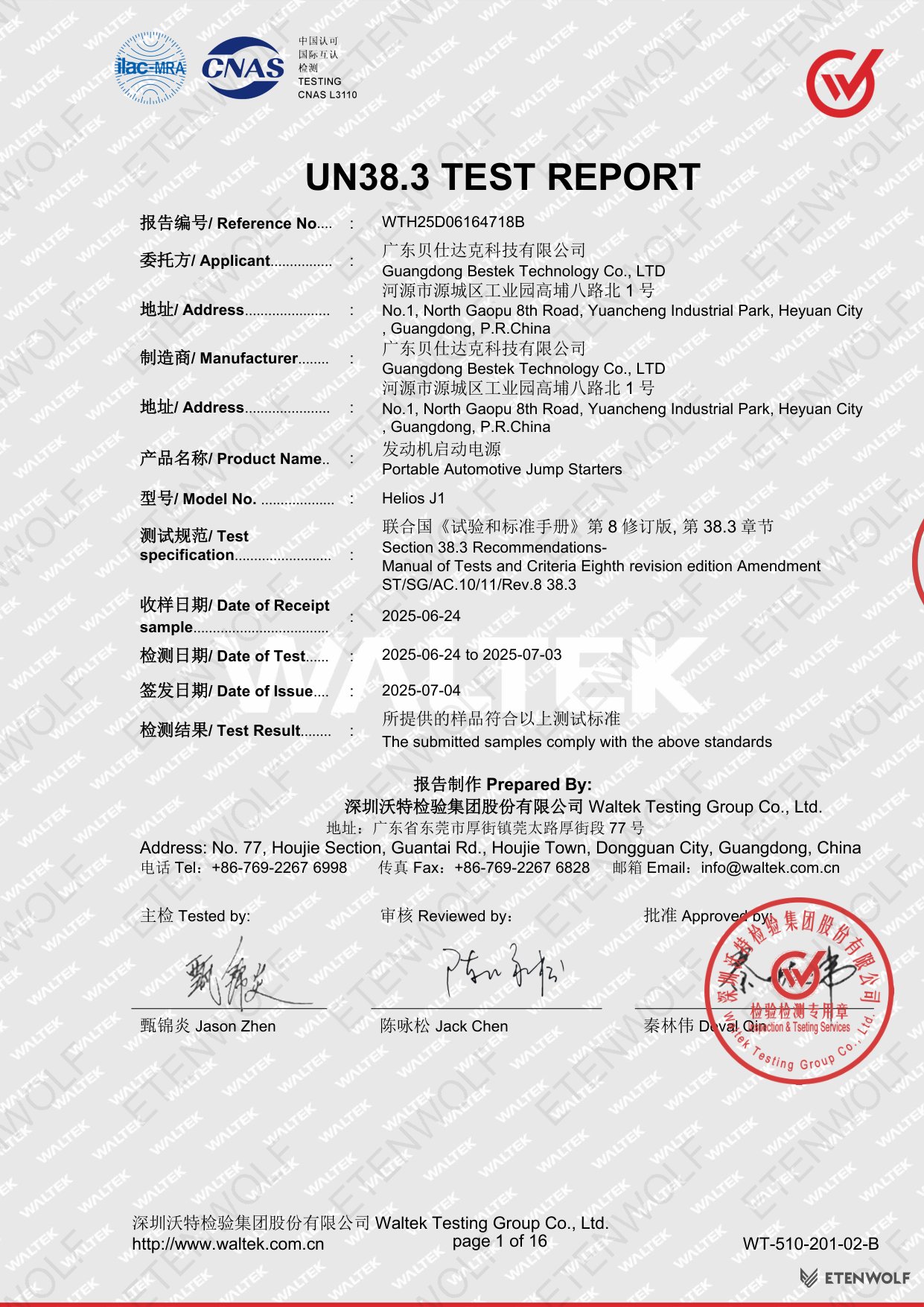
This page presents the official UN38.3 Transport Test Report for the Helios J1 portable automotive jump starter, issued by Waltek Testing Group Co., Ltd. (深圳沃特检验集团股份有限公司). The report covers lithium battery transport safety qualification under the United Nations Recommendations on the Transport of Dangerous Goods — Manual of Tests and Criteria, Eighth Revision (ST/SG/AC.10/11/Rev.8, Section 38.3).
| Field | Detail |
|---|---|
| Report Number | WTH25D06164718B |
| Document Type | UN38.3 Transport Test Report |
| Issuing Laboratory | Waltek Testing Group Co., Ltd. |
| Date of Issue | 2025-07-04 |
| Date of Receipt | 2025-06-24 |
| Test Period | 2025-06-24 to 2025-07-03 |
| Test Standard | ST/SG/AC.10/11/Rev.8 Section 38.3 |
| Overall Result | PASS — Samples comply with the above standards |
Product Information
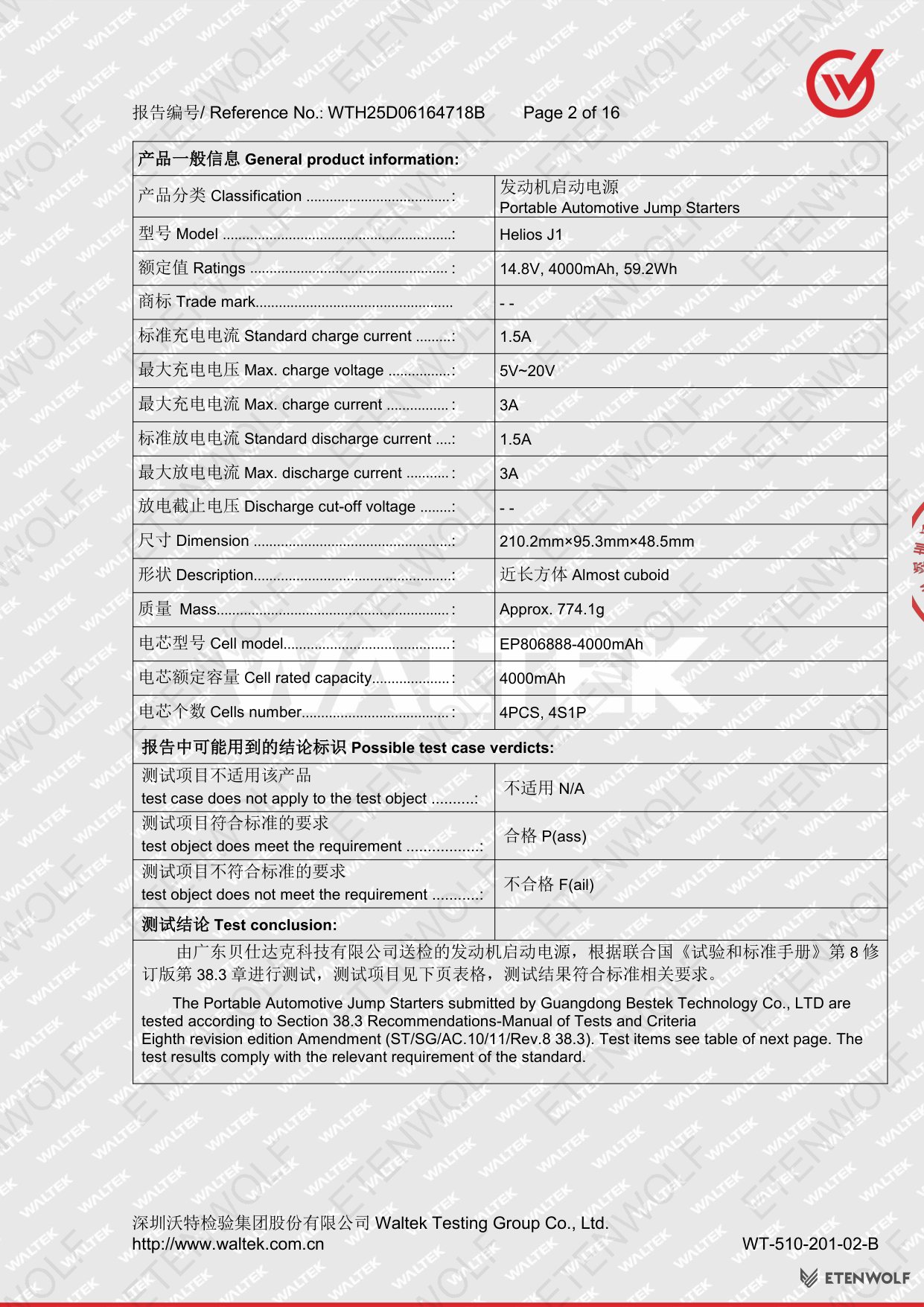
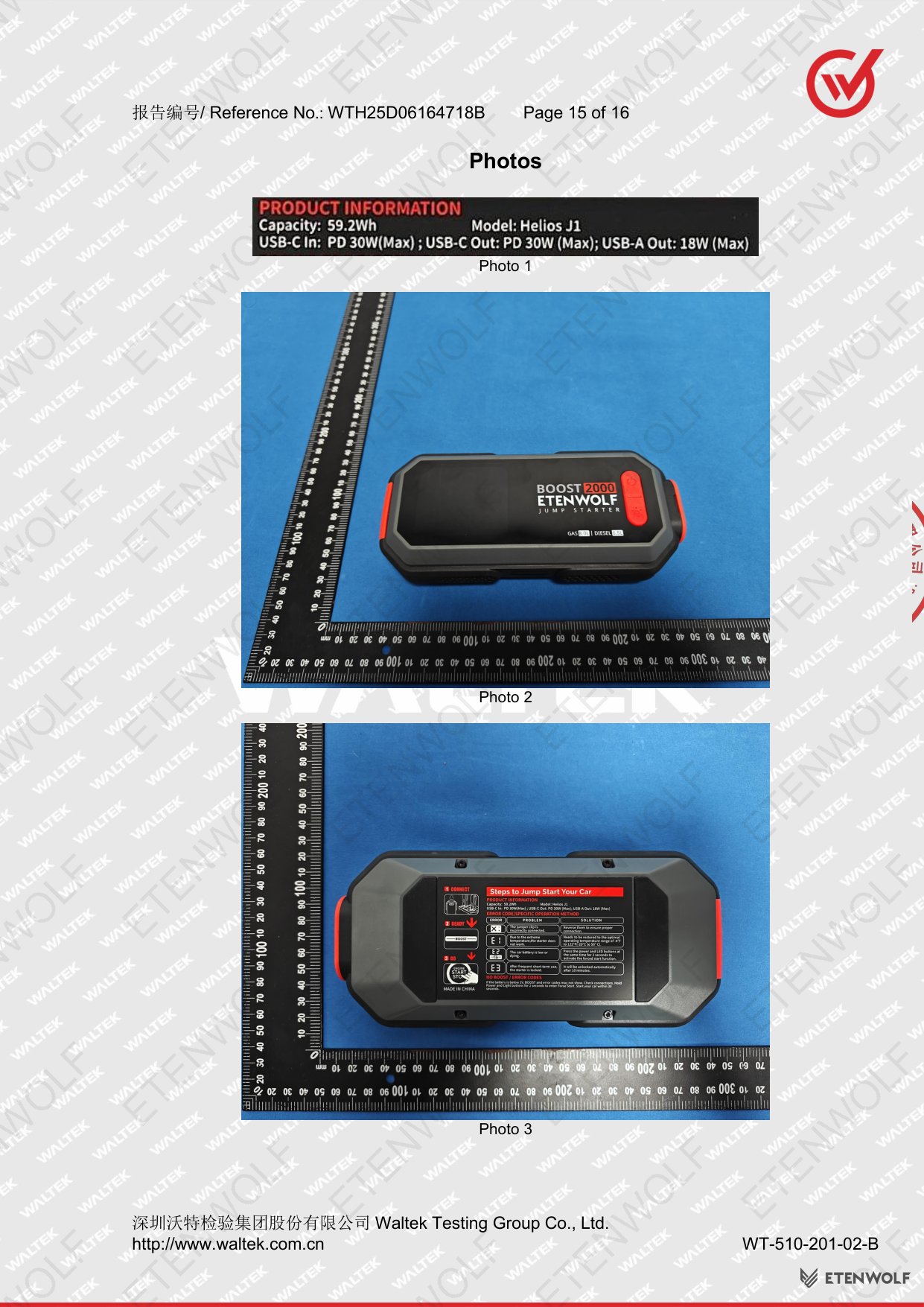
The tested product is the Helios J1, a portable automotive jump starter manufactured and submitted by Guangdong Bestek Technology Co., Ltd. The unit integrates a 4-cell lithium-ion pack and is designed for emergency vehicle starting and USB power delivery.
| Parameter | Value |
|---|---|
| Product Name | Portable Automotive Jump Starters |
| Model Number | Helios J1 |
| Rated Voltage | 14.8 V |
| Rated Capacity | 4000 mAh |
| Energy | 59.2 Wh |
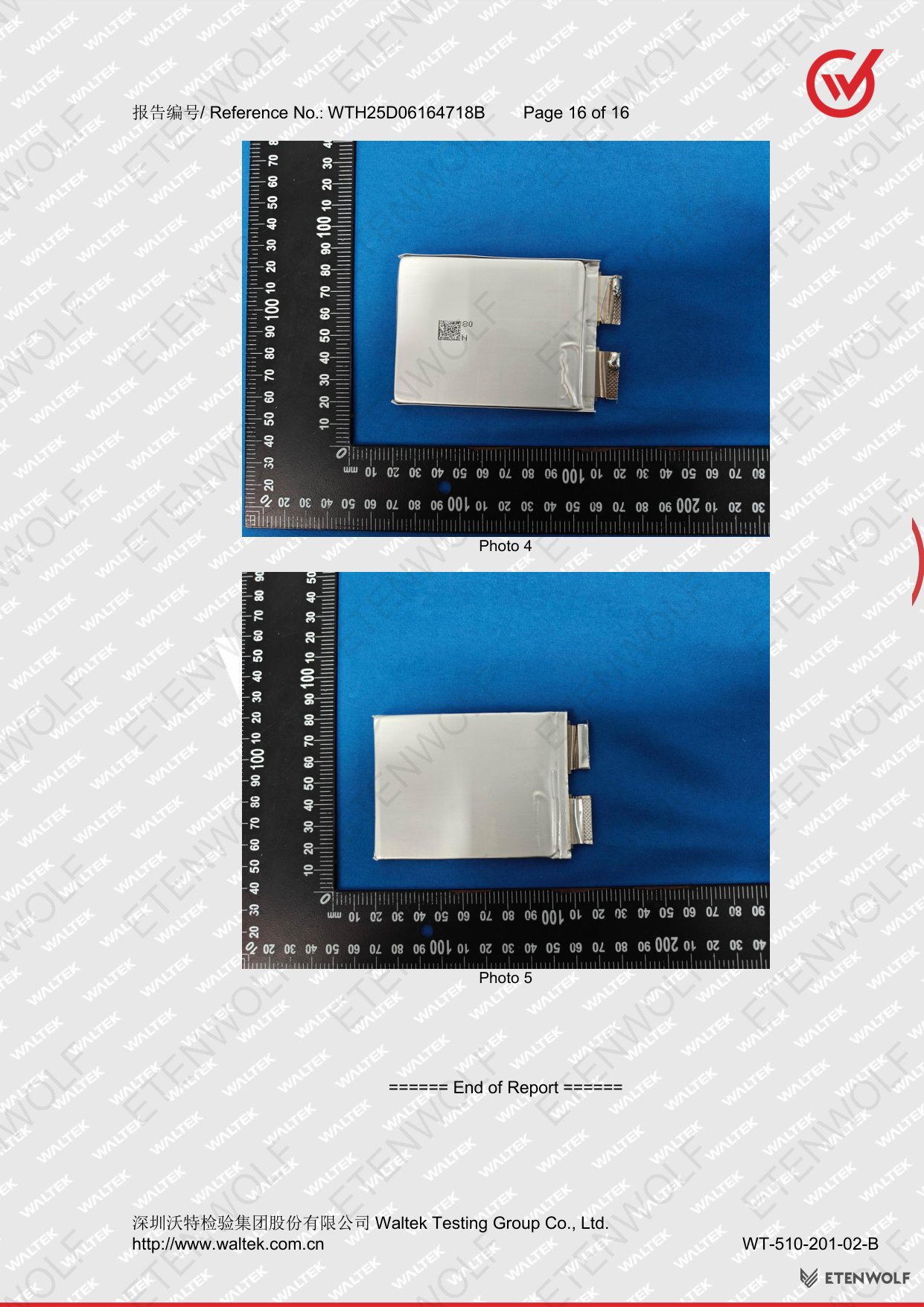
| Cell Model | EP806888-4000mAh |
| Cell Configuration | 4 cells, 4S1P |
| Standard Charge Current | 1.5 A |
| Max. Charge Voltage | 5 V – 20 V |
| Max. Charge Current | 3 A |
| Standard Discharge Current | 1.5 A |
| Max. Discharge Current | 3 A |
| Dimensions | 210.2 mm × 95.3 mm × 48.5 mm |
| Shape | Almost cuboid |
| Mass | Approx. 774.1 g |
| Applicant / Manufacturer | Guangdong Bestek Technology Co., Ltd., No. 1, North Gaopu 8th Road, Yuancheng Industrial Park, Heyuan City, Guangdong, China |
Key Details
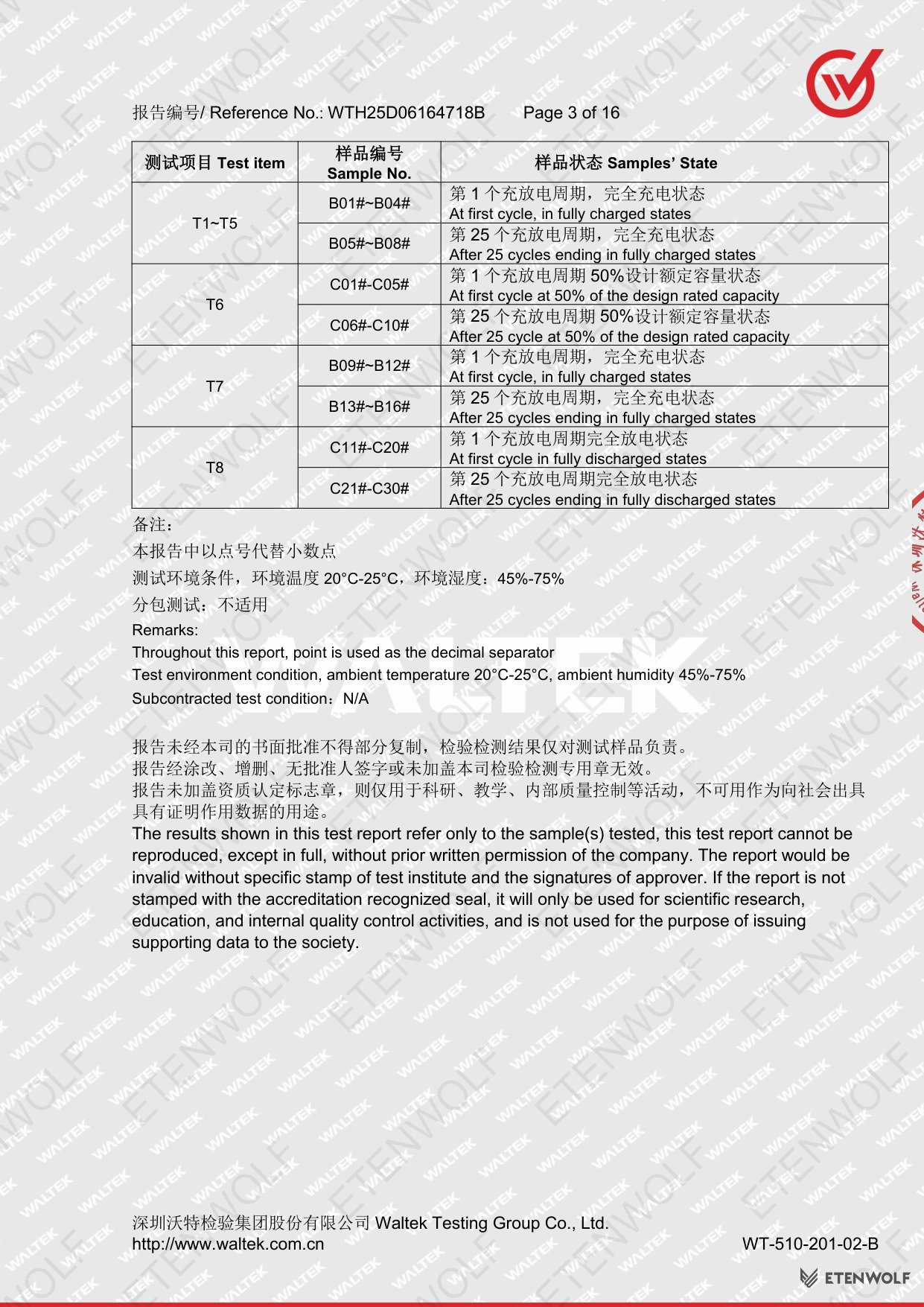
The Helios J1 was subjected to the full sequential UN38.3 test battery as required for lithium cells and batteries exceeding 20 Wh. Tests T.1 through T.5 were conducted in sequence on the same cells; T.6 and T.8 used previously untested cells; T.7 used undamaged cells from the T.1–T.5 sequence. All tests were performed in a controlled environment of 20 °C–25 °C ambient temperature and 45 %–75 % relative humidity.
Sample Allocation
| Test | Sample IDs | State |
|---|---|---|
| T1–T5 | B01#–B04# | 1st charge/discharge cycle, fully charged |
| T1–T5 | B05#–B08# | After 25 cycles, fully charged |
| T6 | C01#–C05# | 1st cycle, 50% of design rated capacity |
| T6 | C06#–C10# | After 25 cycles, 50% of design rated capacity |
| T7 | B09#–B12# | 1st cycle, fully charged |
| T7 | B13#–B16# | After 25 cycles, fully charged |
| T8 | C11#–C20# | 1st cycle, fully discharged |
| T8 | C21#–C30# | After 25 cycles, fully discharged |
Test Results Summary
| Test | Description | Key Conditions | Verdict |
|---|---|---|---|
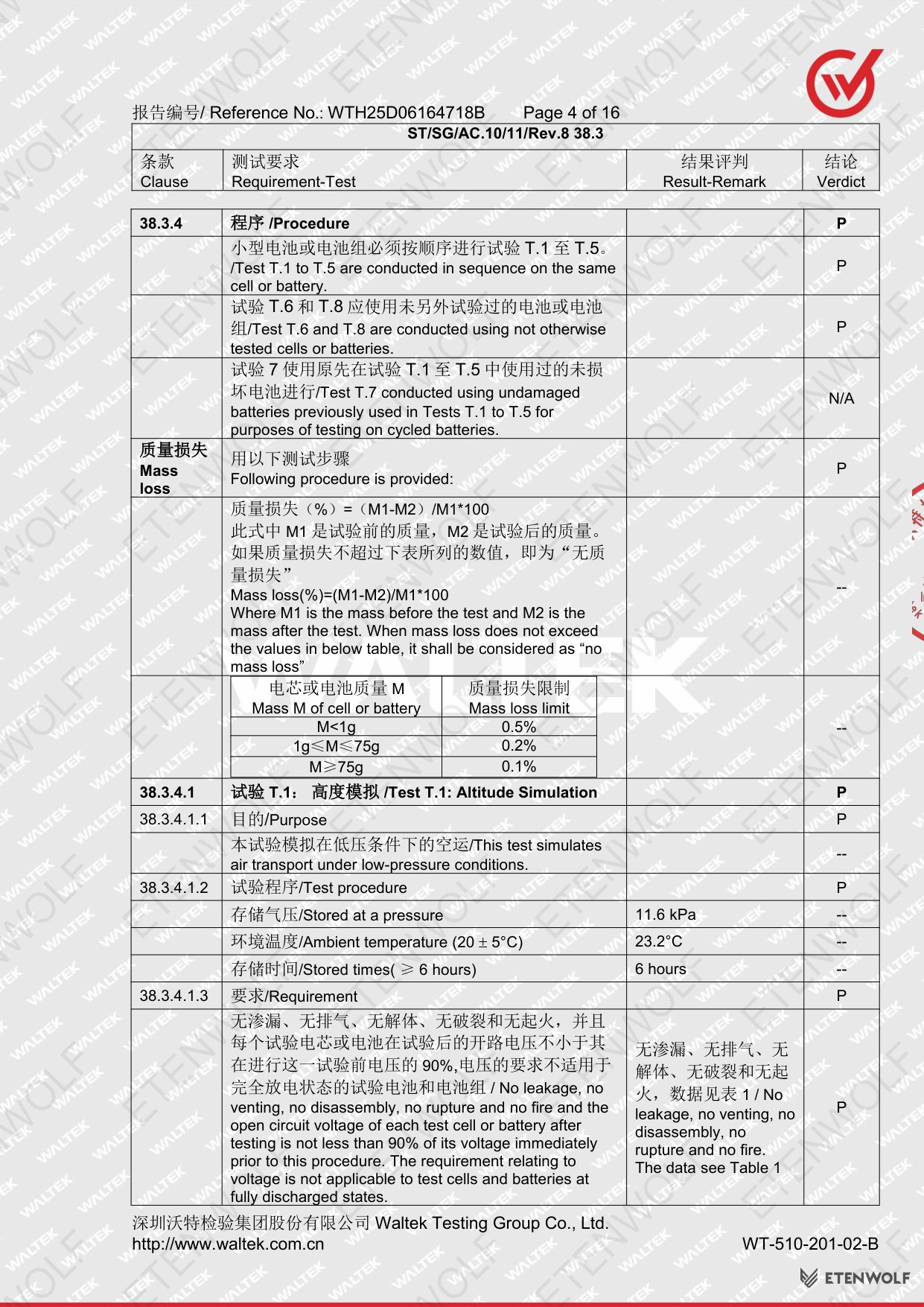
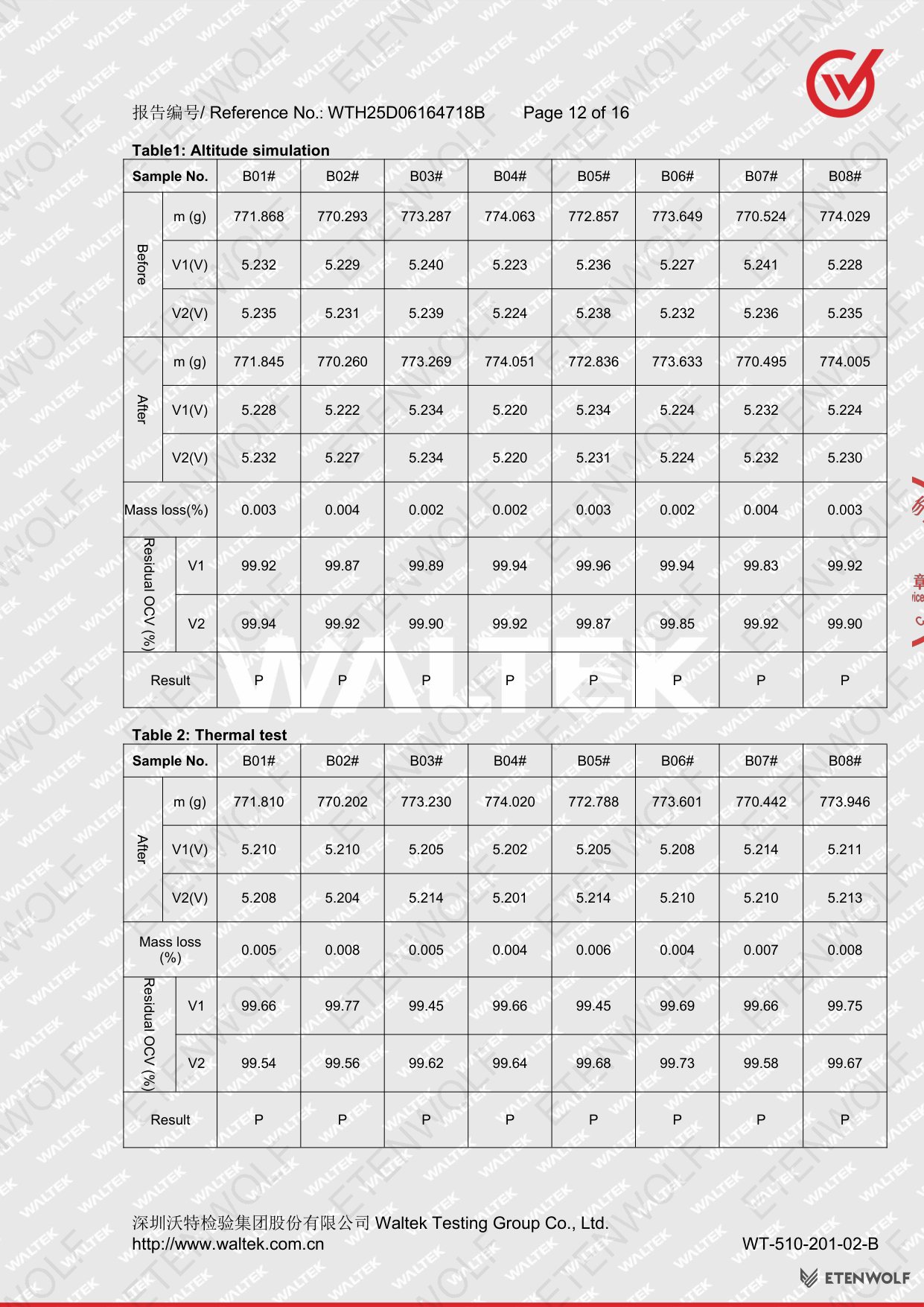
| T.1 | Altitude Simulation | 11.6 kPa, 23.2 °C, 6 hours | PASS |
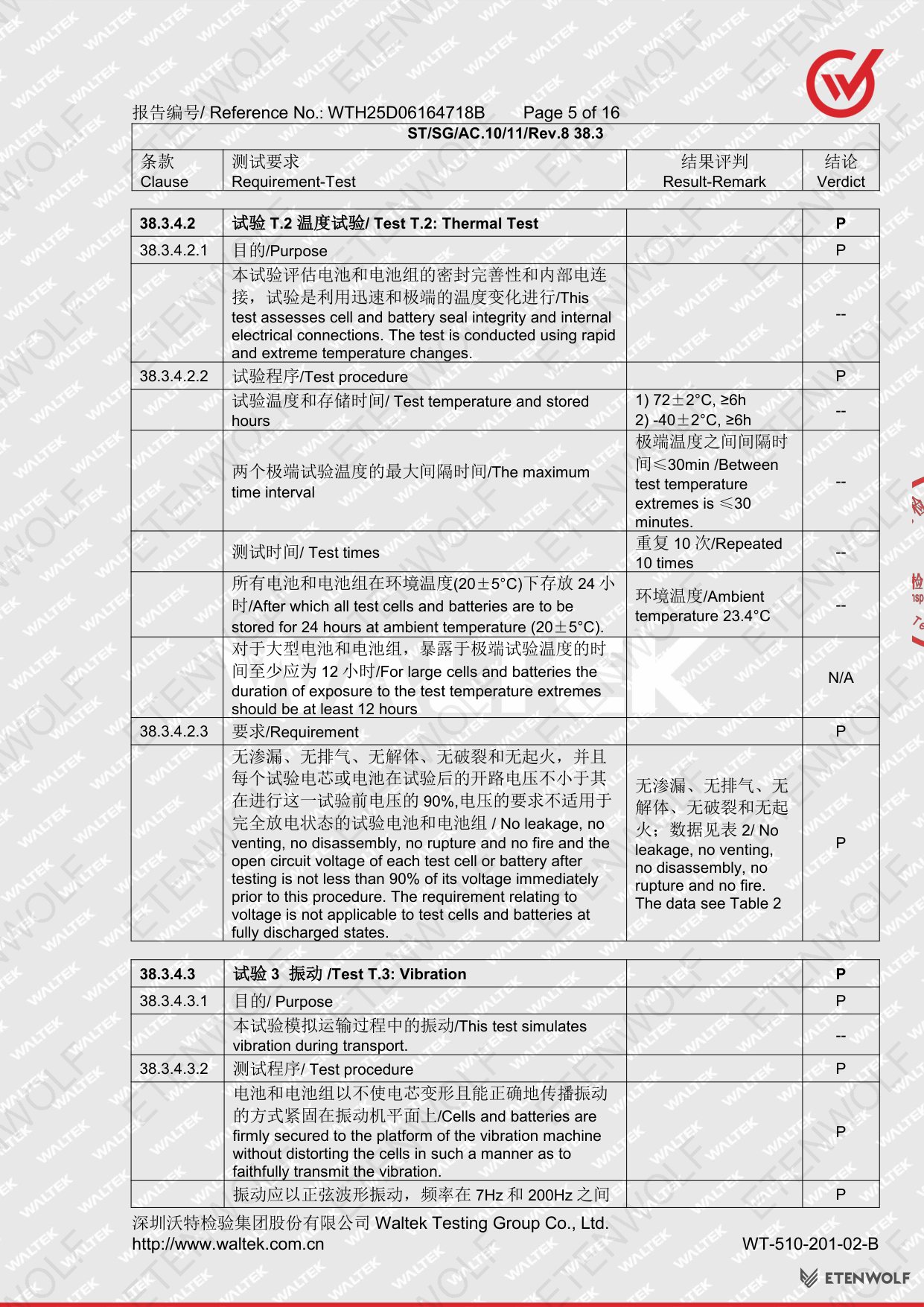
| T.2 | Thermal Test | 72 ± 2 °C / −40 ± 2 °C, ≥6 h each extreme, 10 cycles, max 30 min between extremes | PASS |
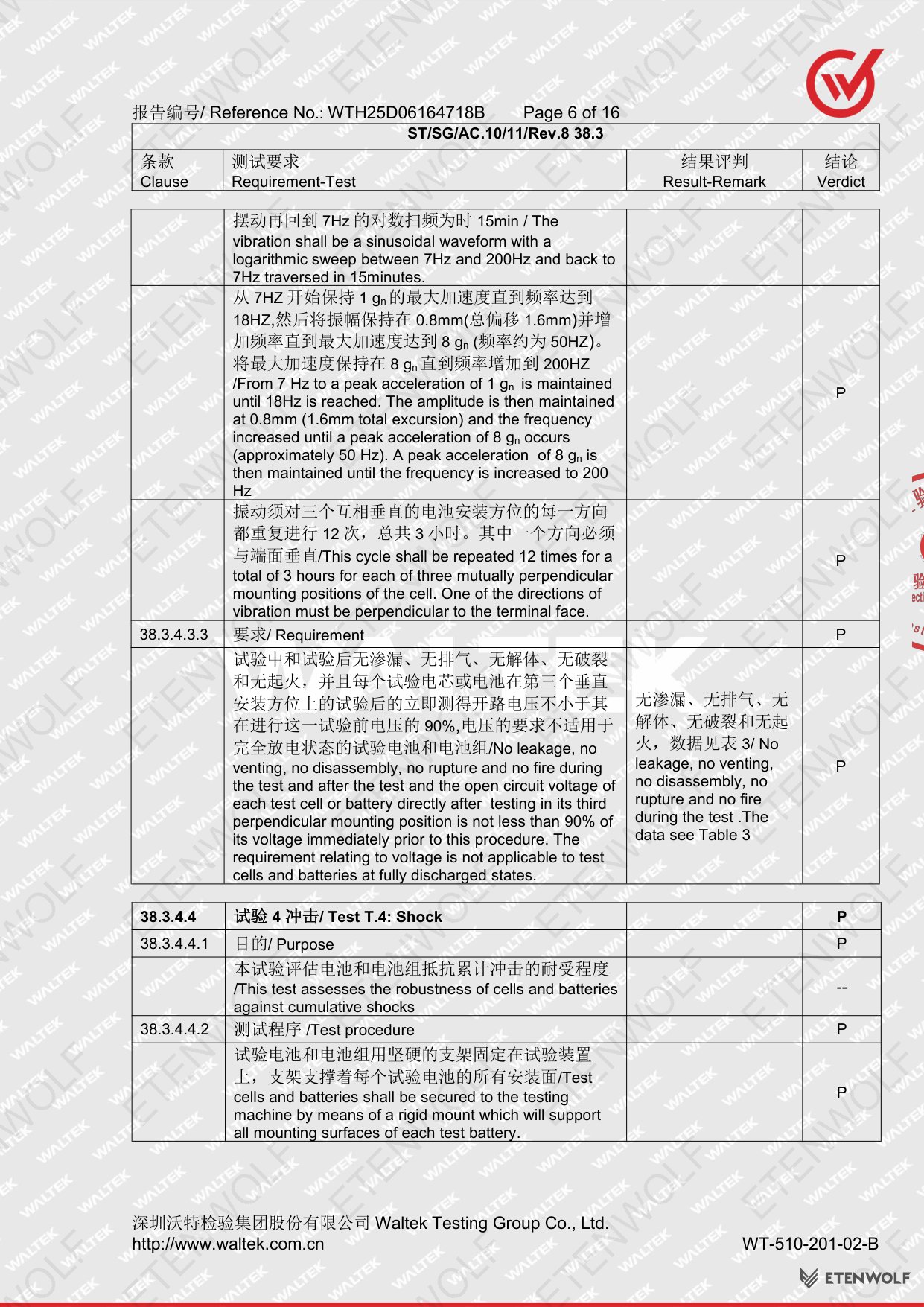
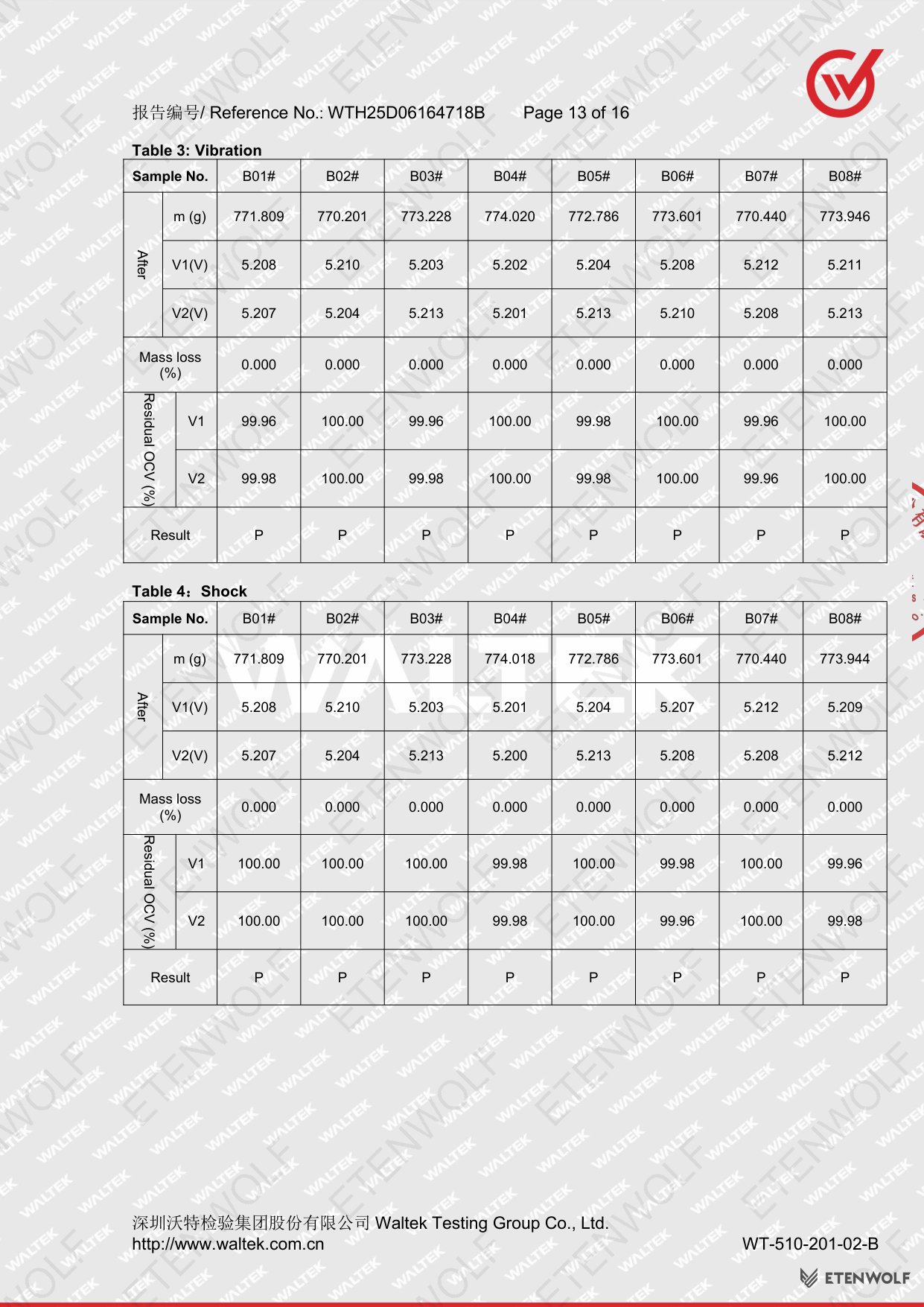
| T.3 | Vibration | Per ST/SG/AC.10/11/Rev.8 38.3.4.3 | PASS |
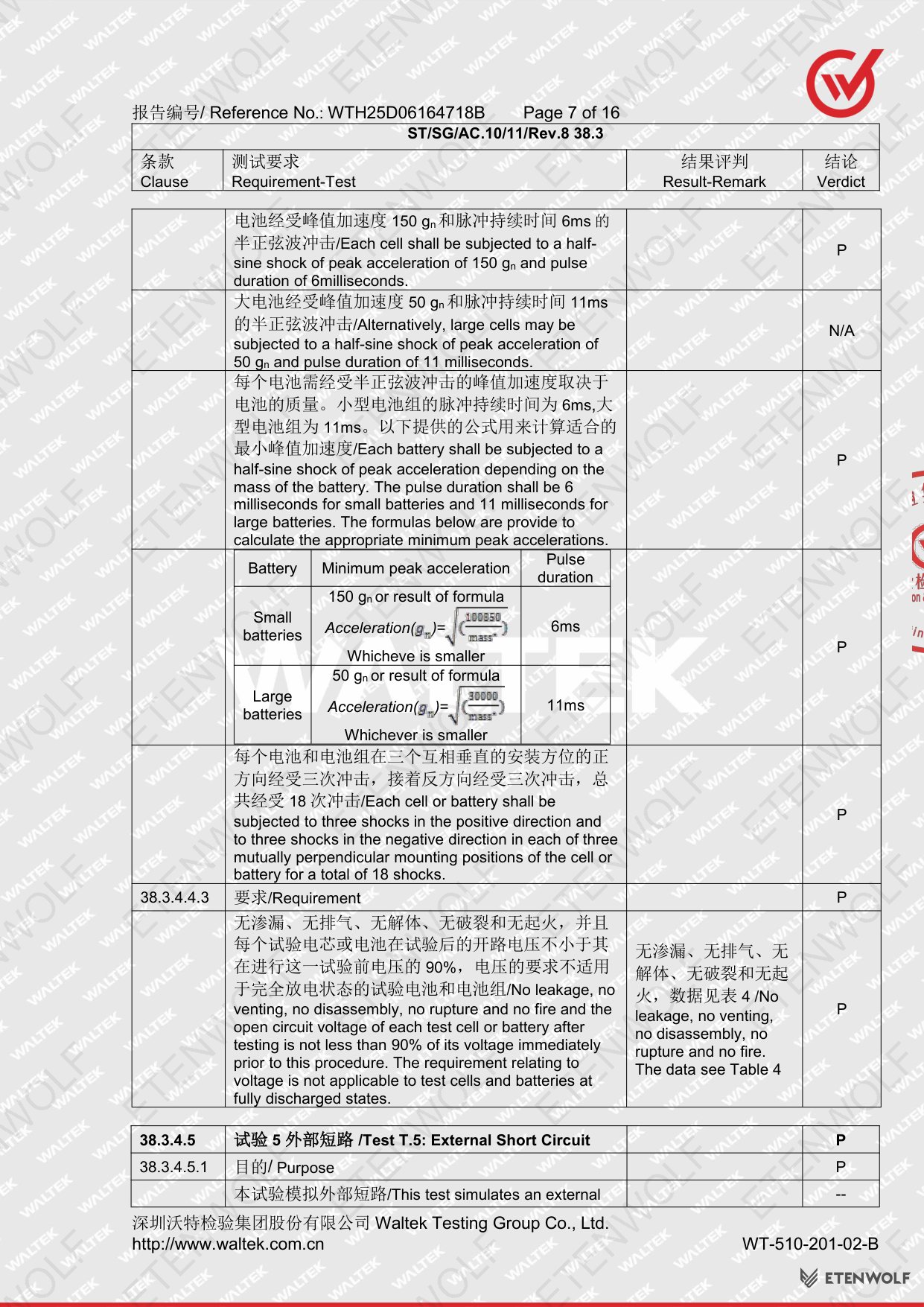
| T.4 | Shock | Per ST/SG/AC.10/11/Rev.8 38.3.4.4 | PASS |
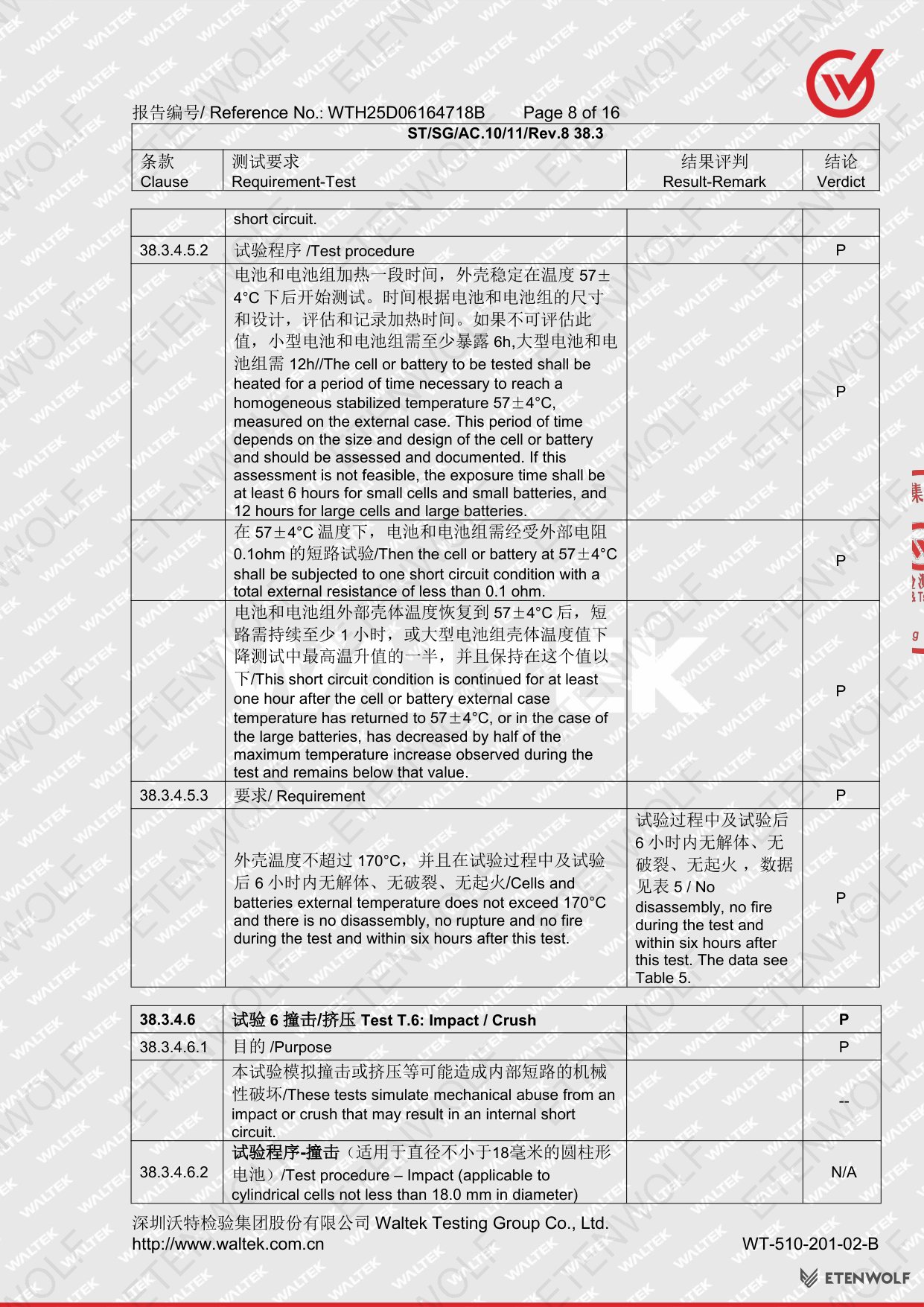
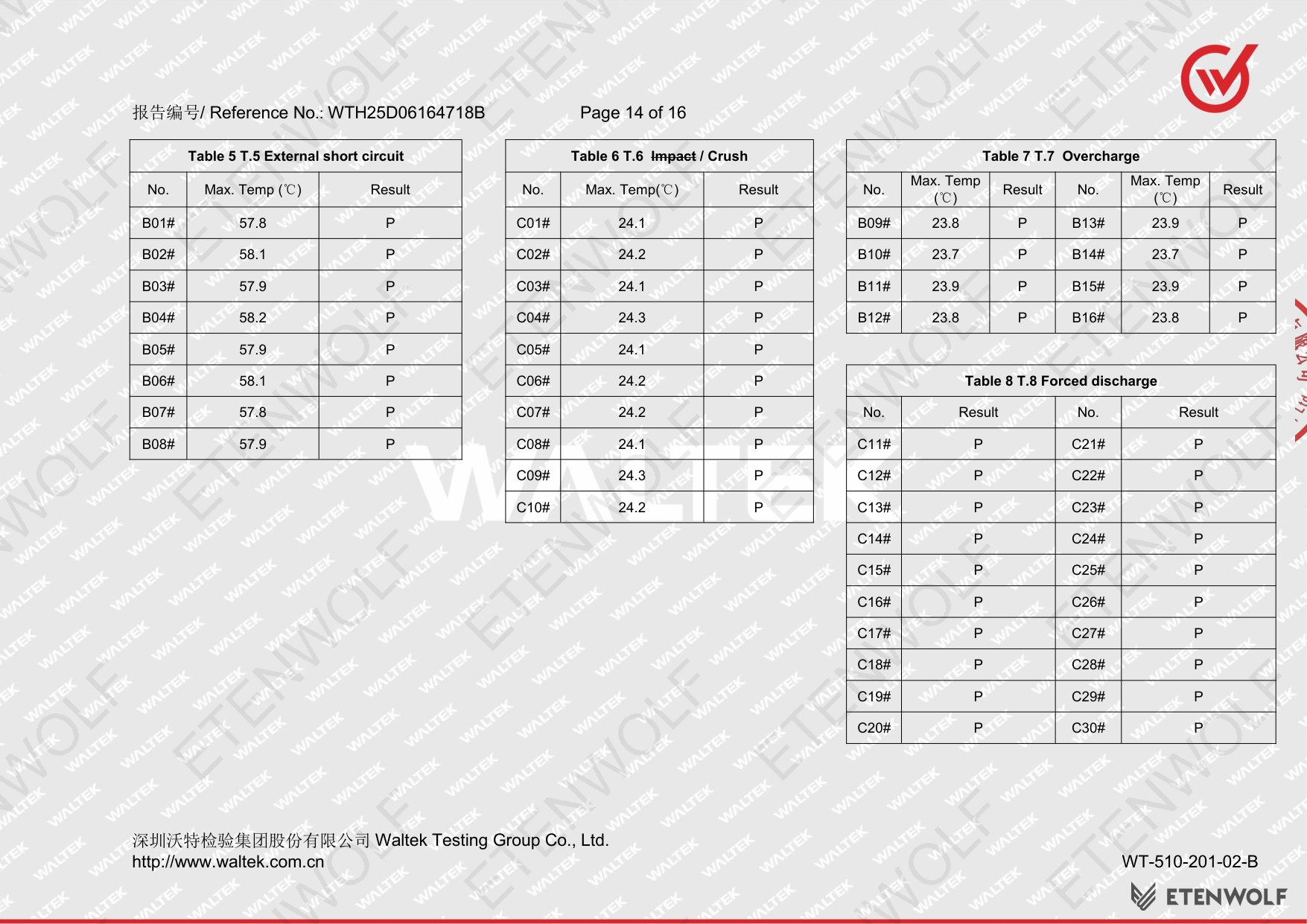
| T.5 | External Short Circuit | Per ST/SG/AC.10/11/Rev.8 38.3.4.5 | PASS |
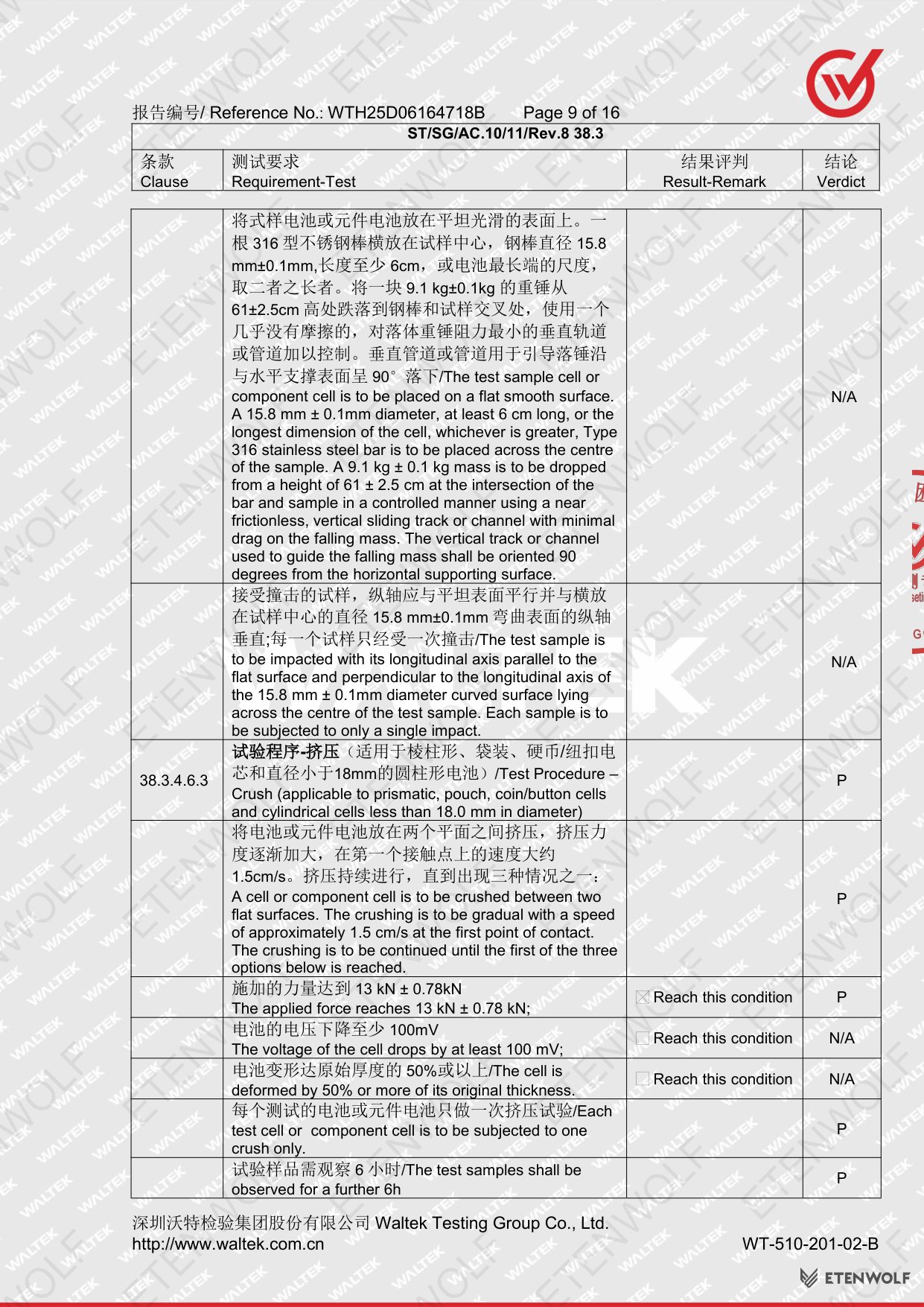
| T.6 | Impact / Crush | Per ST/SG/AC.10/11/Rev.8 38.3.4.6 | PASS |
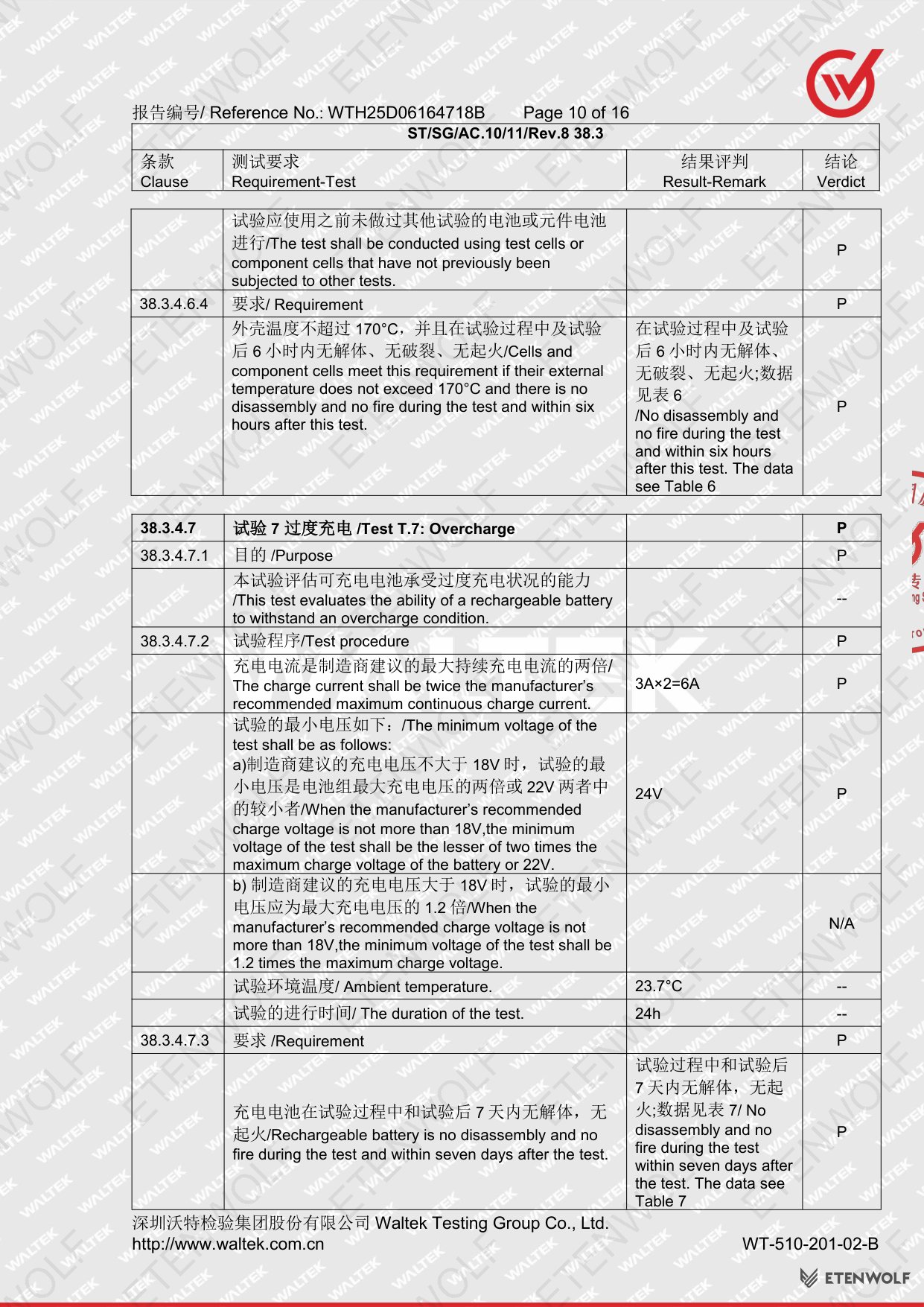
| T.7 | Overcharge | Per ST/SG/AC.10/11/Rev.8 38.3.4.7 | N/A (not applicable per procedure) |
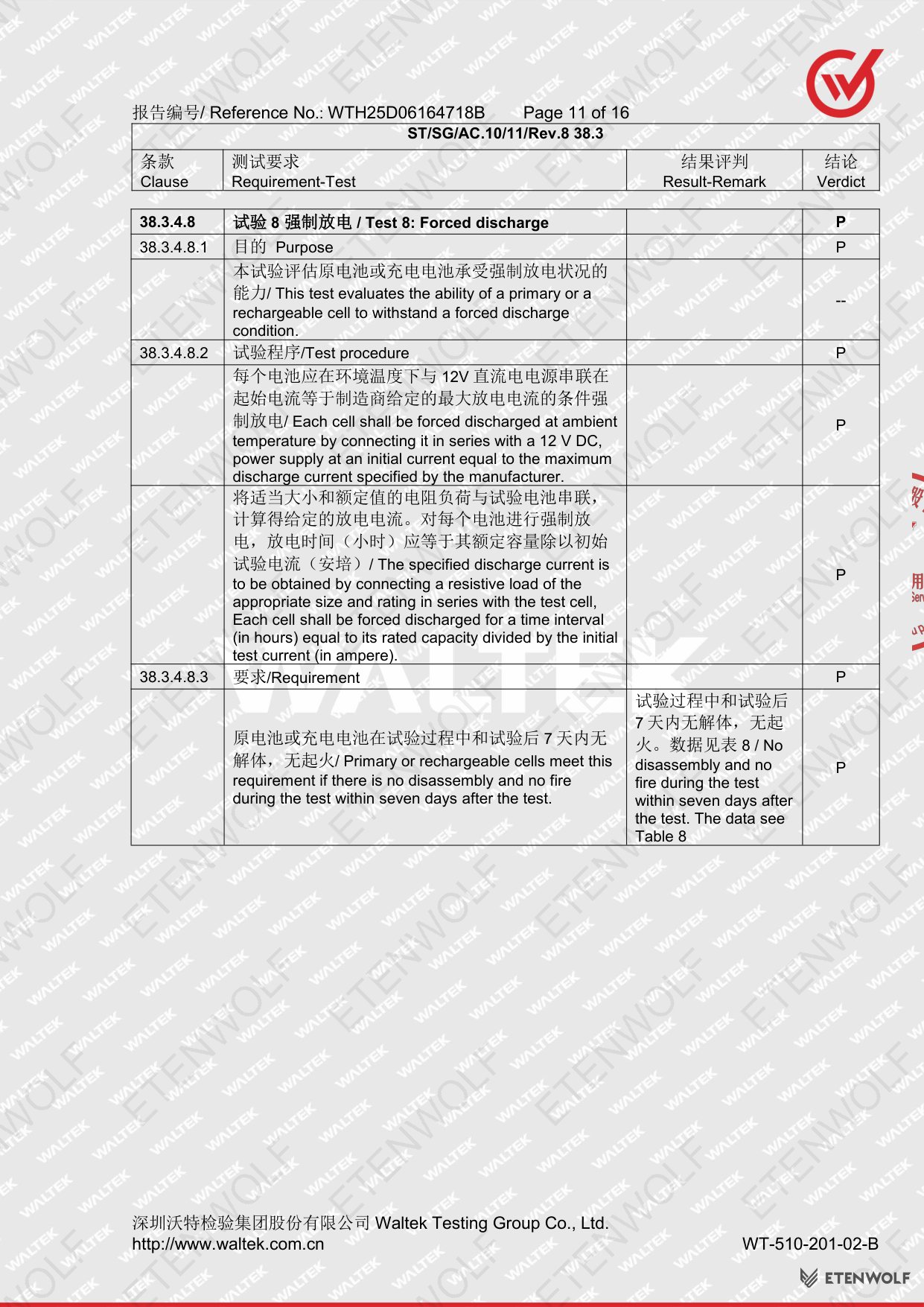
| T.8 | Forced Discharge | Per ST/SG/AC.10/11/Rev.8 38.3.4.8 | PASS |
Mass loss acceptance criterion: for batteries with mass ≥ 75 g, the limit is 0.1%. The Helios J1 at approx. 774.1 g falls in this bracket. All samples remained within the permissible mass loss threshold after each applicable test.
For T.1, post-test open-circuit voltage of each battery was confirmed to be no less than 90% of the pre-test voltage (requirement waived for fully discharged samples per the standard).
Standards & Compliance
The Helios J1 was evaluated exclusively against the transport safety requirements for lithium batteries listed below. All applicable clauses returned a PASS verdict.
| Standard / Regulation | Scope | Result |
|---|---|---|
| UN ST/SG/AC.10/11/Rev.8 Section 38.3 | Transport of lithium cells and batteries — altitude simulation, thermal, vibration, shock, external short circuit, impact/crush, overcharge, forced discharge | PASS |
The UN38.3 standard is mandated by the International Air Transport Association (IATA) Dangerous Goods Regulations and the International Civil Aviation Organization (ICAO) Technical Instructions for lithium batteries shipped by air, sea, or land. Compliance confirms the Helios J1 battery pack does not pose unacceptable leakage, venting, disassembly, rupture, or fire risk under simulated transport conditions.
Test environment was maintained at 20 °C–25 °C ambient temperature and 45 %–75 % relative humidity throughout. No subcontracted testing was performed.
Validity & Certification Body
The report was prepared by Waltek Testing Group Co., Ltd. (深圳沃特检验集团股份有限公司), an accredited third-party testing laboratory headquartered in Dongguan, Guangdong, China.
| Field | Detail |
|---|---|
| Report Number | WTH25D06164718B |
| Date of Issue | 2025-07-04 |
| Laboratory | Waltek Testing Group Co., Ltd. |
| Lab Address | No. 77, Houjie Section, Guantai Rd., Houjie Town, Dongguan City, Guangdong, China |
| Tel | +86-769-2267 6998 |
| Fax | +86-769-2267 6828 |
| [email protected] | |
| Lab Website | http://www.waltek.com.cn |
| Tested By | Jason Zhen (甄锦炎) |
| Reviewed By | Jack Chen (陈咏松) |
| Approved By | Deval Qin (秦林伟) |
| Internal Form | WT-510-201-02-B |
This report is valid solely for the specific samples tested and may not be partially reproduced without prior written permission from Waltek Testing Group. The report is invalid if altered, incomplete, unsigned by the approver, or lacking the official laboratory stamp. If the accreditation recognition seal is absent, the report is restricted to scientific research, education, and internal quality control activities only.
Frequently Asked Questions
- What is UN38.3 and why does the Helios J1 need it?
- UN38.3 is the transport safety test standard for lithium cells and batteries defined in the United Nations Manual of Tests and Criteria (ST/SG/AC.10/11/Rev.8, Section 38.3). It is required by IATA, ICAO, and most international freight carriers before lithium battery products can be shipped by air or sea. The Helios J1, containing a 59.2 Wh lithium-ion pack, must pass UN38.3 to be legally transported as cargo worldwide.
- Which specific tests did the Helios J1 undergo?
- The Helios J1 completed altitude simulation (T.1), thermal cycling (T.2), vibration (T.3), mechanical shock (T.4), external short circuit (T.5), impact/crush (T.6), and forced discharge (T.8). Tests were performed across both first-cycle fully-charged and 25-cycle fully-charged or fully-discharged sample sets. All applicable tests returned a PASS result.
- Who conducted the UN38.3 testing for the Helios J1?
- Testing was performed by Waltek Testing Group Co., Ltd., an independent accredited laboratory located at No. 77, Houjie Section, Guantai Rd., Houjie Town, Dongguan City, Guangdong, China. The report reference number is WTH25D06164718B, issued on 2025-07-04.
- Does UN38.3 certification cover the safety of the Helios J1 during everyday use?
- UN38.3 specifically addresses transport safety — it validates that the battery pack will not leak, vent, rupture, or catch fire under the conditions experienced during air, sea, or road freight. For operational safety during everyday use, the Helios J1 is also subject to additional certifications such as CE, FCC, and RoHS compliance testing, which address electrical safety and electromagnetic compatibility in normal operating conditions.
Related Documents
The following certification and compliance documents are relevant to the Helios J1 portable automotive jump starter and complement this UN38.3 transport test report:
- CE Declaration of Conformity — Required for sale in the European Economic Area; covers Low Voltage Directive (LVD) and Electromagnetic Compatibility (EMC) under IEC standards.
- FCC ID Certification — Required for the United States market; confirms the device does not cause harmful radio frequency interference.
- KC Certification — Required for the South Korean market under the Radio Waves Act and Electrical Appliances Safety Control Act.
- RoHS Compliance Report — Confirms restriction of hazardous substances (lead, mercury, cadmium, etc.) in accordance with EU Directive 2011/65/EU; see RoHS Directive.
- REACH SVHC Declaration — Confirms compliance with EU REACH Regulation (EC) No 1907/2006 regarding Substances of Very High Concern; see REACH Regulation.
- IEC 62133 Battery Safety Test Report — Covers secondary lithium cells and batteries for portable applications, complementing the transport-focused UN38.3 report.
- MSDS / SDS (Material Safety Data Sheet) — Required by most freight forwarders alongside the UN38.3 report for lithium battery shipment documentation.
Document Pages