Document Overview
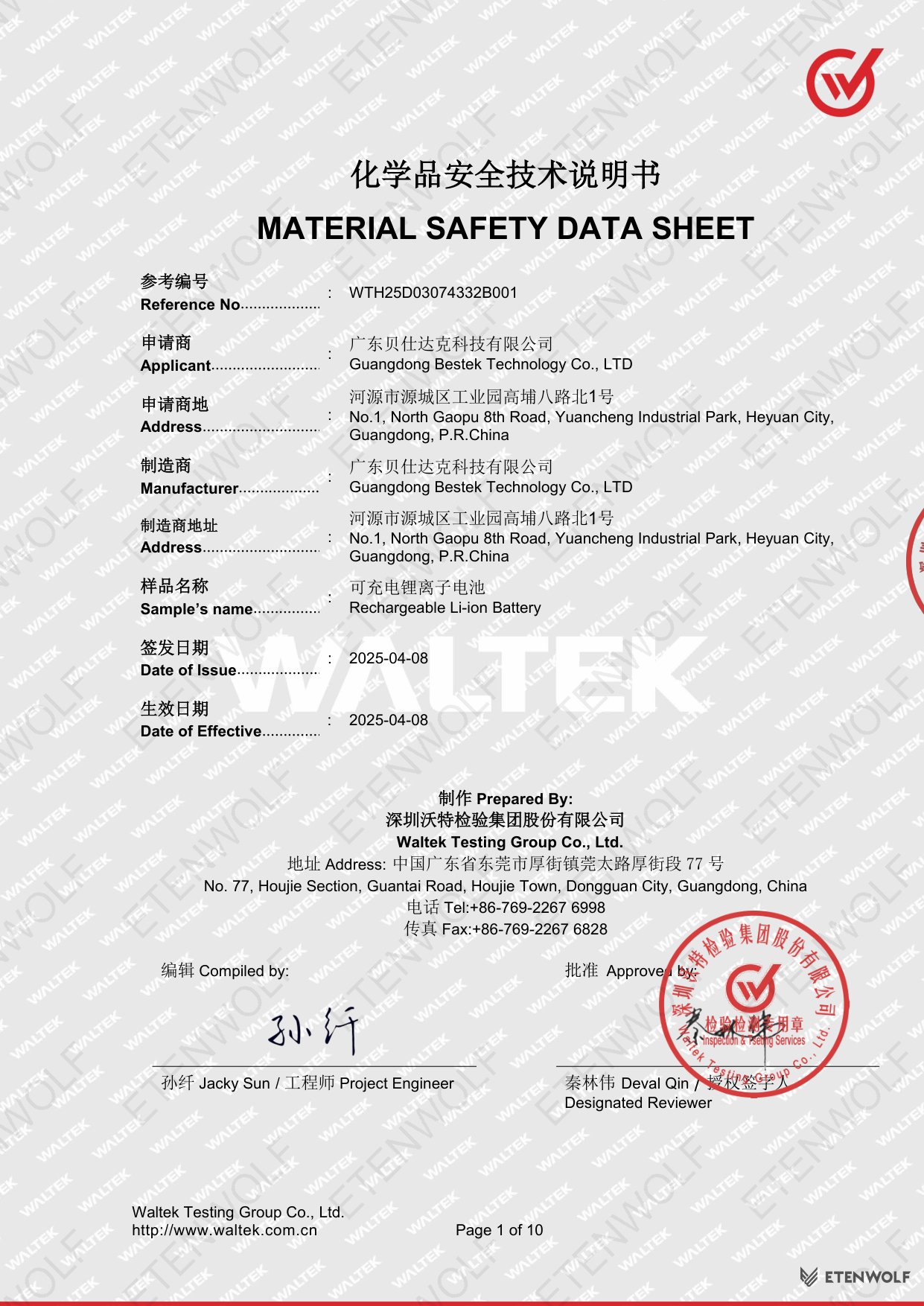
Document Overview This page presents the Material Safety Data Sheet (MSDS) issued for the rechargeable lithium-ion battery pack contained in the ETENWOLF Vortex S7 tire inflator. The document is a chemical safety technical data sheet prepared and issued by Waltek Testing Group Co., Ltd. (深圳沃特检验集团股份有限公司),…
- Document type
- Certification Report
- Prepared by
- Michelle Torres
- Published
- Last reviewed
- Topics
- International Transportation: CB / MSDS / UN38.3
Document Overview
This page presents the Material Safety Data Sheet (MSDS) issued for the rechargeable lithium-ion battery pack contained in the ETENWOLF Vortex S7 tire inflator. The document is a chemical safety technical data sheet prepared and issued by Waltek Testing Group Co., Ltd. (深圳沃特检验集团股份有限公司), an accredited third-party testing laboratory based in Dongguan, Guangdong, China.
- Reference No.: WTH25D03074332B001
- Document Type: Material Safety Data Sheet (MSDS) — UN38.3 Classification Support Document
- Date of Issue: 2025-04-08
- Date of Effective: 2025-04-08
- Total Pages: 10
- Issuing Laboratory: Waltek Testing Group Co., Ltd., No. 77, Houjie Section, Guantai Road, Houjie Town, Dongguan City, Guangdong, China
- Compiled By: Jacky Sun (孙纤) — Project Engineer
- Approved By: Deval Qin (秦林伟) — Designated Reviewer
The MSDS covers the chemical composition, hazard classification, first-aid procedures, fire-fighting measures, accidental release handling, storage guidance, and emergency contacts for the battery pack used in the ETENWOLF Vortex S7. It is required documentation for the transport and international sale of lithium-ion battery-containing products under UN38.3 and related dangerous goods regulations.
Product Information
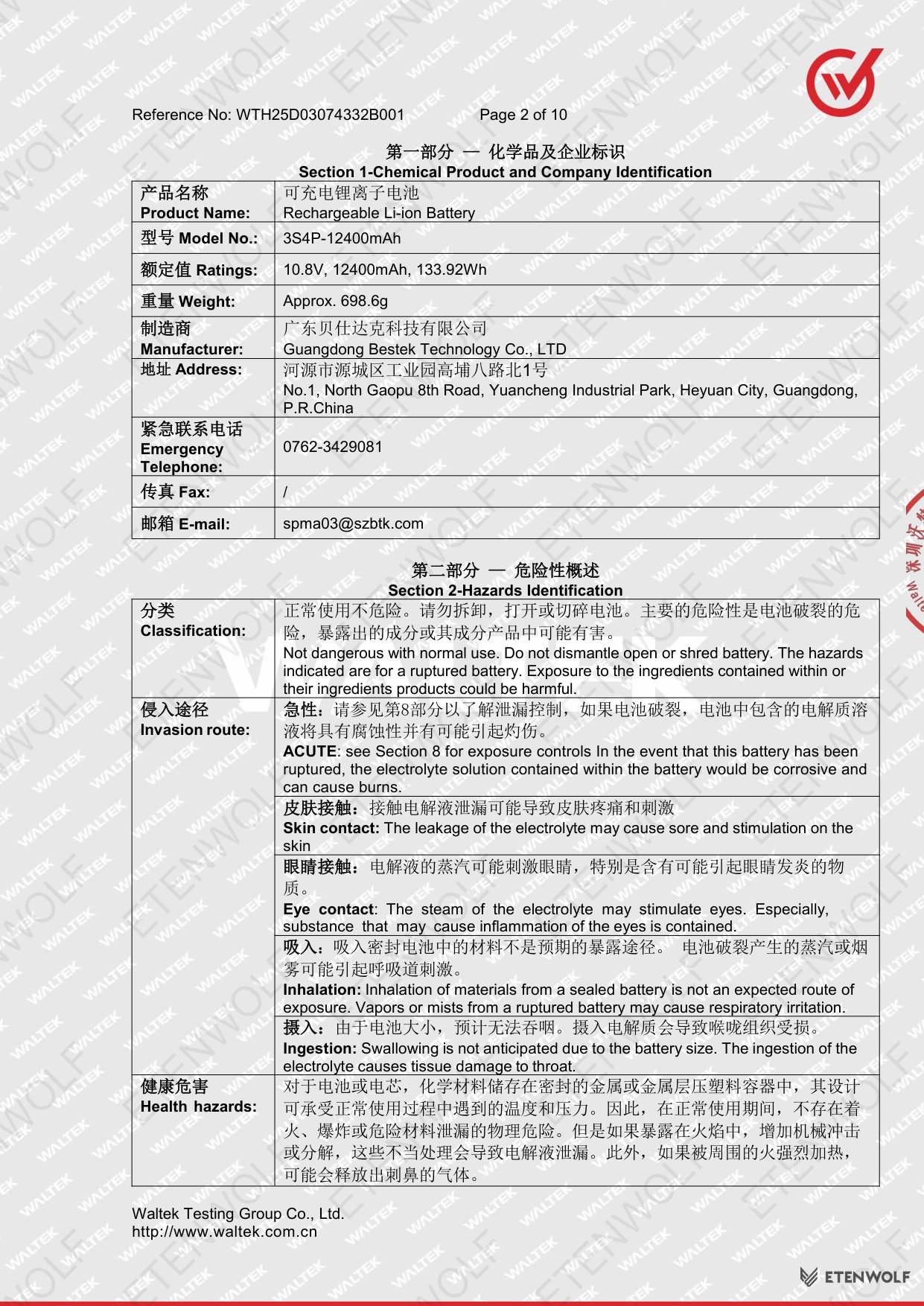
The battery assembly documented in this MSDS is the internal power source of the ETENWOLF Vortex S7 tire inflator. Full product and manufacturer details are listed below.
| Field | Detail |
|---|---|
| Product Name | Rechargeable Li-ion Battery (可充电锂离子电池) |
| Model No. | 3S4P-12400mAh |
| Voltage | 10.8 V |
| Capacity | 12,400 mAh |
| Energy | 133.92 Wh |
| Weight | Approx. 698.6 g |
| Applicant | Guangdong Bestek Technology Co., Ltd. (广东贝仕达克科技有限公司) |
| Manufacturer | Guangdong Bestek Technology Co., Ltd. (广东贝仕达克科技有限公司) |
| Manufacturer Address | No. 1, North Gaopu 8th Road, Yuancheng Industrial Park, Heyuan City, Guangdong, P.R. China |
| Emergency Telephone | 0762-3429081 |
| Contact E-mail | [email protected] |
The battery is a 3-series 4-parallel (3S4P) lithium iron phosphate / lithium-ion cell configuration delivering 10.8 V nominal at 12,400 mAh, providing the high-capacity power required for the cordless operation of the ETENWOLF Vortex S7 tire inflator.
Key Details
Chemical Composition (Section 3)
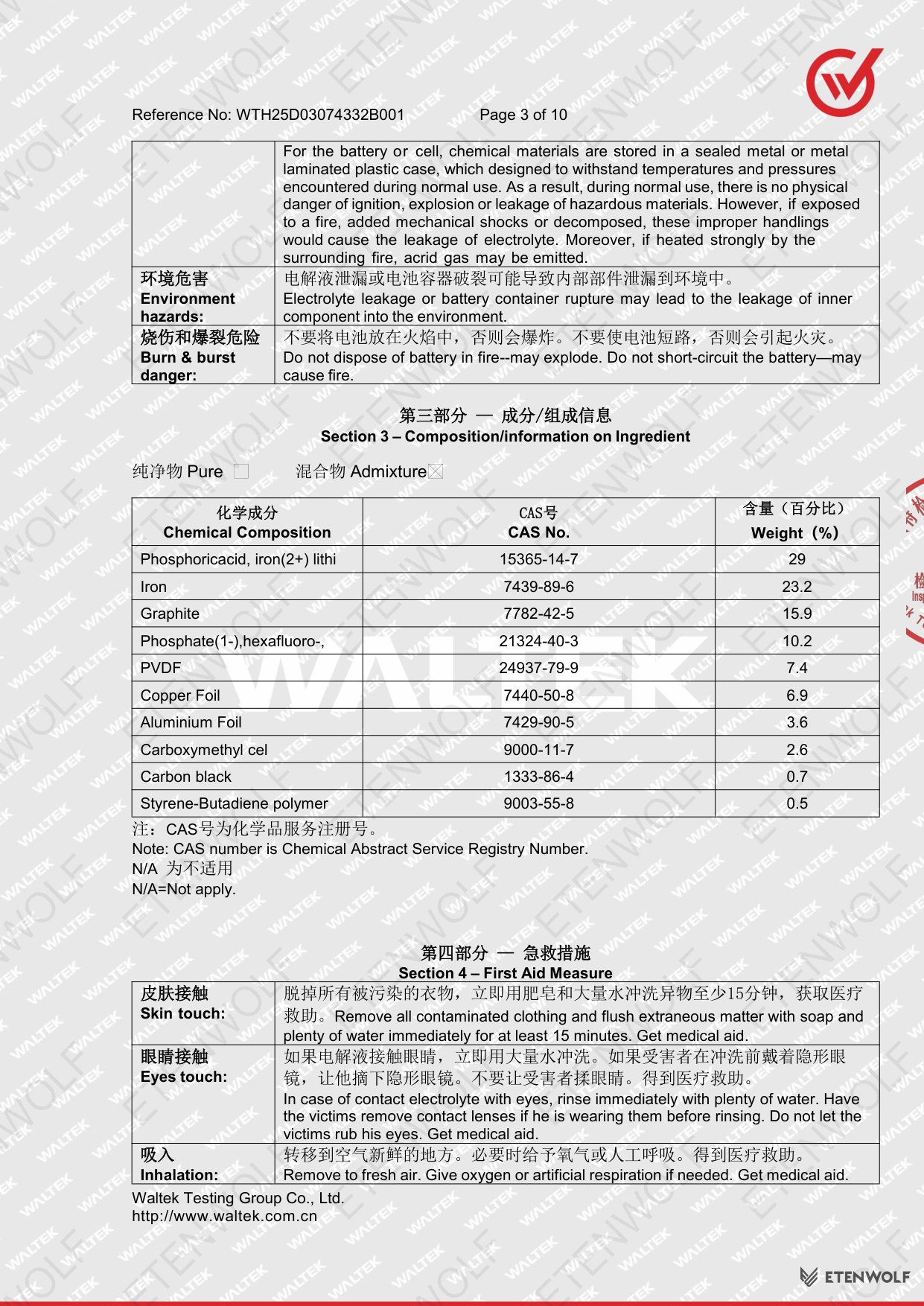
The battery pack contains a sealed metal or metal-laminated plastic enclosure. Under normal use, chemical materials remain fully contained. The table below lists all identified chemical ingredients, their CAS registry numbers, and approximate weight percentages.
| Chemical Composition | CAS No. | Weight (%) |
|---|---|---|
| Phosphoric acid, iron(2+) lithium salt (Lithium Iron Phosphate, LiFePO₄) | 15365-14-7 | 29.0% |
| Iron (Fe) | 7439-89-6 | 23.2% |
| Graphite | 7782-42-5 | 15.9% |
| Phosphate(1-), hexafluoro- (LiPF₆ electrolyte salt) | 21324-40-3 | 10.2% |
| Polyvinylidene fluoride (PVDF) | 24937-79-9 | 7.4% |
| Copper Foil | 7440-50-8 | 6.9% |
| Aluminium Foil | 7429-90-5 | 3.6% |
| Carboxymethyl cellulose (CMC) | 9000-11-7 | 2.6% |
| Carbon Black | 1333-86-4 | 0.7% |
| Styrene-Butadiene Polymer (SBR) | 9003-55-8 | 0.5% |
Hazard Classification (Section 2)
The battery is not dangerous under normal use conditions. Hazards arise only in the event of physical rupture, improper handling, or exposure to fire. Key hazard information is summarised below.
- Skin Contact: Electrolyte leakage may cause skin pain and irritation. Remove contaminated clothing and flush with soap and water for at least 15 minutes. Seek medical aid.
- Eye Contact: Electrolyte vapour may cause eye inflammation. Rinse immediately with plenty of water and seek medical aid. Remove contact lenses before rinsing if applicable.
- Inhalation: Inhalation from a sealed battery is not an expected exposure route. Vapours or mists from a ruptured battery may cause respiratory irritation. Move to fresh air; administer oxygen or artificial respiration if needed.
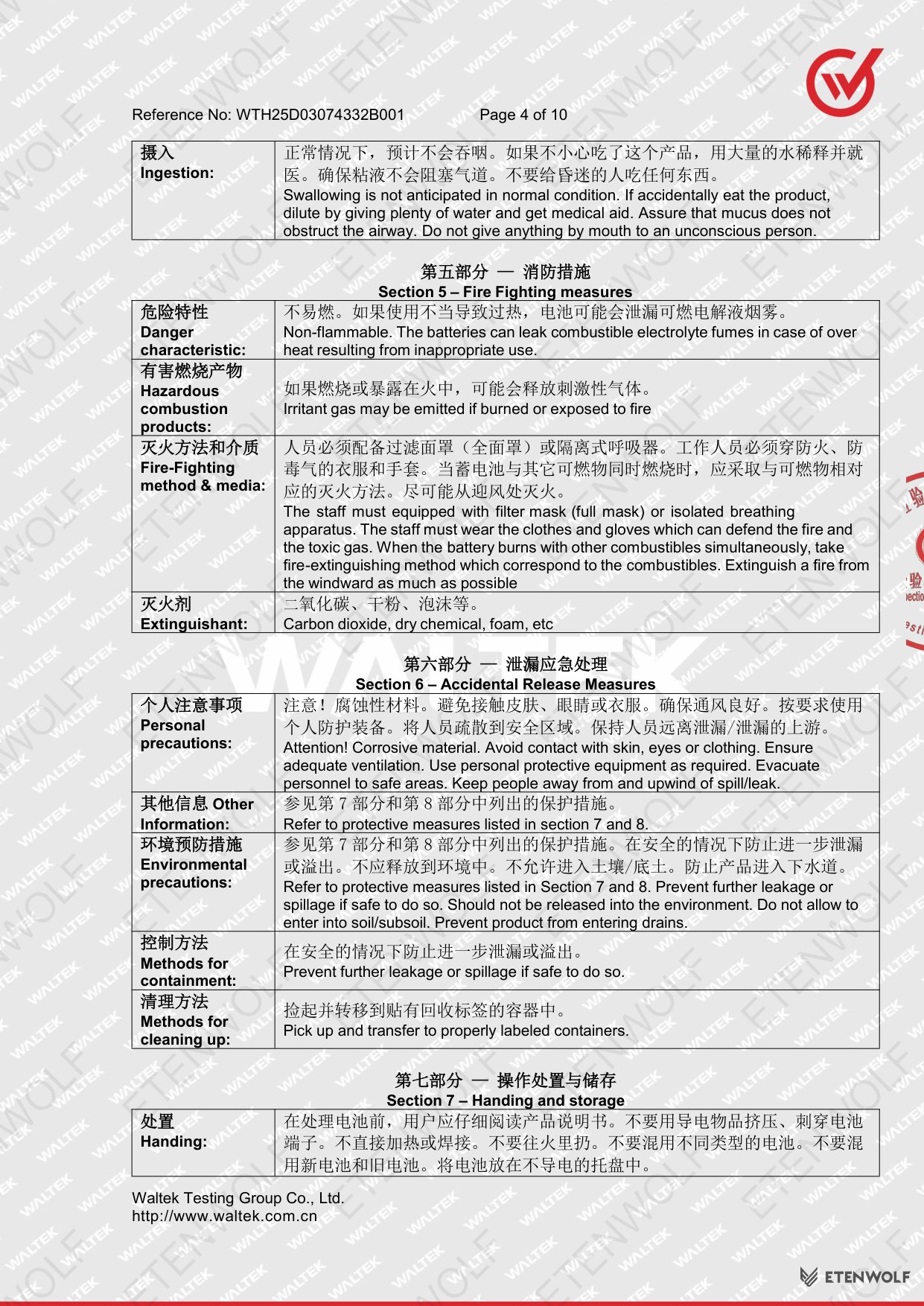
- Ingestion: Swallowing is not anticipated due to battery size. Electrolyte ingestion causes tissue damage to the throat. Dilute with plenty of water and seek medical aid.
- Environmental Hazard: Electrolyte leakage or container rupture may release inner components into the environment. Prevent entry into soil, groundwater, or drainage systems.
Fire-Fighting Measures (Section 5)
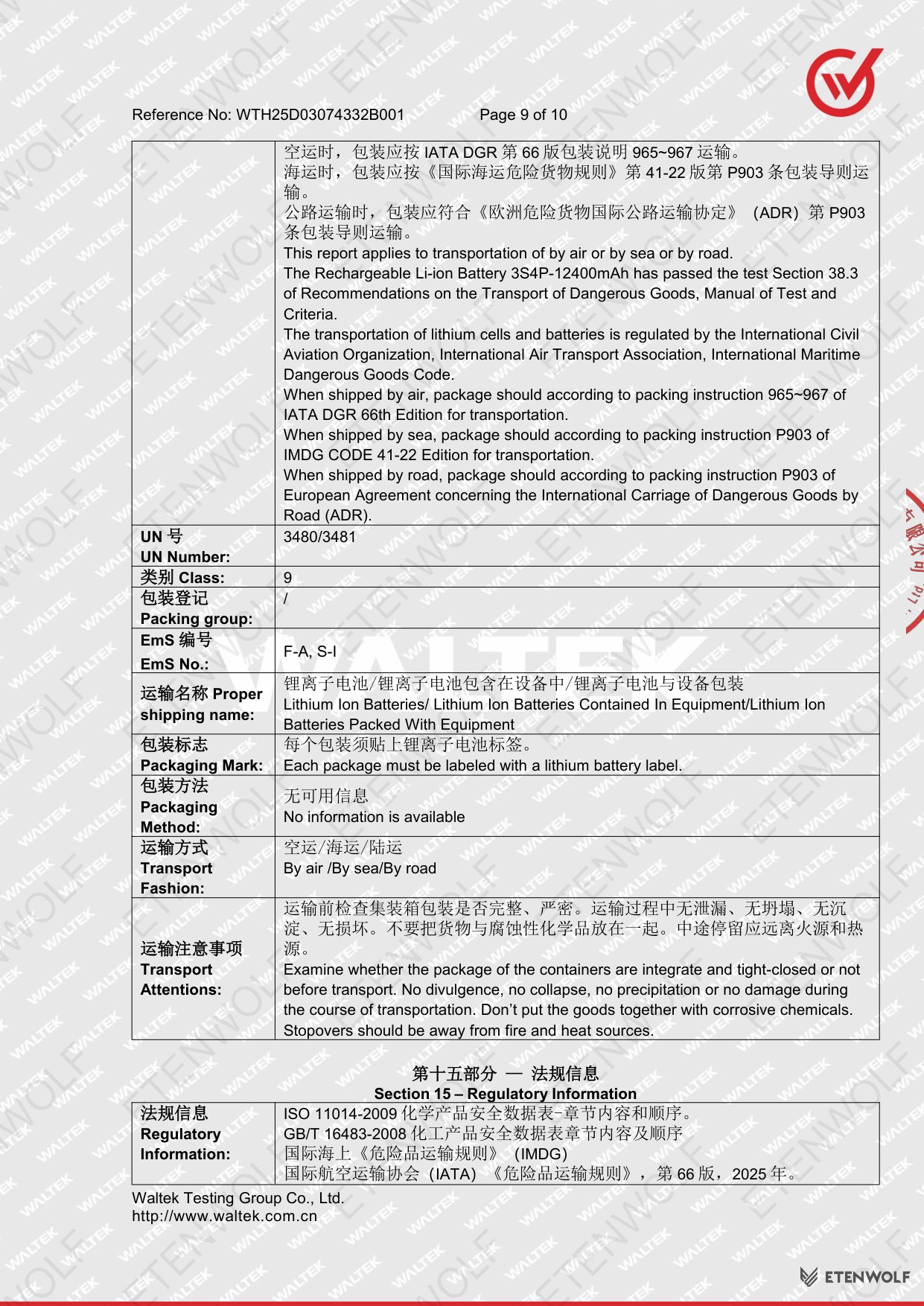
The battery is classified as non-flammable under normal conditions. In the event of overheating caused by improper use, combustible electrolyte fumes may be released. Recommended extinguishing agents include carbon dioxide (CO₂), dry chemical powder, and foam. Firefighting personnel must wear full-face filter masks or isolated breathing apparatus and fire- and toxic-gas-resistant clothing and gloves. Extinguish from the windward side wherever possible.
Accidental Release and Storage (Sections 6 & 7)
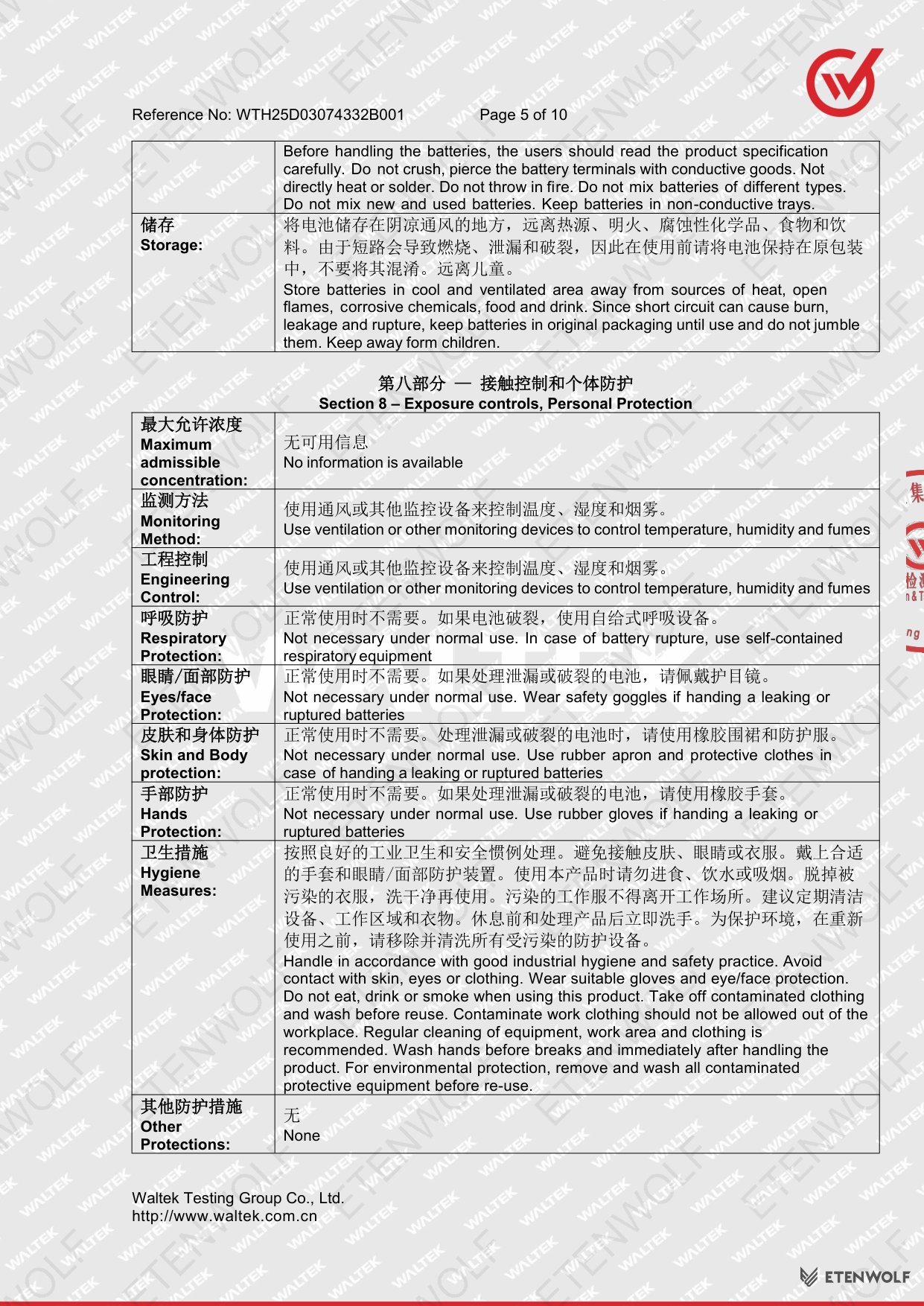
In the event of electrolyte leakage, treat as a corrosive material spill. Evacuate personnel upwind of the release area, ensure adequate ventilation, and use appropriate personal protective equipment (PPE). Collect spilled material and transfer to properly labelled containers for disposal. Do not allow the electrolyte to enter drains, soil, or subsoil.
For storage and handling, users should read the product manual before use. Do not crush, pierce, or short-circuit battery terminals with conductive objects. Do not heat directly, weld, or dispose of the battery in fire. Do not mix battery types or new and used batteries. Store in non-conductive trays in a cool, dry environment away from direct sunlight and heat sources.
Standards & Compliance
This MSDS has been prepared to support regulatory compliance for the transport and sale of lithium-ion battery-containing products. The ETENWOLF Vortex S7 battery pack is subject to the following applicable regulations and standards.
| Standard / Regulation | Scope |
|---|---|
| UN38.3 | UN Manual of Tests and Criteria, Part III, Section 38.3 — lithium battery transport safety testing |
| IATA Dangerous Goods Regulations (DGR) | Air transport classification and packaging requirements for lithium-ion batteries |
| IMDG Code | International Maritime Dangerous Goods Code — sea transport of lithium batteries |
| GHS / SDS Format | Globally Harmonised System of Classification and Labelling of Chemicals — MSDS structure compliance |
| ISO 9001 | Quality management system of the issuing laboratory (Waltek Testing Group) |
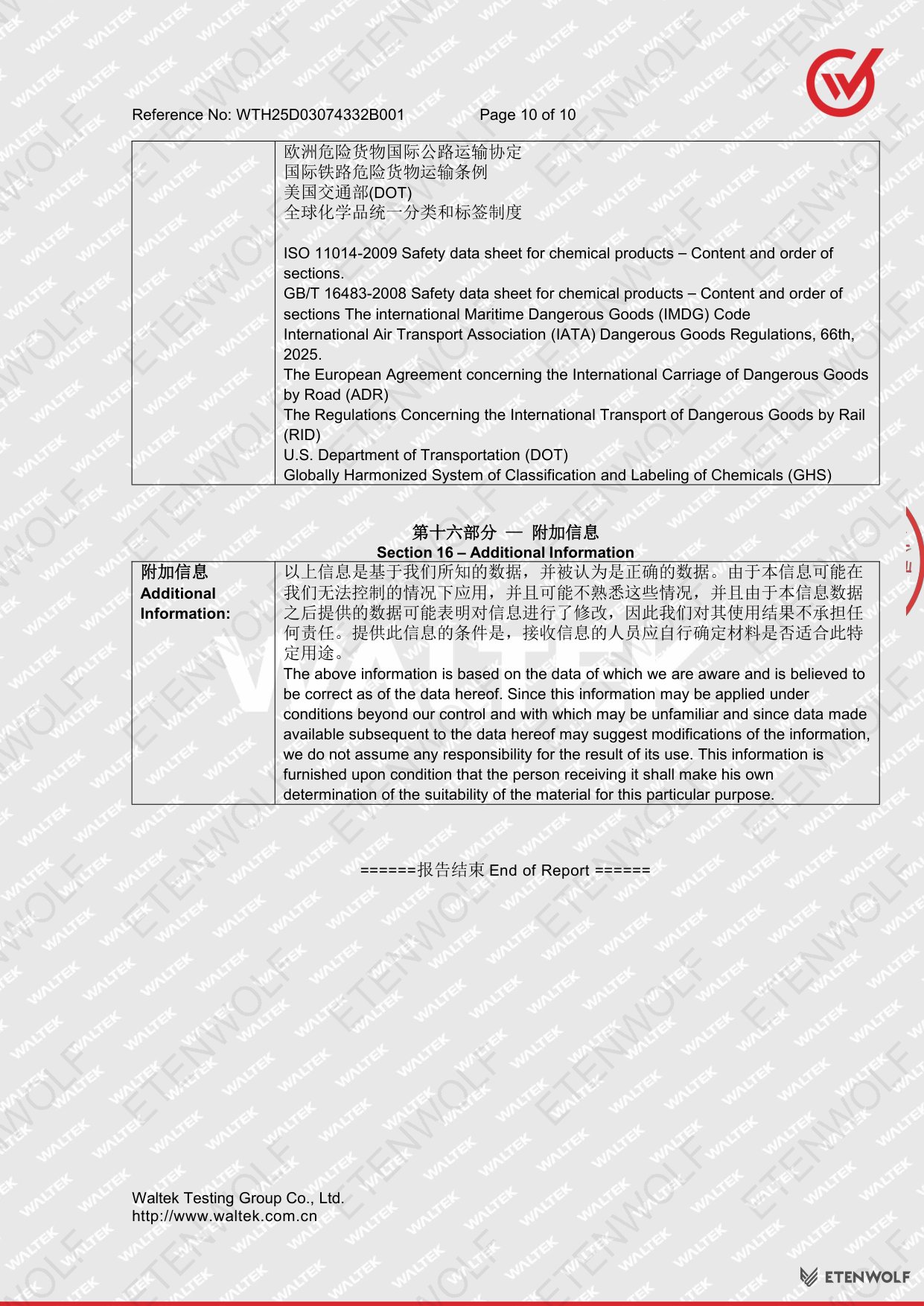
The MSDS format and content conform to the 16-section GHS Safety Data Sheet structure, ensuring compliance with international chemical communication standards for hazardous goods documentation. The battery energy content of 133.92 Wh places it in the category requiring full UN38.3 test series completion prior to shipment.
Validity & Certification Body
The MSDS document was issued and is valid as of the date of issue. Key validity and issuing body information is provided below.
| Field | Detail |
|---|---|
| Reference No. | WTH25D03074332B001 |
| Date of Issue | 2025-04-08 |
| Date of Effective | 2025-04-08 |
| Issuing Body | Waltek Testing Group Co., Ltd. (深圳沃特检验集团股份有限公司) |
| Laboratory Address | No. 77, Houjie Section, Guantai Road, Houjie Town, Dongguan City, Guangdong, China |
| Laboratory Website | http://www.waltek.com.cn |
| Telephone | +86-769-2267 6998 |
| Fax | +86-769-2267 6828 |
| Compiled By | Jacky Sun (孙纤) — Project Engineer |
| Approved By | Deval Qin (秦林伟) — Designated Reviewer / Authorised Signatory |
Waltek Testing Group Co., Ltd. is a CNAS-accredited third-party testing laboratory operating across multiple certification disciplines including battery safety, electrical safety, and chemical analysis. MSDS documents are typically reviewed and reissued when product formulation, regulatory requirements, or chemical composition change materially.
Frequently Asked Questions
- Q: What does UN38.3 certification mean for the ETENWOLF S7 tire inflator battery?
-
UN38.3 is the international standard under the UN Manual of Tests and Criteria that requires lithium-ion batteries to pass a series of safety tests — including altitude simulation, thermal testing, vibration, shock, short circuit, impact, overcharge, and forced discharge — before they may be transported by air, sea, or road. The MSDS (Reference No. WTH25D03074332B001) is a supporting document confirming the chemical classification and safe handling procedures for the battery inside the ETENWOLF Vortex S7.
- Q: Is the 3S4P lithium-ion battery in the ETENWOLF S7 dangerous under normal use?
-
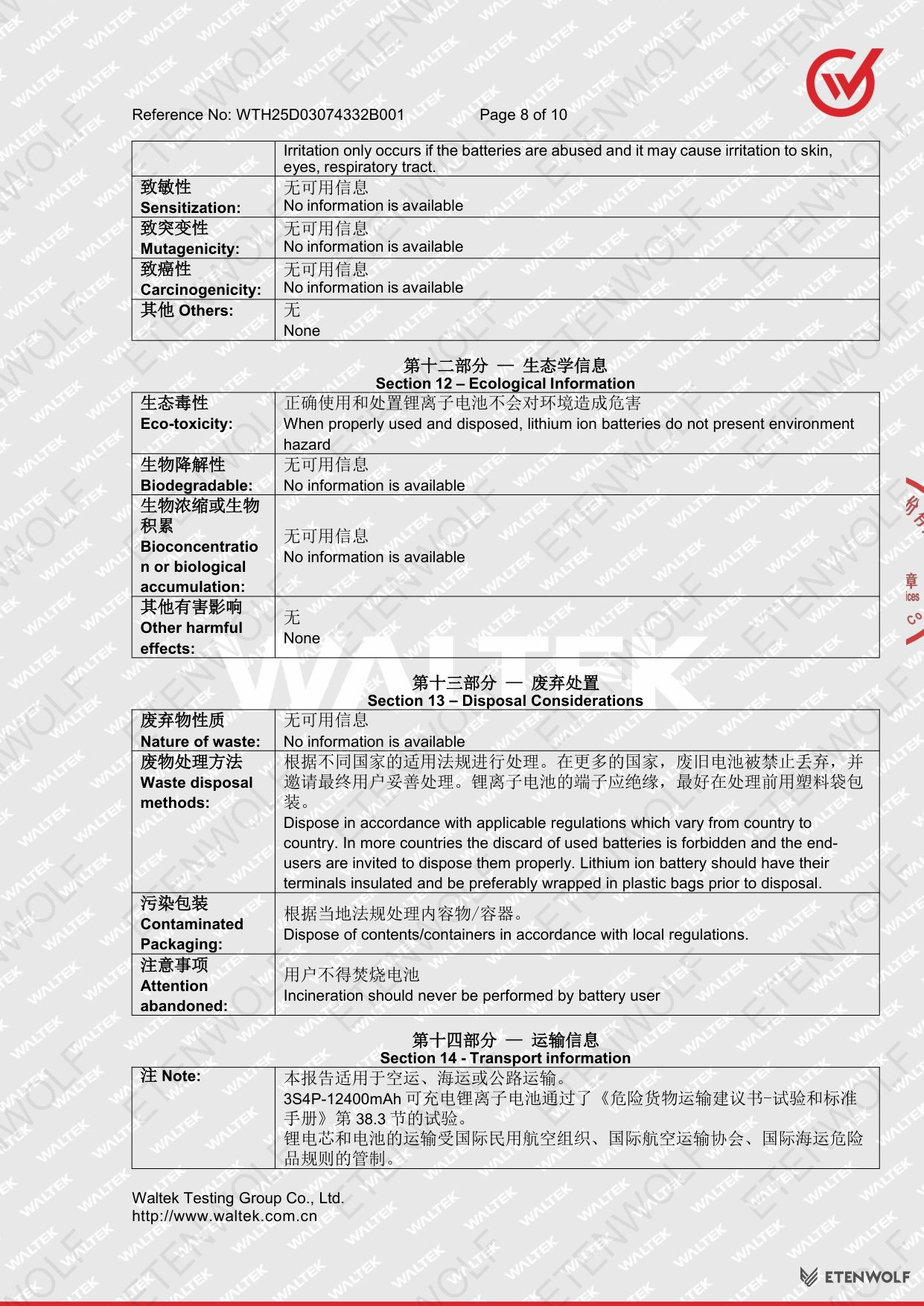
No. Under normal operating conditions, the battery is not classified as dangerous. The chemical materials are stored in a sealed metal or metal-laminated plastic enclosure designed to withstand the temperatures and pressures of normal use. Hazards only arise in the event of physical rupture, exposure to open flame, short-circuiting, or other improper handling. Always follow the product manual and avoid dismantling, piercing, crushing, or exposing the battery to fire or extreme heat.
- Q: What should I do if the battery in my ETENWOLF S7 leaks or ruptures?
-
If the battery ruptures, treat the leaked electrolyte as a corrosive material. For skin contact, remove contaminated clothing and flush with soap and water for at least 15 minutes; seek medical aid. For eye contact, rinse immediately with plenty of water and seek medical aid. If fumes are inhaled, move to fresh air and seek medical attention. Collect any spilled material in a properly labelled container and prevent it from entering drains, soil, or waterways. Contact the emergency number 0762-3429081 or the manufacturer at [email protected] for further guidance.
- Q: Who issued the MSDS for the ETENWOLF S7 battery and when is it valid from?
-
The MSDS (Reference No. WTH25D03074332B001) was prepared and issued by Waltek Testing Group Co., Ltd., a CNAS-accredited laboratory based in Dongguan, Guangdong, China. The document was compiled by Project Engineer Jacky Sun and approved by Designated Reviewer Deval Qin. It was issued and became effective on 2025-04-08. The document should be reviewed and updated if there are any material changes to the battery’s chemical composition or applicable regulatory requirements.
Related Documents
The following certification and compliance documents are typically required alongside an MSDS for a lithium-ion battery-powered portable device such as the ETENWOLF Vortex S7 tire inflator.
- UN38.3 Test Report — Full battery transport safety test series results (altitude simulation, thermal abuse, vibration, shock, short circuit, impact/crush, overcharge, forced discharge).
- IEC 62133 Battery Safety Certificate — IEC standard for safety requirements of portable sealed secondary lithium cells and batteries used in portable applications.
- CE Declaration of Conformity — Required for sale in the European Economic Area, covering applicable directives including the Low Voltage Directive (LVD) and the Radio Equipment Directive (RED) as applicable.
- FCC Declaration of Conformity — Required for sale in the United States market, covering electromagnetic compatibility and radio frequency emissions.
- RoHS Compliance Certificate — Restriction of Hazardous Substances in electrical and electronic equipment; confirms the product does not exceed permitted levels of lead, mercury, cadmium, hexavalent chromium, PBB, PBDE, and other restricted substances as per EU RoHS Directive 2011/65/EU.
- REACH SVHC Declaration — Confirms compliance with REACH Regulation (EC) No 1907/2006 regarding Substances of Very High Concern.
- KC Certification (Korea) — Required for sale in the South Korean market under the KC safety scheme for electrical products and lithium batteries.
- PSE Certification (Japan) — Required for sale in Japan for lithium-ion battery-powered devices under the Electrical Appliances and Materials Safety Act.
Document Pages