Document Overview
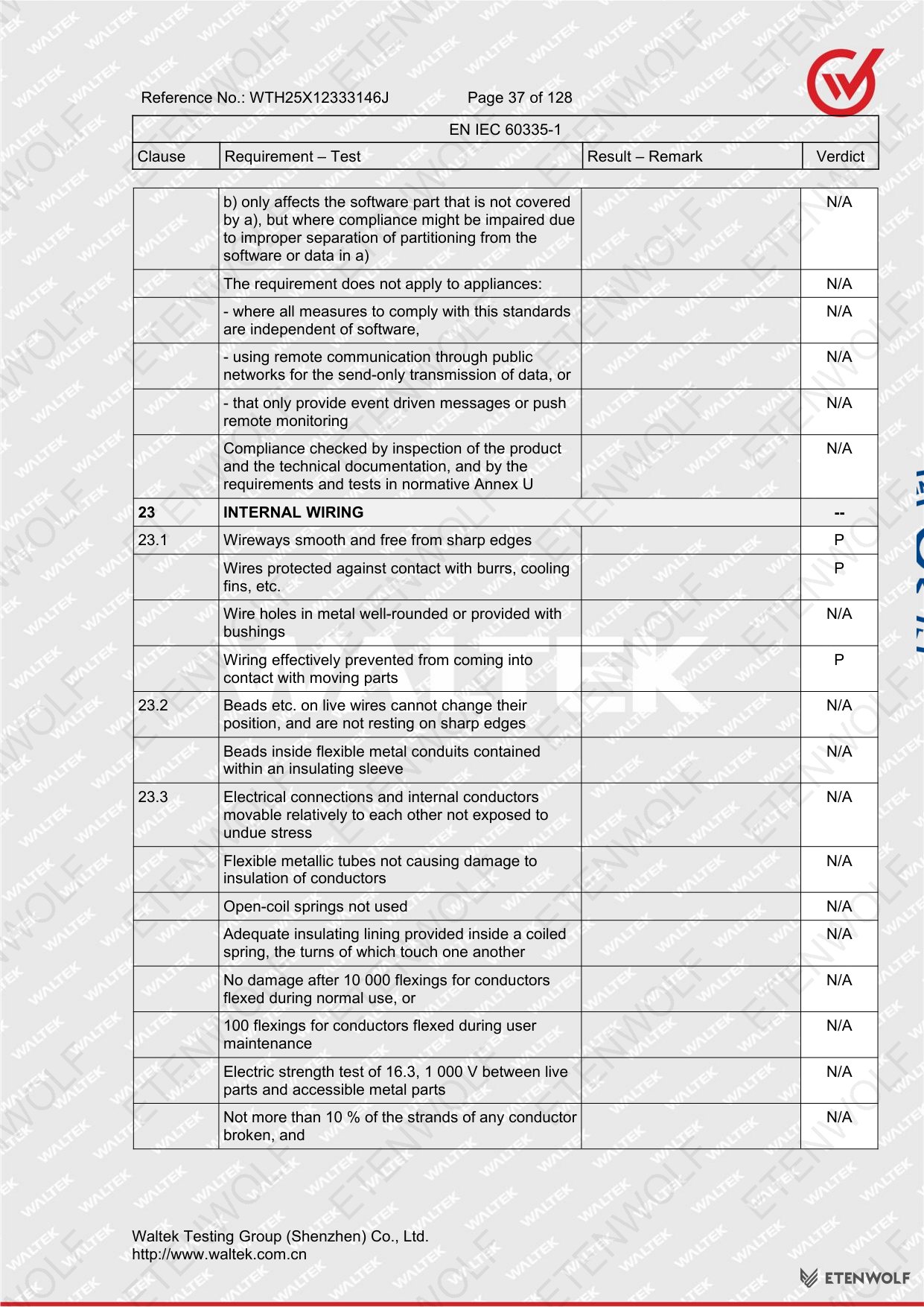
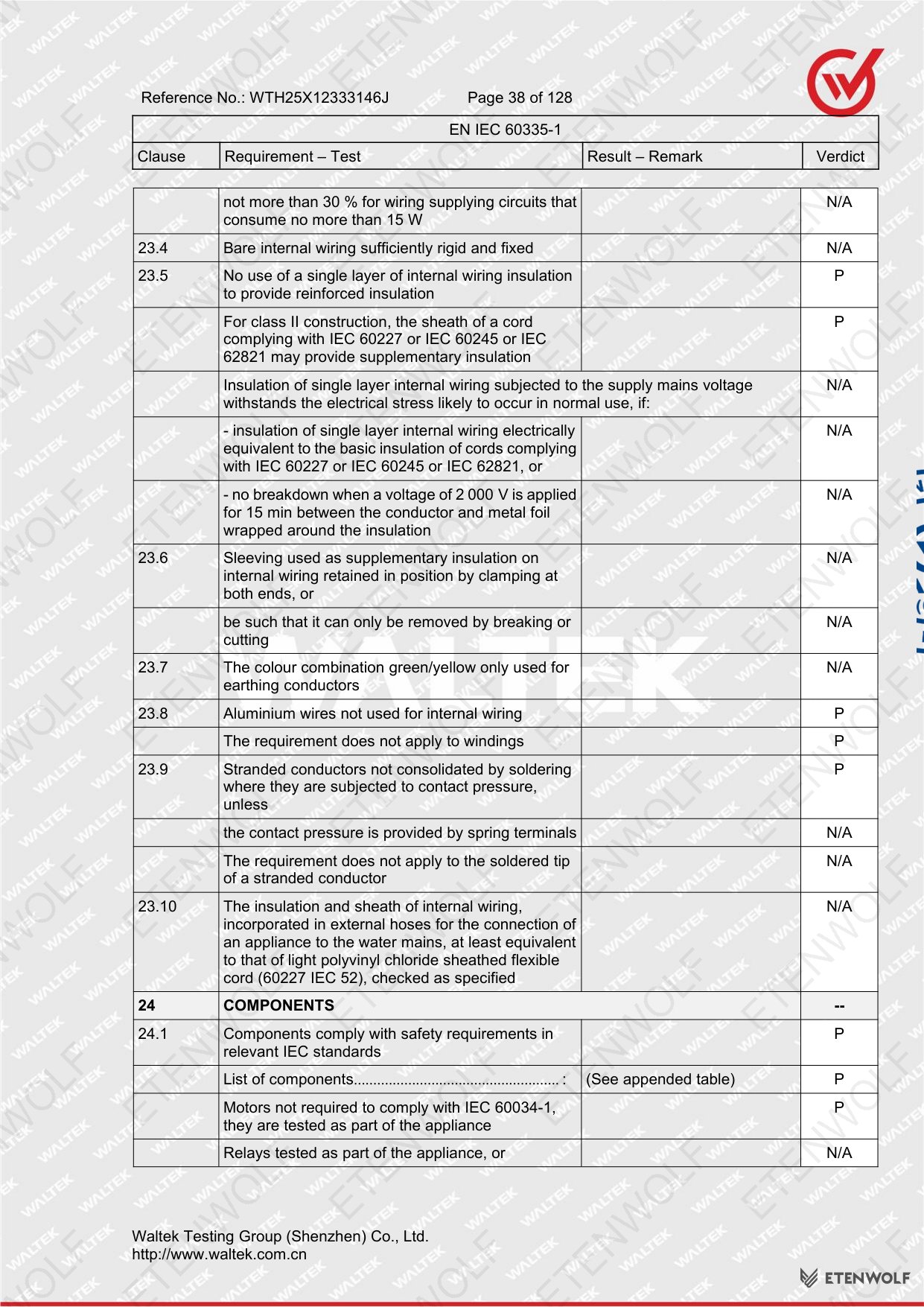
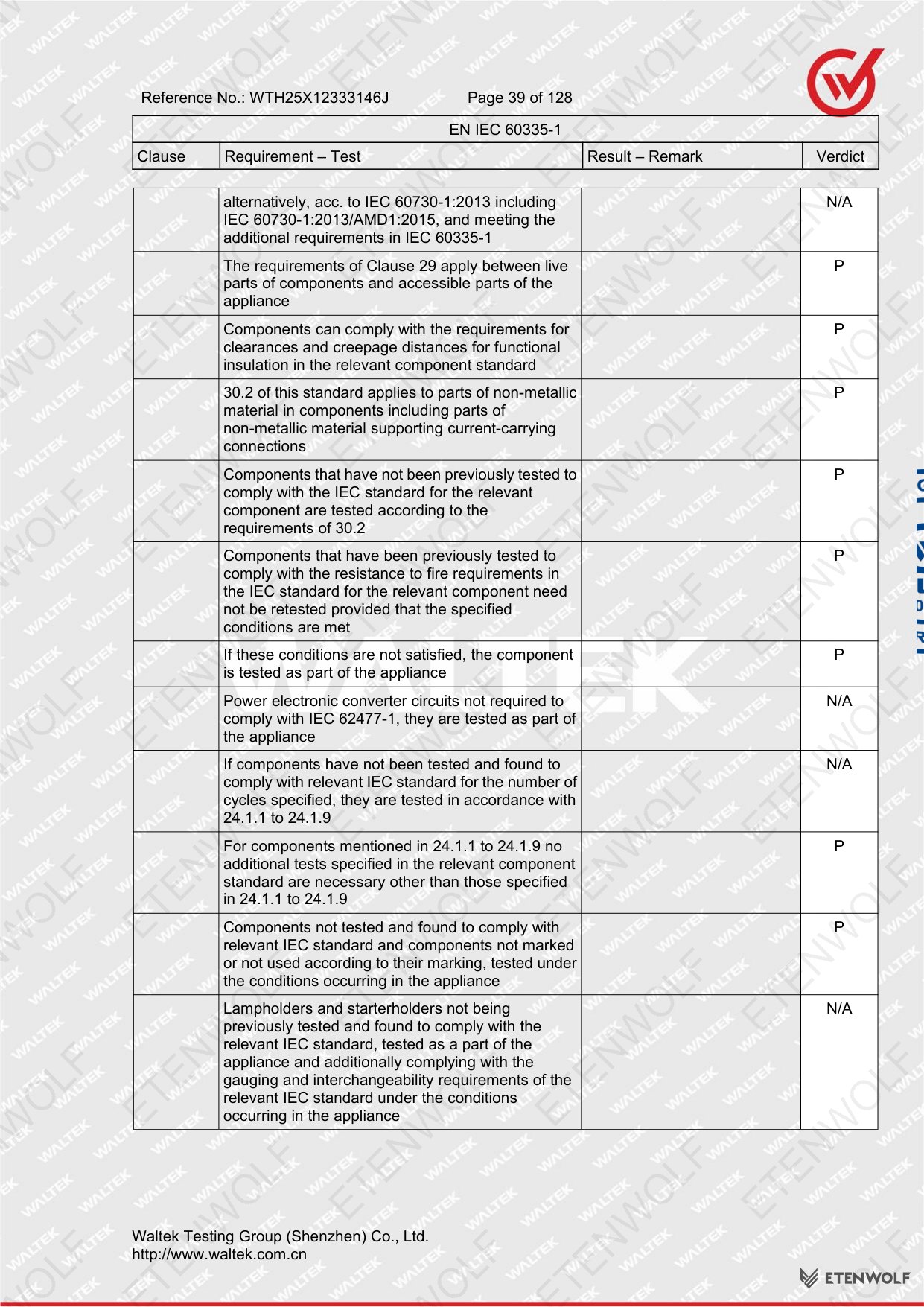
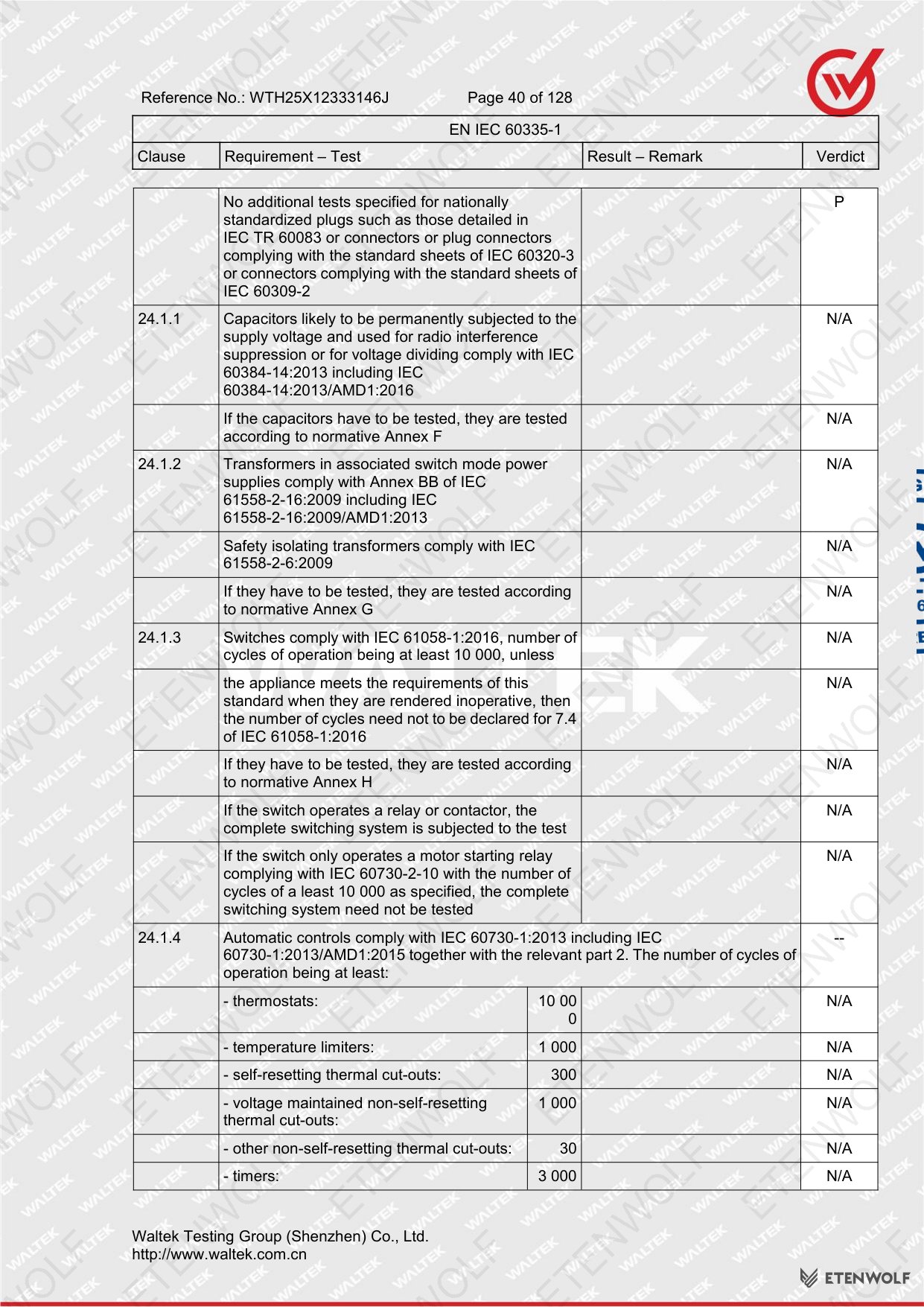
Document Overview This article summarises the official CE Low Voltage Directive (CE-LVD) test report issued by Waltek Testing Group (Shenzhen) Co., Ltd. for the ETENWOLF S1 portable tire inflator. The report evaluates compliance with the applicable European safety and electromagnetic field standards for household and…
- Document type
- Certification Report
- Prepared by
- Michelle Torres
- Published
- Last reviewed
- Topics
- European Union: CE / RoHS / REACH / WEEE
Document Overview
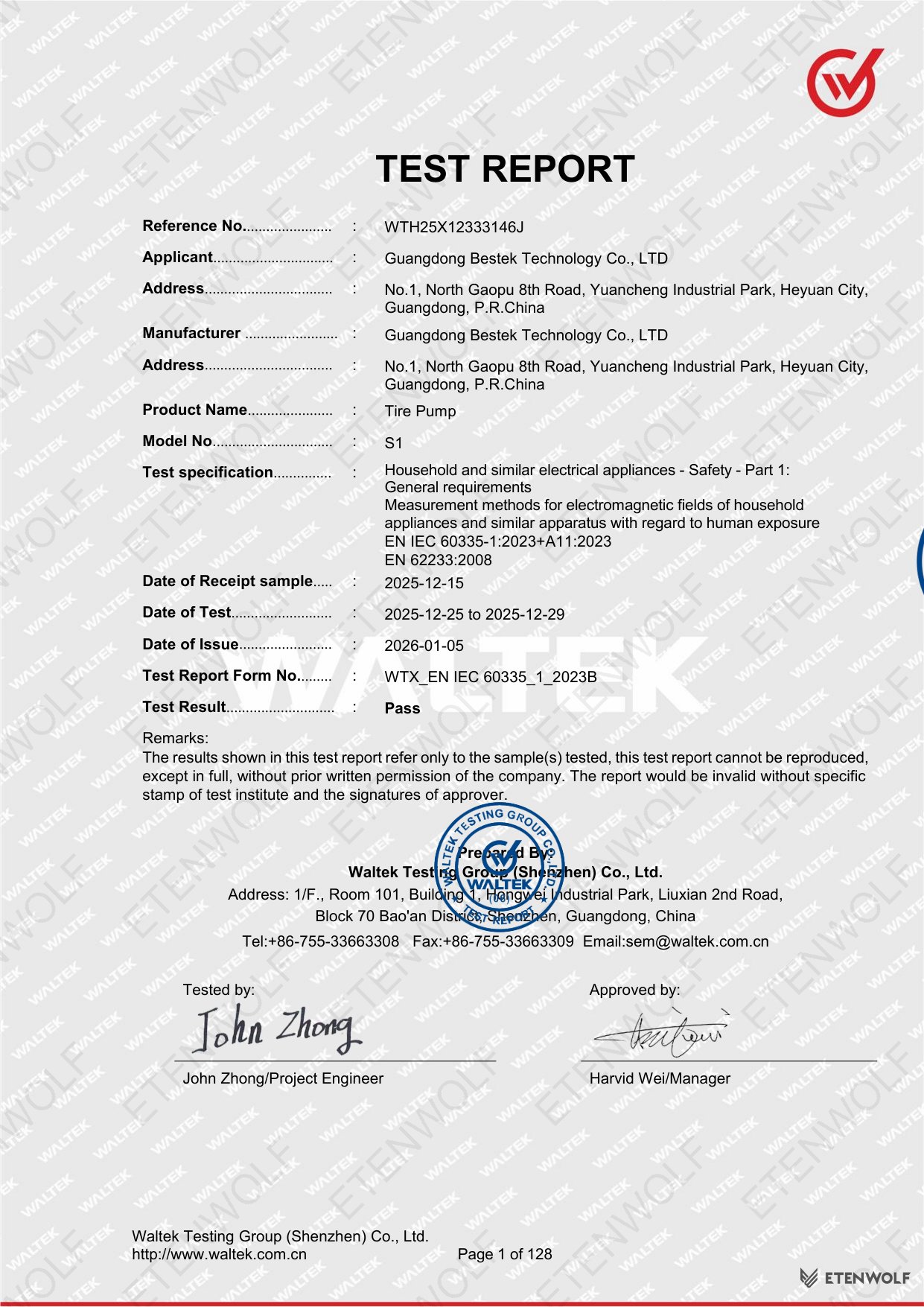
This article summarises the official CE Low Voltage Directive (CE-LVD) test report issued by Waltek Testing Group (Shenzhen) Co., Ltd. for the ETENWOLF S1 portable tire inflator. The report evaluates compliance with the applicable European safety and electromagnetic field standards for household and similar electrical appliances.
| Field | Detail |
|---|---|
| Document Type | CE-LVD Test Report |
| Reference Number | WTH25X12333146J |
| Test Report Form No. | WTX_EN IEC 60335_1_2023B |
| Issuing Body | Waltek Testing Group (Shenzhen) Co., Ltd. |
| Date of Issue | 2026-01-05 |
| Test Period | 2025-12-25 to 2025-12-29 |
| Date of Sample Receipt | 2025-12-15 |
| Overall Test Result | Pass |
The test report was prepared by John Zhong (Project Engineer) and approved by Harvid Wei (Manager) at Waltek Testing Group. Testing was conducted entirely in-house with no subcontracting to external laboratories.
Product Information
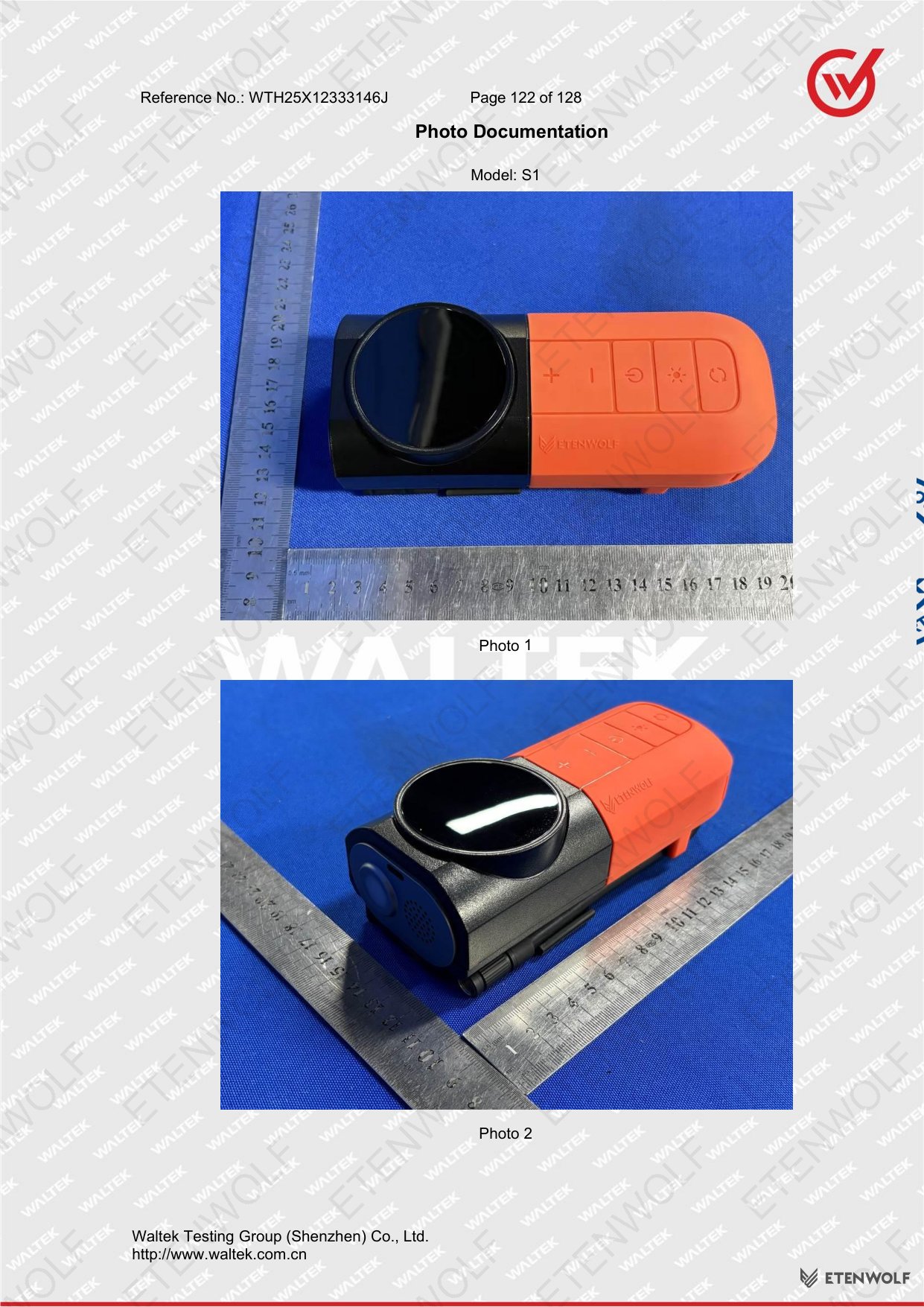
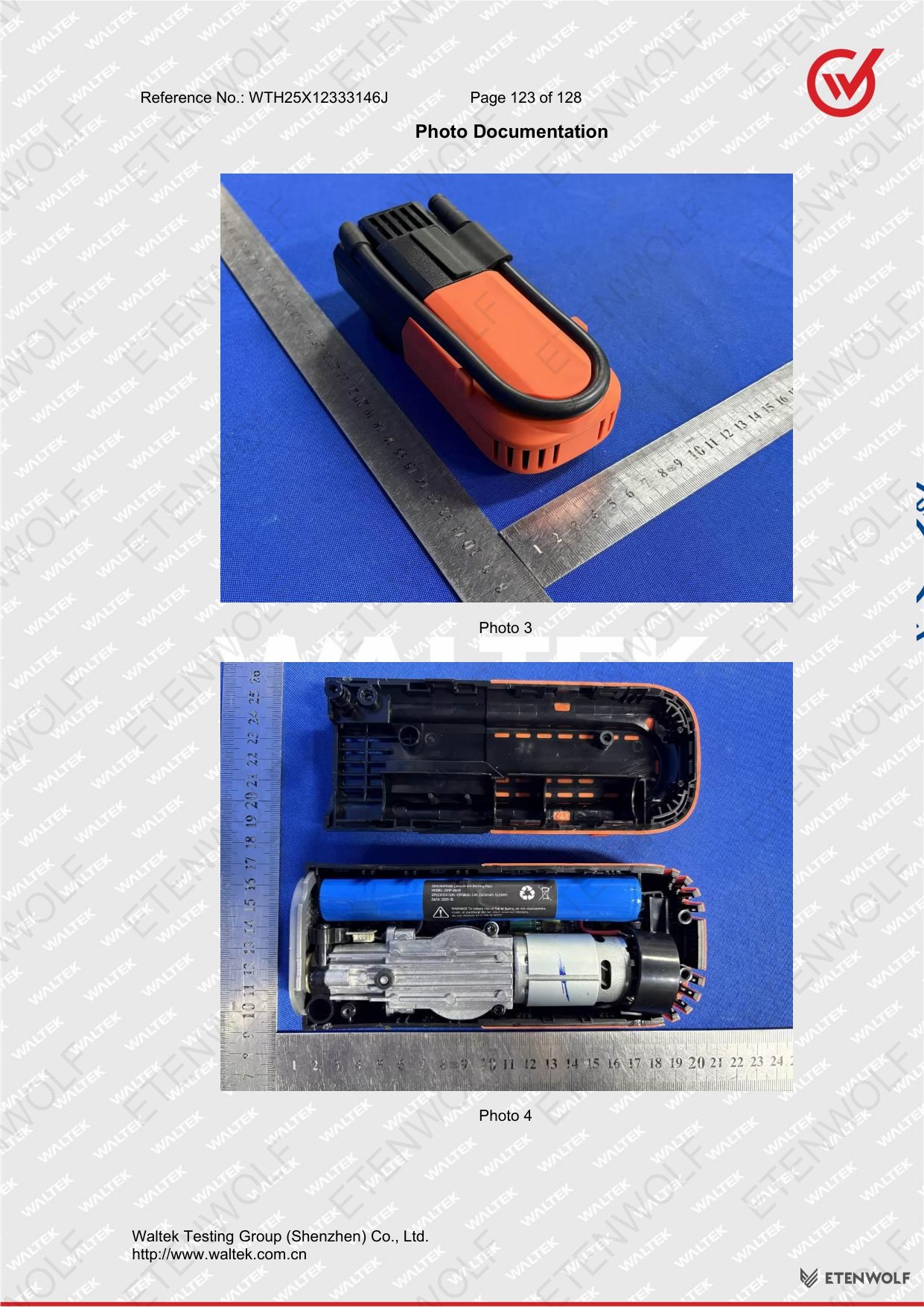
The ETENWOLF S1 Portable Tire Inflator is a compact, electrically powered inflation device designed for consumer and household use. It is manufactured and supplied by Guangdong Bestek Technology Co., Ltd., operating under the ETENWOLF brand.
| Attribute | Value |
|---|---|
| Product Name | Tire Pump |
| Model Number | S1 |
| Trademark | ETENWOLF |
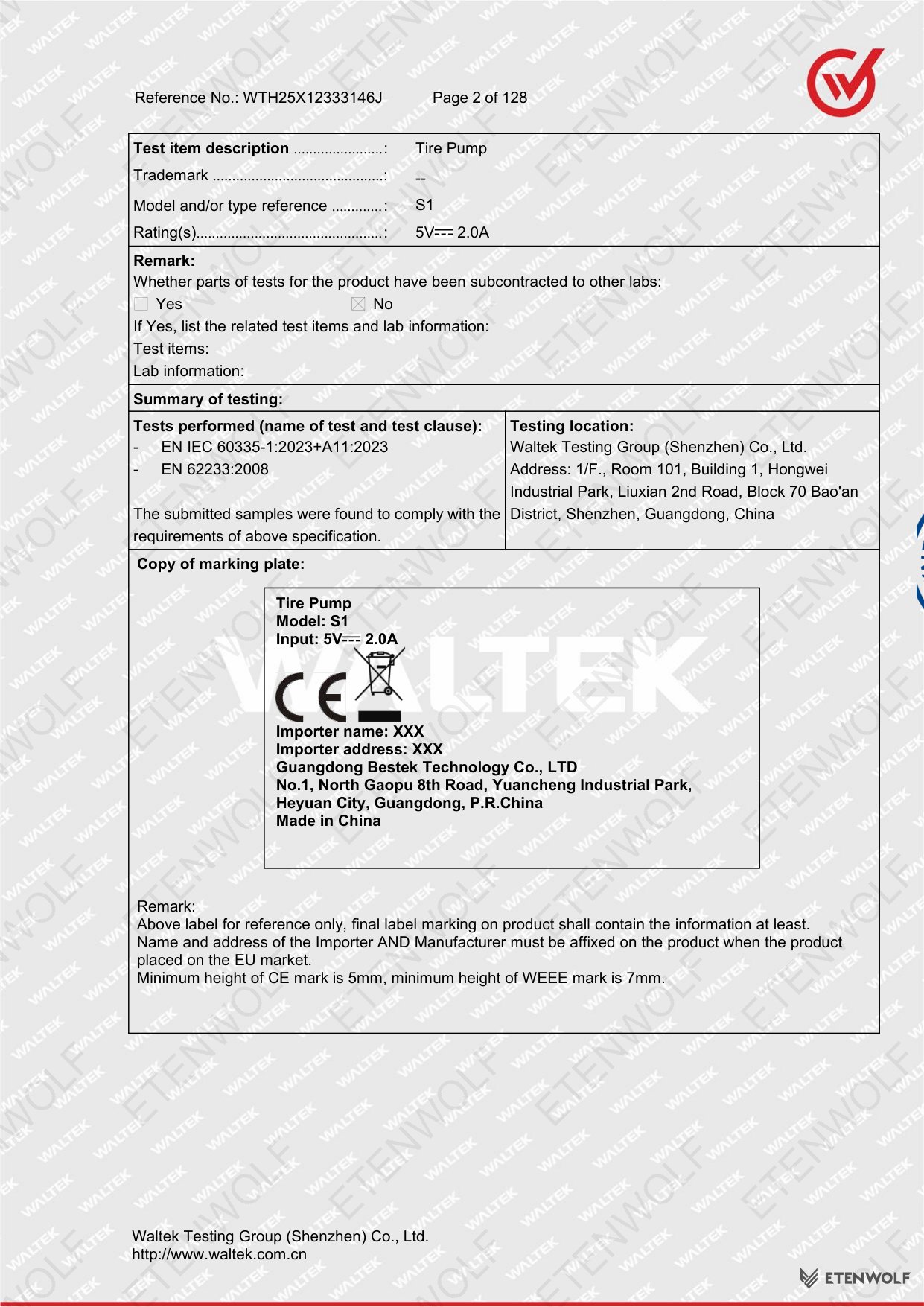
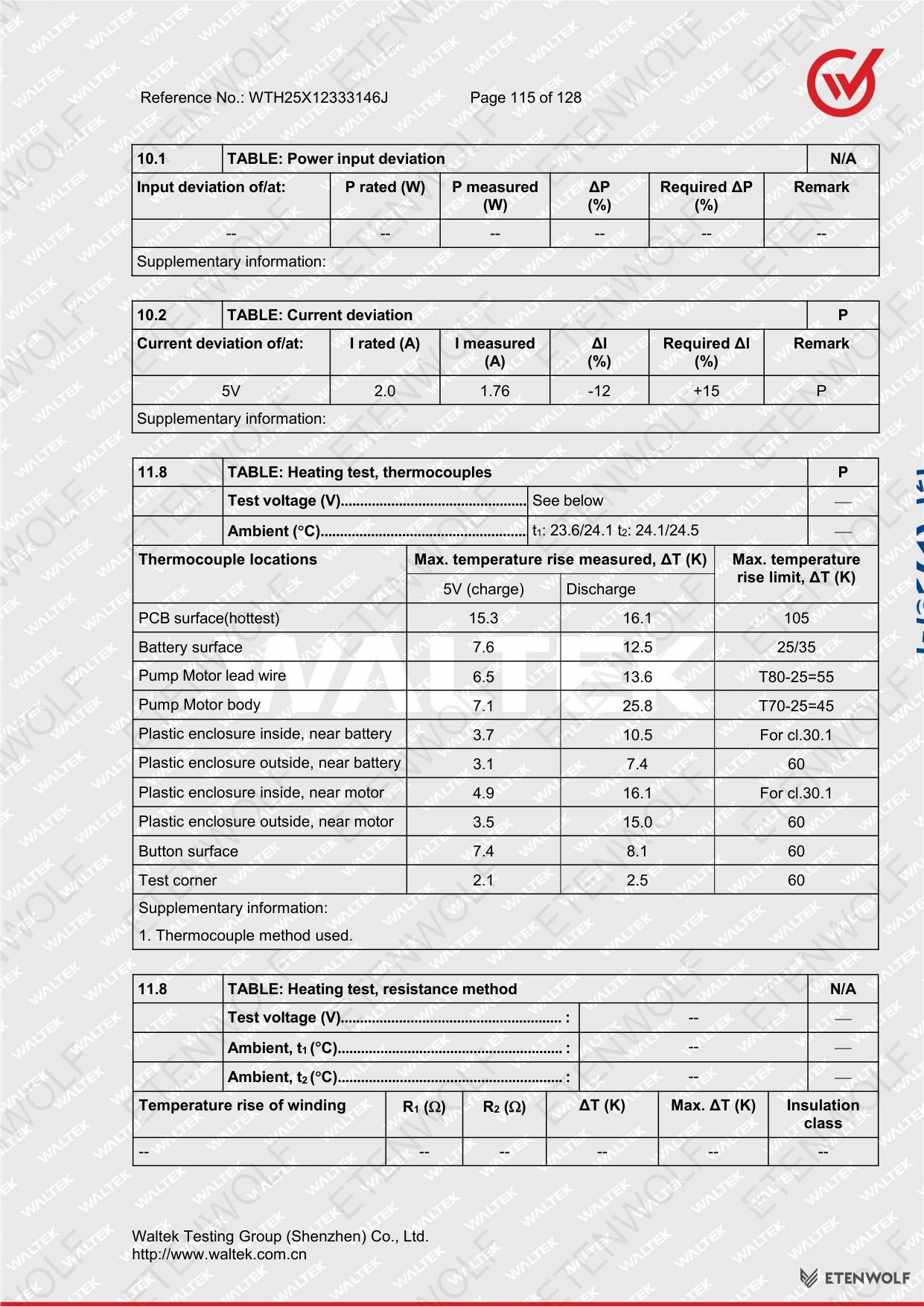
| Rated Voltage | 5 V |
| Rated Current | 2.0 A |
| Applicant | Guangdong Bestek Technology Co., Ltd. |
| Manufacturer | Guangdong Bestek Technology Co., Ltd. |
| Manufacturer Address | No.1, North Gaopu 8th Road, Yuancheng Industrial Park, Heyuan City, Guangdong, P.R. China |
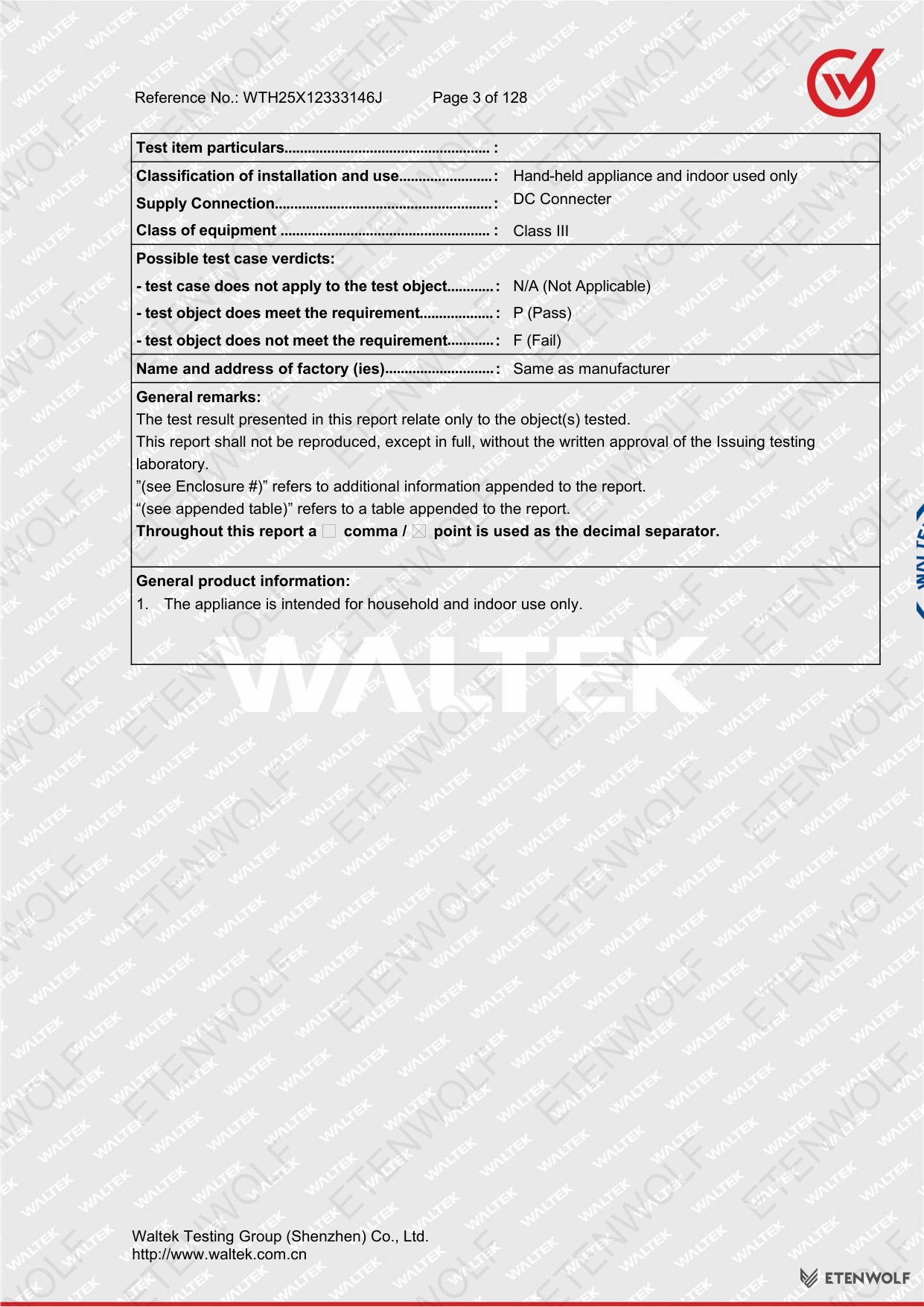
The ETENWOLF S1 operates at a low-voltage DC input (5 V / 2.0 A), making it suitable for USB-powered or portable charging scenarios. Its compact form factor positions it as a household and travel-grade tire inflation tool.
Key Details
The following table captures the primary test parameters evaluated during the CE-LVD assessment of the ETENWOLF S1.
| Test Parameter | Standard Applied | Result |
|---|---|---|
| General Safety Requirements for Household Electrical Appliances | EN IEC 60335-1:2023+A11:2023 | Pass |
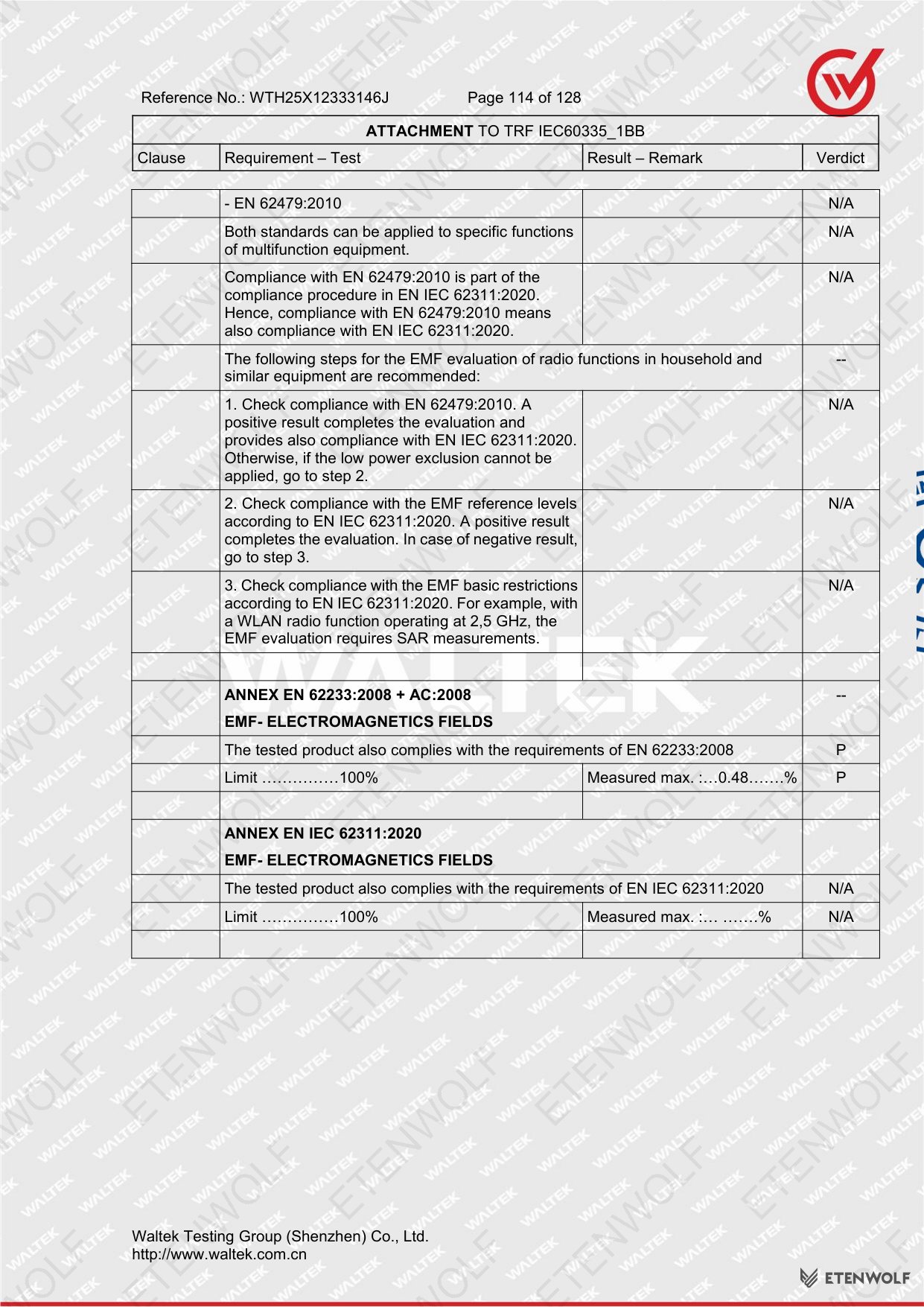
| Electromagnetic Fields – Human Exposure Measurement | EN 62233:2008 | Pass |
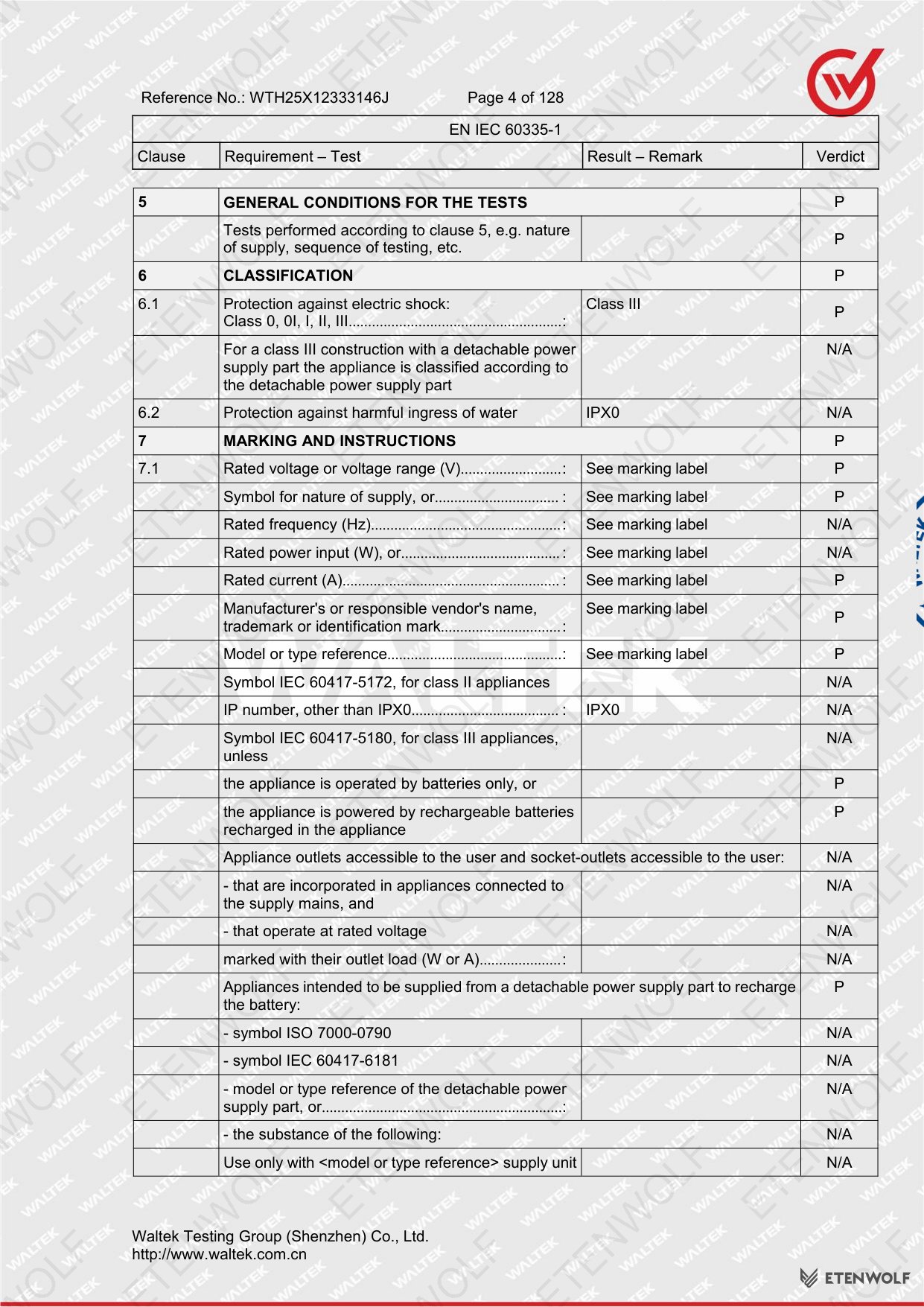
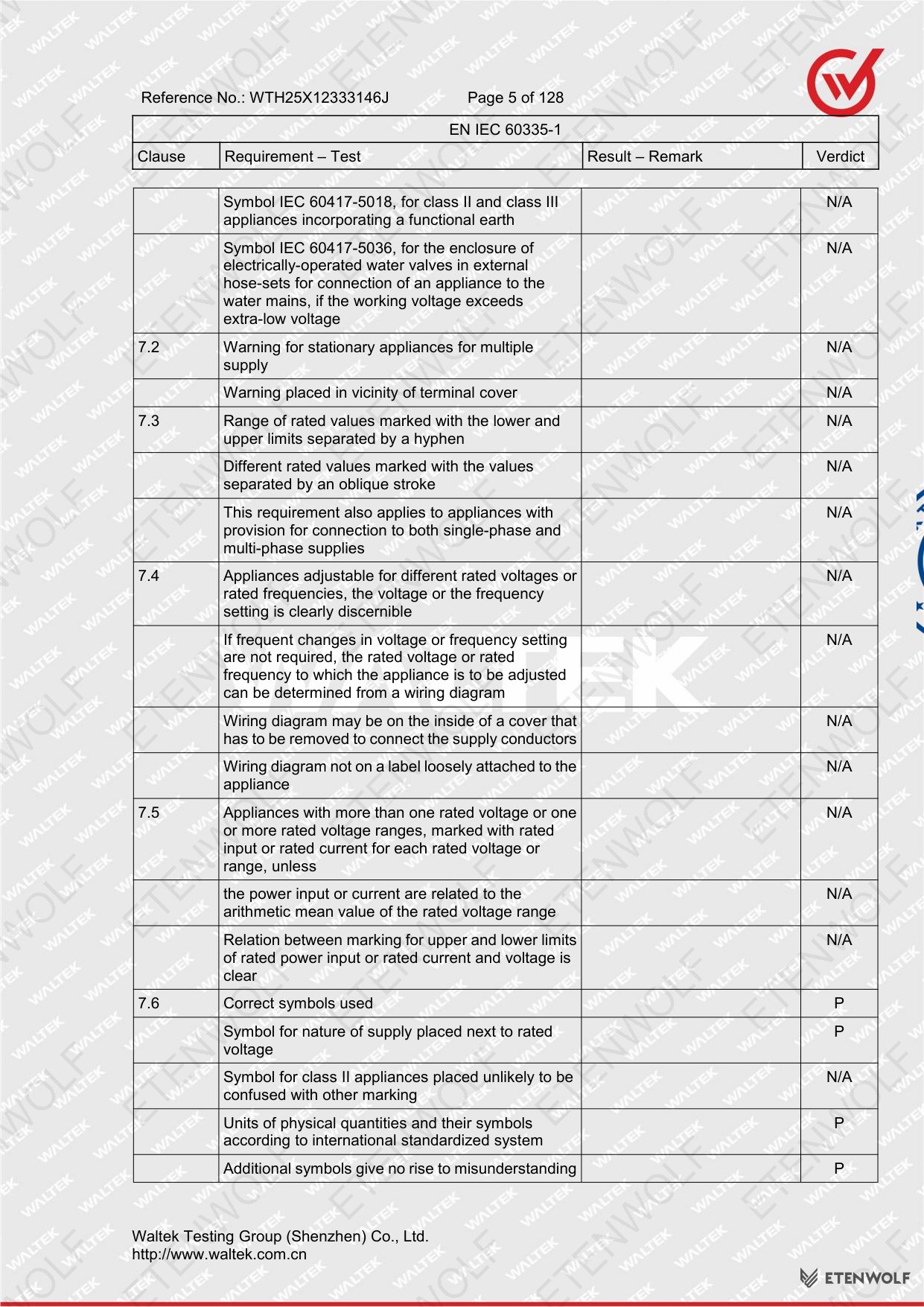
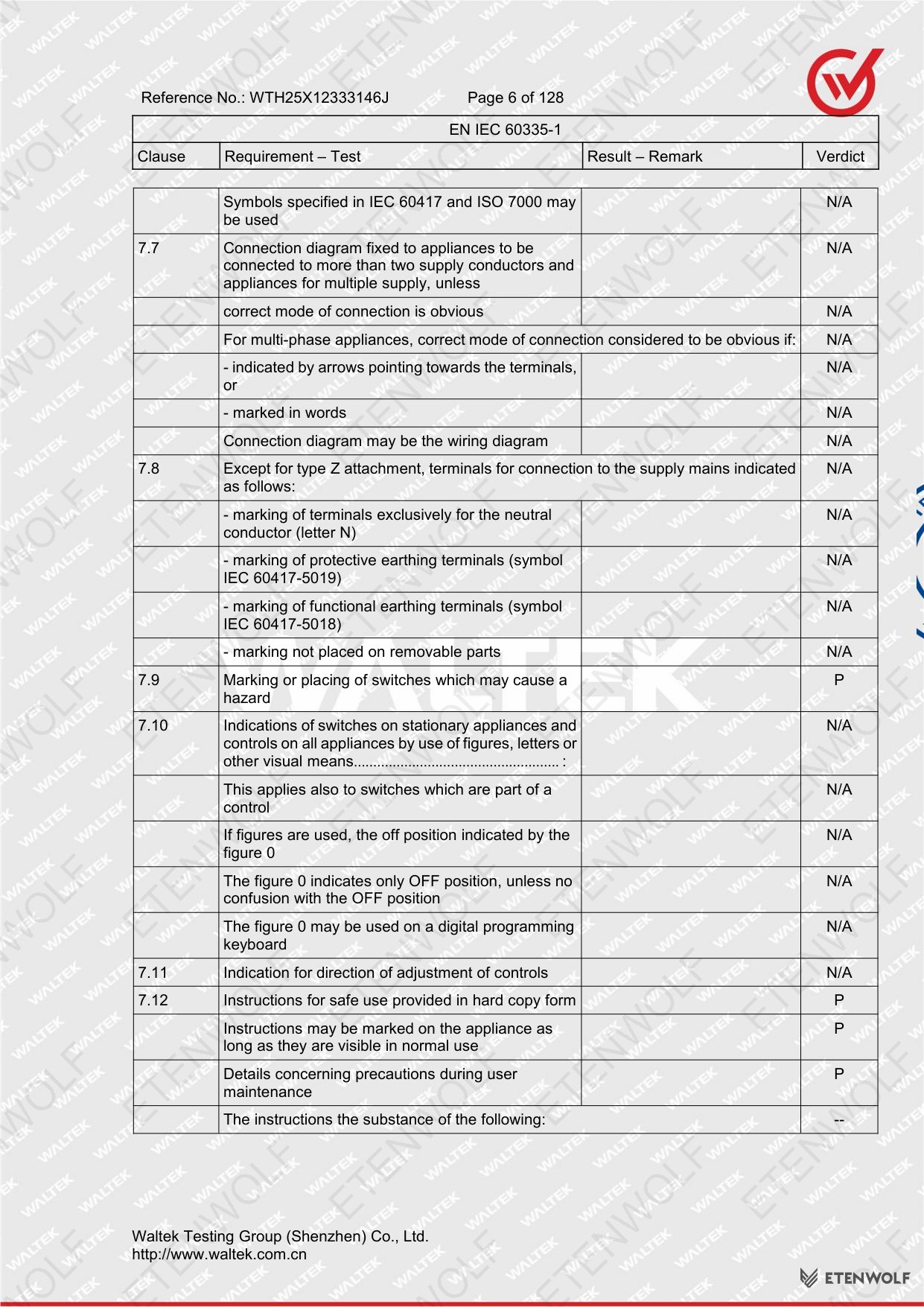
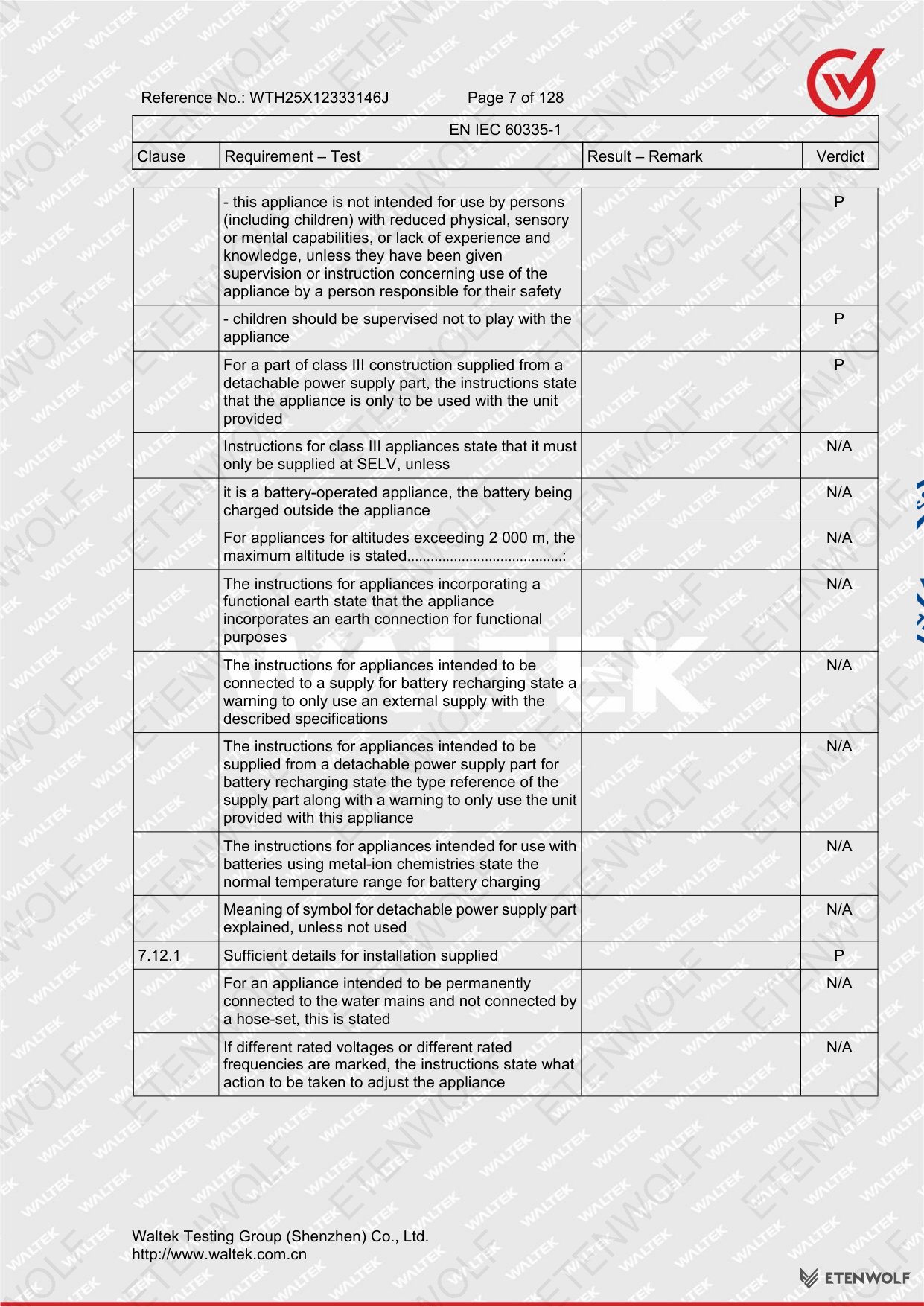
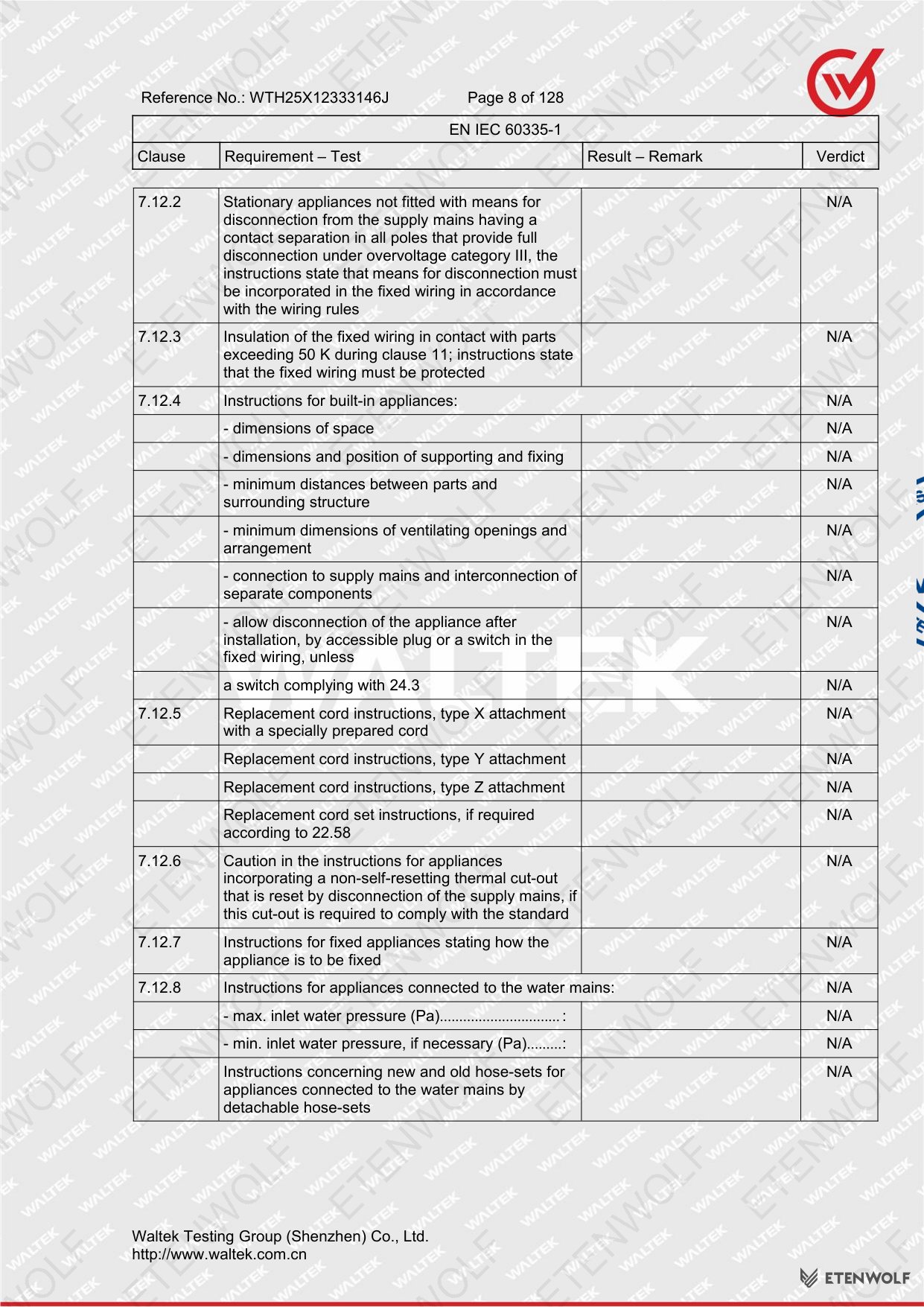
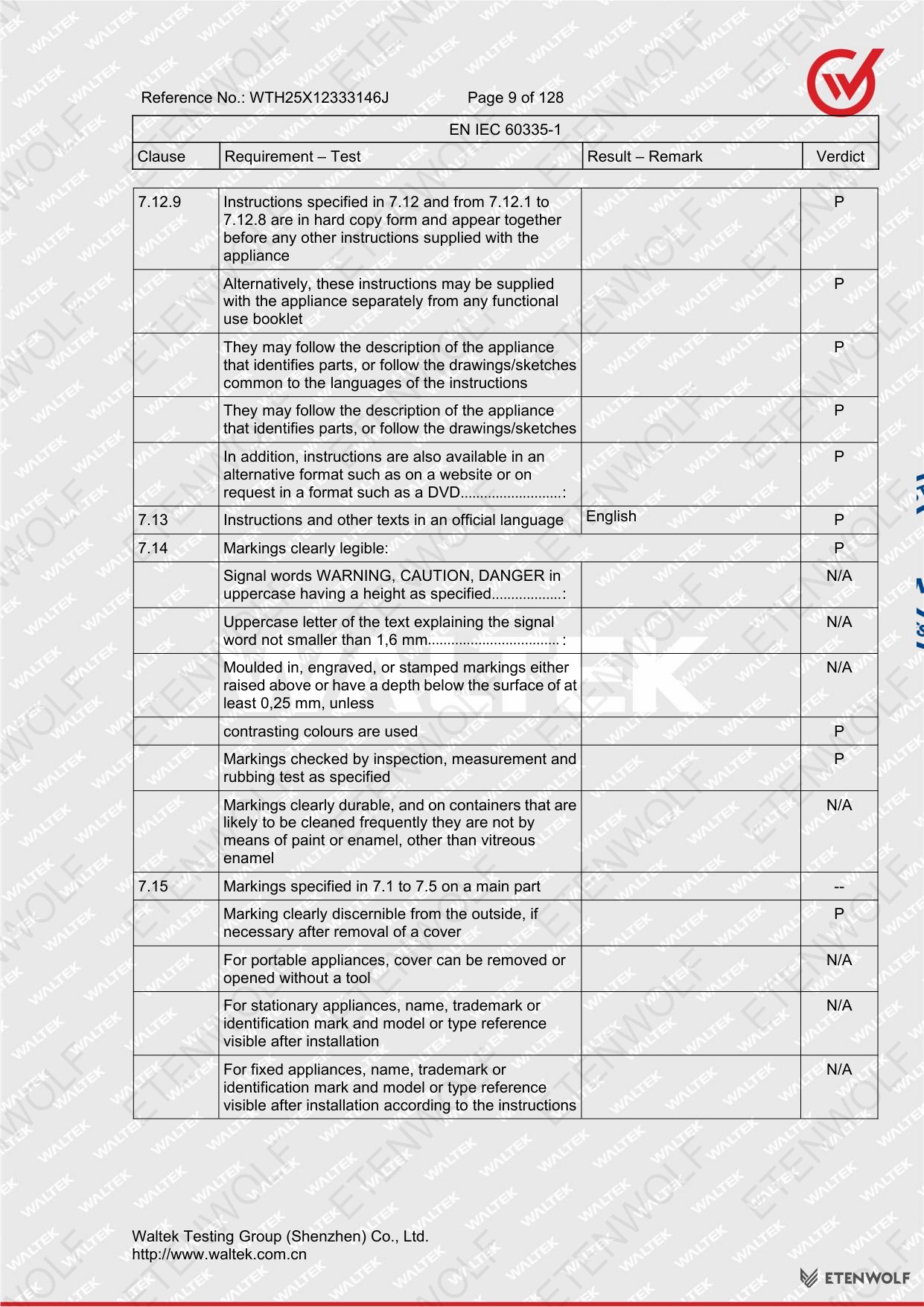
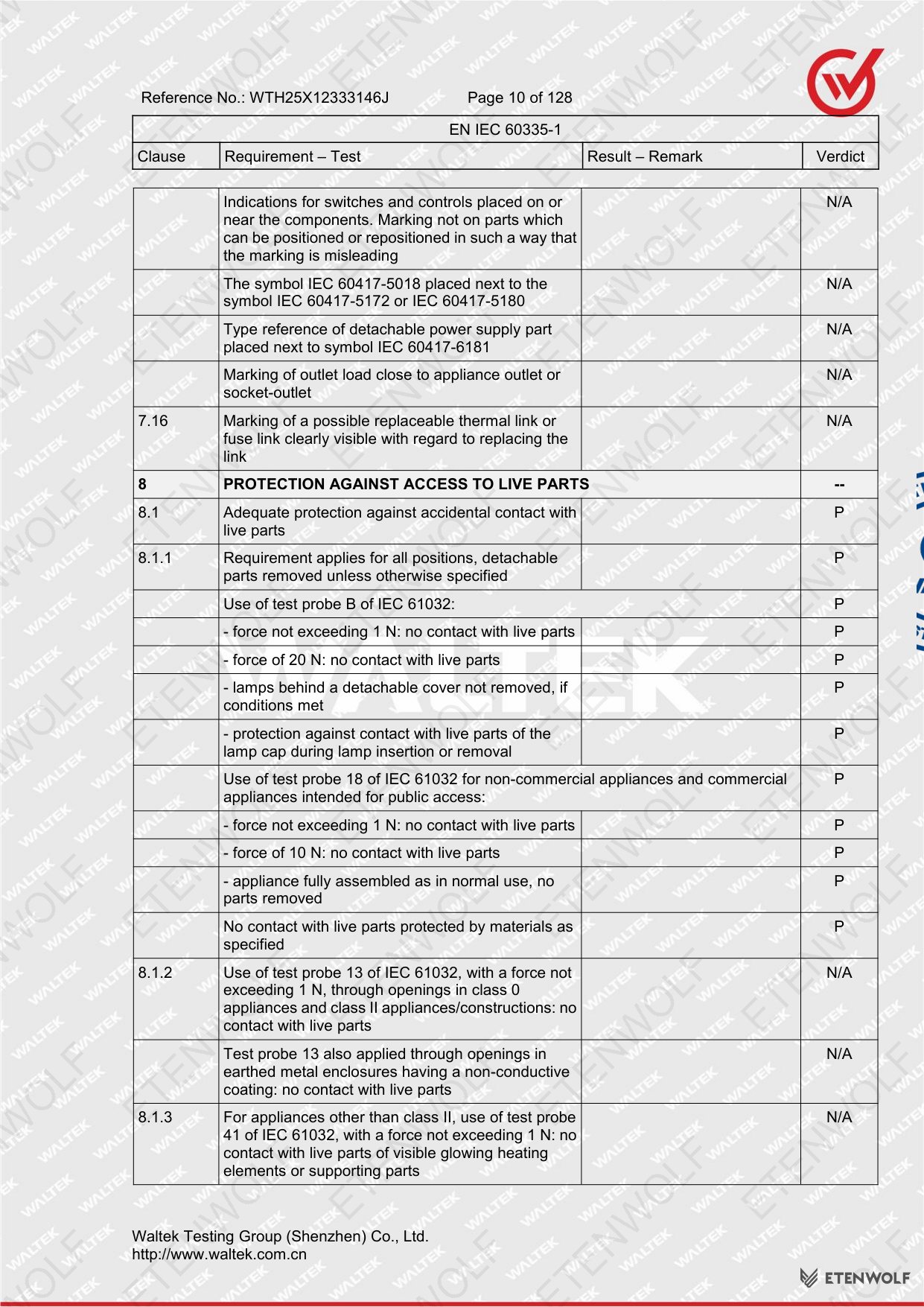
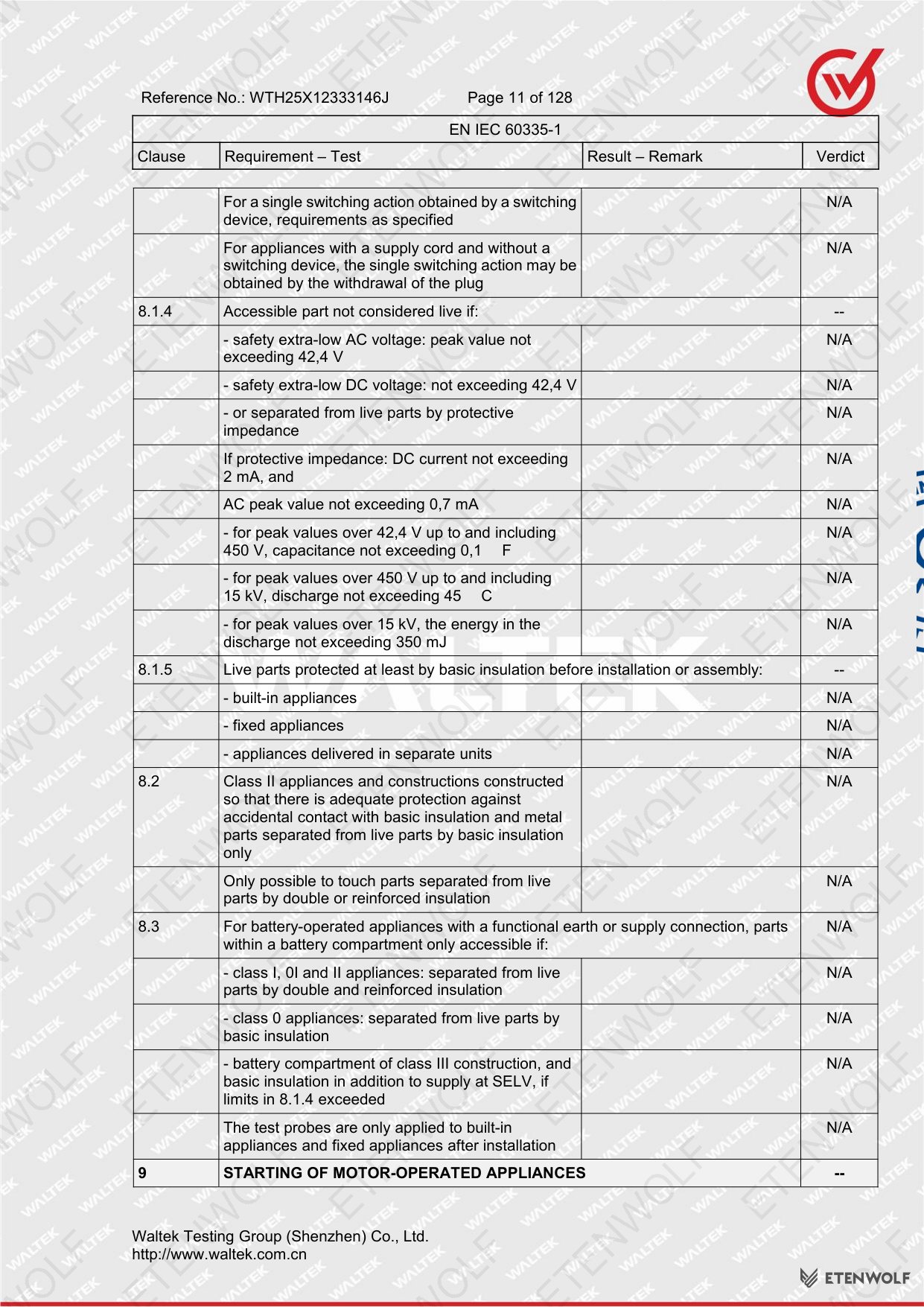
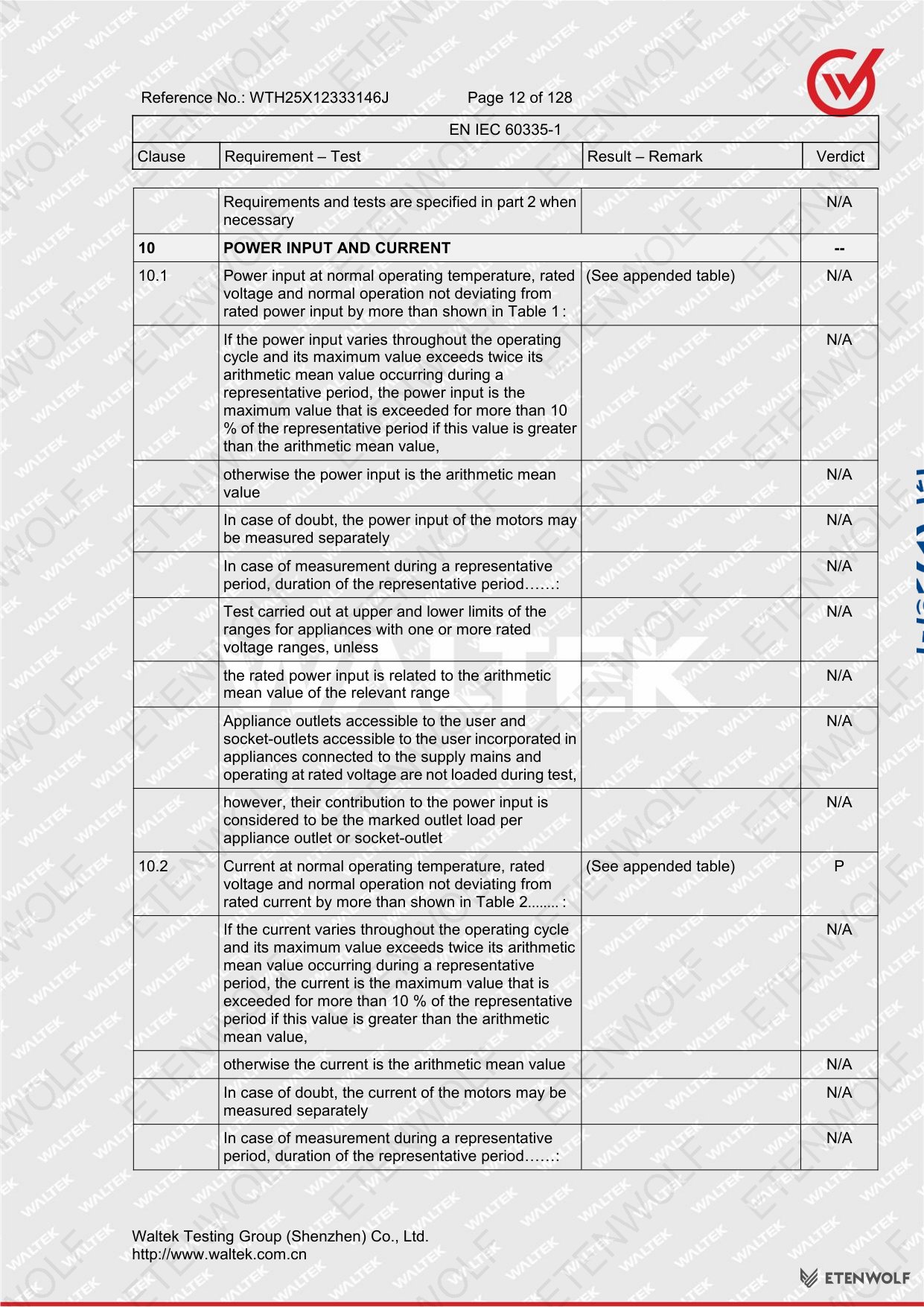
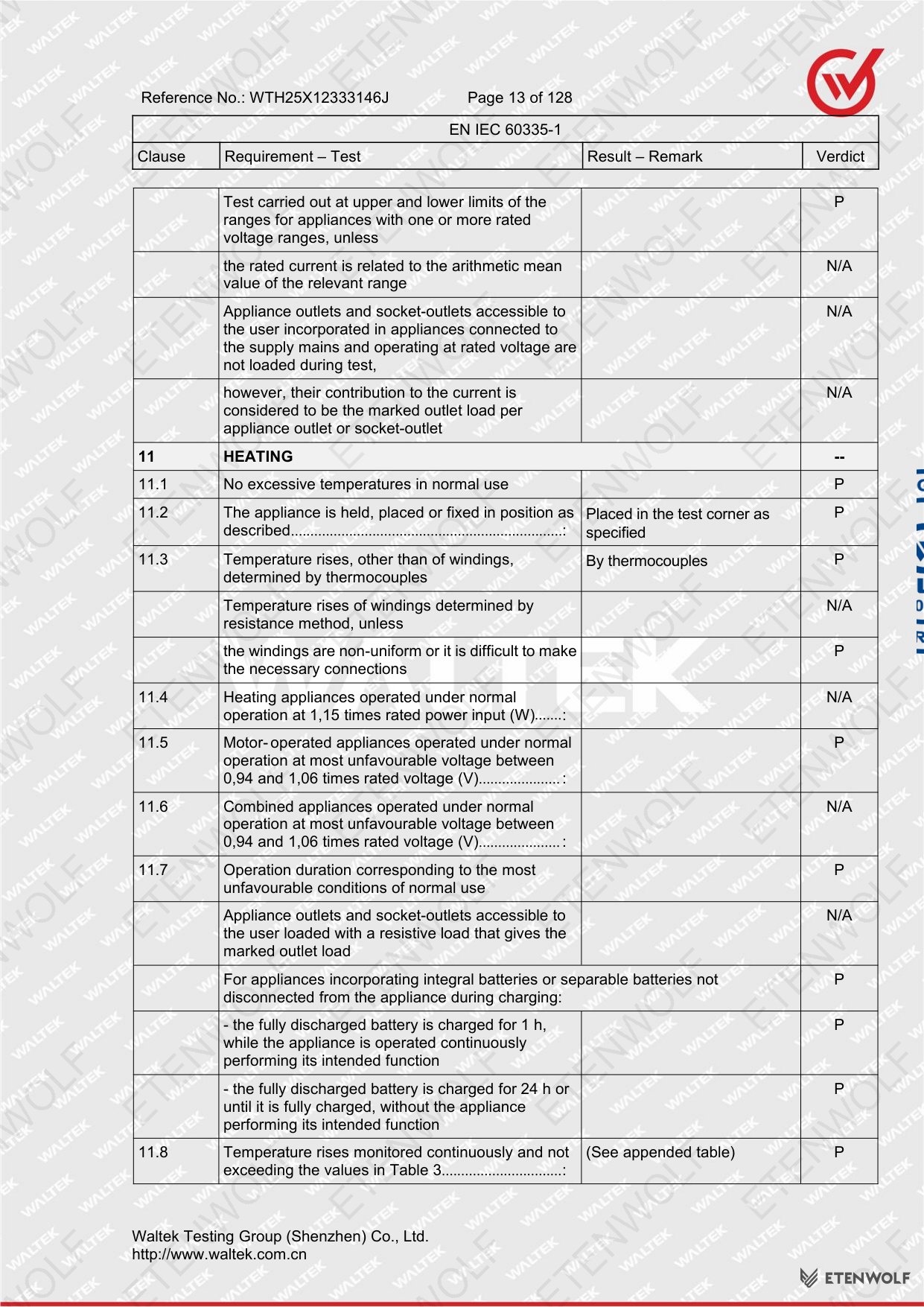
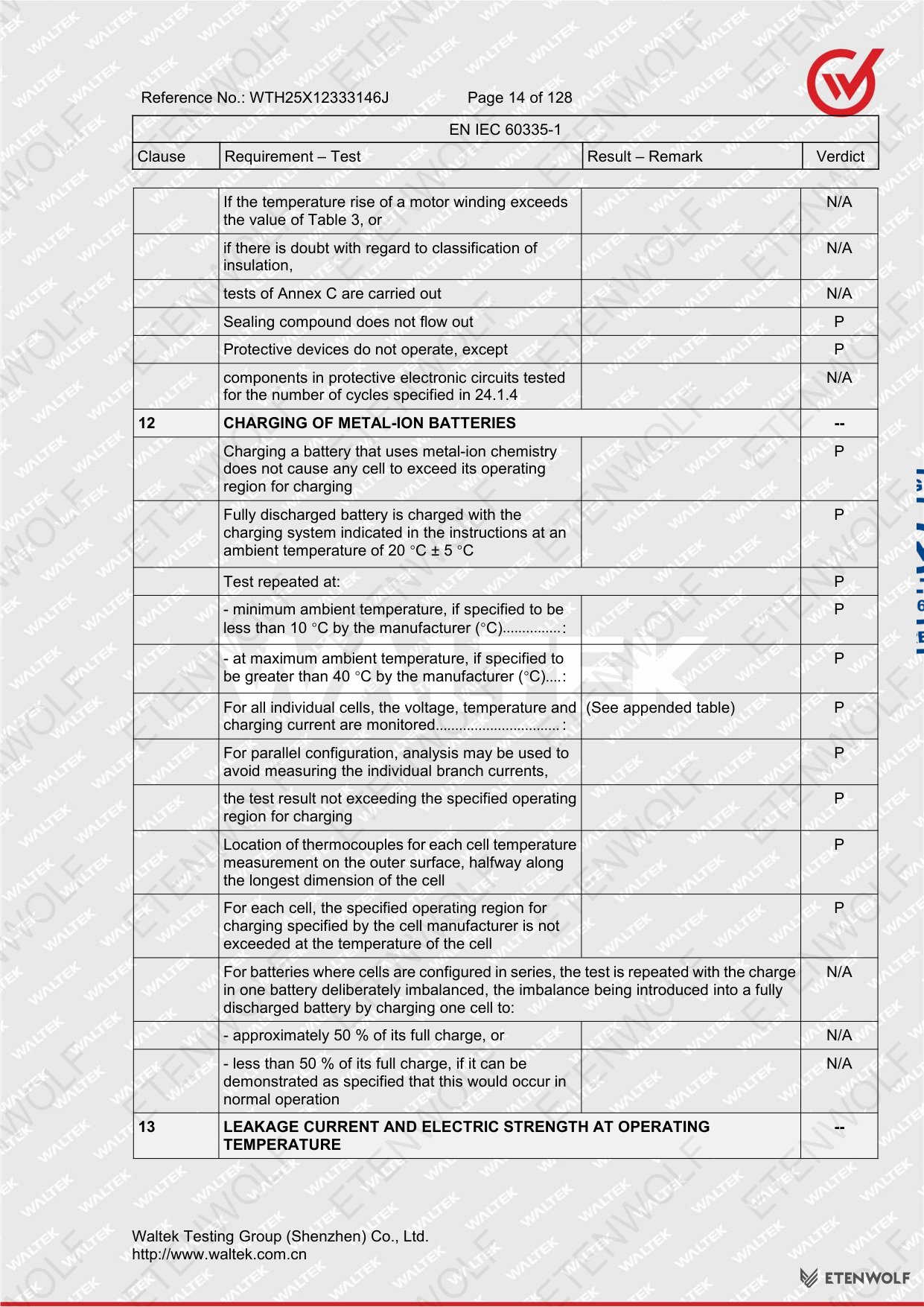
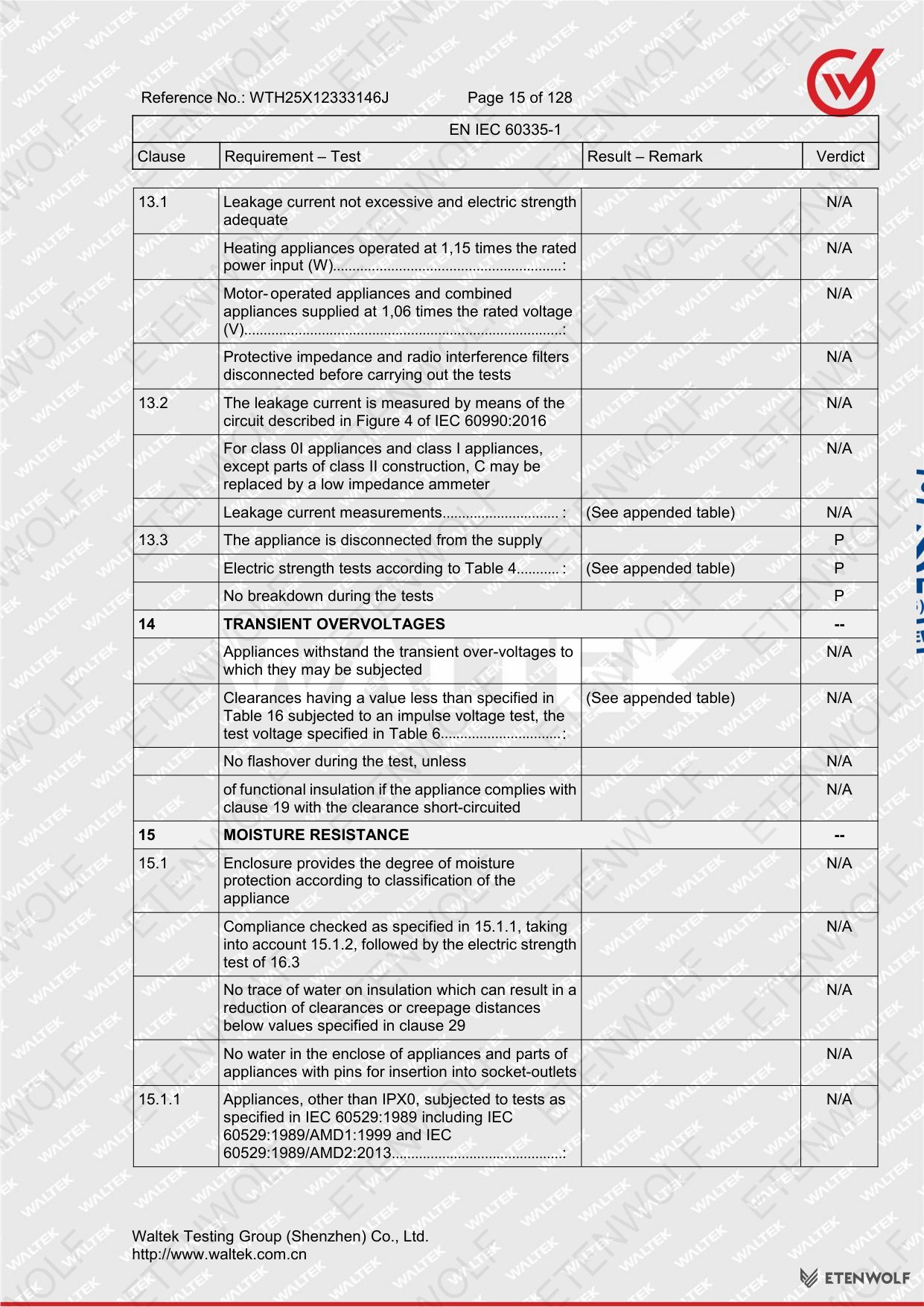
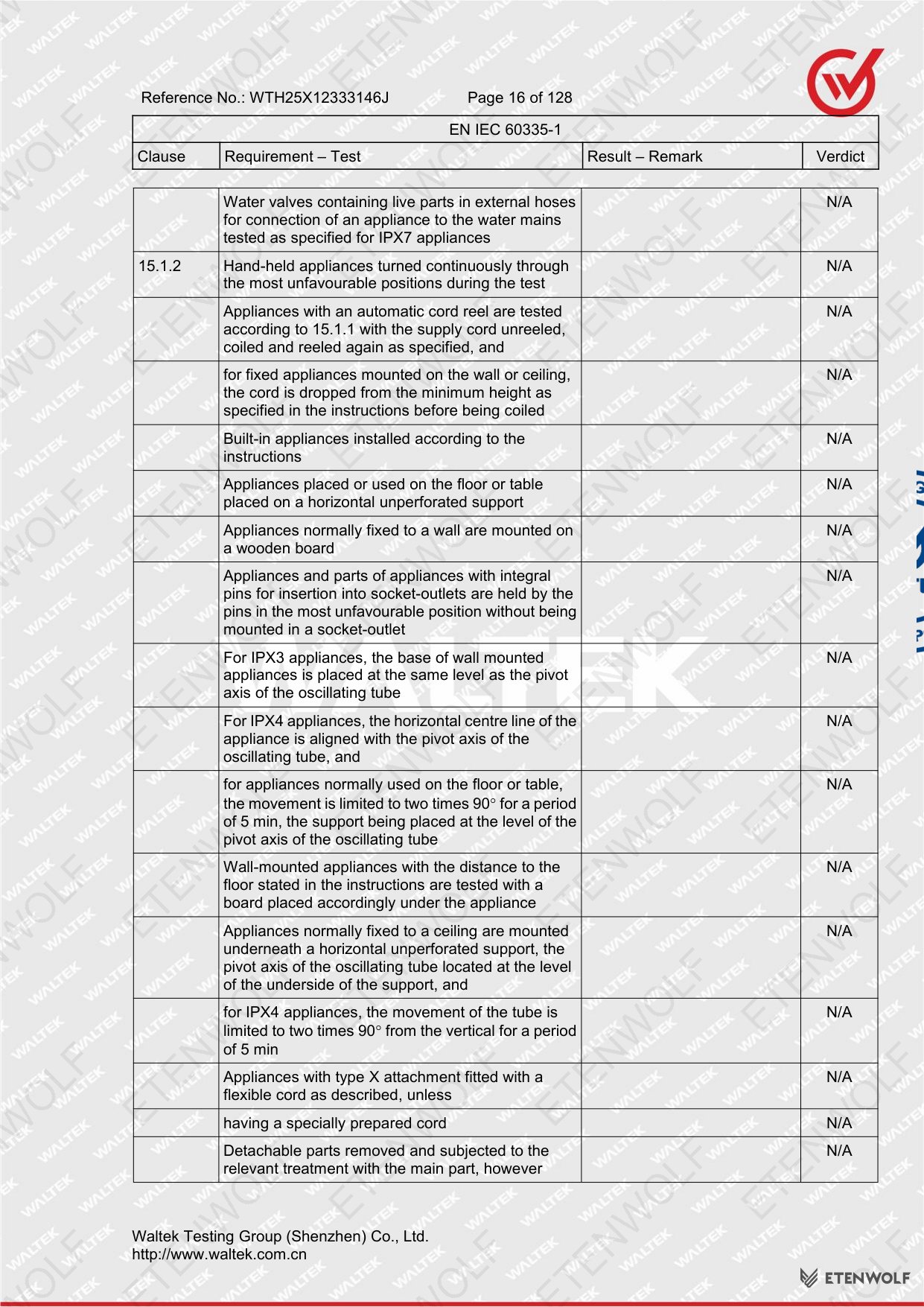
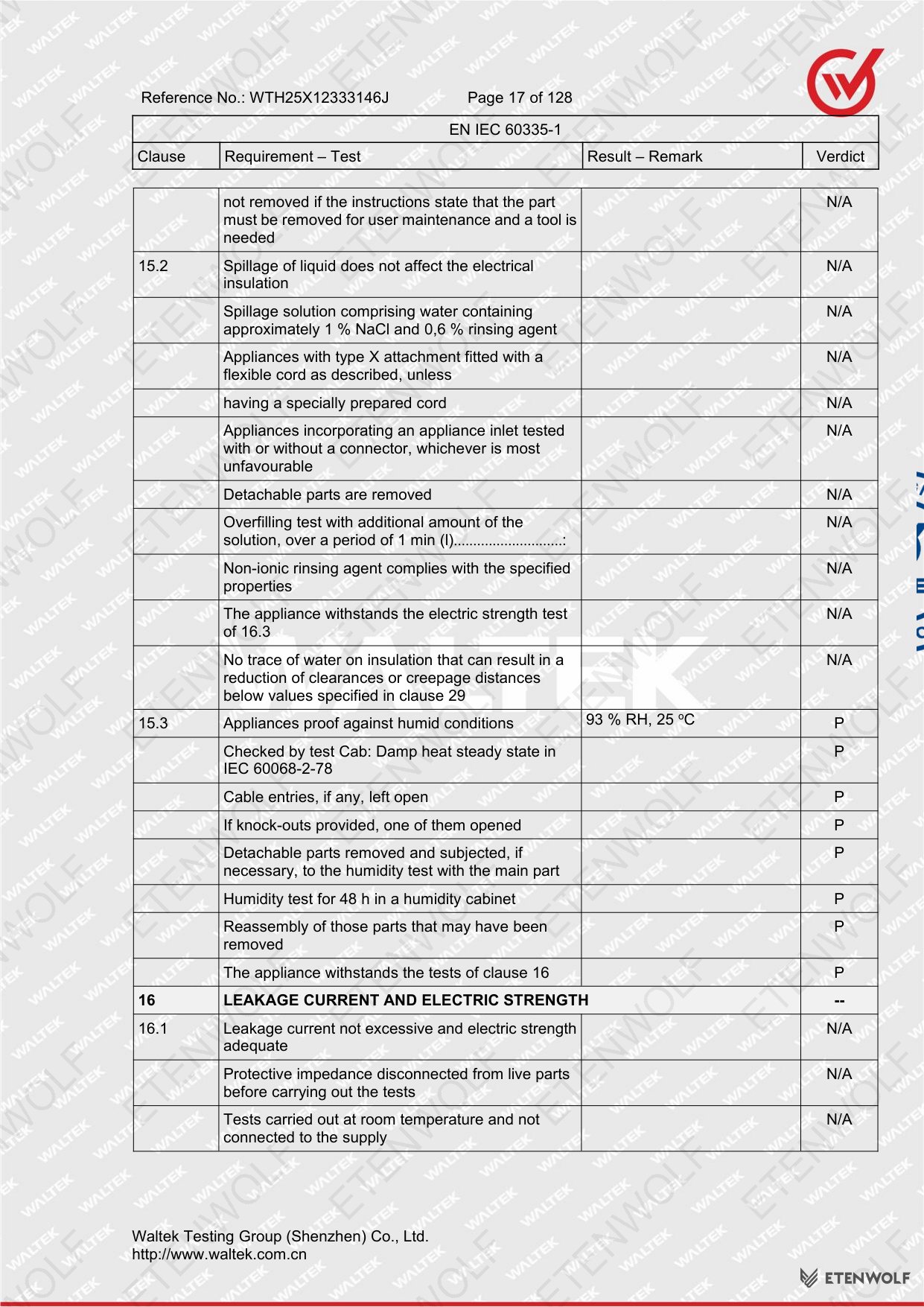
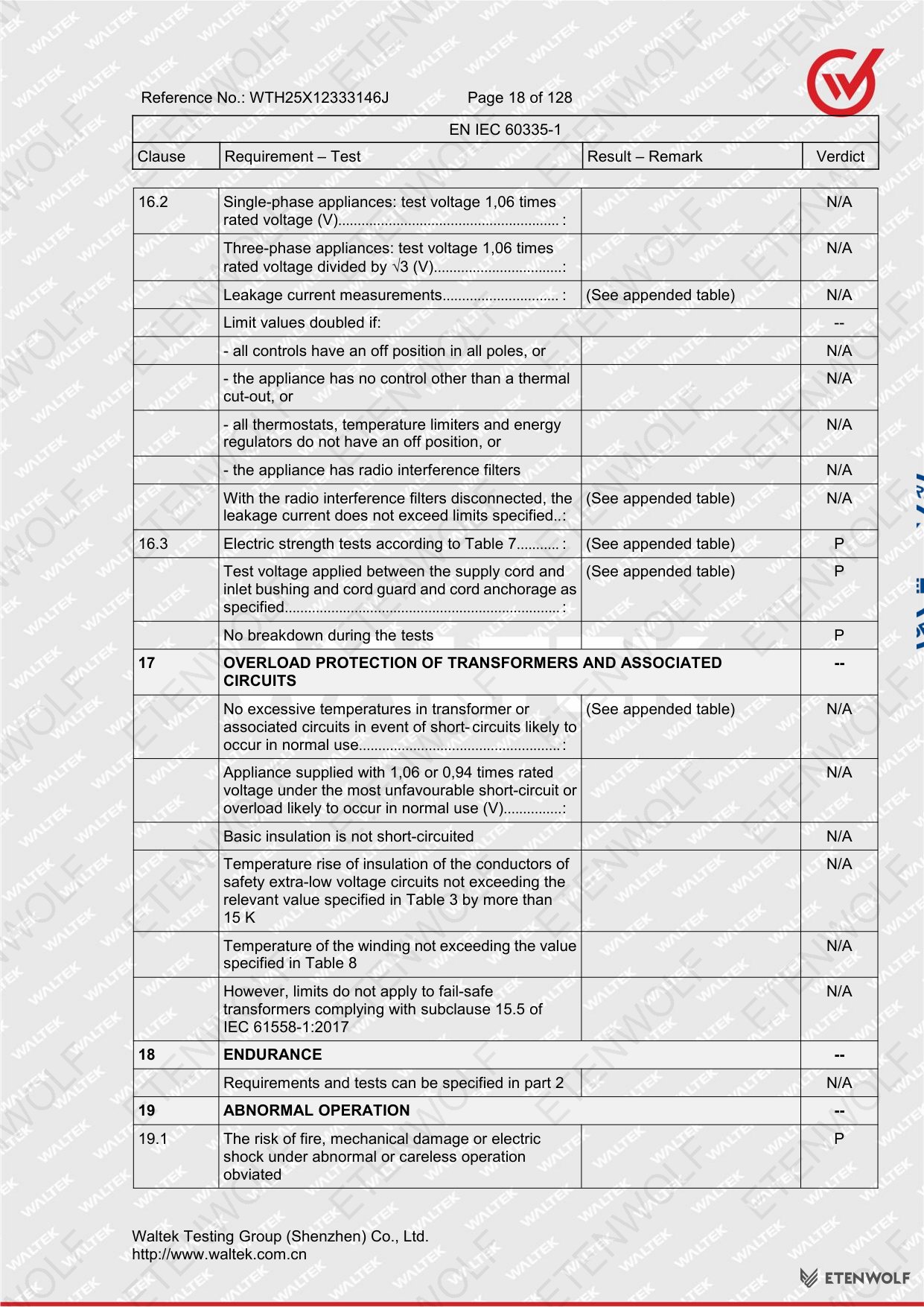
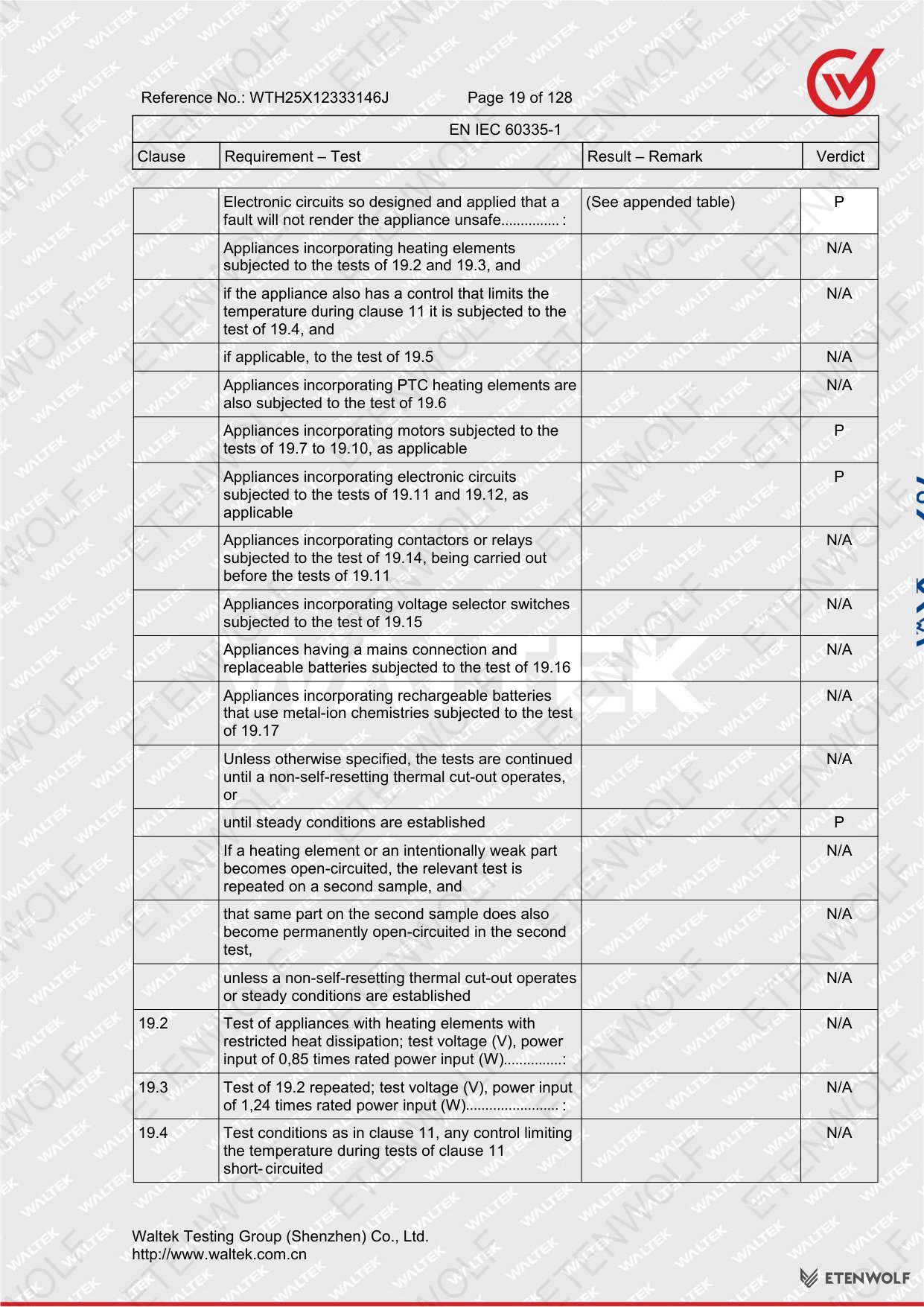
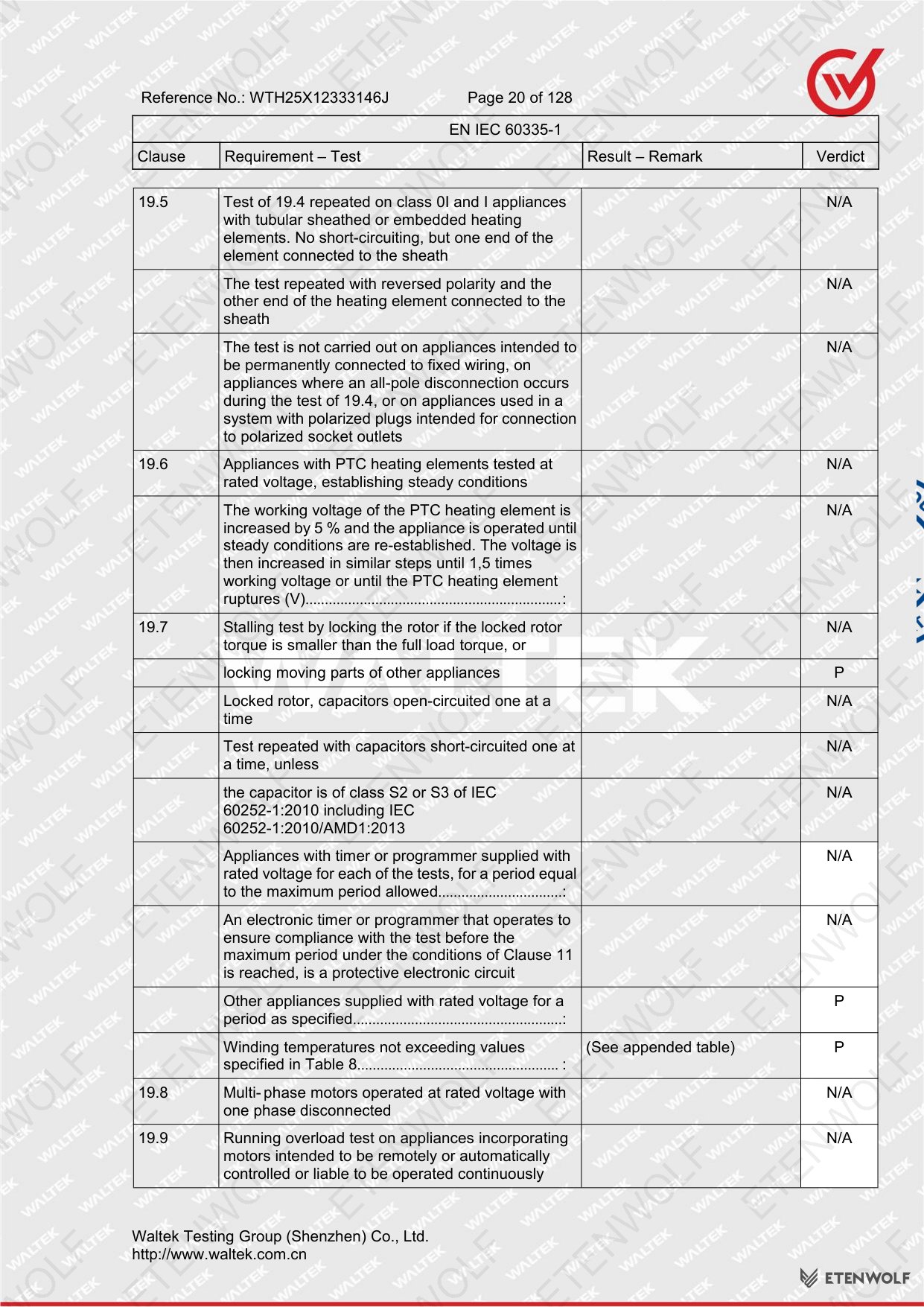
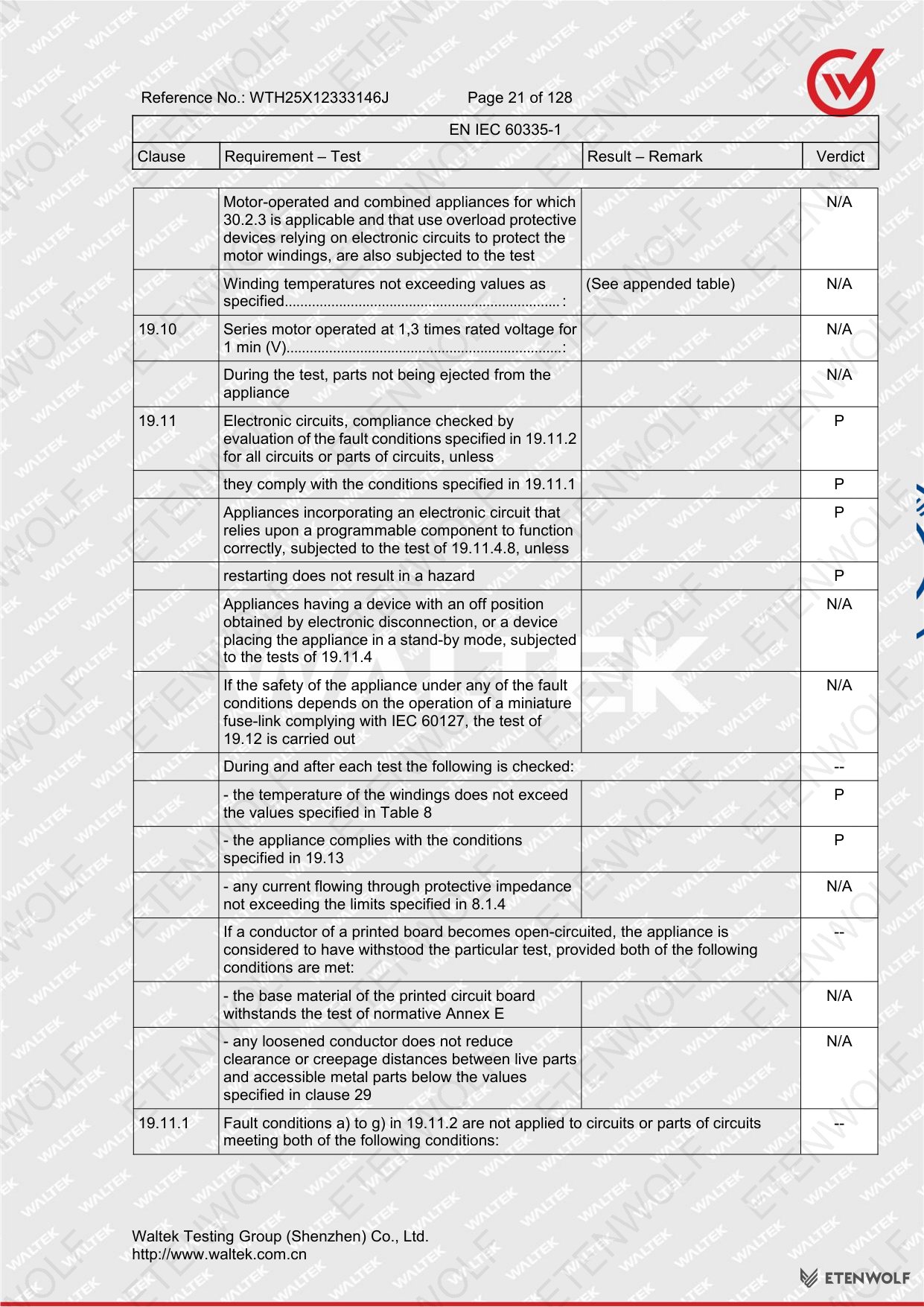
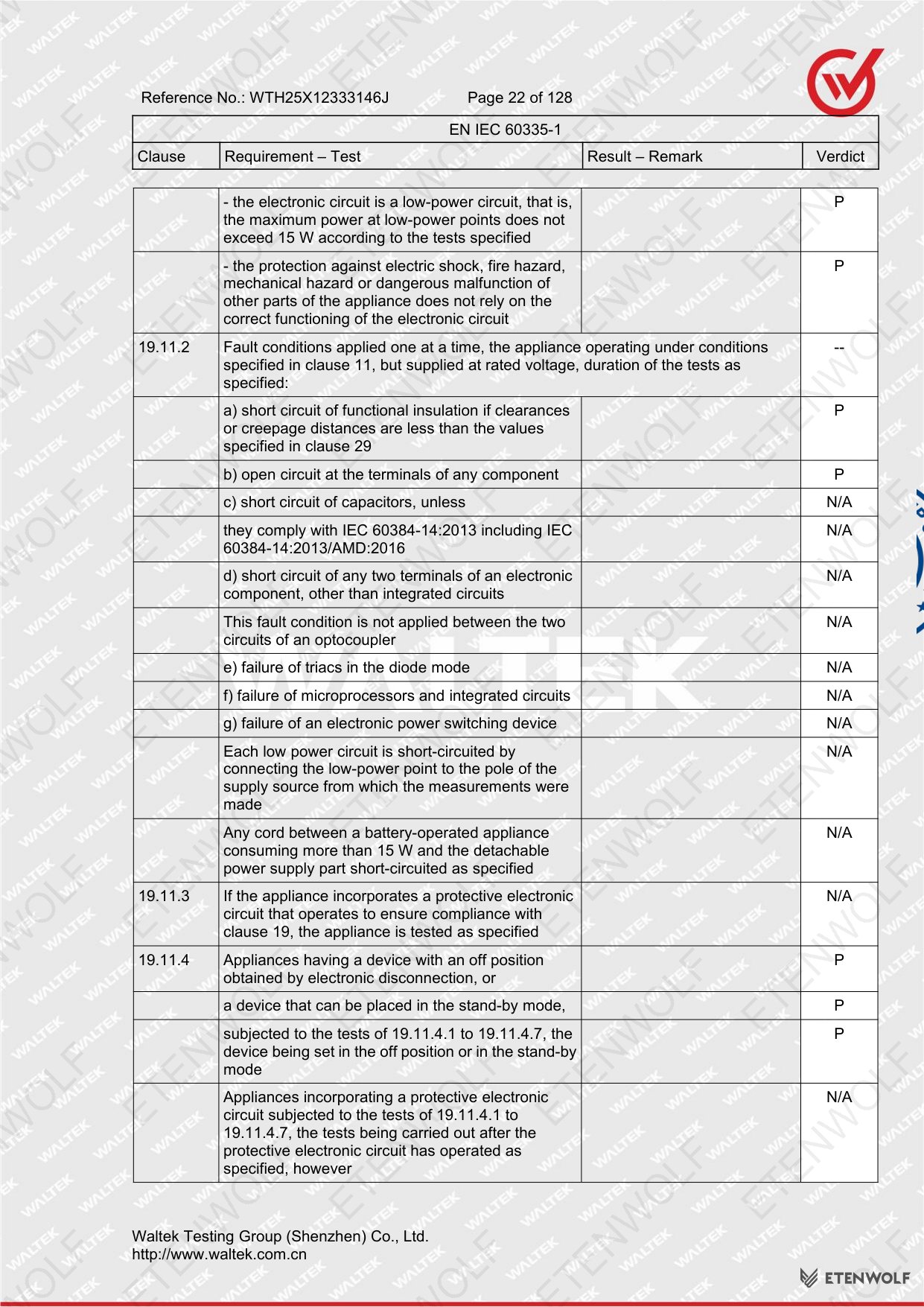
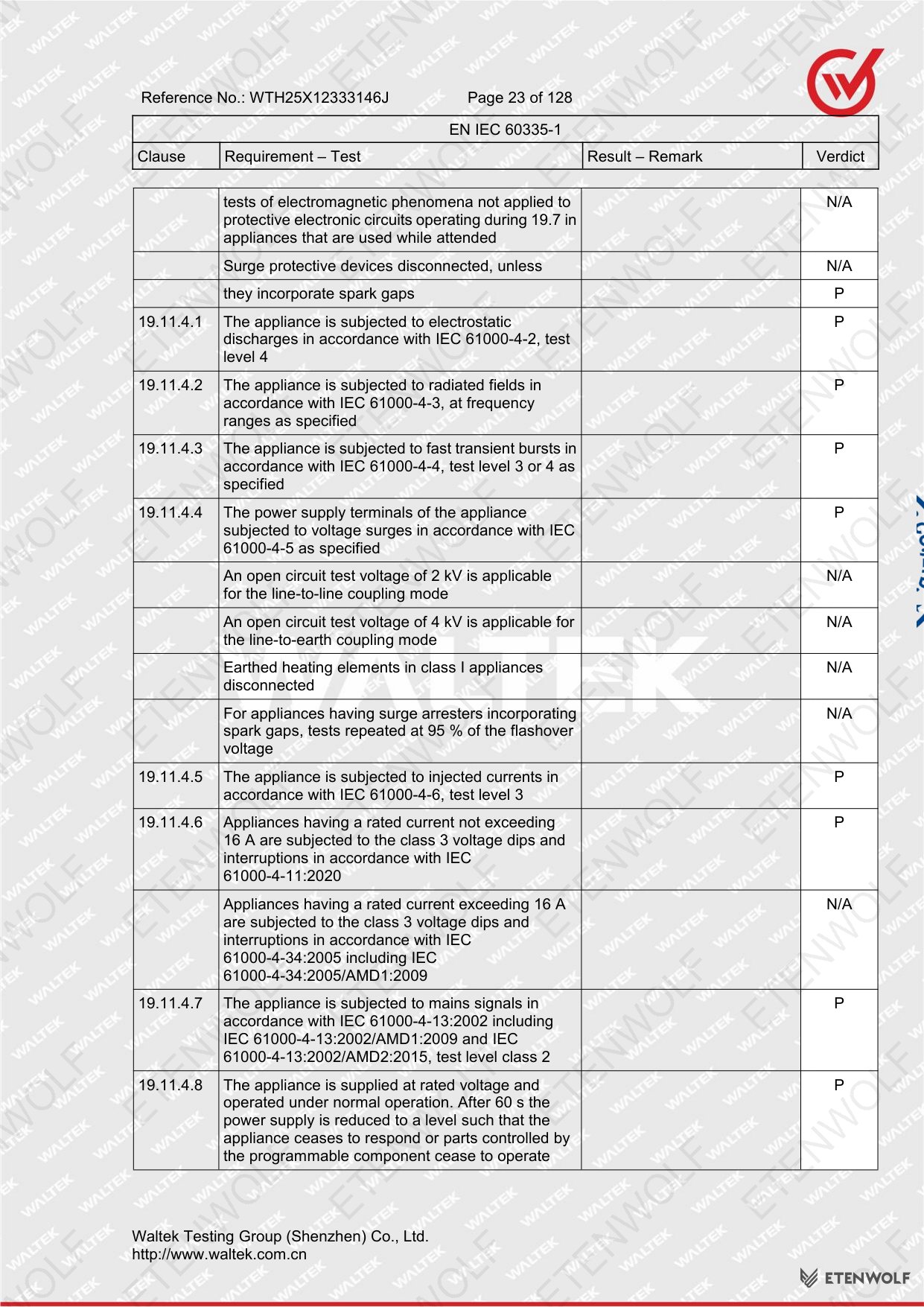
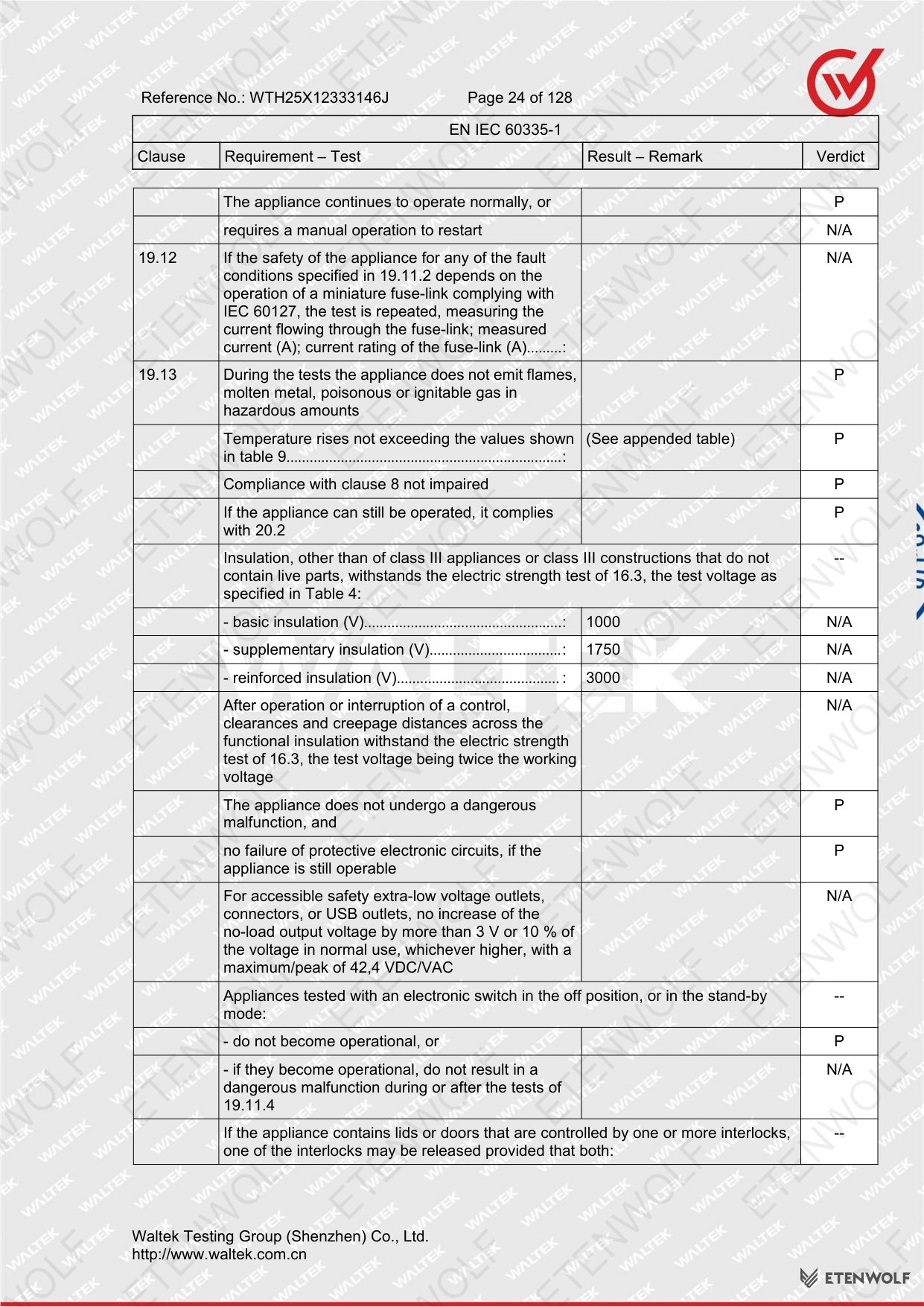
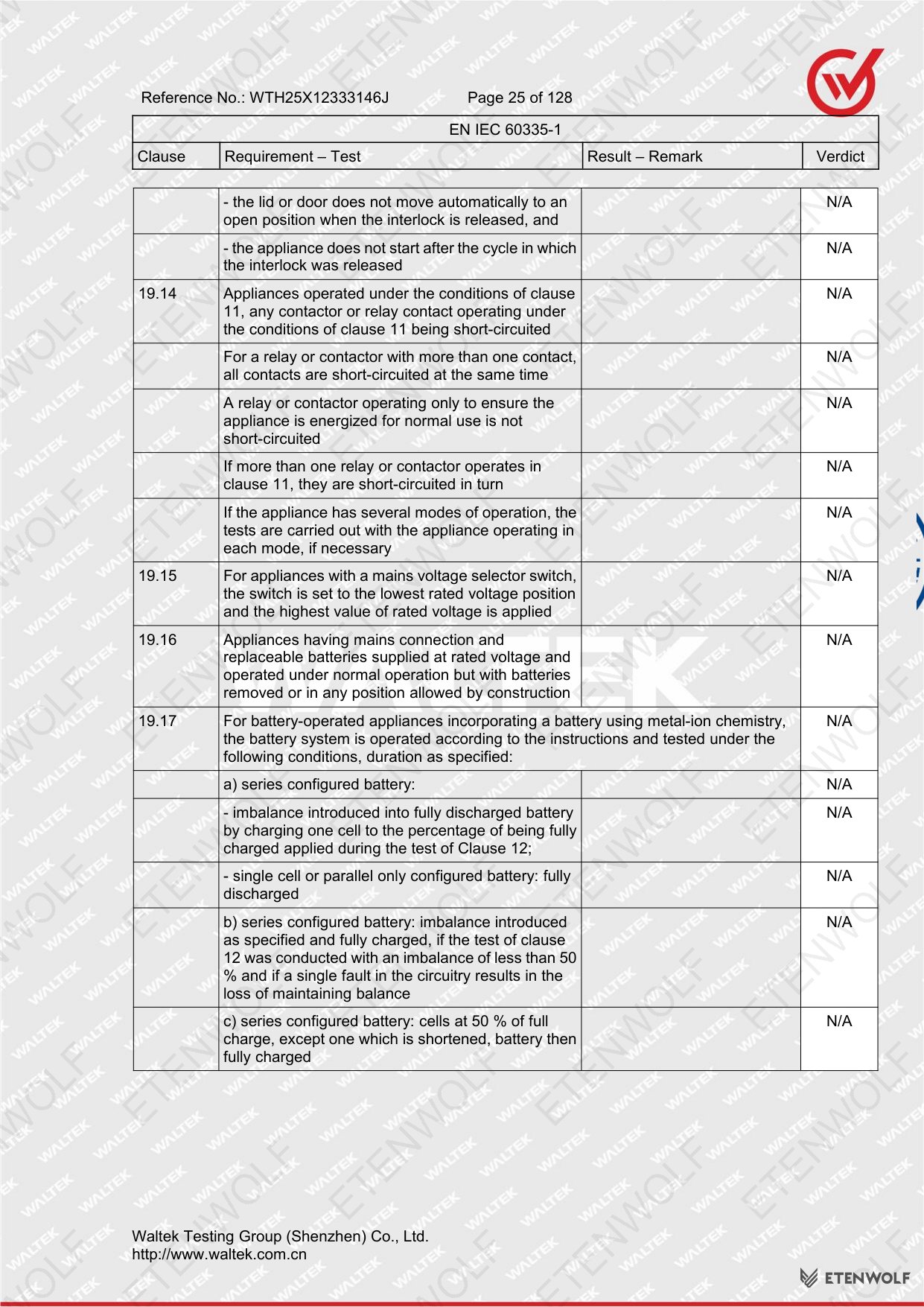
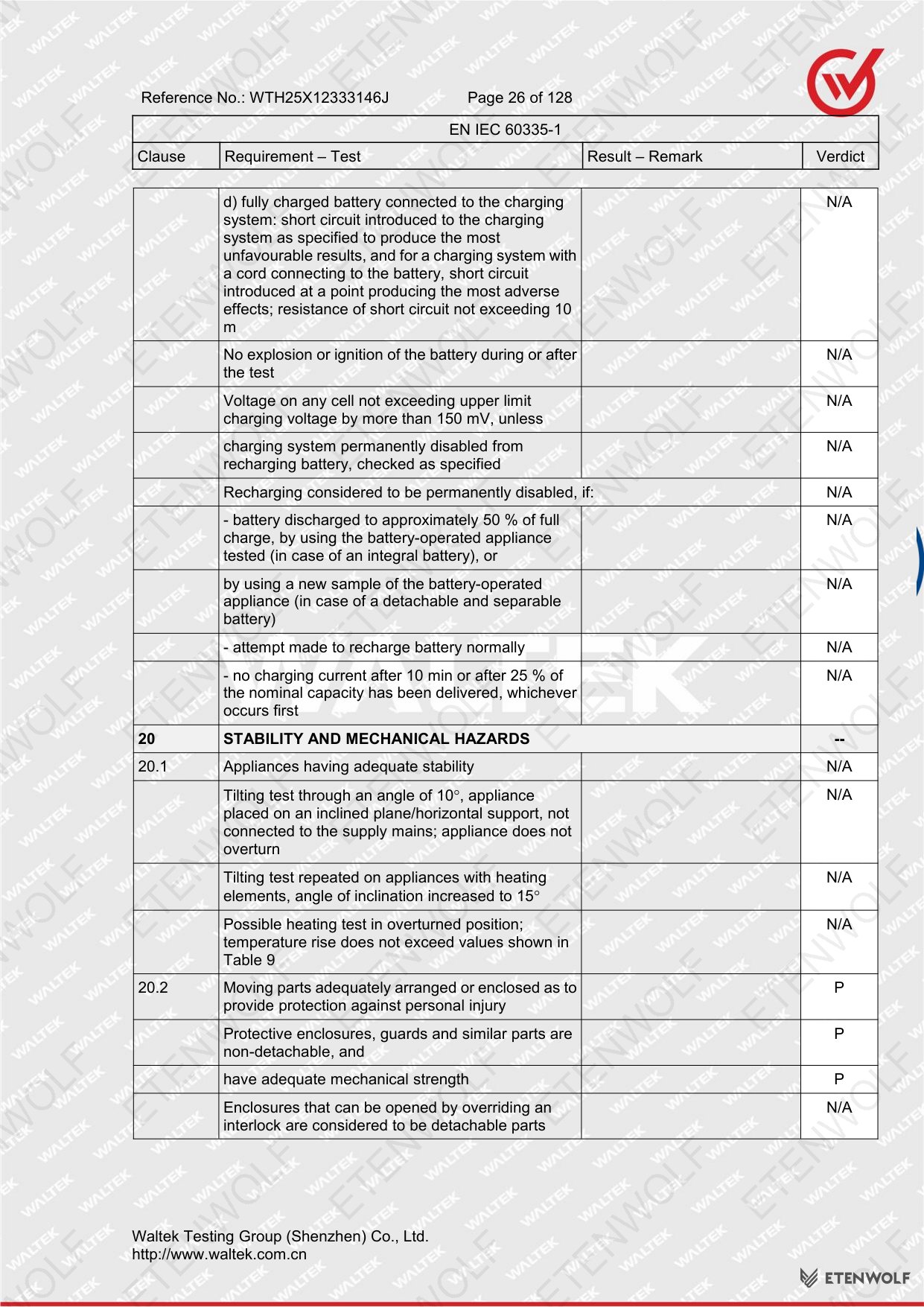
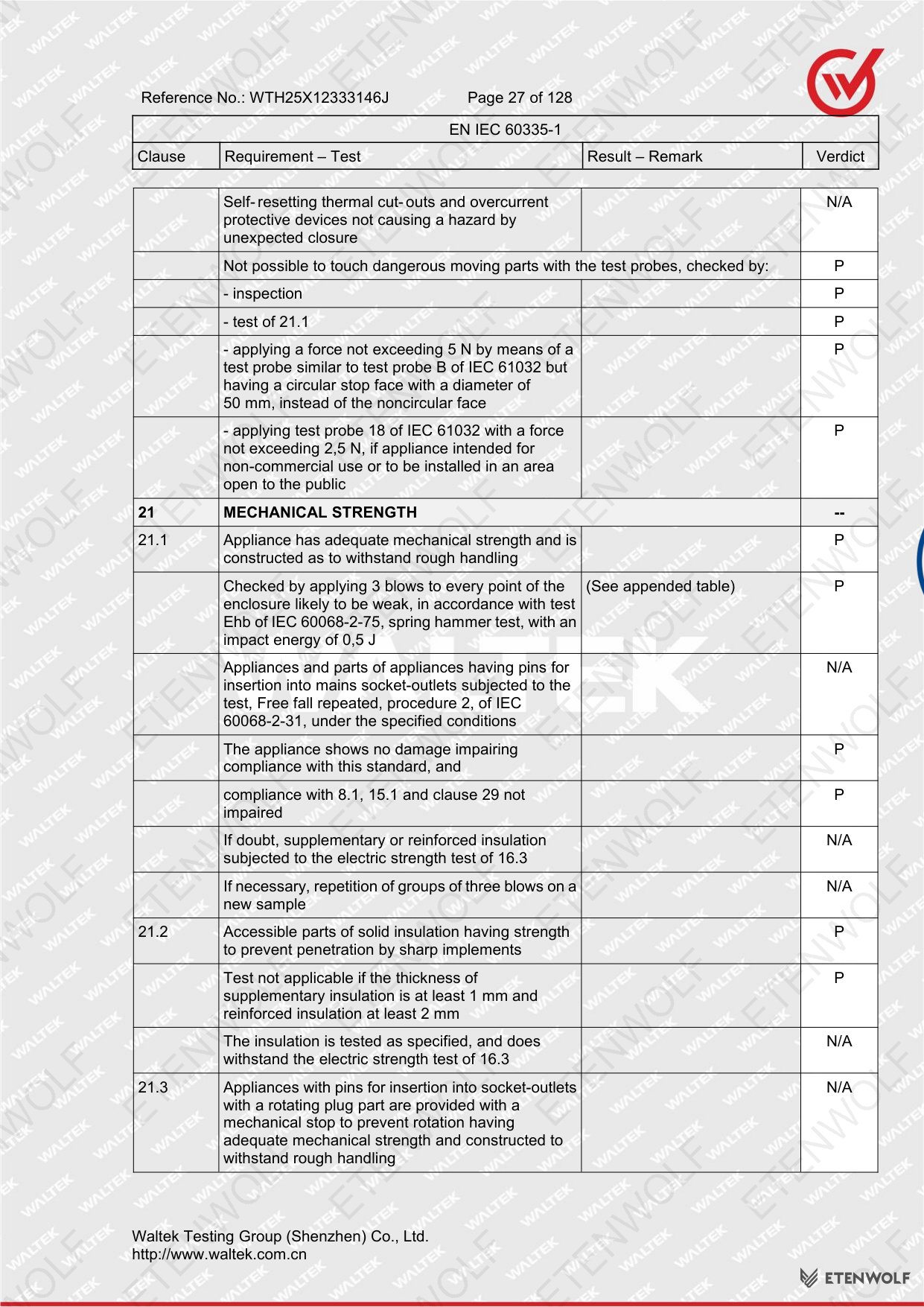
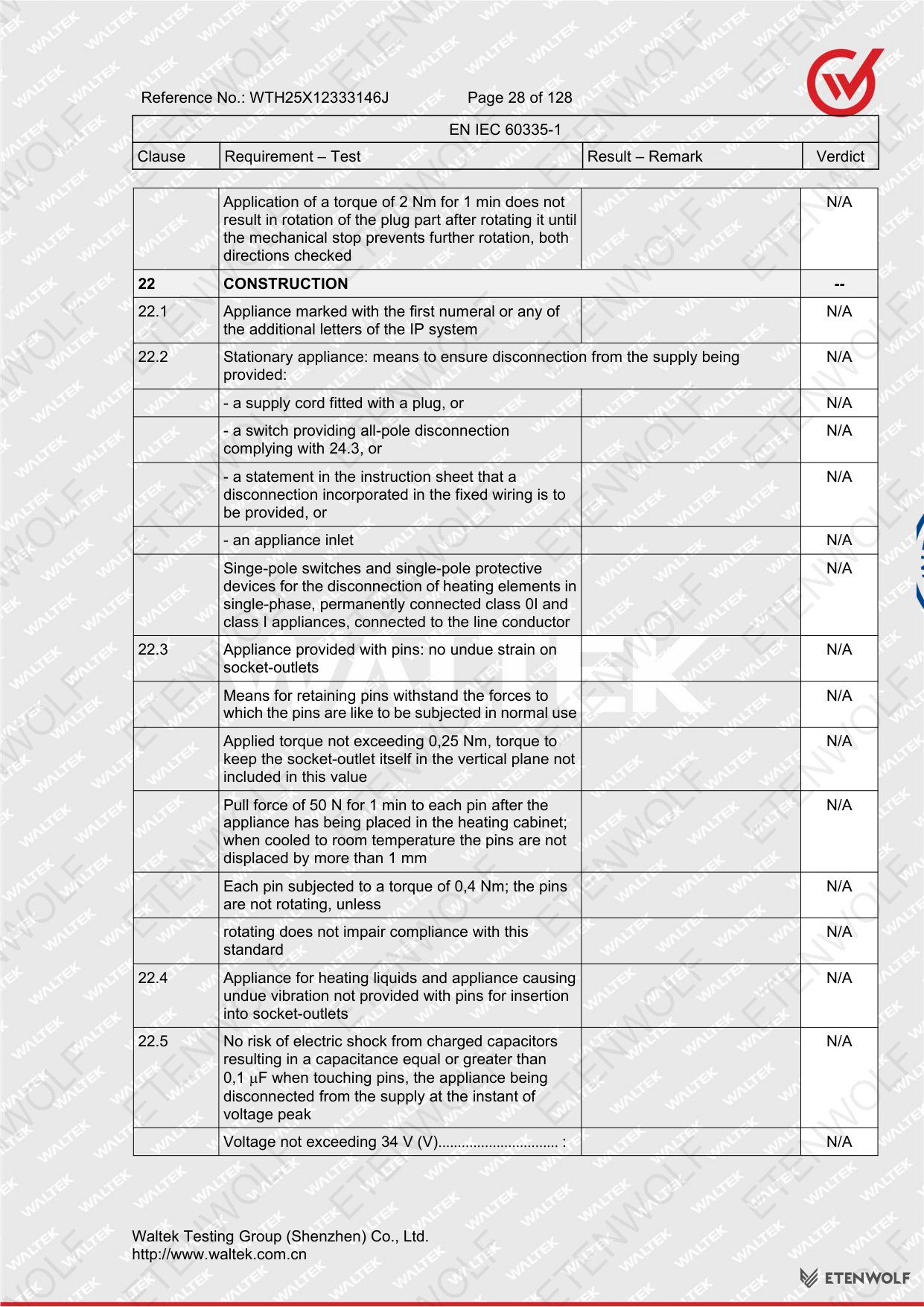
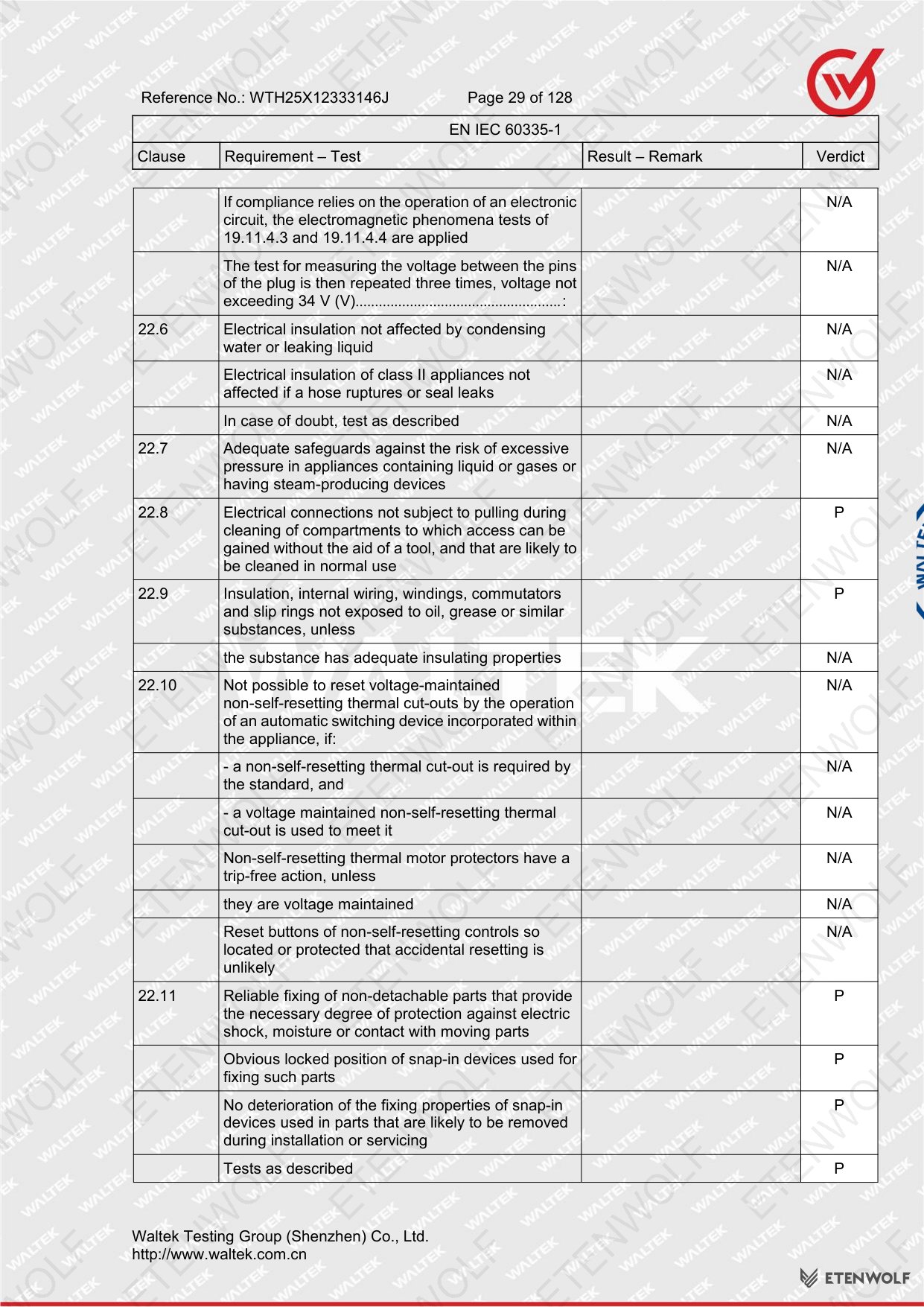
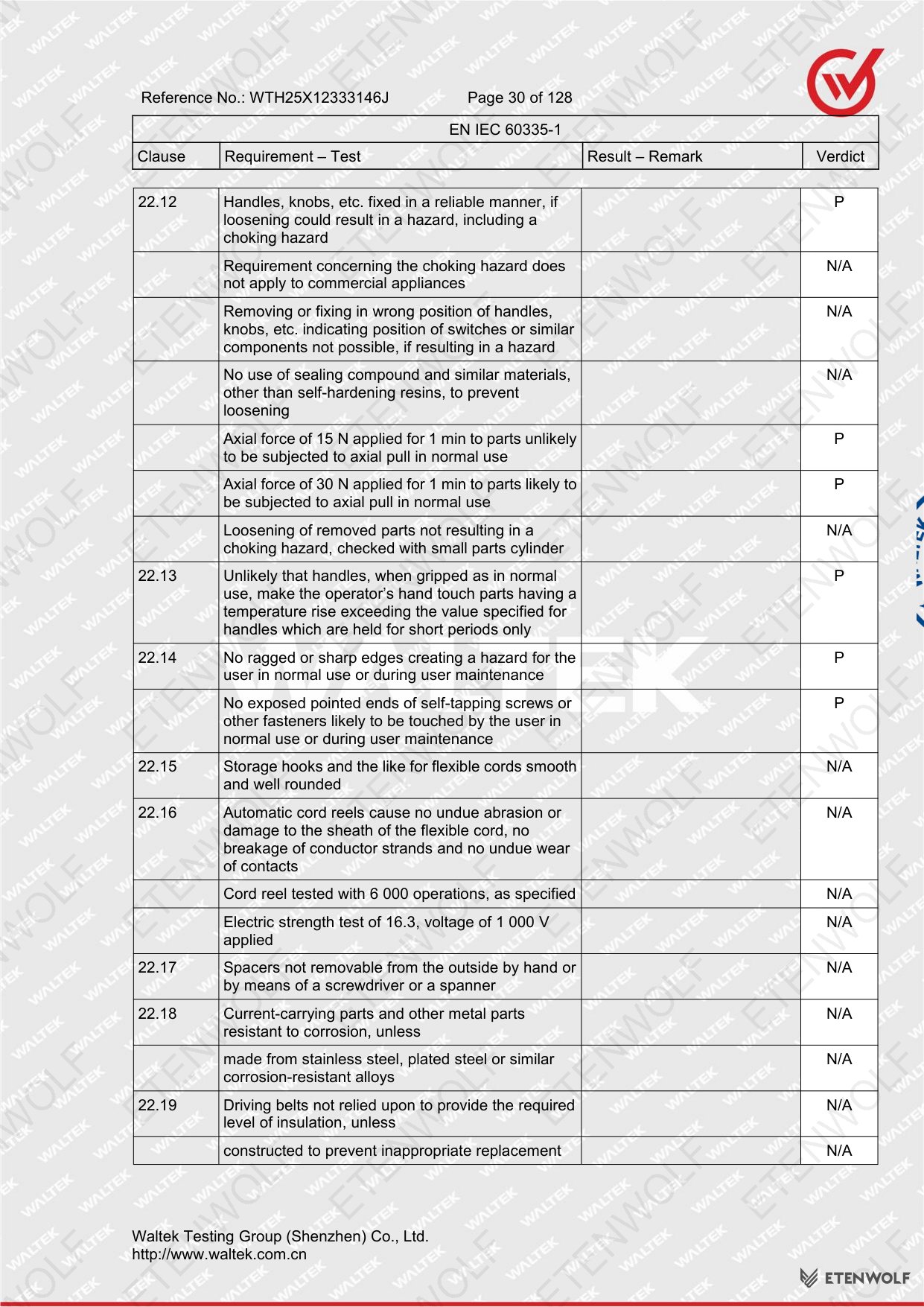
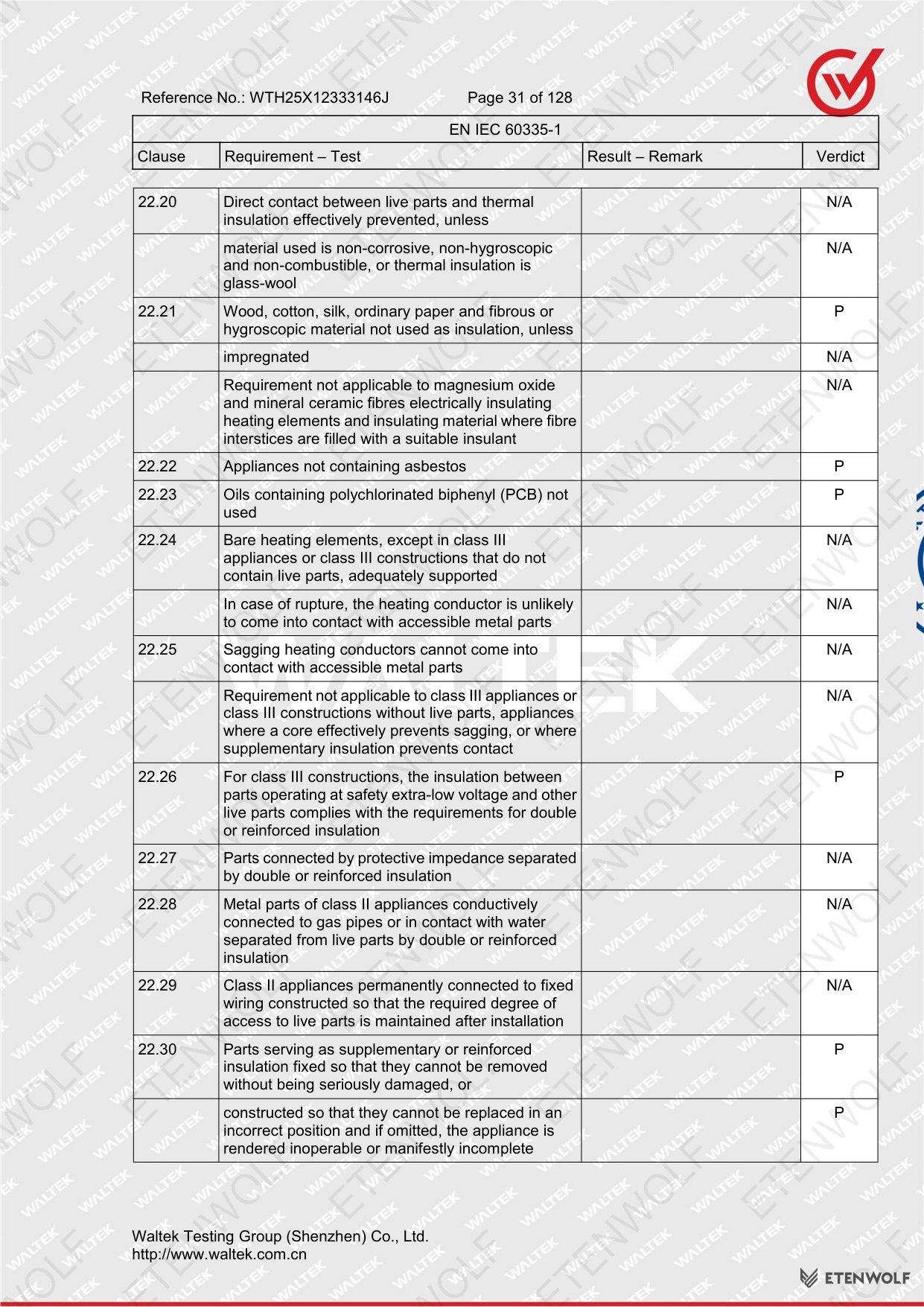
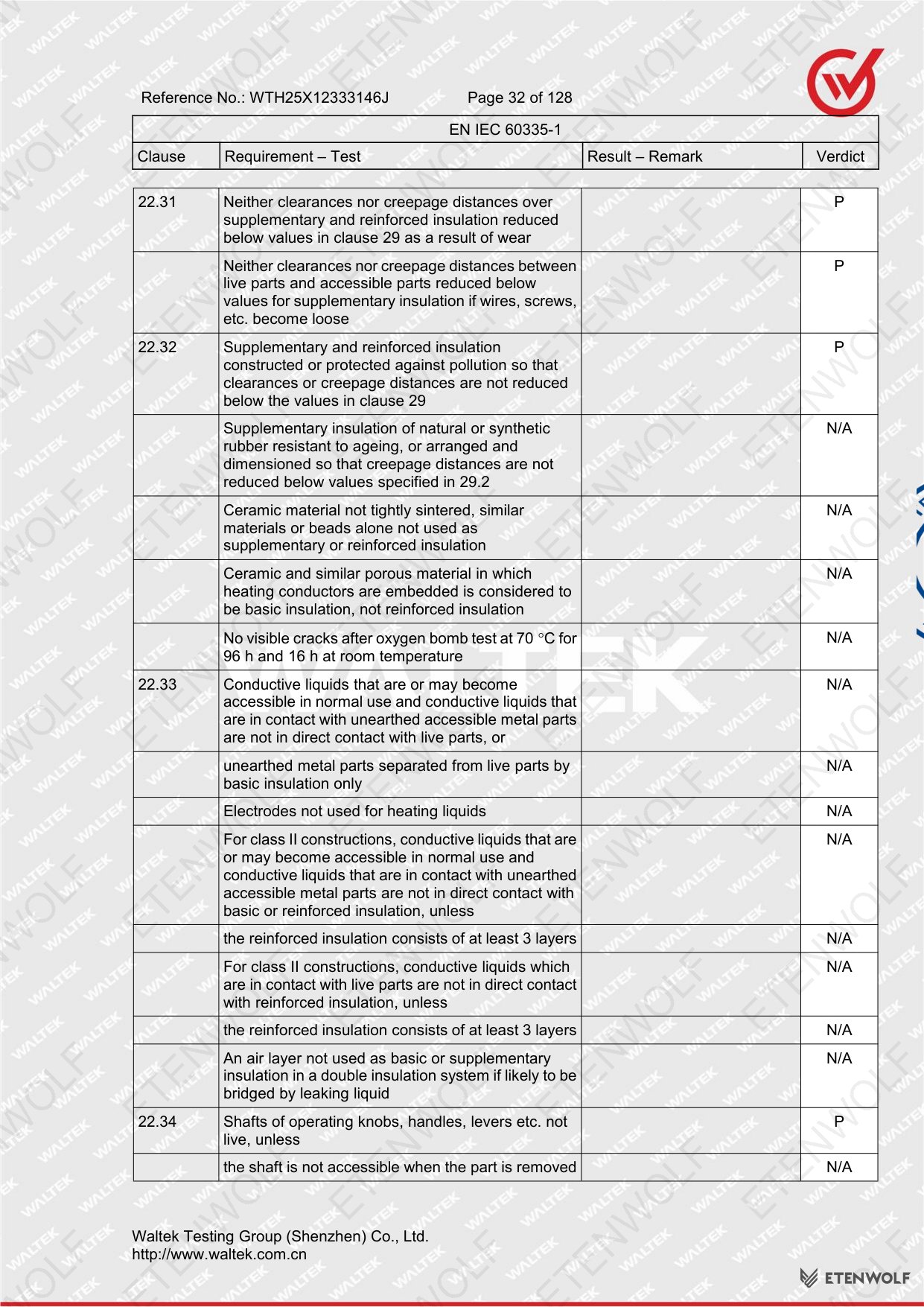
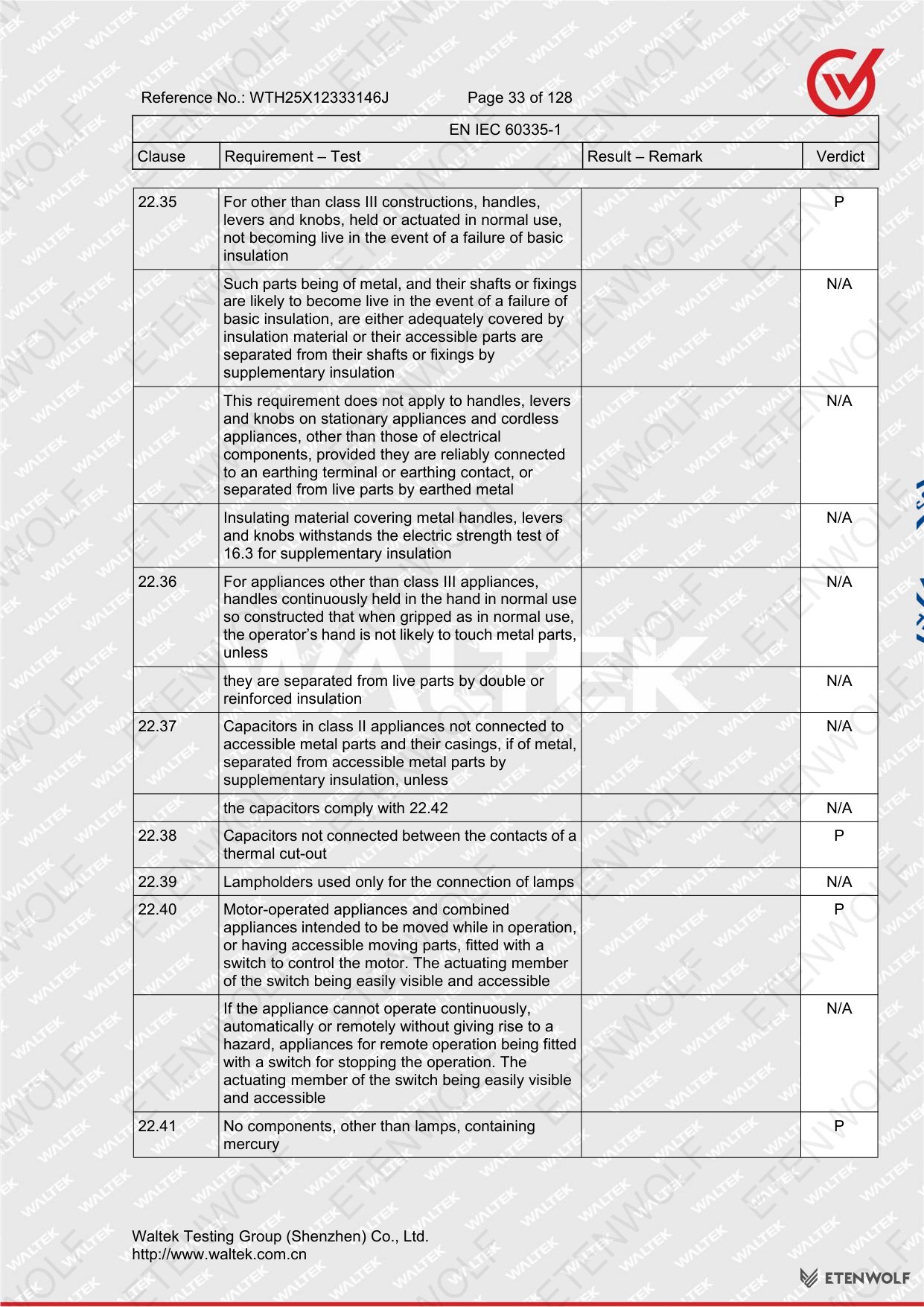
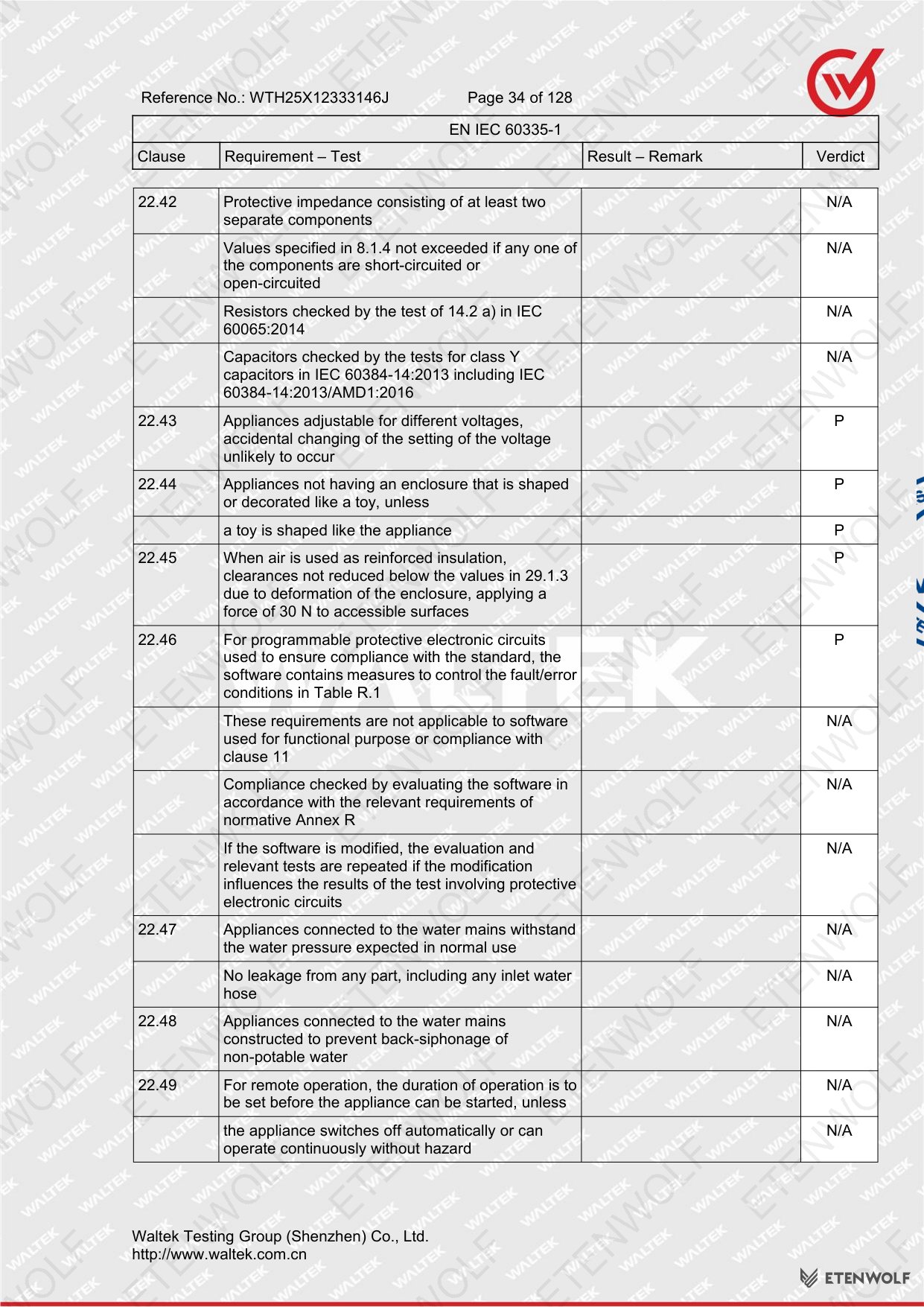
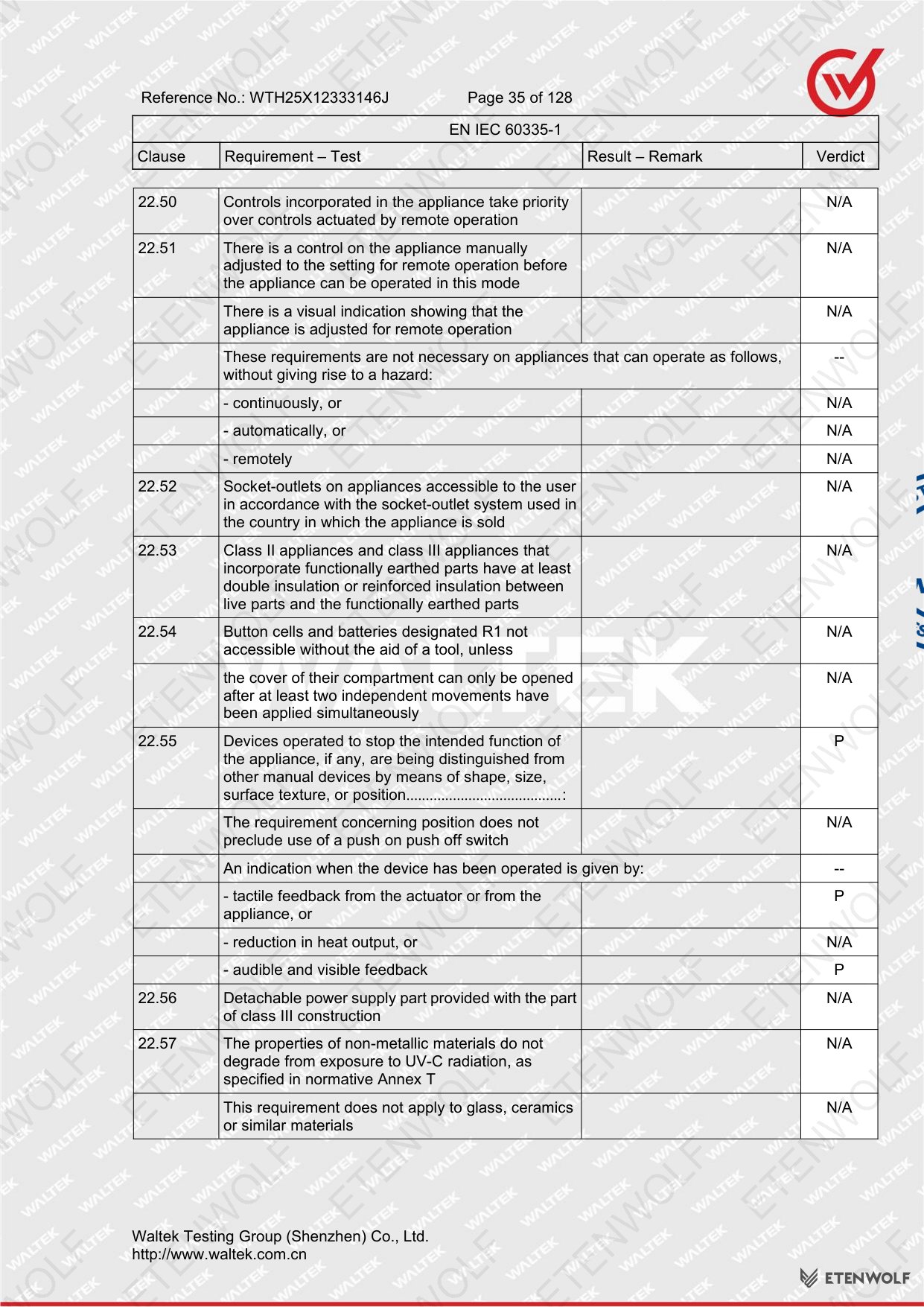
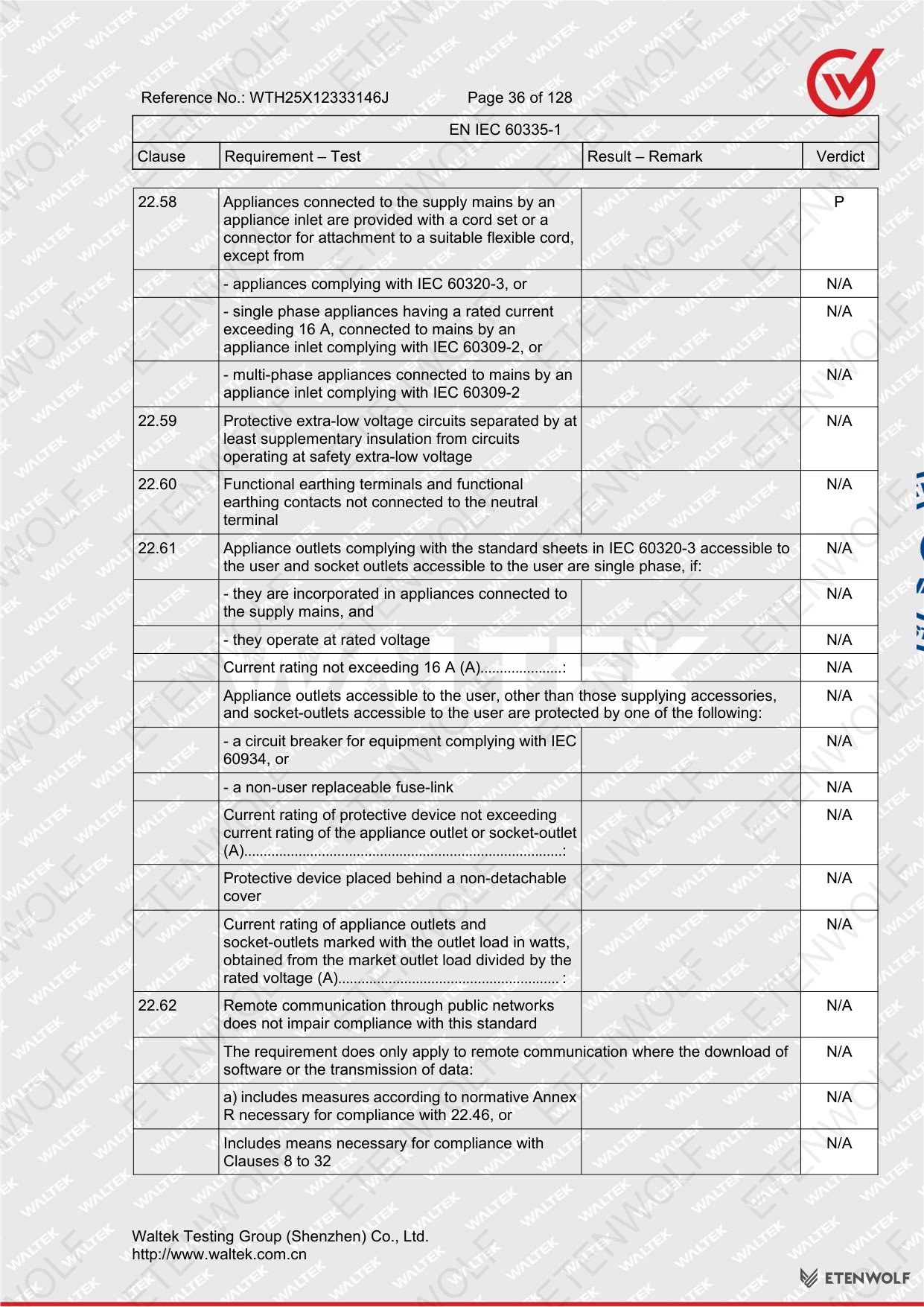
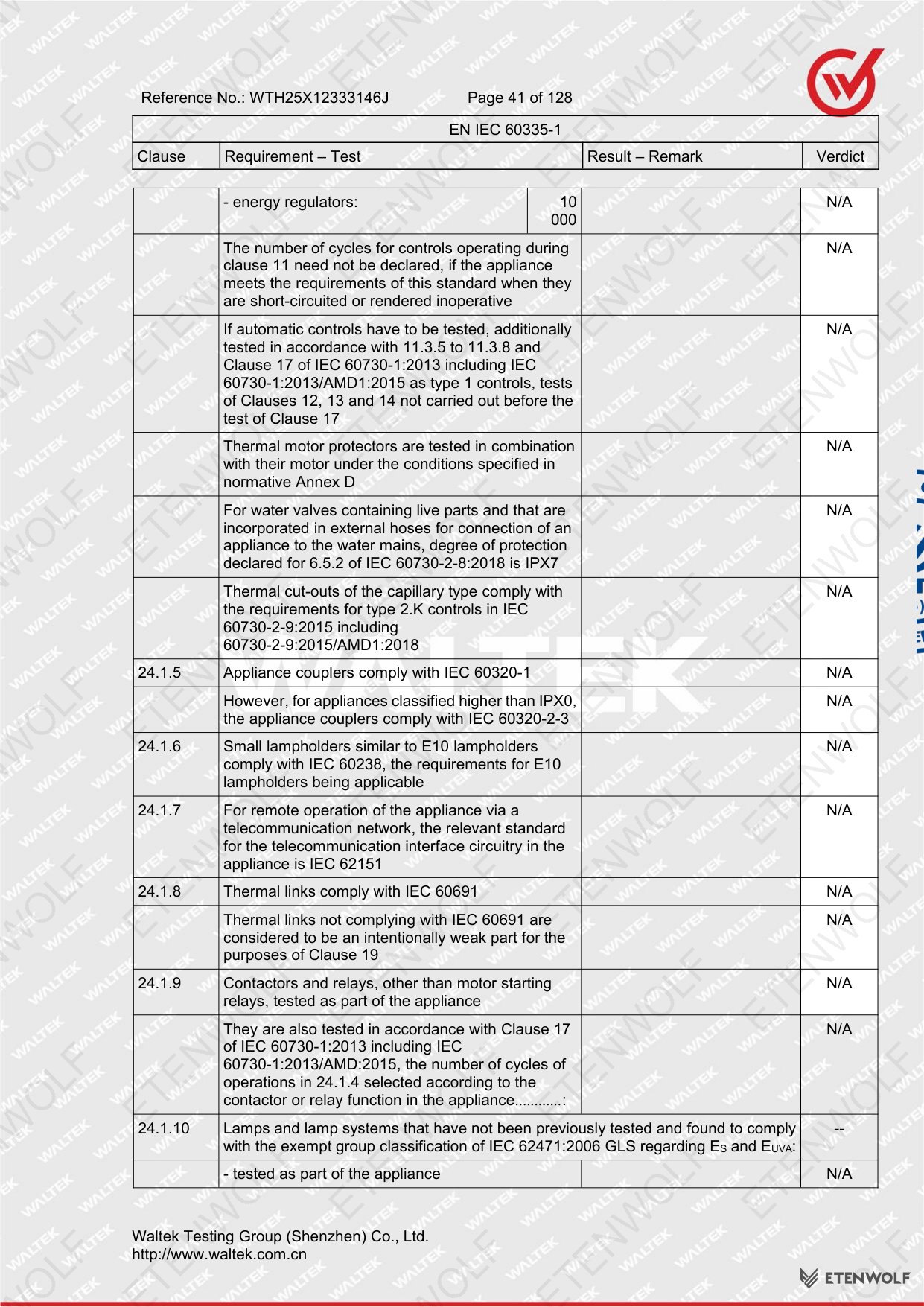
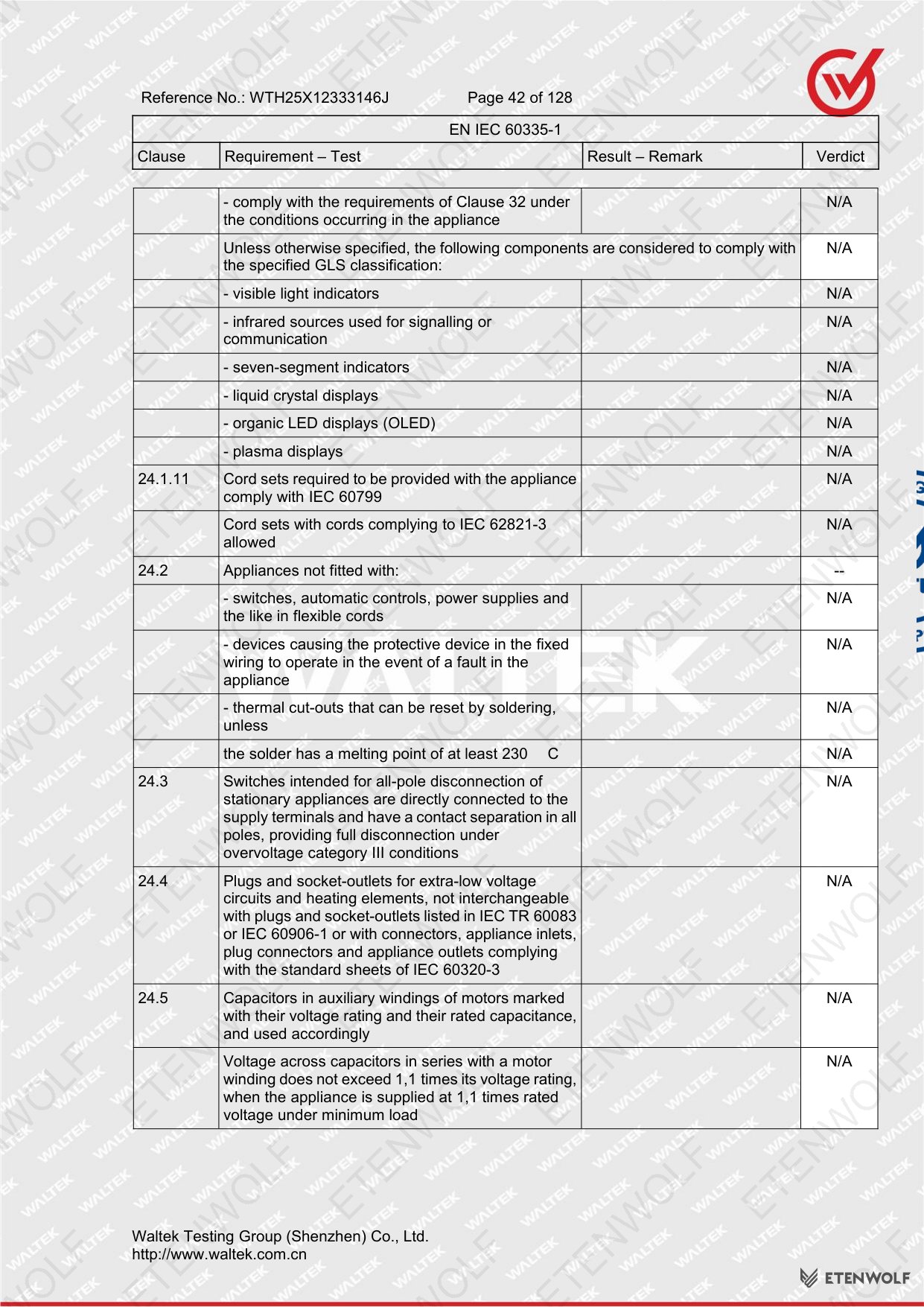
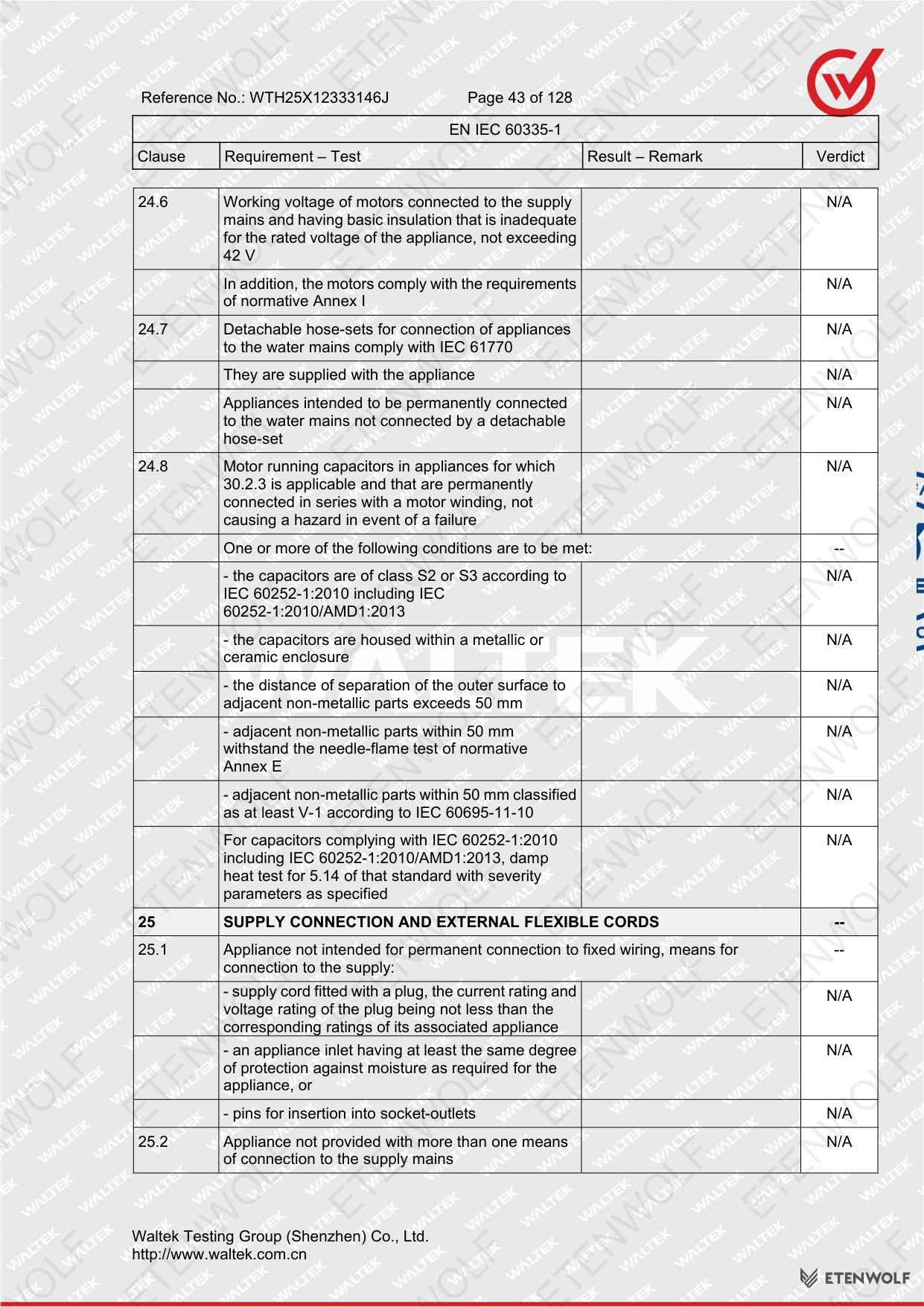
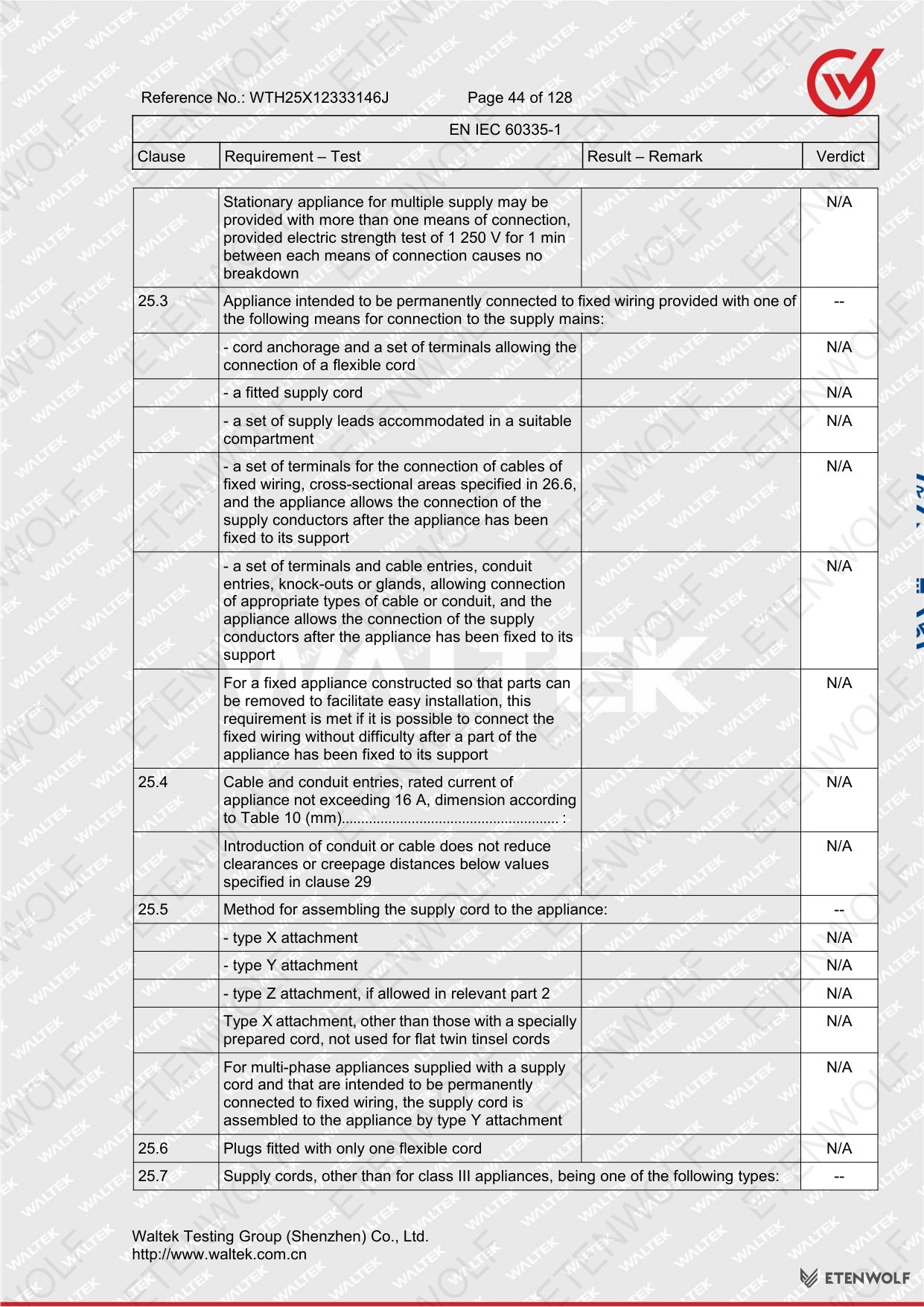
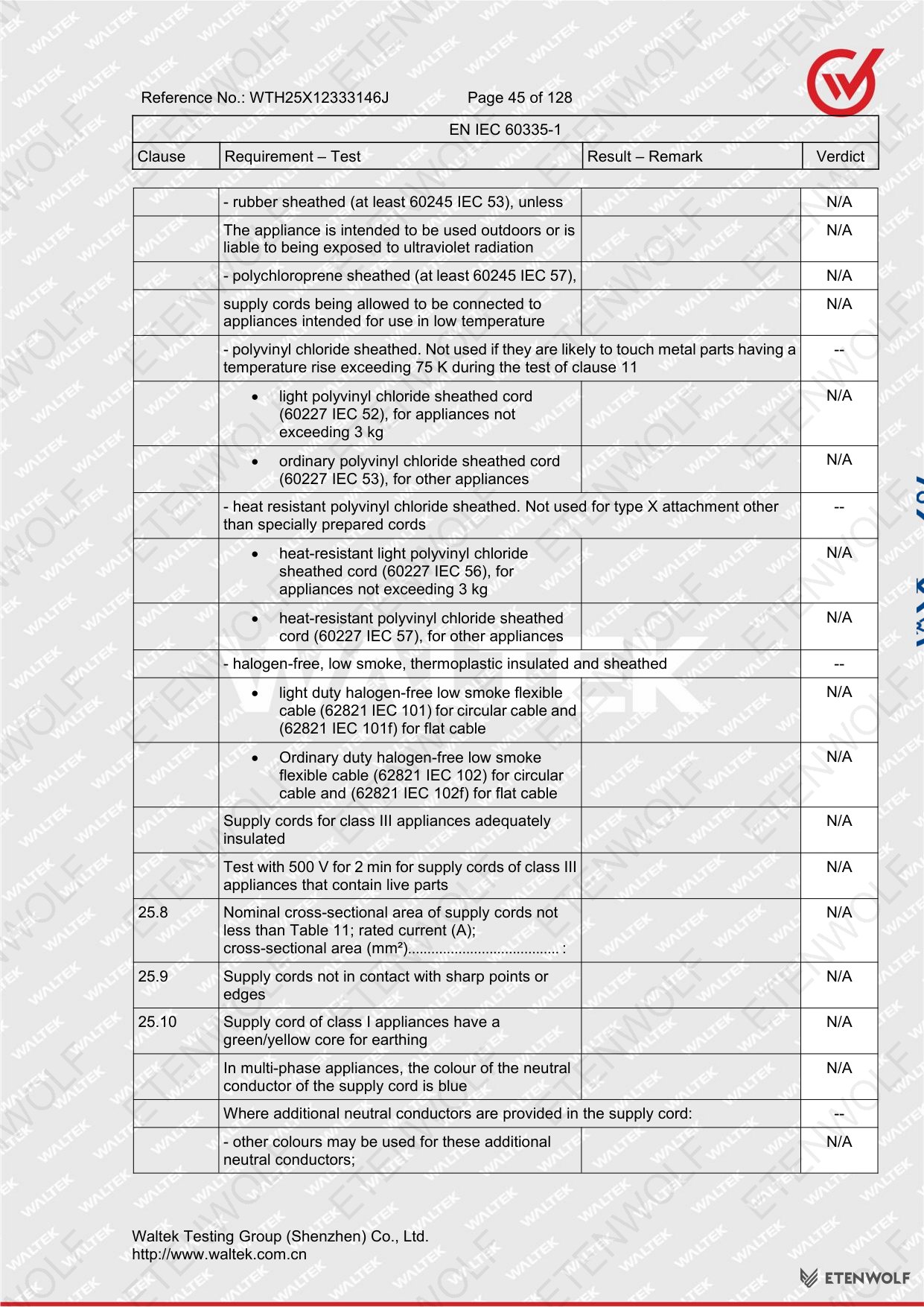
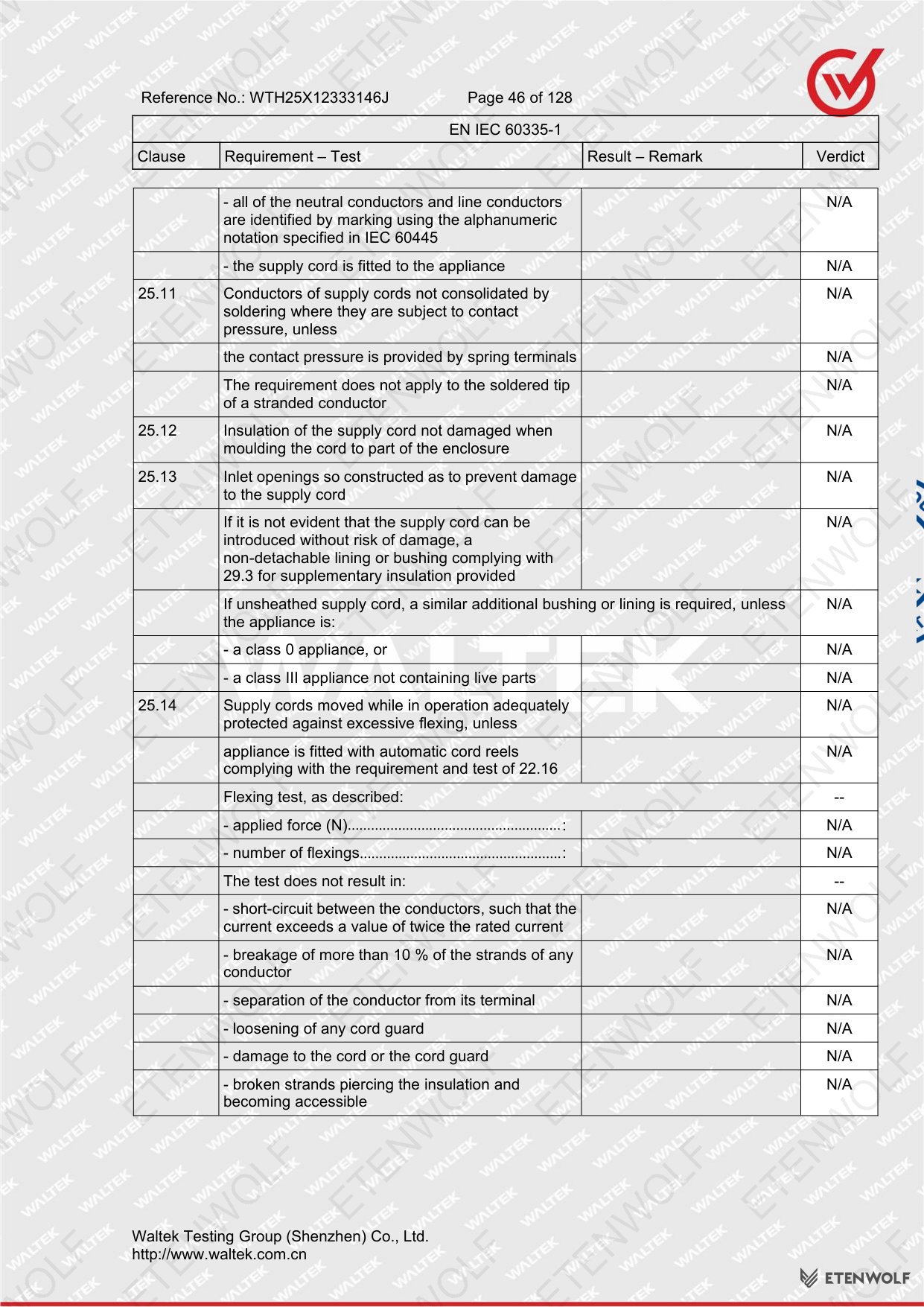
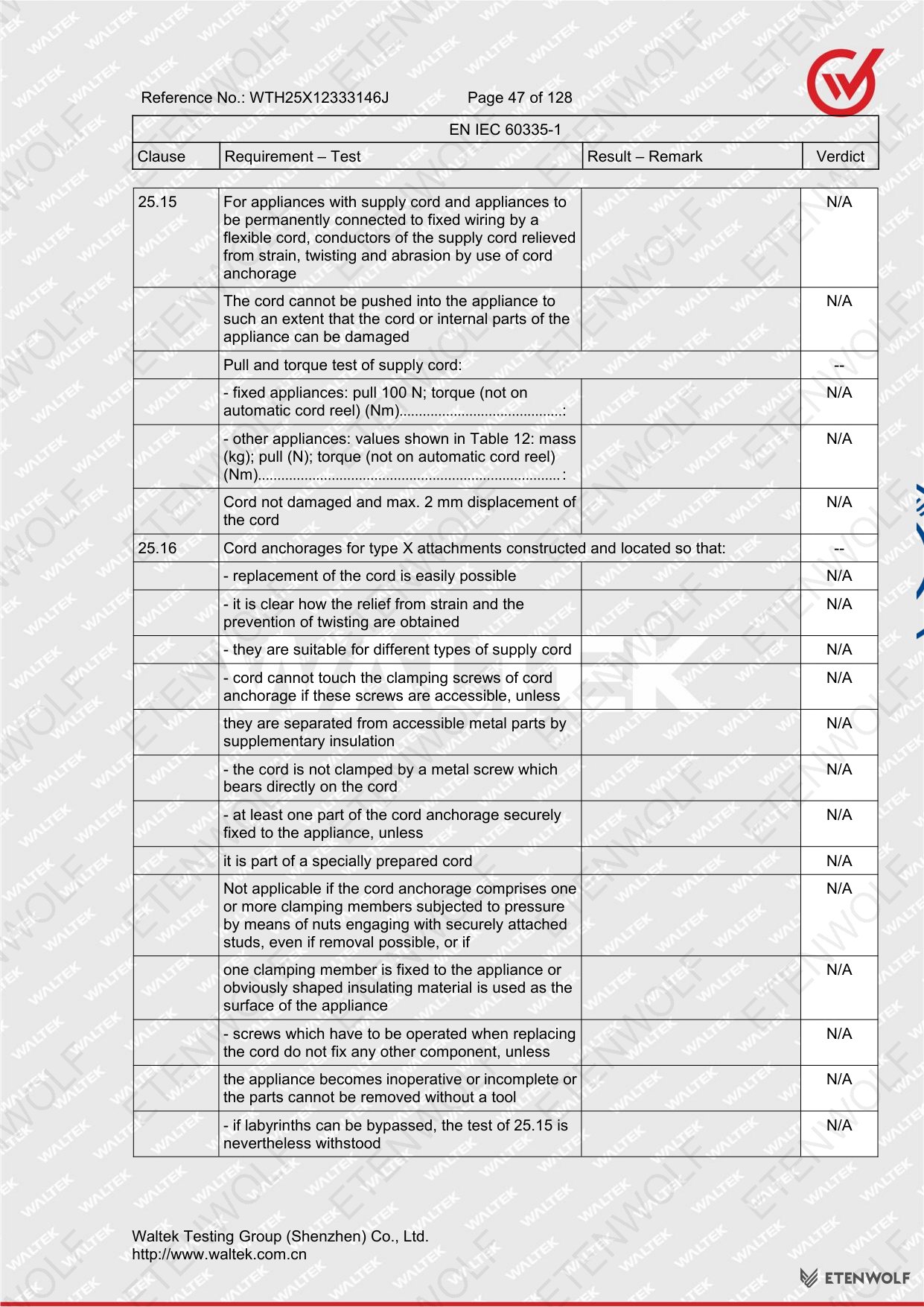
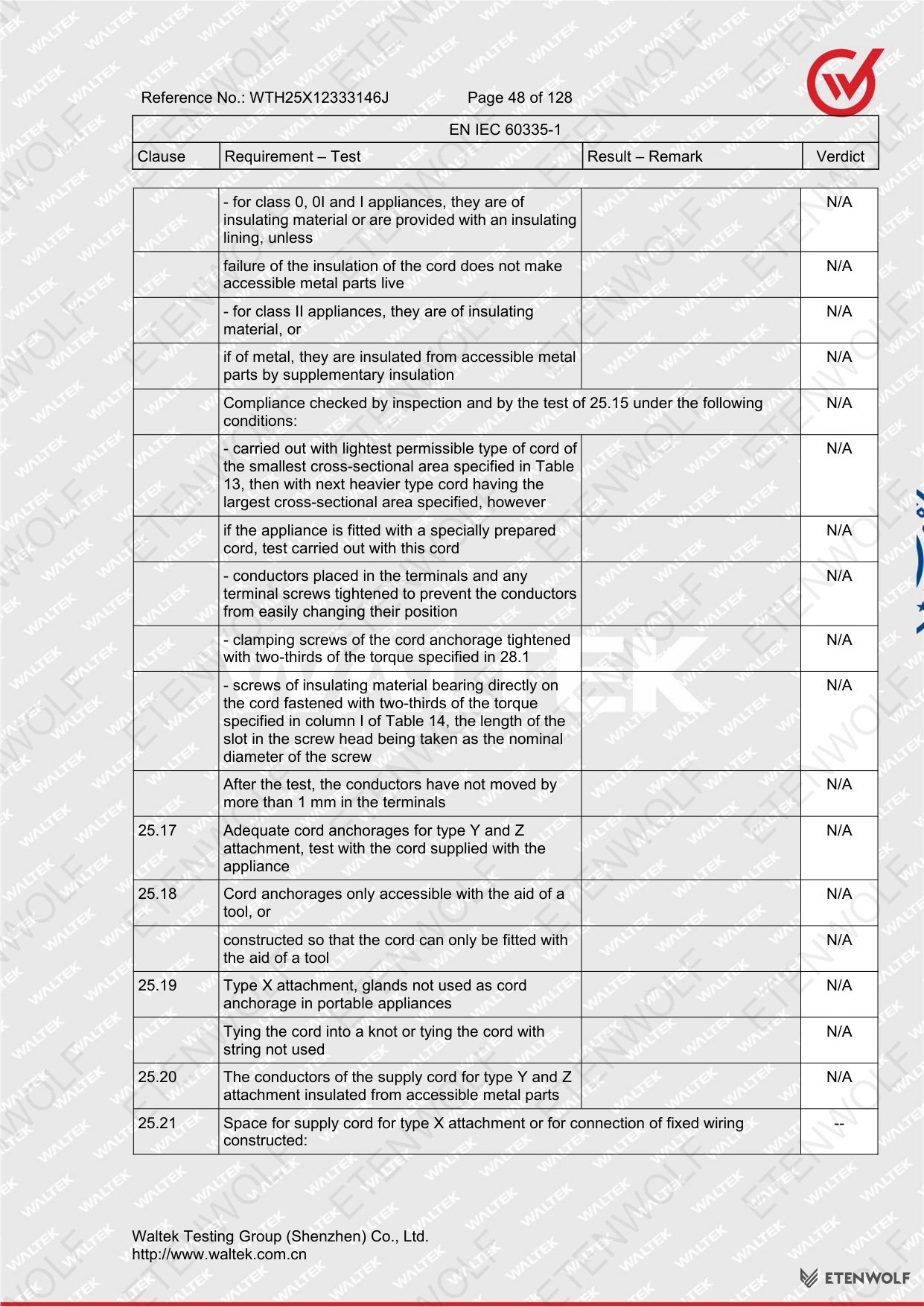
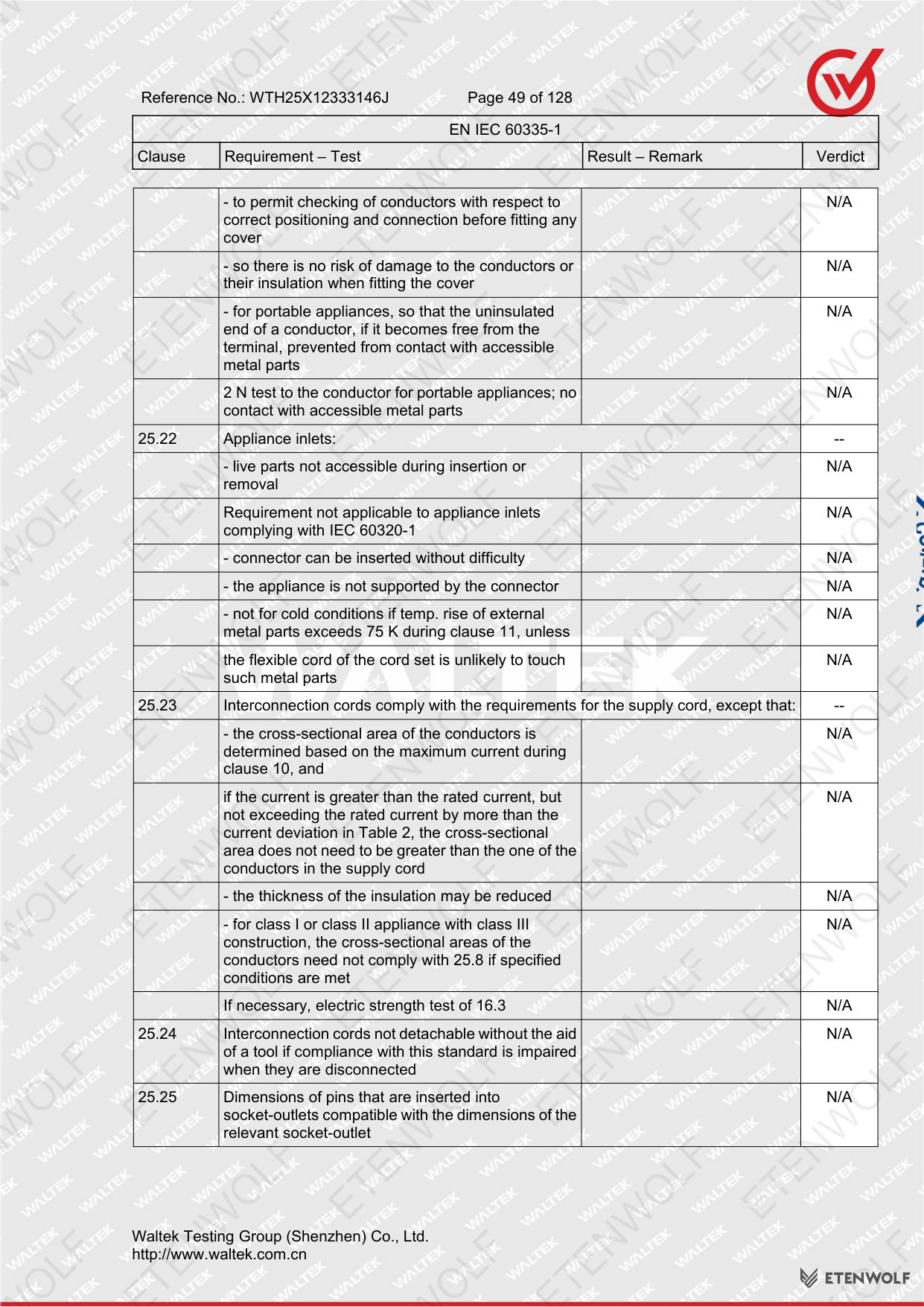
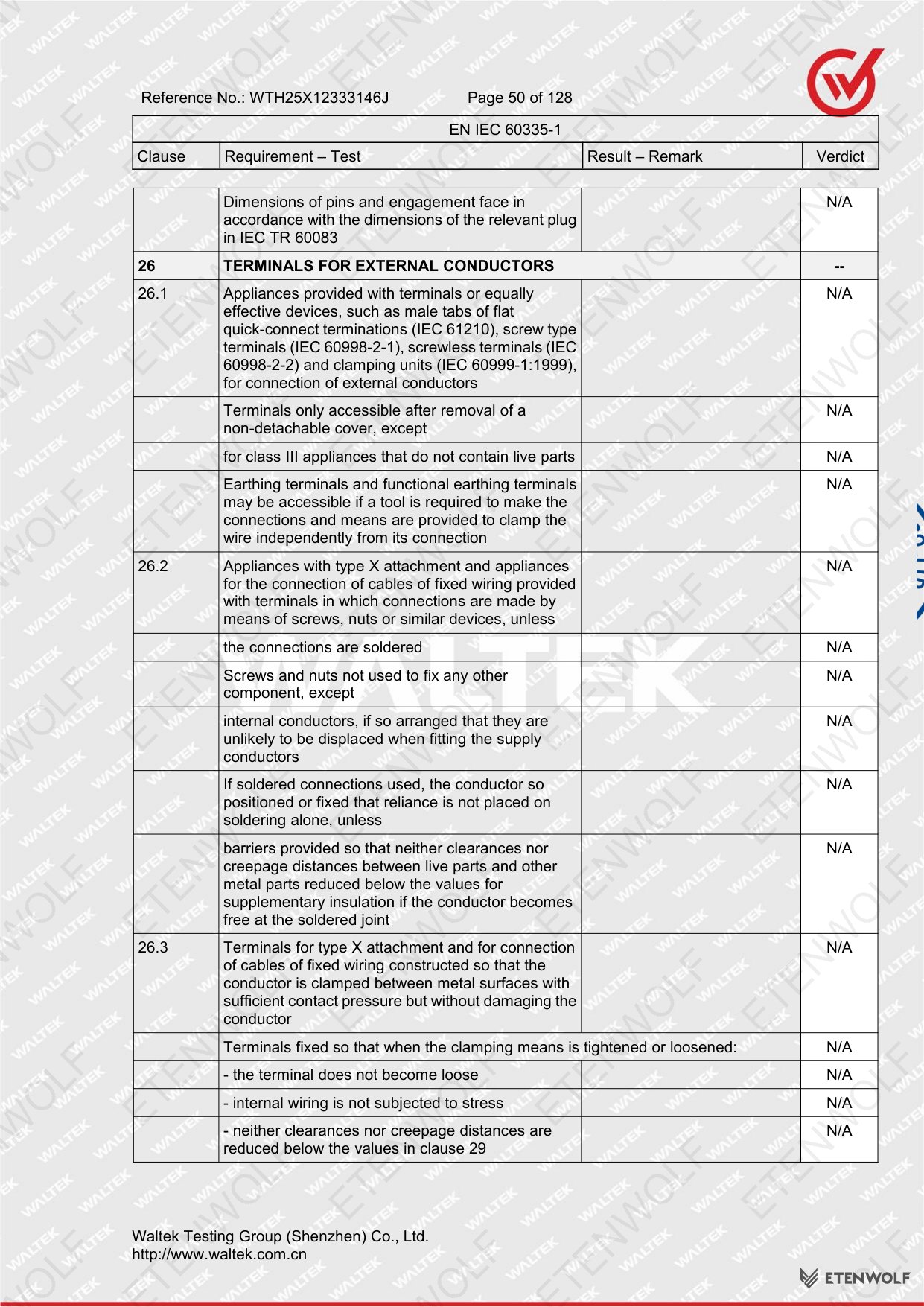
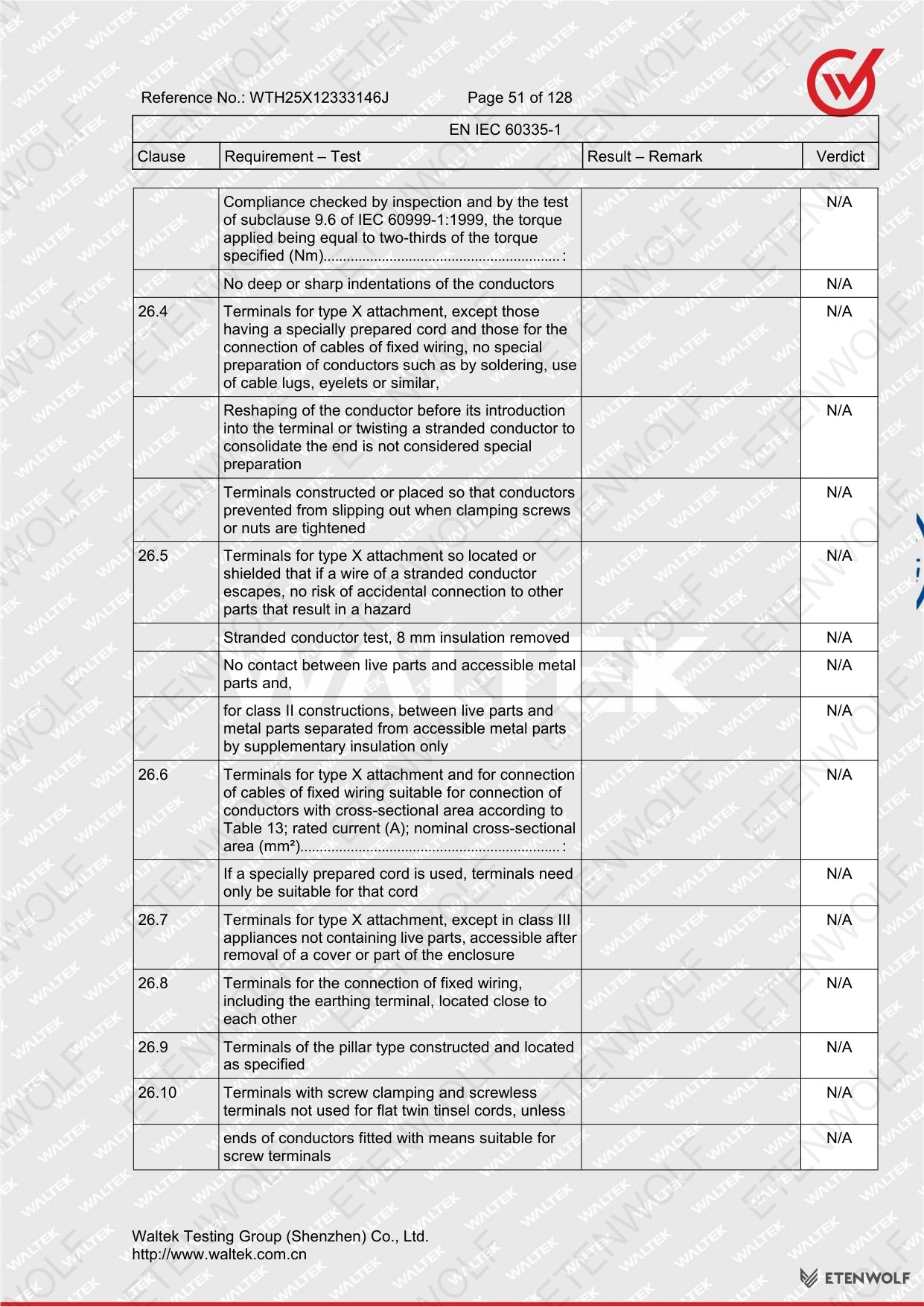
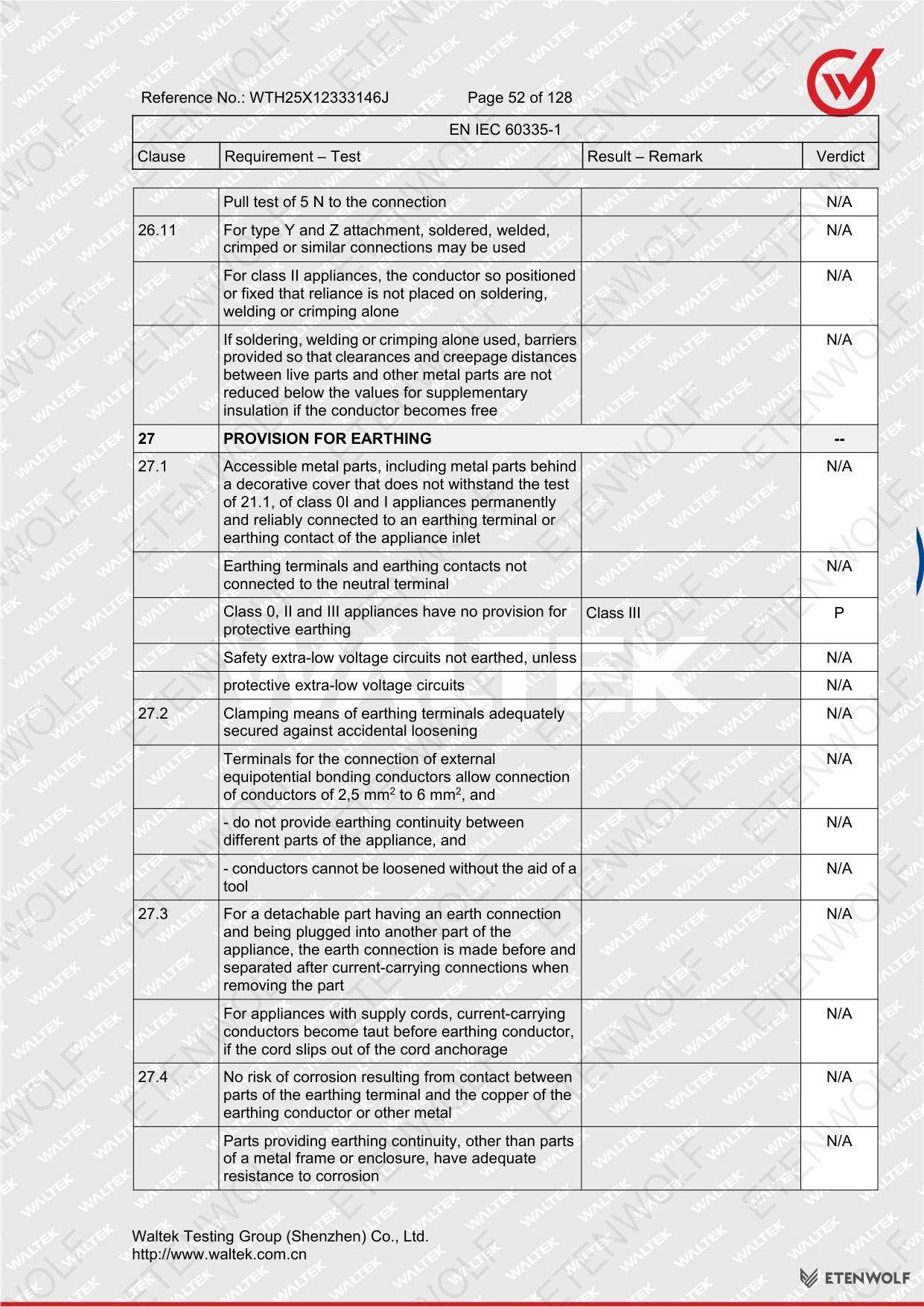
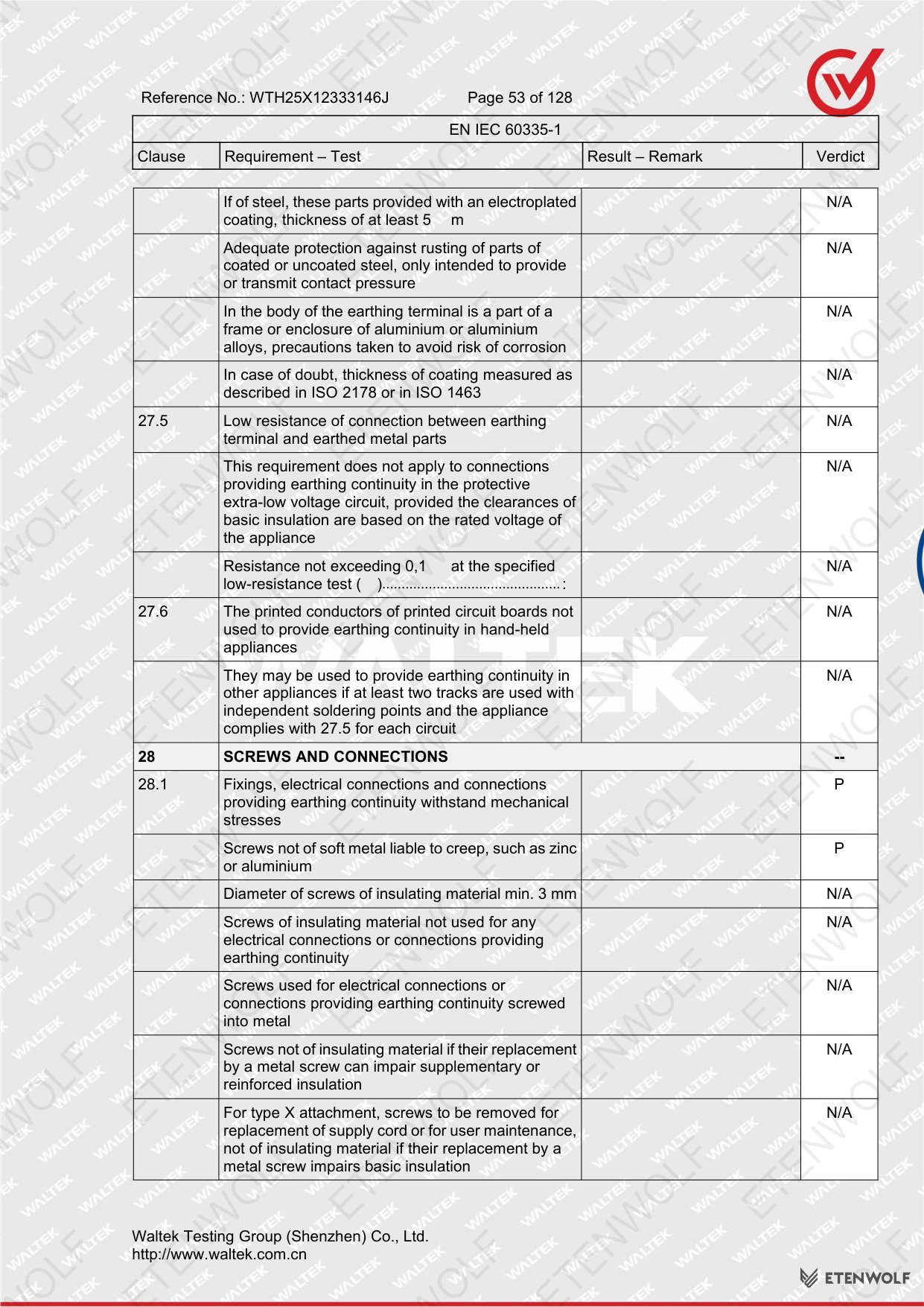
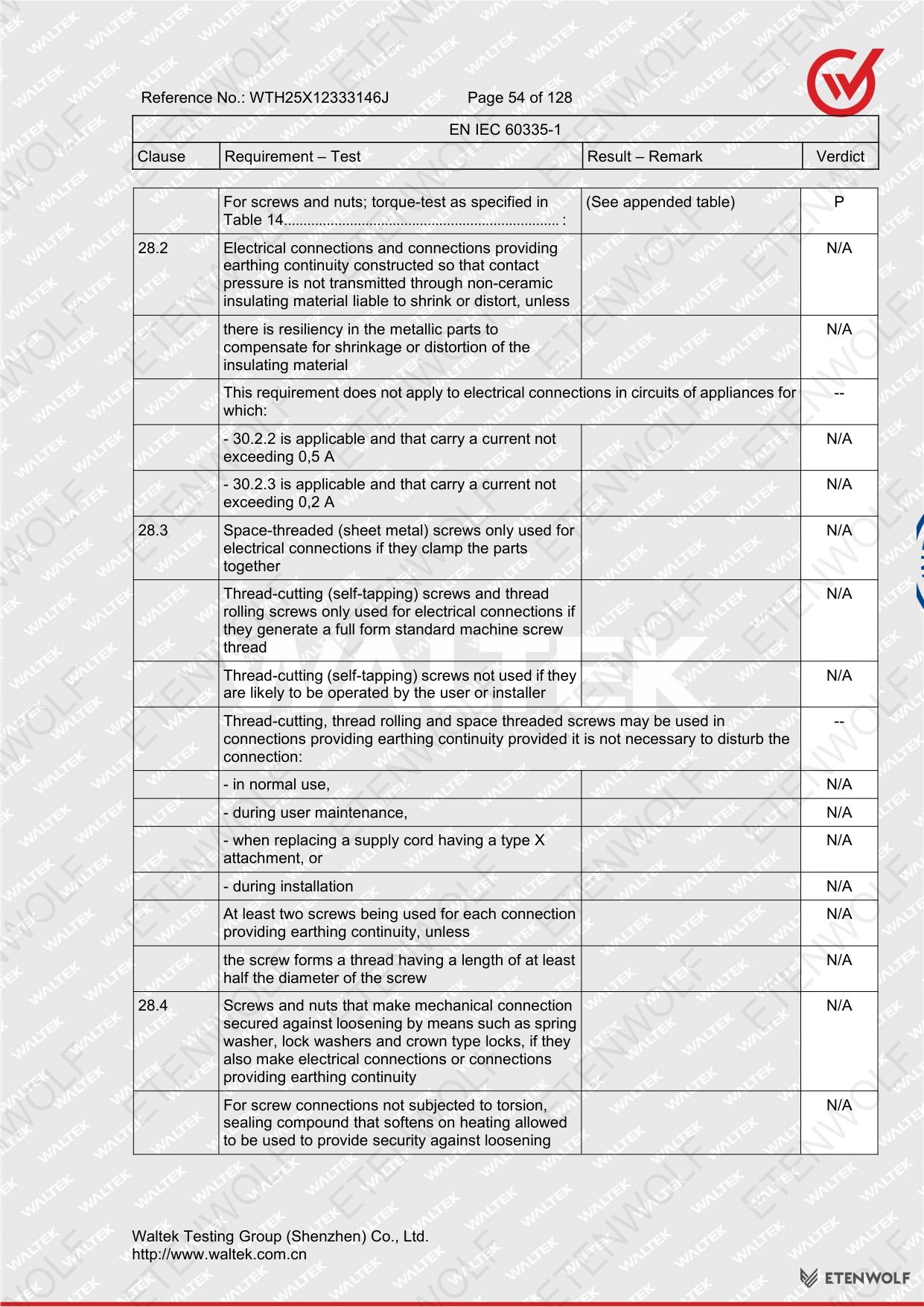
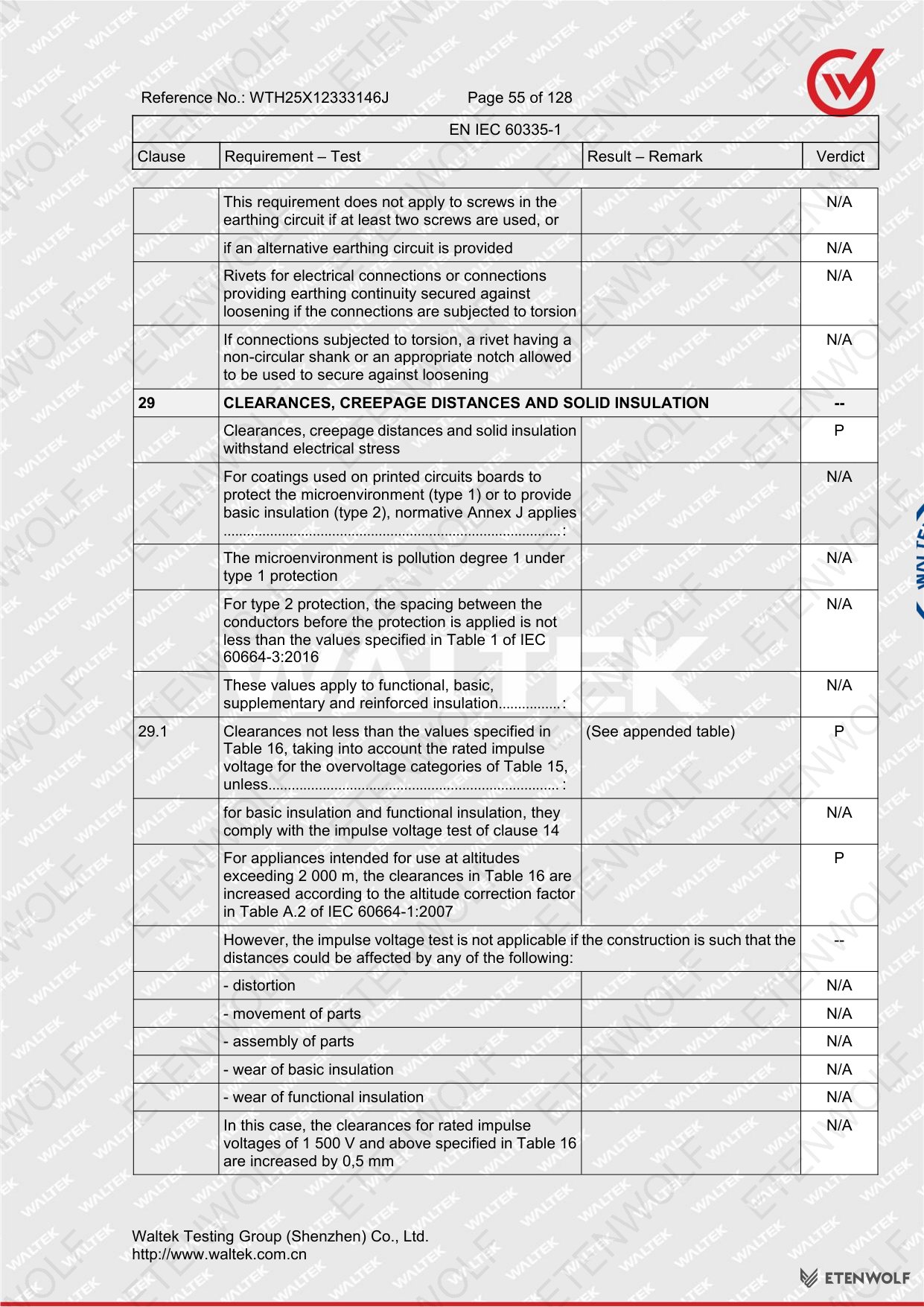
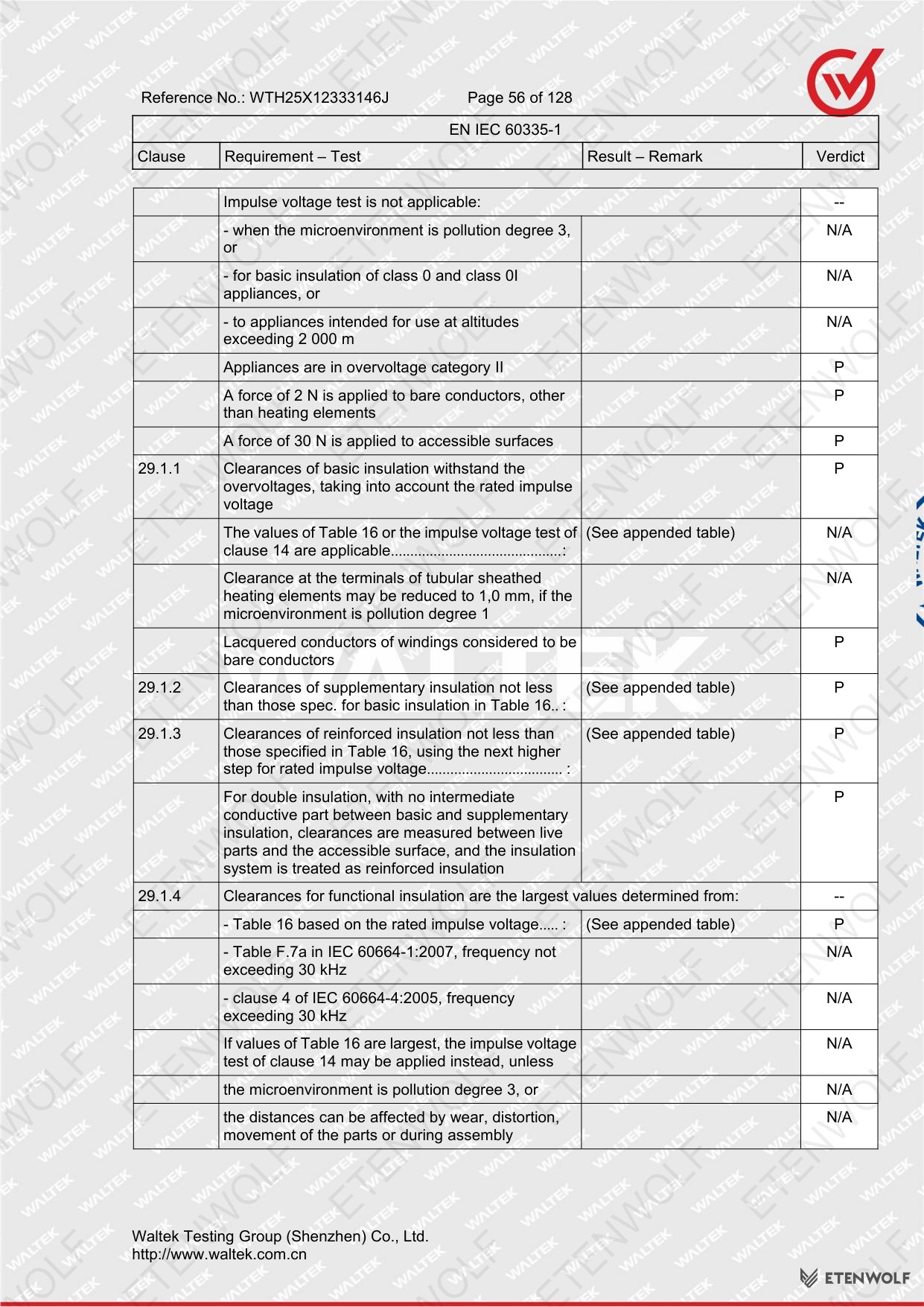
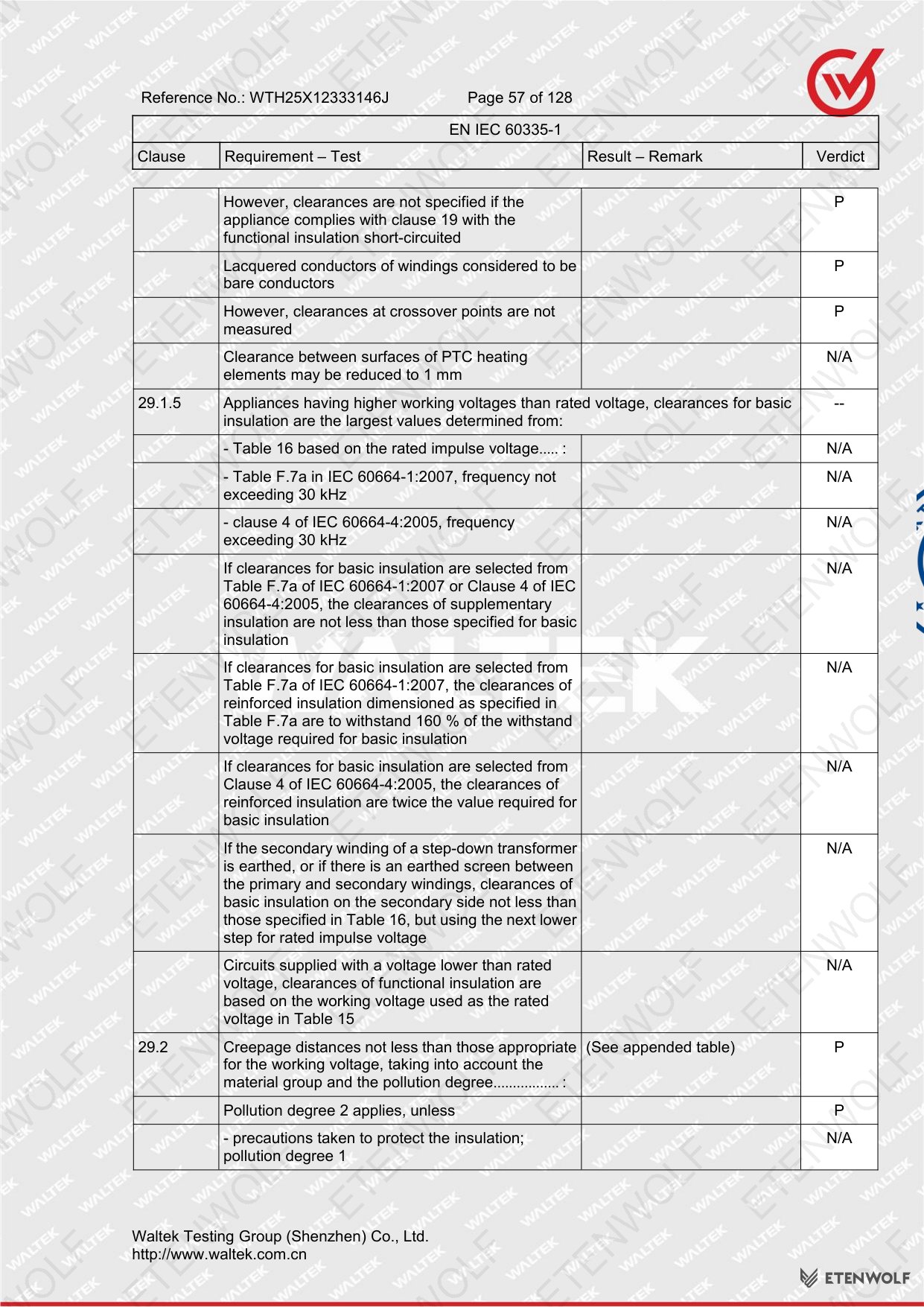
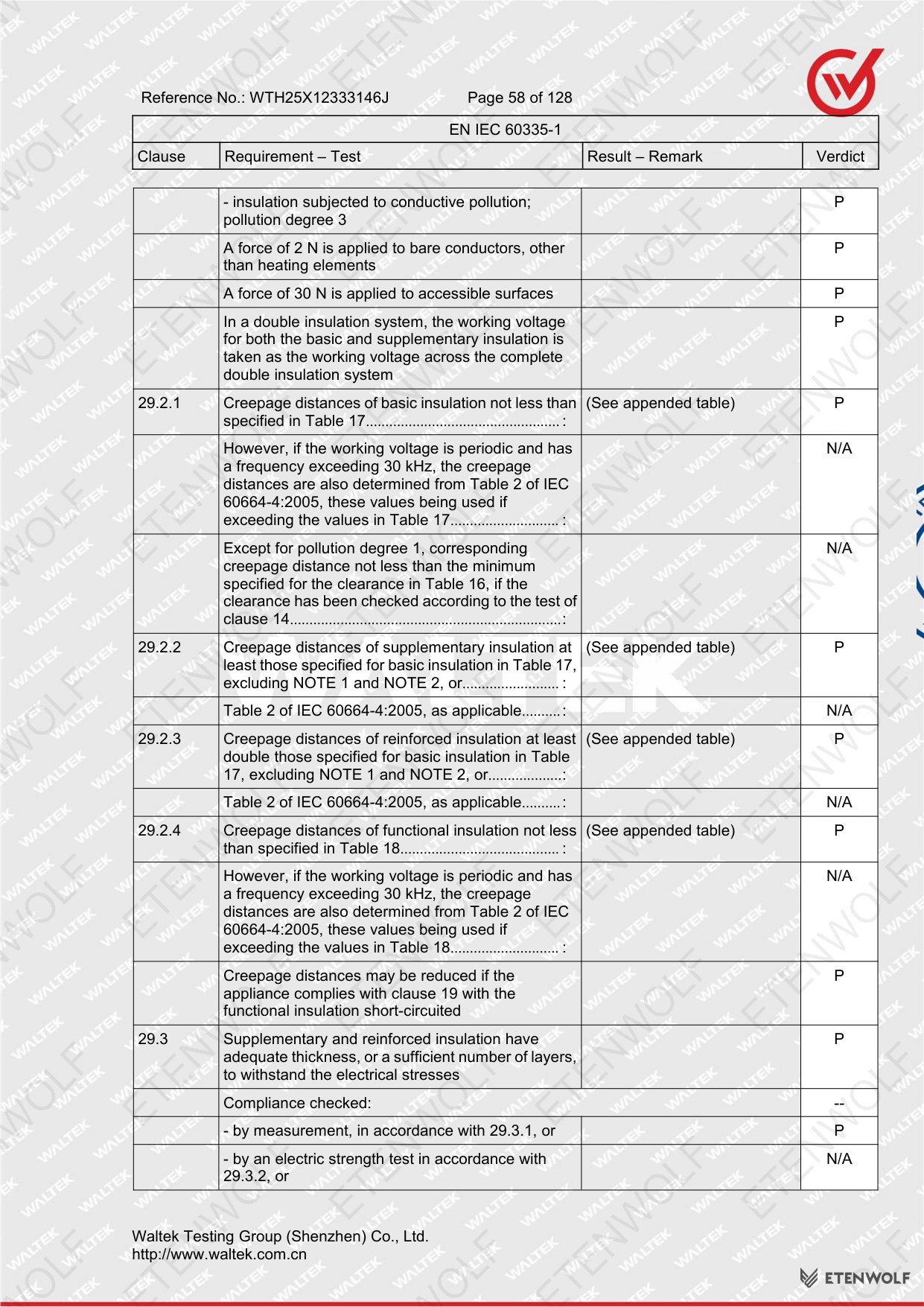
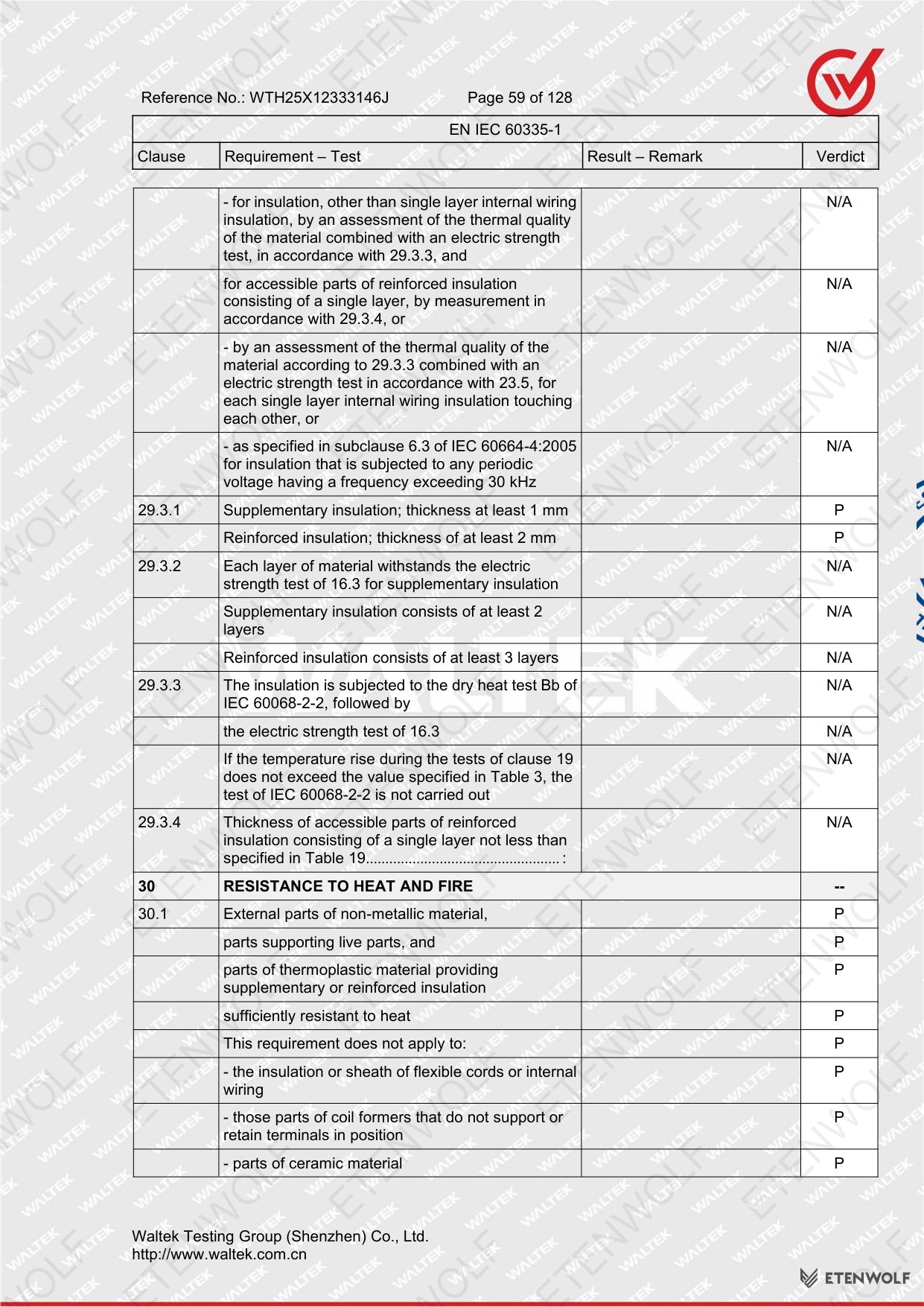
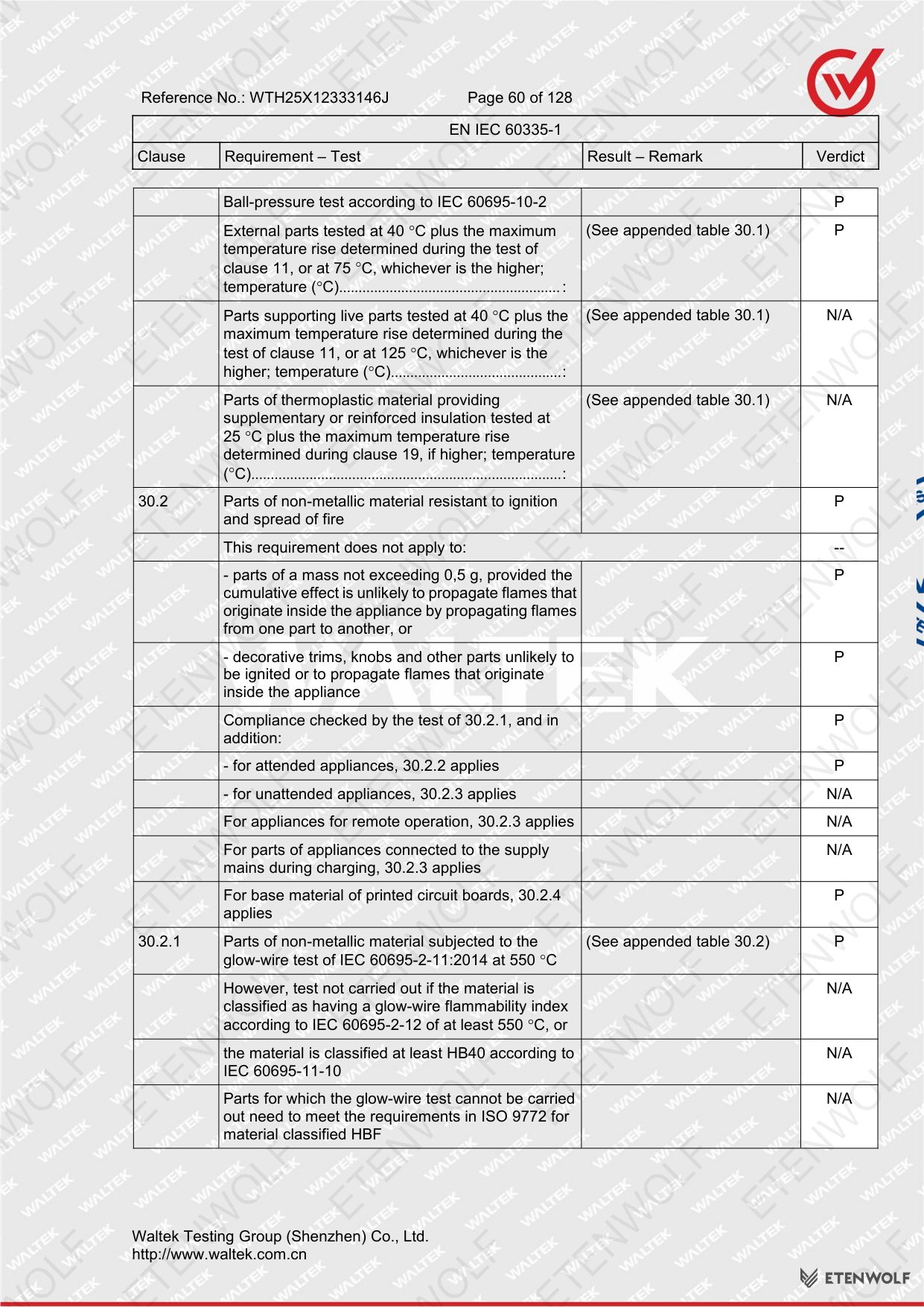
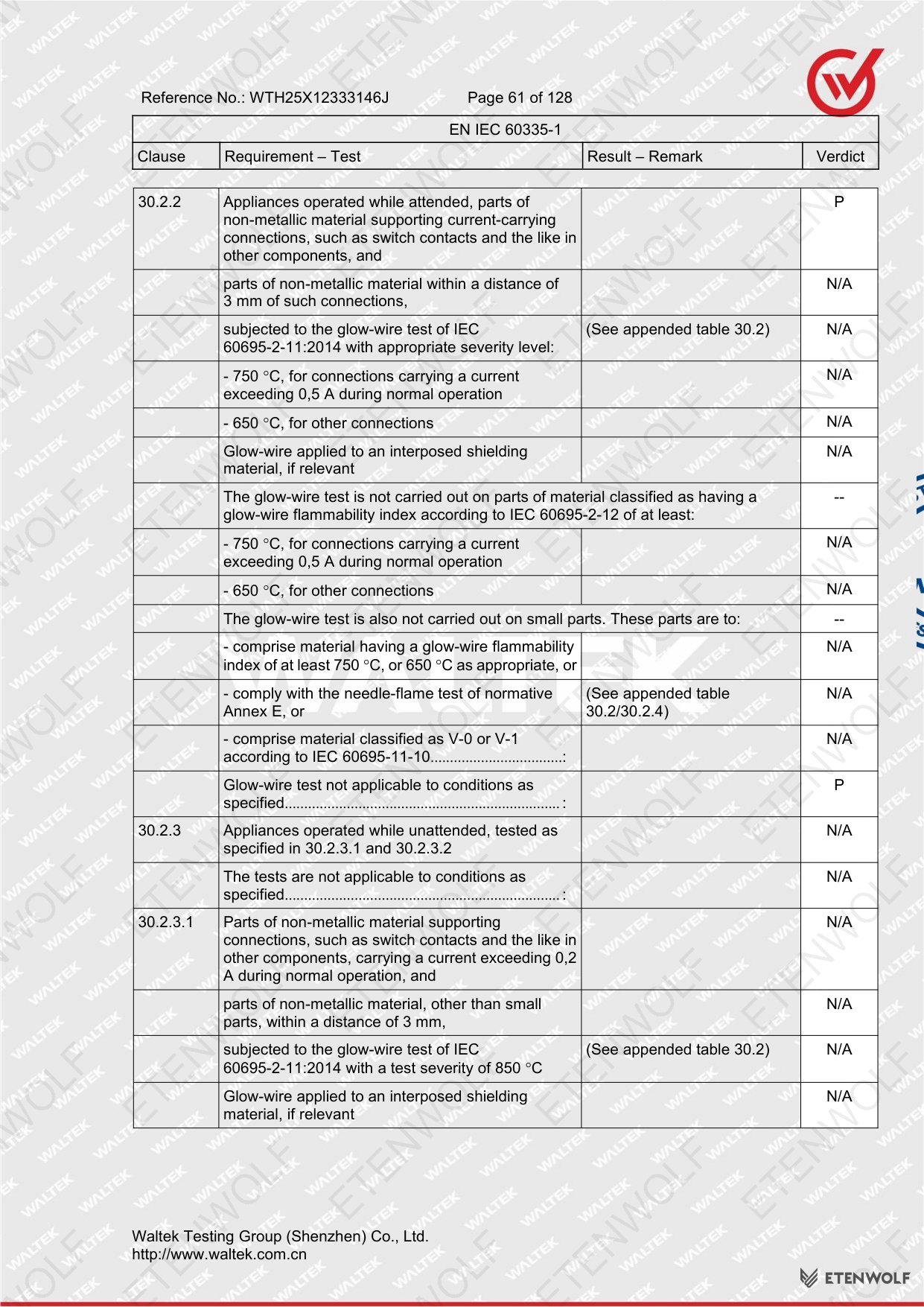
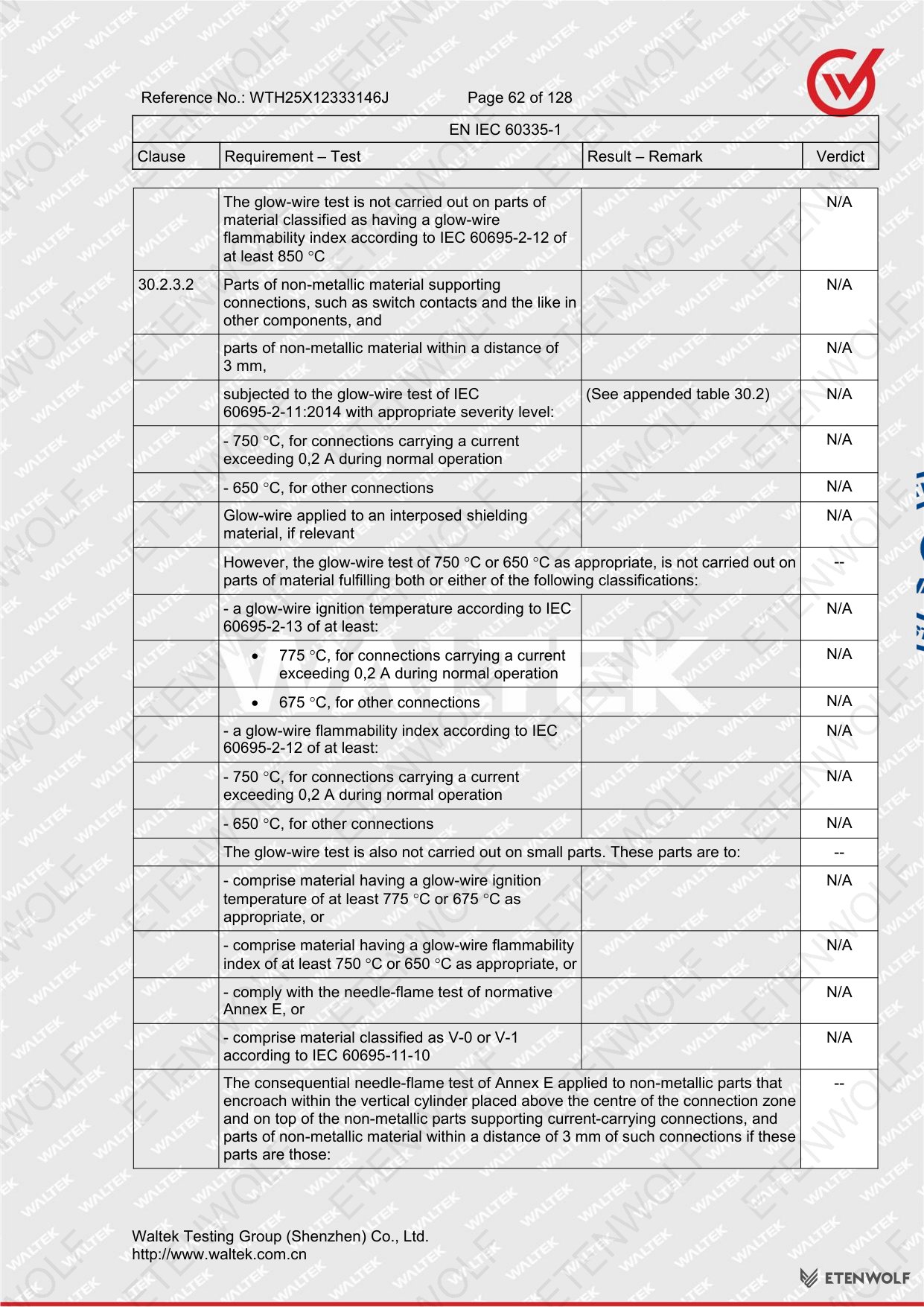
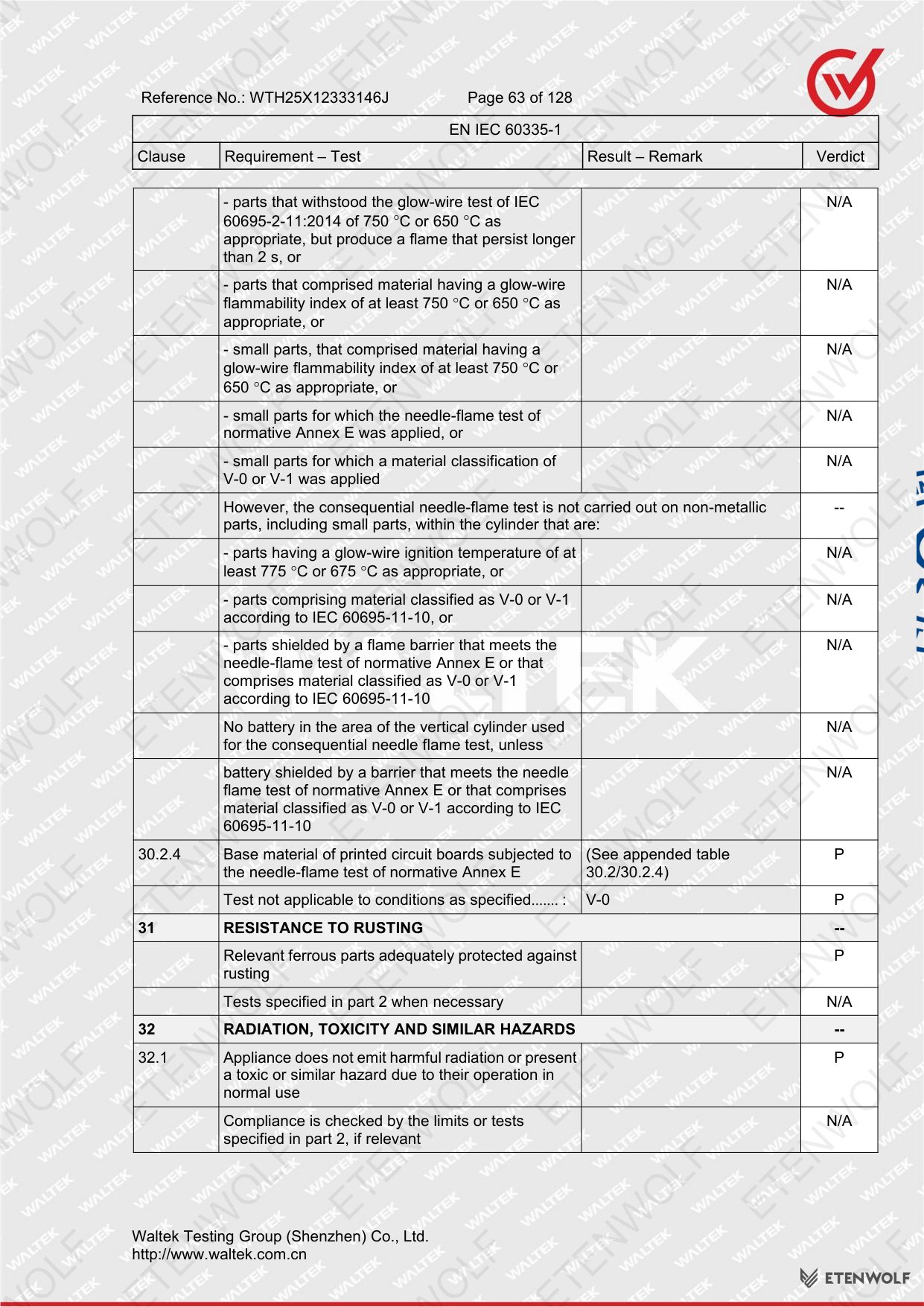
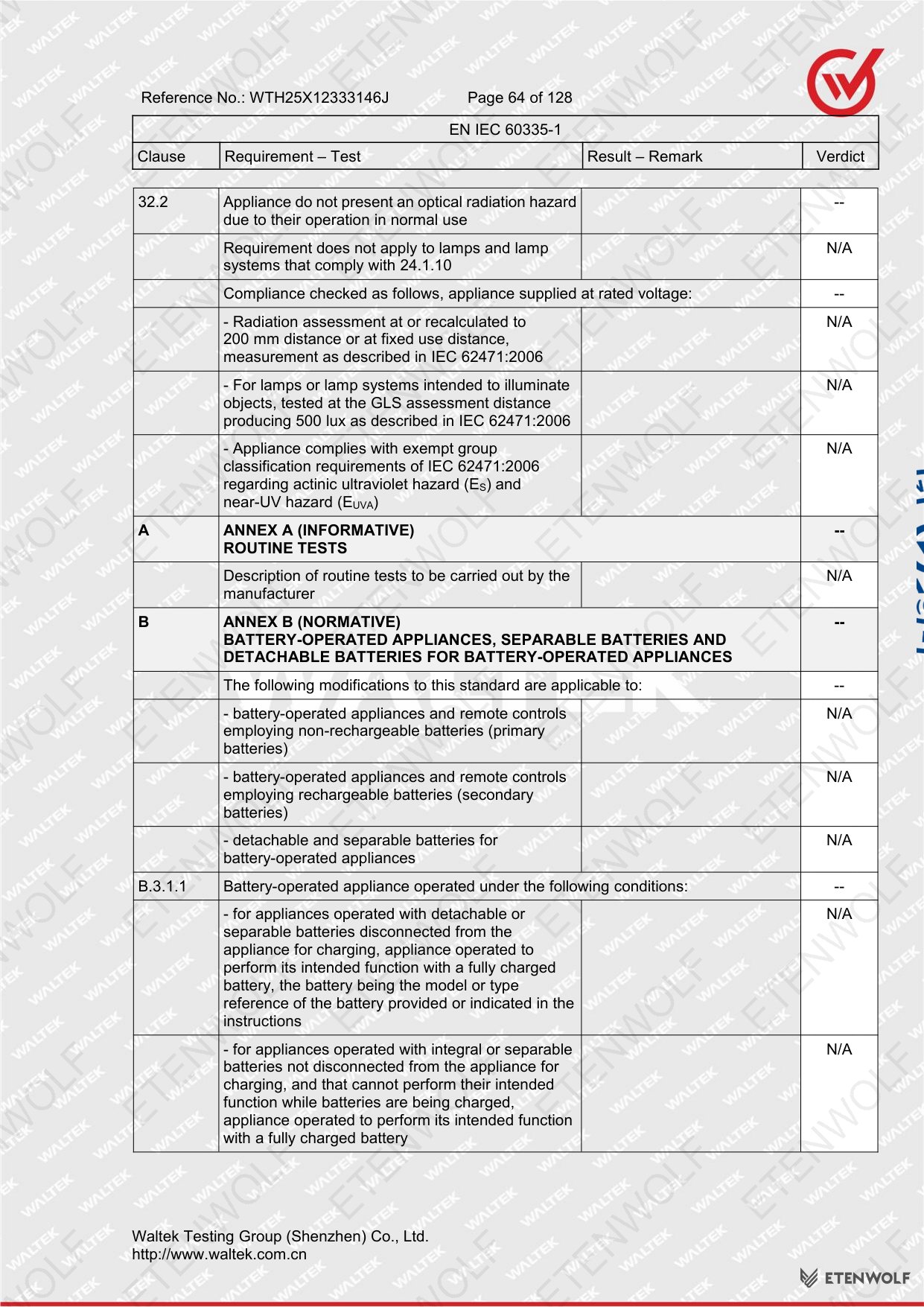
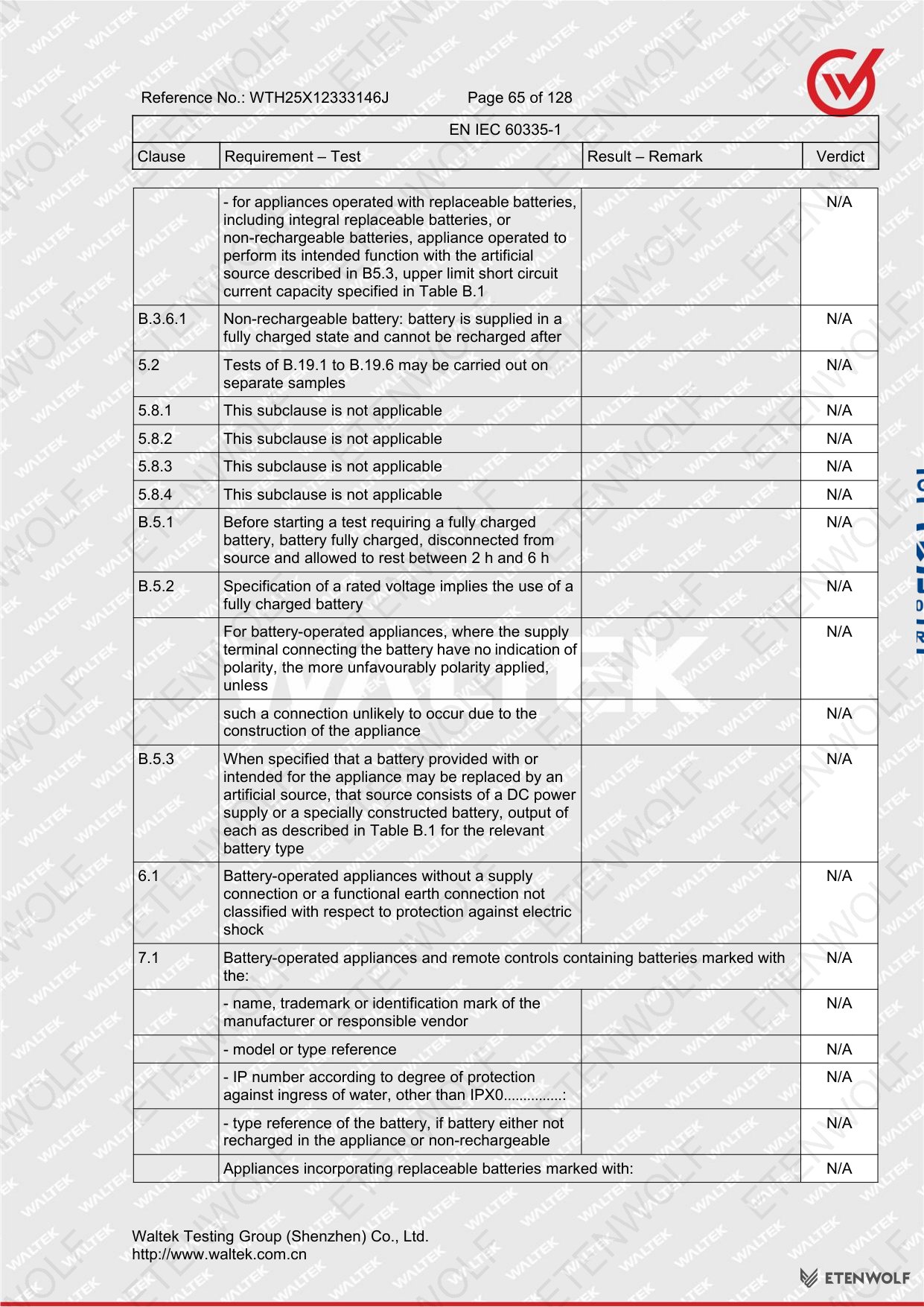
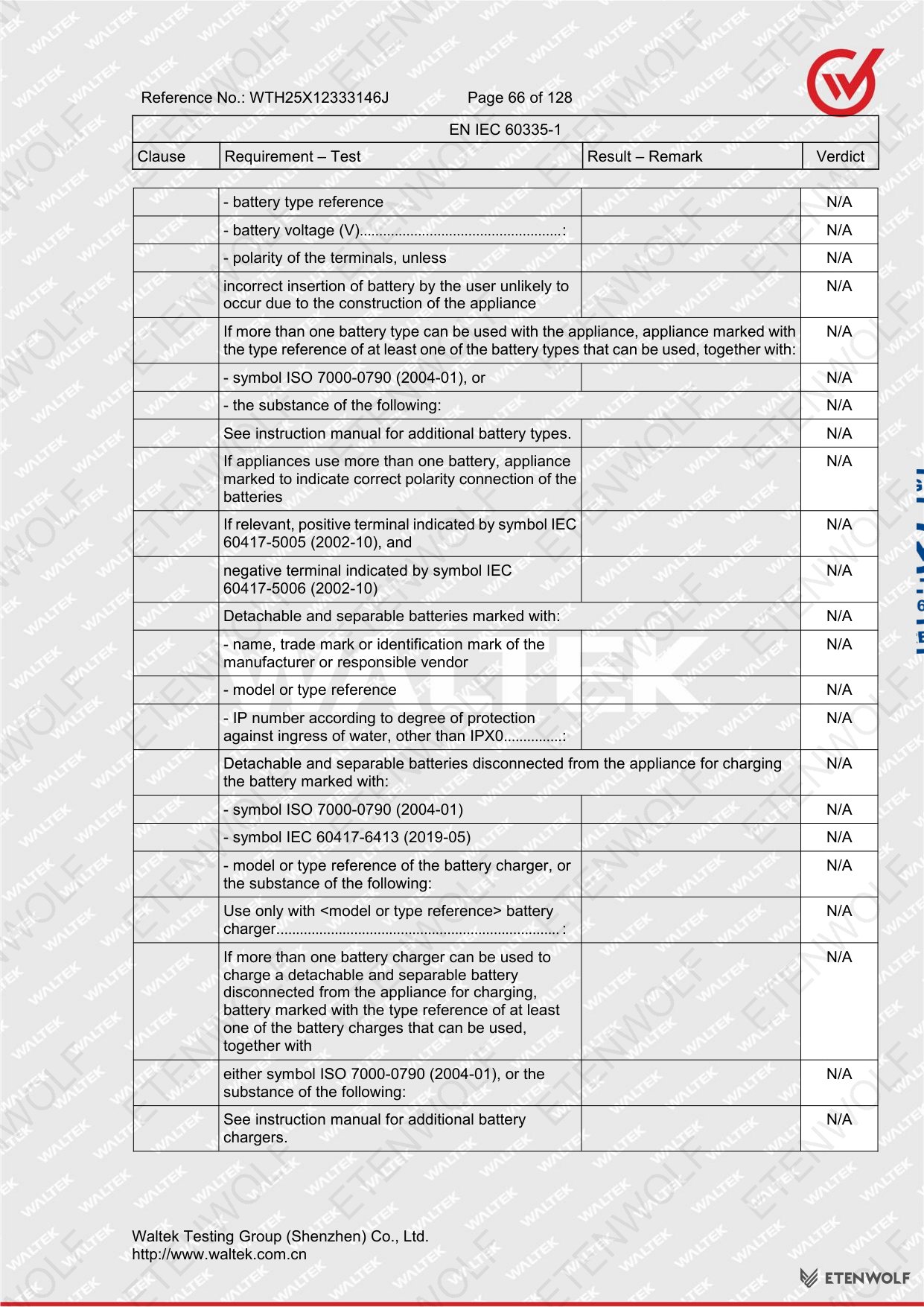
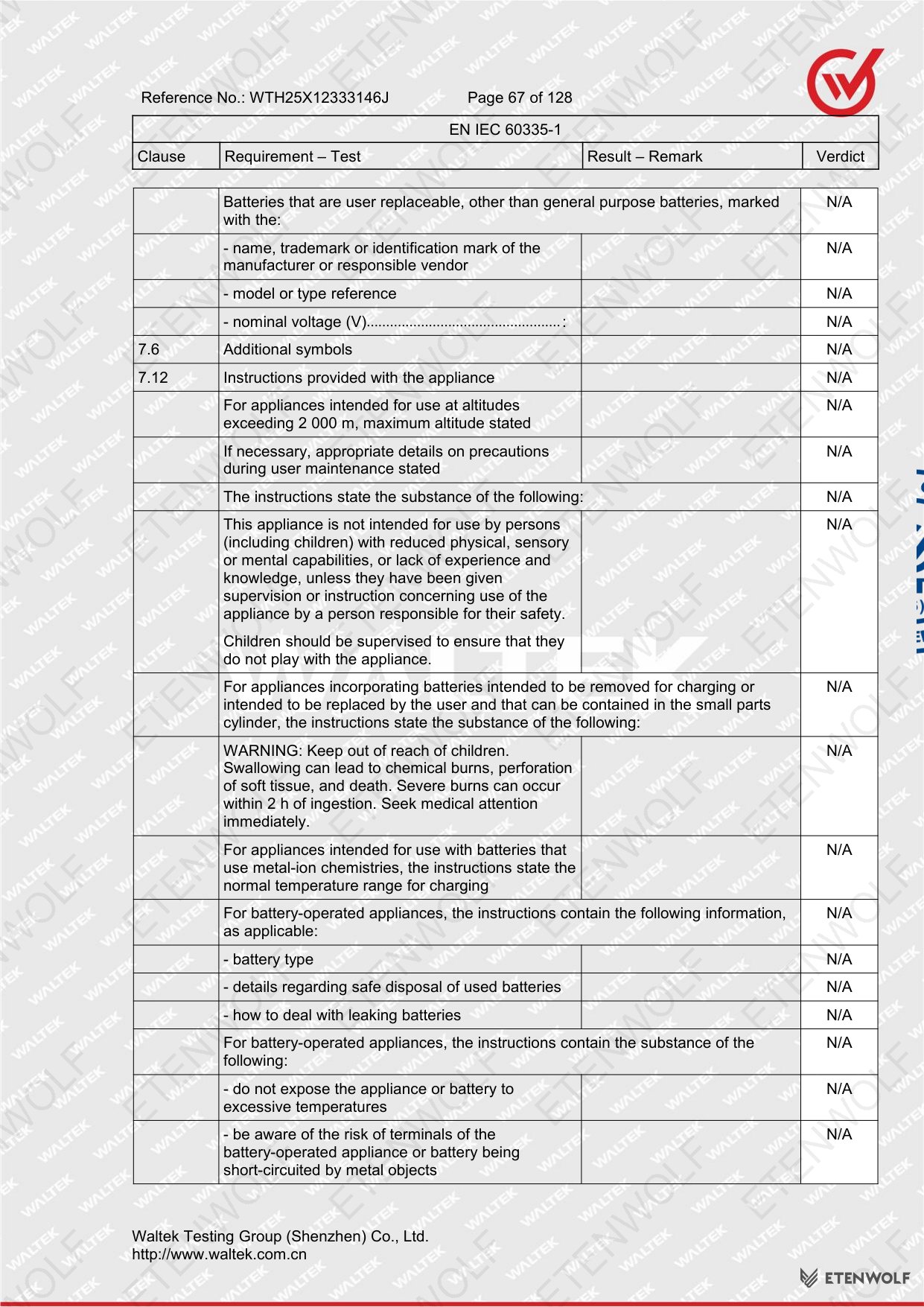
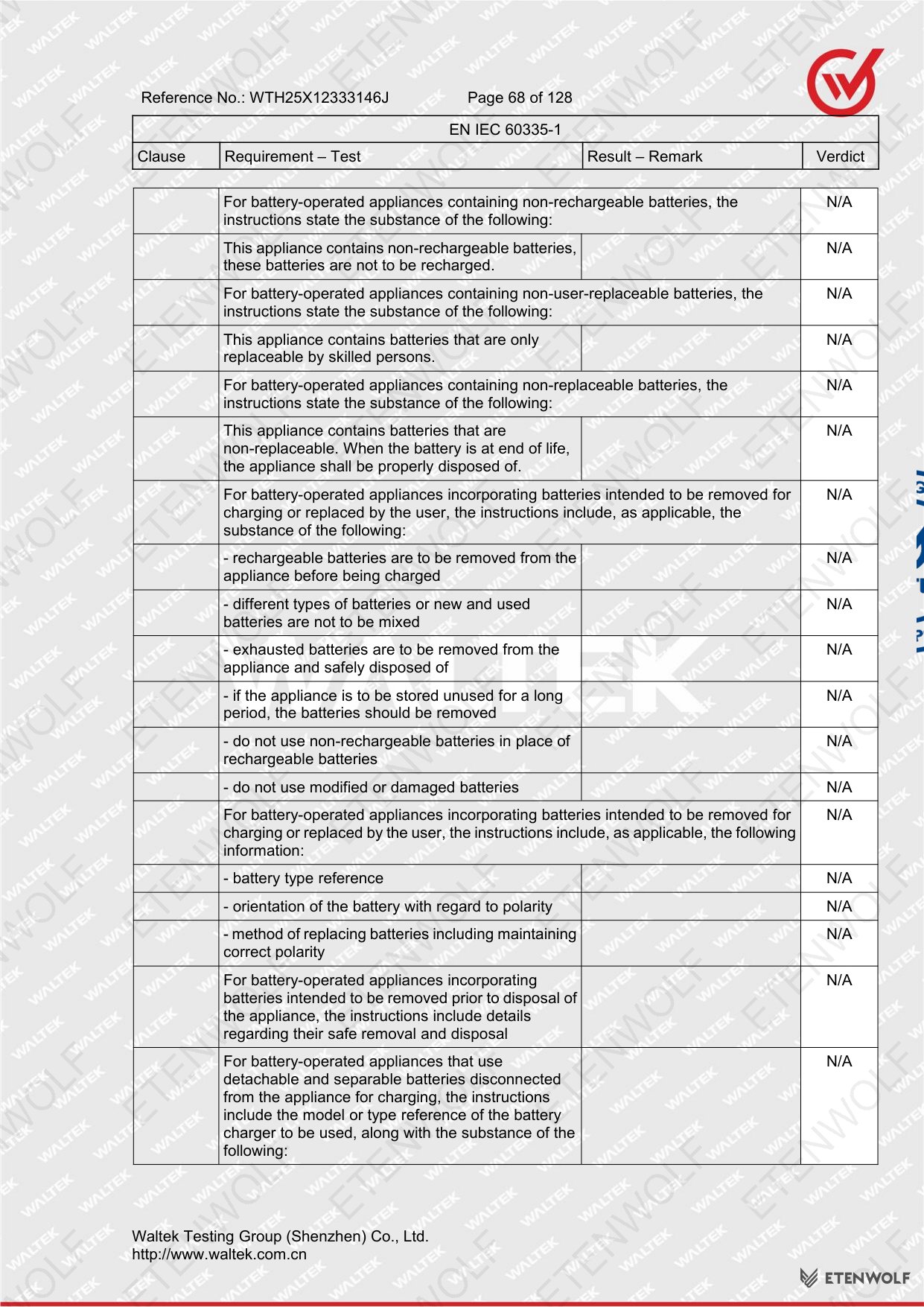
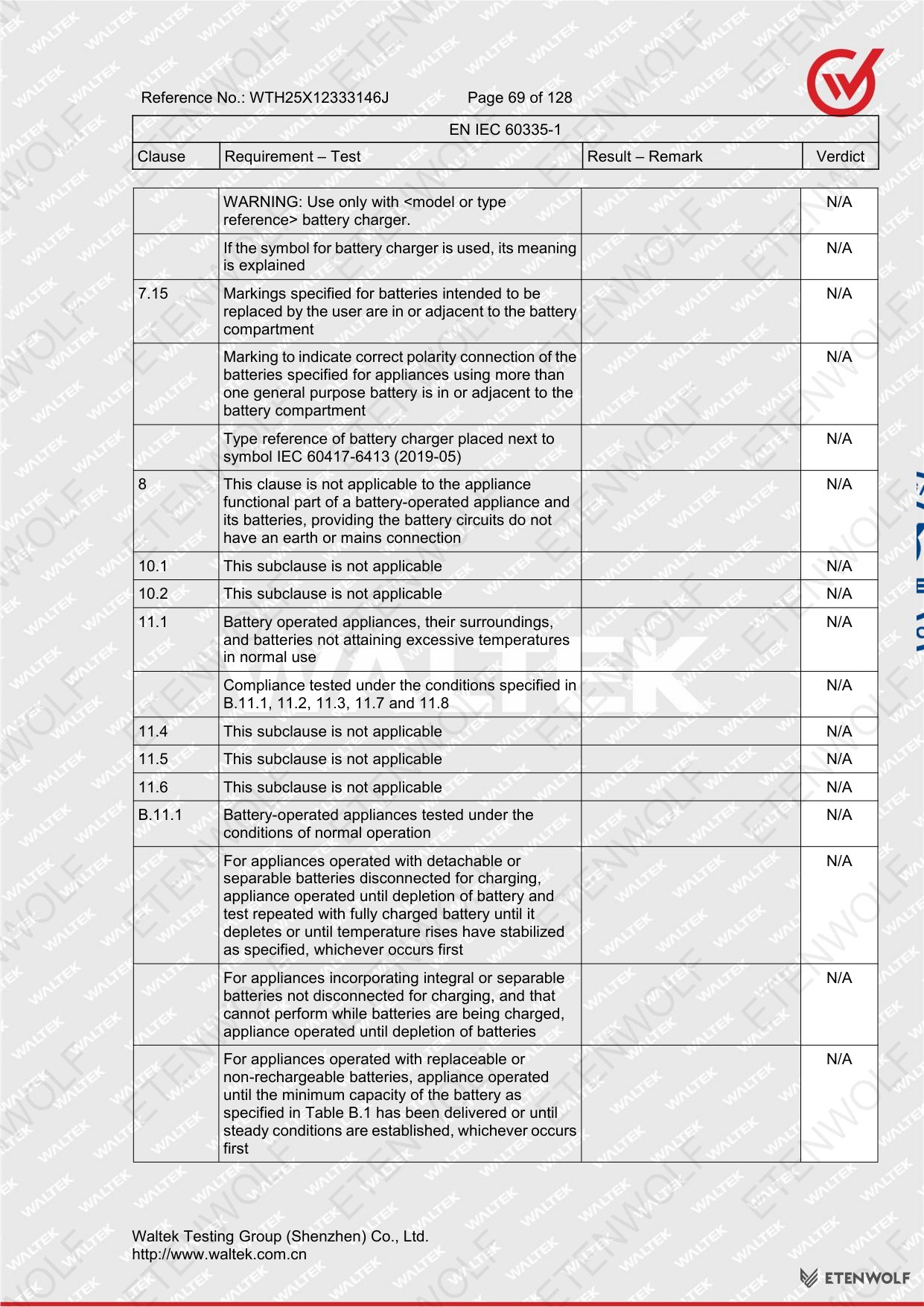
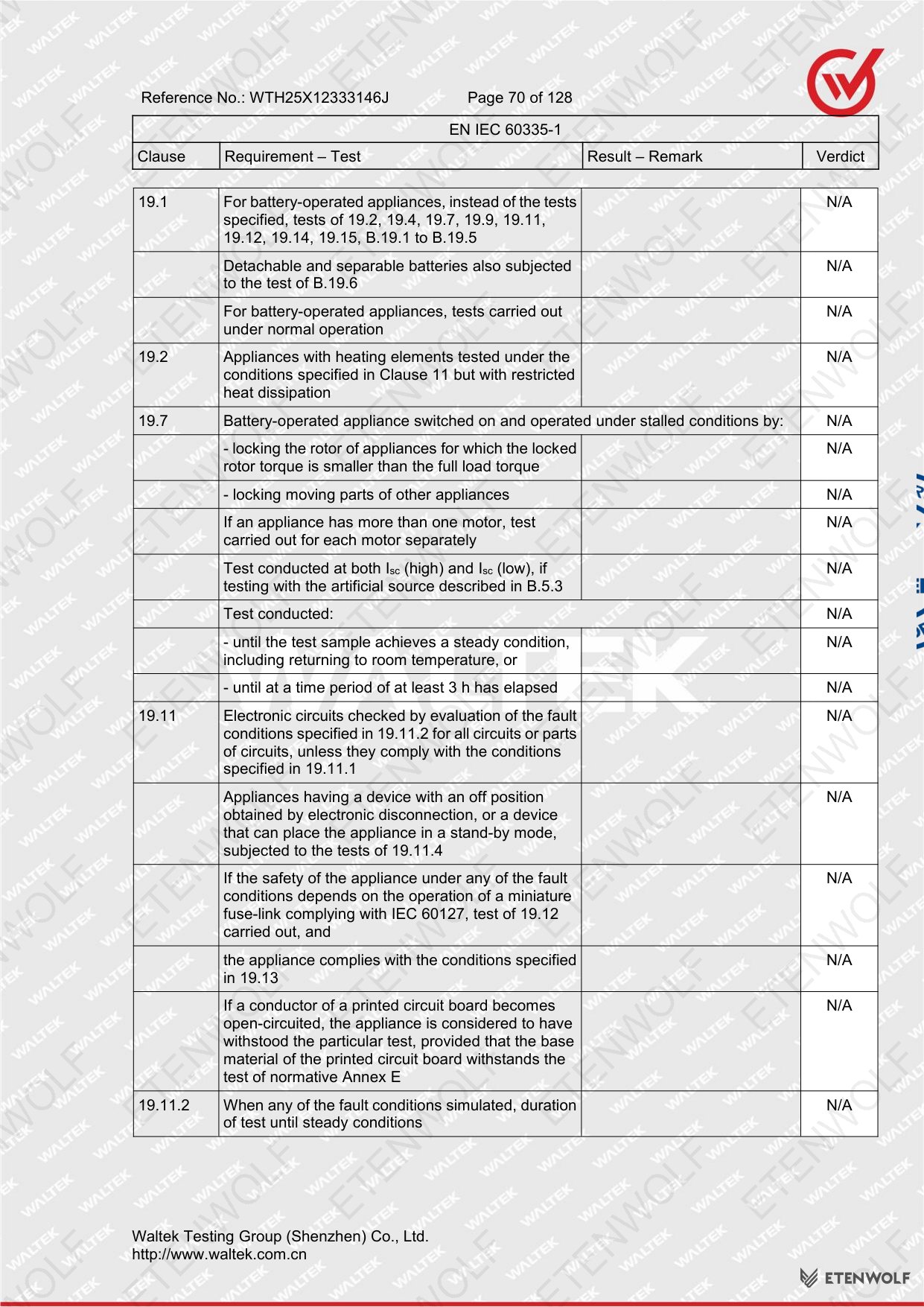
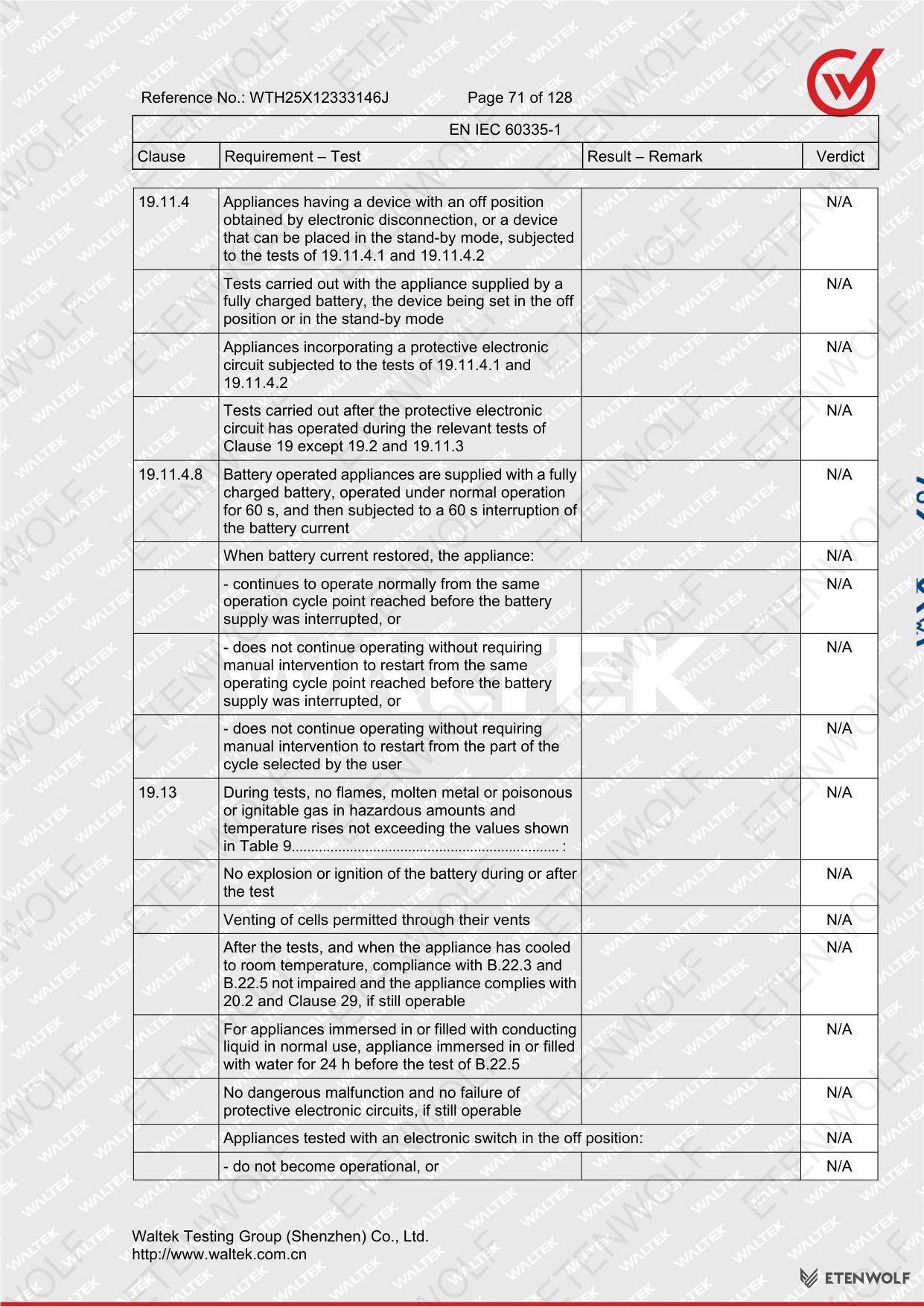
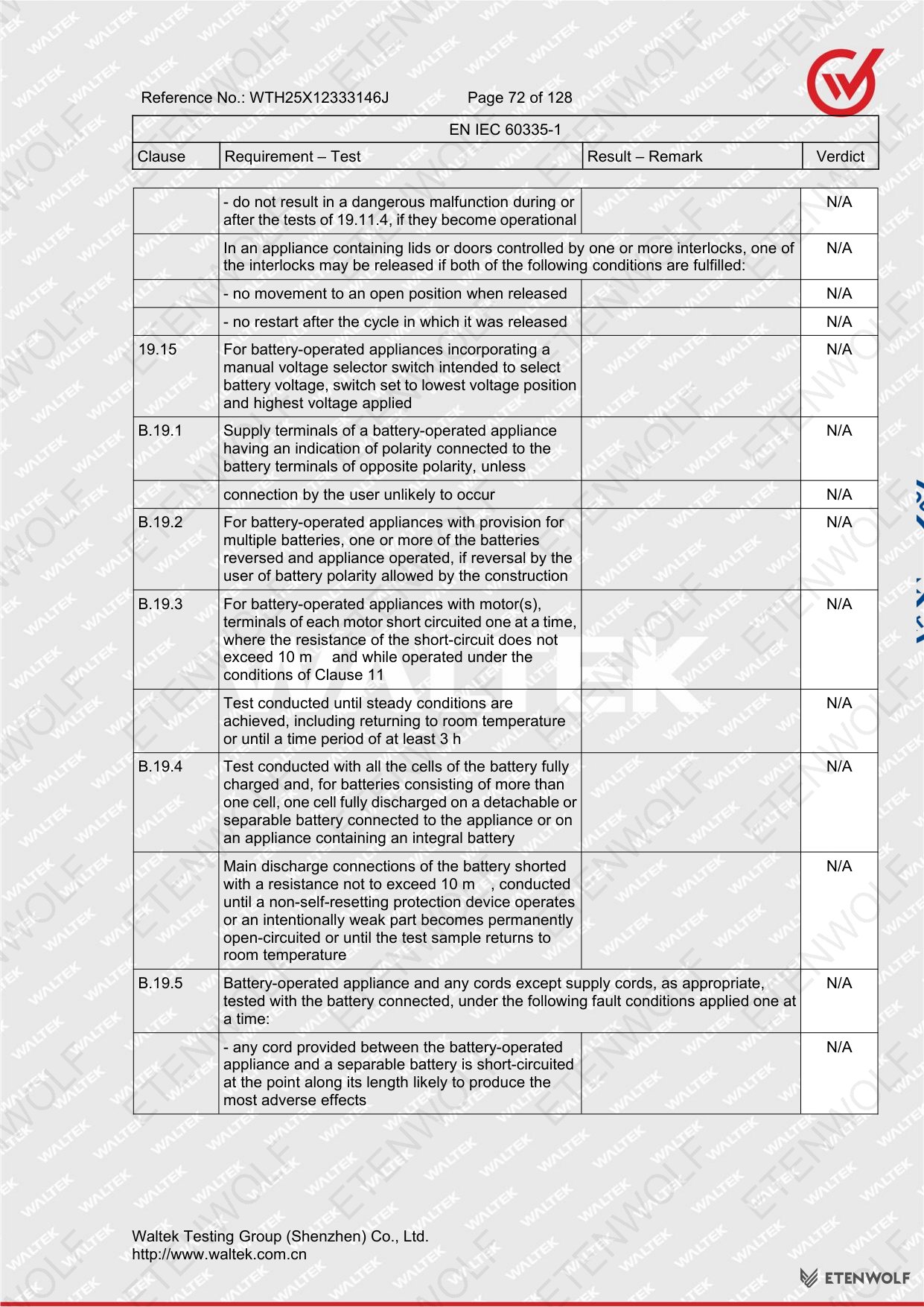
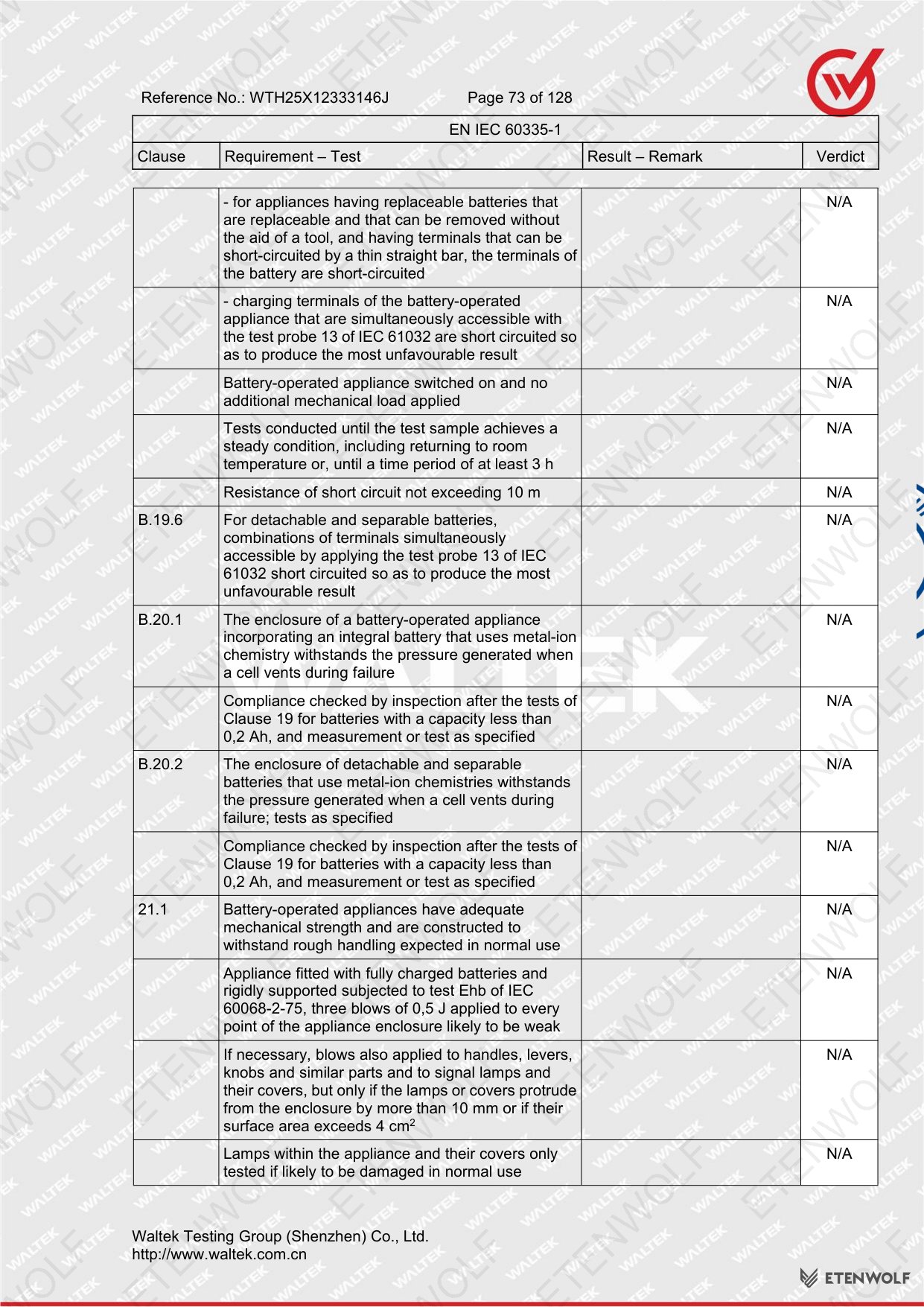
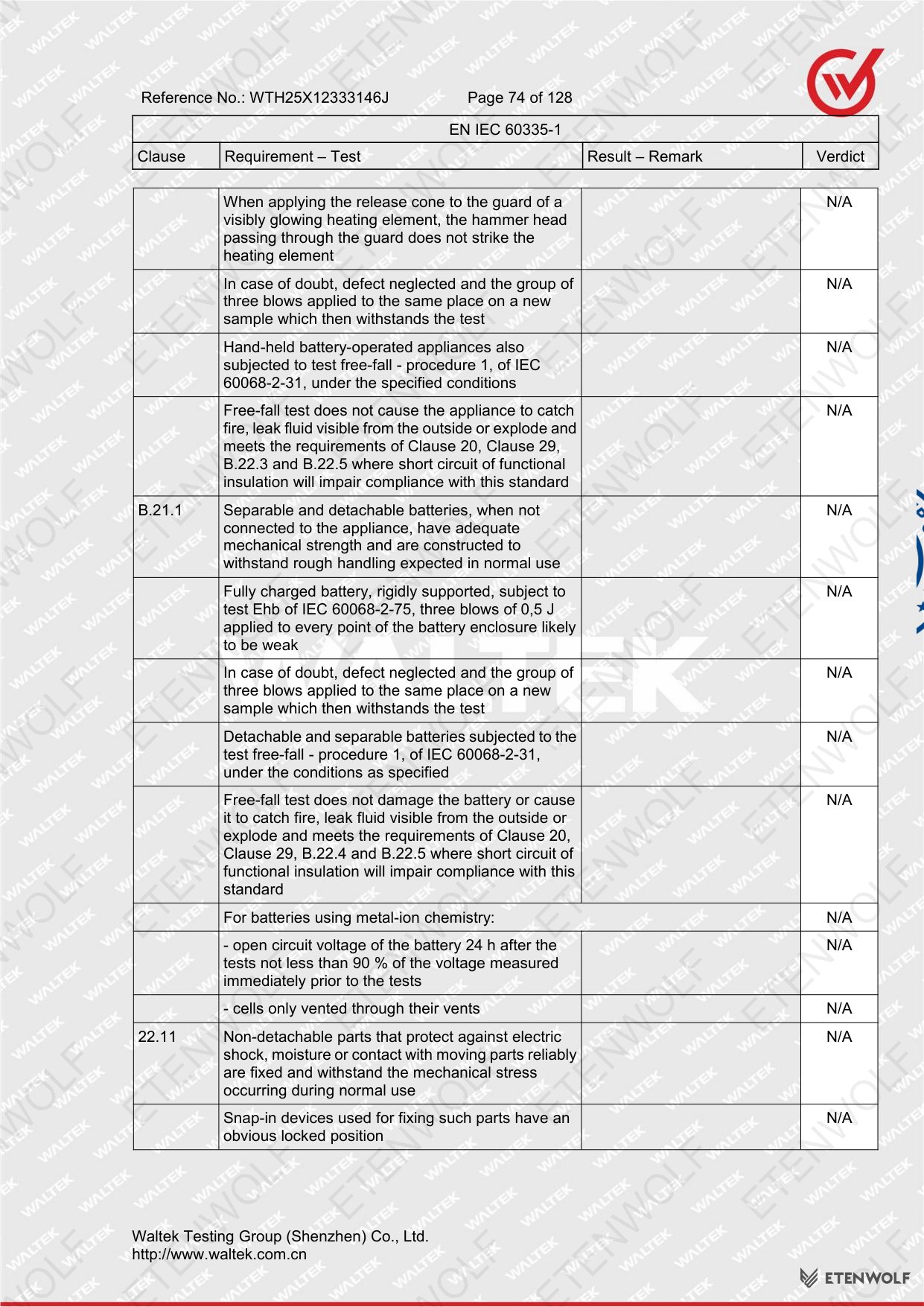
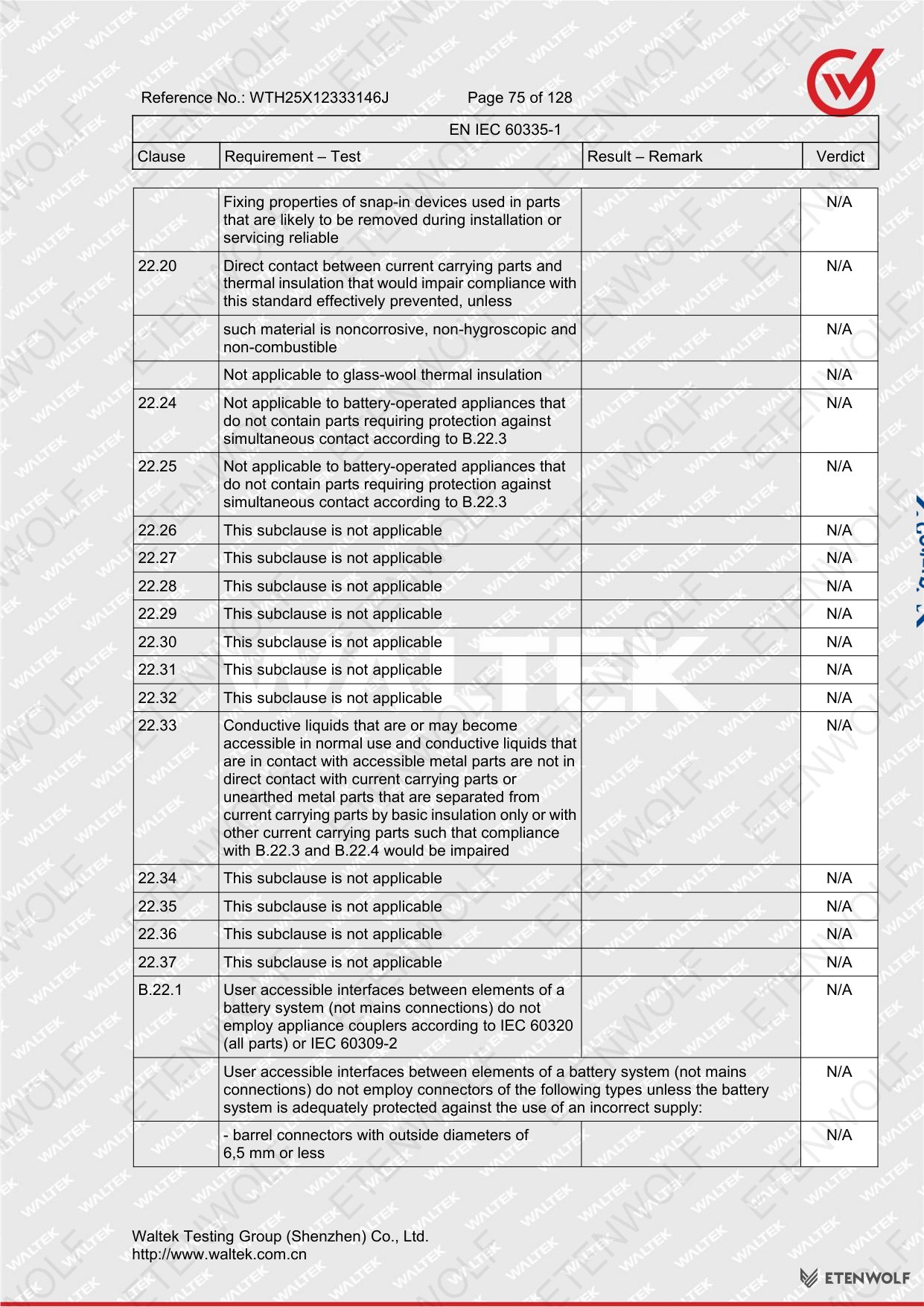
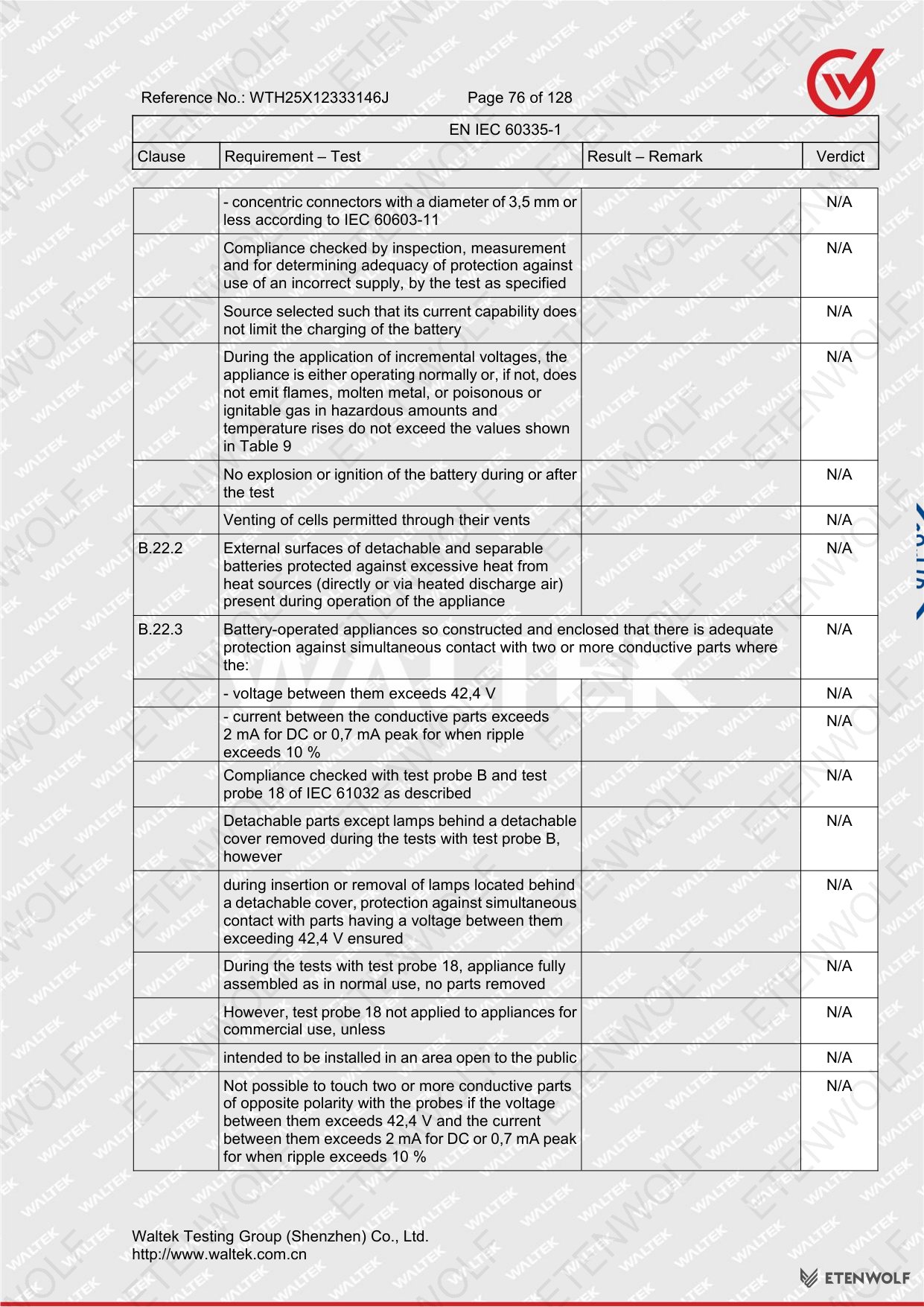
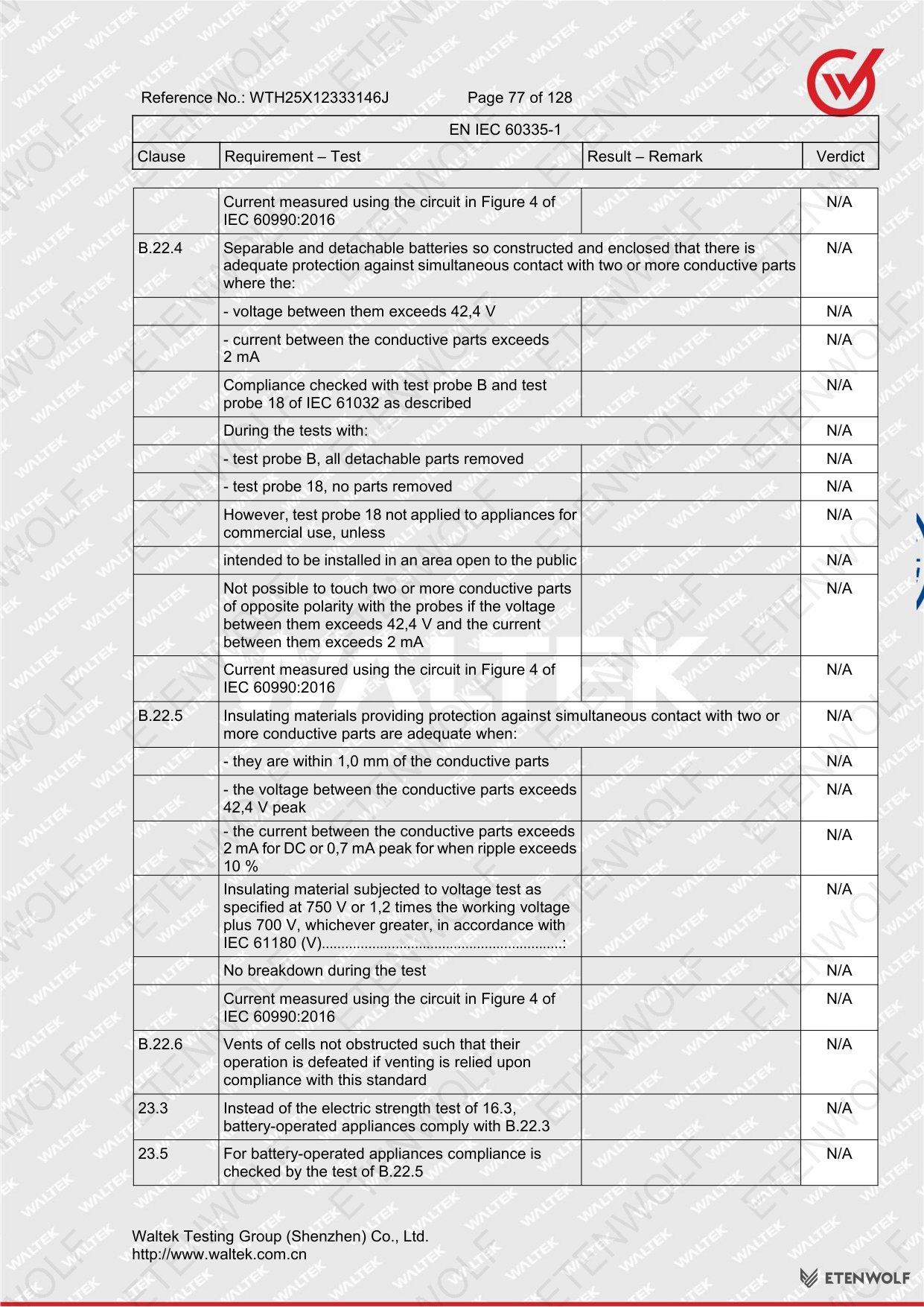
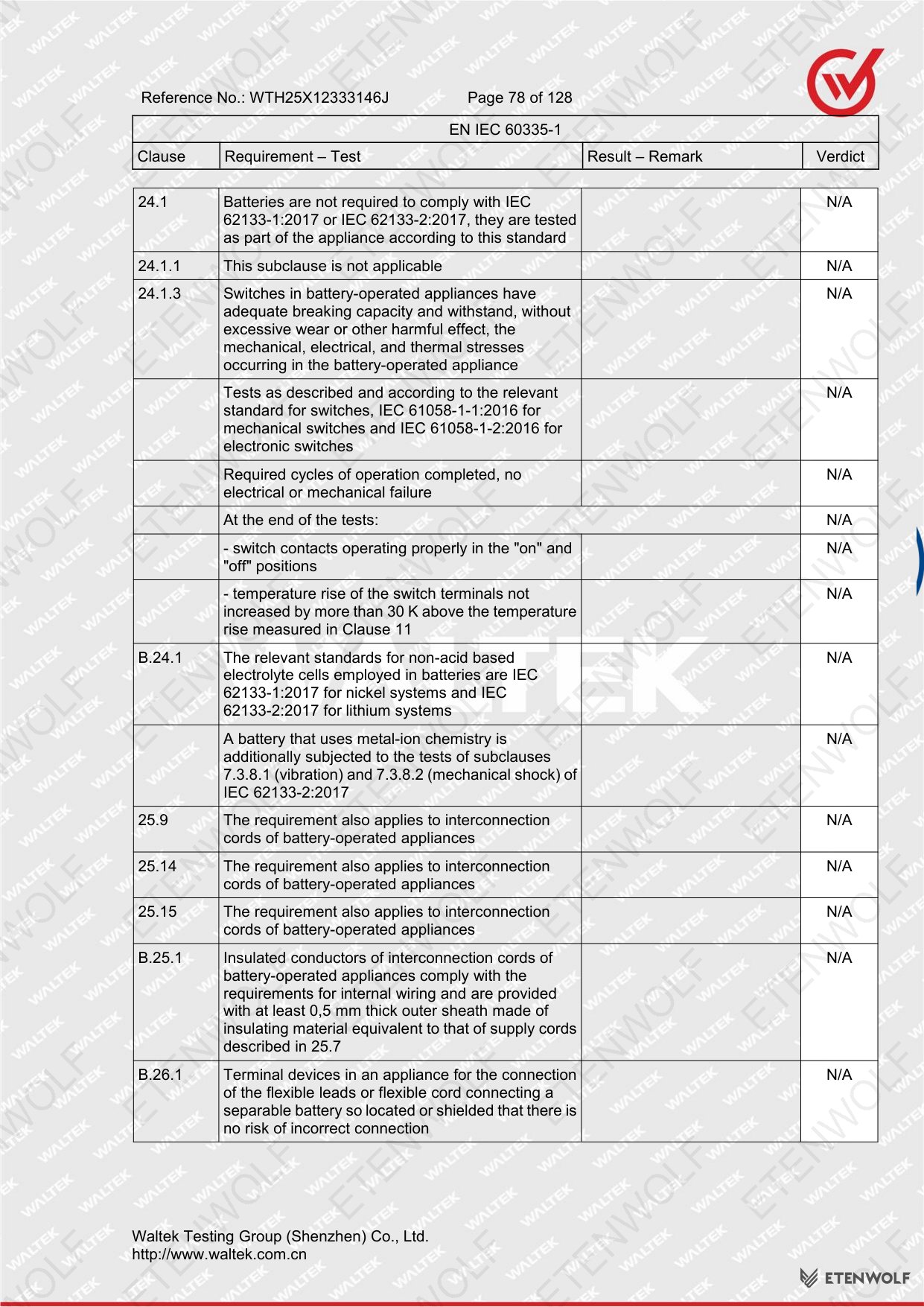
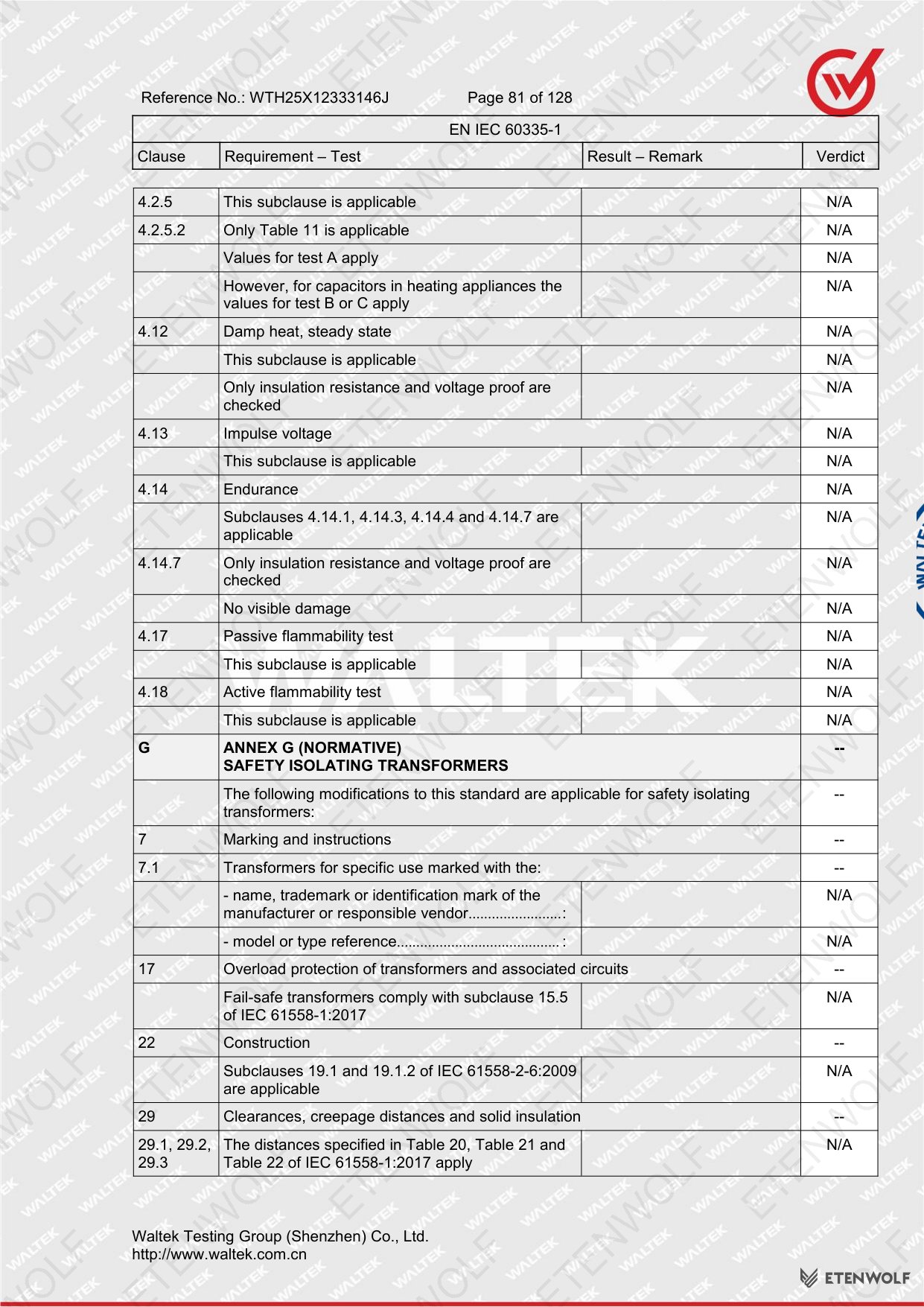
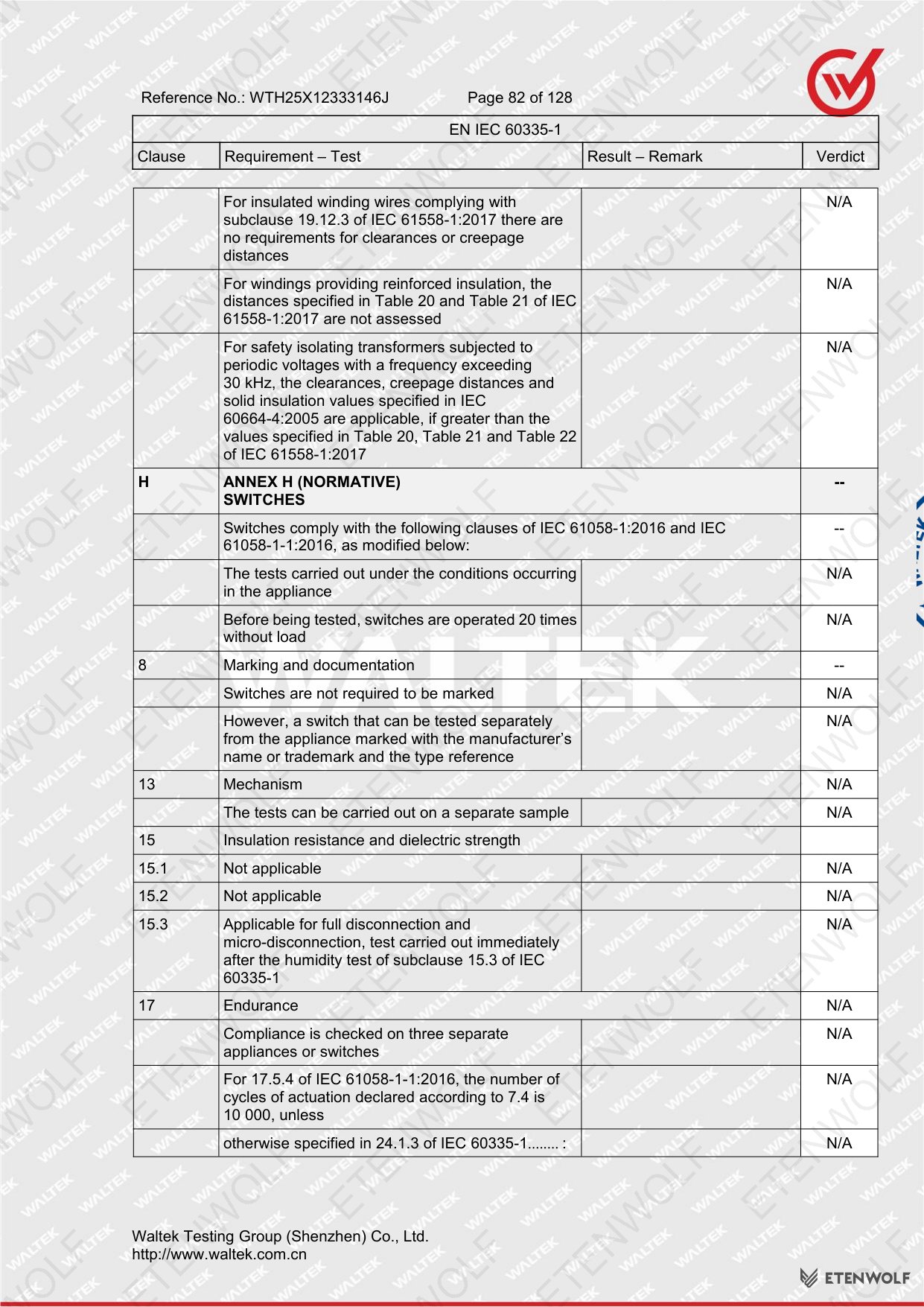
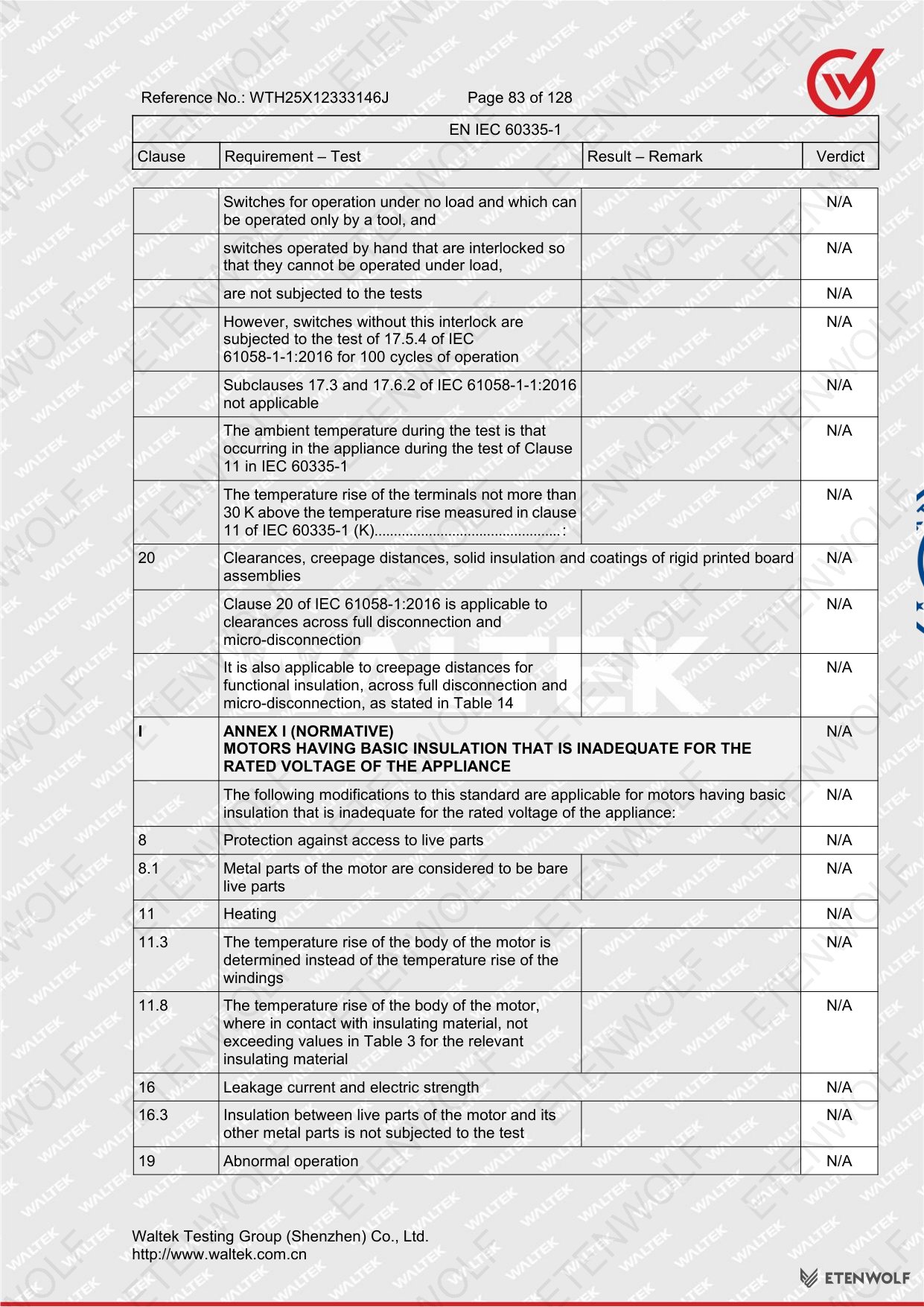
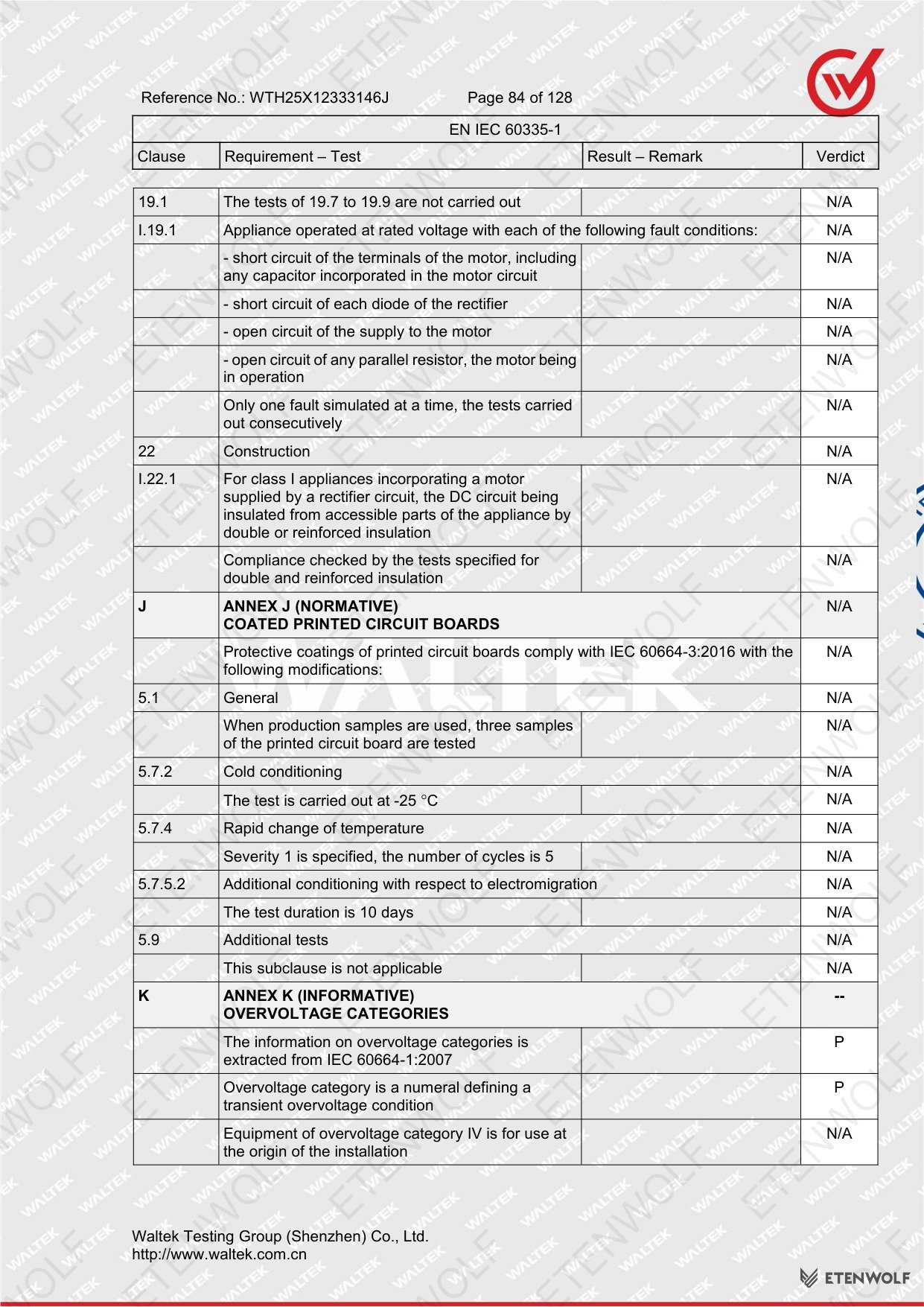
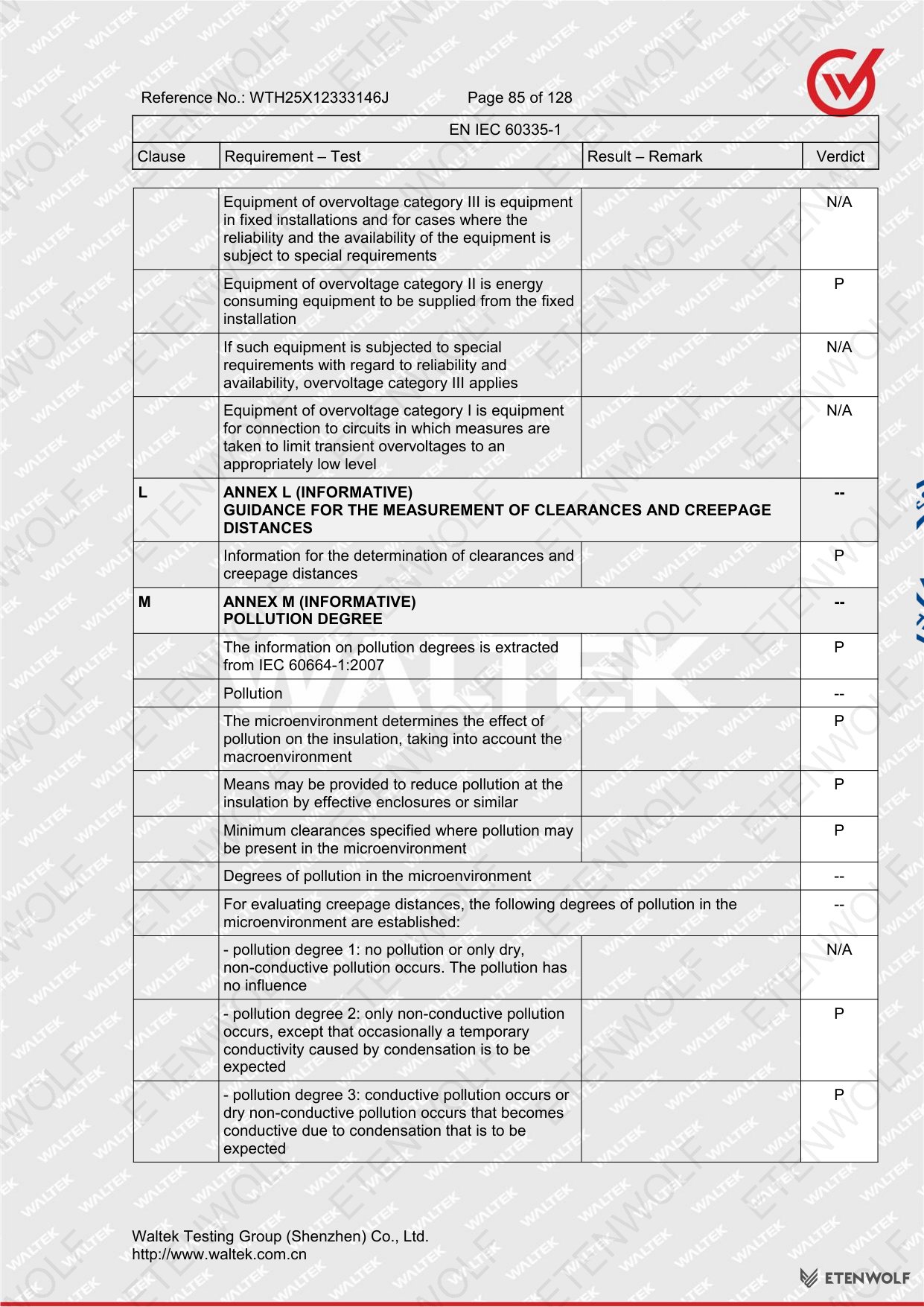
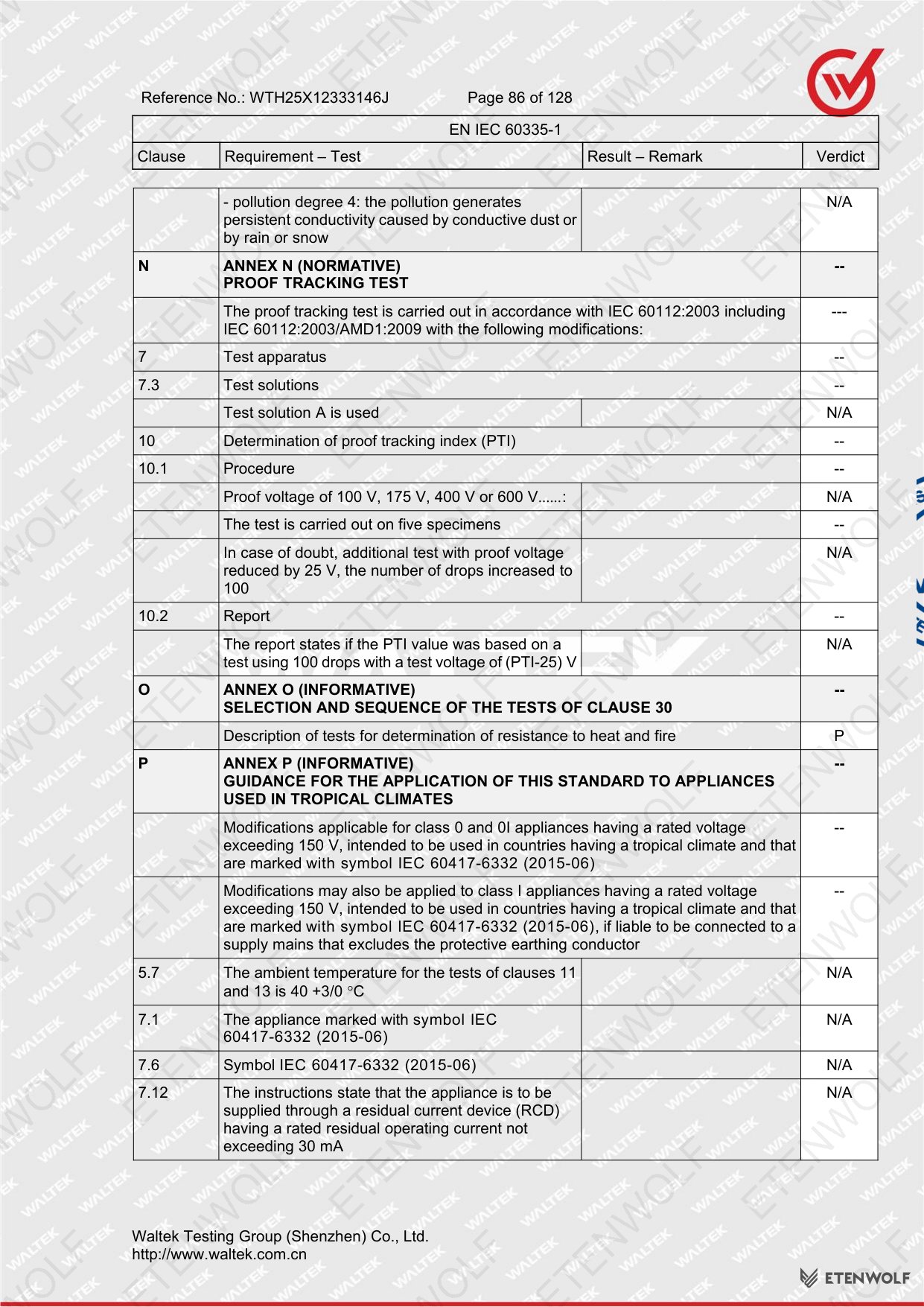
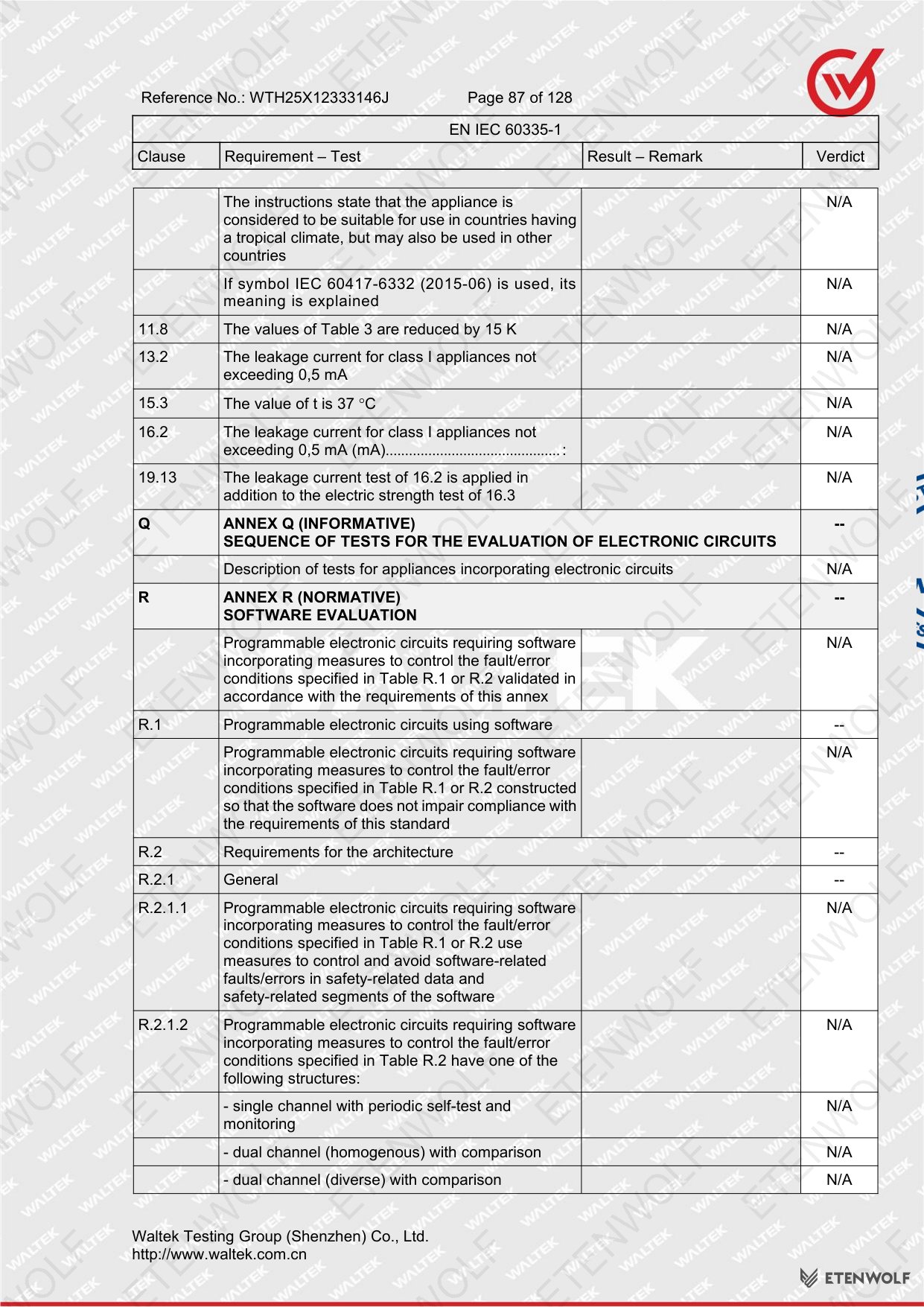
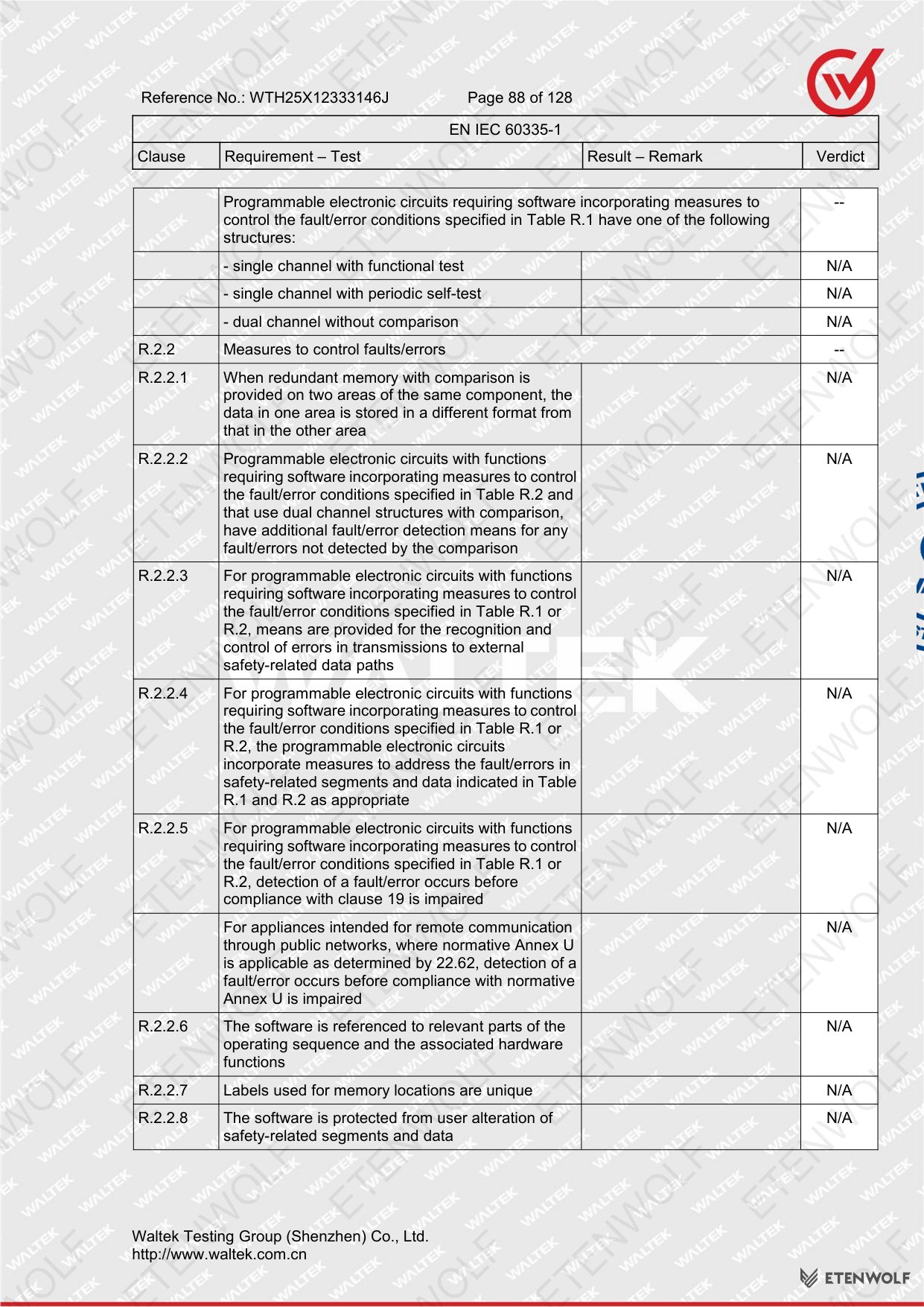
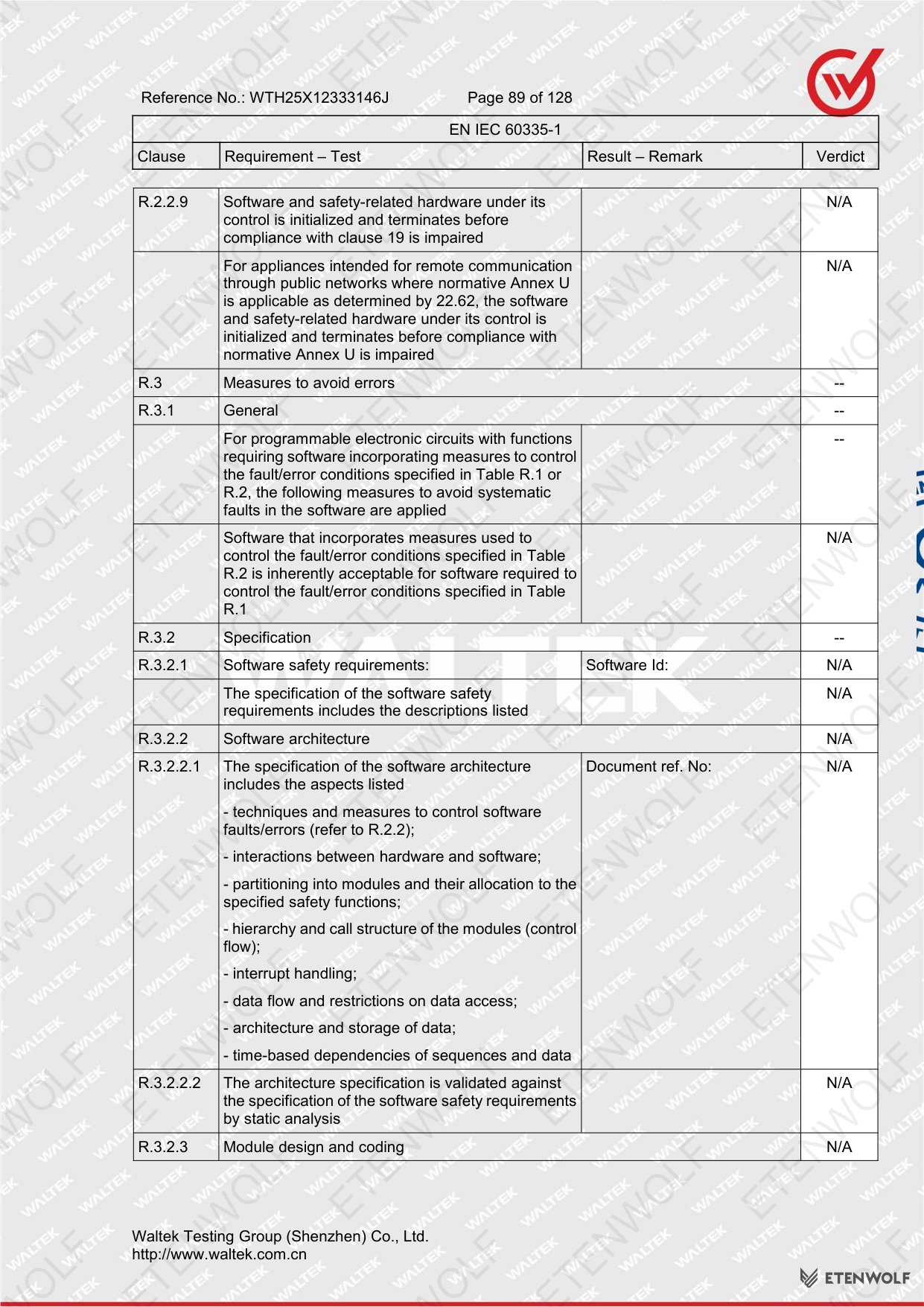
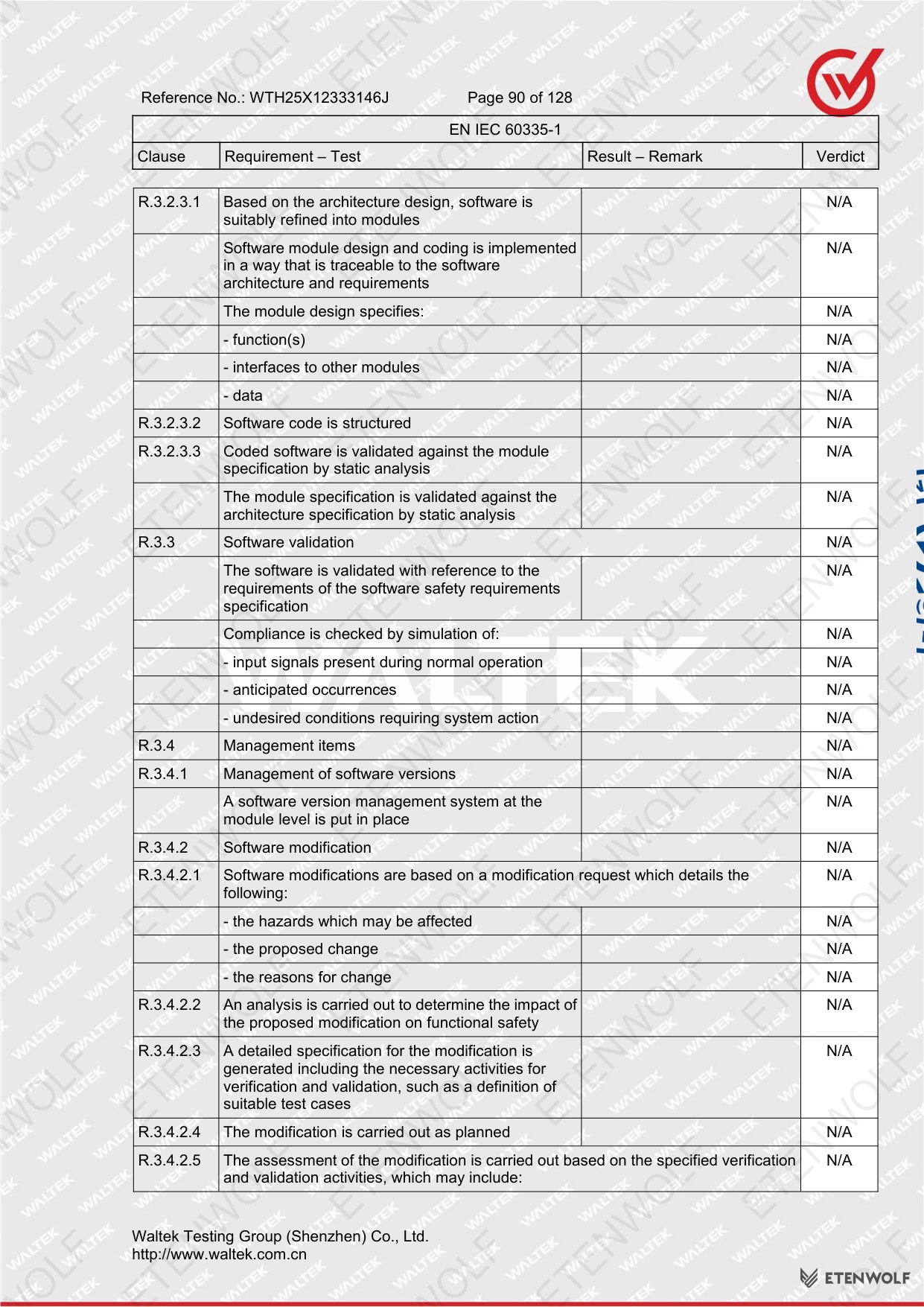
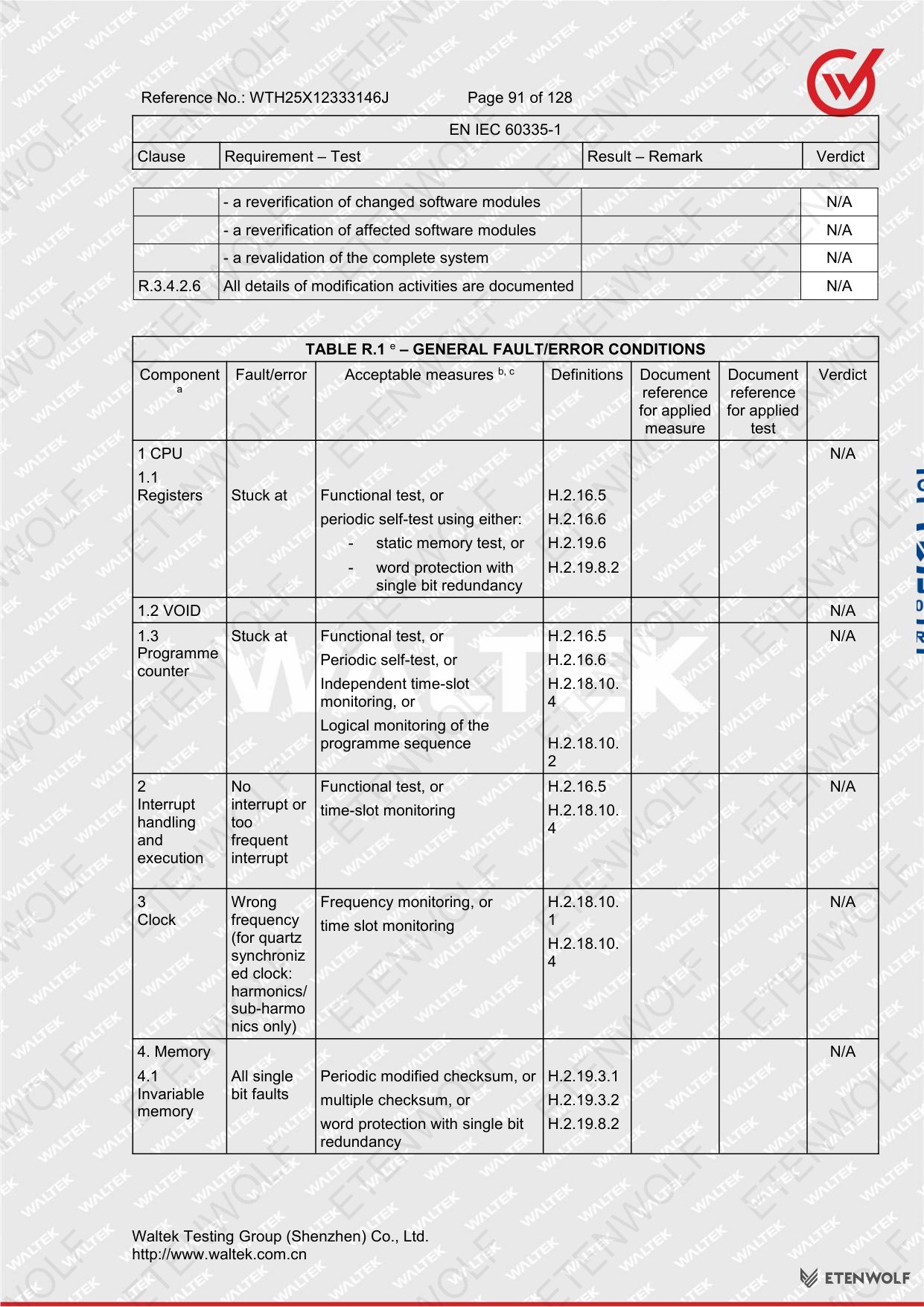
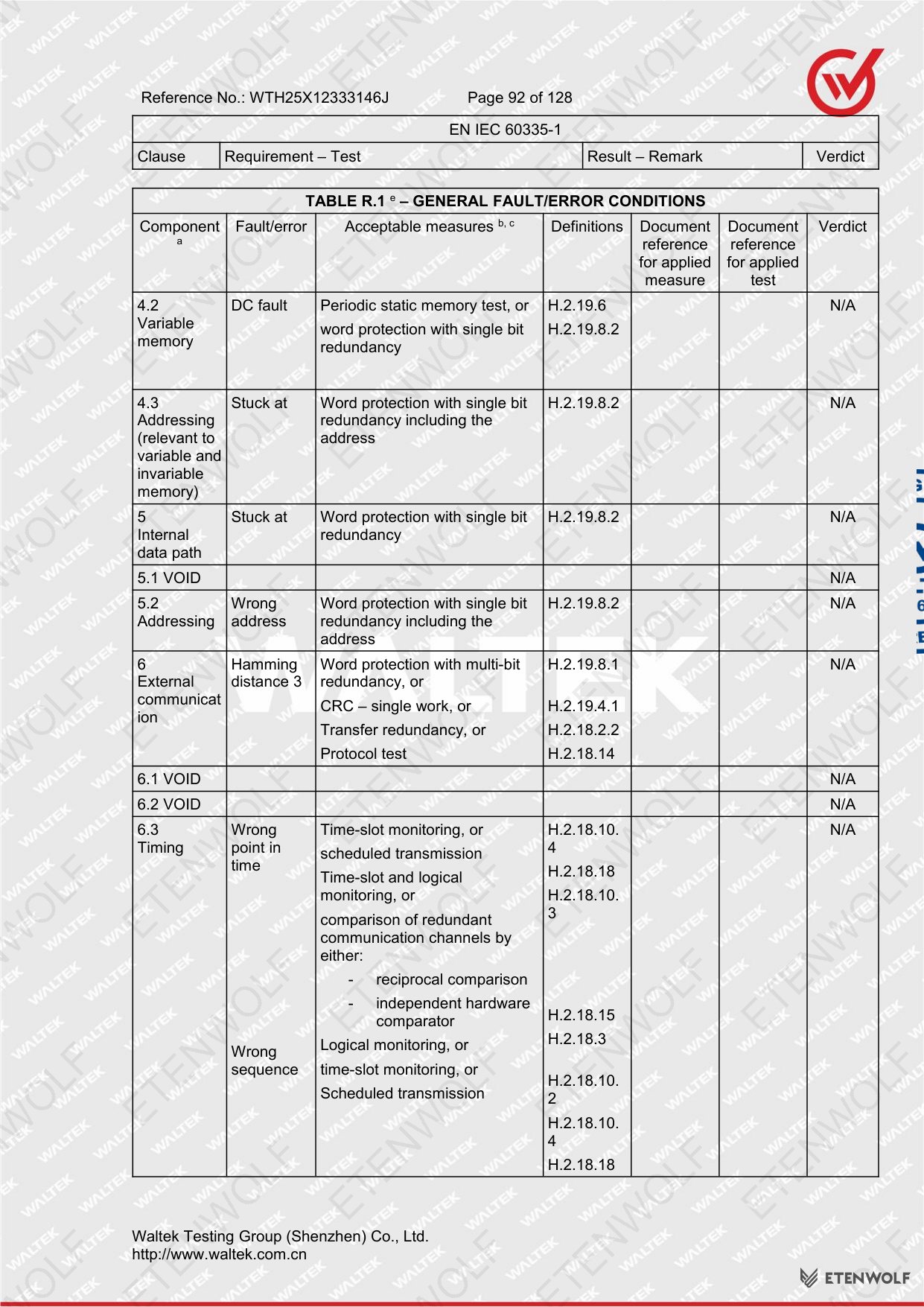
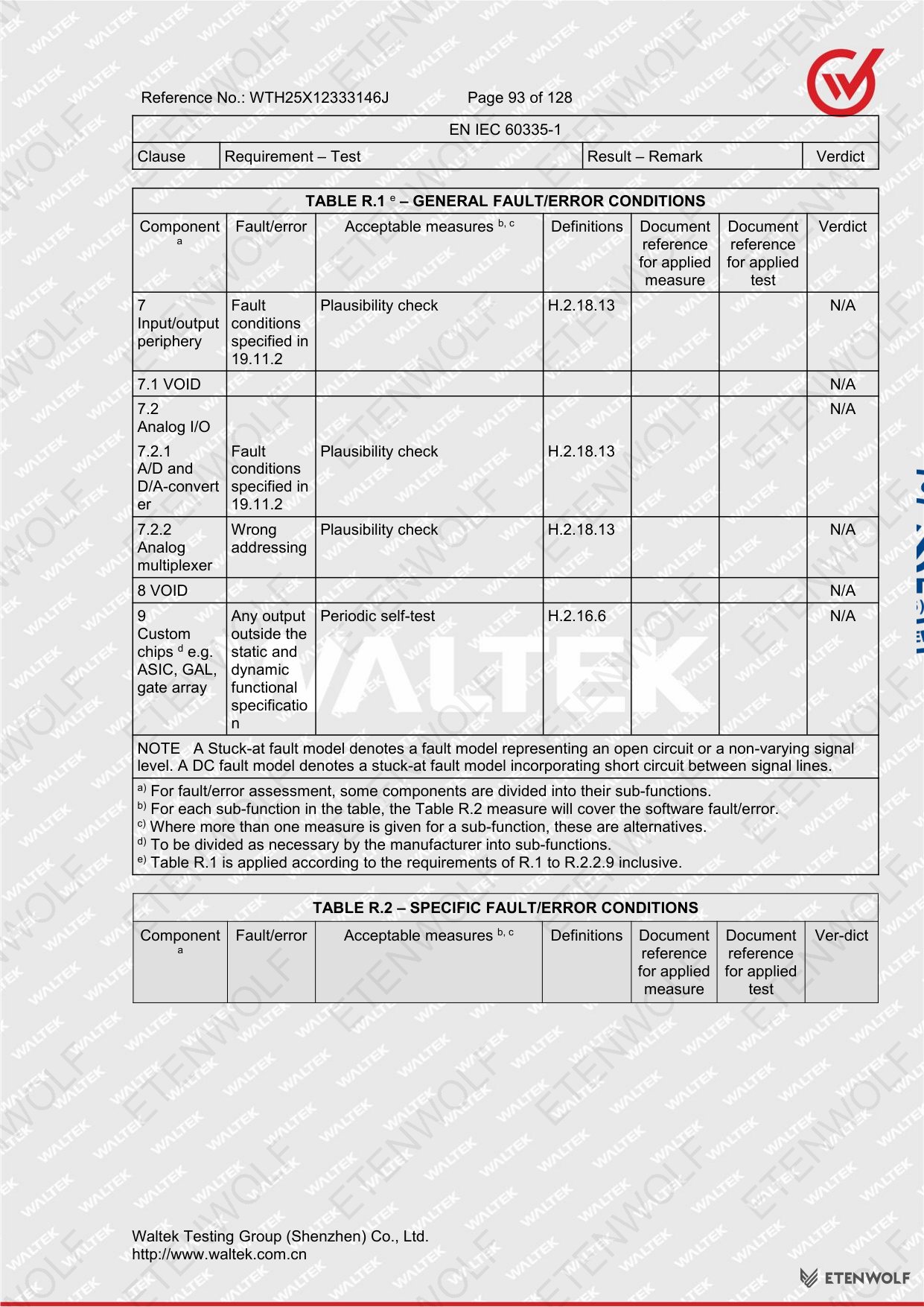
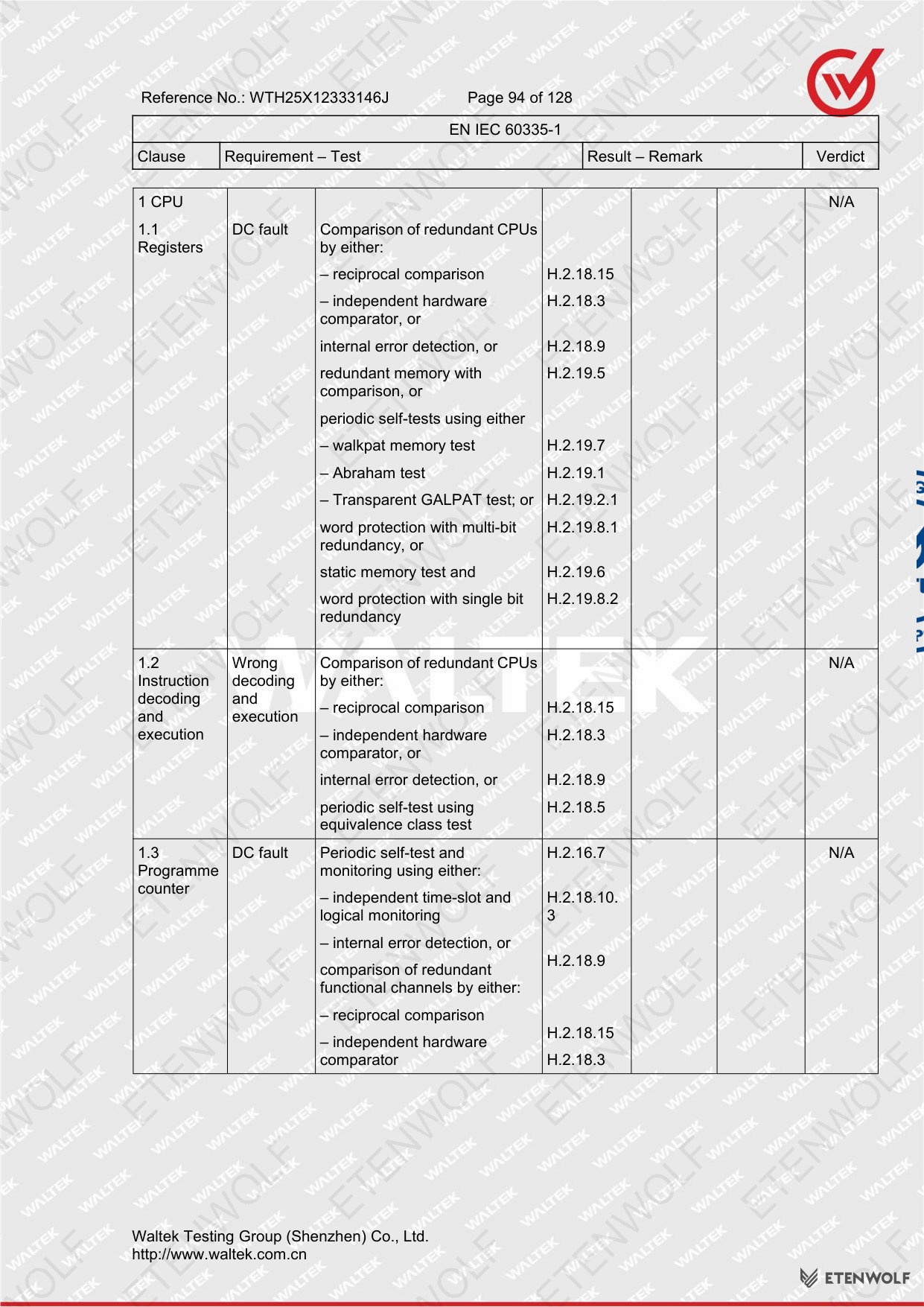
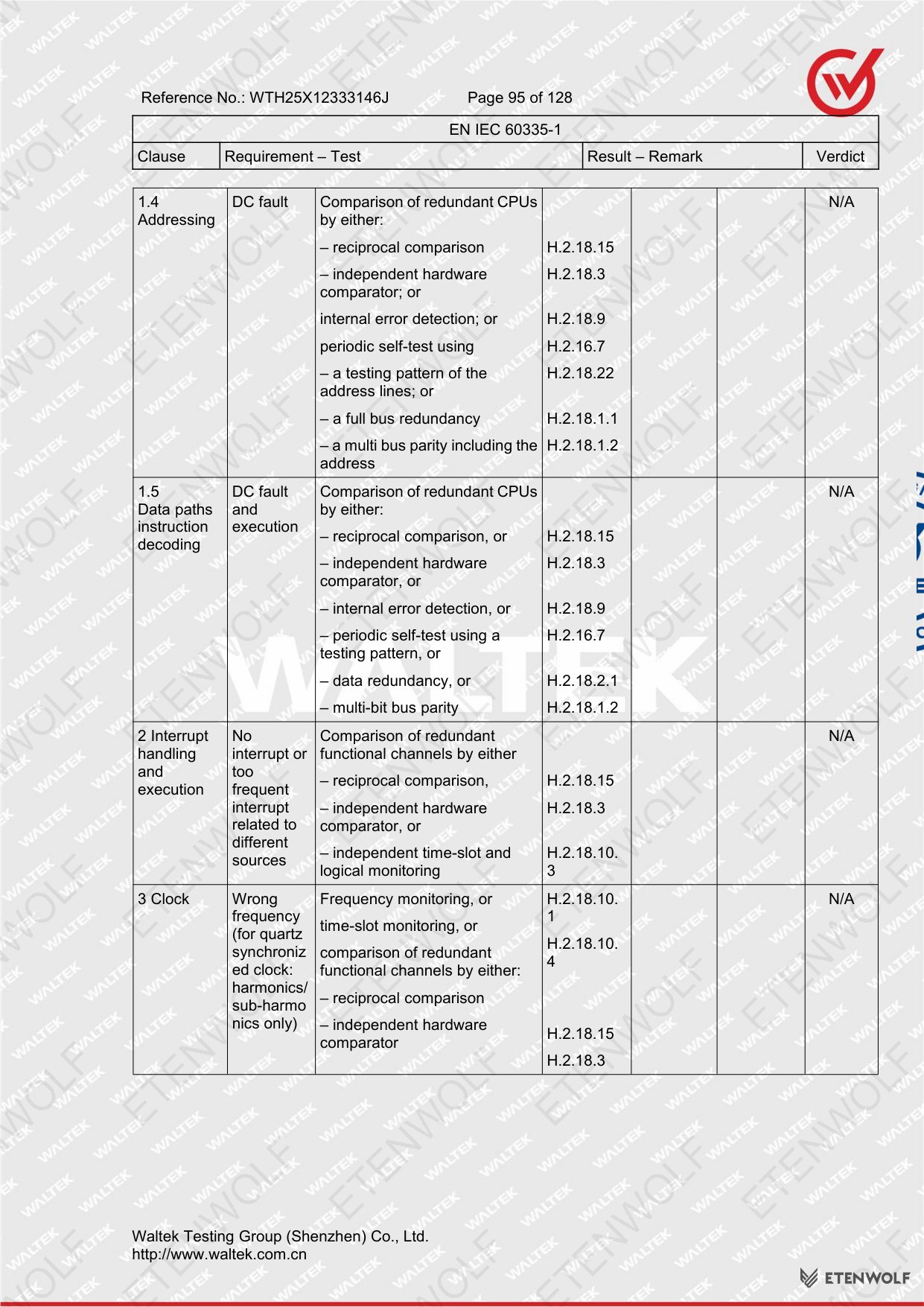
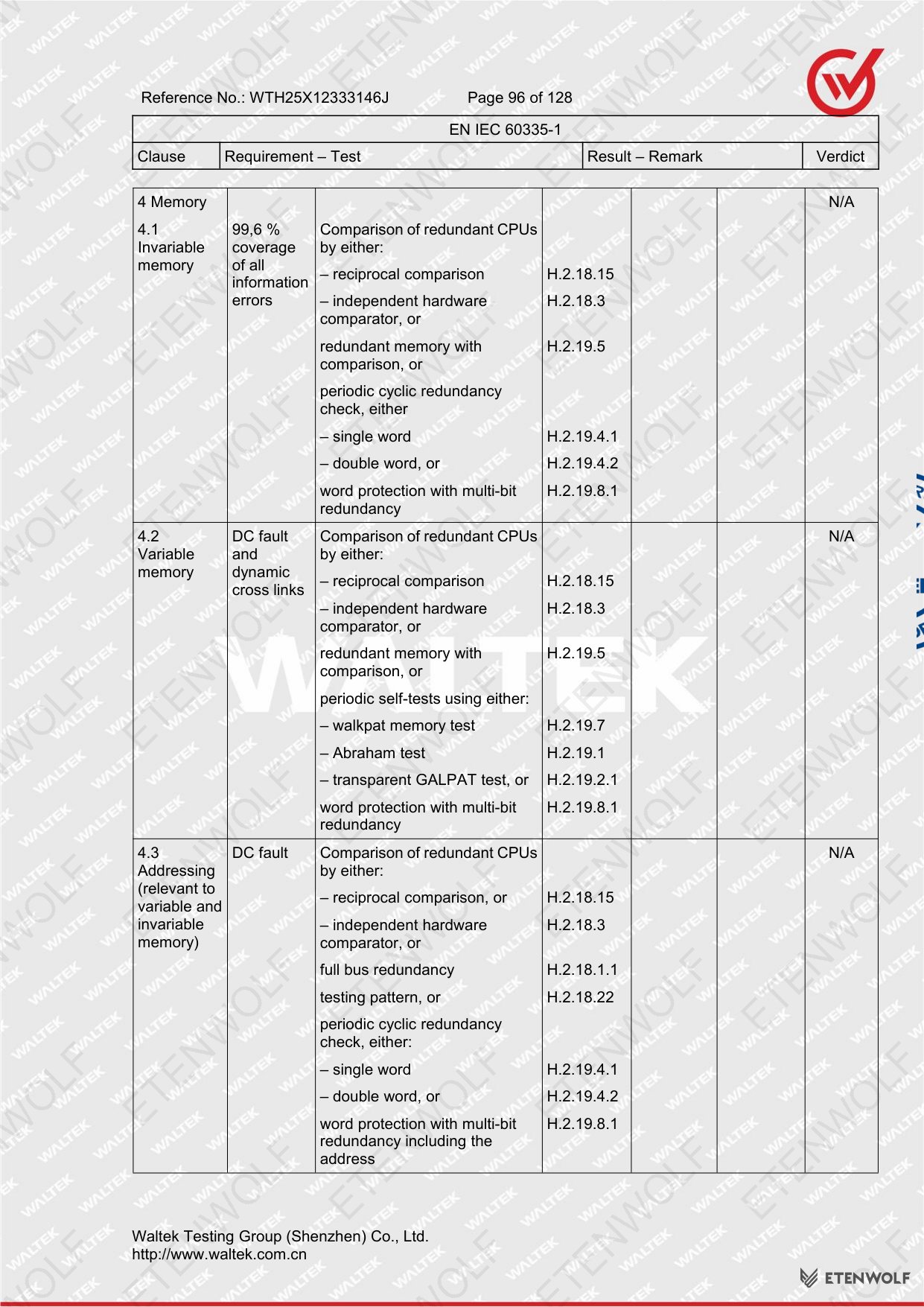
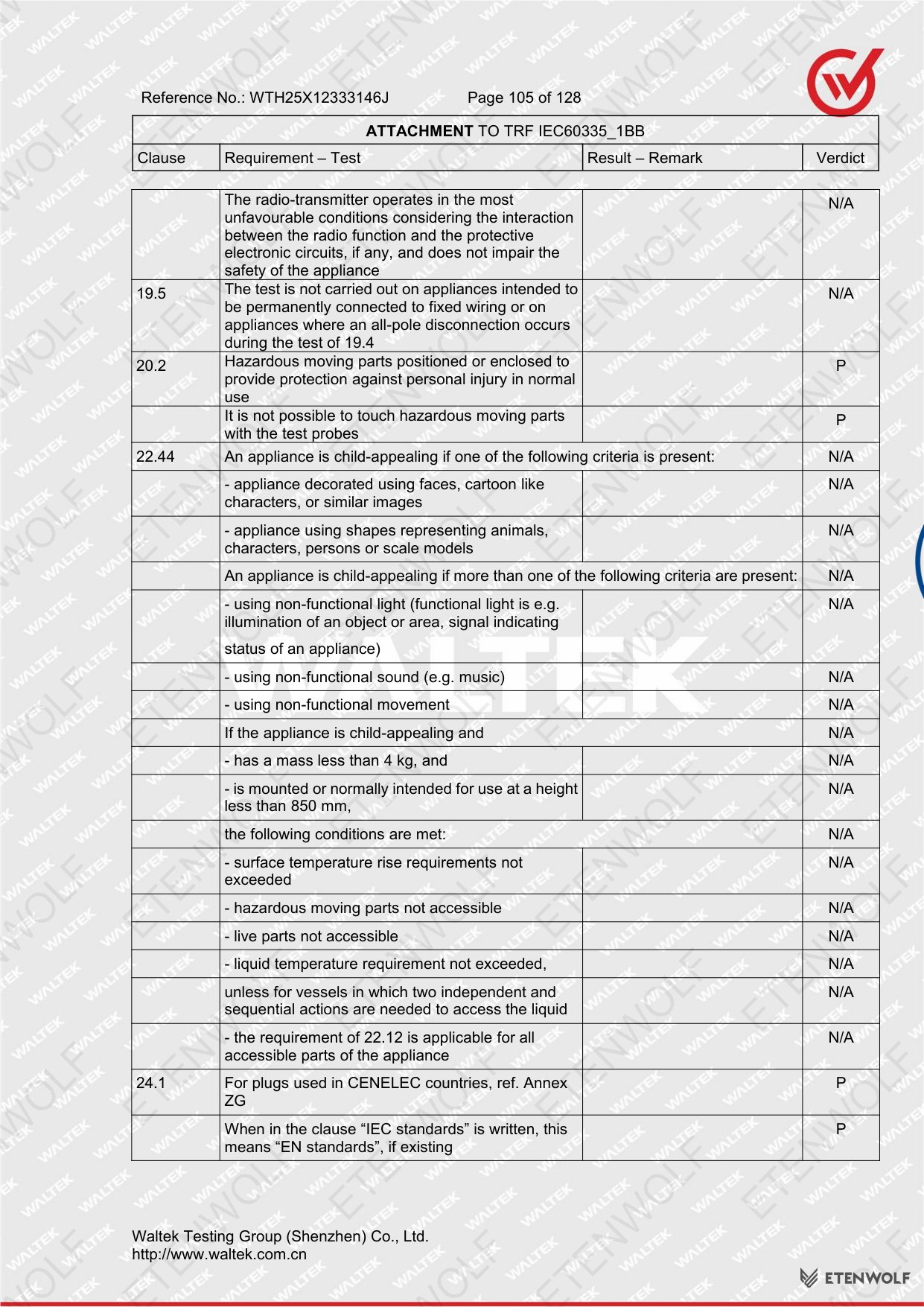
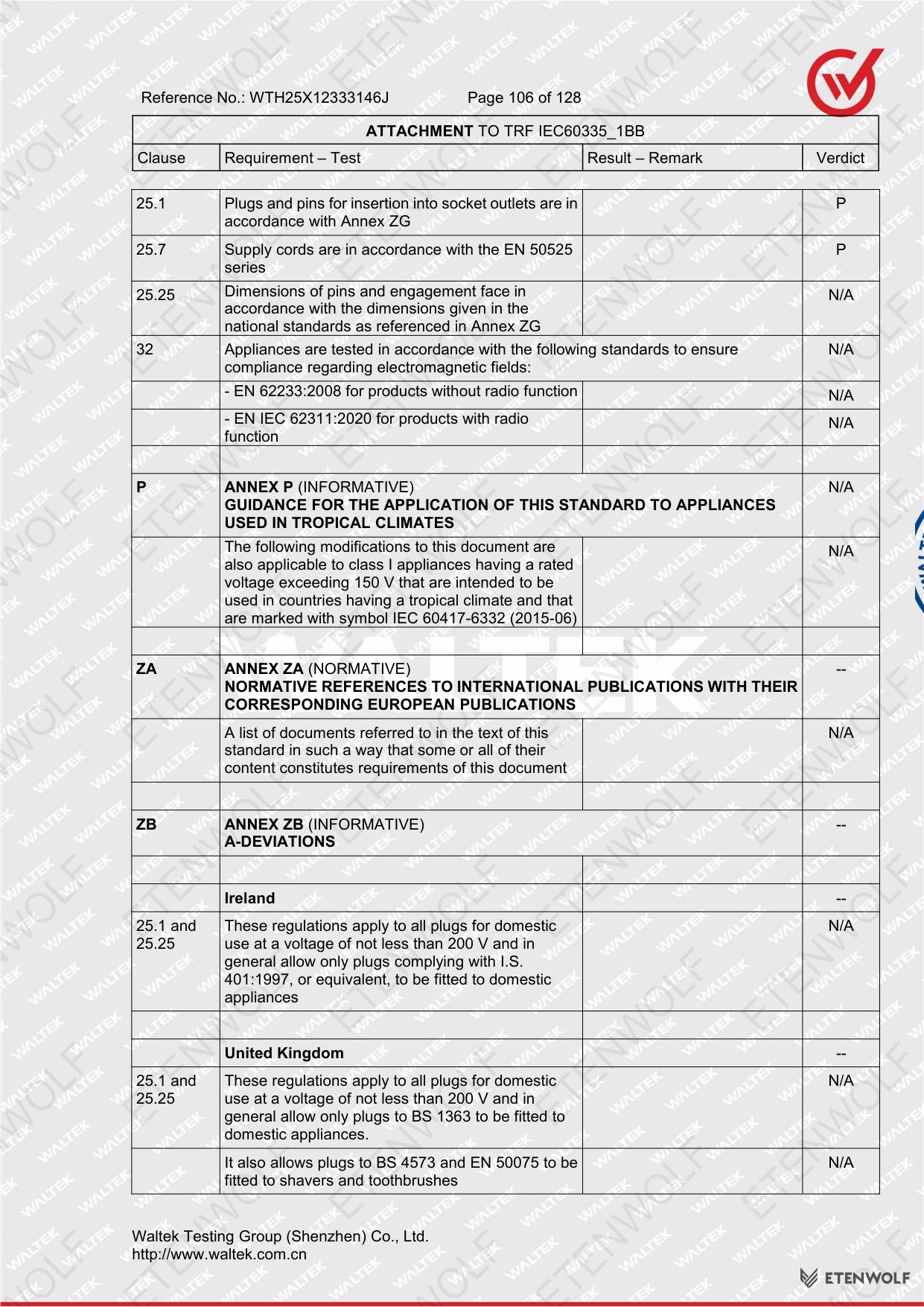
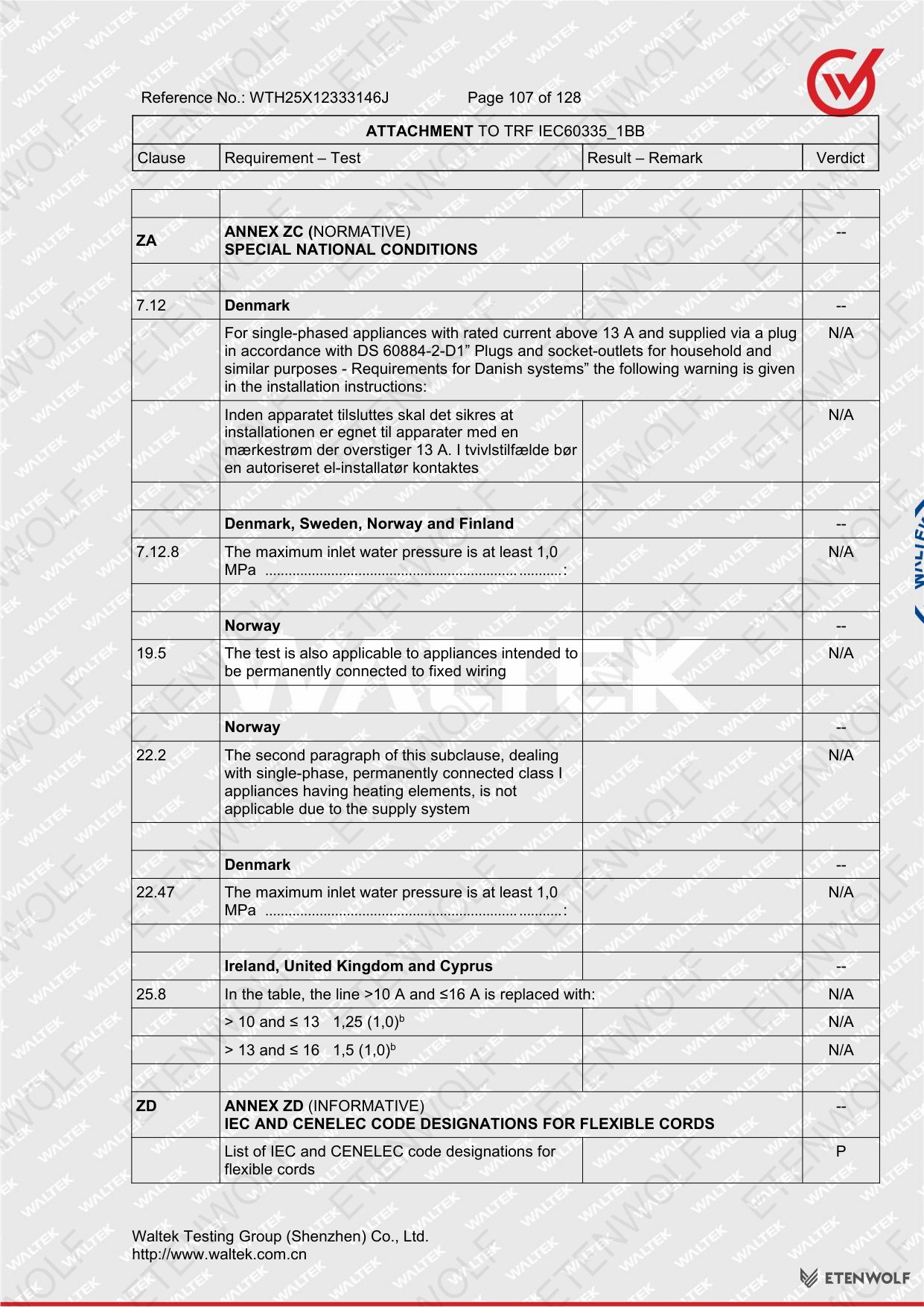
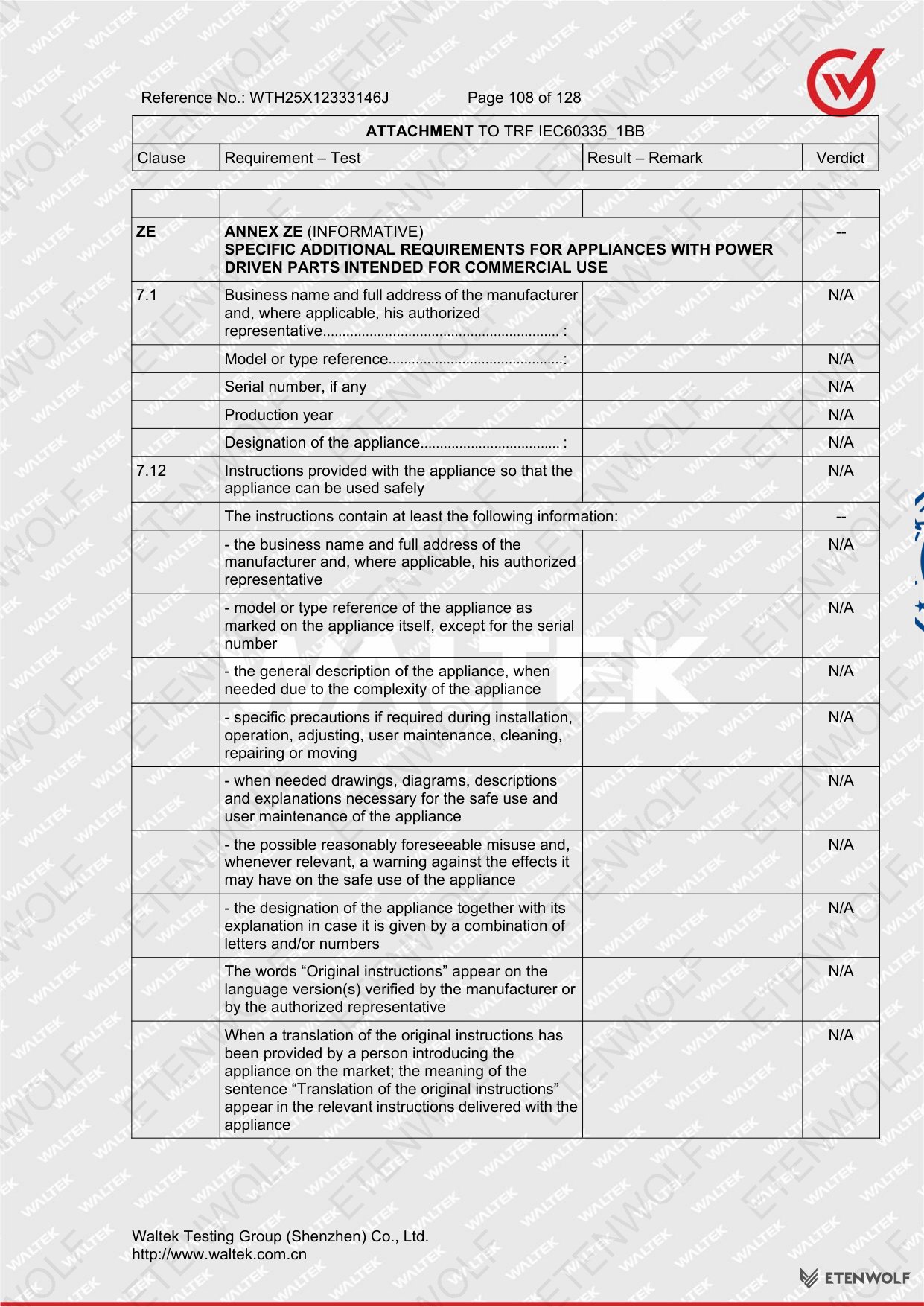
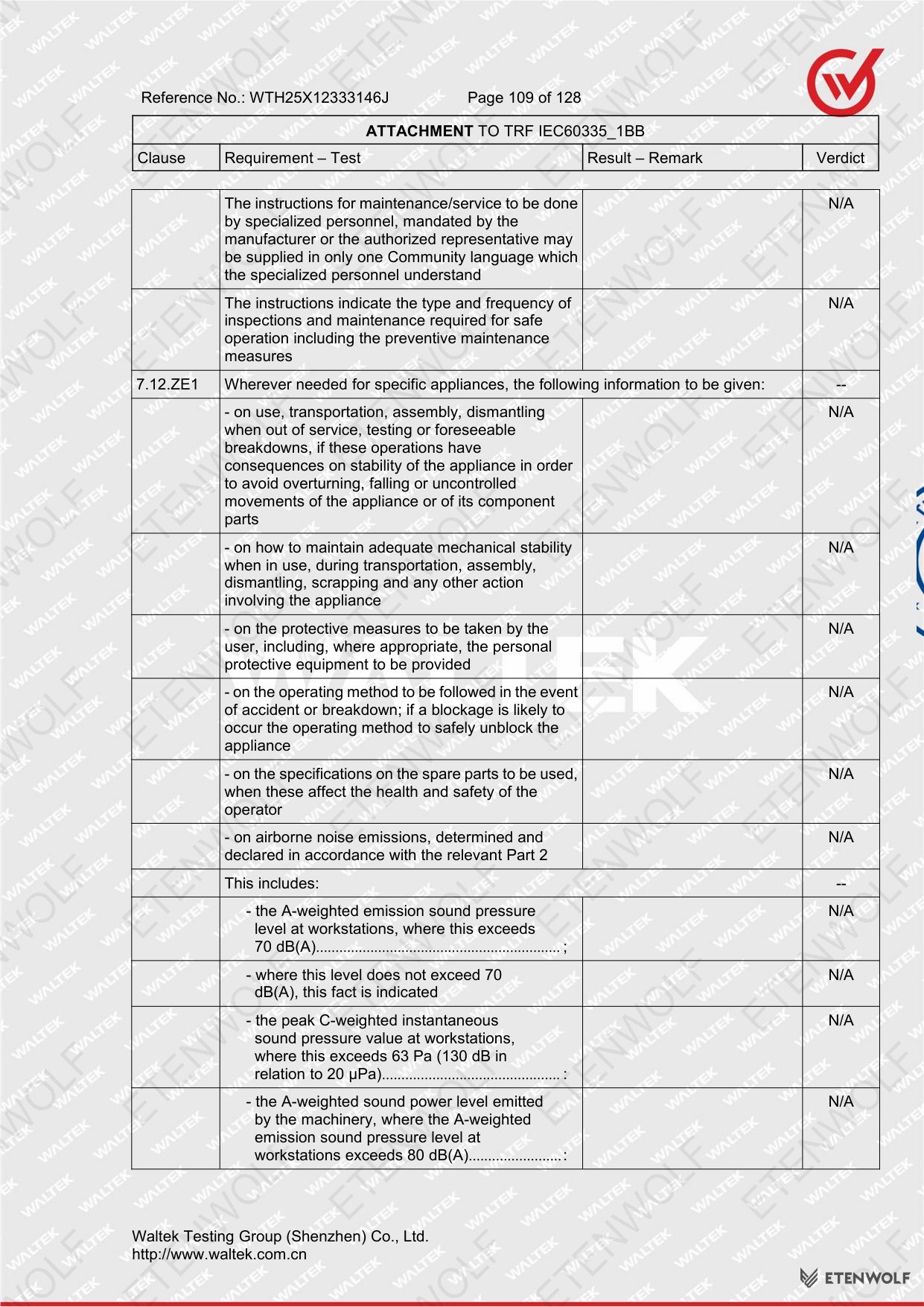
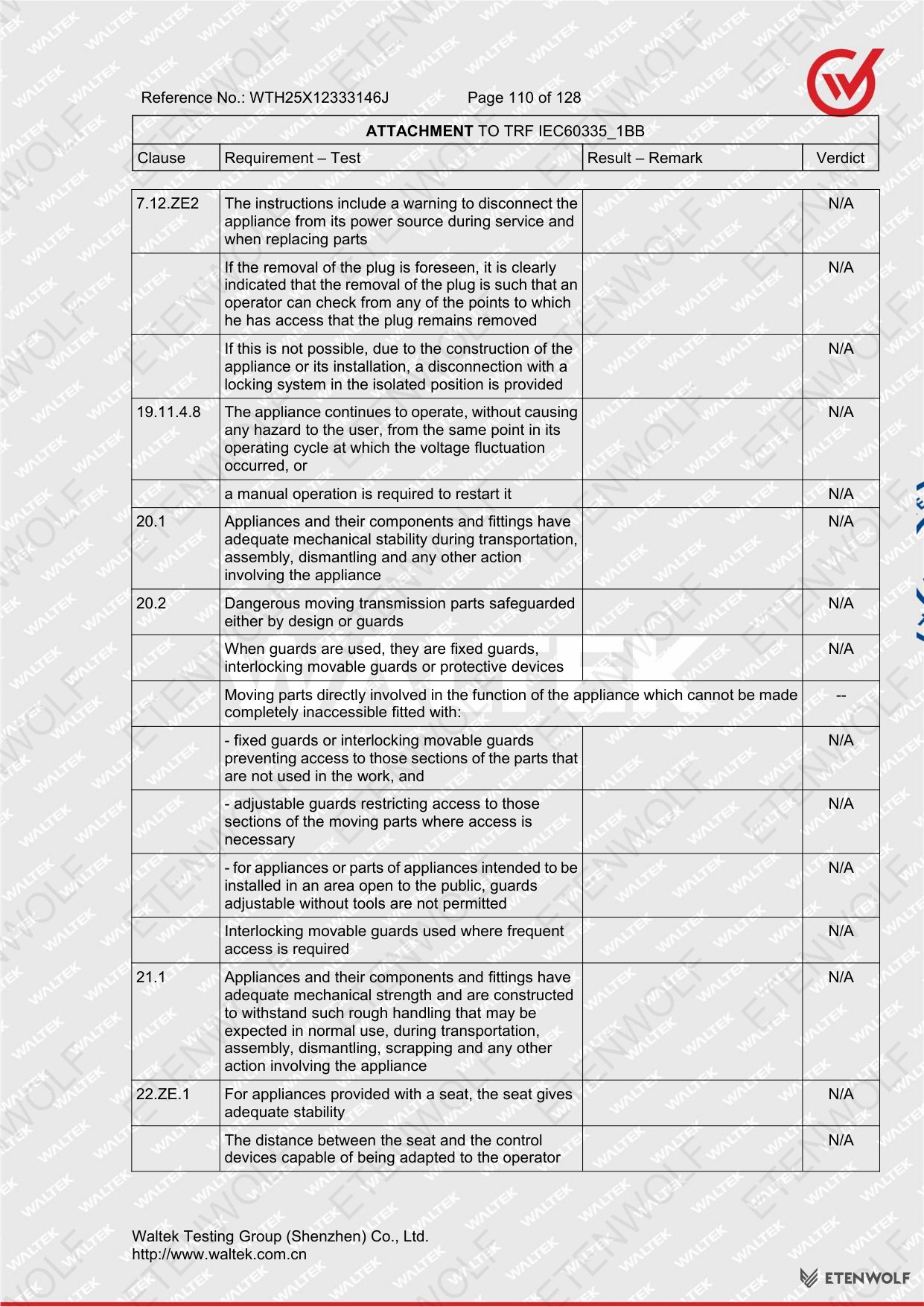
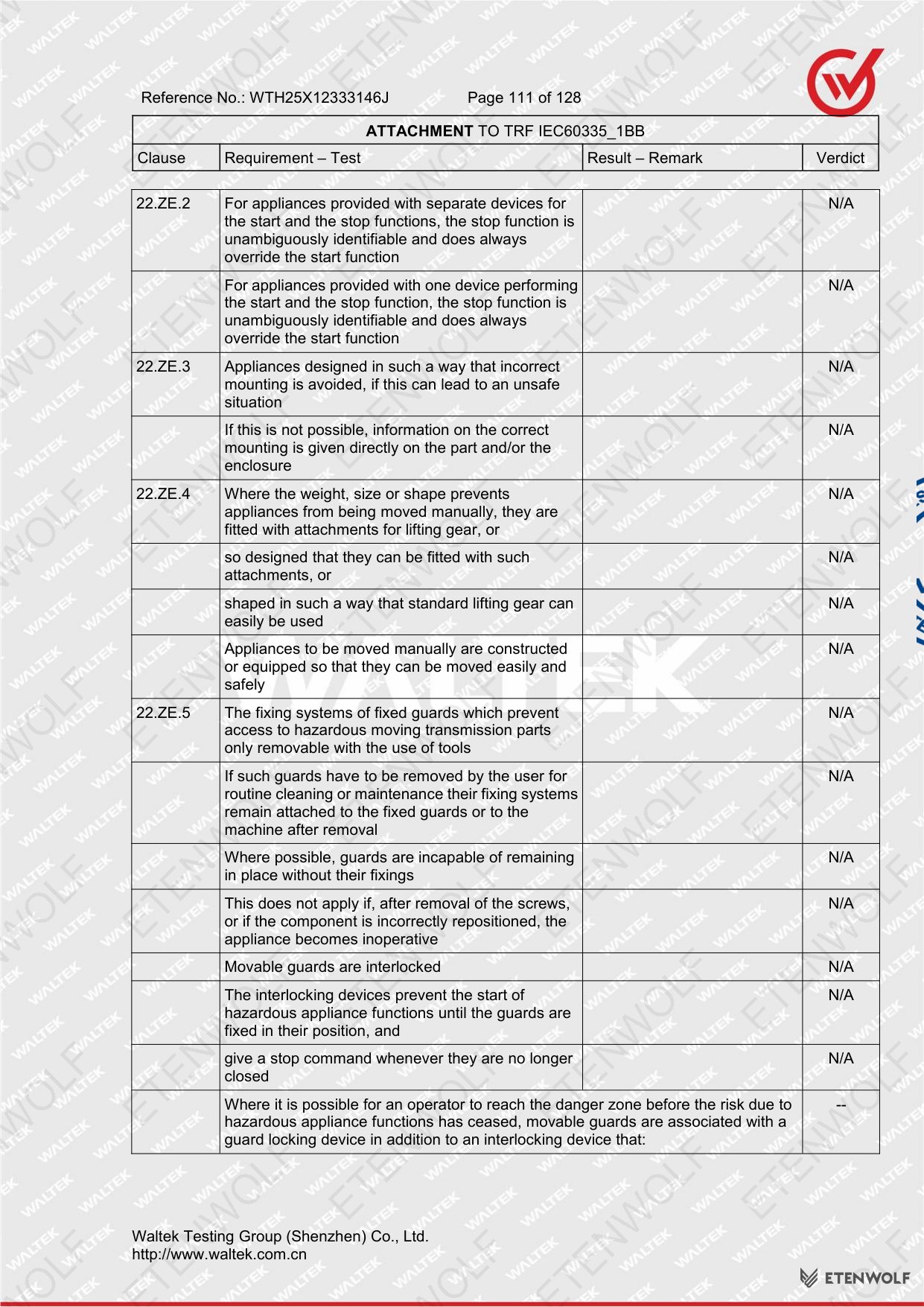
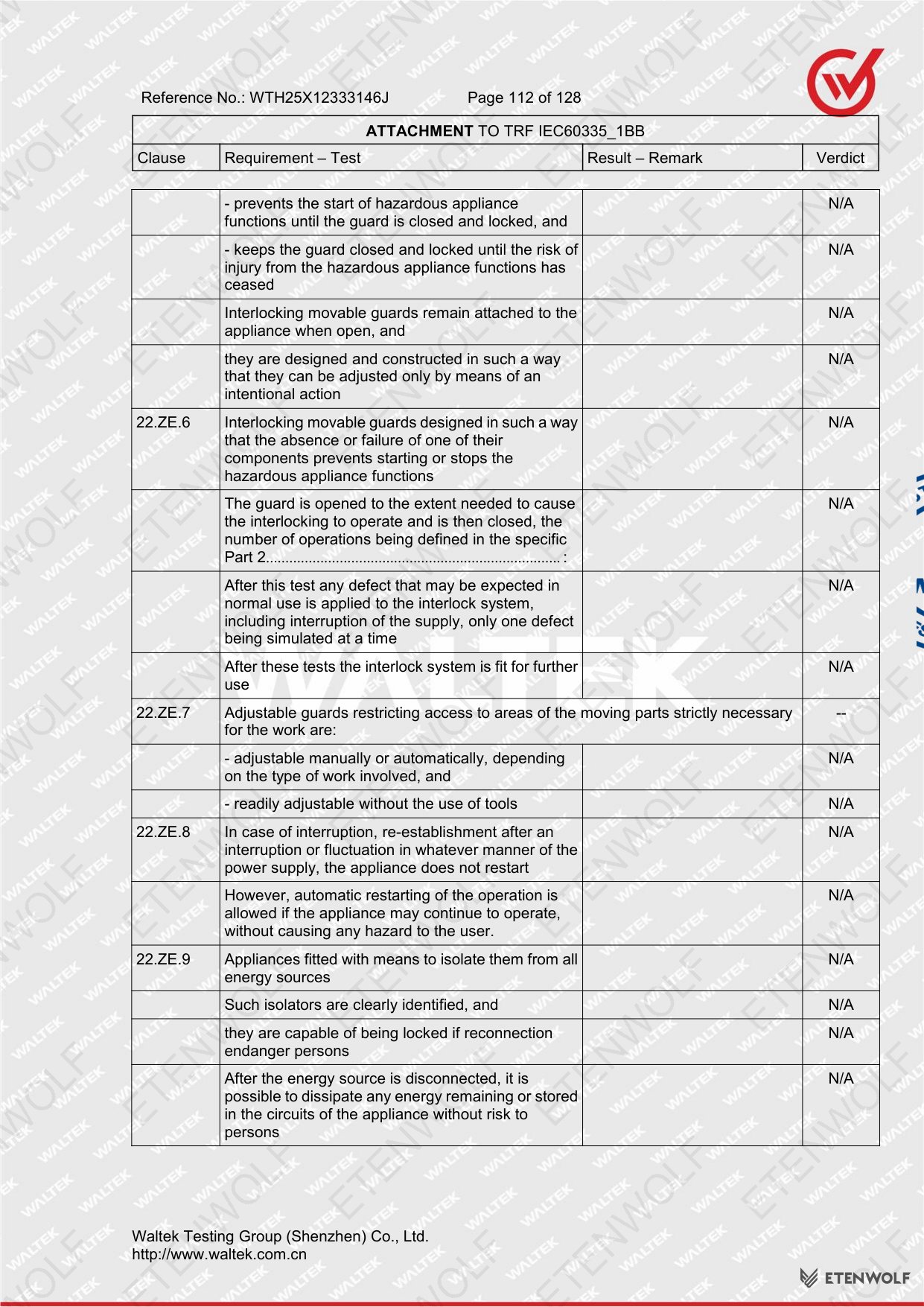
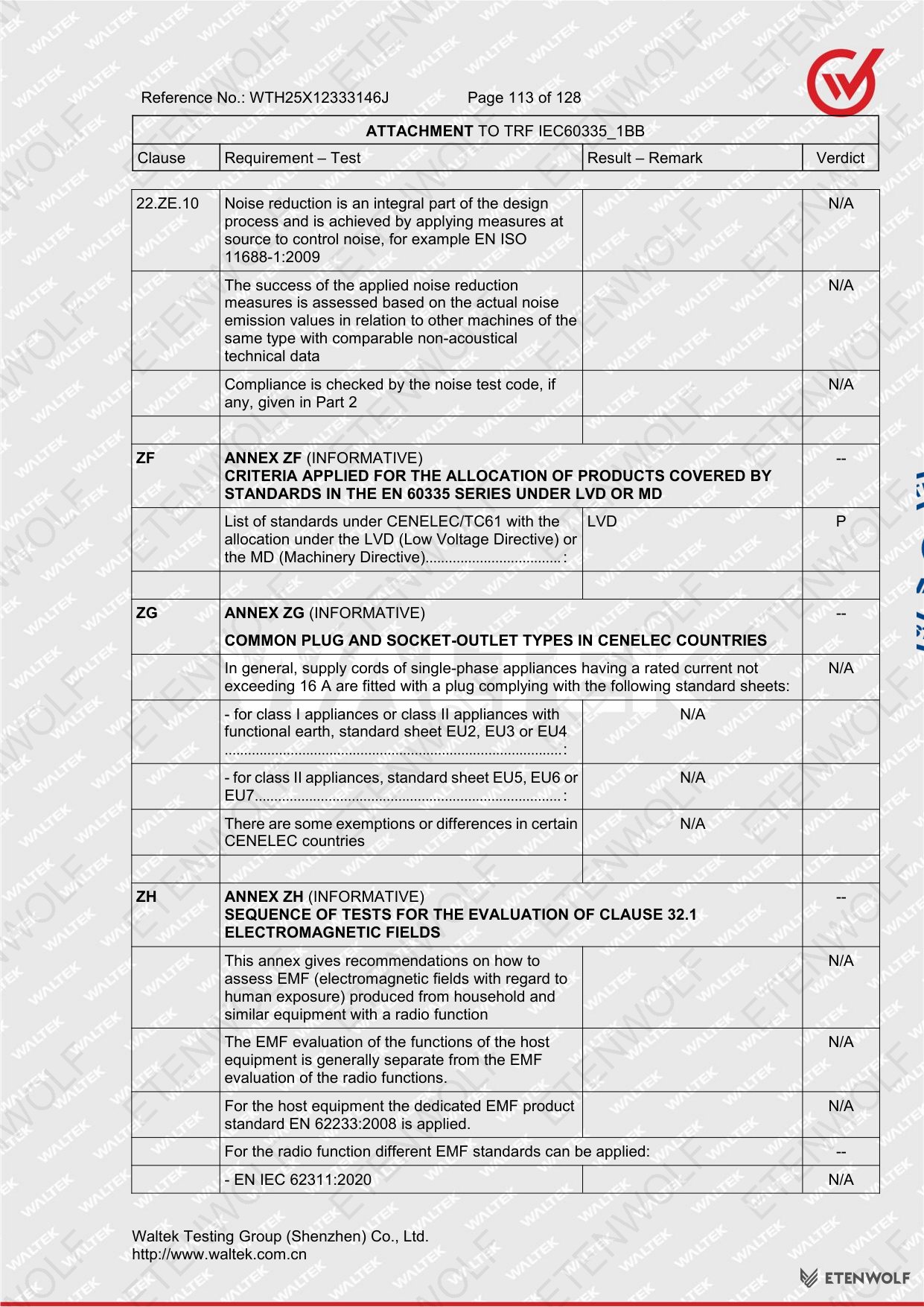
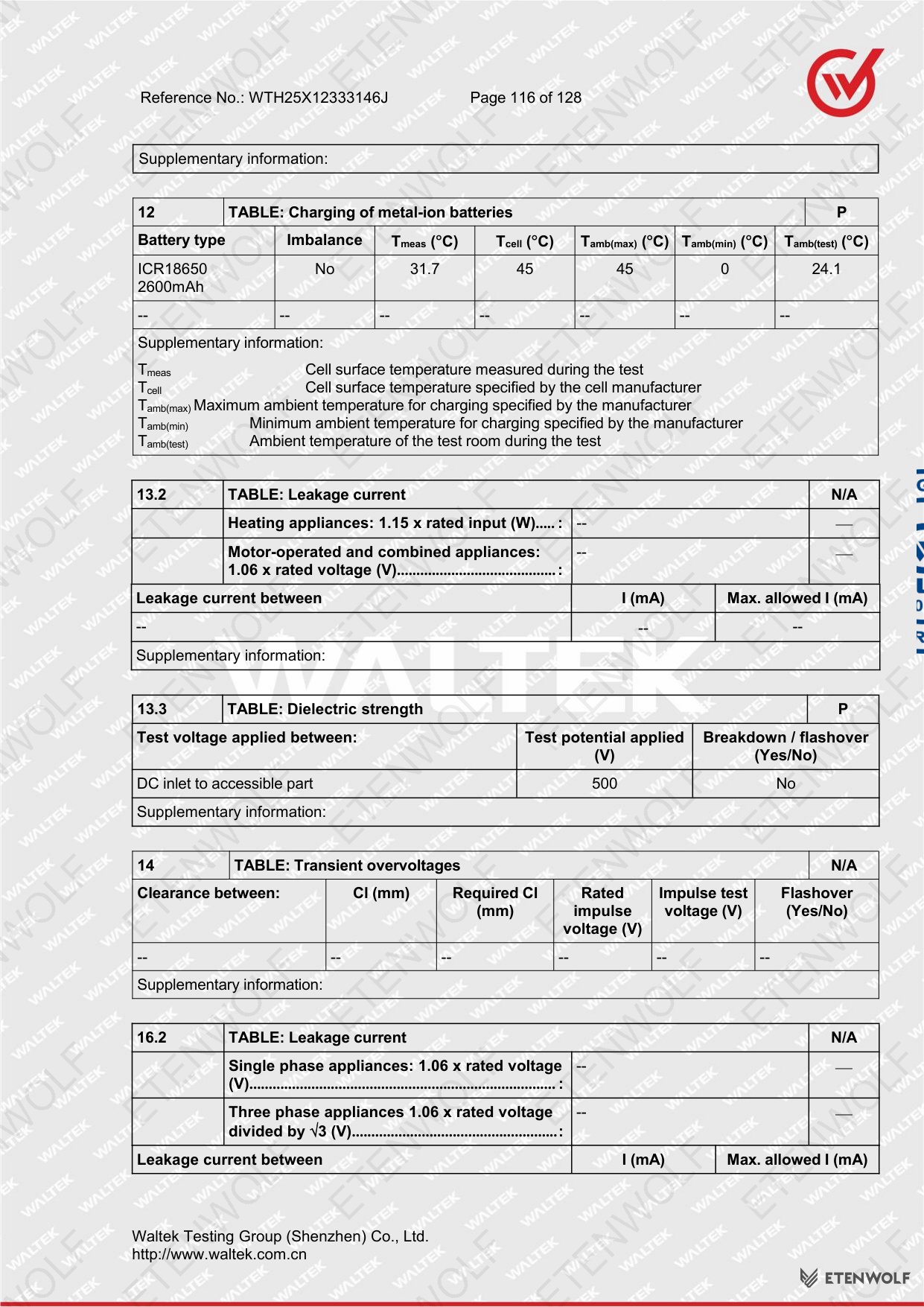
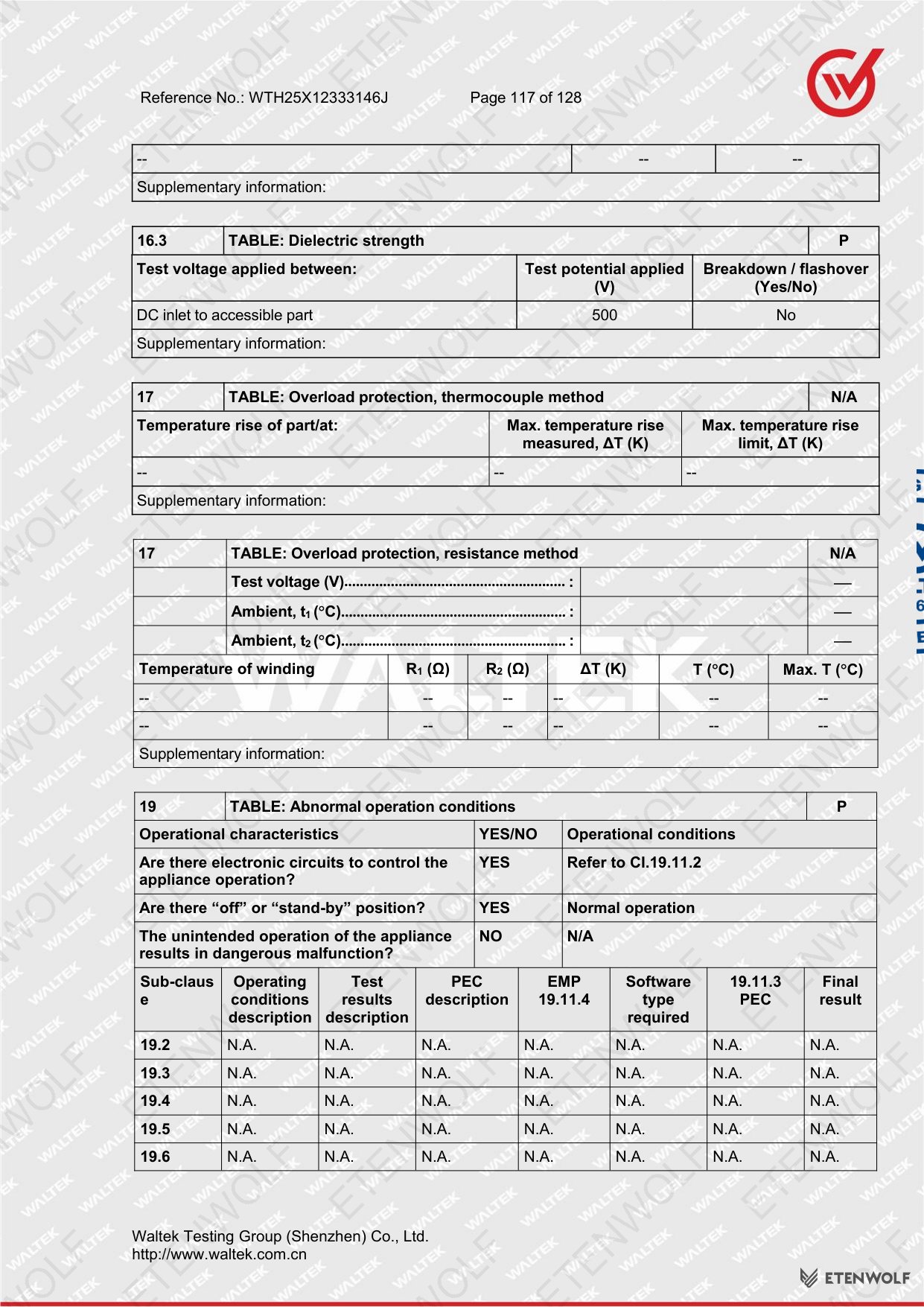
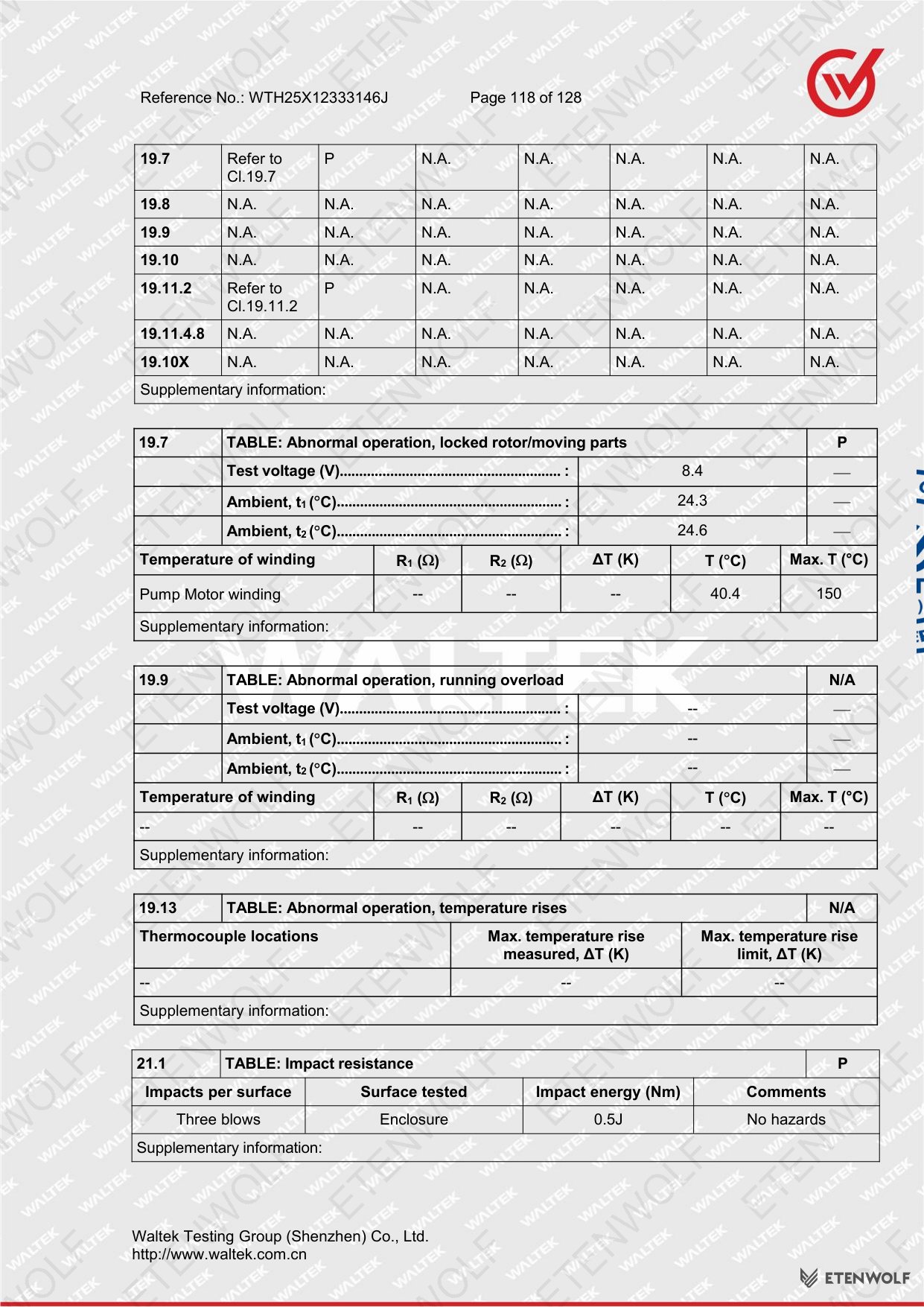
Both standards were applied in their most current harmonised forms. EN IEC 60335-1:2023+A11:2023 covers general construction, insulation, leakage current, dielectric strength, mechanical hazards, and abnormal operation tests. EN 62233:2008 governs measurement methods for electromagnetic fields emitted by household appliances with respect to human exposure limits.
All submitted samples were found to fully comply with the requirements of the above specifications. No deviations, exceptions, or conditional passes were recorded.
Standards & Compliance
The ETENWOLF S1 was tested against the following harmonised European standards to demonstrate conformity with the CE Low Voltage Directive:
- EN IEC 60335-1:2023+A11:2023 — Household and similar electrical appliances – Safety – Part 1: General requirements. This is the primary safety standard for low-voltage household appliances within the European Economic Area. The 2023 revision incorporates updated requirements for electrical insulation, protection against mechanical hazards, abnormal and fault conditions, and marking requirements.
- EN 62233:2008 — Measurement methods for electromagnetic fields of household appliances and similar apparatus with regard to human exposure. This standard defines the methodology for quantifying EMF emissions to ensure they remain within safe limits for end users.
Together, these standards form the technical basis for the CE marking affixed to the ETENWOLF S1, enabling its lawful sale and distribution within the European Union and EEA member states.
Importers are required to ensure that the product label affixed on the physical unit contains, at minimum, the name and address of both the importer and the manufacturer, in accordance with EU market surveillance regulations.
Validity & Certification Body
The test report bearing reference number WTH25X12333146J was issued on 2026-01-05 by Waltek Testing Group (Shenzhen) Co., Ltd., an accredited third-party testing laboratory operating in Shenzhen, Guangdong, China.
| Field | Detail |
|---|---|
| Laboratory Name | Waltek Testing Group (Shenzhen) Co., Ltd. |
| Laboratory Address | 1/F., Room 101, Building 1, Hongwei Industrial Park, Liuxian 2nd Road, Block 70, Bao’an District, Shenzhen, Guangdong, China |
| Website | http://www.waltek.com.cn |
| Telephone | +86-755-33663308 |
| Fax | +86-755-33663309 |
| [email protected] | |
| Prepared By | John Zhong, Project Engineer |
| Approved By | Harvid Wei, Manager |
| Report Issue Date | 2026-01-05 |
| Total Pages | 128 |
The report is valid only when accompanied by the specific stamp of the test institute and the original signatures of the approver. Reproduction of the report in part is not permitted without prior written consent from Waltek Testing Group. The full 128-page report on file constitutes the authoritative compliance record for CE-LVD purposes.
Frequently Asked Questions
- What does the CE-LVD certification mean for the ETENWOLF S1?
-
CE-LVD (Low Voltage Directive) certification confirms that the ETENWOLF S1 meets the European Union’s mandatory safety requirements for electrical equipment operating at low voltage. Passing this certification allows the product to be legally sold throughout the EU and EEA and confirms it has been independently tested against EN IEC 60335-1:2023+A11:2023 and EN 62233:2008.
- Which laboratory conducted the CE-LVD testing for the S1?
-
The testing was conducted by Waltek Testing Group (Shenzhen) Co., Ltd., an accredited third-party test laboratory located in Bao’an District, Shenzhen, China. The report was prepared by Project Engineer John Zhong and approved by Manager Harvid Wei. The laboratory’s reference number for this report is WTH25X12333146J.
- What safety aspects were evaluated during the test?
-
The testing covered all general safety requirements under EN IEC 60335-1:2023+A11:2023, including electrical insulation, leakage current, dielectric strength, mechanical hazard protection, abnormal operation, and product marking. In addition, electromagnetic field emissions were assessed under EN 62233:2008 to confirm safe levels of human EMF exposure during normal operation of the ETENWOLF S1.
- What are the rated electrical specifications of the ETENWOLF S1?
-
The ETENWOLF S1 is rated at 5 V / 2.0 A, placing it in the low-voltage DC category. This specification was confirmed during sample receipt and testing in December 2025 and is reflected on the product’s marking plate.
Related Documents
For a complete compliance picture of the ETENWOLF S1, the following related certification and documentation types are typically required or recommended for products in this category entering global markets:
- CE-EMC (Electromagnetic Compatibility) Declaration — Verifies that the S1 does not emit disruptive electromagnetic interference and is immune to external EMF within EU thresholds, tested under EN 55014 series standards.
- CE Declaration of Conformity (DoC) — The manufacturer’s formal declaration that the product meets all applicable EU directives, including LVD and EMC. Required for affixing the CE mark.
- IEC 62368-1 or IEC 60335-2 Series Report — Supplementary product-category-specific safety tests may apply depending on intended markets and distribution channels.
- RoHS Compliance Report — Confirms the S1 is free from restricted hazardous substances (lead, mercury, cadmium, hexavalent chromium, PBB, PBDE) as required for EU market access.
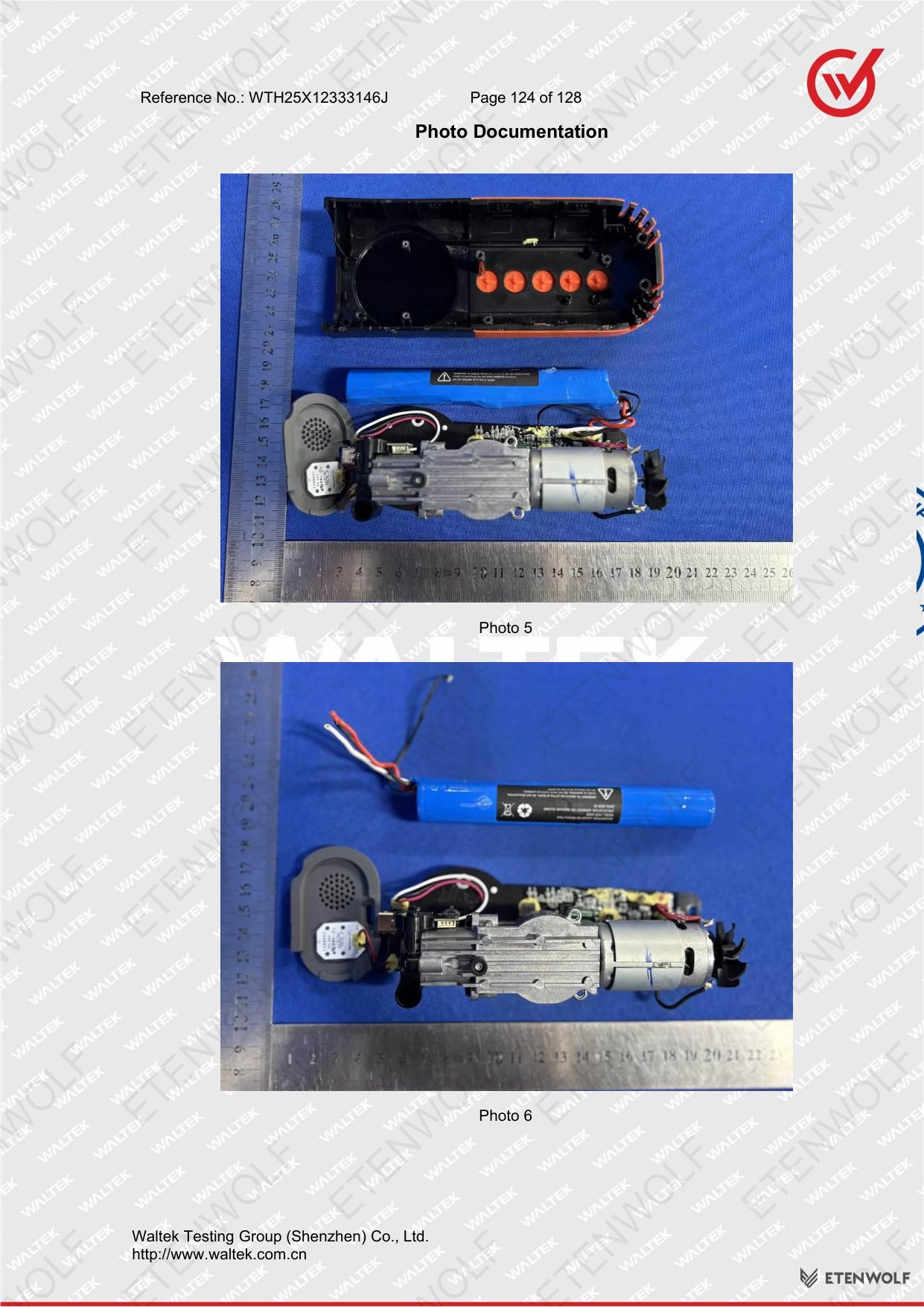
- UN38.3 Battery Transport Test Report — If the S1 includes an integrated lithium battery, UN38.3 certification is required for safe air and ground transport of the product internationally.
- FCC ID / SDOC — Required for sale in the United States market, covering radio frequency emissions and conducted/radiated interference compliance.
- KC Certification — Required for distribution in the South Korean market, covering electrical safety and EMC under Korean national standards.
Document Pages