Document Overview
Document Overview This page presents the official Material Safety Data Sheet (MSDS) issued under the UN38.3 transport certification framework for the ETENWOLF Helios J1 Portable Automotive Jump Starter. The document covers hazard identification, chemical composition, safe handling, storage, emergency response, and transport compliance information required…
- Document type
- Certification Report
- Prepared by
- Michelle Torres
- Published
- Last reviewed
- Topics
- International Transportation: CB / MSDS / UN38.3
Document Overview
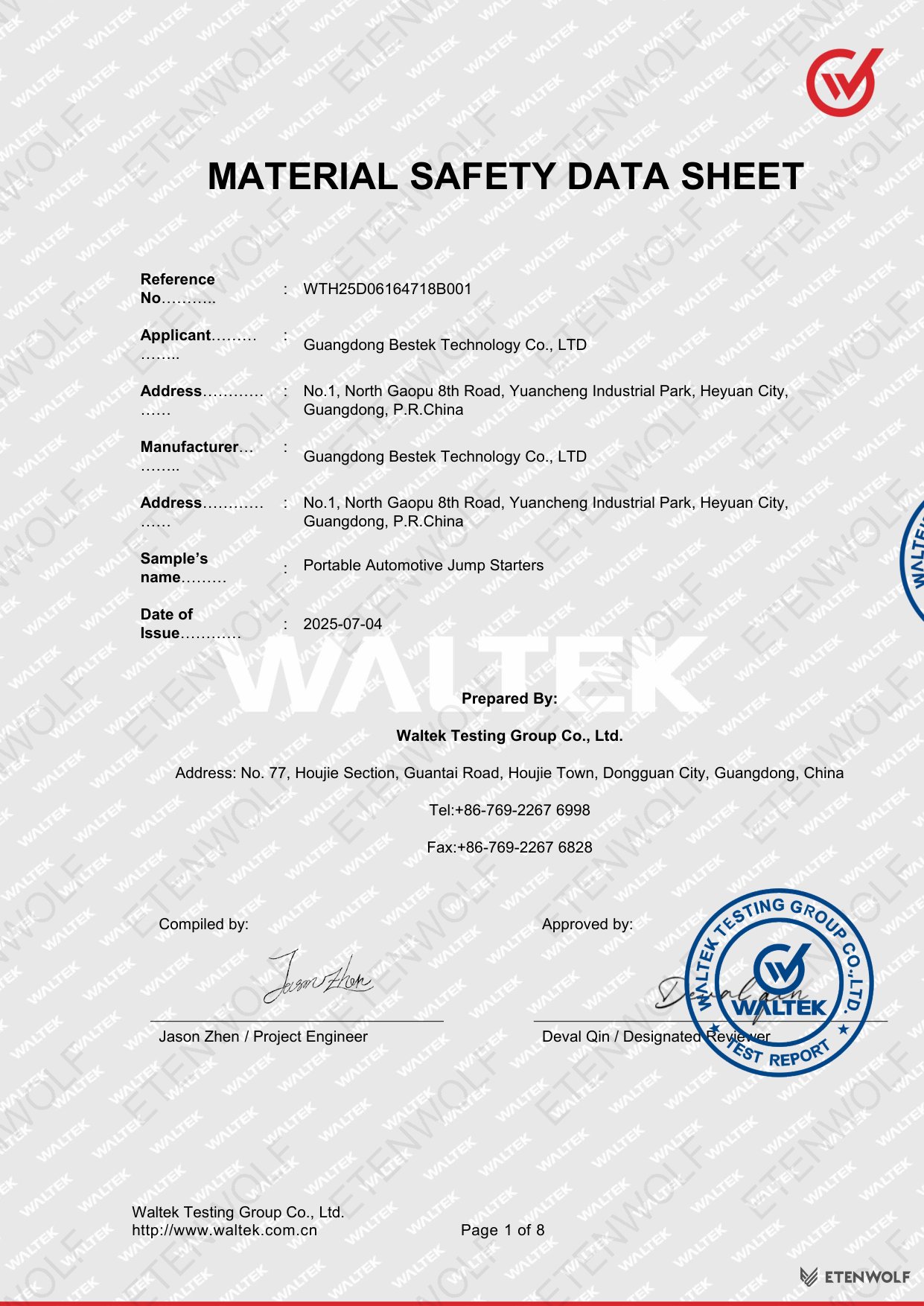
This page presents the official Material Safety Data Sheet (MSDS) issued under the UN38.3 transport certification framework for the ETENWOLF Helios J1 Portable Automotive Jump Starter. The document covers hazard identification, chemical composition, safe handling, storage, emergency response, and transport compliance information required for lithium battery products shipped internationally.
| Field | Details |
|---|---|
| Reference Number | WTH25D06164718B001 |
| Document Type | Material Safety Data Sheet (MSDS) — UN38.3 Transport |
| Issuing Laboratory | Waltek Testing Group Co., Ltd. |
| Date of Issue | 2025-07-04 |
| Applicant | Guangdong Bestek Technology Co., LTD |
| Applicant Address | No.1, North Gaopu 8th Road, Yuancheng Industrial Park, Heyuan City, Guangdong, P.R.China |
| Scope | Portable Automotive Jump Starters — lithium-ion battery pack safety data |
| Total Pages | 8 |
Product Information
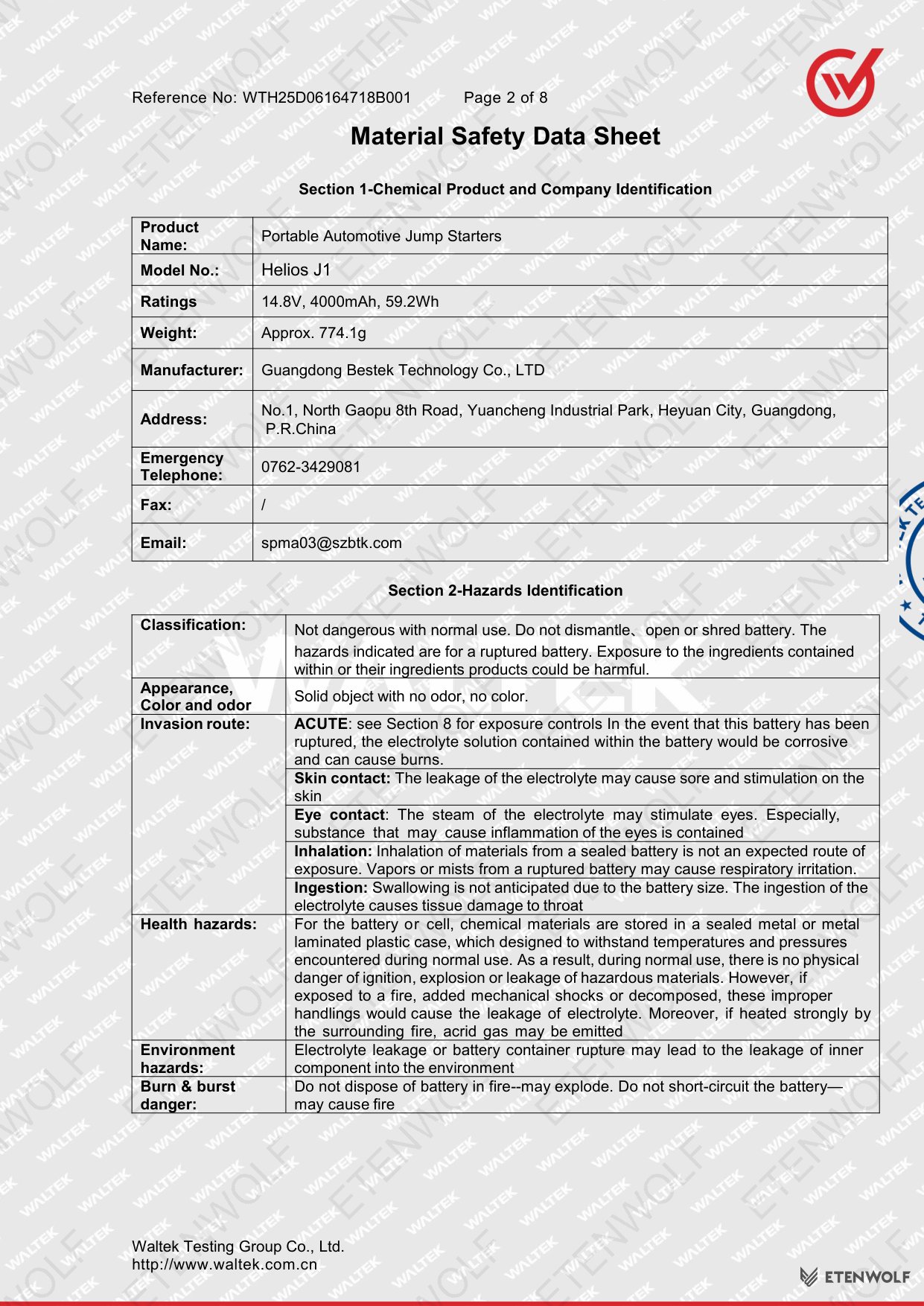
The ETENWOLF Helios J1 is a portable automotive jump starter powered by a lithium-ion battery pack. It is designed for vehicle emergency starting assistance and is manufactured by Guangdong Bestek Technology Co., LTD.
| Attribute | Value |
|---|---|
| Product Name | Portable Automotive Jump Starter |
| Model Number | Helios J1 |
| Rated Voltage | 14.8 V |
| Rated Capacity | 4000 mAh |
| Energy Rating | 59.2 Wh |
| Approximate Weight | 774.1 g |
| Appearance | Solid object, no odor, no color |
| Manufacturer | Guangdong Bestek Technology Co., LTD |
| Manufacturer Address | No.1, North Gaopu 8th Road, Yuancheng Industrial Park, Heyuan City, Guangdong, P.R.China |
| Emergency Telephone | 0762-3429081 |
| Contact Email | [email protected] |
Key Details
The MSDS for the Helios J1 provides comprehensive safety data across eight sections. The following summarizes the critical technical and chemical information.
Chemical Composition (Section 3)
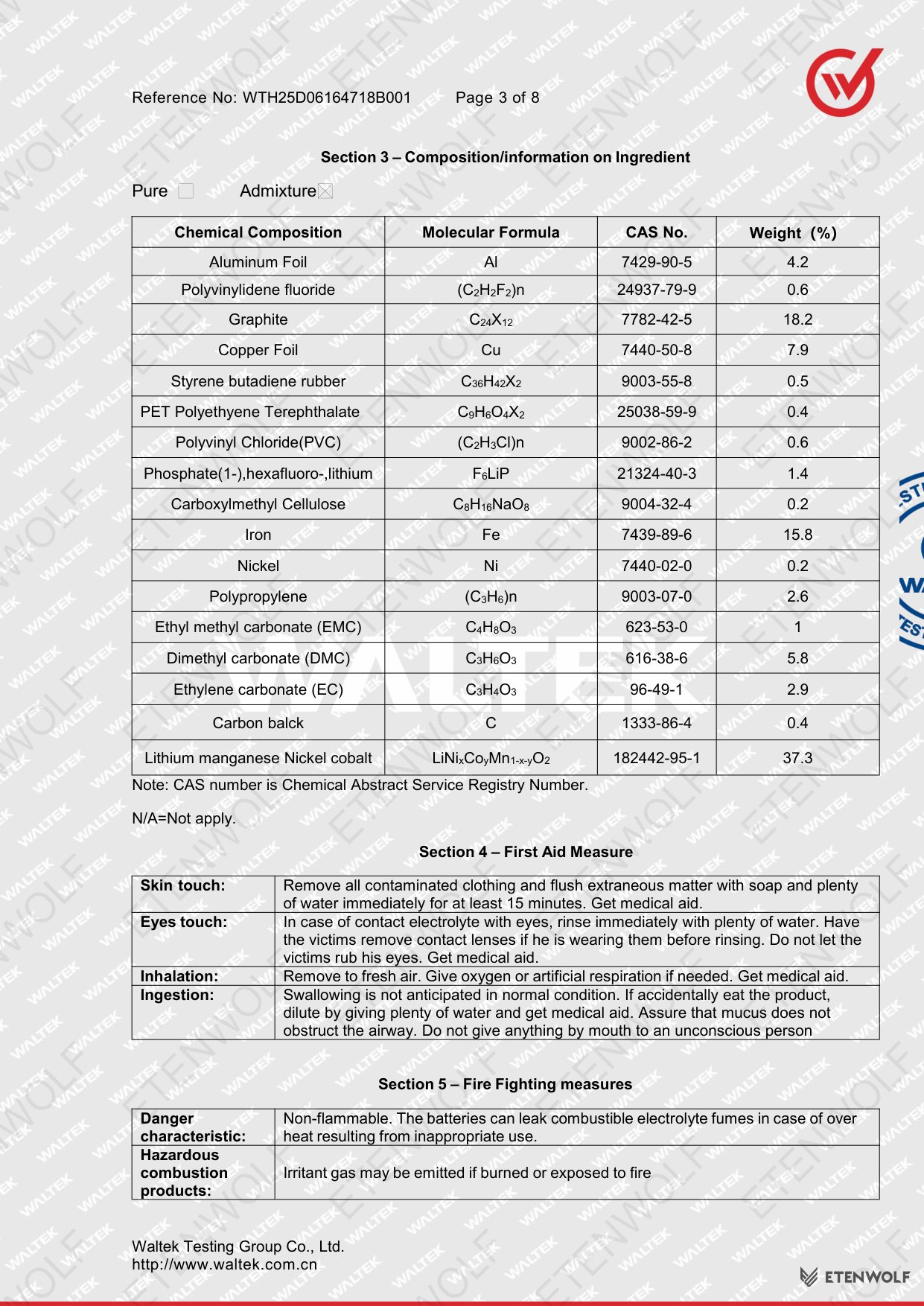
The battery pack contains the following substances. All CAS numbers are Chemical Abstract Service Registry Numbers.
| Chemical Composition | Molecular Formula | CAS No. | Weight (%) |
|---|---|---|---|
| Lithium Manganese Nickel Cobalt Oxide (NMC) | LiNixCoyMn1-x-yO2 | 182442-95-1 | 37.3 |
| Graphite | C24X12 | 7782-42-5 | 18.2 |
| Iron | Fe | 7439-89-6 | 15.8 |
| Copper Foil | Cu | 7440-50-8 | 7.9 |
| Dimethyl Carbonate (DMC) | C3H6O3 | 616-38-6 | 5.8 |
| Aluminum Foil | Al | 7429-90-5 | 4.2 |
| Ethylene Carbonate (EC) | C3H4O3 | 96-49-1 | 2.9 |
| Polypropylene | (C3H6)n | 9003-07-0 | 2.6 |
| Lithium Hexafluorophosphate | F6LiP | 21324-40-3 | 1.4 |
| Ethyl Methyl Carbonate (EMC) | C4H8O3 | 623-53-0 | 1.0 |
| Polyvinylidene Fluoride (PVDF) | (C2H2F2)n | 24937-79-9 | 0.6 |
| Polyvinyl Chloride (PVC) | (C2H3Cl)n | 9002-86-2 | 0.6 |
| Styrene Butadiene Rubber (SBR) | C36H42X2 | 9003-55-8 | 0.5 |
| PET Polyethylene Terephthalate | C9H6O4X2 | 25038-59-9 | 0.4 |
| Carbon Black | C | 1333-86-4 | 0.4 |
| Nickel | Ni | 7440-02-0 | 0.2 |
| Carboxymethyl Cellulose (CMC) | C8H16NaO8 | 9004-32-4 | 0.2 |
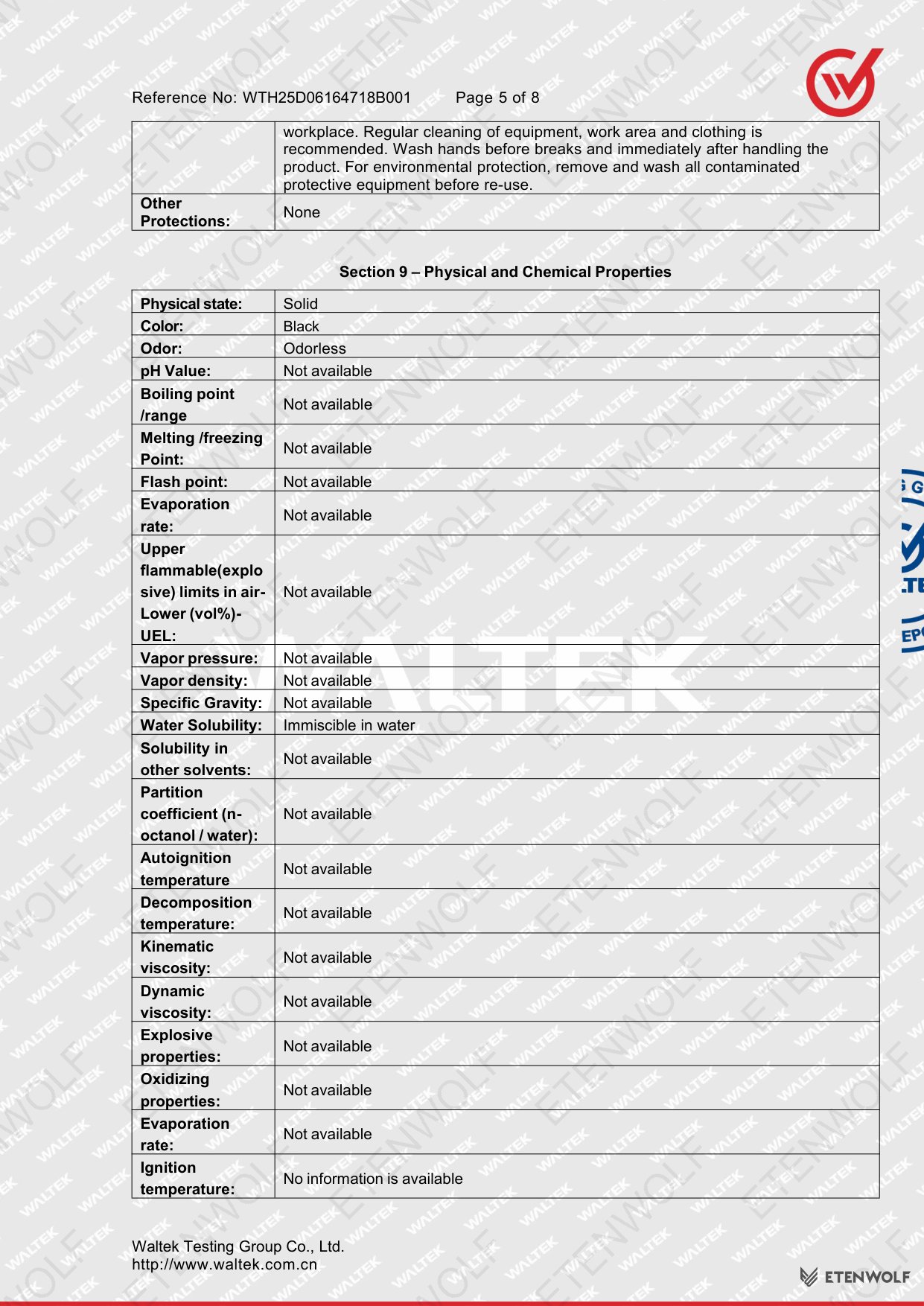
Hazard Identification Summary (Section 2)
The Helios J1 battery is classified as not dangerous under normal use conditions. Hazard risks arise only in the event of battery rupture, misuse, or exposure to excessive heat. Key hazard pathways include:
- Skin contact: Electrolyte leakage may cause irritation and sores.
- Eye contact: Electrolyte vapor may cause eye inflammation.
- Inhalation: Vapors from a ruptured battery may cause respiratory irritation.
- Ingestion: Electrolyte ingestion can cause tissue damage to the throat.
- Environmental: Electrolyte leakage or container rupture may release inner components into the environment.
- Fire/Burst risk: Do not dispose of in fire — may explode. Do not short-circuit — may cause fire.
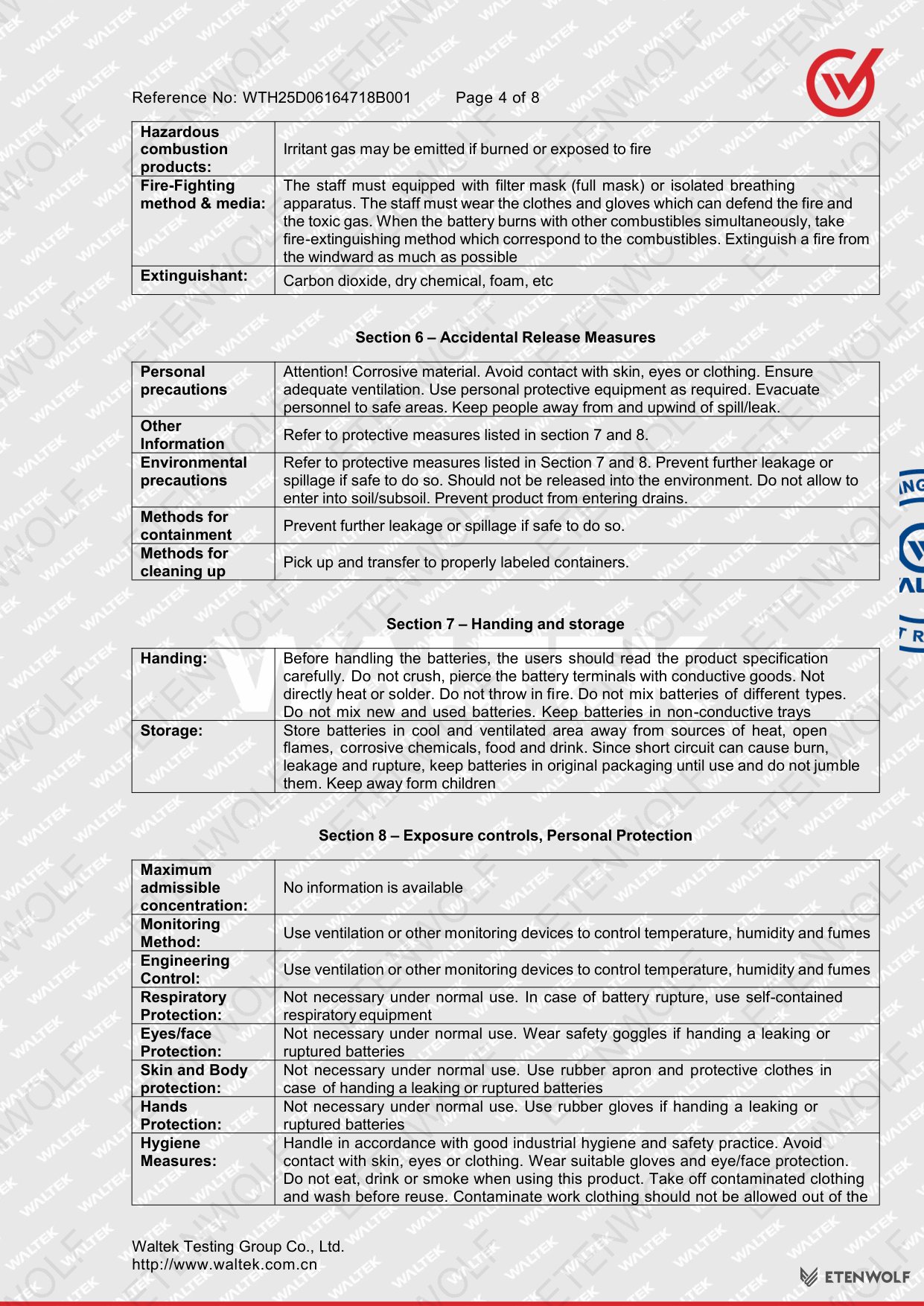
Handling and Storage Guidelines (Section 7)
- Read the product specification carefully before handling.
- Do not crush, pierce terminals with conductive objects, directly heat, or solder the battery.
- Do not throw into fire or mix batteries of different types or new and used batteries together.
- Keep batteries in non-conductive trays.
- Store in a cool, ventilated area away from heat sources, open flames, corrosive chemicals, food and drink.
- Keep in original packaging until use; do not jumble batteries together.
- Keep away from children.
First Aid Measures (Section 4)
- Skin: Remove contaminated clothing and flush with soap and plenty of water for at least 15 minutes. Seek medical aid.
- Eyes: Rinse immediately with plenty of water; remove contact lenses first. Do not rub eyes. Seek medical aid.
- Inhalation: Move to fresh air. Administer oxygen or artificial respiration if needed. Seek medical aid.
- Ingestion: Dilute by giving plenty of water. Do not give anything by mouth to an unconscious person. Seek medical aid.
Fire Fighting (Section 5)
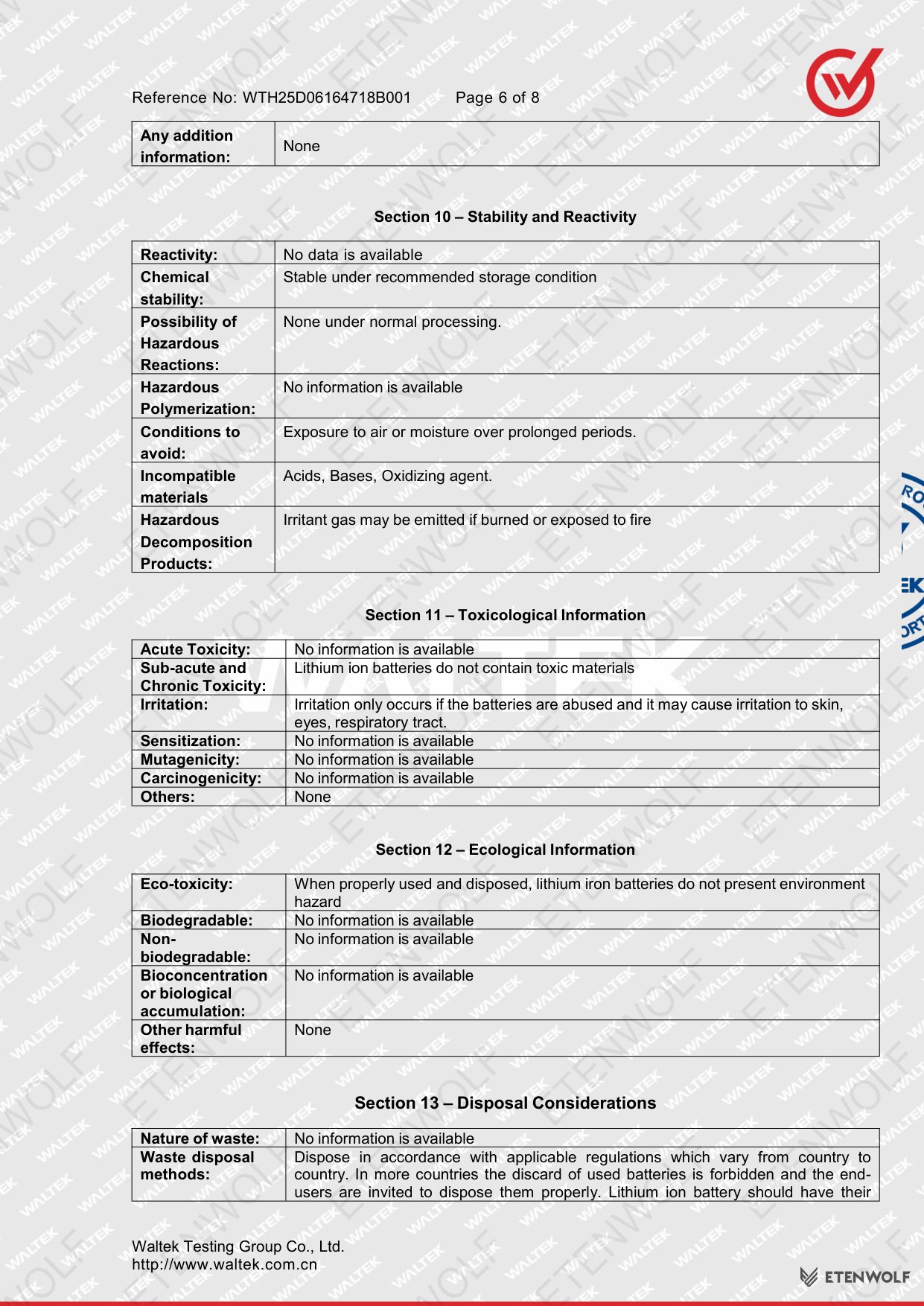
The battery is non-flammable under normal conditions but can leak combustible electrolyte fumes if overheated due to misuse. Suitable extinguishing agents include carbon dioxide, dry chemical powder, and foam. Firefighters must wear full-face filter masks or self-contained breathing apparatus and fire-resistant protective clothing and gloves.
Standards & Compliance
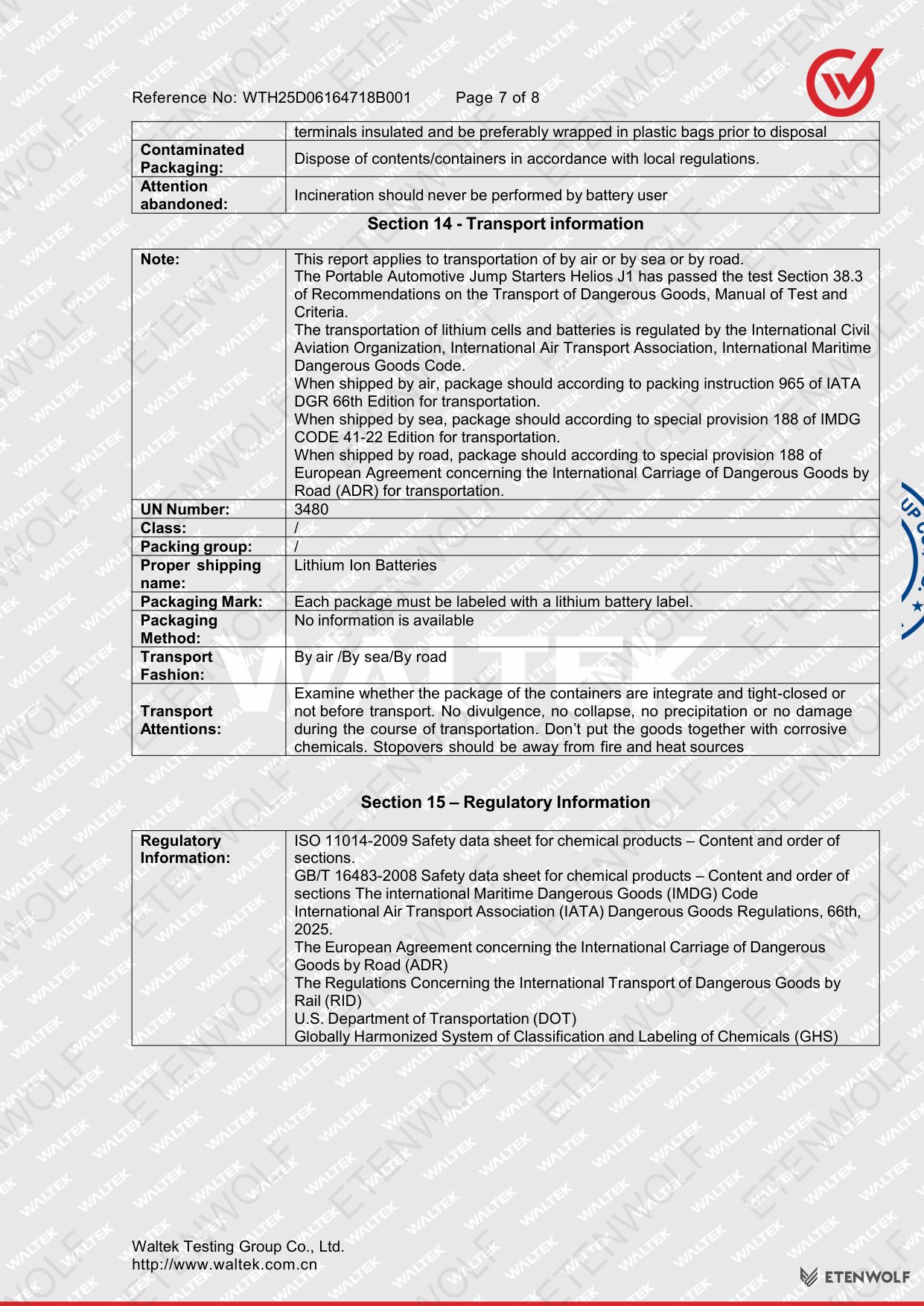
The MSDS for the ETENWOLF Helios J1 has been prepared in compliance with international transport and safety regulations applicable to lithium-ion battery products. The document supports UN38.3 transport certification requirements, which mandate that lithium batteries intended for air, sea, or ground transport pass a series of safety tests and be accompanied by appropriate safety documentation.
| Standard / Regulation | Relevance |
|---|---|
| UN38.3 | International transport testing standard for lithium batteries (altitude simulation, thermal, vibration, shock, external short circuit, impact, overcharge, forced discharge tests) |
| IATA Dangerous Goods Regulations | Air transport requirements for lithium battery packs |
| IMDG Code | Sea freight transport compliance for hazardous goods |
| GHS / SDS Format | Globally Harmonized System of Classification and Labelling of Chemicals — MSDS structure compliance |
The product uses NMC (Lithium Manganese Nickel Cobalt Oxide) cathode chemistry with organic carbonate electrolyte solvents. The MSDS confirms that under normal operating conditions, the product presents no dangerous goods classification risk, but must be handled and transported in accordance with applicable lithium battery regulations when shipped commercially.
Validity & Certification Body
| Field | Details |
|---|---|
| Reference Number | WTH25D06164718B001 |
| Date of Issue | 2025-07-04 |
| Issuing Body | Waltek Testing Group Co., Ltd. |
| Laboratory Website | http://www.waltek.com.cn |
| Laboratory Address | No. 77, Houjie Section, Guantai Road, Houjie Town, Dongguan City, Guangdong, China |
| Telephone | +86-769-2267 6998 |
| Fax | +86-769-2267 6828 |
| Compiled By | Jason Zhen, Project Engineer |
| Approved By | Deval Qin, Designated Reviewer |
Waltek Testing Group Co., Ltd. is an accredited third-party testing laboratory based in Dongguan, Guangdong, China, providing certification and compliance testing services for consumer electronics and battery products for global markets. The MSDS remains valid as a supporting document for the UN38.3 transport certification of the ETENWOLF Helios J1 and should be renewed if the product design, chemistry, or rated specifications change.
Frequently Asked Questions
- What is the UN38.3 MSDS and why does the Helios J1 need it?
-
The Material Safety Data Sheet (MSDS) prepared under the UN38.3 framework is a mandatory safety document required for transporting lithium-ion battery products by air, sea, or ground. The ETENWOLF Helios J1 contains a 14.8V, 59.2Wh lithium-ion battery pack, which requires this documentation to meet international dangerous goods transport regulations including IATA and IMDG requirements.
- Is the Helios J1 battery classified as a dangerous good?
-
Under normal use conditions, the Helios J1 is classified as not dangerous. The hazard classification only applies in the event of battery rupture, short circuit, exposure to excessive heat, or other forms of misuse or physical damage. The product must still comply with applicable transport regulations for lithium-ion batteries.
- What chemicals are inside the Helios J1 battery pack?
-
The primary active material is Lithium Manganese Nickel Cobalt Oxide (NMC, CAS 182442-95-1) at 37.3% by weight, with graphite (18.2%) as the anode material. The electrolyte consists of organic carbonate solvents — Dimethyl Carbonate (DMC), Ethylene Carbonate (EC), and Ethyl Methyl Carbonate (EMC) — dissolved with Lithium Hexafluorophosphate (LiPF6) as the conducting salt. Full composition details are listed in Section 3 of the MSDS (Reference No. WTH25D06164718B001).
- What should I do if the Helios J1 battery leaks or ruptures?
-
If the battery leaks or ruptures, avoid skin and eye contact with the electrolyte. Ensure adequate ventilation and evacuate personnel from the immediate area. For skin contact, flush with soap and water for at least 15 minutes. For eye contact, rinse immediately with plenty of water and seek medical attention. Do not allow electrolyte to enter drains or soil. Transfer any spilled material to properly labeled containers and dispose of in accordance with local regulations.
Related Documents
The following certification and compliance documents are relevant to the ETENWOLF Helios J1 Portable Automotive Jump Starter and are typically required for global market access and transport compliance:
- UN38.3 Test Summary Report — Full test results for altitude simulation, thermal cycling, vibration, shock, external short circuit, impact, overcharge, and forced discharge tests as required by UN38.3.
- IEC 62133 Battery Safety Certificate — IEC standard for safety requirements of portable sealed secondary lithium cells and batteries.
- CE Declaration of Conformity — Required for sale in the European Economic Area, covering applicable directives including the Battery Directive and Low Voltage Directive.
- FCC Declaration of Conformity — Required for sale in the United States market, covering electromagnetic compatibility of the device.
- RoHS Compliance Certificate — Confirms restriction of hazardous substances in the product, required for RoHS compliance in the EU market.
- REACH Declaration — Confirms compliance with REACH regulation regarding substances of very high concern (SVHCs) in the product.
- PSE / KC Certification — Required for sale in Japan (PSE) and South Korea (KC) respectively, covering electrical safety of the battery-powered device.
Document Pages