Document Overview
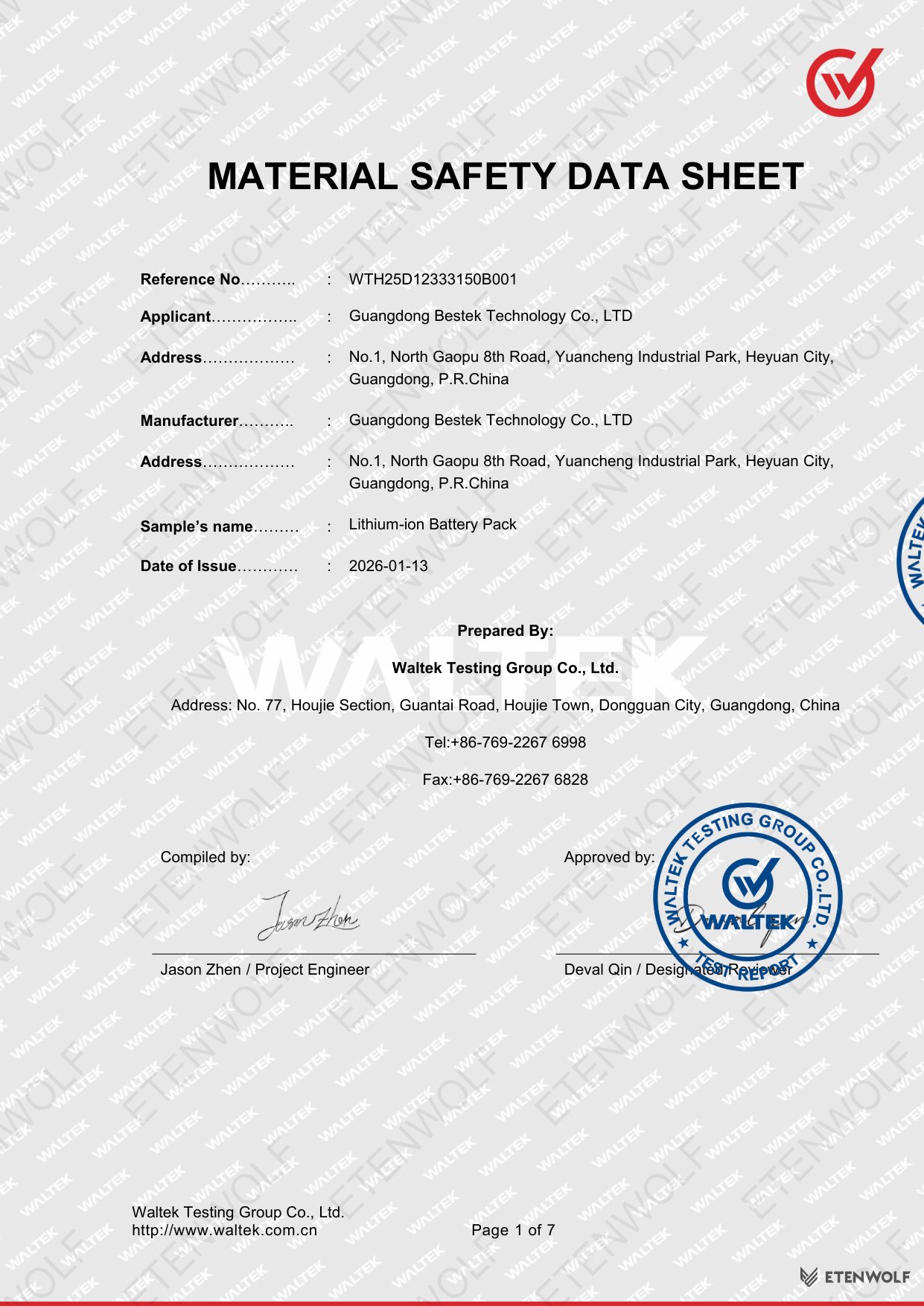
Document Overview This Material Safety Data Sheet (MSDS) is a compliance document prepared under the UN38.3 framework for the lithium-ion battery pack used in the ETENWOLF S1 portable tire inflator. It covers chemical composition, hazard identification, handling precautions, and emergency response procedures. Reference Number: WTH25D12333150B001…
- Document type
- Certification Report
- Prepared by
- Michelle Torres
- Published
- Last reviewed
- Topics
- International Transportation: CB / MSDS / UN38.3
Document Overview
This Material Safety Data Sheet (MSDS) is a compliance document prepared under the UN38.3 framework for the lithium-ion battery pack used in the ETENWOLF S1 portable tire inflator. It covers chemical composition, hazard identification, handling precautions, and emergency response procedures.
- Reference Number: WTH25D12333150B001
- Document Type: Material Safety Data Sheet (MSDS)
- Issuing Body: Waltek Testing Group Co., Ltd.
- Date of Issue: 2026-01-13
- Total Pages: 7
- Prepared By: Jason Zhen, Project Engineer
- Approved By: Deval Qin, Designated Reviewer
- Issuing Body Address: No. 77, Houjie Section, Guantai Road, Houjie Town, Dongguan City, Guangdong, China
- Issuing Body Website: http://www.waltek.com.cn
Section 1 – Chemical Product and Company Identification
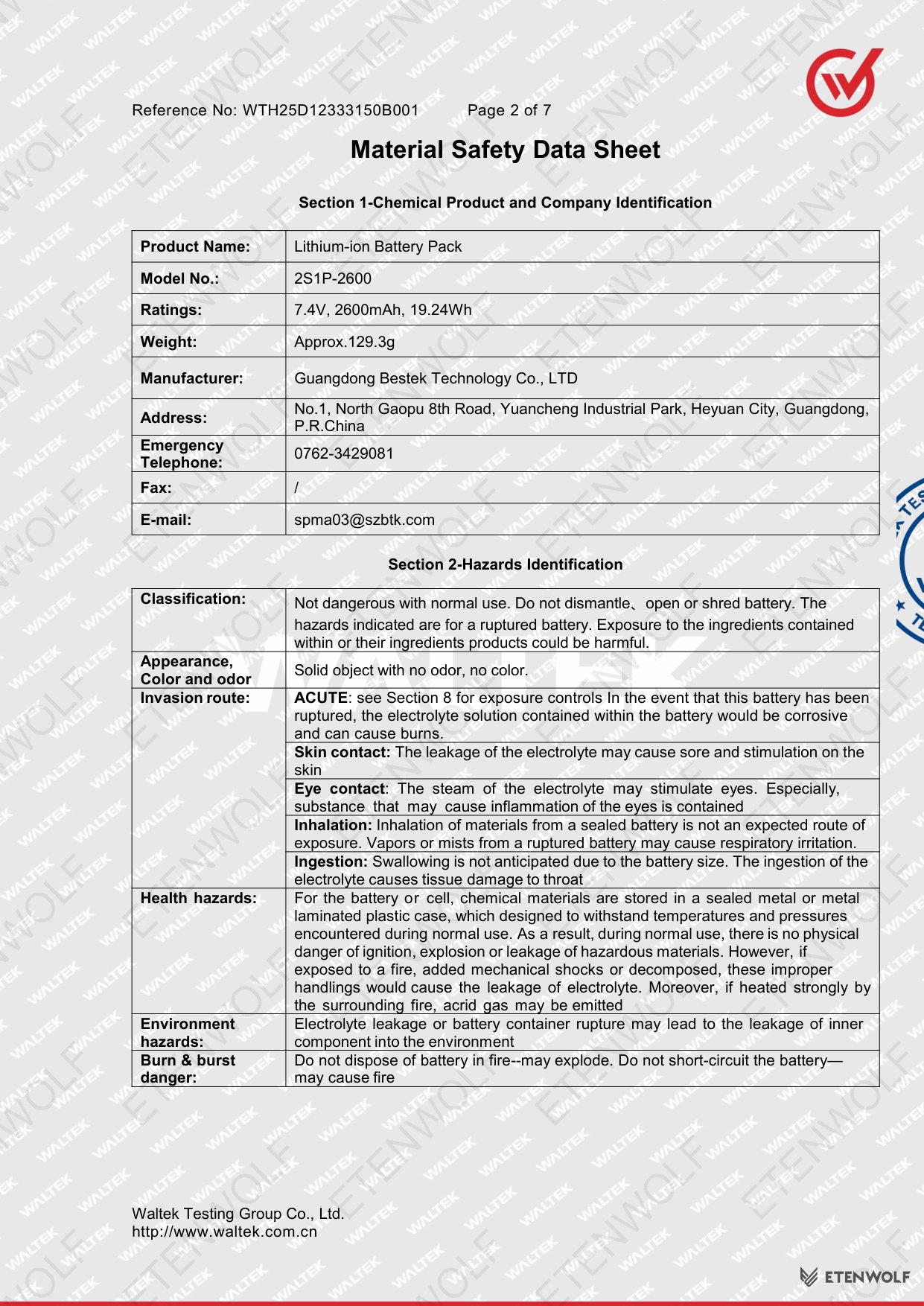
The subject of this MSDS is the lithium-ion battery pack integrated into the ETENWOLF S1 portable tire inflator. Full product and manufacturer details are listed below.
| Field | Details |
|---|---|
| Product Name | Lithium-ion Battery Pack |
| Model Number | 2S1P-2600 |
| Rated Voltage | 7.4 V |
| Rated Capacity | 2600 mAh |
| Energy | 19.24 Wh |
| Weight | Approx. 129.3 g |
| Appearance | Solid object, no odor, no color |
| Applicant / Manufacturer | Guangdong Bestek Technology Co., Ltd. |
| Manufacturer Address | No. 1, North Gaopu 8th Road, Yuancheng Industrial Park, Heyuan City, Guangdong, P.R. China |
| Emergency Telephone | 0762-3429081 |
| [email protected] |
Key Details
The following sections summarize the critical safety information extracted from the MSDS, covering chemical composition, hazard identification, first aid, fire fighting, accidental release, handling and storage, and personal protection.
Hazards Identification (Section 2)
The battery pack is not classified as dangerous under normal use conditions. Hazards arise only upon rupture, mechanical damage, or improper handling:
- Skin Contact: Electrolyte leakage may cause irritation and sores. Flush with soap and water for at least 15 minutes and seek medical aid.
- Eye Contact: Electrolyte vapors may cause eye inflammation. Rinse immediately with water and seek medical aid.
- Inhalation: Vapors or mists from a ruptured battery may cause respiratory irritation. Move to fresh air and seek medical aid.
- Ingestion: Electrolyte ingestion causes tissue damage to the throat. Dilute with water and seek immediate medical aid.
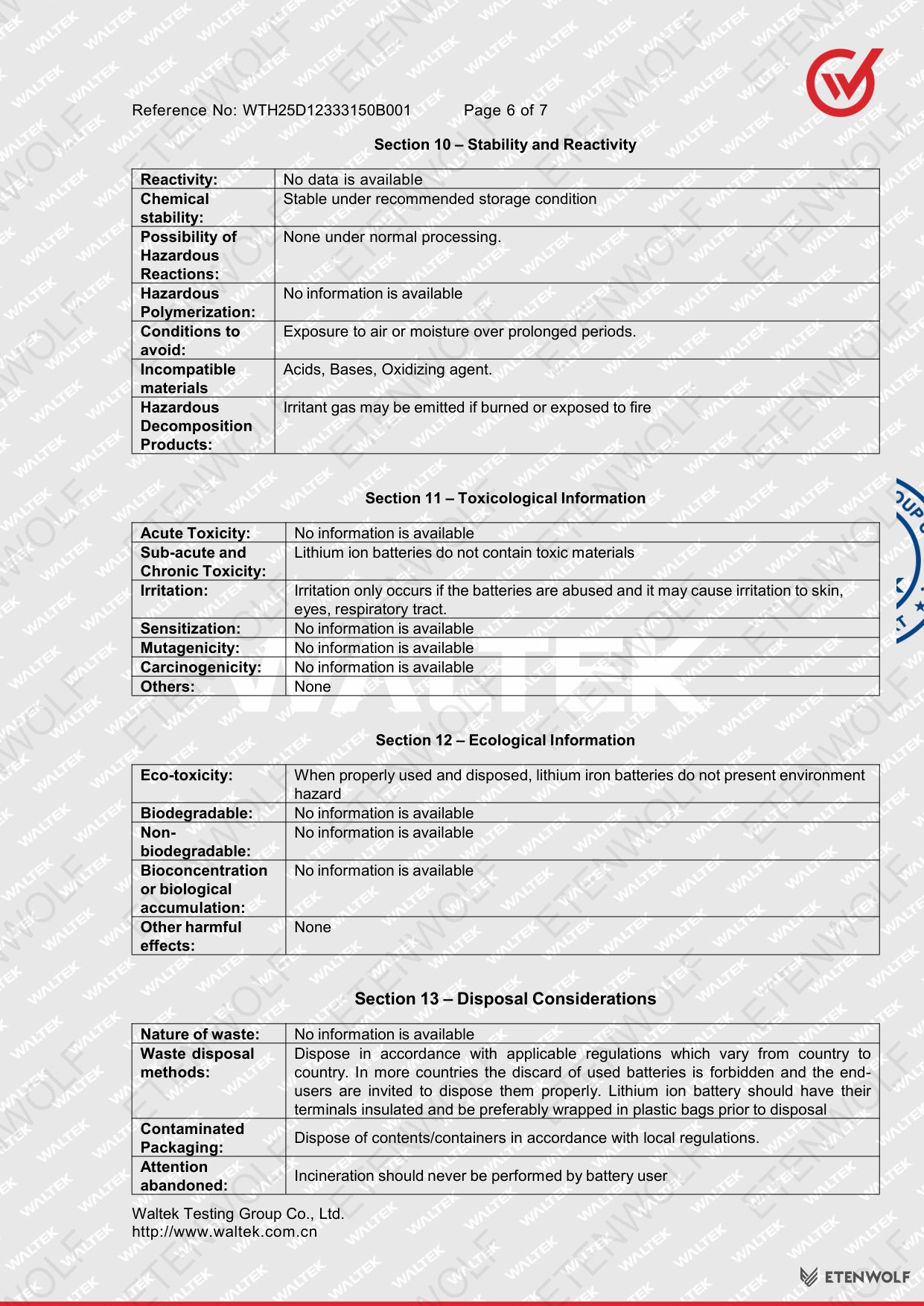
- Environmental: Electrolyte leakage may contaminate soil and waterways. Prevent entry into drains or soil.
- Burn and Burst: Do not dispose of the battery in fire — risk of explosion. Do not short-circuit — risk of fire.
Chemical Composition (Section 3)
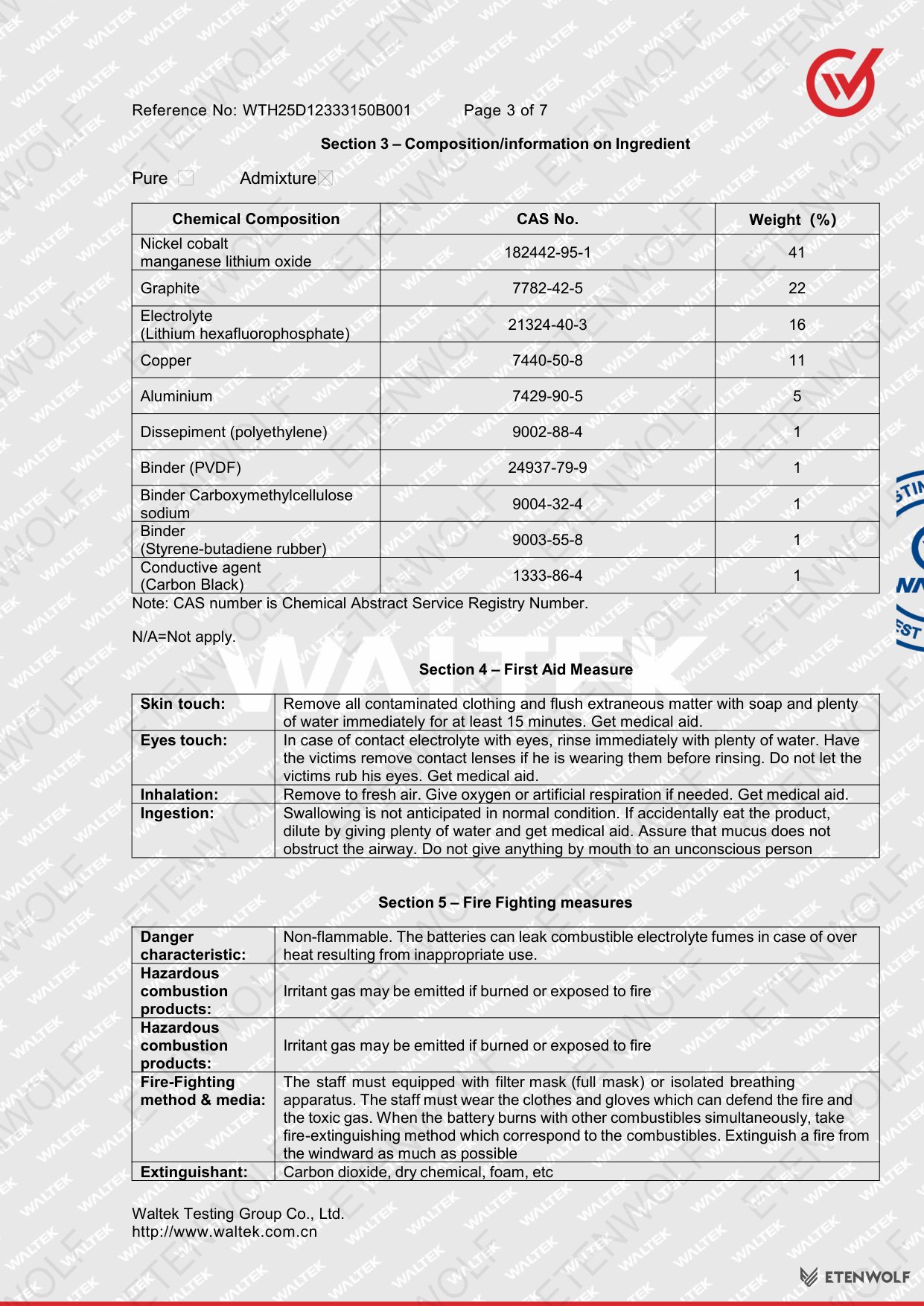
| Chemical Substance | CAS Number | Weight (%) |
|---|---|---|
| Nickel Cobalt Manganese Lithium Oxide (cathode) | 182442-95-1 | 41 |
| Graphite (anode) | 7782-42-5 | 22 |
| Electrolyte – Lithium Hexafluorophosphate | 21324-40-3 | 16 |
| Copper (current collector) | 7440-50-8 | 11 |
| Aluminium (current collector) | 7429-90-5 | 5 |
| Separator – Polyethylene | 9002-88-4 | 1 |
| Binder – PVDF | 24937-79-9 | 1 |
| Binder – Carboxymethylcellulose Sodium | 9004-32-4 | 1 |
| Binder – Styrene-Butadiene Rubber | 9003-55-8 | 1 |
| Conductive Agent – Carbon Black | 1333-86-4 | 1 |
First Aid Measures (Section 4)
- Skin touch: Remove all contaminated clothing and flush extraneous matter with soap and plenty of water immediately for at least 15 minutes. Get medical aid.
- Eyes touch: In case of contact electrolyte with eyes, rinse immediately with plenty of water. Have the victims remove contact lenses if he is wearing them before rinsing. Do not let the victims rub his eyes. Get medical aid.
- Inhalation: Remove to fresh air. Give oxygen or artificial respiration if needed. Get medical aid.
- Ingestion: Swallowing is not anticipated in normal condition. If accidentally eat the product, dilute by giving plenty of water and get medical aid. Assure that mucus does not obstruct the airway. Do not give anything by mouth to an unconscious person.
Fire Fighting Measures (Section 5)
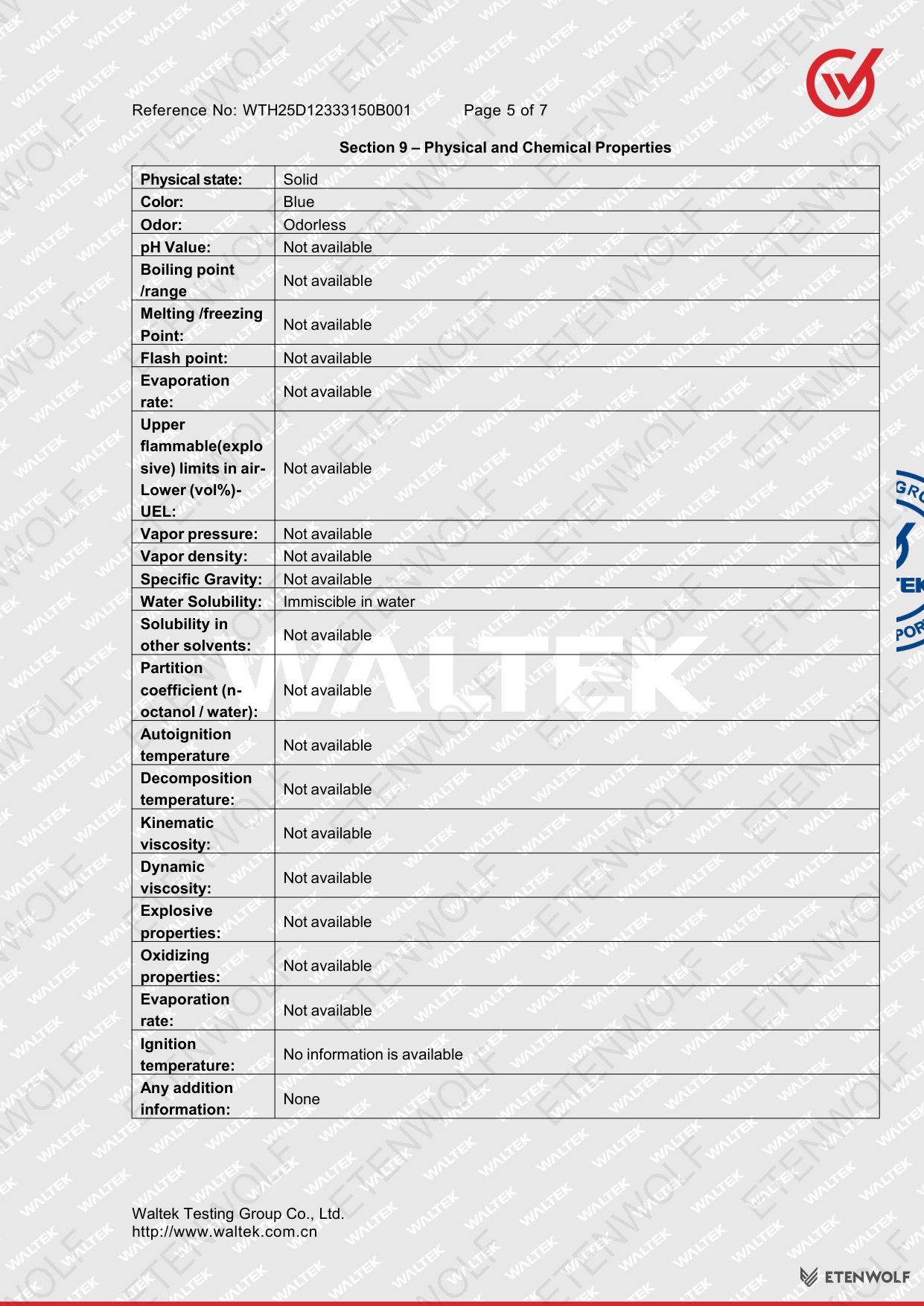
The battery is non-flammable under normal conditions but may emit combustible electrolyte fumes if overheated. Recommended extinguishing agents include carbon dioxide, dry chemical, and foam. Firefighting personnel must wear full-face filter masks or self-contained breathing apparatus and fire-resistant protective clothing.
Accidental Release Measures (Section 6)
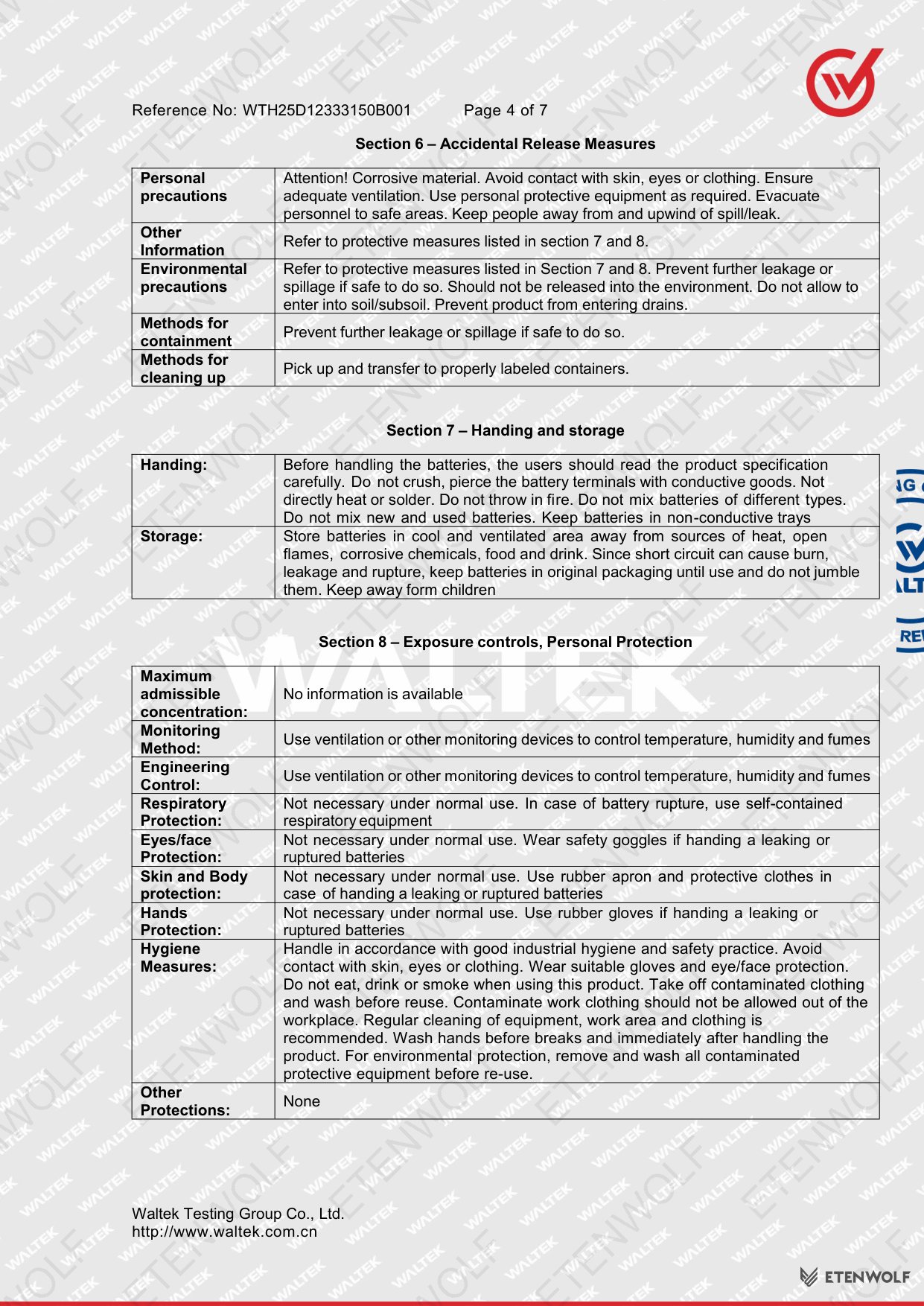
- Personal precautions: Attention! Corrosive material. Avoid contact with skin, eyes or clothing. Ensure adequate ventilation. Use personal protective equipment as required. Evacuate personnel to safe areas. Keep people away from and upwind of spill/leak.
- Other information: Refer to protective measures listed in section 7 and 8.
- Environmental precautions: Refer to protective measures listed in Section 7 and 8. Prevent further leakage or spillage if safe to do so. Should not be released into the environment. Do not allow to enter into soil/subsoil. Prevent product from entering drains.
- Containment: Prevent further leakage or spillage if safe to do so.
- Cleaning: Pick up and transfer to properly labeled containers.
Handling and Storage (Section 7)
- Read product specifications before handling.
- Do not crush, pierce terminals, heat directly, or solder.
- Do not dispose of in fire.
- Do not mix batteries of different types or mix new and used batteries.
- Store in cool, ventilated areas away from heat sources, open flames, and corrosive chemicals.
- Keep in original packaging until use to prevent short circuit.
- Keep out of reach of children.
Personal Protection (Section 8)
- Respiratory: Not required under normal use. Use self-contained breathing apparatus if battery is ruptured.
- Eyes/Face: Not required under normal use. Wear safety goggles when handling a leaking or ruptured battery.
- Skin/Body: Not required under normal use. Use rubber apron and protective clothing when handling a leaking or ruptured battery.
- Hands: Not required under normal use. Use rubber gloves when handling a leaking or ruptured battery.
Standards & Compliance
This MSDS was prepared in accordance with internationally recognized standards for the safe transport and handling of lithium-ion batteries. The ETENWOLF S1 battery pack complies with the following frameworks:
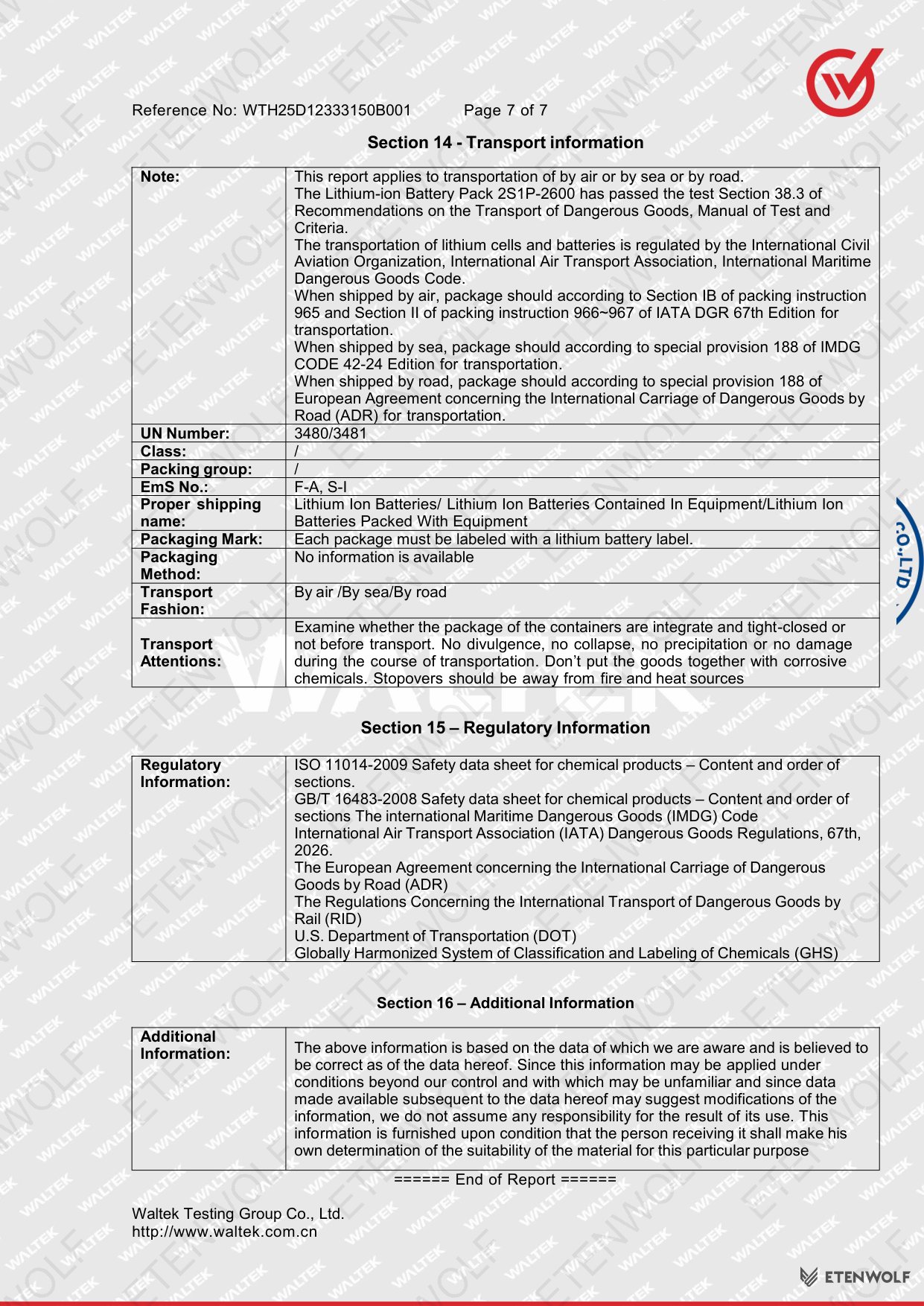
- UN38.3 – United Nations Manual of Tests and Criteria, Part III, Section 38.3: Transport testing requirements for lithium-ion batteries, including altitude simulation, thermal, vibration, shock, external short circuit, impact/crush, overcharge, and forced discharge tests.
- Material Safety Data Sheet (MSDS) format aligned with international chemical safety communication standards.
- Applicable Chinese national regulations for hazardous material identification and reporting.
The battery configuration (2S1P-2600, 7.4 V, 19.24 Wh) falls below the 100 Wh threshold for individual lithium-ion cells and packs, satisfying the energy content requirements for standard transport classification under UN38.3.
Validity & Certification Body
| Field | Details |
|---|---|
| Reference Number | WTH25D12333150B001 |
| Date of Issue | 2026-01-13 |
| Issuing Laboratory | Waltek Testing Group Co., Ltd. |
| Laboratory Address | No. 77, Houjie Section, Guantai Road, Houjie Town, Dongguan City, Guangdong, China |
| Laboratory Website | http://www.waltek.com.cn |
| Telephone | +86-769-2267 6998 |
| Fax | +86-769-2267 6828 |
| Prepared By | Jason Zhen, Project Engineer |
| Approved By | Deval Qin, Designated Reviewer |
The MSDS validity is tied to the product model and battery configuration. Any change to the battery chemistry, configuration, capacity, or manufacturer requires a new MSDS to be issued. Users should verify the reference number against the current product batch documentation.
Frequently Asked Questions
- What is the UN38.3 standard and why does the ETENWOLF S1 battery need it?
- UN38.3 is the United Nations testing standard for lithium batteries intended for transport. It mandates a series of safety tests — including altitude simulation, thermal cycling, vibration, shock, short circuit, and overcharge — to confirm the battery will not pose a hazard during shipping. The ETENWOLF S1 battery pack must pass these tests to be legally transported by air, sea, or ground internationally.
- What chemicals are inside the ETENWOLF S1 battery pack and are they dangerous?
- Under normal operating conditions the sealed battery pack presents no chemical hazard. It contains nickel cobalt manganese lithium oxide (41%), graphite (22%), lithium hexafluorophosphate electrolyte (16%), copper (11%), aluminium (5%), and small amounts of polymer binders and a carbon black conductive agent. These substances are only hazardous if the battery is physically ruptured, overheated, or improperly dismantled, at which point the electrolyte may cause skin, eye, and respiratory irritation.
- What should I do if the ETENWOLF S1 battery leaks or ruptures?
- Immediately move the unit to a well-ventilated area. Avoid skin and eye contact with any leaked electrolyte. If skin contact occurs, wash thoroughly with soap and water for at least 15 minutes. If eye contact occurs, rinse with plenty of water and remove contact lenses before rinsing. Do not inhale vapors — move to fresh air. Seek medical assistance in all cases of exposure. Do not attempt to dismantle or recharge a visibly damaged battery.
- How should the ETENWOLF S1 lithium-ion battery be stored safely?
- Store the battery in a cool, dry, and well-ventilated location away from heat sources, open flames, and corrosive materials. Keep it in its original packaging until use to prevent accidental short circuits. Do not mix it with batteries of different types or states of charge. Keep out of reach of children. Do not expose to temperatures outside the manufacturer’s specified range.
Related Documents
The following certification and compliance documents are relevant to the ETENWOLF S1 portable tire inflator and its lithium-ion battery pack. Obtaining and maintaining these documents ensures full regulatory compliance across major global markets:
- UN38.3 Test Summary Report – Detailed pass/fail results for all eight UN38.3 transport safety tests for the 2S1P-2600 battery cell and pack.
- IEC 62133 Safety Certificate – Safety requirements for portable sealed secondary lithium cells and batteries for use in portable applications.
- FCC Declaration of Conformity – Electromagnetic compatibility certification required for sale in the United States.
- CE Declaration of Conformity – Required for sale in the European Economic Area, covering Low Voltage Directive and EMC Directive compliance.
- RoHS Compliance Report – Confirms restriction of hazardous substances (lead, mercury, cadmium, etc.) in the product’s electrical and electronic components.
- REACH SVHC Declaration – Confirms that no Substances of Very High Concern exceed regulatory thresholds in the product.
- Battery Transport Classification Letter (DGD) – Dangerous Goods Declaration for air freight shipment, referencing UN3481 (lithium-ion battery packed with equipment).
Document Pages