Document Overview
Document Overview This test report documents the electromagnetic compatibility (EMC) testing conducted on the ETENWOLF S7 inflator pump according to FCC Part 15 Subpart B requirements. The testing was performed by Waltek Testing Group (Shenzhen) Co., Ltd., an accredited testing facility specializing in electromagnetic compatibility…
- Document type
- Certification Report
- Prepared by
- Michelle Torres
- Published
- Last reviewed
- Topics
- North America: FCC / UL
Document Overview
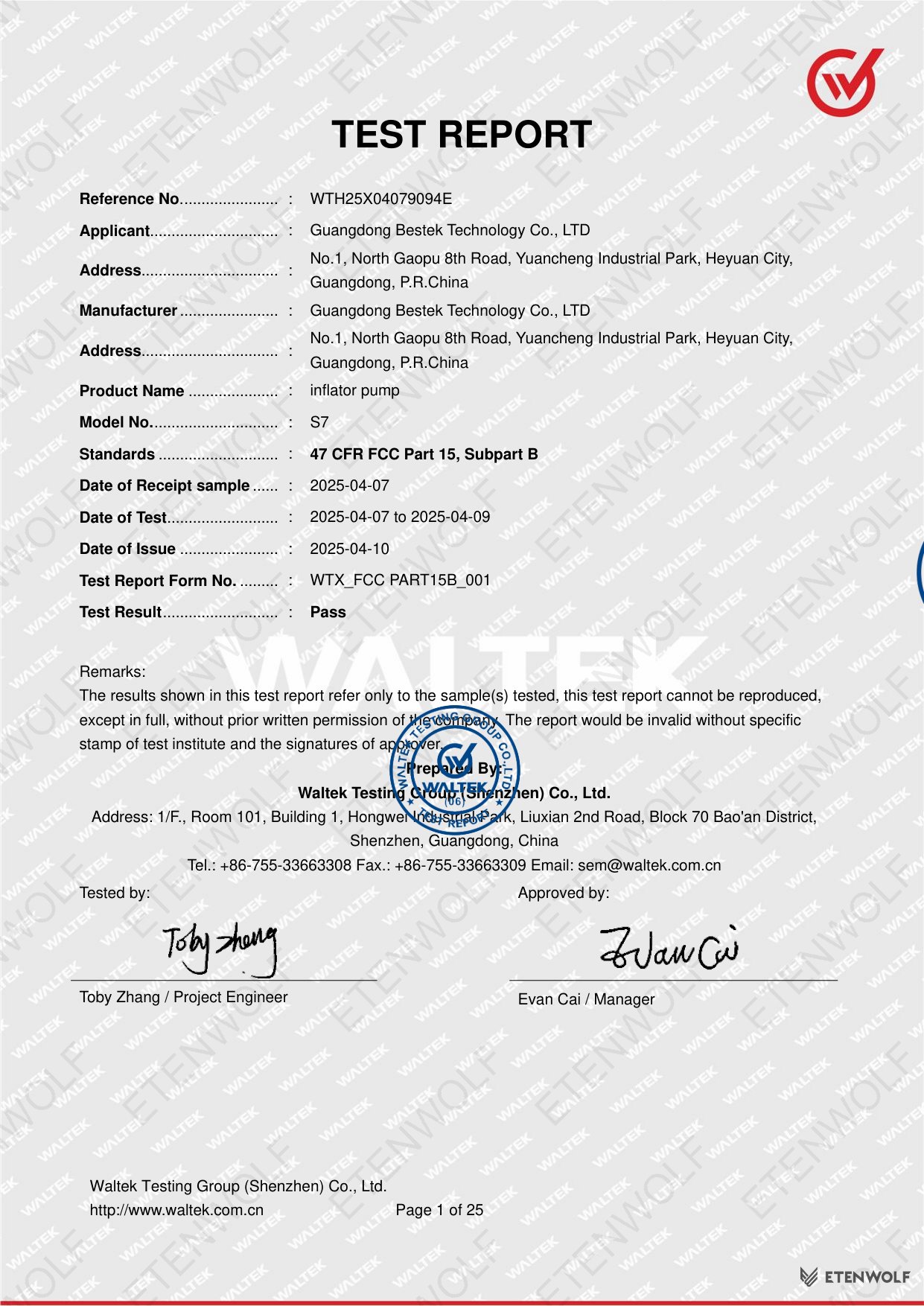
This test report documents the electromagnetic compatibility (EMC) testing conducted on the ETENWOLF S7 inflator pump according to FCC Part 15 Subpart B requirements. The testing was performed by Waltek Testing Group (Shenzhen) Co., Ltd., an accredited testing facility specializing in electromagnetic compatibility evaluations.
Report Reference Number: WTH25X04079094E
Document Type: FCC Part 15B Compliance Test Report
Issue Date: April 10, 2025
Test Period: April 7-9, 2025
Overall Result: PASS
This report certifies that the tested sample complies with the technical requirements specified in 47 CFR FCC Part 15, Subpart B for unintentional radiators. The device demonstrated acceptable levels of conducted and radiated emissions during the evaluation period.
Product Information
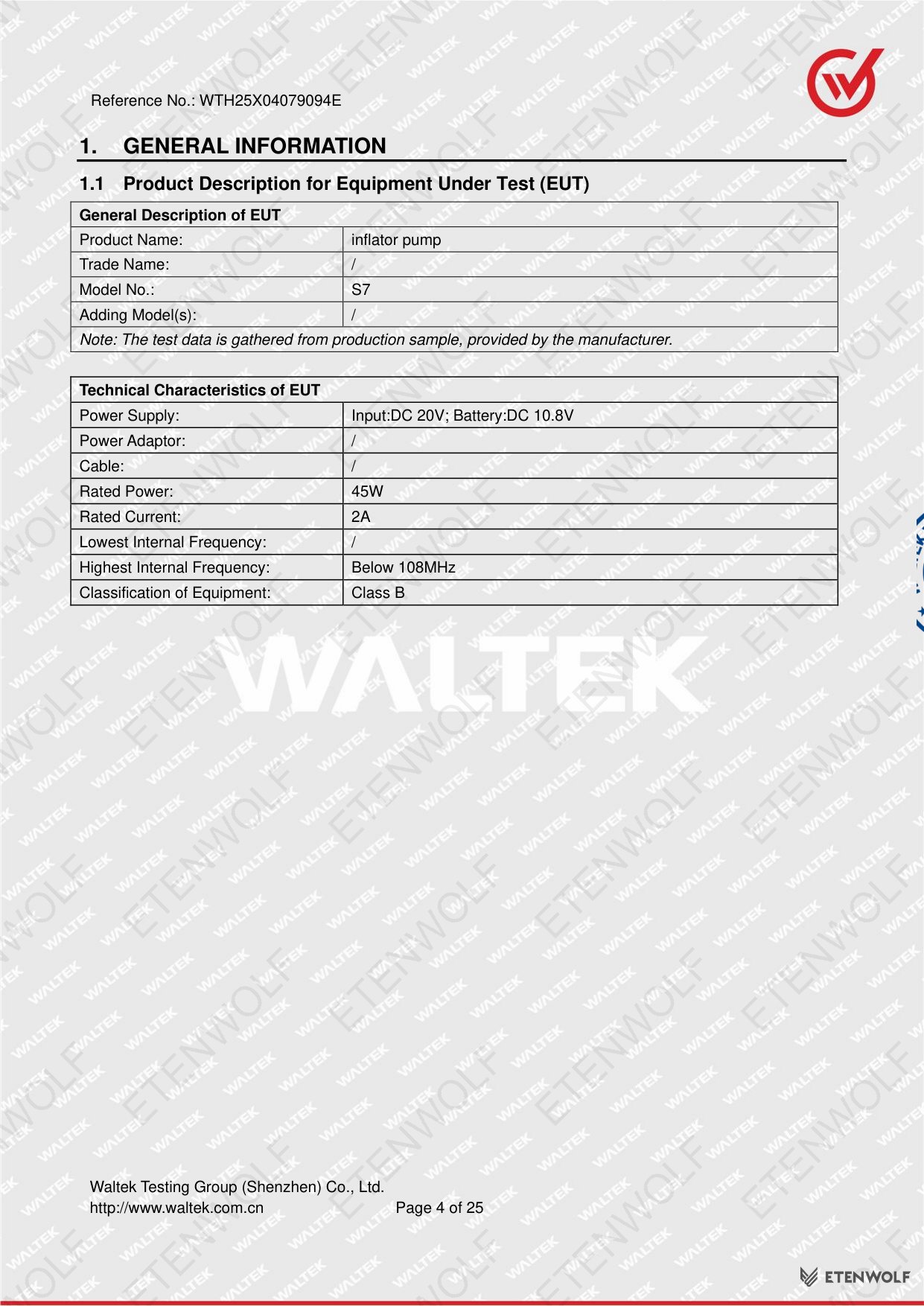
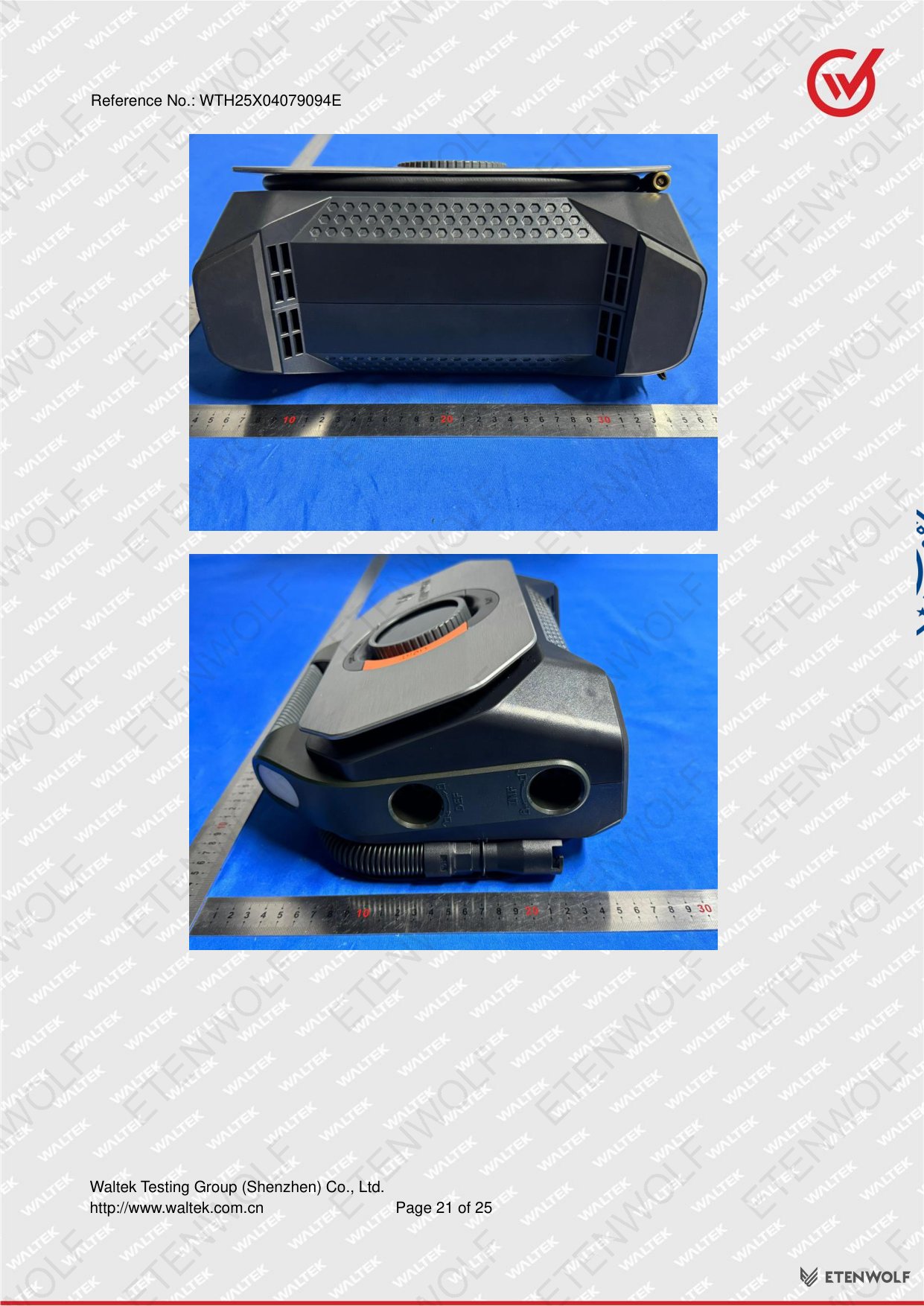
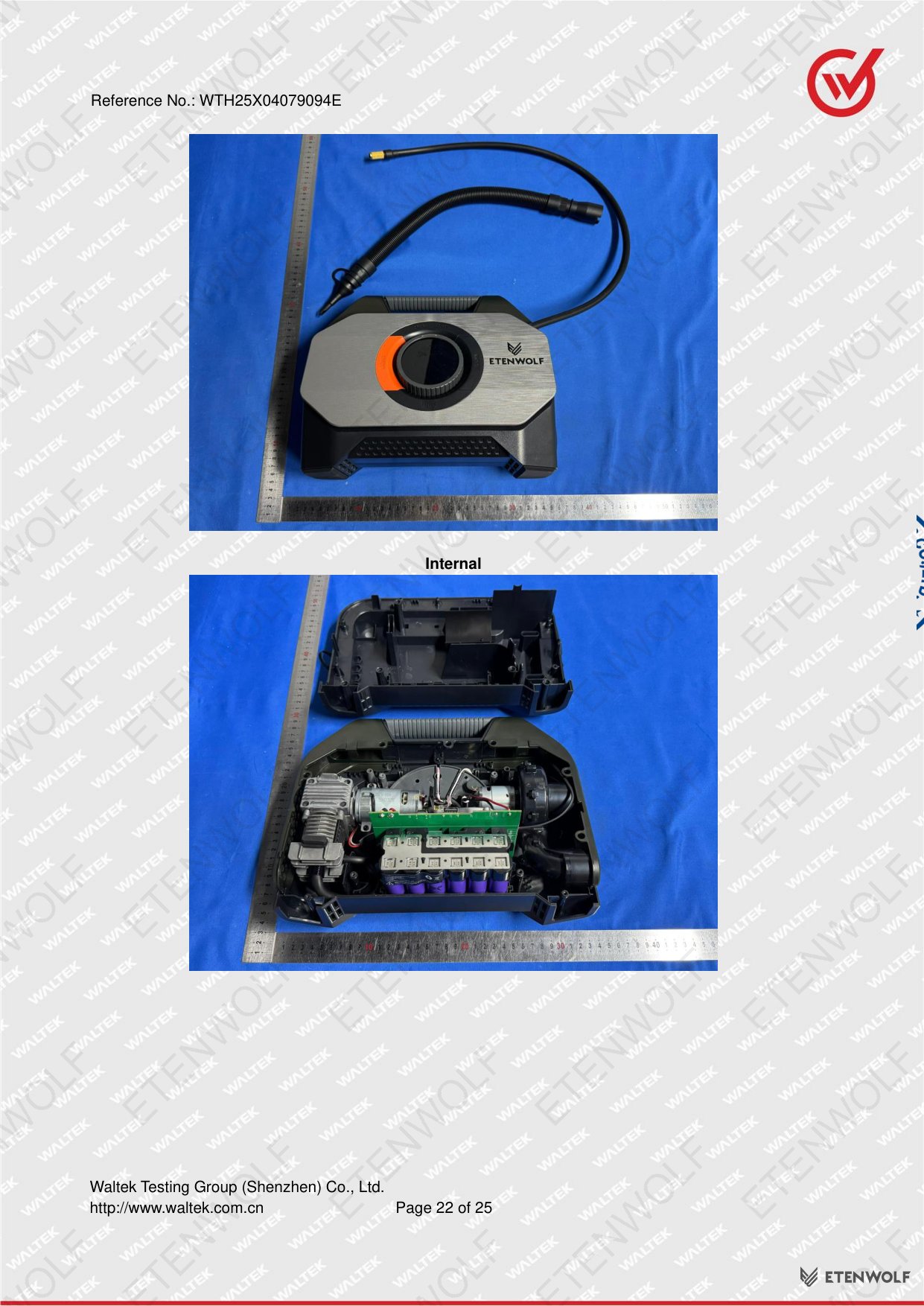
The equipment under test (EUT) is a portable tire inflator pump designed for automotive and recreational vehicle applications. The S7 model represents ETENWOLF’s advanced inflation technology platform.
| Specification | Details |
|---|---|
| Product Name | Inflator Pump |
| Model Number | S7 |
| Manufacturer | Guangdong Bestek Technology Co., LTD |
| Manufacturing Location | No.1, North Gaopu 8th Road, Yuancheng Industrial Park, Heyuan City, Guangdong, P.R.China |
| Product Category | Portable Electric Inflator / Unintentional Radiator |
The device operates as an unintentional radiator under FCC regulations, meaning it contains digital circuitry but is not designed to intentionally transmit radio frequency energy. Compliance testing ensures the device does not cause harmful interference to radio communications.
Key Details
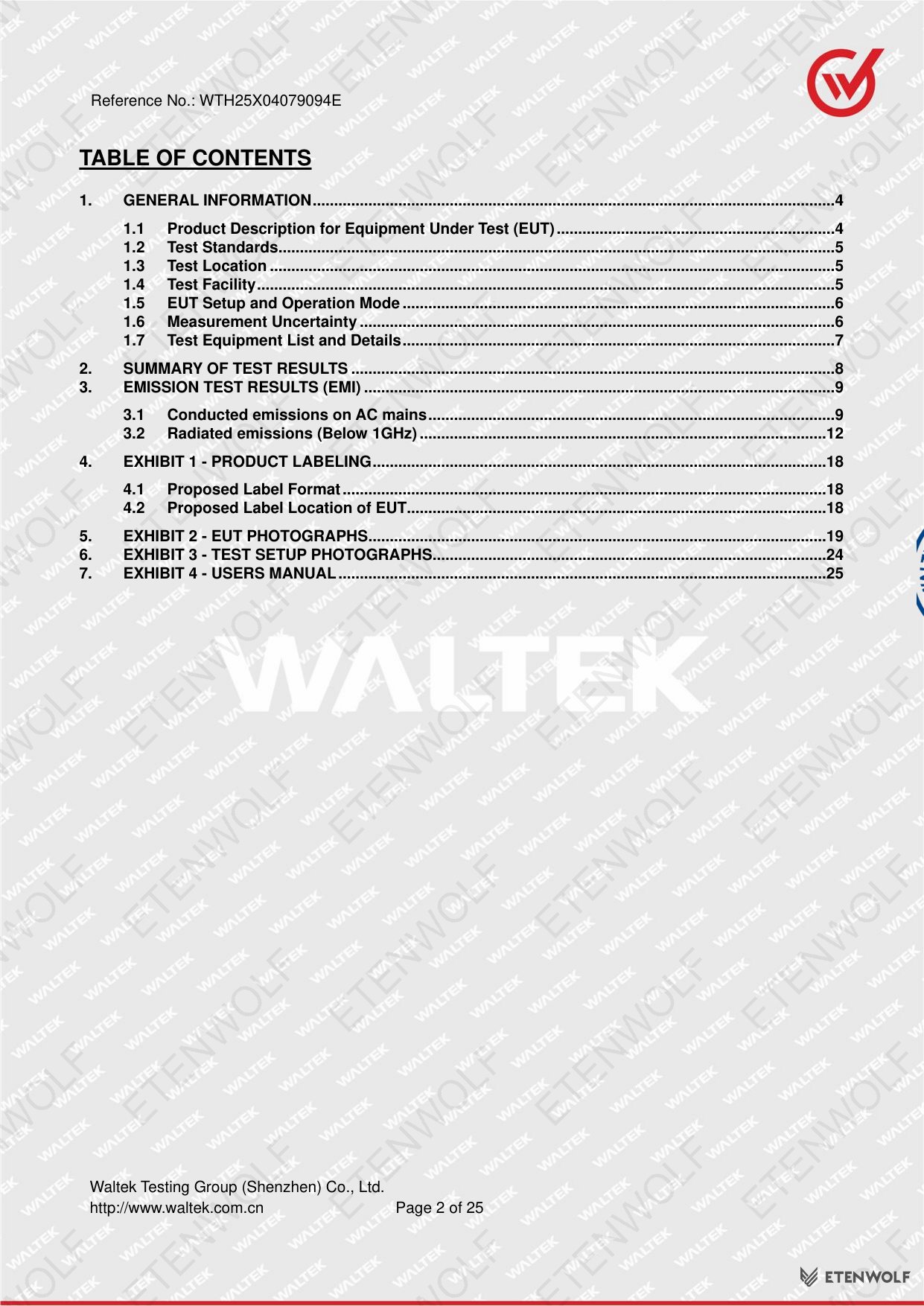
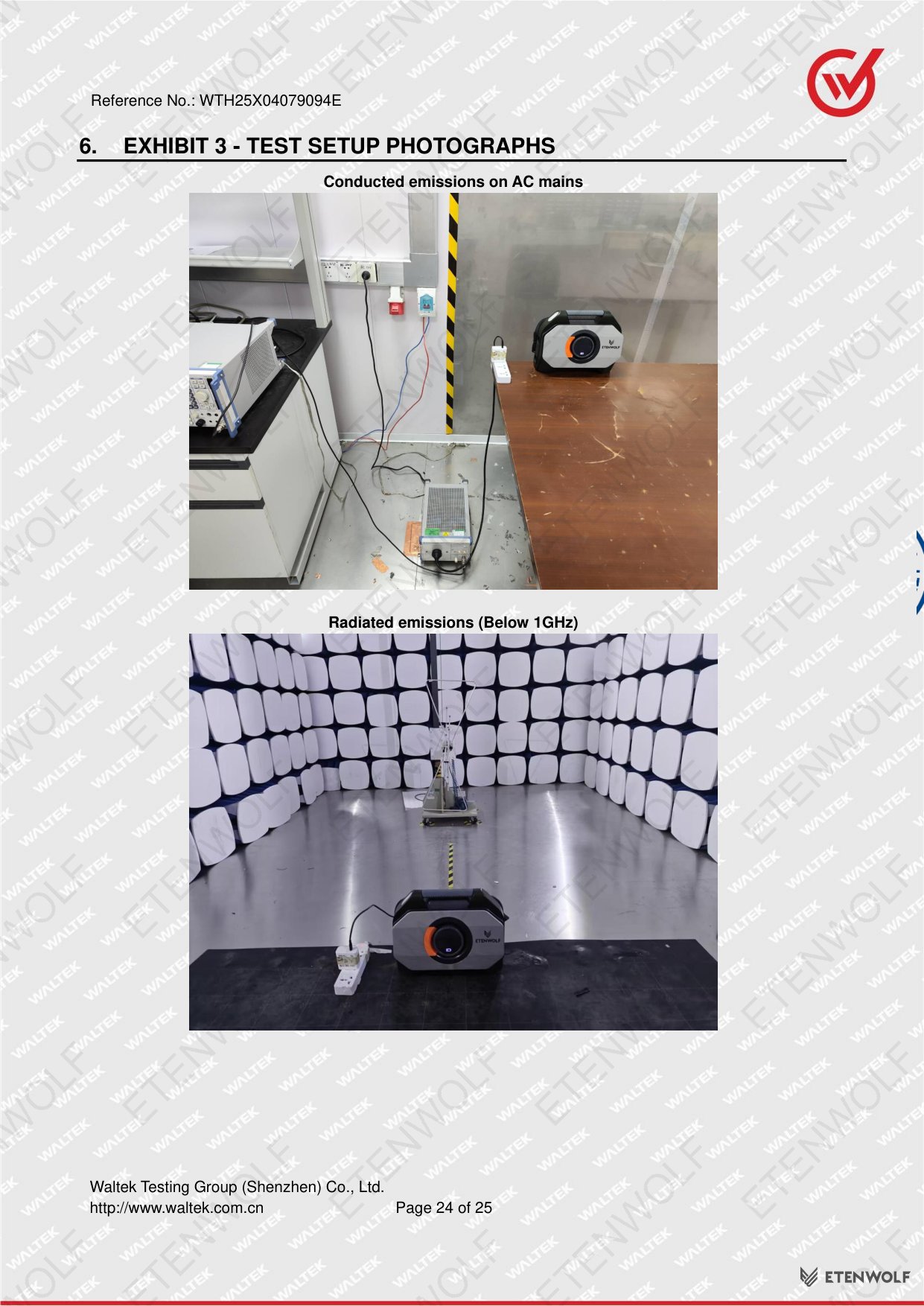
The FCC Part 15B testing evaluated electromagnetic emissions in two categories: conducted emissions on AC mains and radiated emissions below 1 GHz. Both test categories were successfully passed, demonstrating the product’s compliance with federal emission limits.
Test Methodology and Conditions
| Test Parameter | Specification |
|---|---|
| Sample Receipt Date | April 7, 2025 |
| Testing Period | April 7-9, 2025 |
| Test Report Form Number | WTX_FCC PART15B_001 |
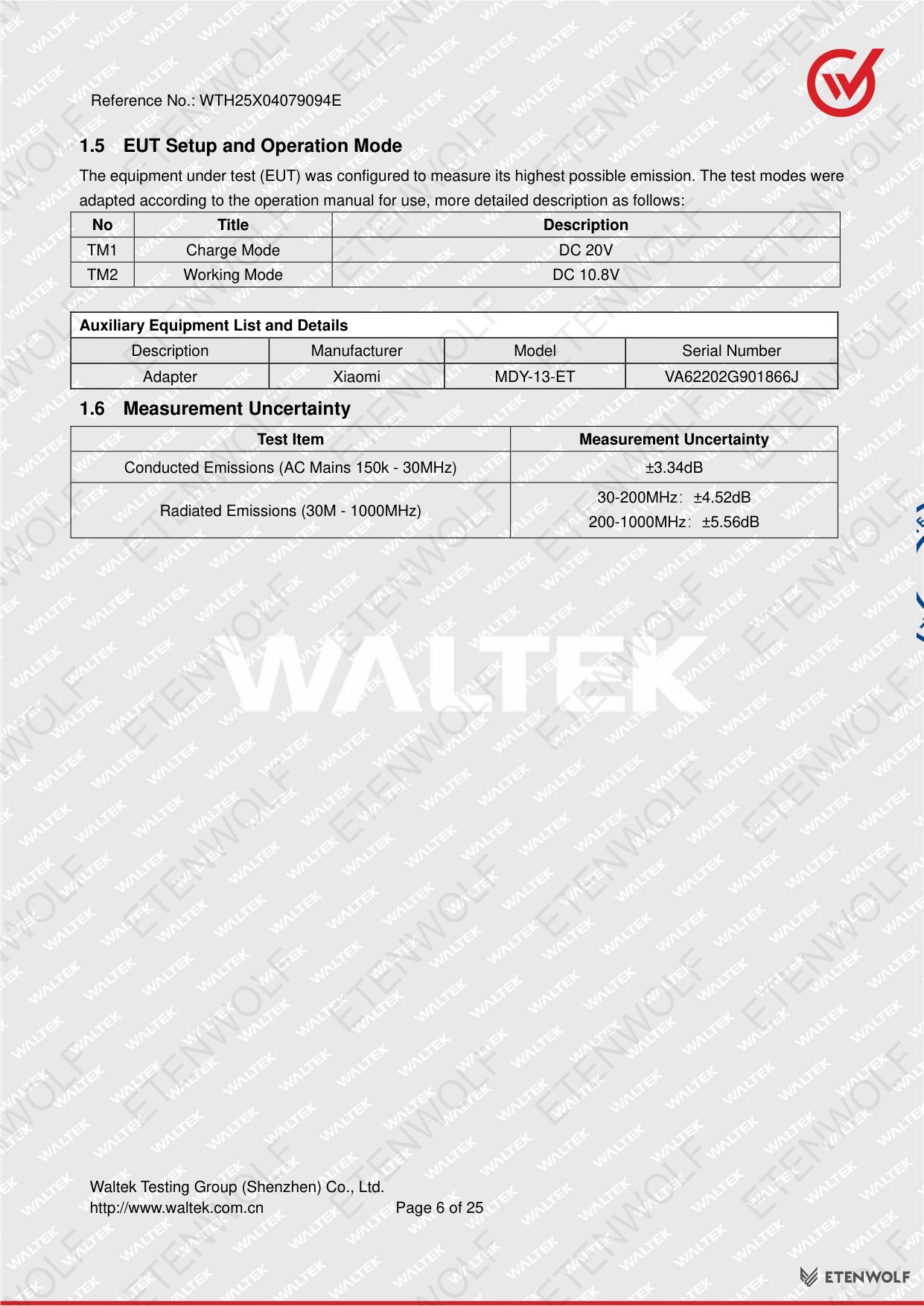
| EUT Configuration | Standard operational mode with typical user configuration |
| Measurement Uncertainty | Accounted for per laboratory calibration procedures |
Test Results Summary
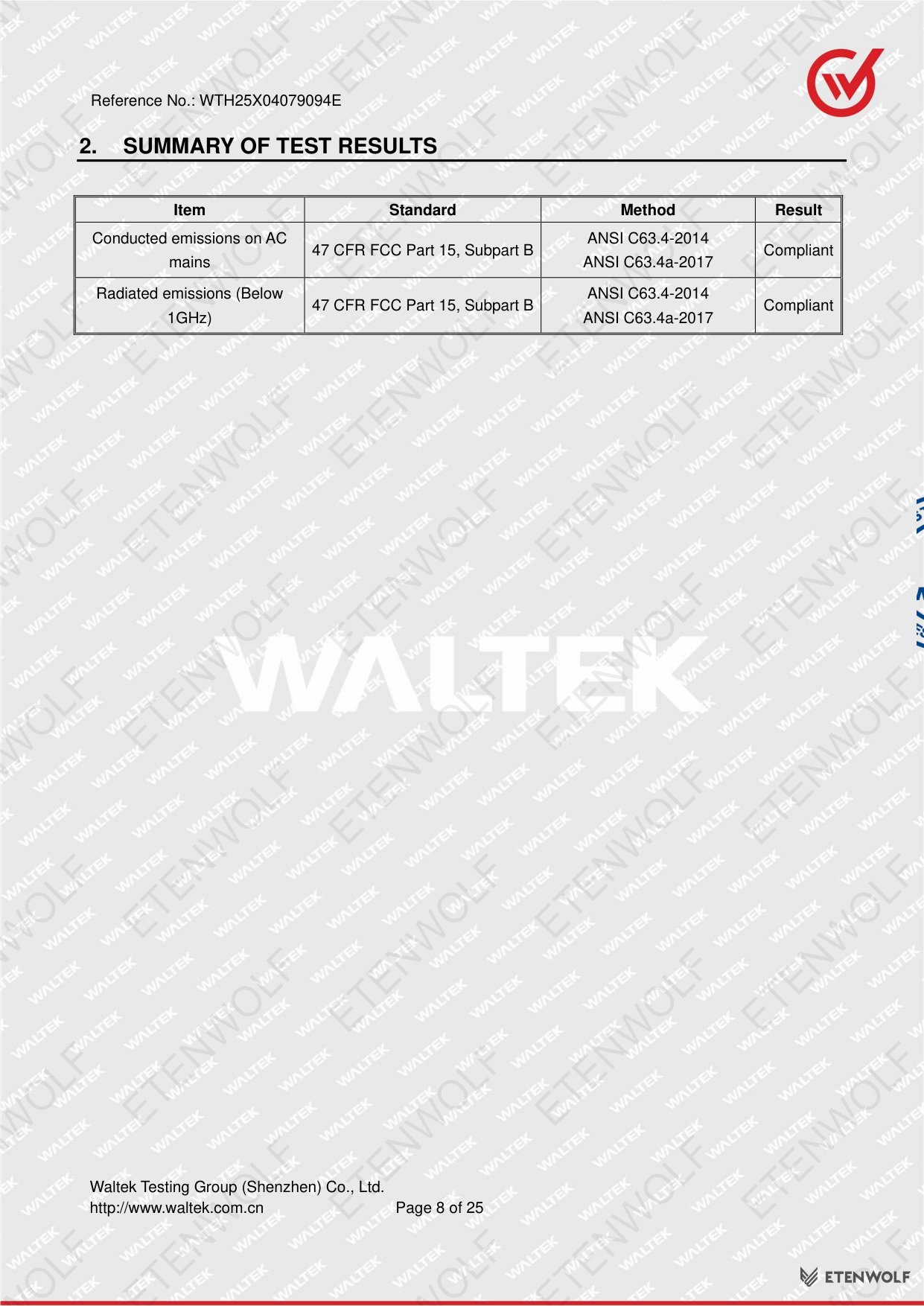
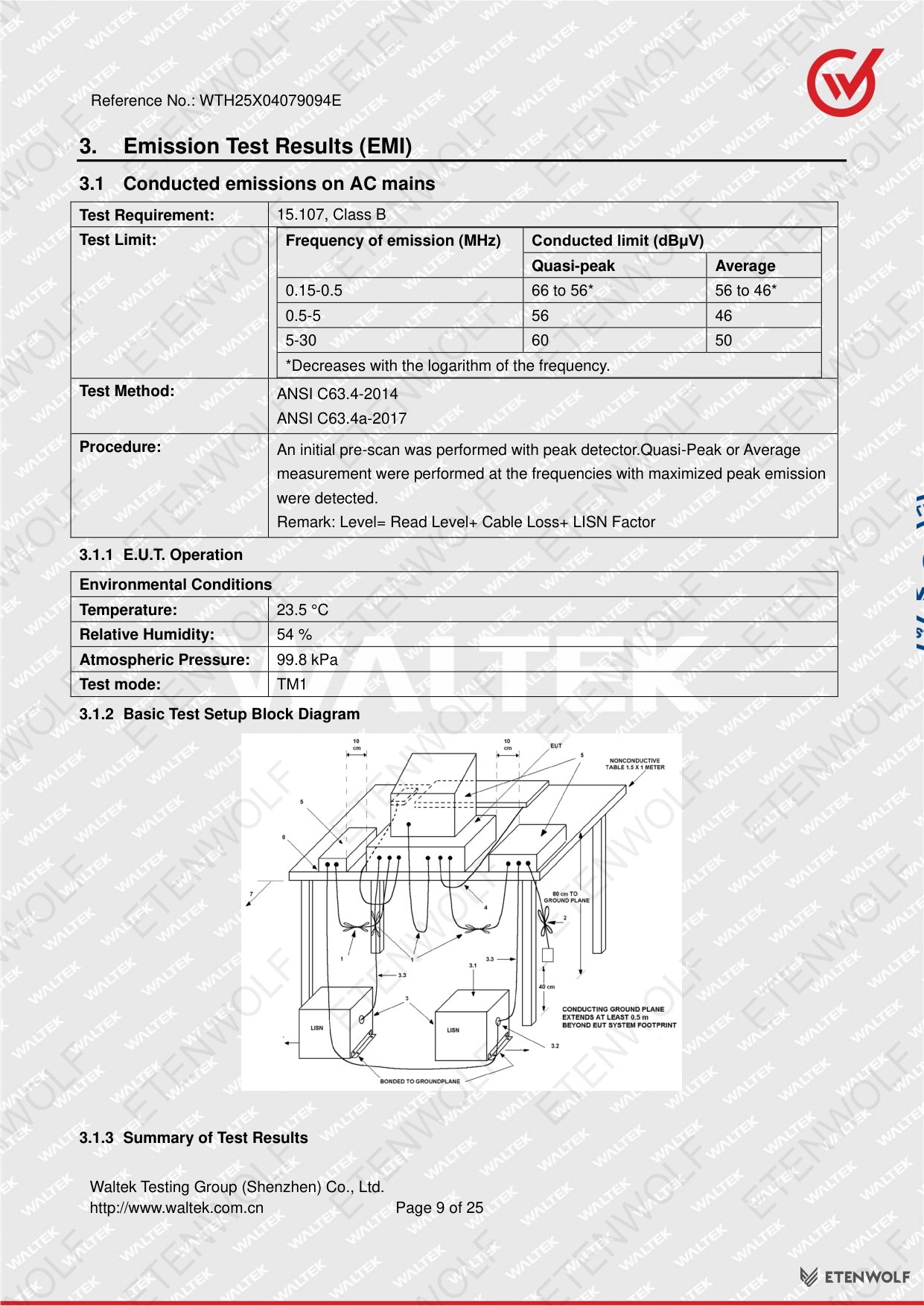
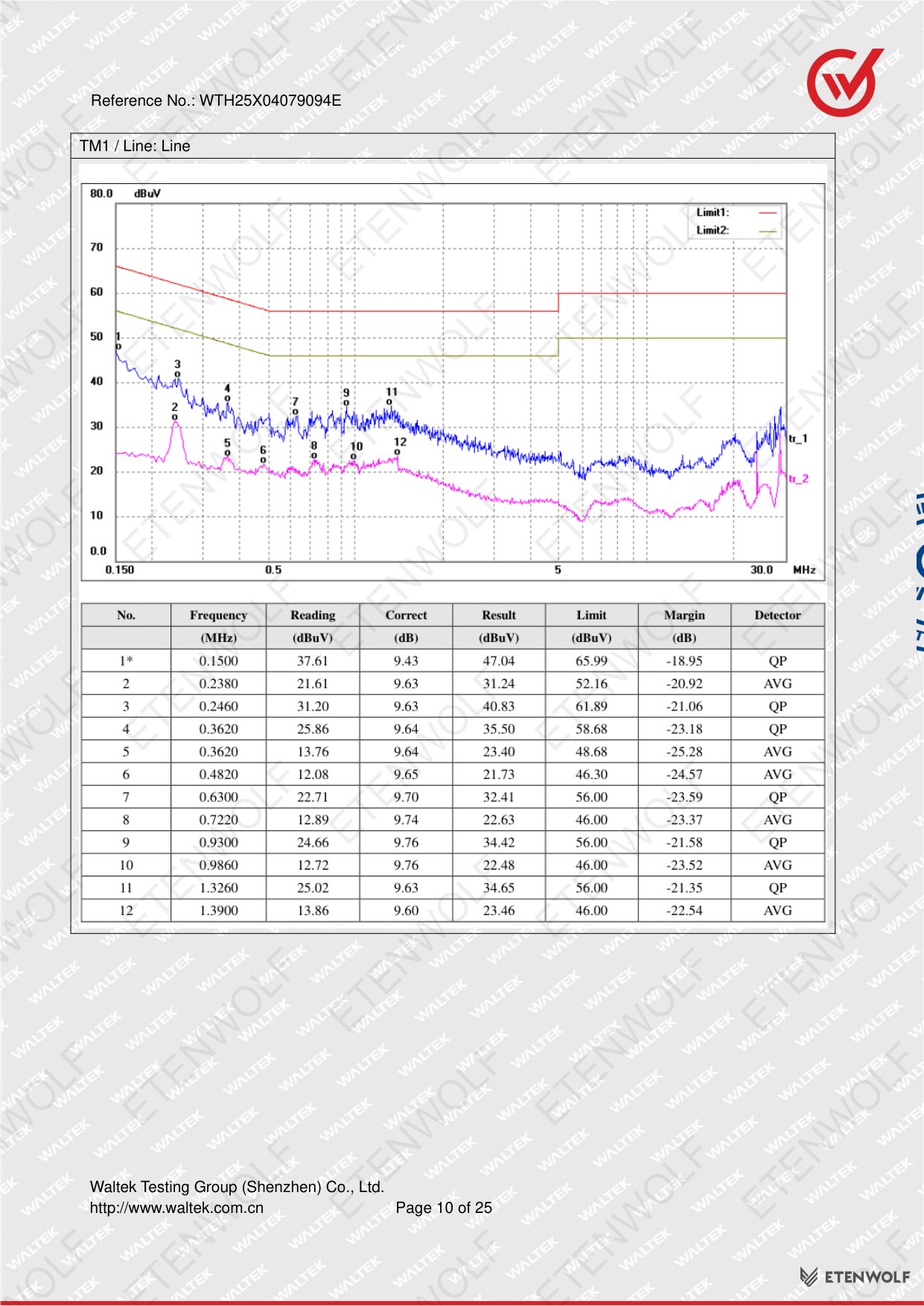
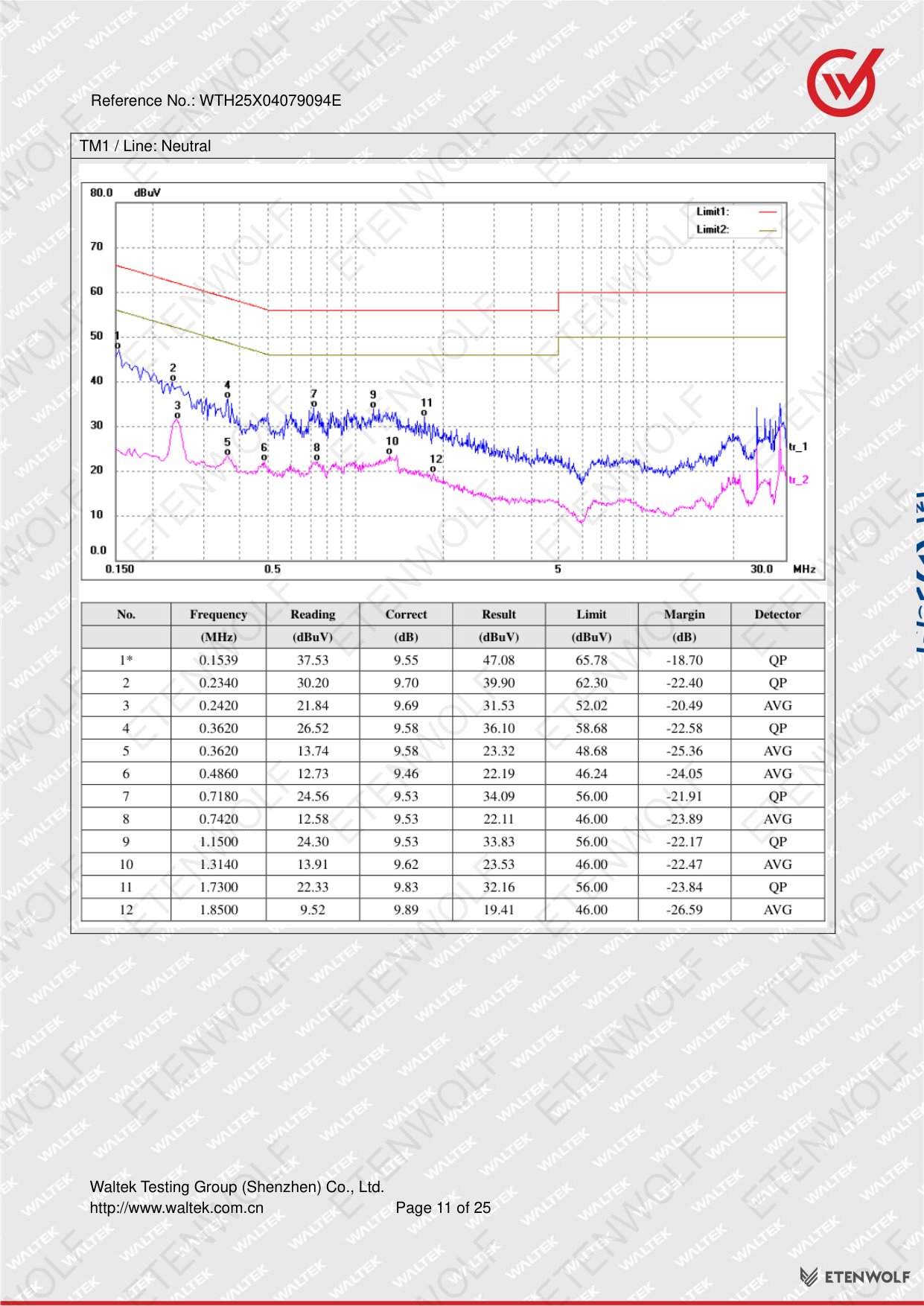
- Conducted Emissions on AC Mains: PASS – All measurements were within the acceptable limits specified in FCC Part 15, Subpart B
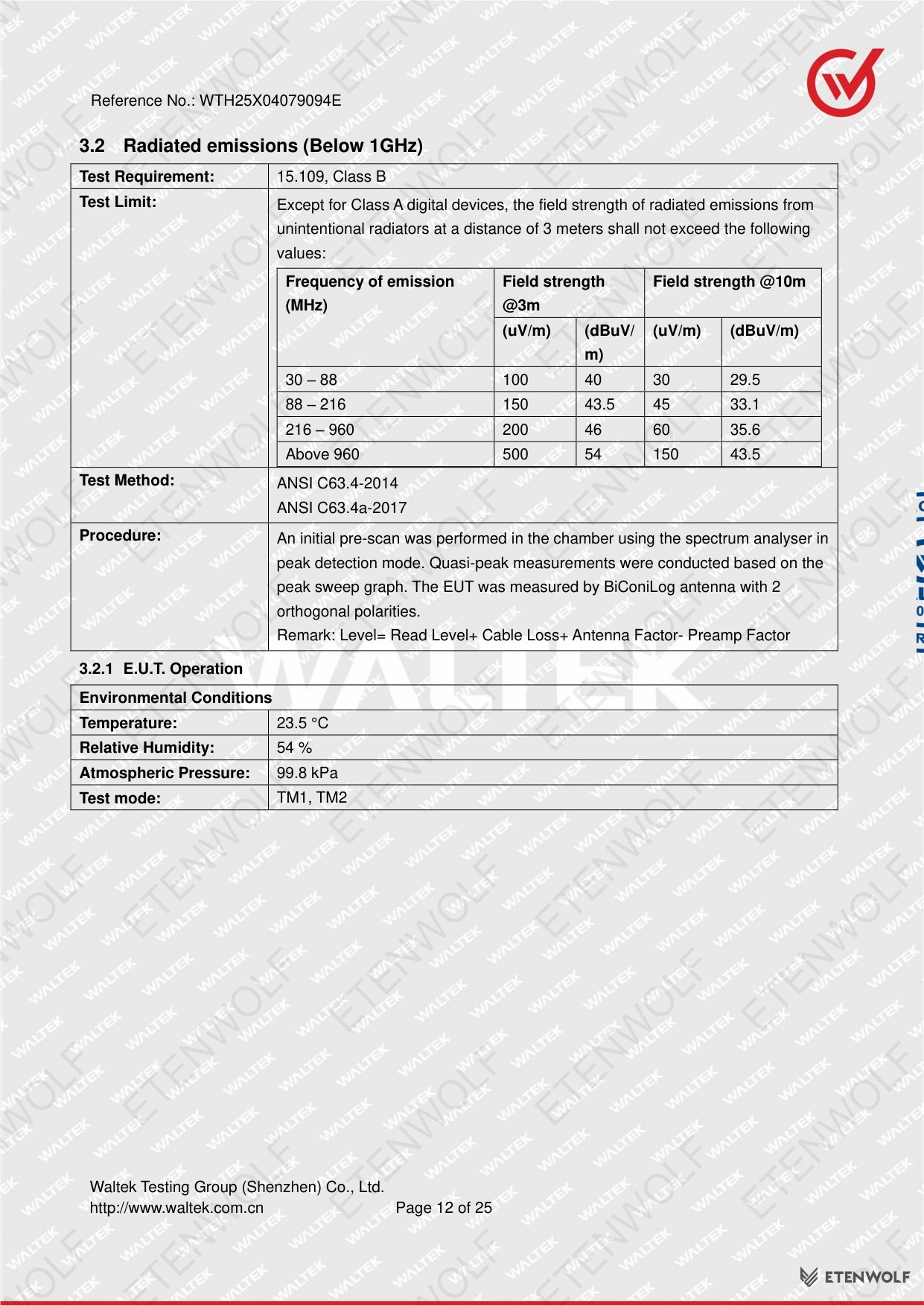
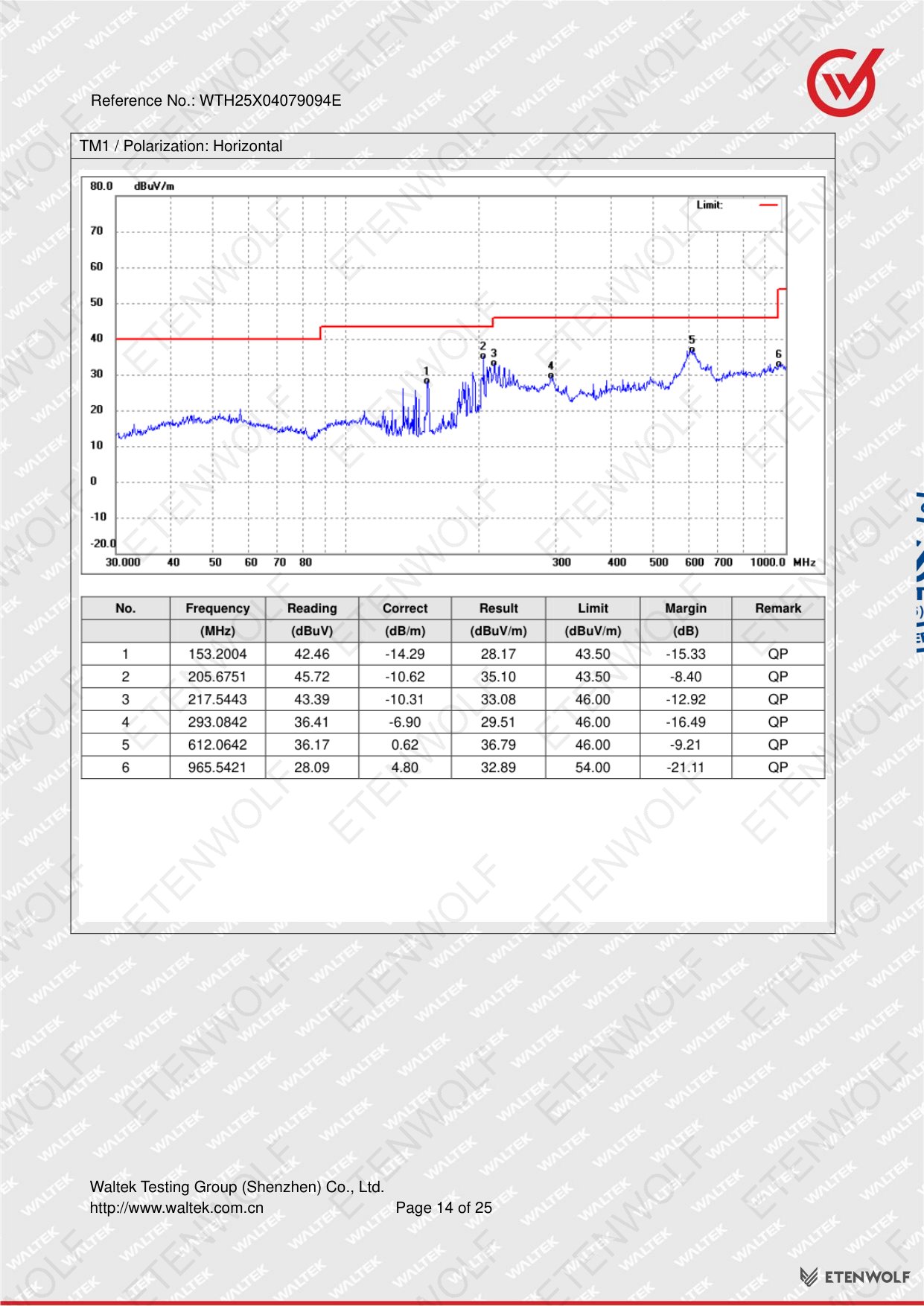
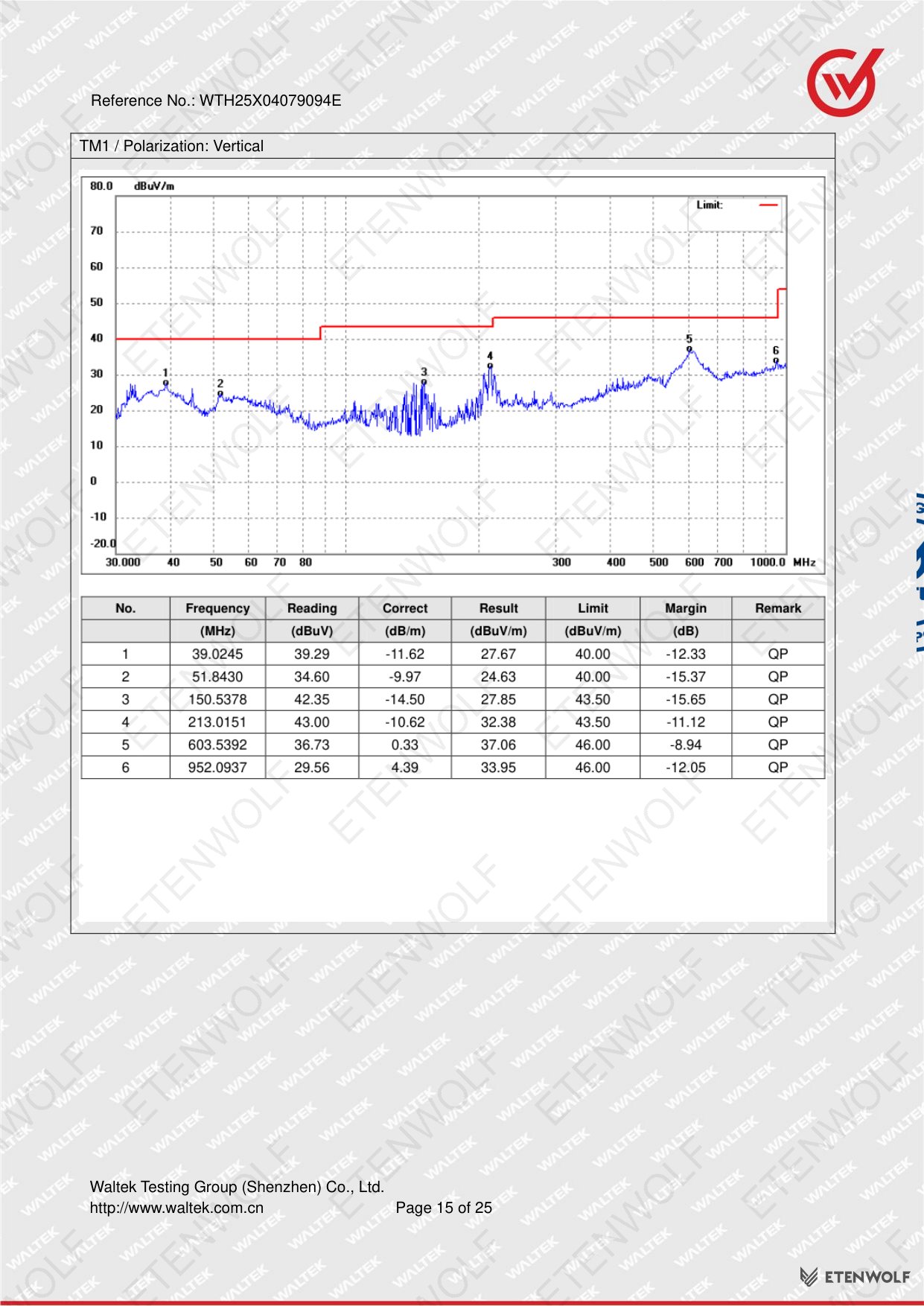
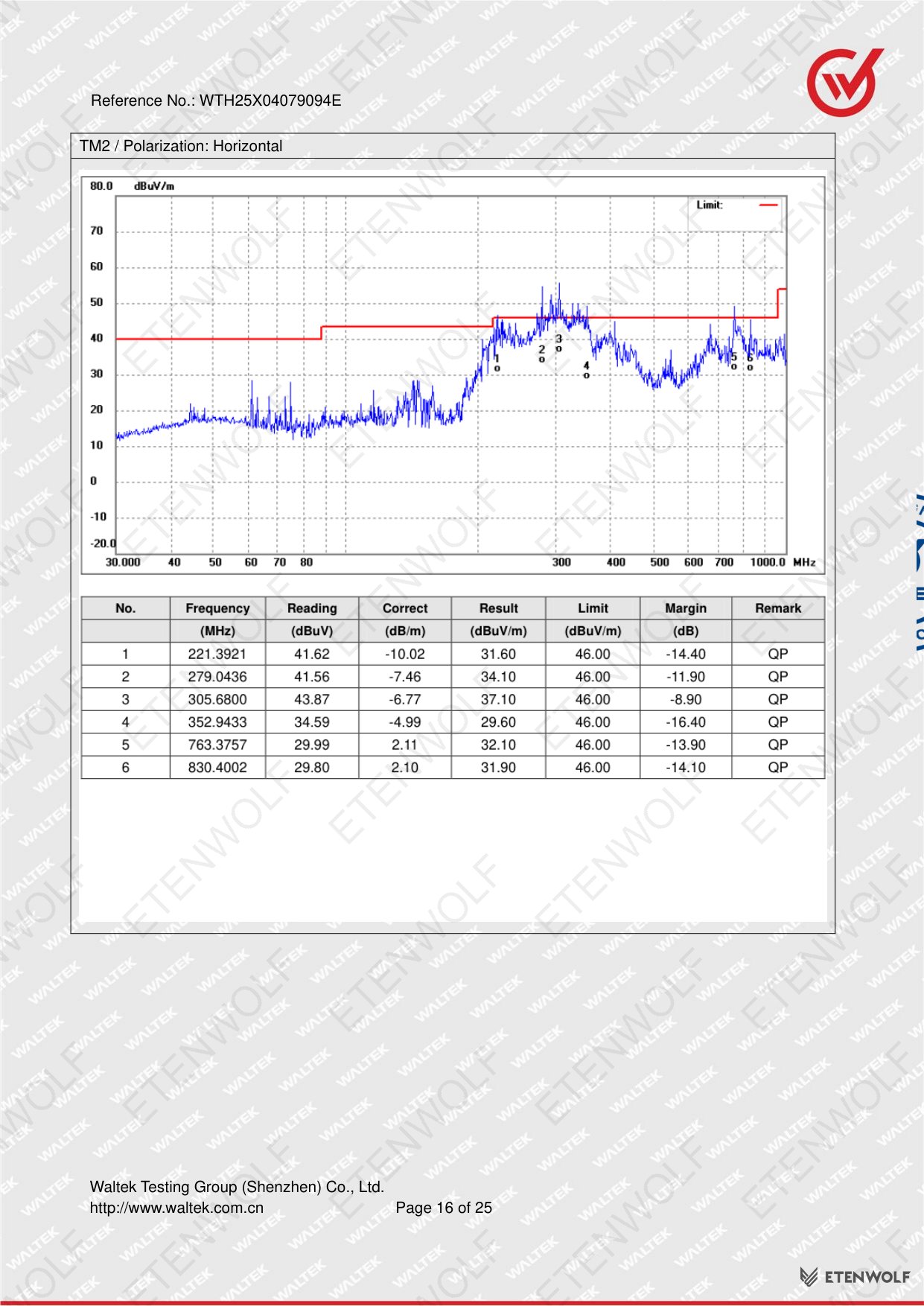
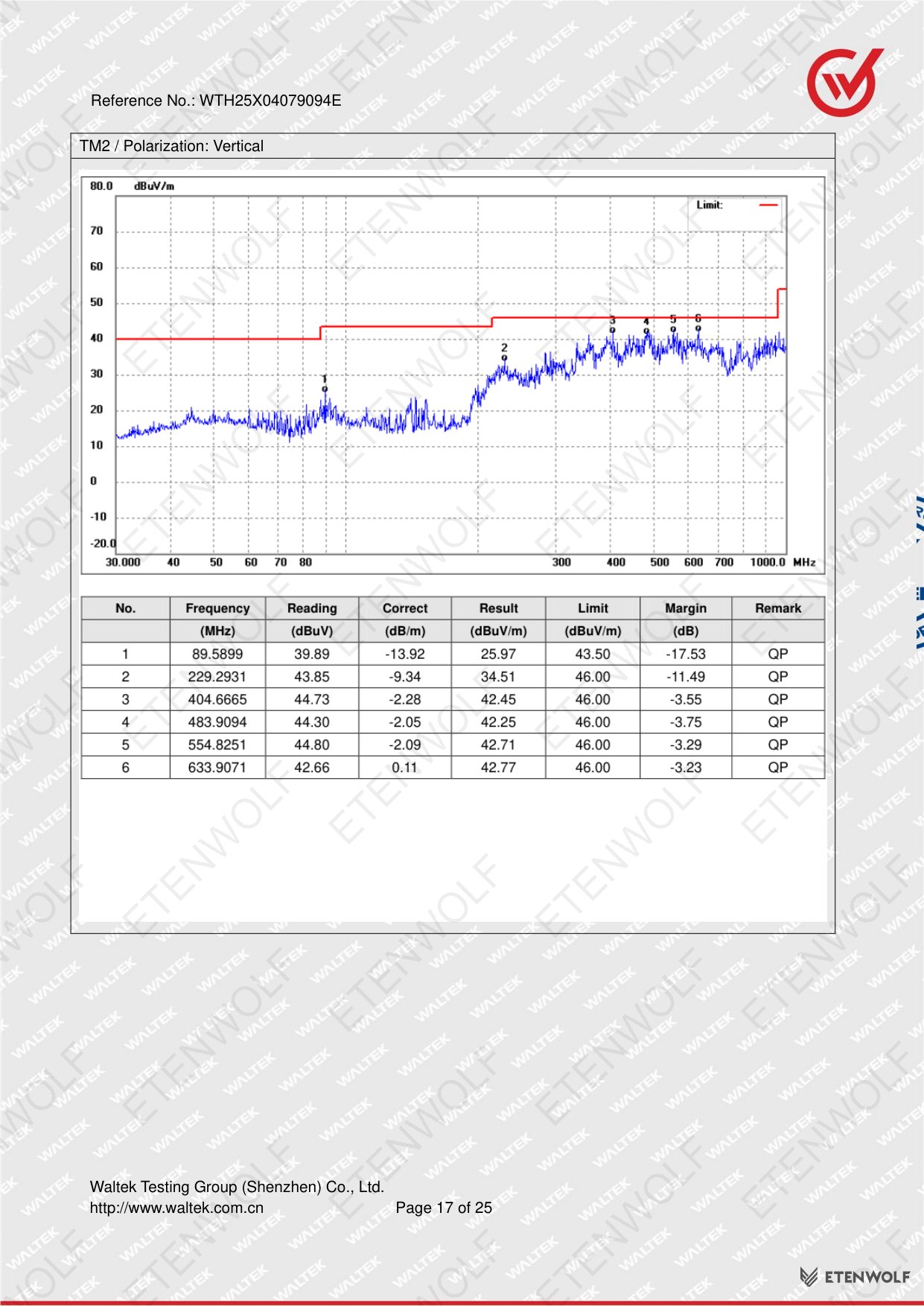
- Radiated Emissions (Below 1GHz): PASS – Electromagnetic field strength measurements complied with Class B digital device limits
The testing protocol followed standard procedures for evaluating unintentional radiators, with measurements taken under worst-case operating conditions to ensure comprehensive compliance verification.
Standards & Compliance
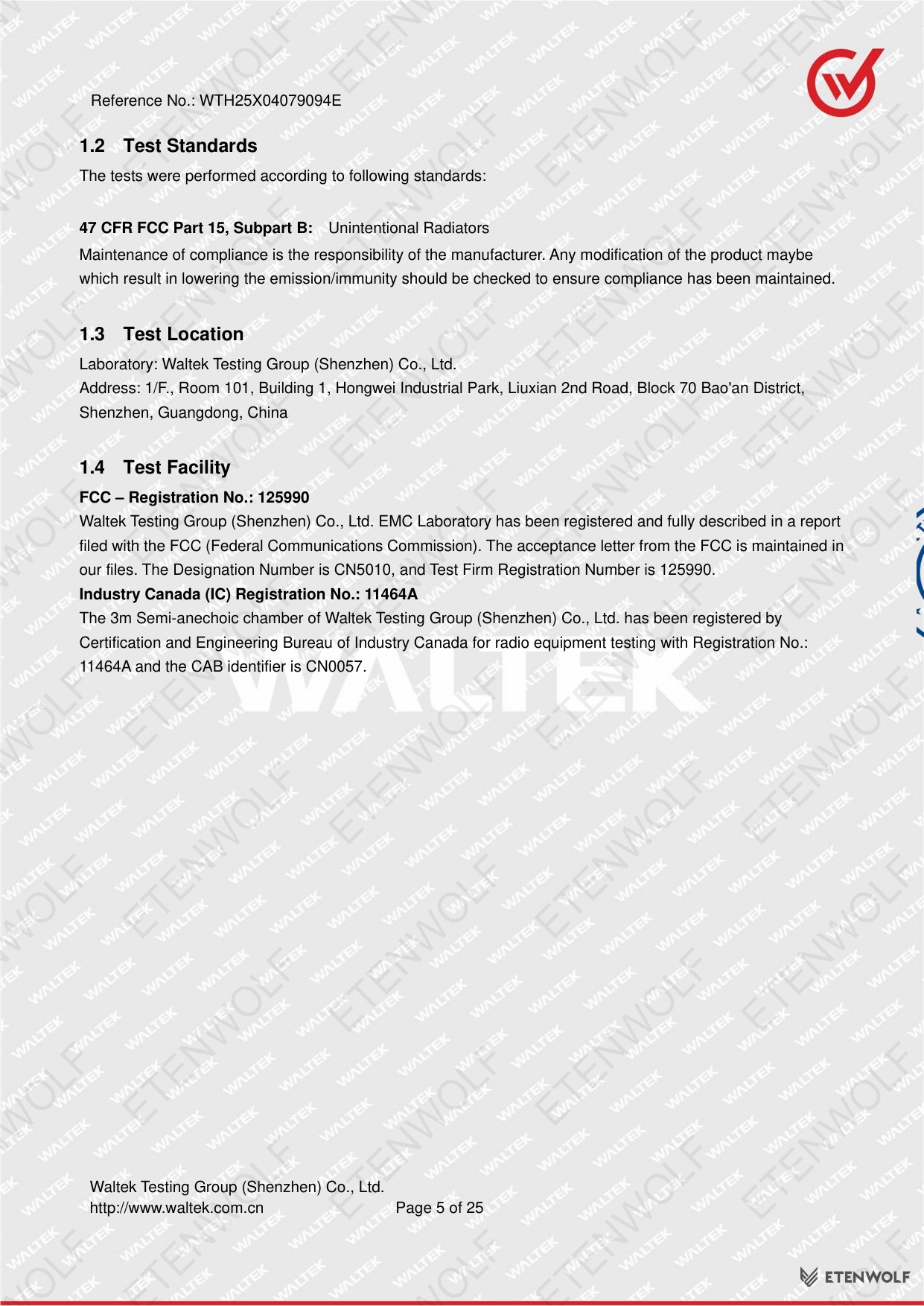
The ETENWOLF S7 inflator pump was evaluated against the following regulatory standard:
Primary Standard
47 CFR FCC Part 15, Subpart B – Technical Requirements for Unintentional Radiators
This regulation establishes limits for electromagnetic emissions from digital devices to prevent harmful interference with radio communications. Part 15, Subpart B specifically addresses devices that contain digital circuitry but do not intentionally emit radio frequency energy.
Key Compliance Requirements
- Conducted Emissions: Limits on radio frequency energy conducted back onto AC power lines, measured in the frequency range 150 kHz to 30 MHz
- Radiated Emissions: Limits on electromagnetic field strength radiated into space, measured at specified distances in the frequency range 30 MHz to 1 GHz
- Class B Limits: Applicable to devices intended for residential use, with more stringent emission limits than Class A (commercial/industrial) devices
Test Methods
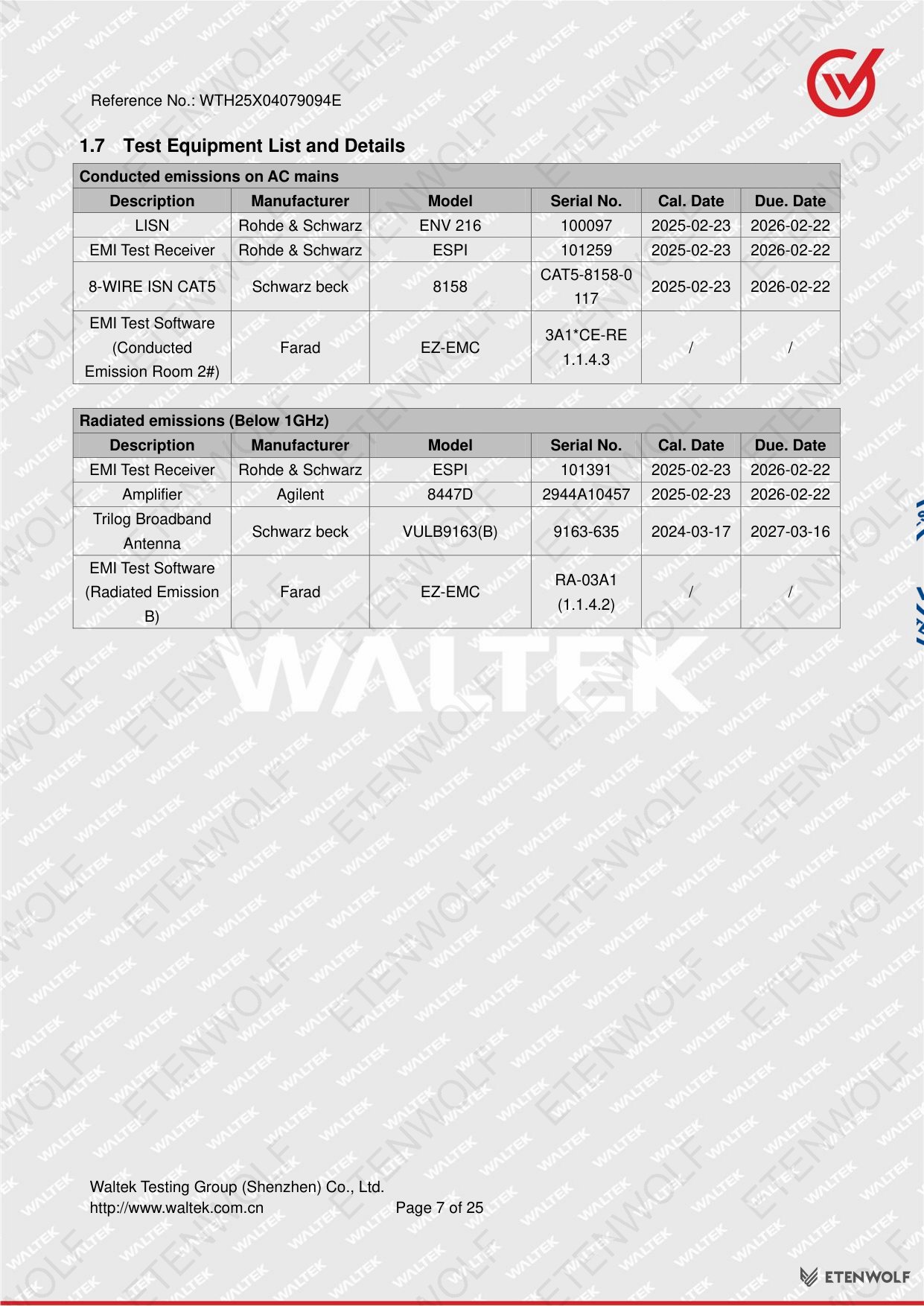
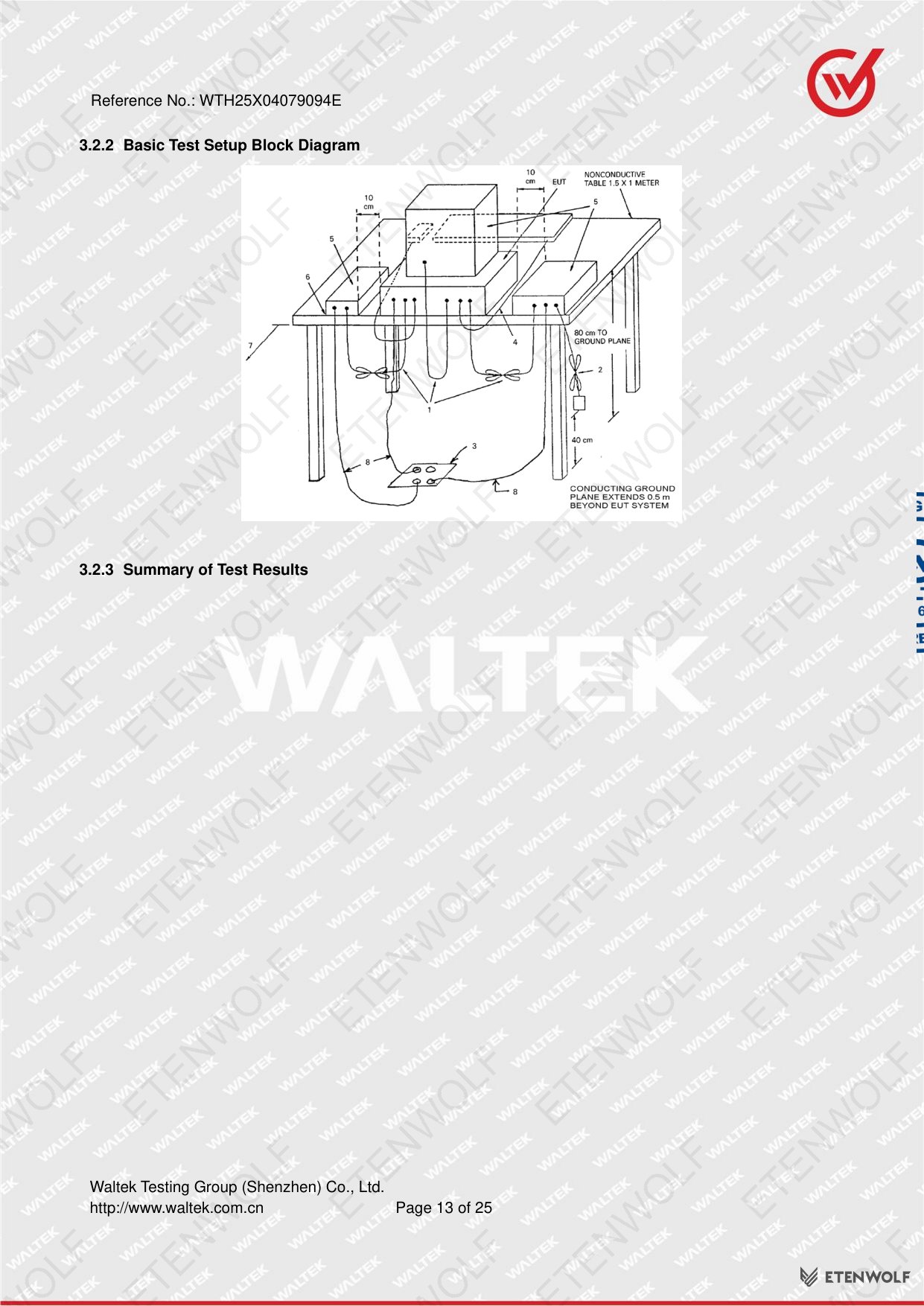
Testing was conducted in accordance with ANSI C63.4 standard measurement procedures, which provide detailed methodologies for evaluating compliance with FCC Part 15 requirements. The test facility utilized calibrated measurement equipment traceable to national standards.
Validity & Certification Body
Testing Laboratory
Laboratory Name: Waltek Testing Group (Shenzhen) Co., Ltd.
Address: 1/F., Room 101, Building 1, Hongwei Industrial Park, Liuxian 2nd Road, Block 70, Bao’an District, Shenzhen, Guangdong, China
Contact Information:
Tel: +86-755-33663308
Fax: +86-755-33663309
Email: [email protected]
Website: www.waltek.com.cn
Test Personnel
Tested by: Toby Zhang, Project Engineer
Approved by: Evan Cai, Manager
Report Validity
This test report is valid as of the issue date (April 10, 2025) and represents the compliance status of the tested sample at the time of evaluation. The report cannot be reproduced except in full without prior written permission from Waltek Testing Group. The report is invalid without the specific stamp of the test institute and signatures of authorized personnel.
Important Note: The test results shown in this report refer only to the specific sample(s) tested. Manufacturers are responsible for ensuring continued compliance of production units through quality control procedures and periodic verification testing.
Frequently Asked Questions
What does FCC Part 15B certification mean for the S7 inflator?
FCC Part 15B certification confirms that the S7 inflator complies with federal regulations limiting electromagnetic emissions from digital devices. This certification is mandatory for legal sale and use of electronic devices in the United States, ensuring the product will not cause harmful interference with radio communications, television reception, or other wireless services.
Is the S7 classified as Class A or Class B device?
Based on the FCC Part 15, Subpart B testing standard applied, the S7 inflator is evaluated as a Class B digital device. Class B devices are intended for residential use and must meet more stringent emission limits than Class A devices (which are designed for commercial or industrial environments). This classification means the S7 is suitable for home use without special installation considerations.
What types of emissions were tested in this certification?
The FCC Part 15B certification evaluated two primary emission categories: (1) Conducted emissions on AC mains, which measures radio frequency energy transmitted back through the power cord into the electrical system (150 kHz to 30 MHz range), and (2) Radiated emissions below 1 GHz, which measures electromagnetic field strength emitted into the surrounding environment (30 MHz to 1 GHz range). Both test categories passed successfully.
How long is this FCC certification valid?
The test report issued on April 10, 2025 (reference number WTH25X04079094E) documents compliance at the time of testing. FCC regulations do not specify an expiration date for certification, but manufacturers must maintain compliance throughout production. Any significant design changes to the S7 model would require re-testing to verify continued compliance with FCC requirements.
Related Documents
For comprehensive compliance documentation of the ETENWOLF S7 tire inflator, consider reviewing these related certification documents:
- CE Certification: European Conformity marking demonstrating compliance with EU safety, health, and environmental protection standards including EMC Directive and Low Voltage Directive
- RoHS Compliance Report: Restriction of Hazardous Substances certification confirming the product meets limits on lead, mercury, cadmium, and other restricted materials
- UN38.3 Battery Testing: If the S7 includes lithium battery components, UN38.3 transportation safety testing documentation for air and ground shipment compliance
- UL Listing: Underwriters Laboratories safety certification for electrical and fire safety evaluation of consumer products
- ISO 9001 Quality Management: Manufacturing facility quality management system certification demonstrating consistent production standards
- KC Certification: Korea Certification for electromagnetic compatibility and safety compliance in South Korean markets
These complementary certifications provide comprehensive documentation of the S7 inflator’s compliance with international safety, environmental, and electromagnetic compatibility standards across global markets.
Document Pages