Document Overview
Document Overview This Material Safety Data Sheet (MSDS) was issued by Waltek Testing Group Co., Ltd. on April 27, 2025, for a lithium-ion battery pack manufactured by Guangdong Bestek Technology Co., LTD. The document provides comprehensive safety information, chemical composition details, and emergency response procedures…
- Document type
- Certification Report
- Prepared by
- Michelle Torres
- Published
- Last reviewed
- Topics
- International Transportation: CB / MSDS / UN38.3
Document Overview
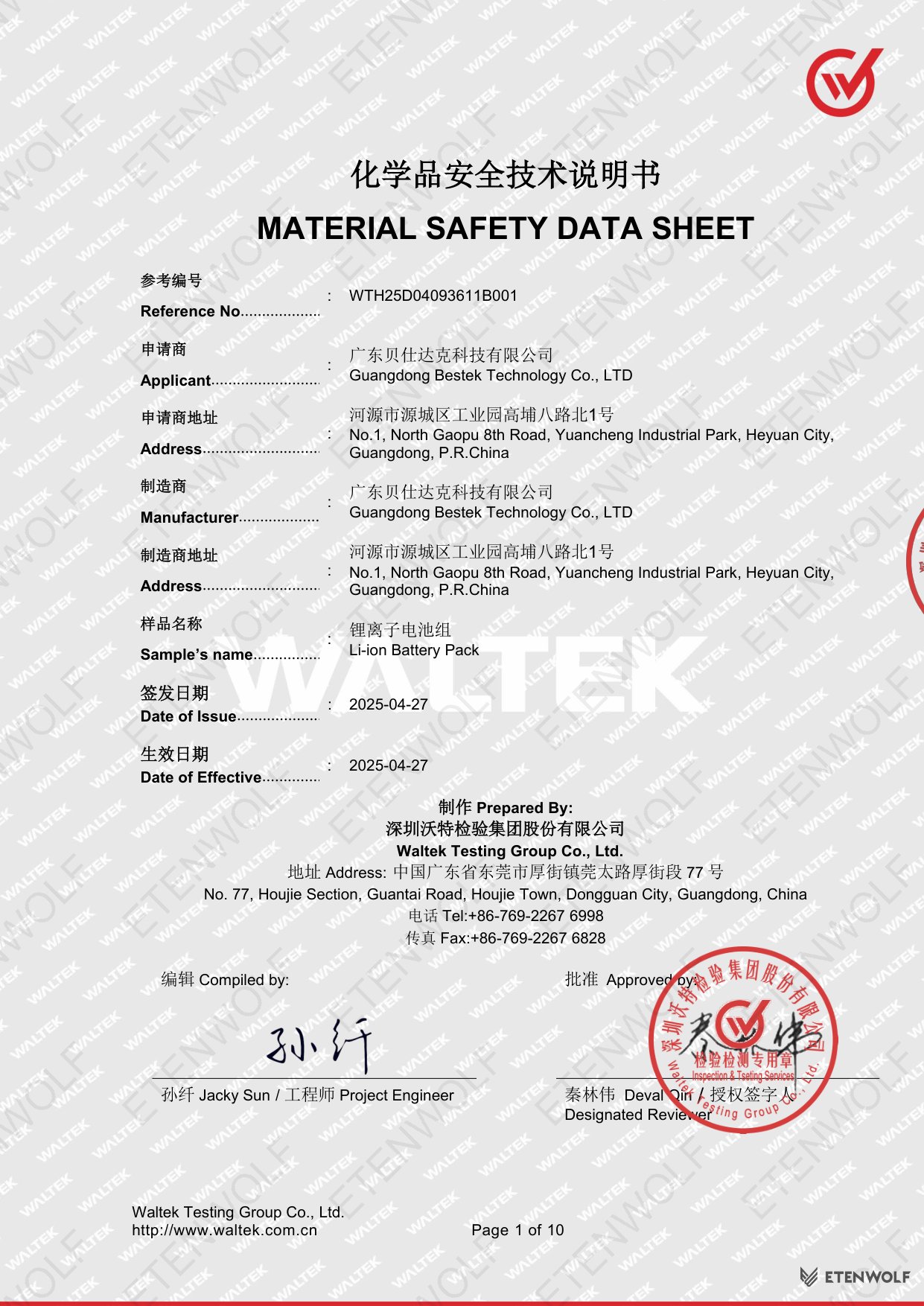
This Material Safety Data Sheet (MSDS) was issued by Waltek Testing Group Co., Ltd. on April 27, 2025, for a lithium-ion battery pack manufactured by Guangdong Bestek Technology Co., LTD. The document provides comprehensive safety information, chemical composition details, and emergency response procedures for the 1S1P-1500 battery model.
Reference Number: WTH25D04093611B001
Document Type: Material Safety Data Sheet (MSDS)
Issue Date: 2025-04-27
Effective Date: 2025-04-27
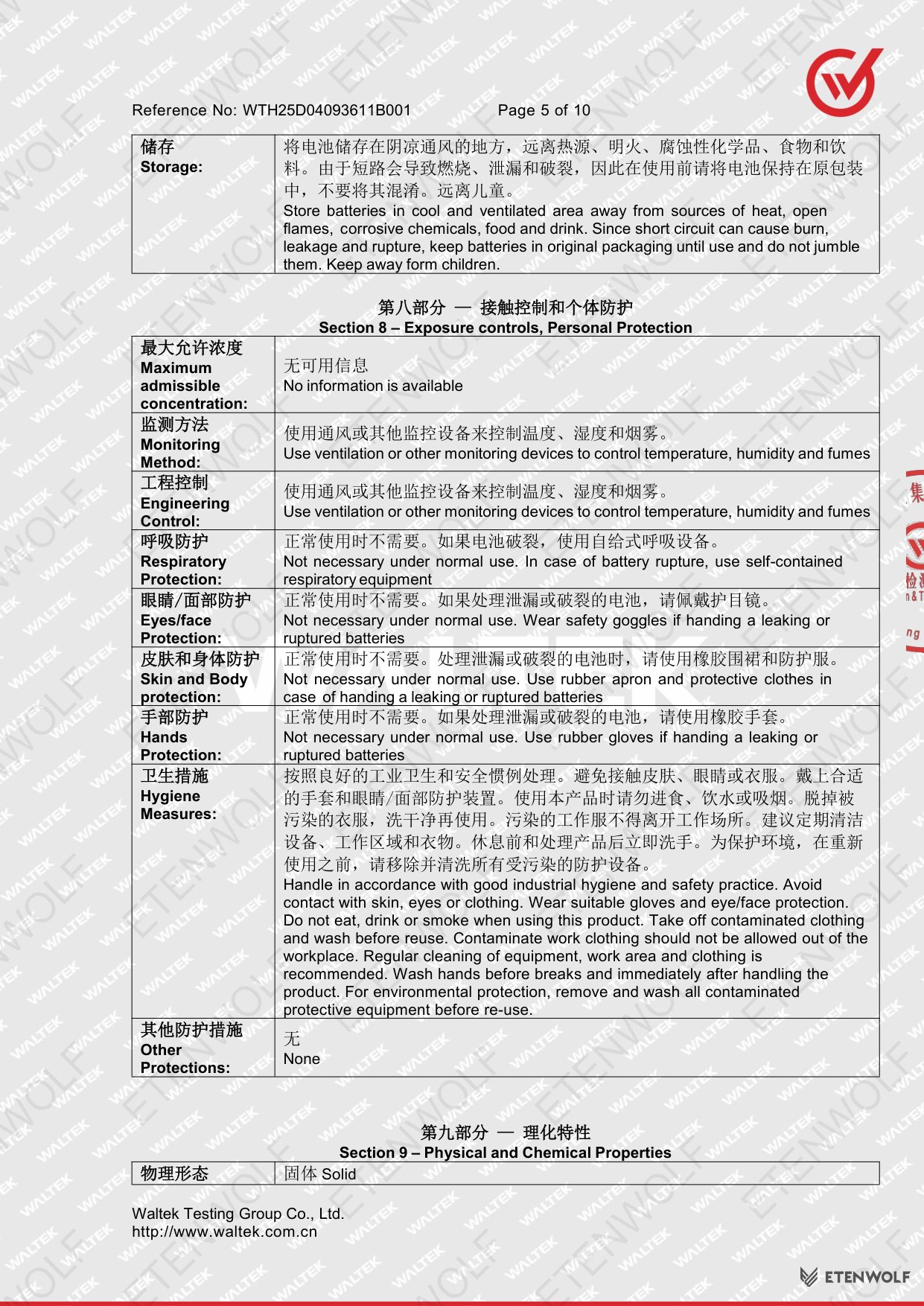
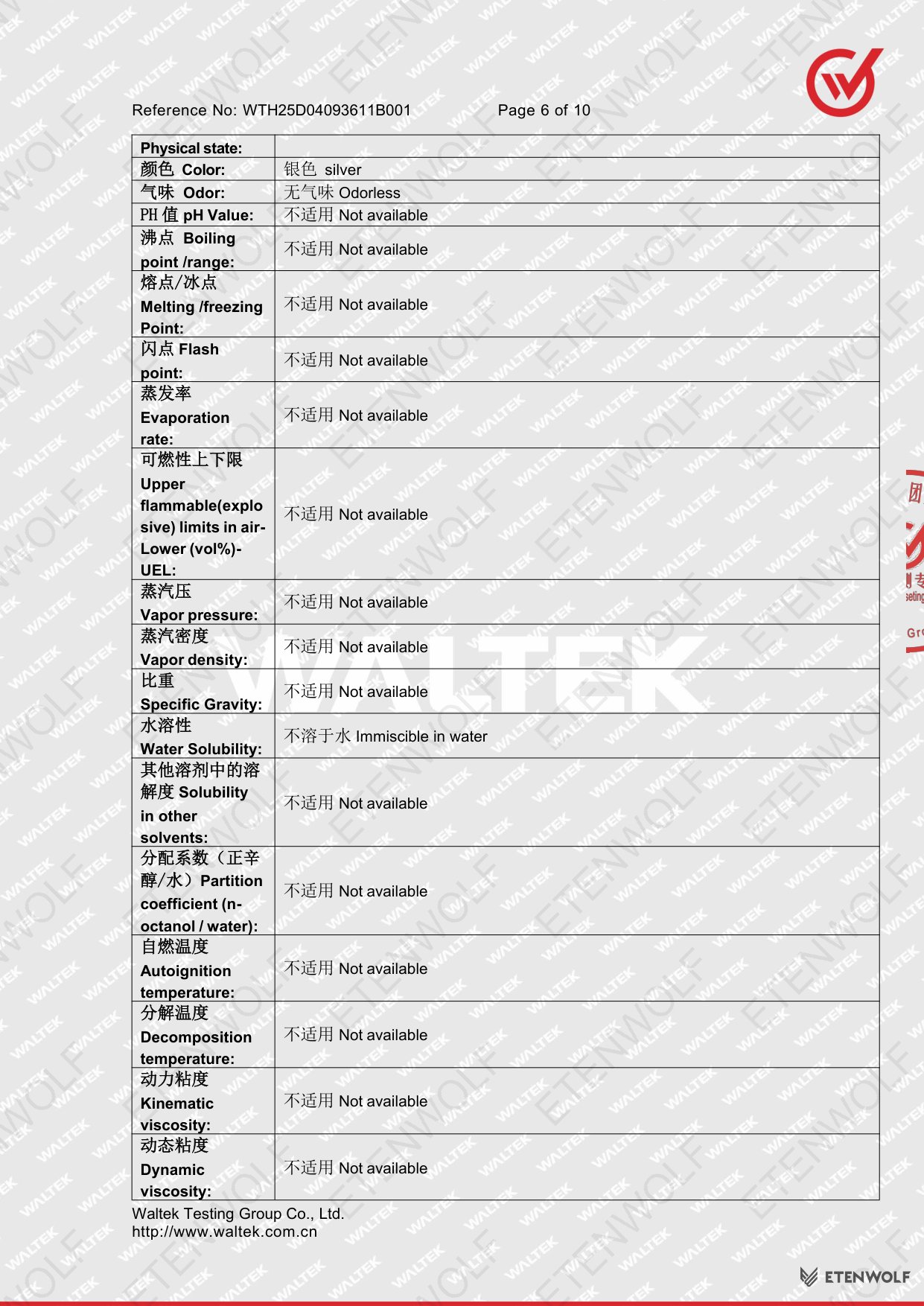
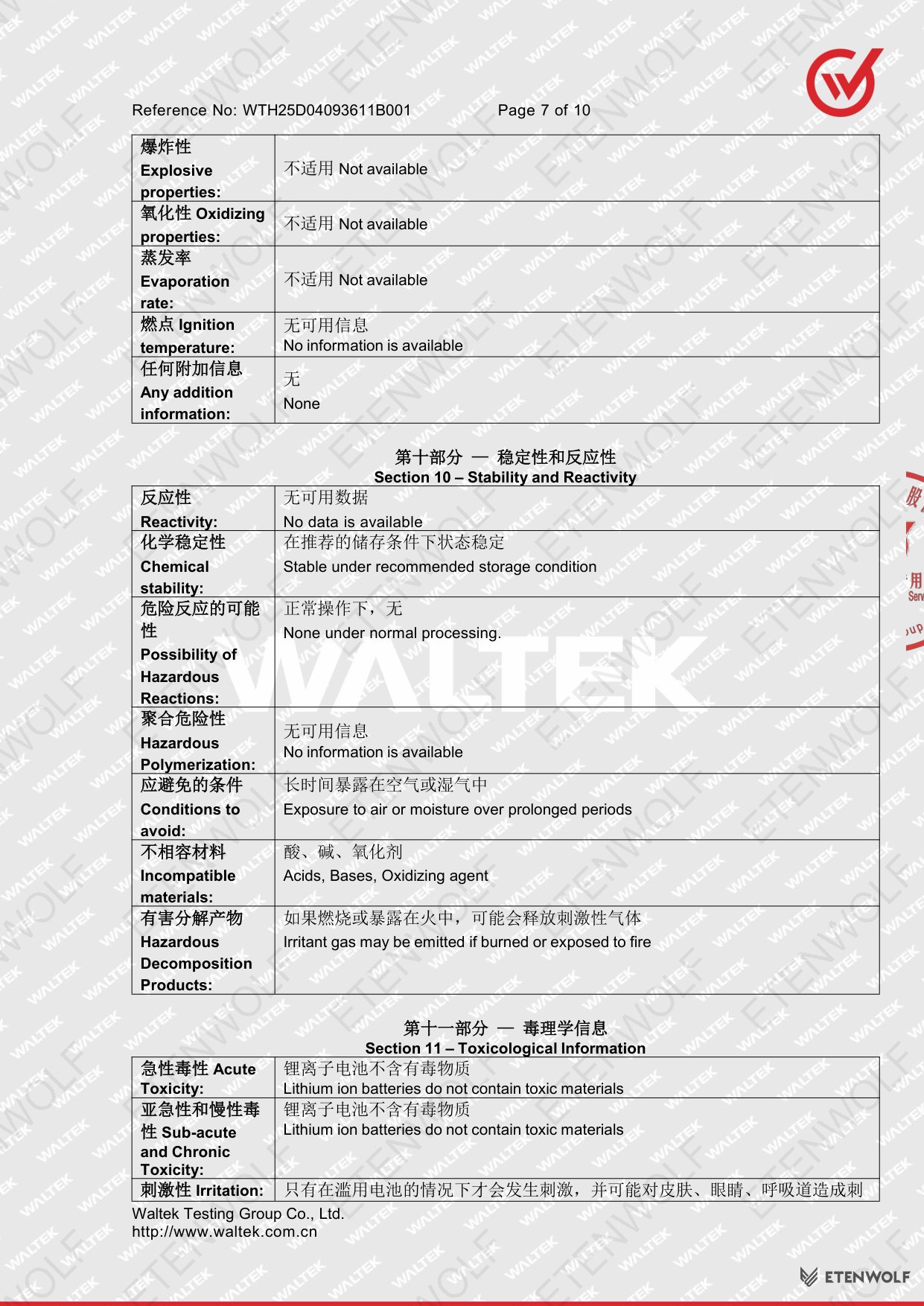
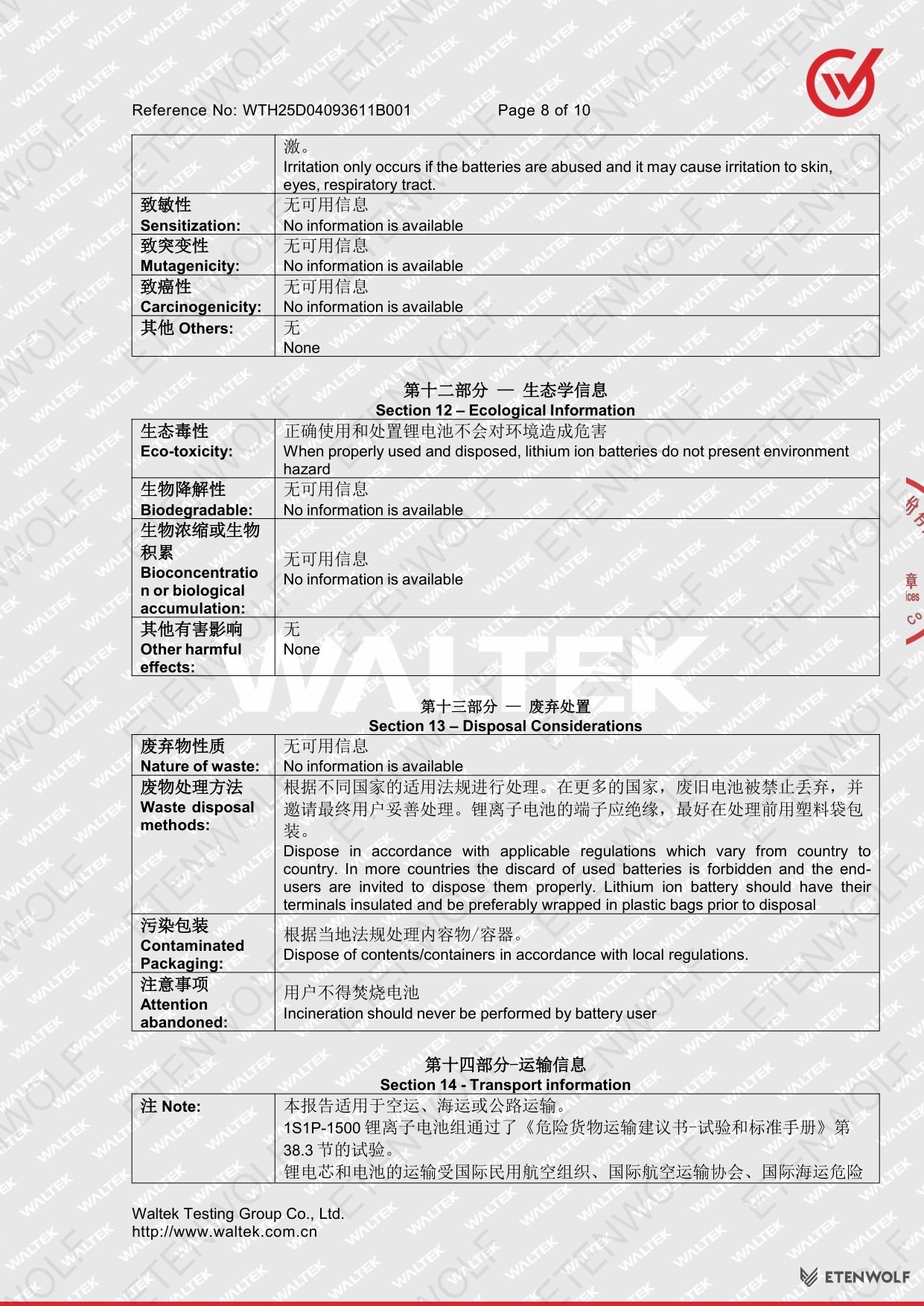
Scope: This MSDS covers the safe handling, storage, and emergency response procedures for the lithium-ion battery pack under normal and abnormal conditions.
Product Information
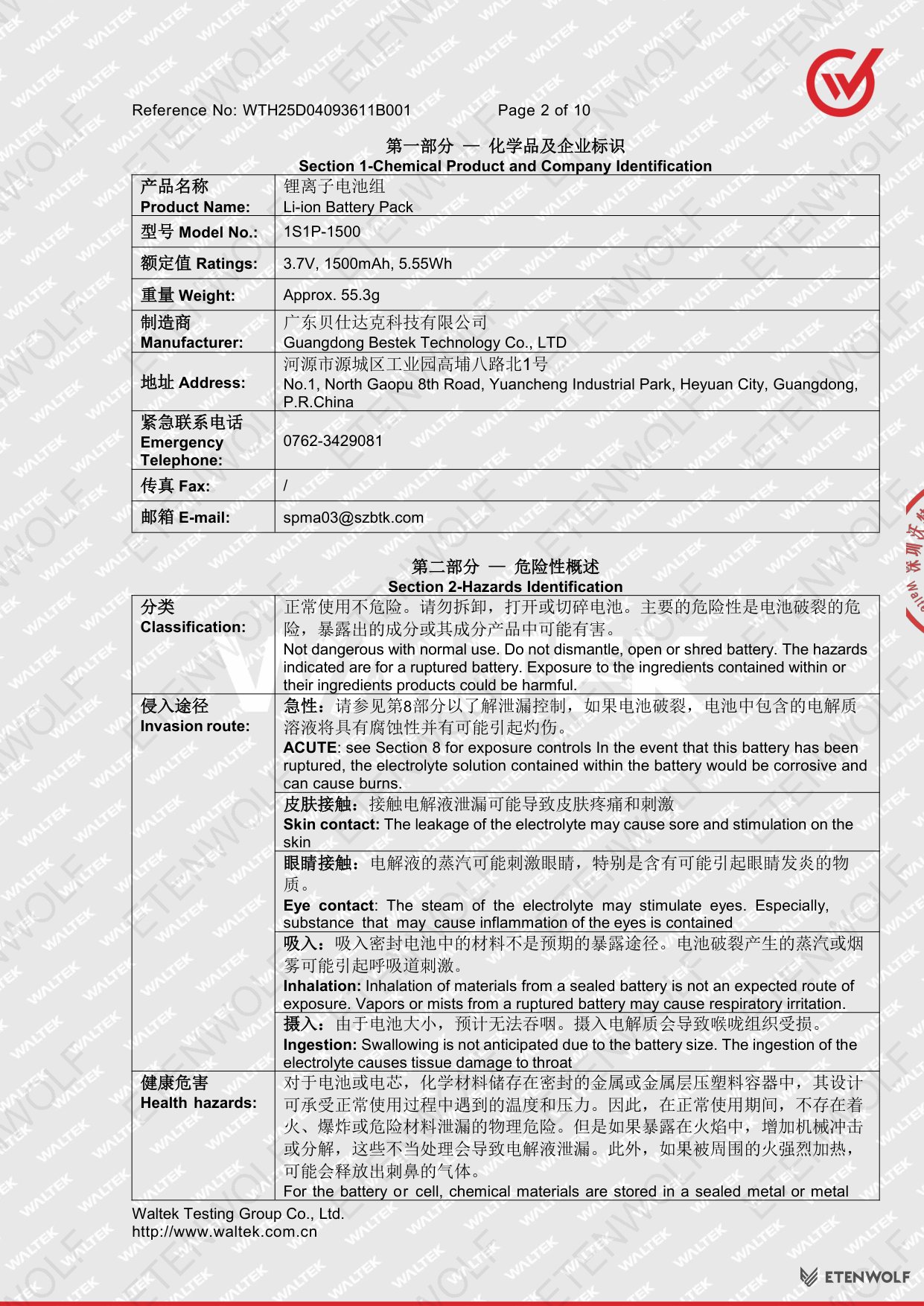
Product Name: Li-ion Battery Pack
Model Number: 1S1P-1500
Rated Specifications:
- Voltage: 3.7V
- Capacity: 1500mAh
- Energy: 5.55Wh
- Weight: Approximately 55.3g
Manufacturer: Guangdong Bestek Technology Co., LTD
Manufacturing Address: No.1, North Gaopu 8th Road, Yuancheng Industrial Park, Heyuan City, Guangdong, P.R.China
Emergency Contact: 0762-3429081
Email: [email protected]
The battery is designed as a sealed unit containing chemical materials in a metal or metal-laminated plastic case, engineered to withstand temperatures and pressures encountered during normal use.
Key Details
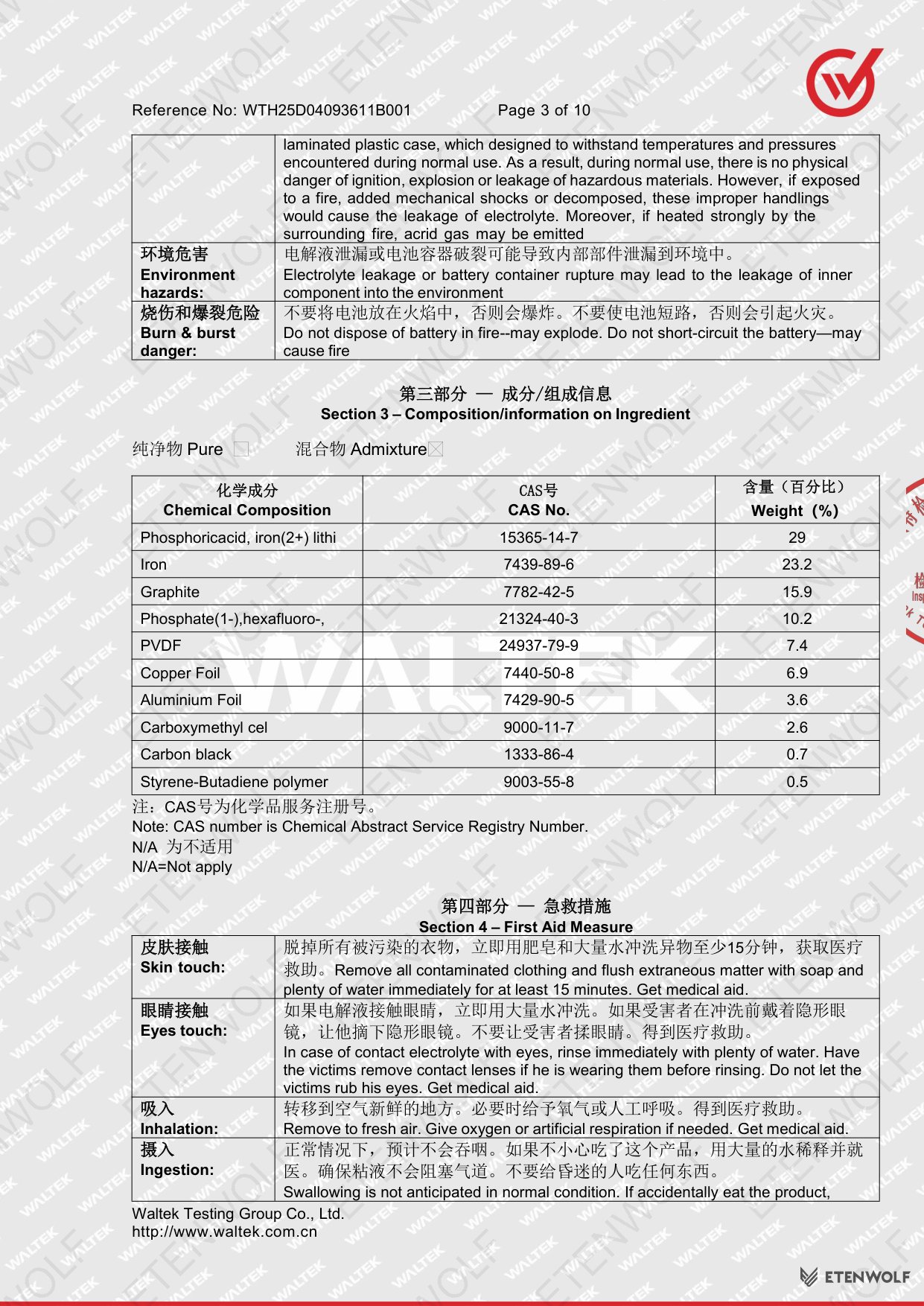
| Chemical Component | CAS Number | Weight Percentage |
|---|---|---|
| Phosphoric acid, iron(2+) lithium | 15365-14-7 | 29% |
| Iron | 7439-89-6 | 23.2% |
| Graphite | 7782-42-5 | 15.9% |
| Phosphate(1-), hexafluoro- | 21324-40-3 | 10.2% |
| PVDF (Polyvinylidene fluoride) | 24937-79-9 | 7.4% |
| Copper Foil | 7440-50-8 | 6.9% |
| Aluminium Foil | 7429-90-5 | 3.6% |
| Carboxymethyl cellulose | 9000-11-7 | 2.6% |
| Carbon black | 1333-86-4 | 0.7% |
| Styrene-Butadiene polymer | 9003-55-8 | 0.5% |
Hazard Identification:
Under normal use conditions, the battery is not dangerous. The primary hazards arise only if the battery is ruptured, exposing internal components. Chemical materials are stored in a sealed container designed to withstand normal operating conditions, preventing fire, explosion, or hazardous material leakage during proper use.
Potential Hazards if Battery is Ruptured:
- Skin Contact: Electrolyte leakage may cause pain and skin irritation
- Eye Contact: Electrolyte vapors may irritate eyes and potentially cause inflammation
- Inhalation: Vapors or mists from a ruptured battery may cause respiratory irritation
- Ingestion: Electrolyte ingestion causes tissue damage to throat
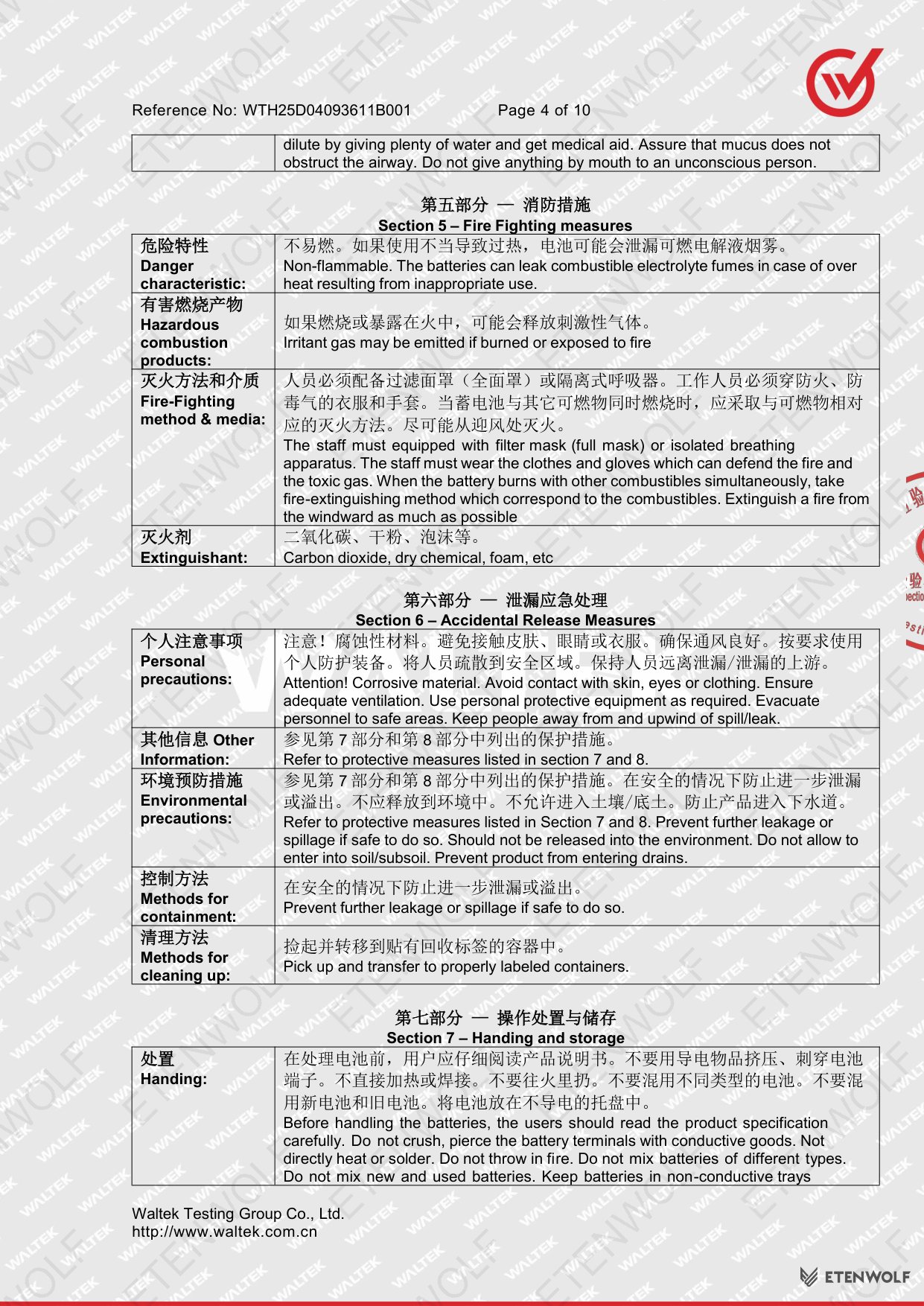
- Fire Hazard: Do not dispose of battery in fire as it may explode
- Short Circuit: Do not short-circuit the battery as it may cause fire
Standards & Compliance
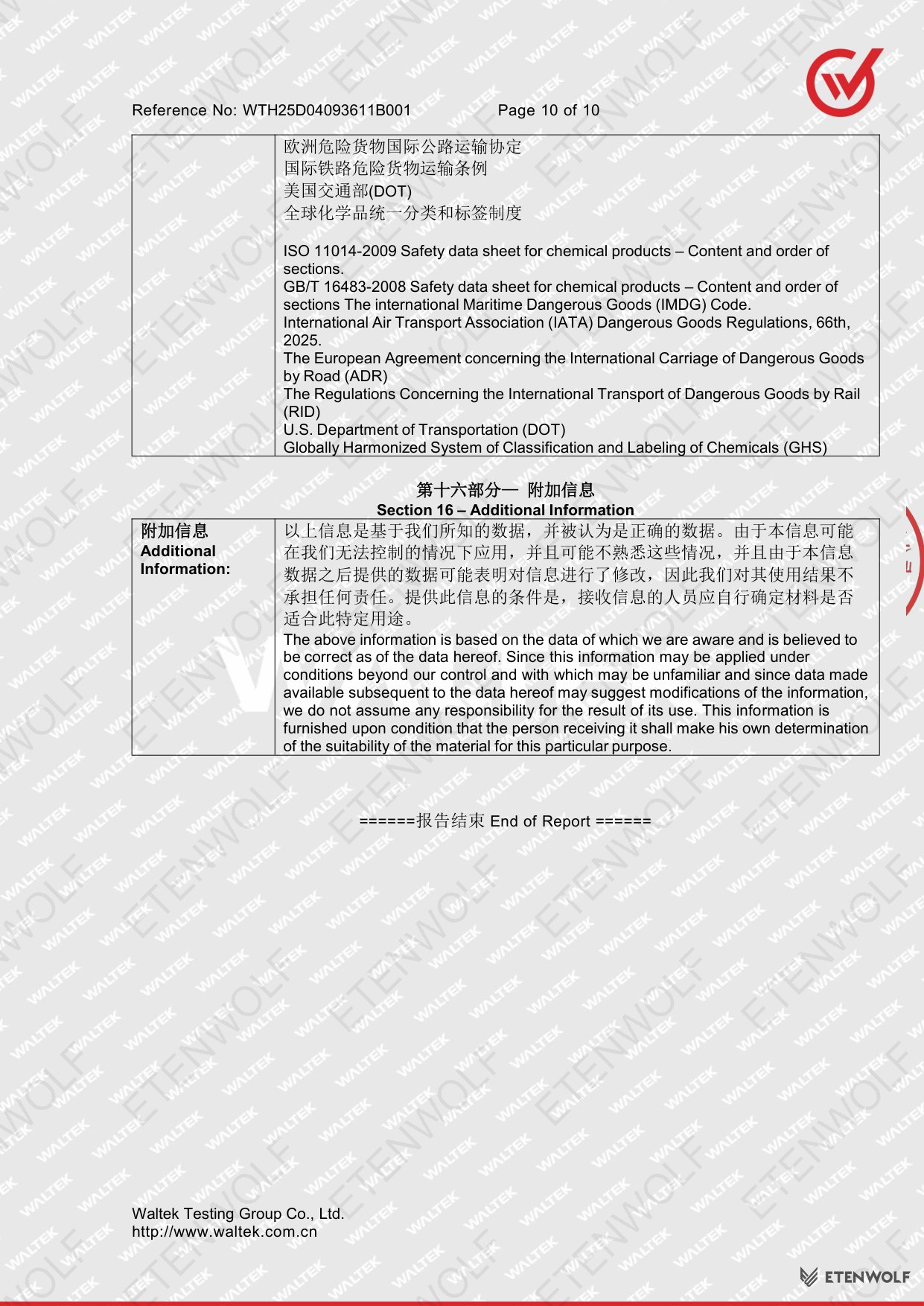
This Material Safety Data Sheet has been prepared in accordance with international chemical safety standards and regulations. The document follows MSDS formatting guidelines established by chemical safety authorities worldwide.
Related Testing Standards:
While this is an MSDS document, lithium-ion batteries like the 1S1P-1500 model are typically also tested according to:
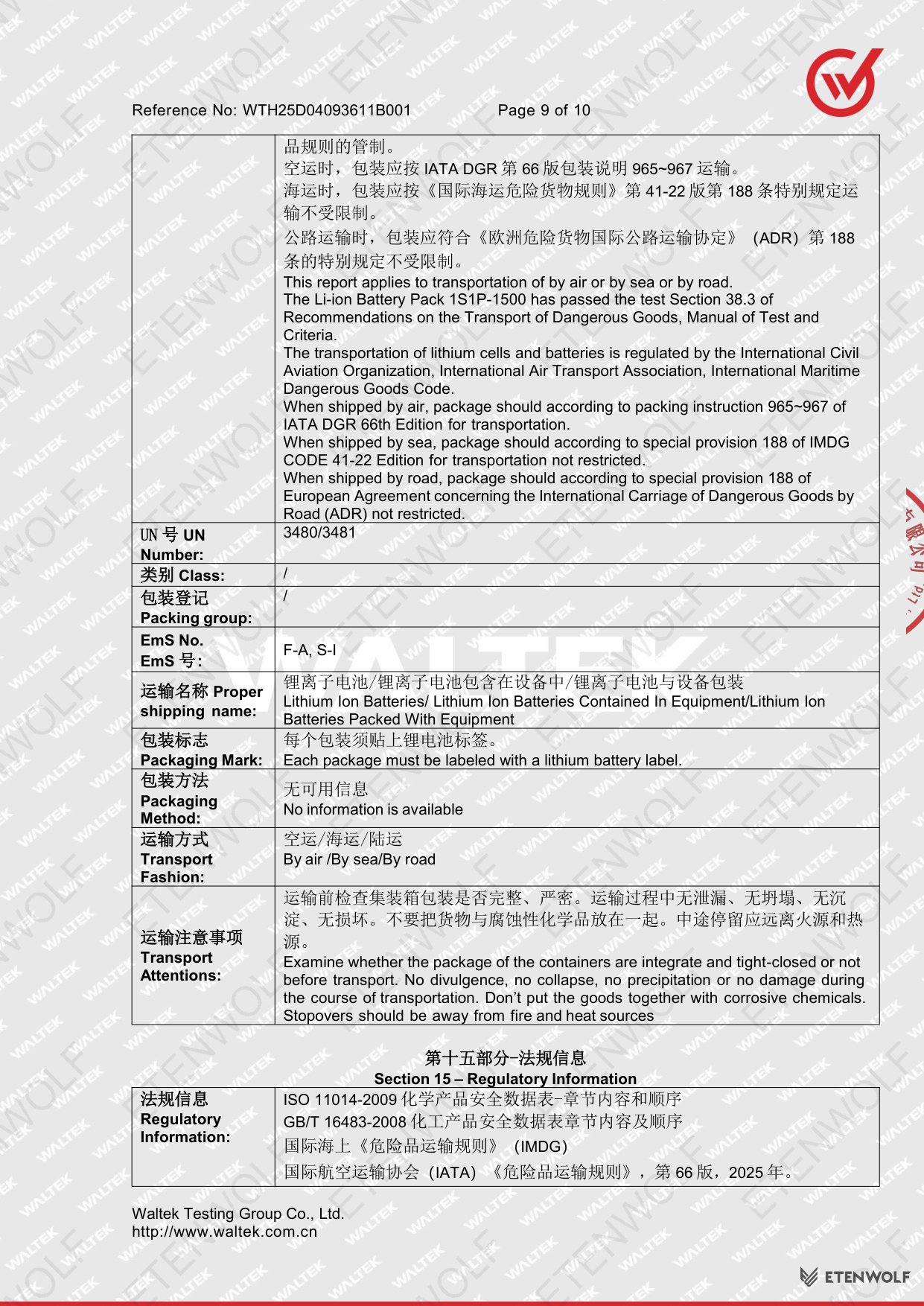
- UN38.3 – UN Recommendations on the Transport of Dangerous Goods, Manual of Tests and Criteria for lithium battery transport safety
- IEC 62133 – Safety requirements for portable sealed secondary cells and batteries
- ISO standards for battery safety and performance
First Aid Measures:
- Skin Contact: Remove contaminated clothing immediately and flush affected area with soap and plenty of water for at least 15 minutes. Seek medical attention.
- Eye Contact: If electrolyte contacts eyes, flush immediately with plenty of water. Remove contact lenses if worn before flushing. Continue flushing for at least 15 minutes and seek immediate medical attention.
Validity & Certification Body
Testing Laboratory: Waltek Testing Group Co., Ltd.
Laboratory Address: No. 77, Houjie Section, Guantai Road, Houjie Town, Dongguan City, Guangdong, China
Contact Information:
- Tel: +86-769-2267 6998
- Fax: +86-769-2267 6828
- Website: http://www.waltek.com.cn
Document Validity:
- Issue Date: April 27, 2025
- Effective Date: April 27, 2025
- Status: Active safety data sheet for current production
Document Prepared By: Jacky Sun, Project Engineer
Document Approved By: Deval Qin, Designated Reviewer
Waltek Testing Group Co., Ltd. is an accredited testing laboratory providing comprehensive safety testing and certification services for batteries and electronic products. The company maintains certifications and qualifications to issue MSDS documents in compliance with international chemical safety regulations.
Frequently Asked Questions
Is the 1S1P-1500 battery safe to use under normal conditions?
Yes, the battery is completely safe under normal use conditions. The chemical materials are stored in a sealed metal or metal-laminated plastic case designed to withstand temperatures and pressures encountered during normal use. There is no physical danger of ignition, explosion, or leakage of hazardous materials during proper use.
What should I do if the battery is damaged or leaking?
If the battery is ruptured and electrolyte leaks, avoid direct contact with skin and eyes. If skin contact occurs, immediately remove contaminated clothing and flush with soap and water for at least 15 minutes. If electrolyte contacts eyes, flush immediately with plenty of water for at least 15 minutes and seek medical attention. Do not attempt to use a damaged battery and dispose of it properly according to local regulations.
What are the main chemical components in this battery?
The battery contains lithium iron phosphate (29%), iron (23.2%), graphite (15.9%), hexafluorophosphate (10.2%), PVDF (7.4%), copper foil (6.9%), aluminum foil (3.6%), and other materials. All components are safely contained within the sealed battery case during normal operation.
Can this battery be disposed of in regular trash or fire?
No, never dispose of the battery in fire as it may explode. Do not place in regular trash. Lithium-ion batteries must be recycled or disposed of according to local regulations for hazardous materials. Contact your local waste management authority or battery recycling facility for proper disposal procedures.
Related Documents
For comprehensive product certification and safety documentation for the 1S1P-1500 battery pack, the following related certification documents may be relevant:
- UN38.3 Test Report – Transportation safety testing for lithium batteries including altitude simulation, thermal testing, vibration, shock, external short circuit, impact, overcharge, and forced discharge tests
- IEC 62133 Certificate – Safety certification for portable sealed secondary cells and batteries for use in portable applications
- CE Marking Documentation – European conformity certification demonstrating compliance with health, safety, and environmental protection standards
- FCC Certification – Federal Communications Commission certification for electromagnetic compatibility if the battery is used in communication devices
- KC Certification – Korean safety certification for products sold in the Republic of Korea market
- RoHS Compliance Report – Restriction of Hazardous Substances directive compliance documentation
- REACH Declaration – Registration, Evaluation, Authorization and Restriction of Chemicals compliance for European market
- Battery Performance Test Report – Detailed testing data for capacity, cycle life, charge/discharge characteristics, and temperature performance
These complementary documents provide complete certification coverage for manufacturing, transportation, sale, and use of the battery pack in different global markets.
Document Pages