Document Overview
Document Overview This page presents the official FCC electromagnetic compatibility (EMC) test report issued for the ETENWOLF L1 Mini Torch. The document is a formal test report — not a certificate — prepared by Waltek Testing Group HCT (Shenzhen) Co., Ltd., an accredited third-party testing…
- Document type
- Certification Report
- Prepared by
- Michelle Torres
- Published
- Last reviewed
- Topics
- Lighting Gear
Document Overview
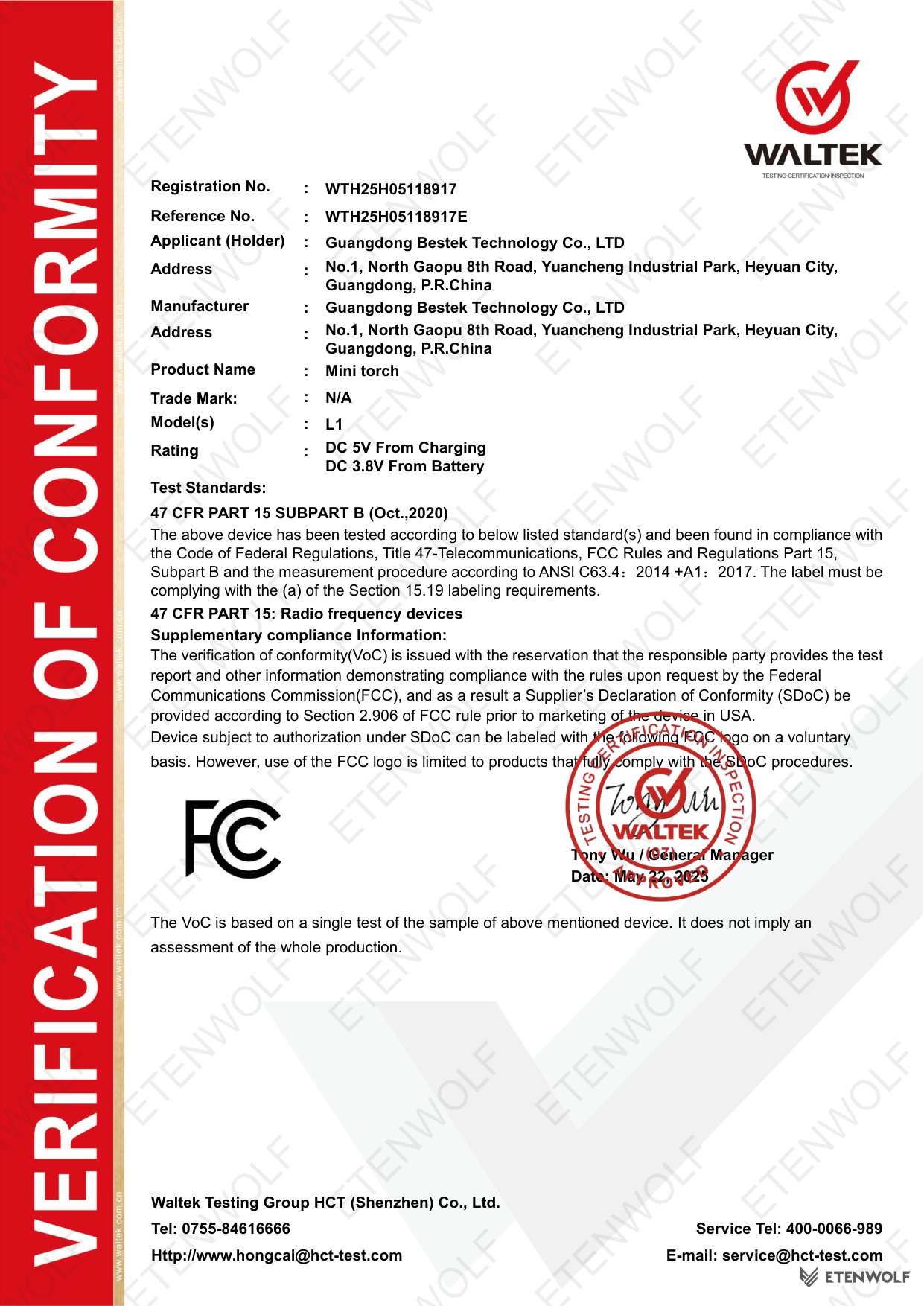
This page presents the official FCC electromagnetic compatibility (EMC) test report issued for the ETENWOLF L1 Mini Torch. The document is a formal test report — not a certificate — prepared by Waltek Testing Group HCT (Shenzhen) Co., Ltd., an accredited third-party testing laboratory located in Longgang District, Shenzhen, Guangdong, China.
| Field | Detail |
|---|---|
| Document Type | FCC EMC Test Report |
| Reference Number | WTH25H05118917E |
| TRF Form Number | TRF FCC CFR 47 Part 15 Subpart B-EMC-001-V01 |
| Internal Lab Reference | HCT/RF-23-21 |
| Issuing Laboratory | Waltek Testing Group HCT (Shenzhen) Co., Ltd. |
| Date of Issue | 2025-05-22 |
| Test Specification | FCC CFR 47 Part 15 Subpart B |
| Overall Test Result | Pass |
Product Information
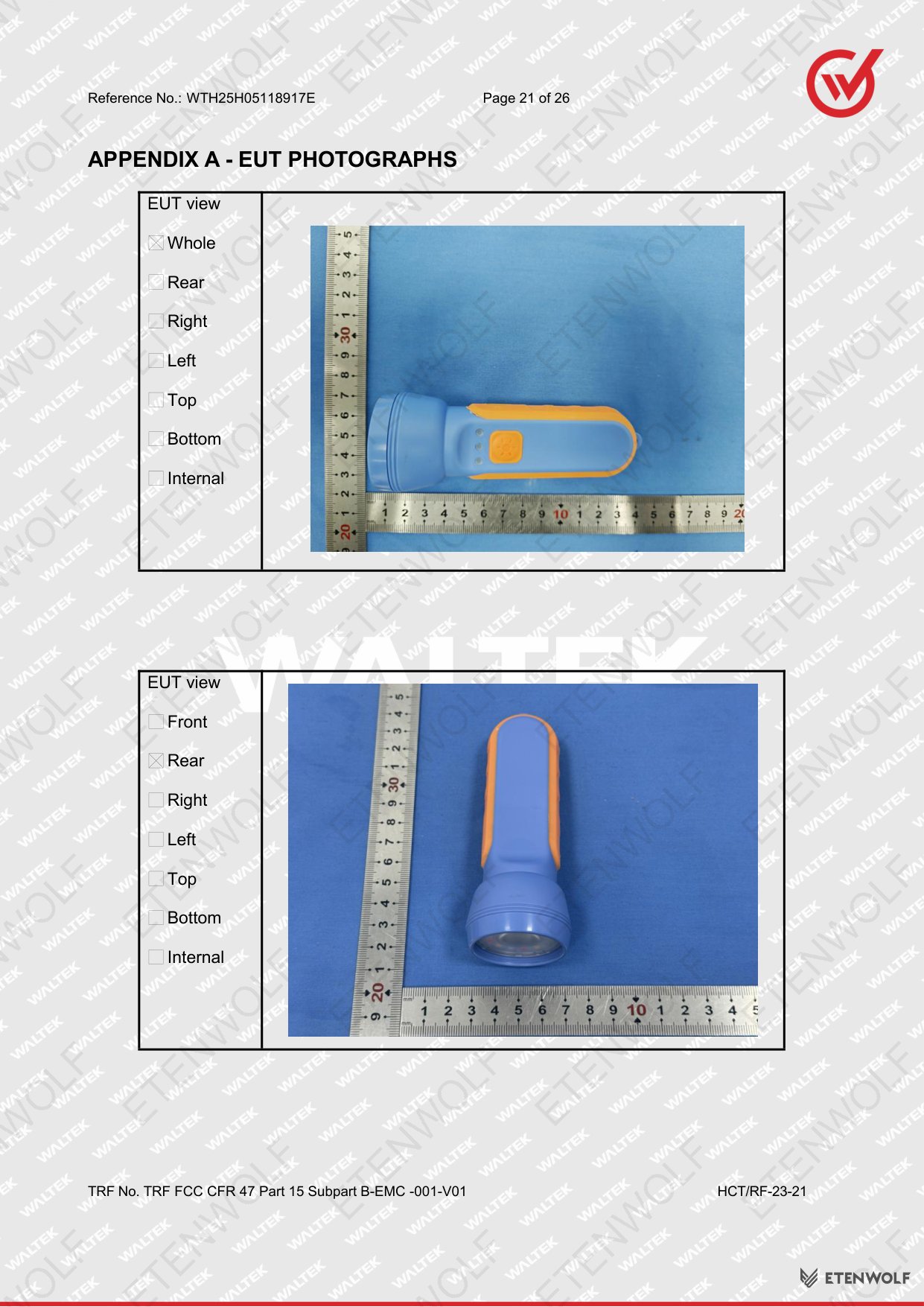
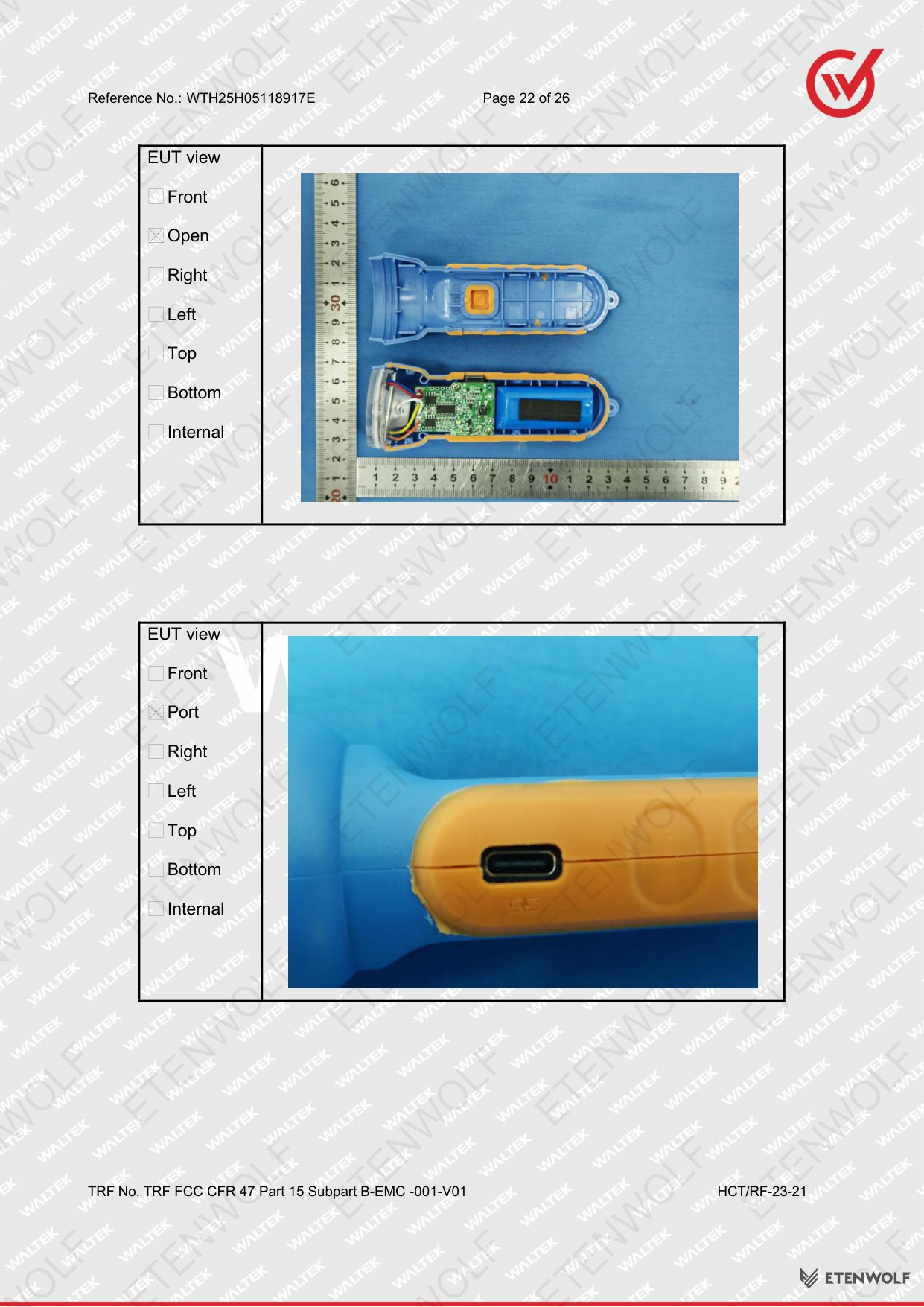
The equipment under test (EUT) is the ETENWOLF L1 Mini Torch, a compact lighting device manufactured and supplied by Guangdong Bestek Technology Co., Ltd. The product is marketed globally under the ETENWOLF brand as part of its portable lighting gear lineup.
| Attribute | Value |
|---|---|
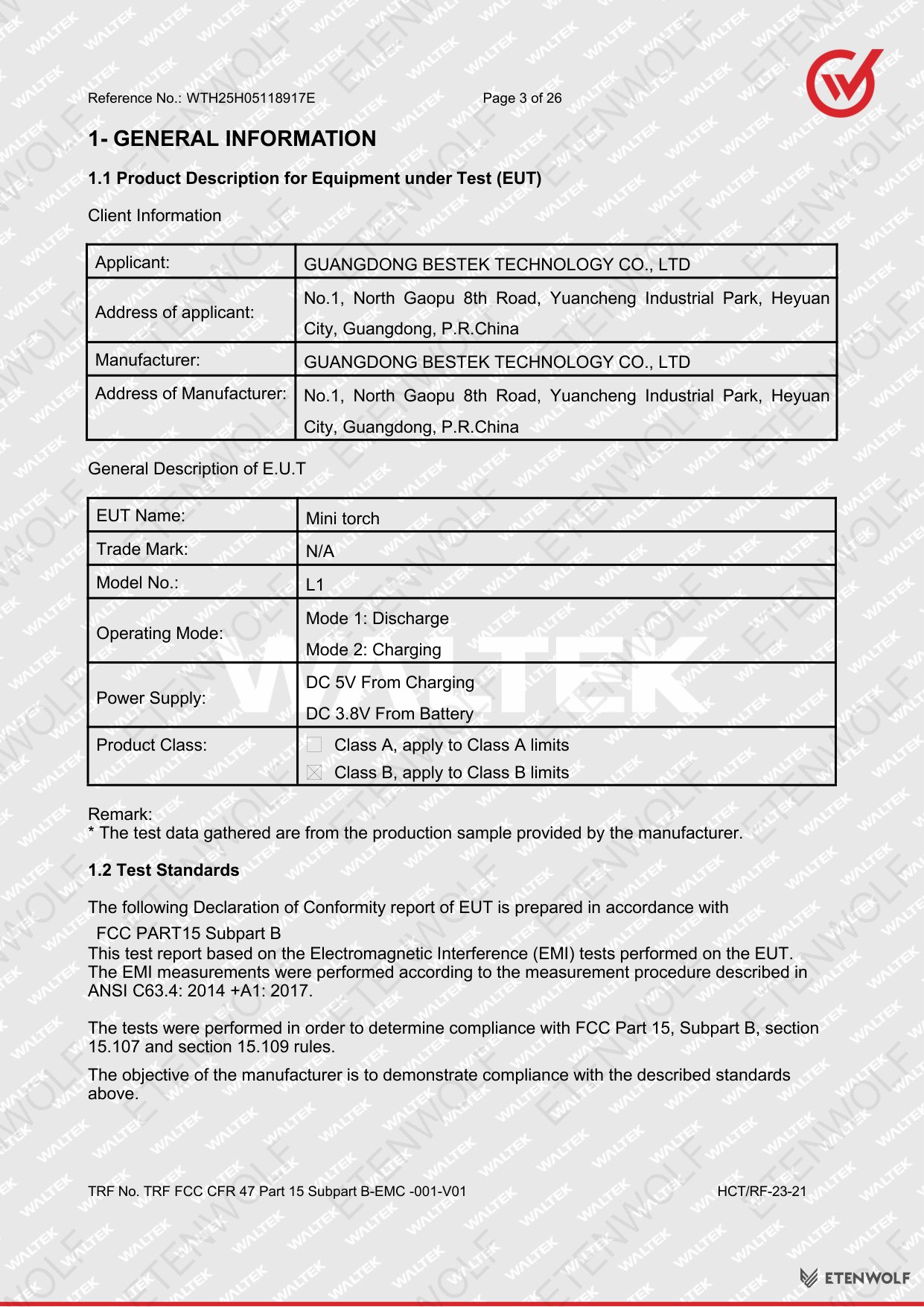
| EUT Name | Mini Torch |
| Model Number | L1 |
| Trade Mark | N/A |
| Applicant | GUANGDONG BESTEK TECHNOLOGY CO., LTD |
| Manufacturer | GUANGDONG BESTEK TECHNOLOGY CO., LTD |
| Manufacturer Address | No.1, North Gaopu 8th Road, Yuancheng Industrial Park, Heyuan City, Guangdong, P.R. China |
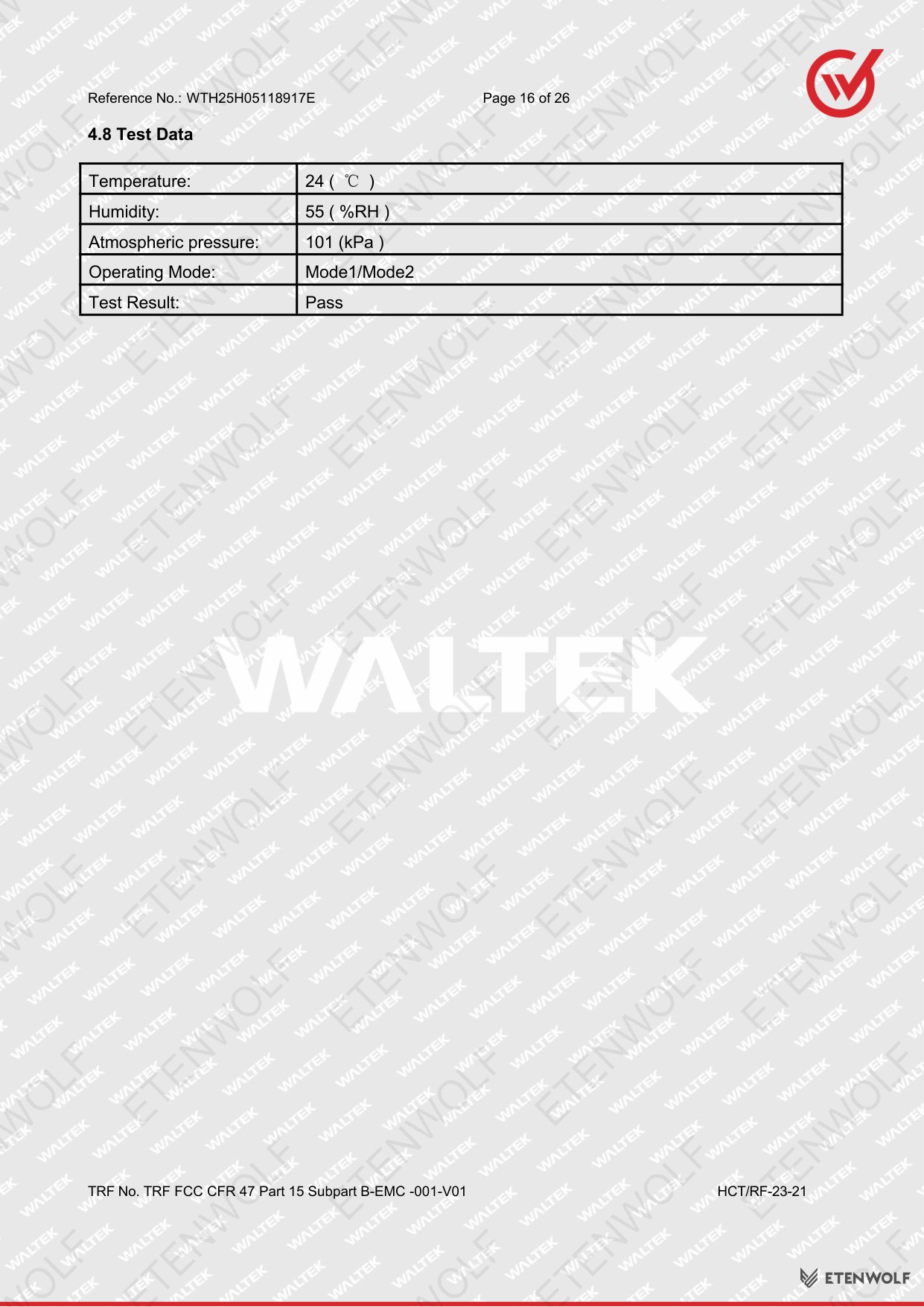
| Operating Mode 1 | Discharge |
| Operating Mode 2 | Charge |
The L1 Mini Torch is designed as a lightweight, portable illumination tool. Its dual operating modes — discharge (active light output) and charge (battery replenishment) — were both evaluated as part of the EMC testing scope to ensure emissions compliance across all functional states.
Key Details
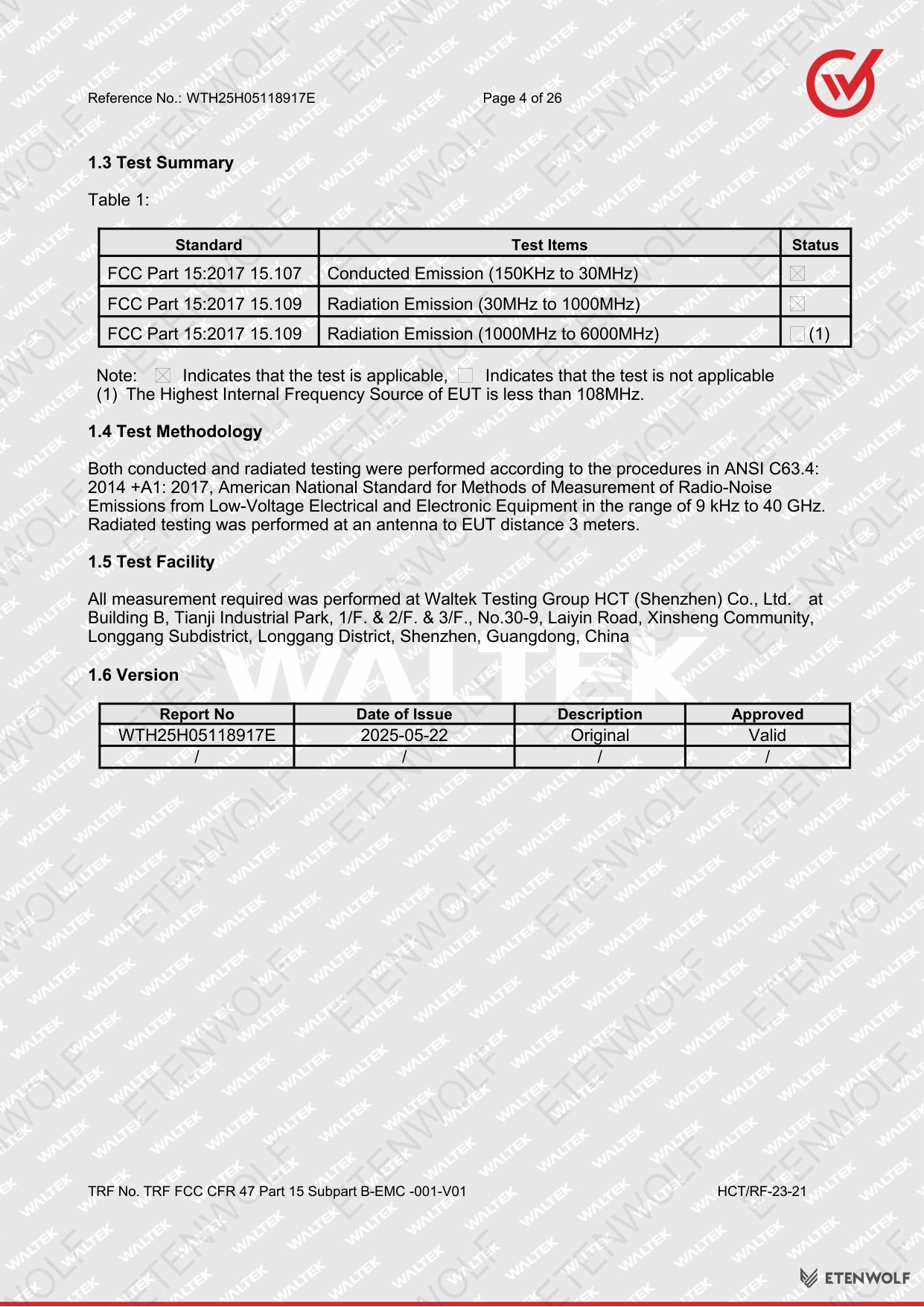
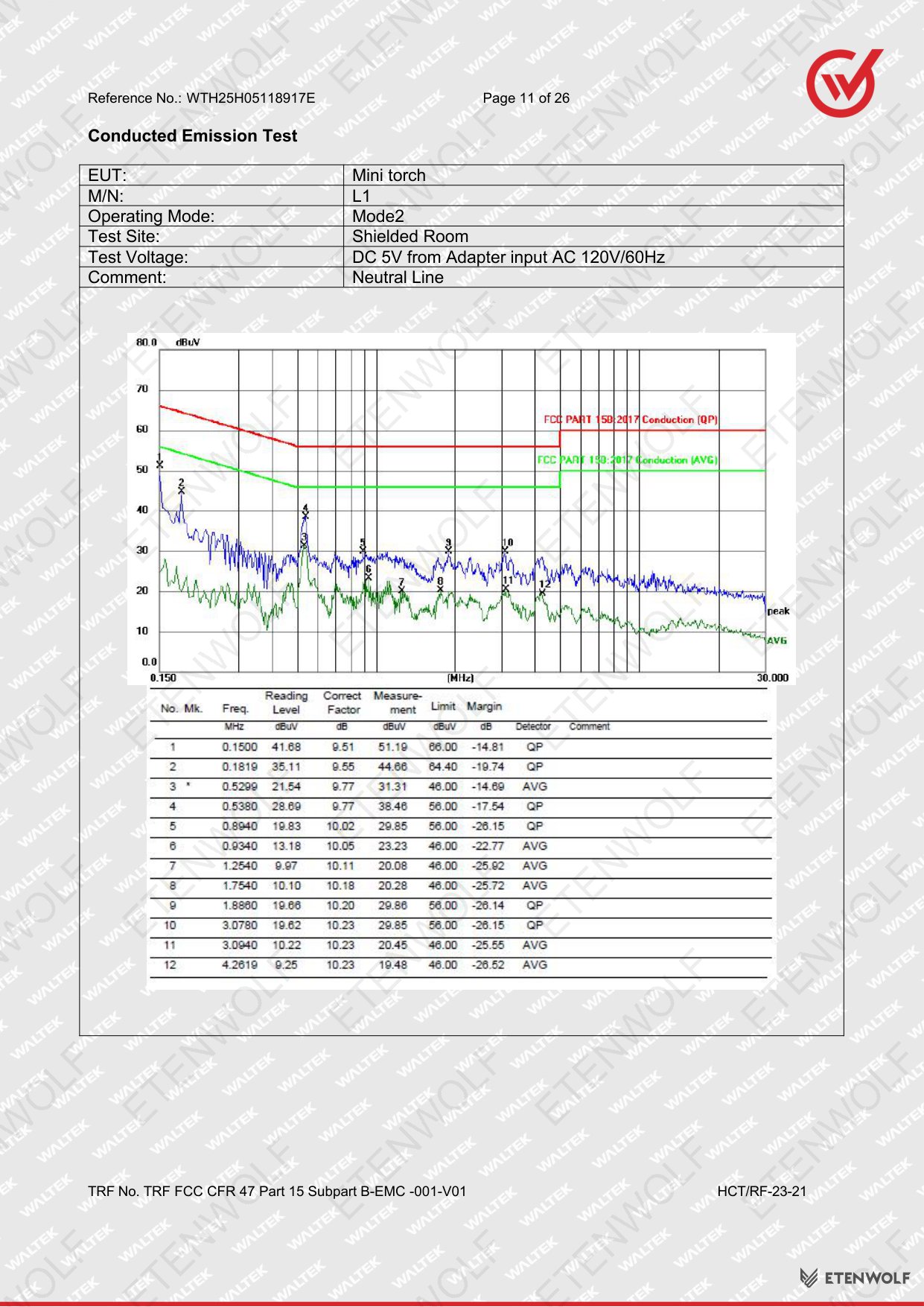
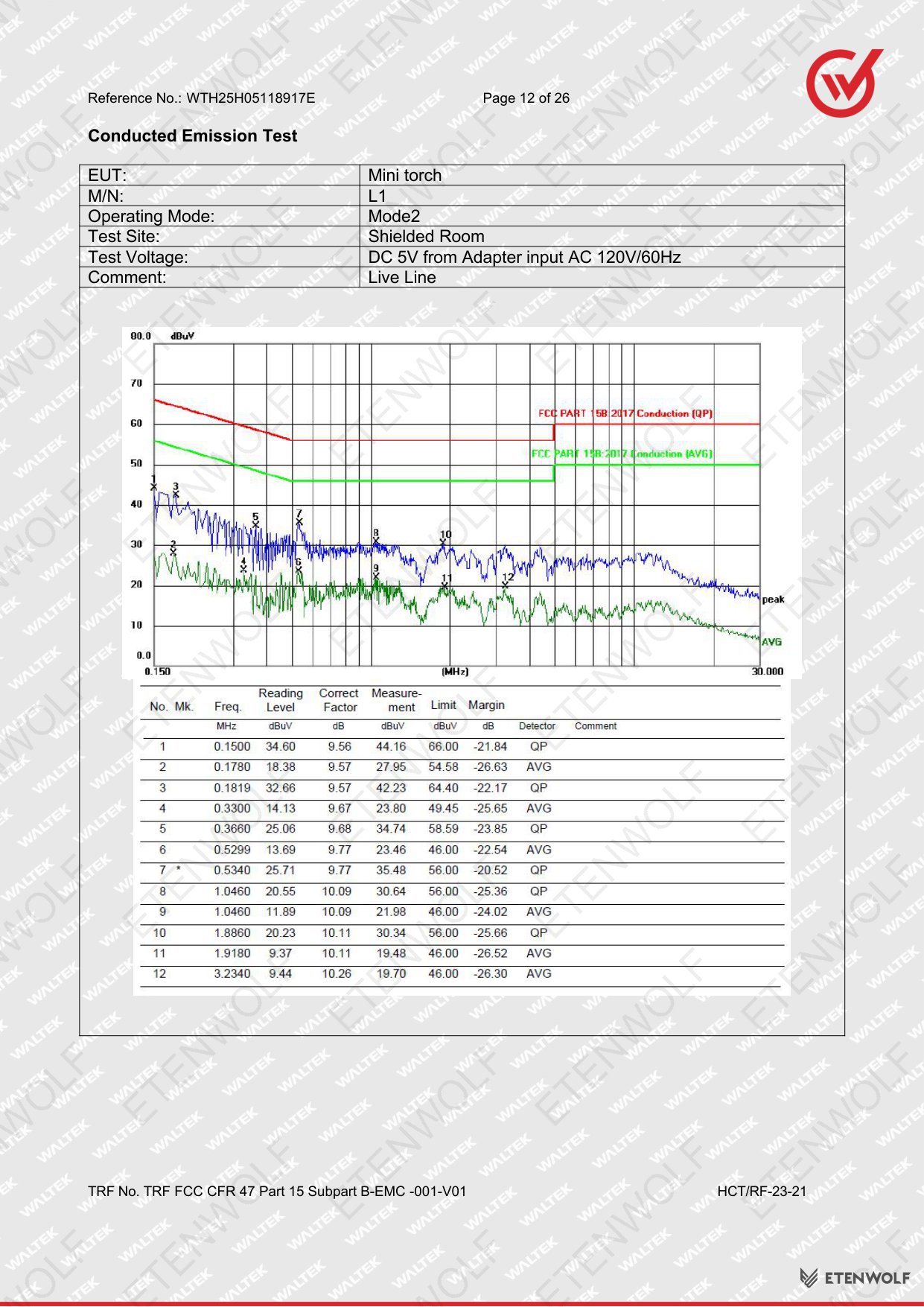
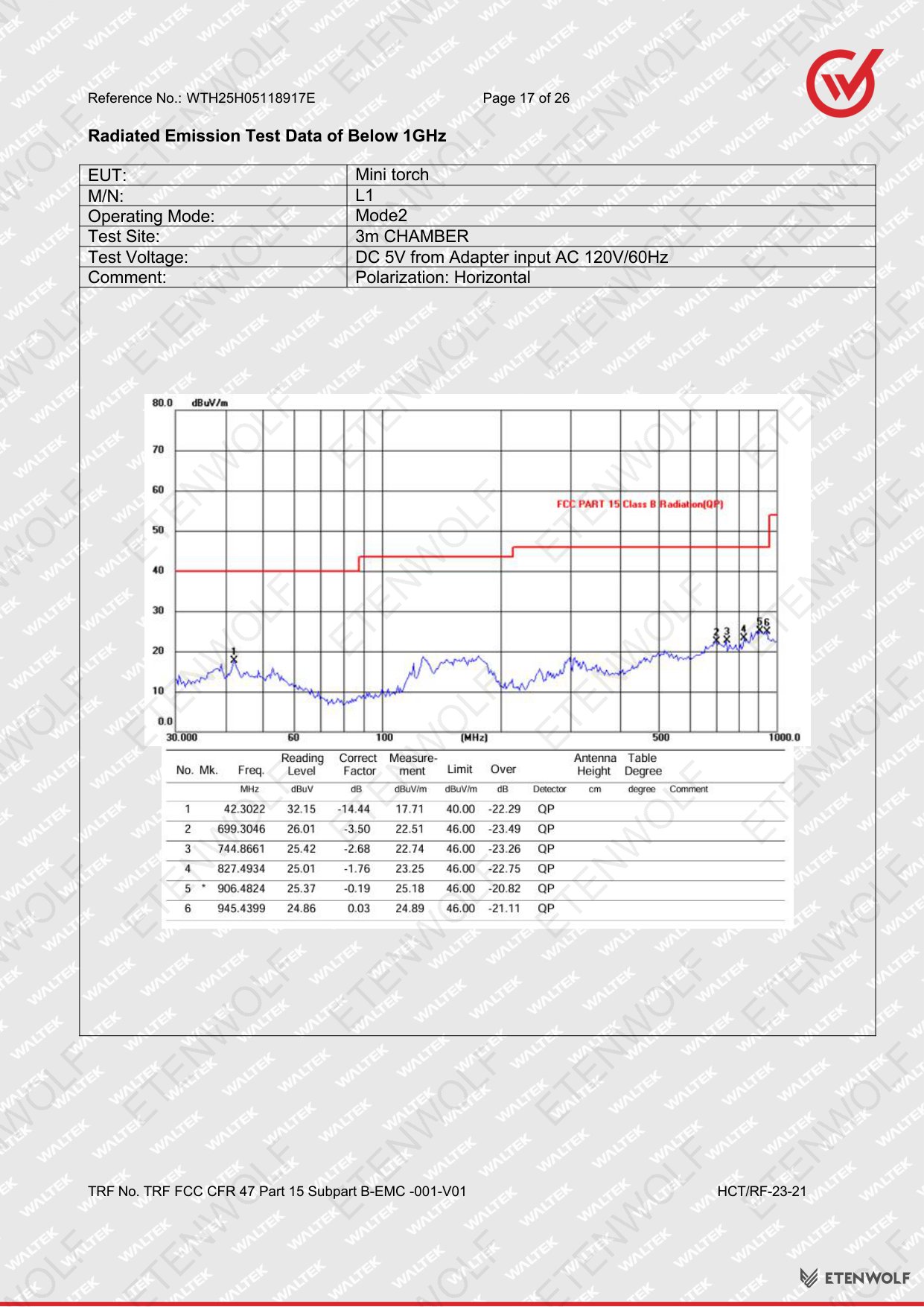
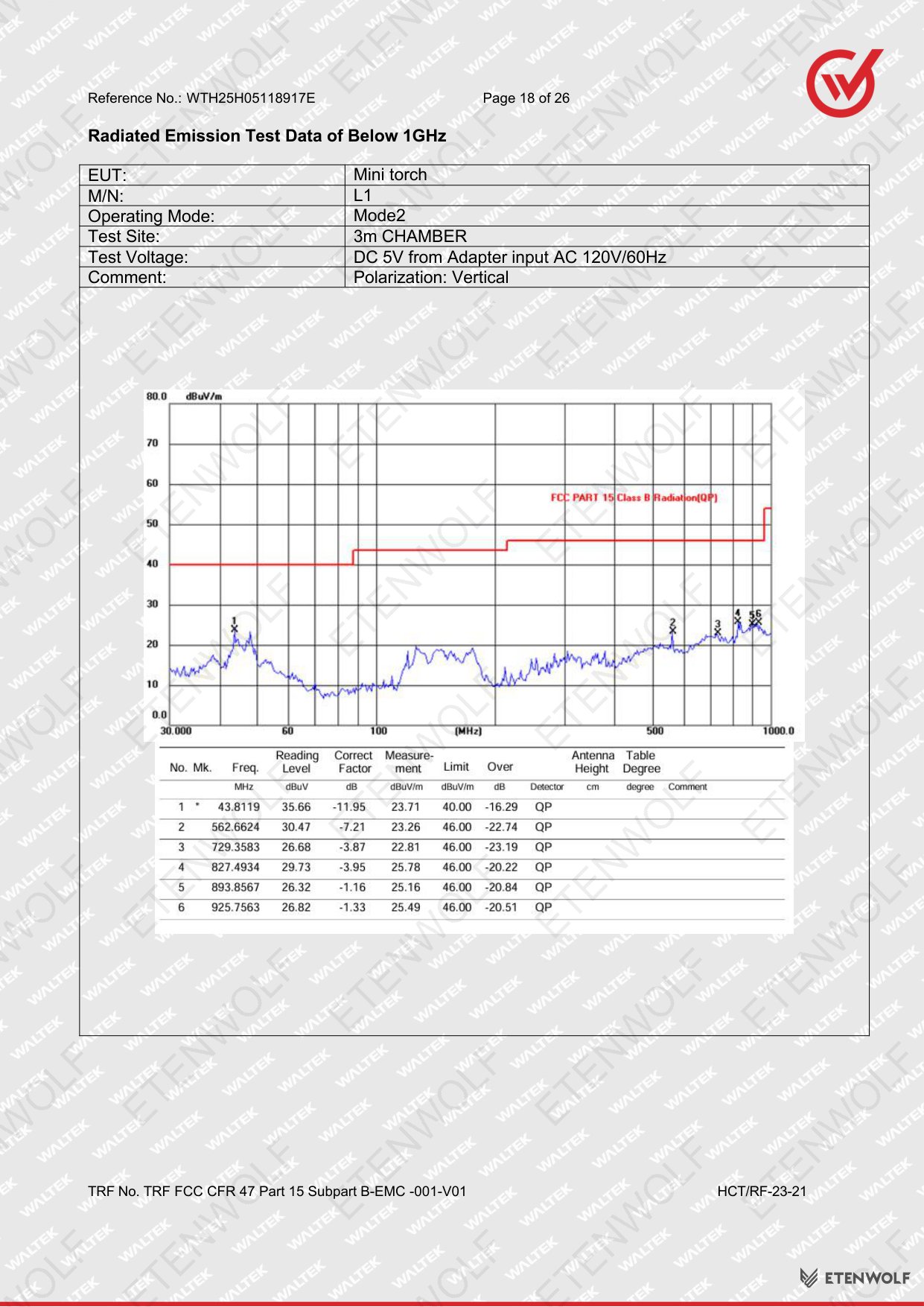
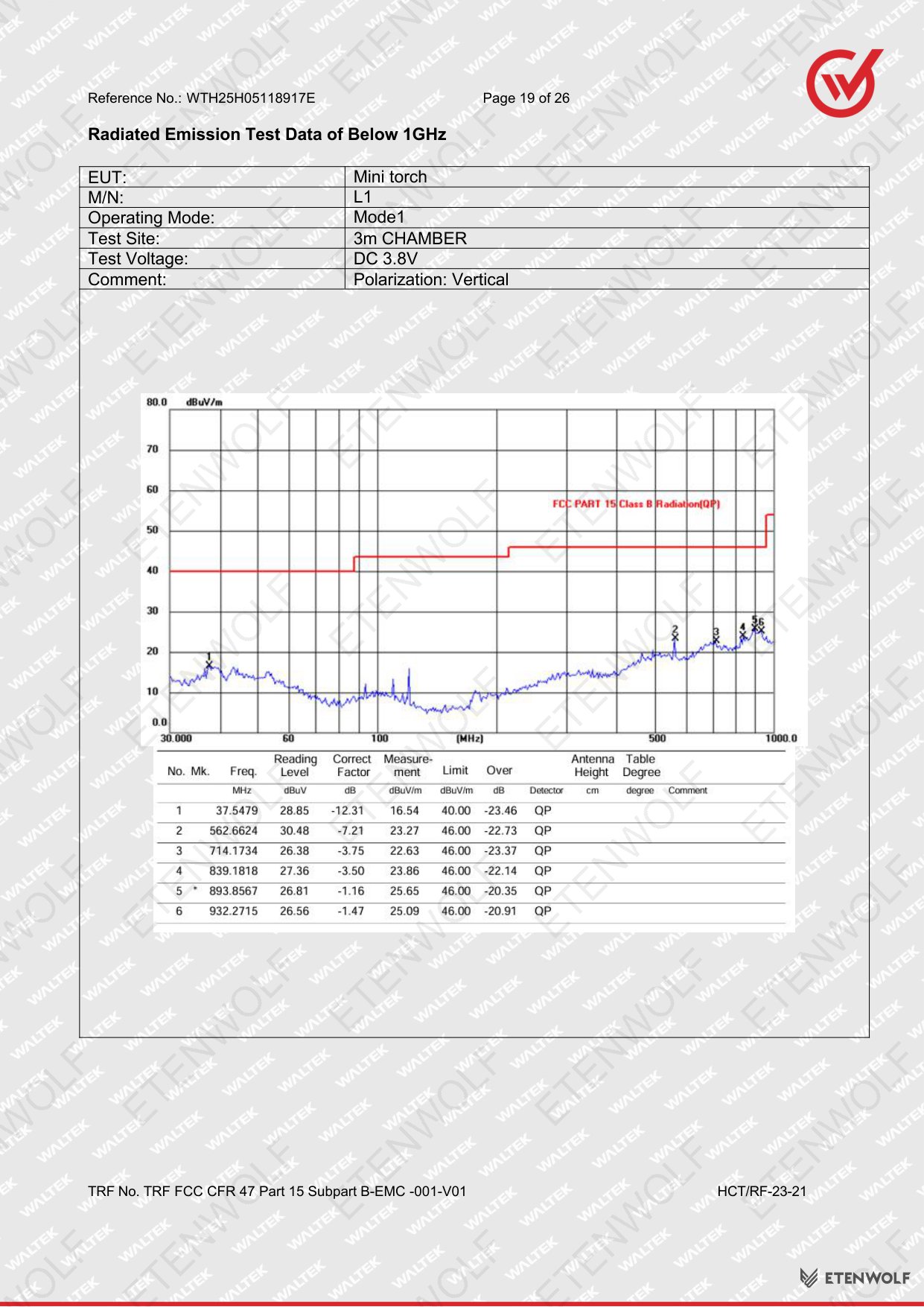
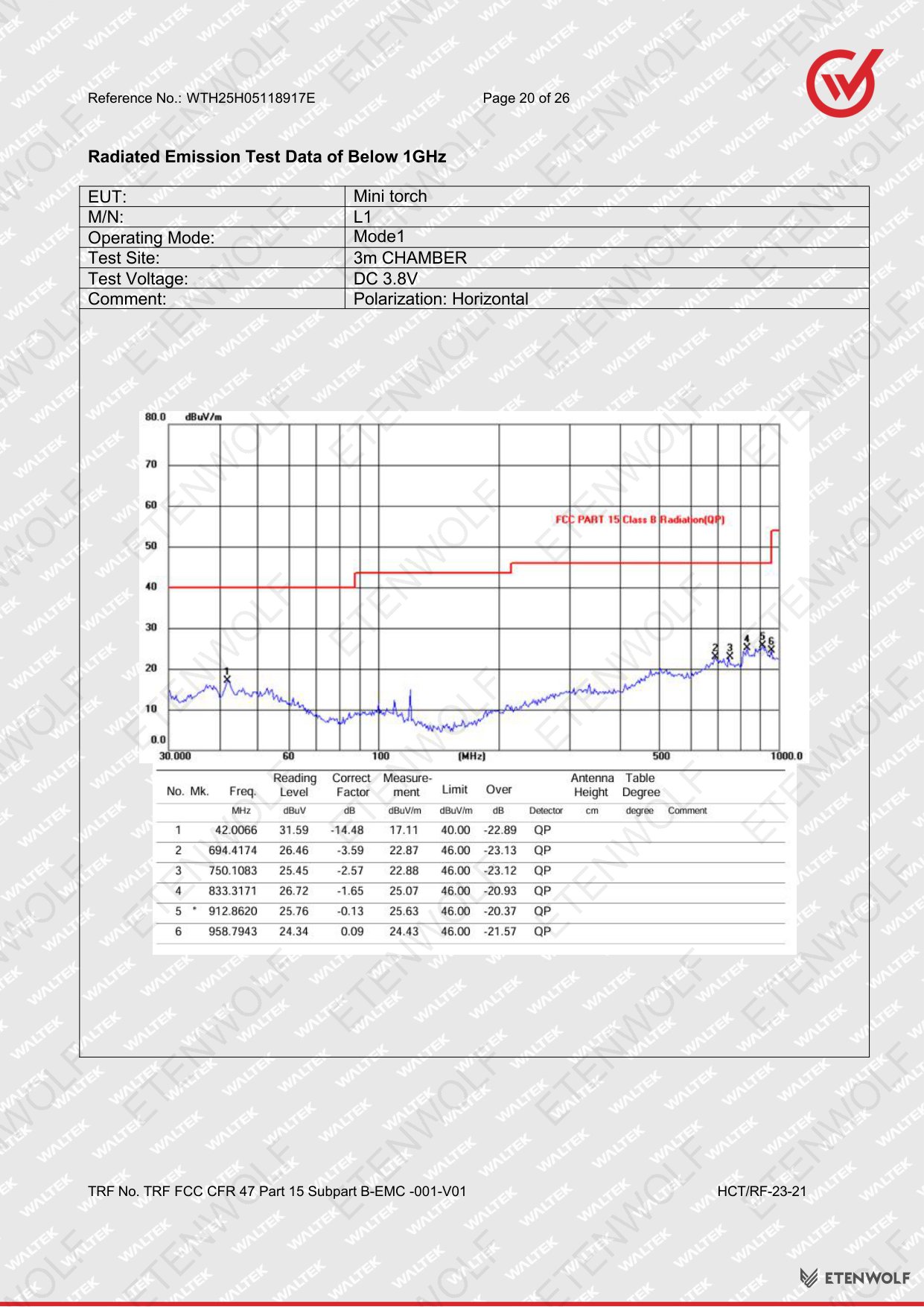
The test report covers two core EMC disciplines required under FCC CFR 47 Part 15 Subpart B: Conducted Emission and Radiated Emission. Both test categories were evaluated against the applicable FCC limits, and both returned a passing result.
Testing Timeline
| Milestone | Date |
|---|---|
| Sample Receipt | 2025-05-12 |
| Testing Period | 2025-05-13 to 2025-05-15 |
| Report Issued | 2025-05-22 |
Test Scope Summary
| Test Category | Section | Result |
|---|---|---|
| Conducted Emission | Section 3 of Report | Pass |
| Radiated Emission | Section 4 of Report | Pass |
Report Structure
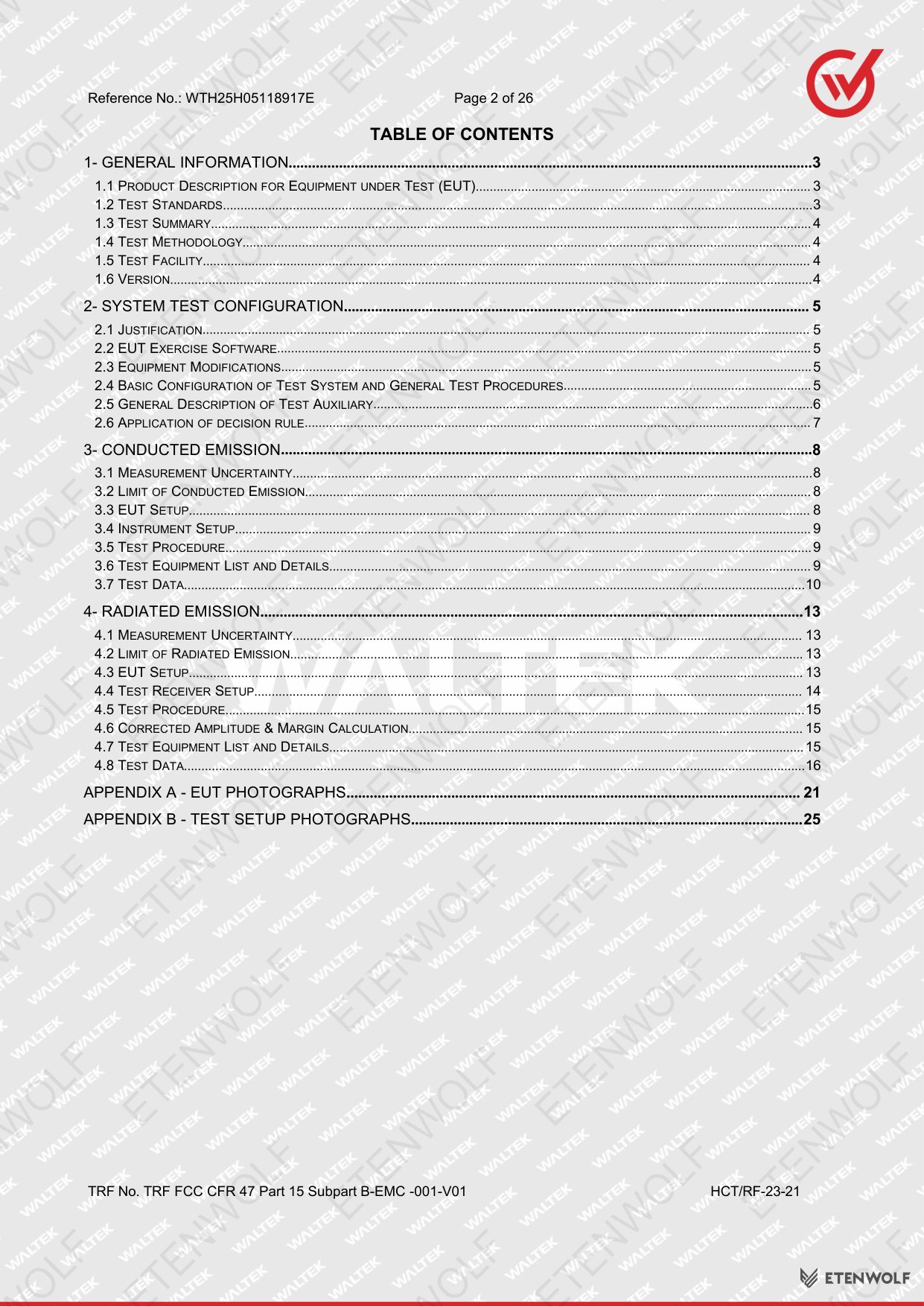
The full 26-page report includes the following sections:
- General Information — product description, test standards, methodology, and facility details
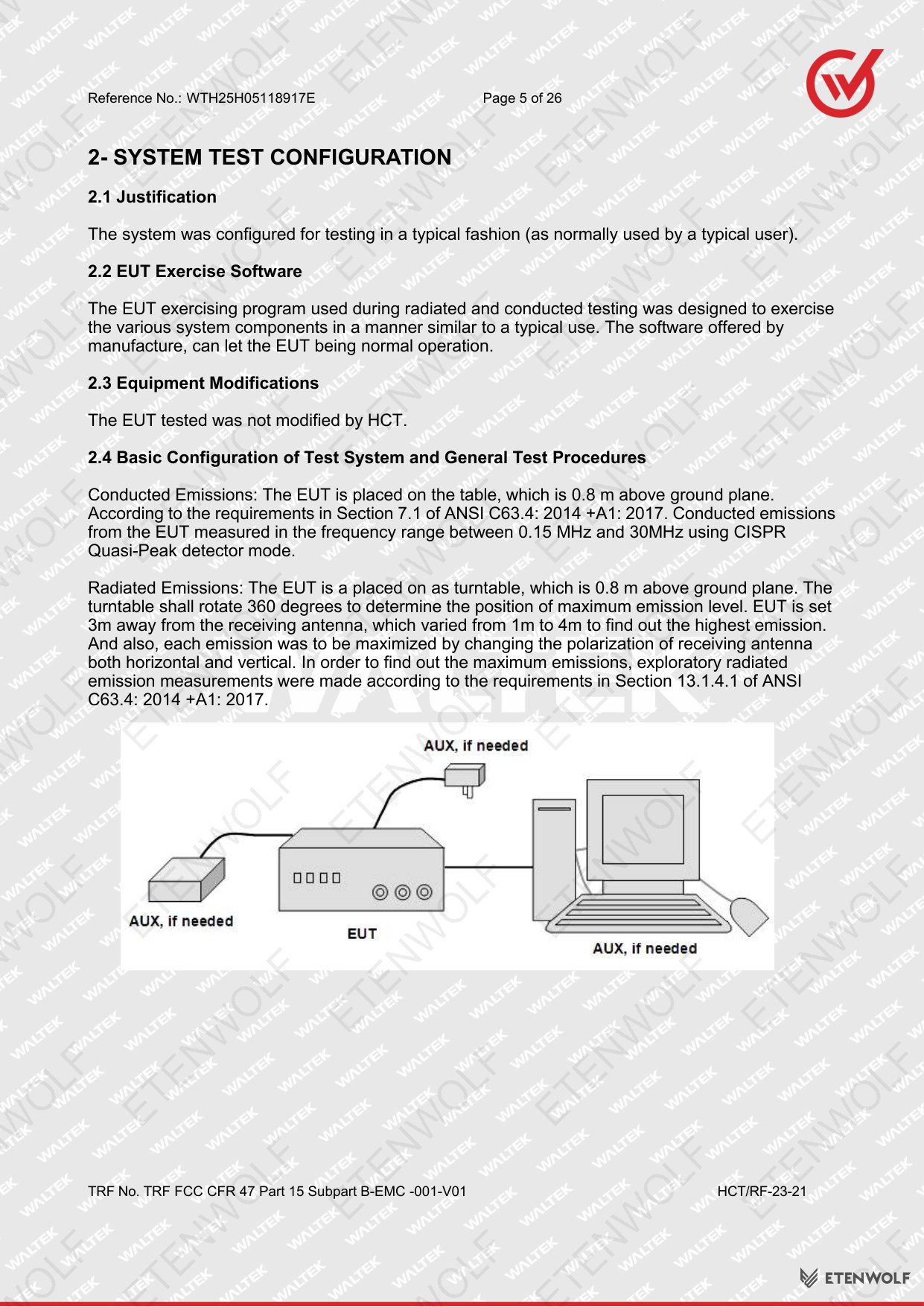
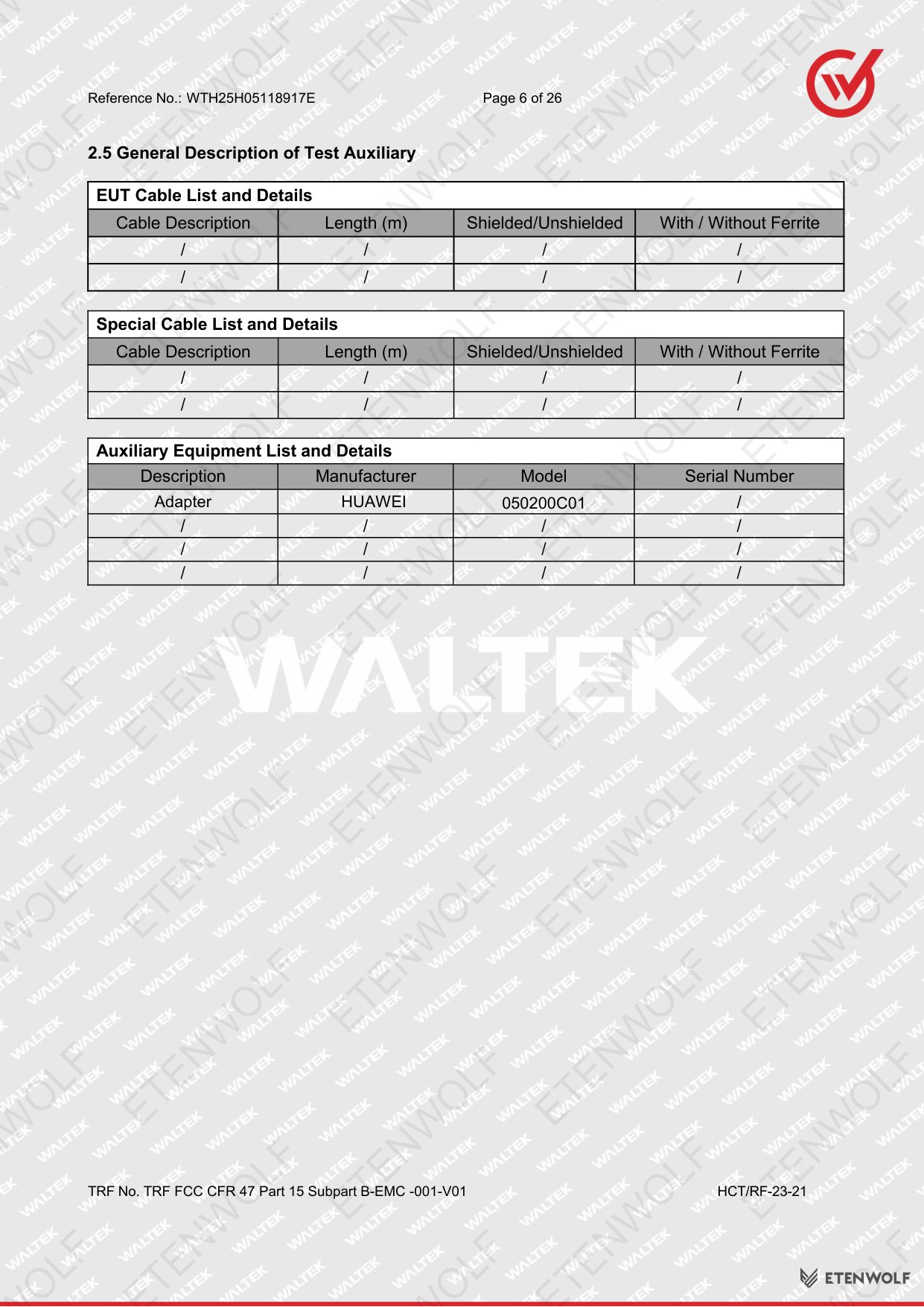
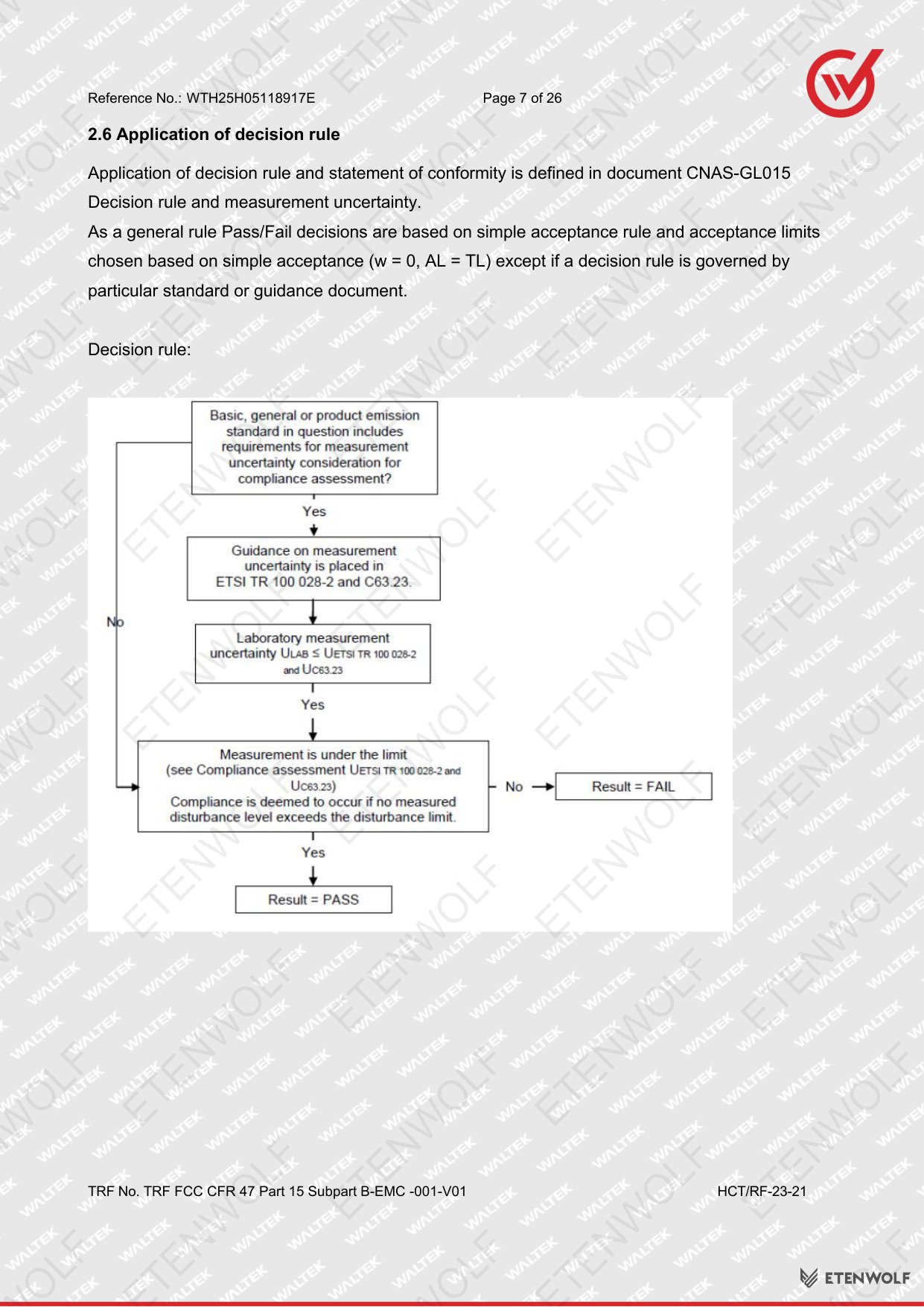
- System Test Configuration — EUT exercise software, equipment modifications, auxiliary equipment, and decision rule application
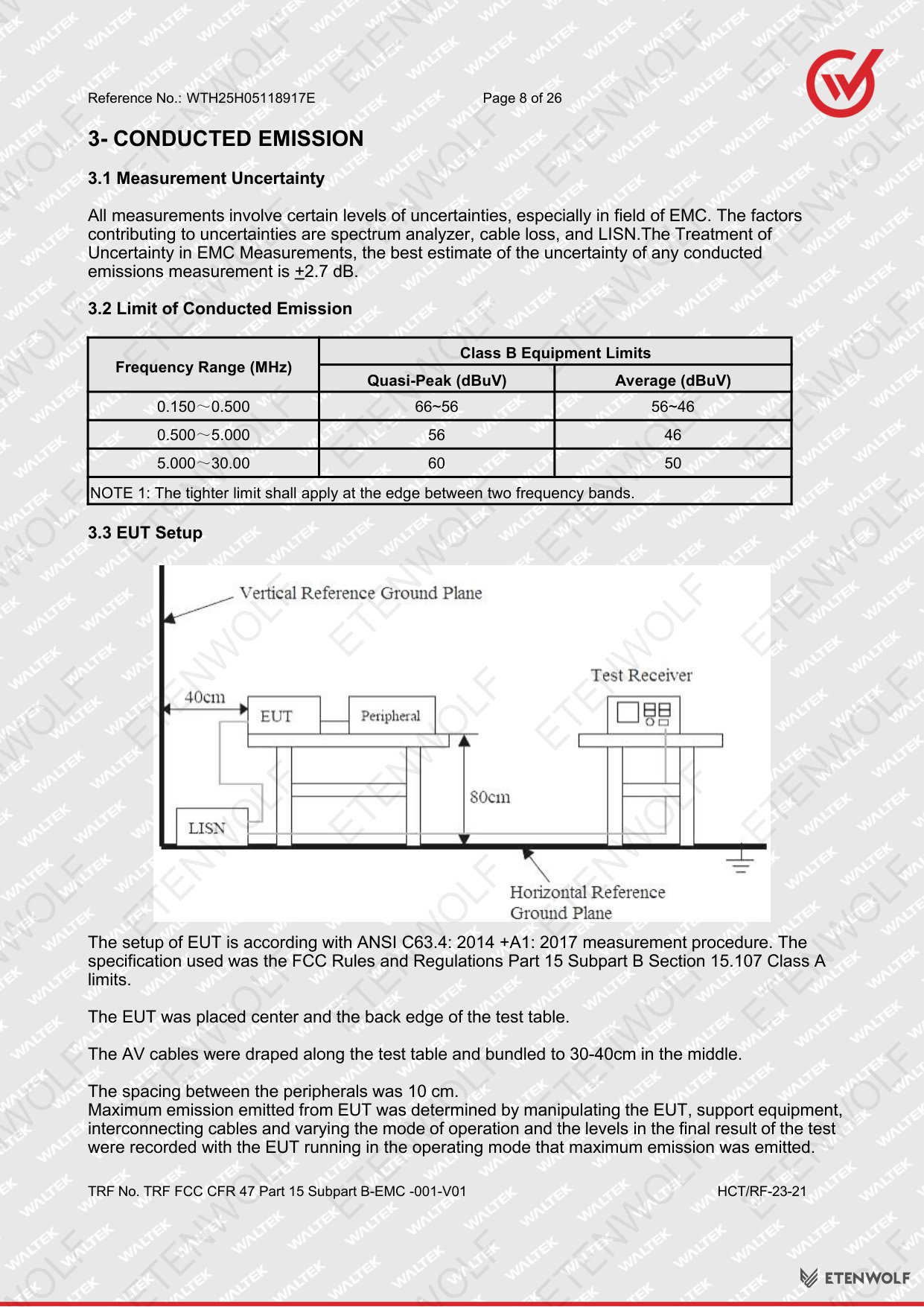
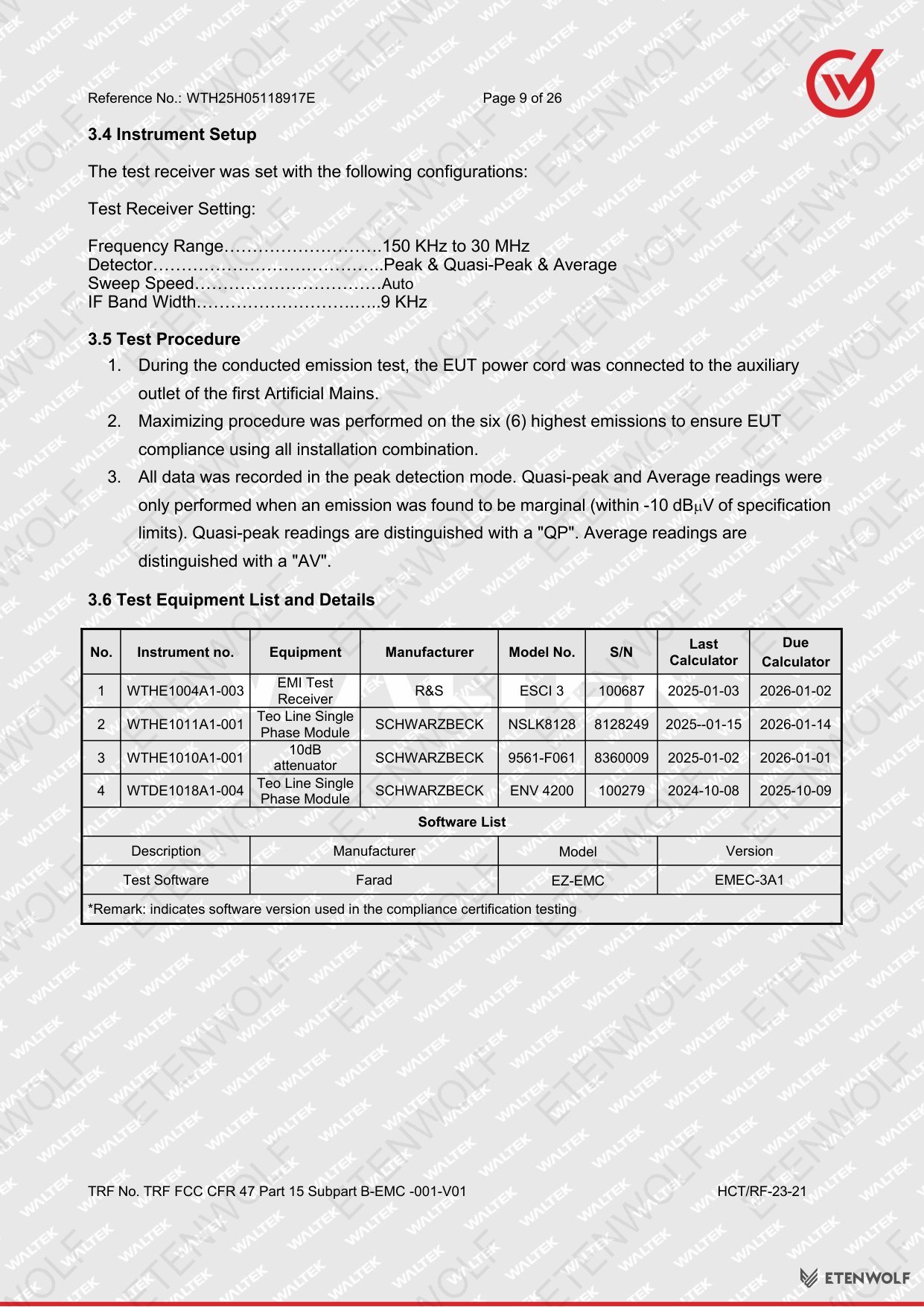
- Conducted Emission — measurement uncertainty, limits, EUT setup, instrument setup, test procedure, equipment list, and test data
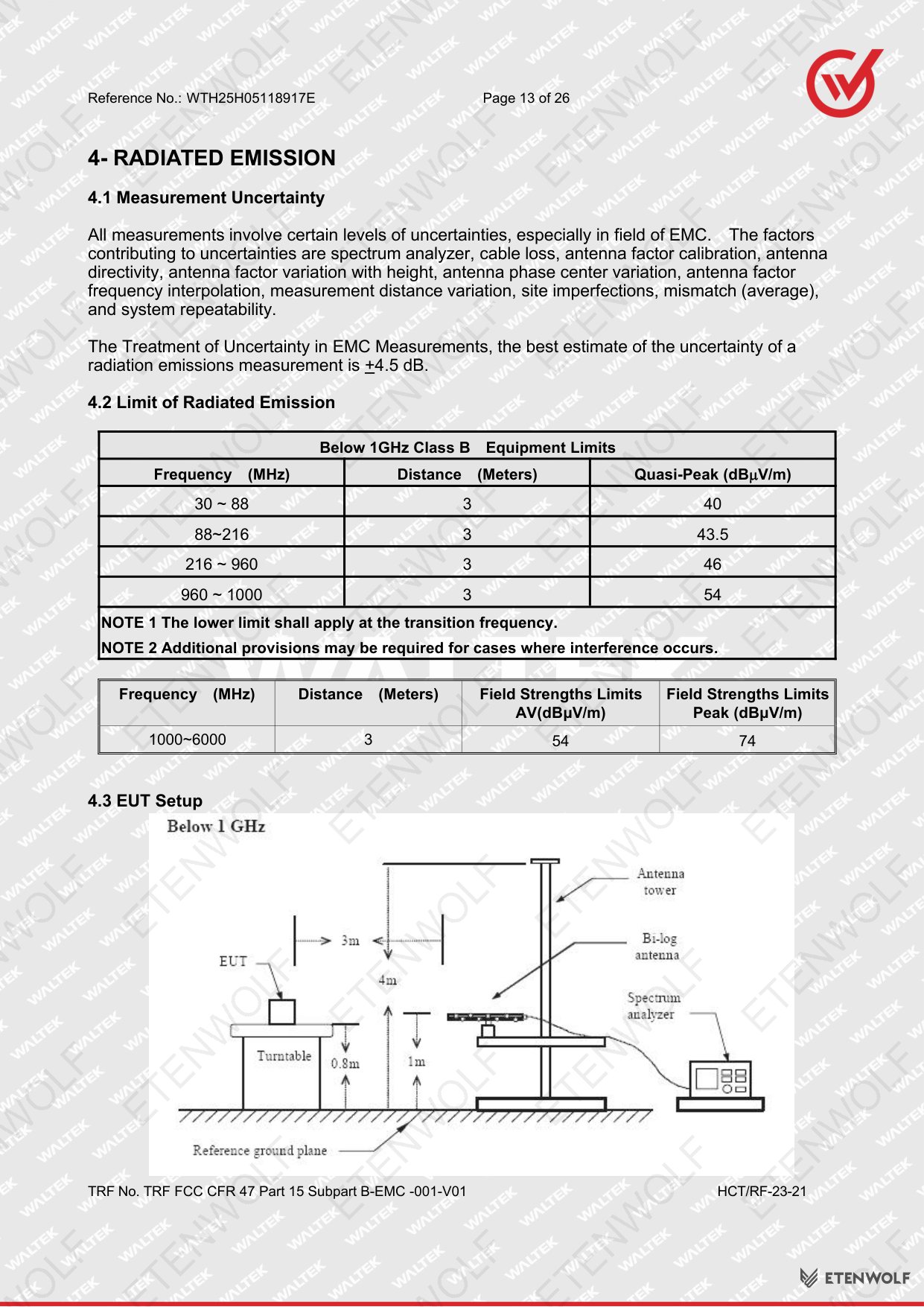
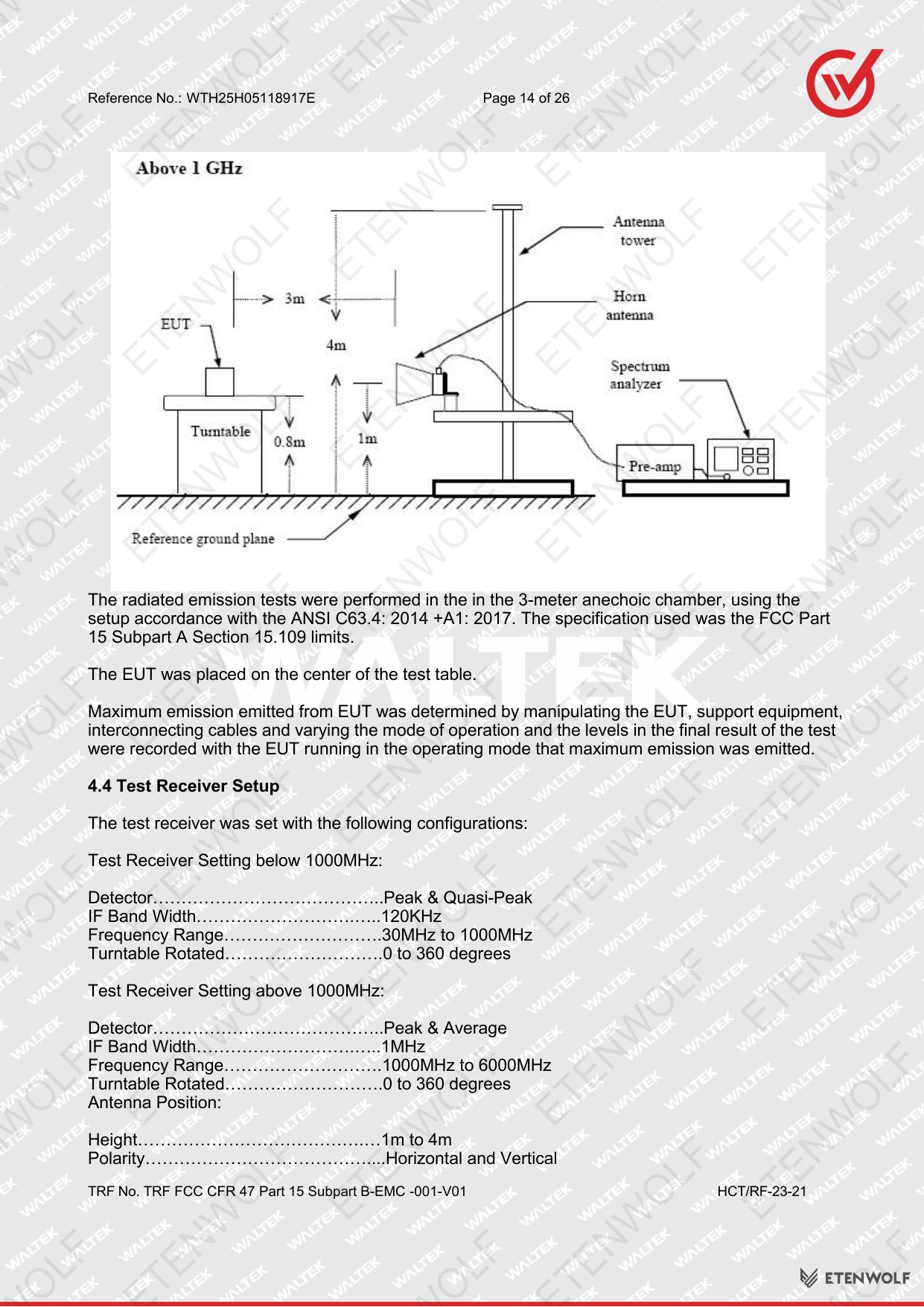
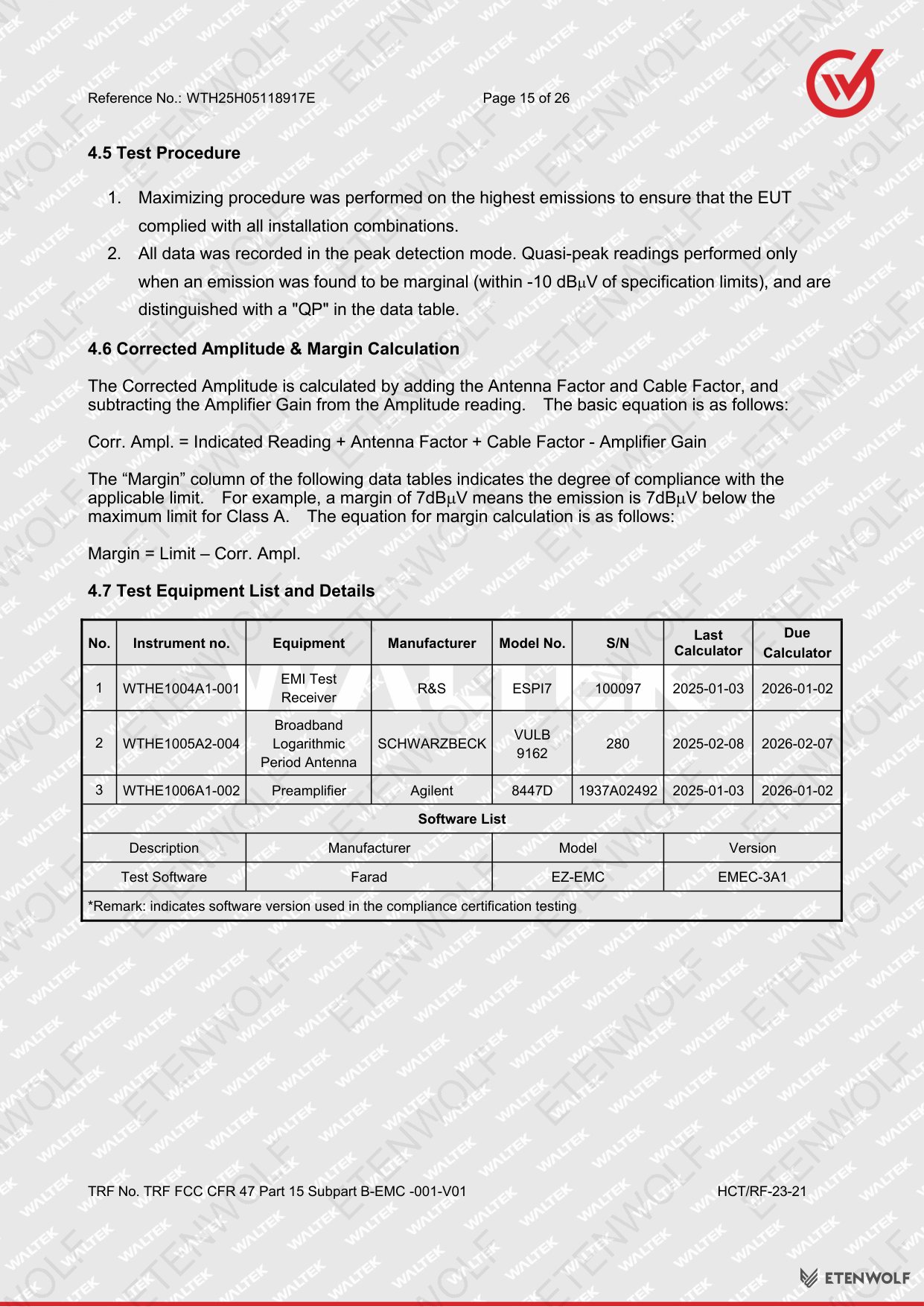
- Radiated Emission — measurement uncertainty, limits, EUT setup, receiver setup, test procedure, corrected amplitude and margin calculation, equipment list, and test data
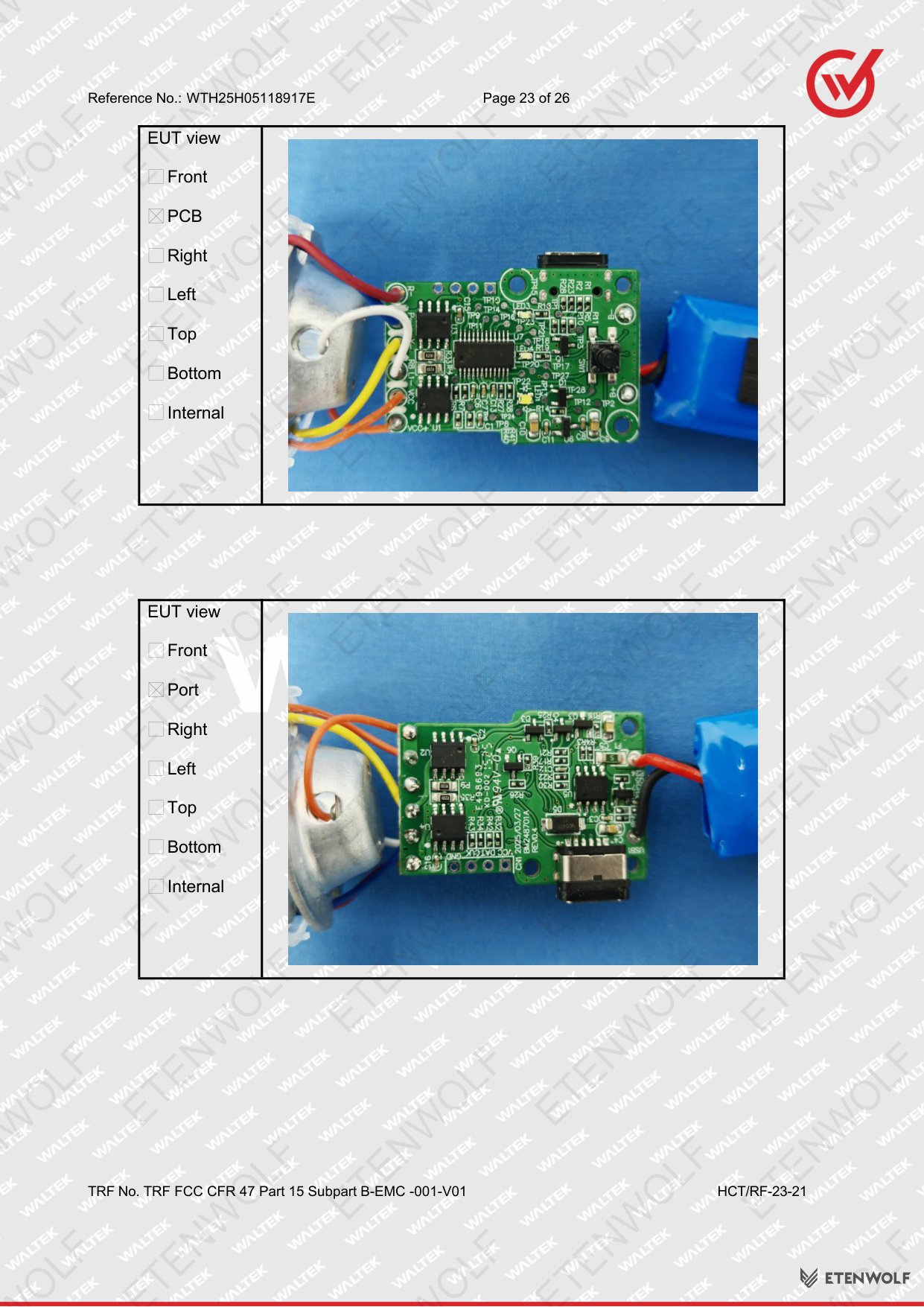
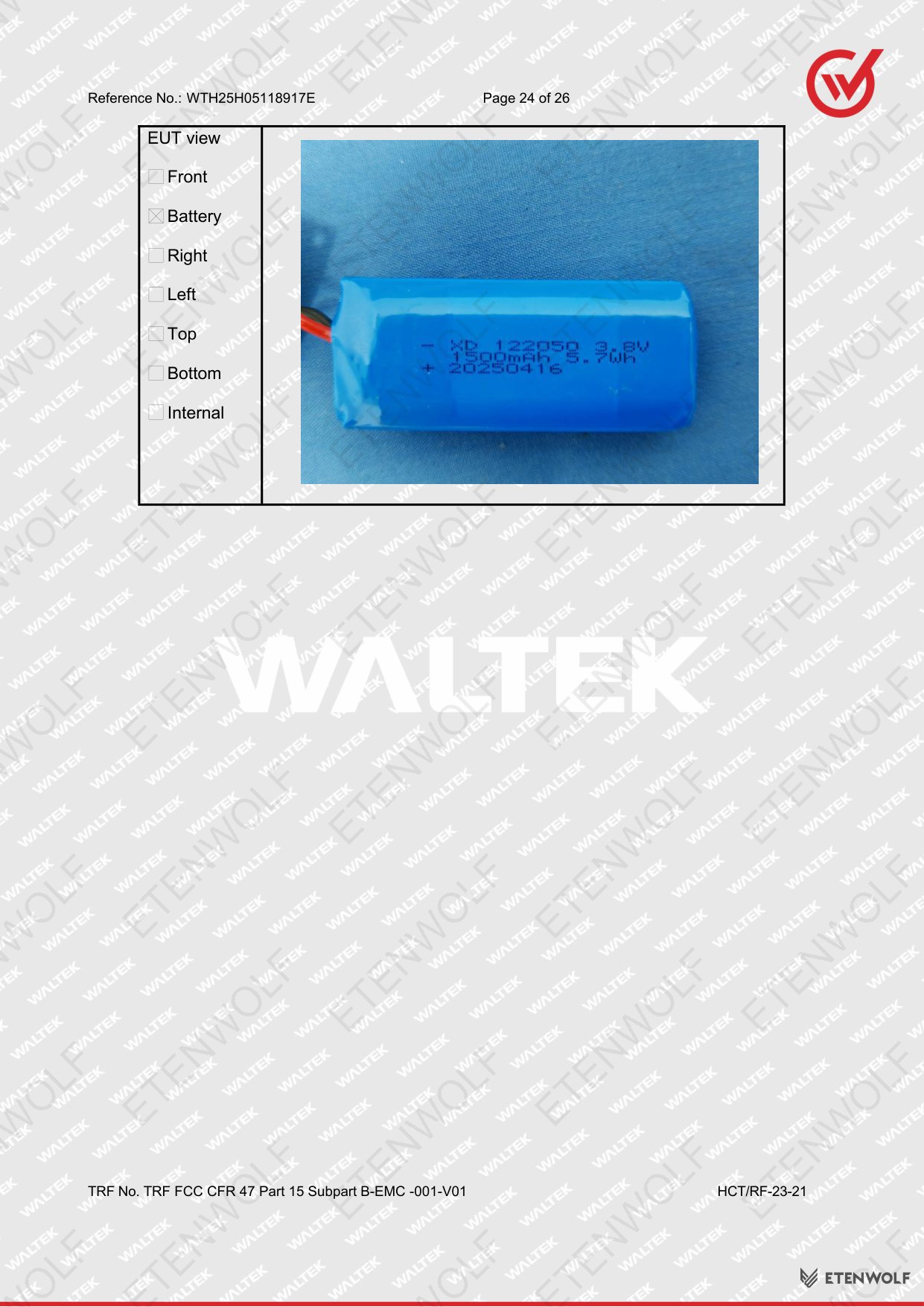
- Appendix A — EUT photographs
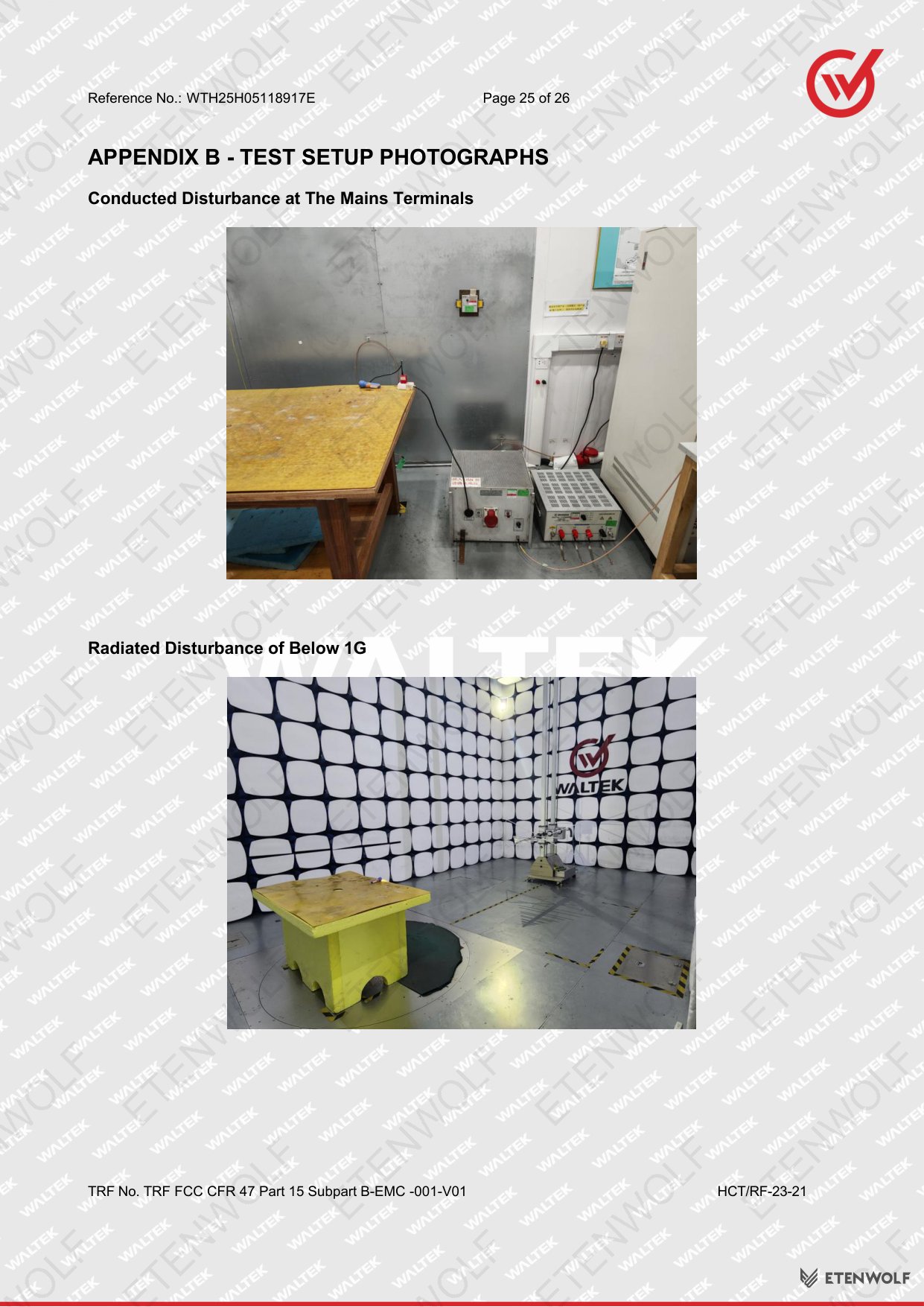
- Appendix B — Test setup photographs
Report Signatories
| Role | Name |
|---|---|
| Tested By | Snow Zeng |
| Approved By | Tony Wu |
Standards & Compliance
The L1 Mini Torch was evaluated against the following regulatory standard:
| Standard | Title | Scope |
|---|---|---|
| FCC CFR 47 Part 15 Subpart B | Unintentional Radiators — EMC Emissions Limits | Conducted and radiated electromagnetic emissions from digital devices and associated equipment sold in the United States market |
FCC Part 15 Subpart B governs the unintentional emission of radio frequency energy from electronic devices. Compliance confirms that the L1 Mini Torch does not generate electromagnetic interference (EMI) exceeding the FCC-prescribed limits for Class B digital devices, making it suitable for sale and operation in the United States.
The test methodology followed the procedures defined in TRF Form TRF FCC CFR 47 Part 15 Subpart B-EMC-001-V01, and measurement uncertainty was documented within the report for both conducted and radiated emission tests. A formal decision rule was applied when assessing margin calculations for radiated emission corrected amplitudes.
Validity & Certification Body
This test report was issued by Waltek Testing Group HCT (Shenzhen) Co., Ltd., a recognized testing and certification service provider operating under the Waltek Testing Group.
| Field | Detail |
|---|---|
| Laboratory Name | Waltek Testing Group HCT (Shenzhen) Co., Ltd. |
| Laboratory Address | Building B, Tianji Industrial Park, 1/F. & 2/F. & 3/F., No.30-9, Laiyin Road, Xinsheng Community, Longgang Subdistrict, Longgang District, Shenzhen, Guangdong, China |
| Website | http://www.hct-test.com |
| Service Telephone | 400-0066-989 |
| Contact Email | [email protected] |
| Report Reference | WTH25H05118917E |
| Report Issue Date | 2025-05-22 |
| Report Total Pages | 26 |
As a test report rather than a standalone FCC certification, this document serves as the primary technical evidence supporting FCC Supplier’s Declaration of Conformity (SDoC) or FCC ID application for the L1 Mini Torch. The report remains valid as supporting documentation provided the product configuration, hardware, and firmware remain unchanged from the tested sample. Any modification to the EUT may require re-testing.
Frequently Asked Questions
- What does this FCC test report confirm about the ETENWOLF L1 Mini Torch?
-
Report reference WTH25H05118917E confirms that the ETENWOLF L1 Mini Torch (Model L1) passed both conducted emission and radiated emission tests under FCC CFR 47 Part 15 Subpart B. This means the device does not emit electromagnetic interference beyond the FCC-permitted levels and is compliant for sale and use in the United States.
- Who conducted the FCC EMC testing for the L1 Mini Torch?
-
The testing was conducted by Waltek Testing Group HCT (Shenzhen) Co., Ltd., based in Longgang District, Shenzhen, China. The report was tested by Snow Zeng and approved by Tony Wu. Testing took place between 2025-05-13 and 2025-05-15, and the report was issued on 2025-05-22.
- What operating modes of the L1 were tested during the FCC evaluation?
-
Both of the L1’s operating modes were evaluated: Mode 1 (Discharge — active torch operation) and Mode 2 (Charge — battery charging state). Testing across both modes ensures the device remains within FCC emission limits regardless of its operational state.
- Does passing FCC Part 15 Subpart B mean the L1 Mini Torch can be sold in the United States?
-
Passing FCC CFR 47 Part 15 Subpart B is a key regulatory requirement for electronic devices marketed in the United States. This test report provides the technical evidence needed to support an FCC authorization (SDoC or FCC ID), which is required before the product can legally be offered for sale in the US market.
Related Documents
For a complete regulatory compliance picture of the ETENWOLF L1 Mini Torch, the following related certification and test documents are relevant:
- CE Declaration of Conformity — Required for sale in the European Economic Area; covers electromagnetic compatibility (EMC) under the EMC Directive 2014/30/EU and Low Voltage Directive 2014/35/EU.
- RoHS Compliance Certificate — Confirms restriction of hazardous substances under EU RoHS Directive 2011/65/EU, applicable to electronic lighting products.
- REACH SVHC Declaration — Verifies that the product and its components do not contain substances of very high concern above threshold levels as defined by REACH Regulation (EC) No 1907/2006.
- UN 38.3 Test Report — If the L1 Mini Torch contains a lithium battery, a UN 38.3 transport safety test report is required for air and ground shipping compliance.
- KC Certification — Required for the South Korean market under the Radio Waves Act and Electrical Appliances Safety Control Act.
- IEC 62133 Battery Safety Report — Covers safety requirements for portable sealed secondary lithium cells and batteries, relevant if the device includes a rechargeable lithium cell.
Document Pages