Document Overview
Document Overview This Material Safety Data Sheet (MSDS) is issued in compliance with UN38.3 standards for lithium-ion battery transportation safety. The certificate reference number is WTH25D12320966B, issued by Waltek Testing Group Co., Ltd., a certified testing laboratory specializing in battery safety certification. The document was…
- Document type
- Certification Report
- Prepared by
- Michelle Torres
- Published
- Last reviewed
- Topics
- International Transportation: CB / MSDS / UN38.3
Document Overview
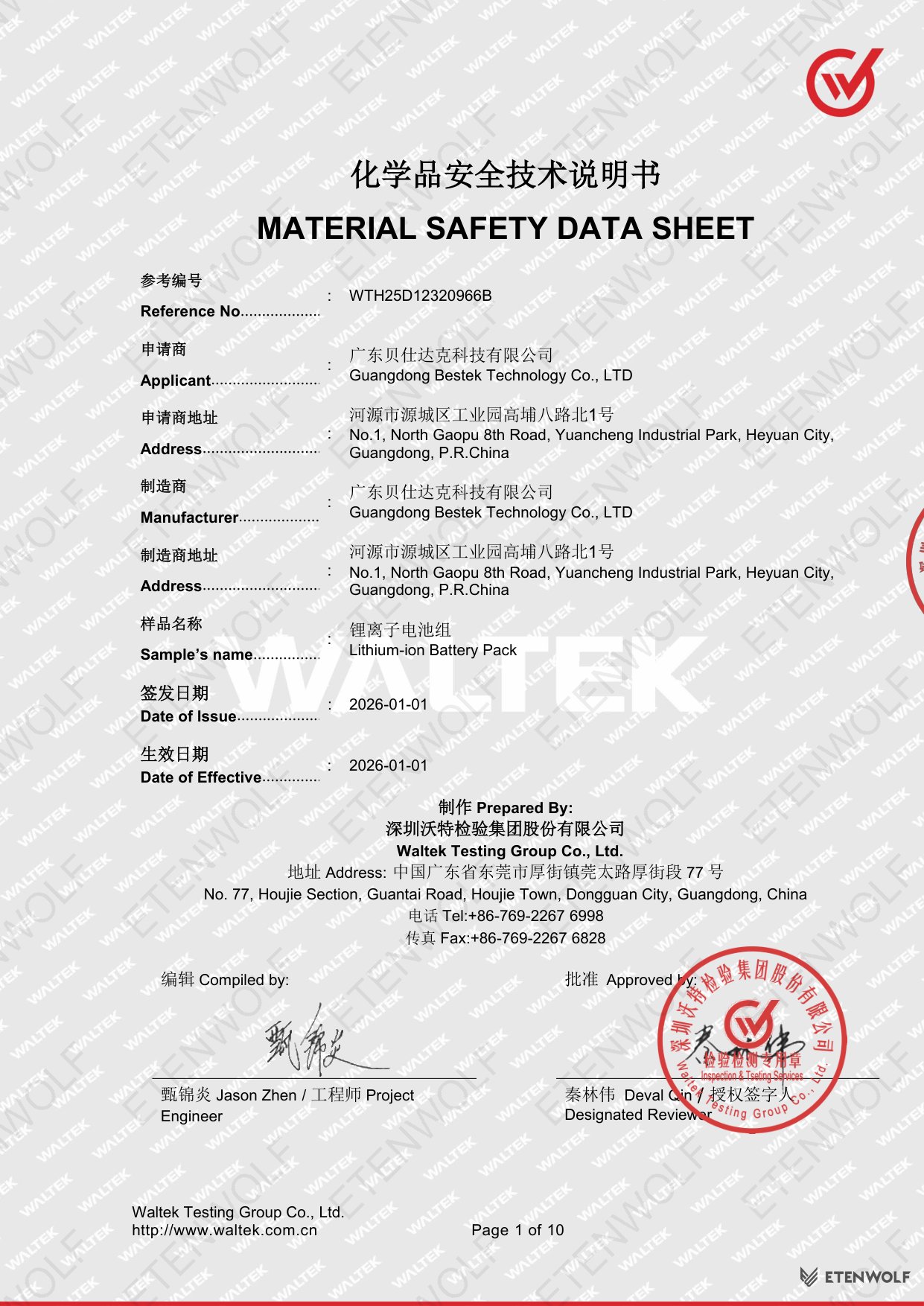
This Material Safety Data Sheet (MSDS) is issued in compliance with UN38.3 standards for lithium-ion battery transportation safety. The certificate reference number is WTH25D12320966B, issued by Waltek Testing Group Co., Ltd., a certified testing laboratory specializing in battery safety certification.
The document was issued on January 1, 2026 and became effective on the same date. This MSDS provides comprehensive safety information for the L2 lithium-ion battery pack (Model 1S1P-2600), covering chemical composition, hazard identification, handling procedures, and emergency response measures.
The certification scope includes full chemical composition analysis, safety classification, environmental impact assessment, and compliance verification with international transportation regulations for lithium-ion batteries.
Product Information
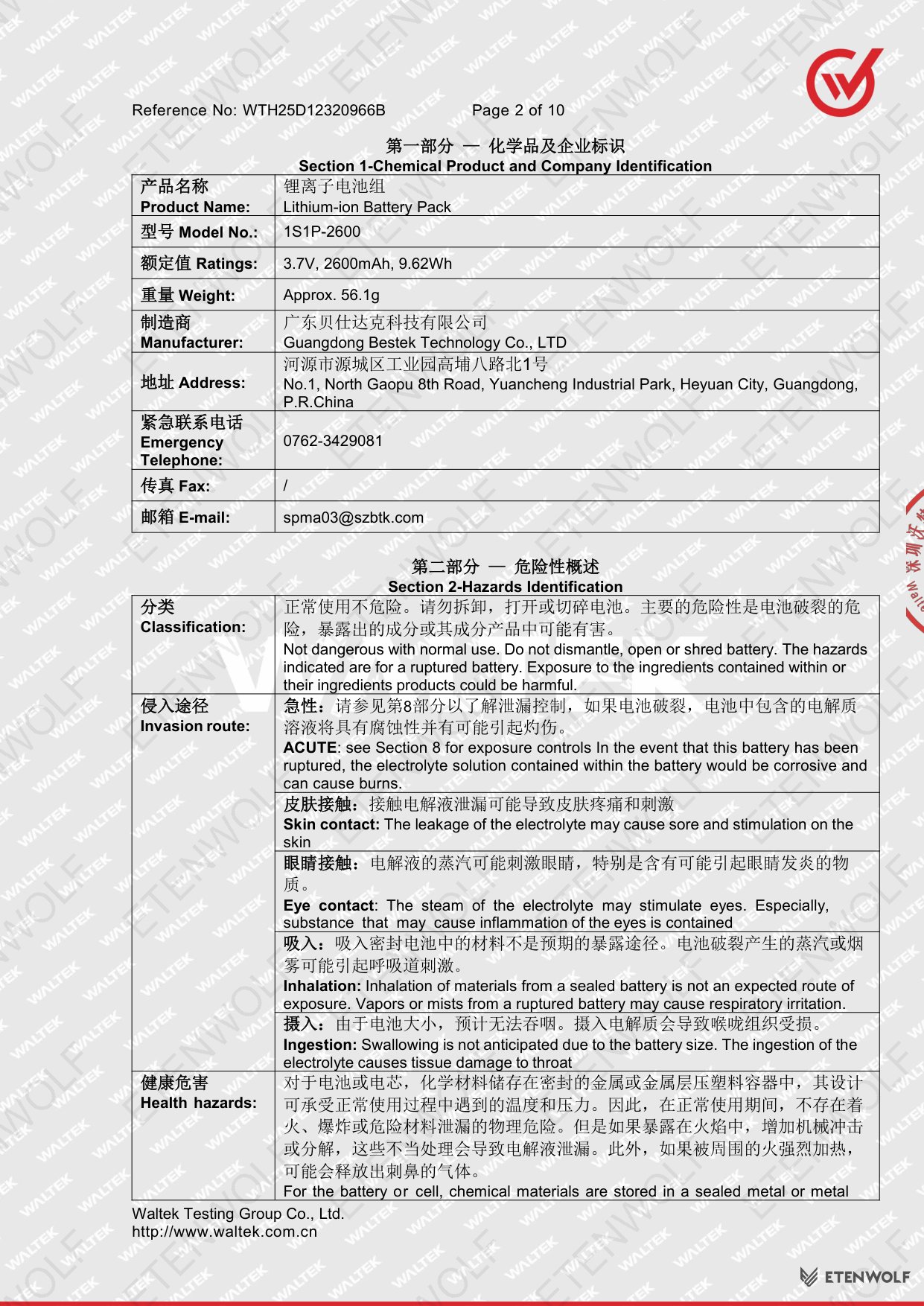
The certified product is a lithium-ion battery pack manufactured by Guangdong Bestek Technology Co., LTD, located at No.1, North Gaopu 8th Road, Yuancheng Industrial Park, Heyuan City, Guangdong, P.R.China.
| Specification | Value |
|---|---|
| Product Name | Lithium-ion Battery Pack |
| Model Number | 1S1P-2600 |
| Voltage | 3.7V |
| Capacity | 2600mAh |
| Energy | 9.62Wh |
| Weight | Approximately 56.1g |
| Configuration | 1 Series 1 Parallel |
Emergency Contact Information: Phone +86-762-3429081, Email [email protected]. The battery is designed for use in portable electronic devices and inflation tools, featuring a sealed metal or metal-laminated plastic case that withstands normal operating temperatures and pressures.
Key Details
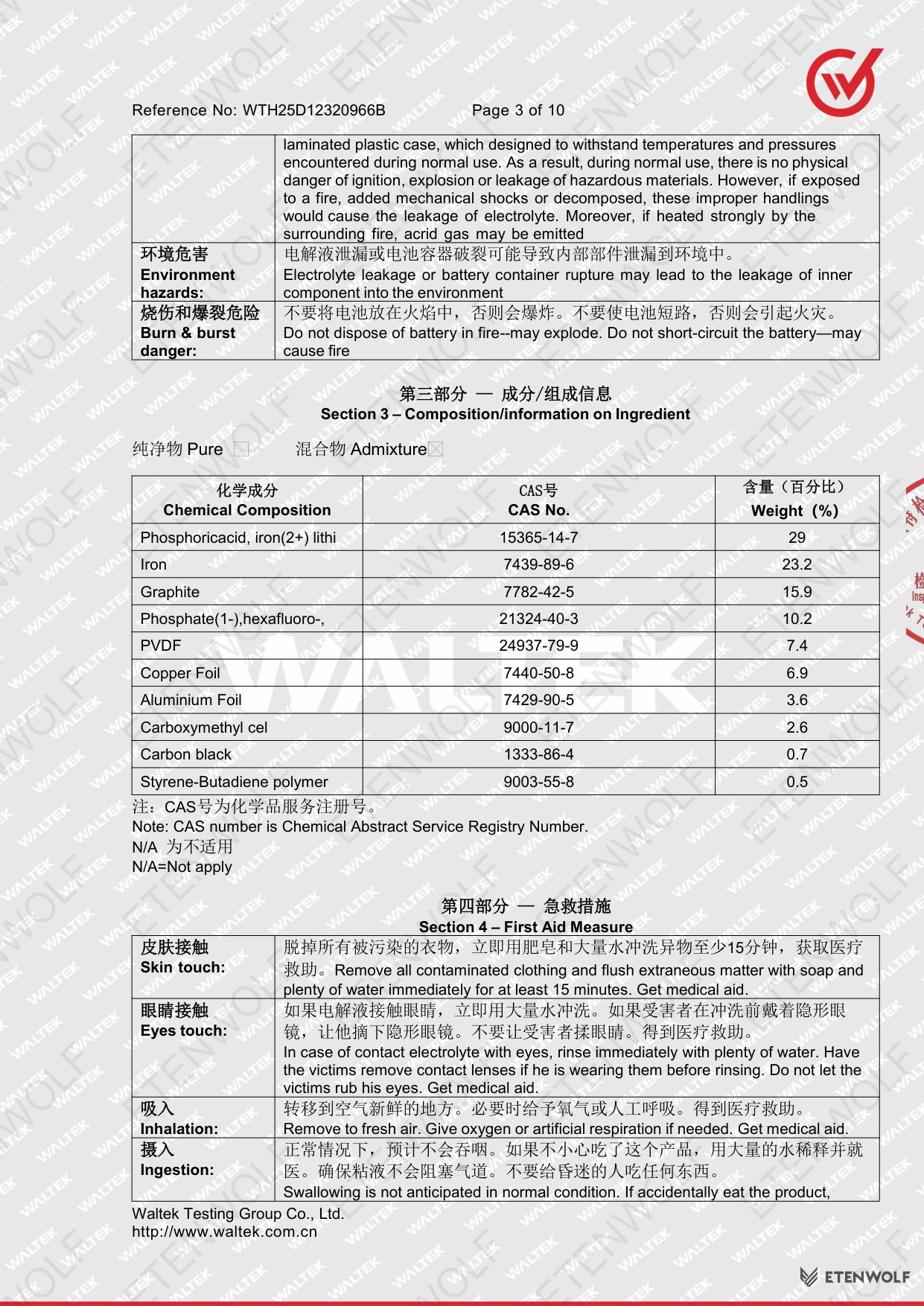
The chemical composition analysis identifies all materials present in the L2 battery pack, with precise weight percentages for each component:
| Chemical Component | CAS Number | Weight Percentage |
|---|---|---|
| Phosphoric acid, iron(2+) lithium | 15365-14-7 | 29.0% |
| Iron | 7439-89-6 | 23.2% |
| Graphite | 7782-42-5 | 15.9% |
| Phosphate(1-), hexafluoro- | 21324-40-3 | 10.2% |
| PVDF (Polyvinylidene fluoride) | 24937-79-9 | 7.4% |
| Copper Foil | 7440-50-8 | 6.9% |
| Aluminium Foil | 7429-90-5 | 3.6% |
| Carboxymethyl cellulose | 9000-11-7 | 2.6% |
| Carbon black | 1333-86-4 | 0.7% |
| Styrene-Butadiene polymer | 9003-55-8 | 0.5% |
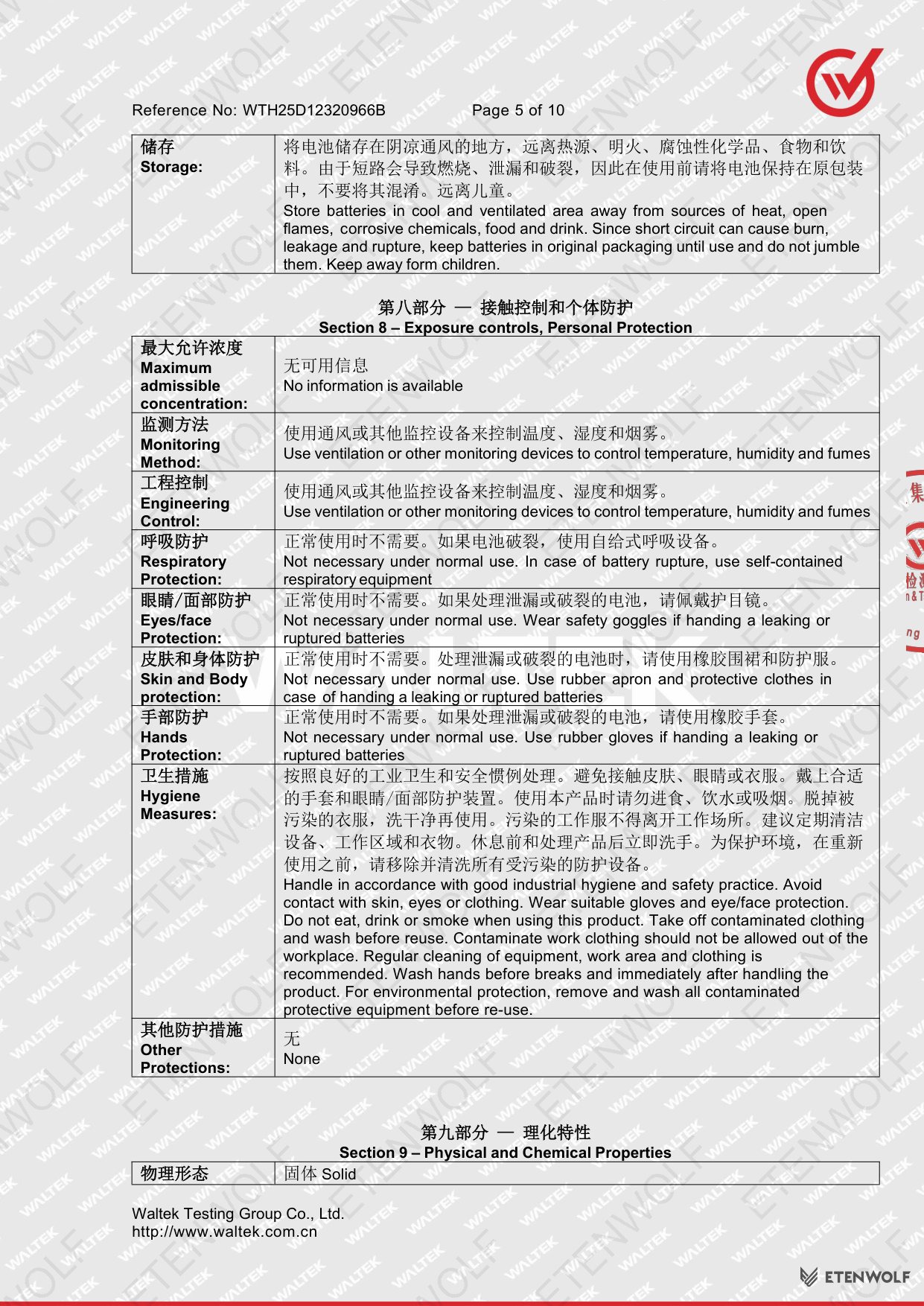
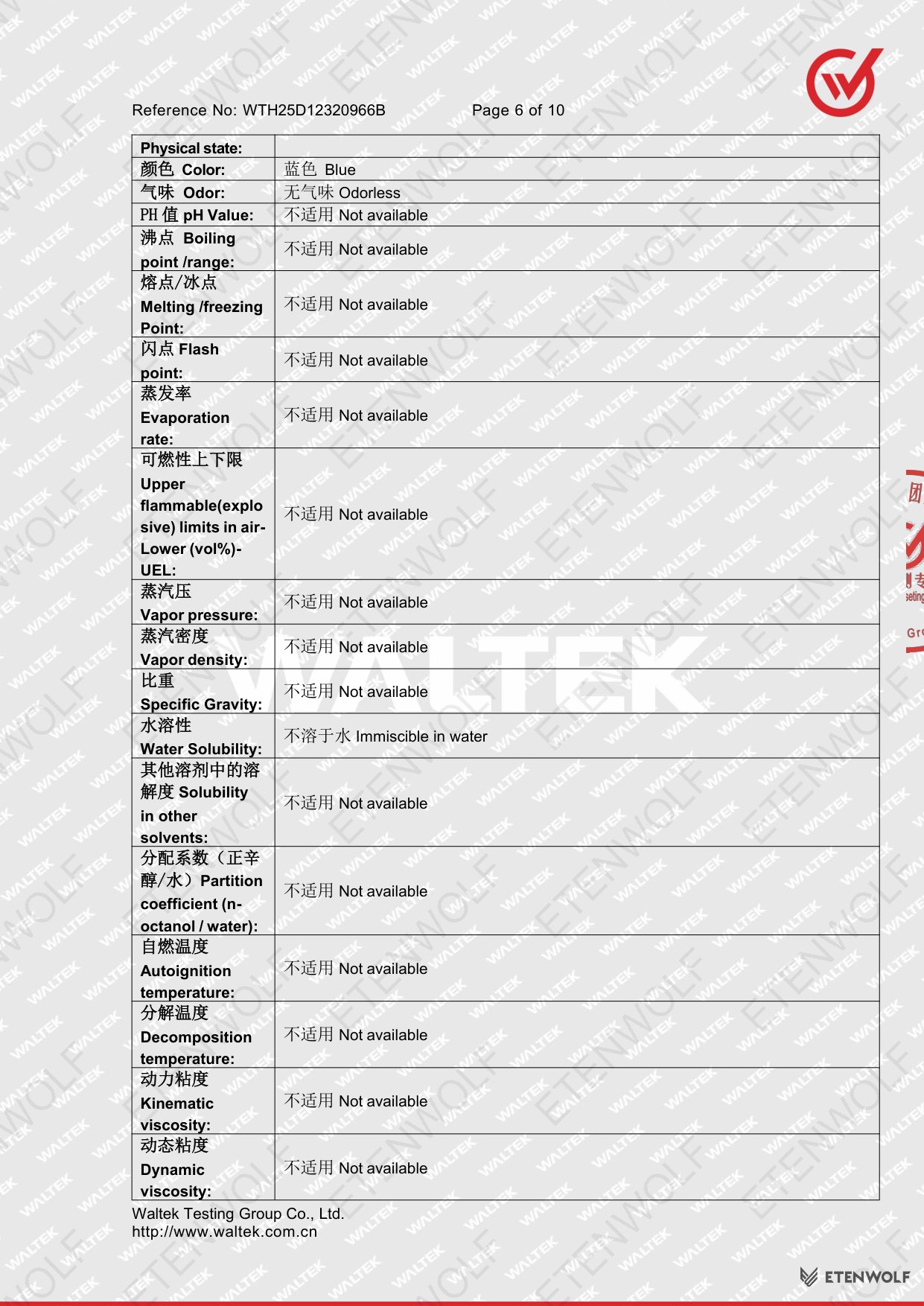
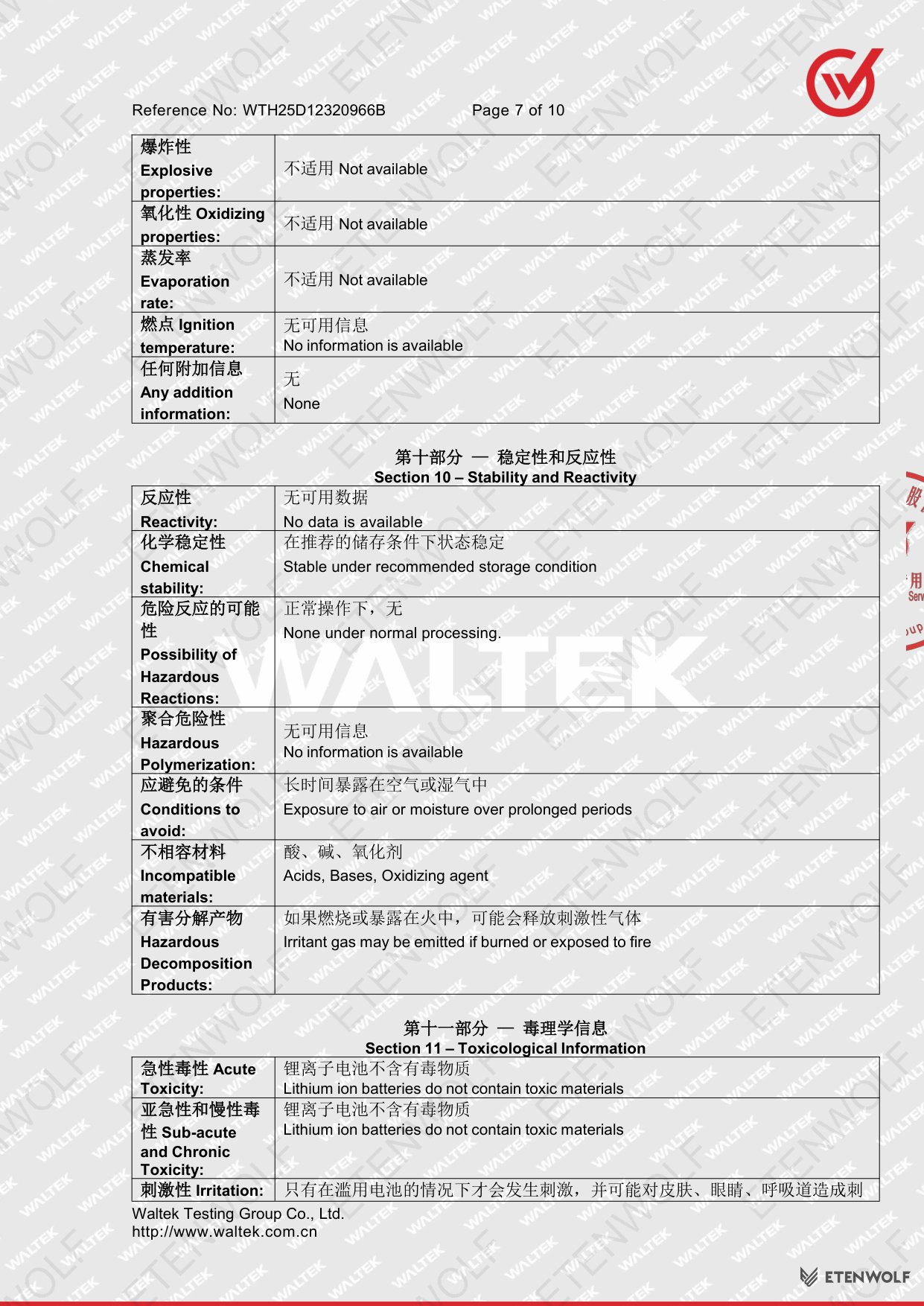
Hazard Classification: Not dangerous with normal use. Chemical materials are stored in a sealed container designed to withstand normal operating conditions. The primary hazard occurs only if the battery is ruptured, exposing internal electrolyte solution which is corrosive and can cause burns. Under normal use, there is no physical danger of ignition, explosion, or leakage of hazardous materials.
First Aid Measures: In case of skin contact with leaked electrolyte, remove contaminated clothing and flush with soap and water for at least 15 minutes. For eye contact, flush immediately with large amounts of water. If electrolyte is inhaled, move to fresh air immediately. Seek medical attention for all exposure incidents.
Standards & Compliance
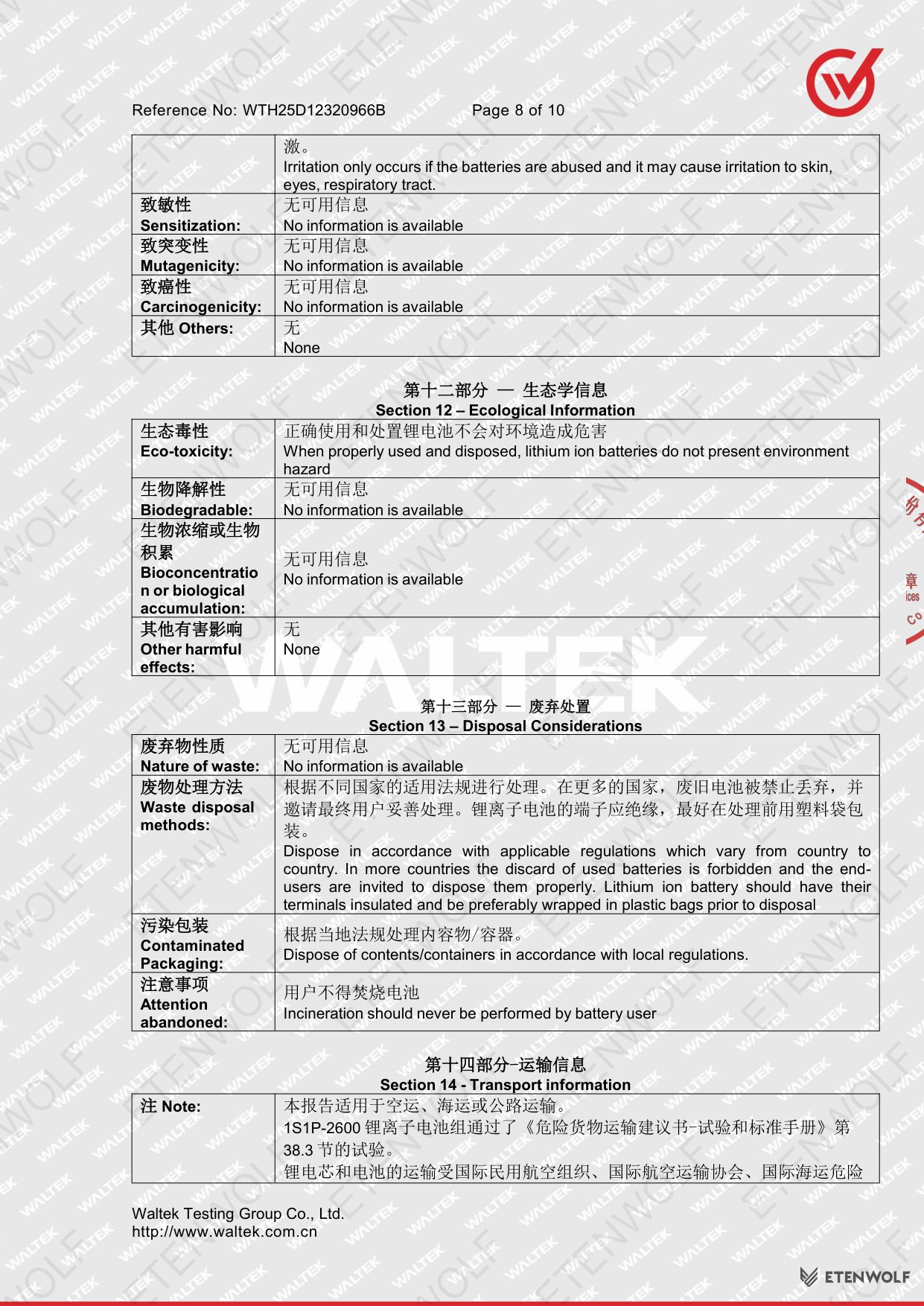
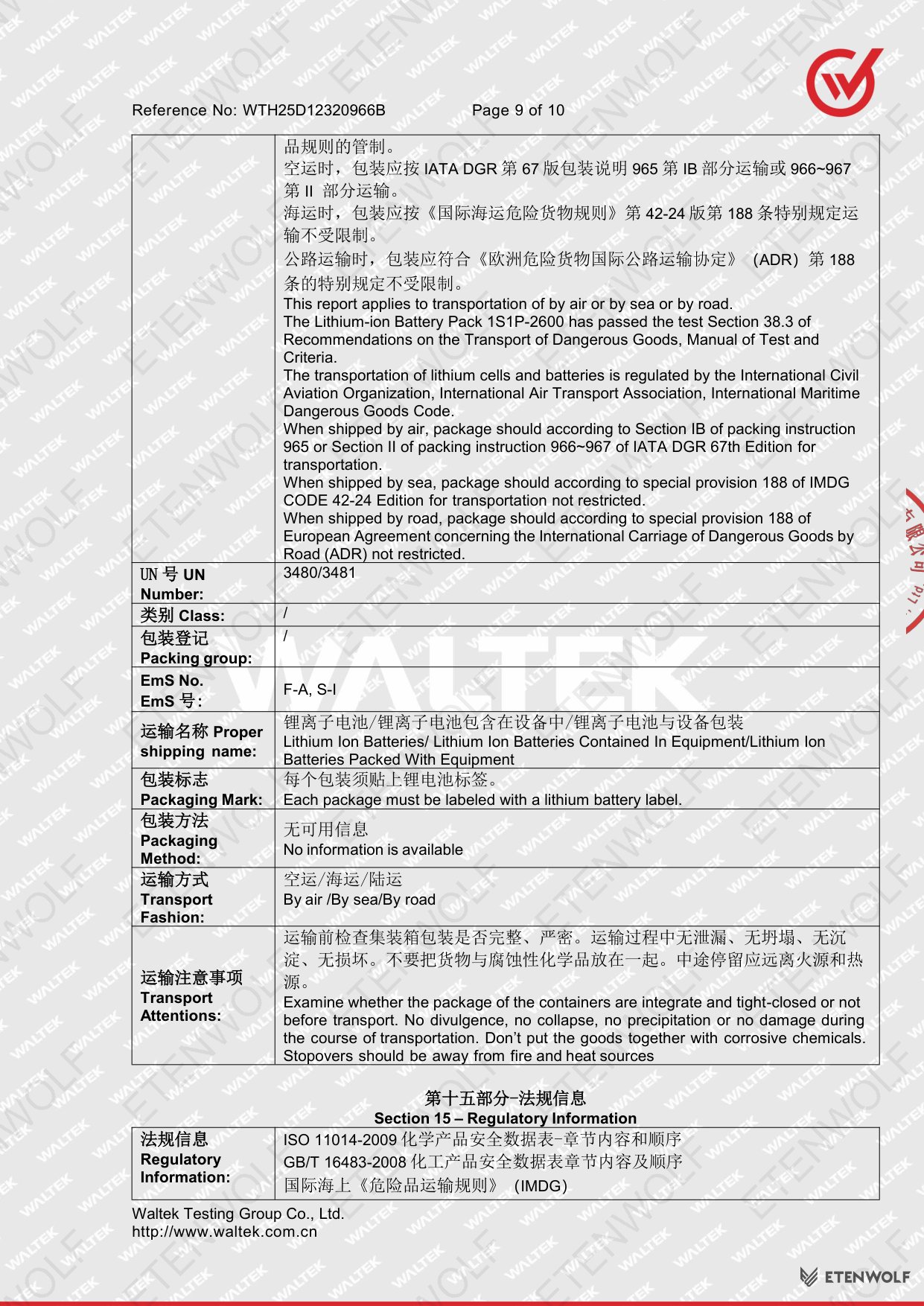
This MSDS certificate demonstrates compliance with UN38.3 standards established by the United Nations for the safe transport of lithium-ion batteries. The UN38.3 certification is mandatory for international air and sea shipment of lithium-ion cells and batteries.
The testing and certification methodology follows internationally recognized protocols for evaluating battery safety under various conditions including:
- Altitude simulation testing
- Thermal testing at extreme temperatures
- Vibration testing to simulate transportation conditions
- Shock testing for mechanical stress evaluation
- External short circuit testing
- Impact/crush testing
- Overcharge testing
- Forced discharge testing
The document also addresses compliance with chemical safety regulations including proper hazard communication through the Global Harmonized System (GHS) classification framework. All CAS registry numbers are properly documented for chemical traceability and regulatory compliance.
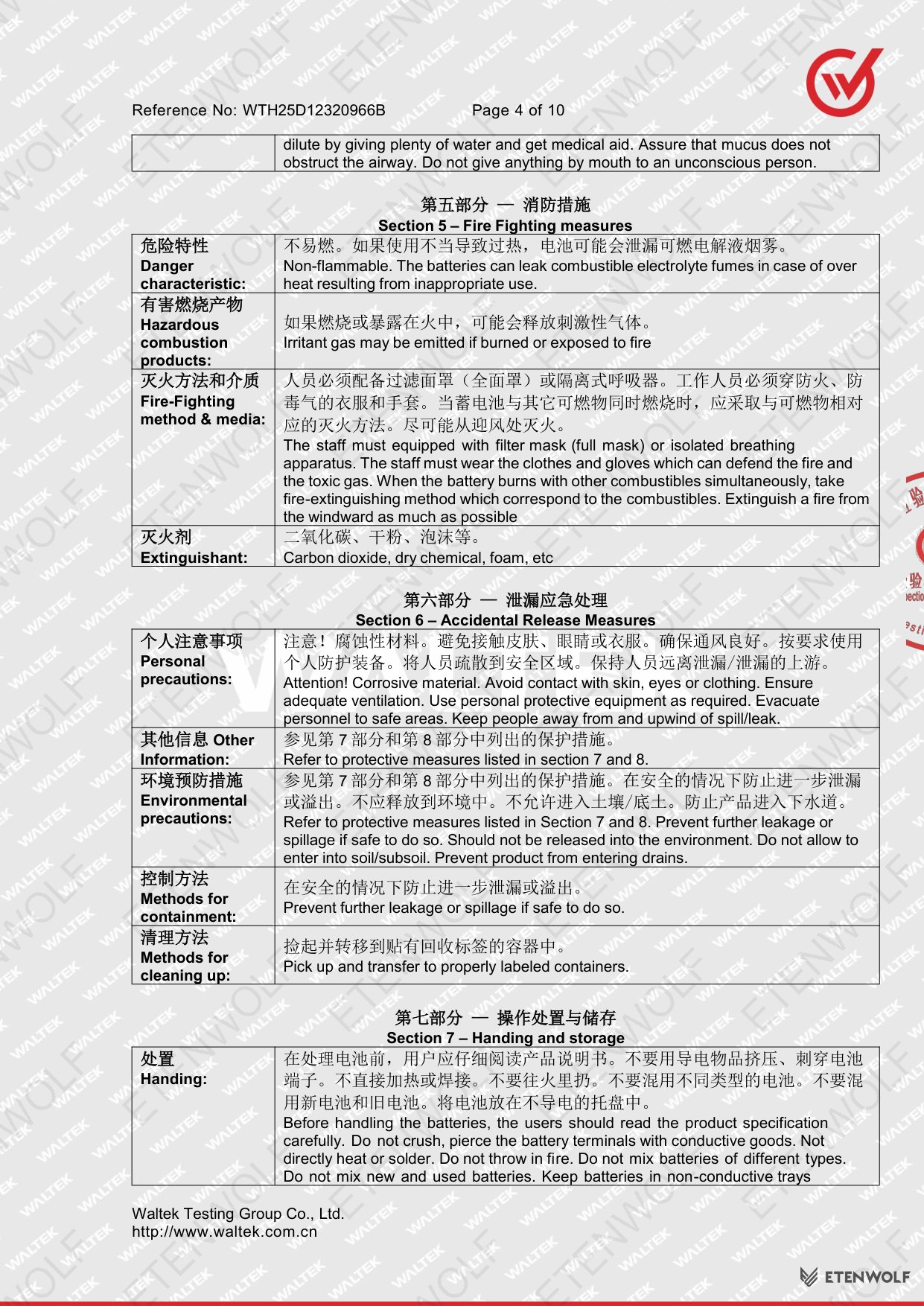
Safety Warnings: Do not dispose of battery in fire as it may explode. Do not short-circuit the battery as it may cause fire. Do not dismantle, open, or shred the battery. Keep away from heat sources and avoid mechanical damage.
Validity & Certification Body
The MSDS certificate WTH25D12320966B was issued by Waltek Testing Group Co., Ltd., an accredited testing laboratory specializing in battery safety certification and compliance testing.
Testing Laboratory Details:
- Name: Waltek Testing Group Co., Ltd. (Shenzhen)
- Address: No. 77, Houjie Section, Guantai Road, Houjie Town, Dongguan City, Guangdong, China
- Phone: +86-769-2267 6998
- Fax: +86-769-2267 6828
- Website: http://www.waltek.com.cn
Certificate Validity:
- Issue Date: January 1, 2026
- Effective Date: January 1, 2026
- Document Status: Valid for current production batch
The certificate was compiled by Jason Zhen (Project Engineer) and approved by Deval Qin (Designated Reviewer), both authorized signatories for Waltek Testing Group. This MSDS should be reviewed and updated whenever product formulation changes or new safety information becomes available.
Frequently Asked Questions
What is UN38.3 certification and why is it required?
UN38.3 is a set of safety tests established by the United Nations for lithium-ion batteries and cells. It is mandatory for shipping lithium batteries by air or sea internationally. The tests ensure batteries can safely withstand conditions encountered during transportation, including temperature variations, vibration, shock, and pressure changes.
Is the L2 battery safe to use under normal conditions?
Yes, the L2 lithium-ion battery pack (Model 1S1P-2600) is safe for normal use. The chemical materials are sealed in a metal or metal-laminated plastic case designed to withstand normal operating temperatures and pressures. Under proper use conditions, there is no risk of ignition, explosion, or leakage of hazardous materials.
What should I do if the battery is damaged or leaking?
If the battery is ruptured or leaking, avoid direct contact with the electrolyte solution as it is corrosive. If skin contact occurs, immediately remove contaminated clothing and flush the affected area with soap and water for at least 15 minutes. For eye contact, flush with large amounts of water and seek medical attention immediately. Move to fresh air if vapors are inhaled.
How should the L2 battery be disposed of?
Never dispose of the battery in fire as it may explode. Do not dismantle or shred the battery. Follow local regulations for battery recycling and disposal. Contact your local waste management authority or battery recycling center for proper disposal procedures. The battery should be handled as hazardous waste due to its chemical composition.
Related Documents
For comprehensive compliance and safety documentation of the L2 lithium-ion battery pack, consider reviewing these related certification documents:
- UN38.3 Test Summary: Complete test report documenting all eight required tests including altitude simulation, thermal cycling, vibration, shock, external short circuit, impact, overcharge, and forced discharge testing results.
- IEC 62133 Certificate: Safety certification for portable sealed secondary cells and batteries containing alkaline or other non-acid electrolytes, covering electrical and mechanical safety requirements.
- UL 2054 Certificate: Household and Commercial Batteries certification covering construction, performance, and safety requirements for lithium-ion battery packs.
- Battery Transport Classification: Documentation specifying proper shipping names, UN numbers, packing instructions, and labeling requirements for international transport compliance.
- Environmental Compliance: REACH and RoHS compliance certificates demonstrating conformity with European chemical substance restrictions and hazardous material limitations.
- Regional Certifications: Additional market-specific certifications such as CE marking for Europe, FCC for United States, and KC certification for South Korea.
Document Pages