Document Overview
Document Overview This page presents the Material Safety Data Sheet (MSDS) issued under reference number WTH26D02036337B, prepared by Waltek Testing Group Co., Ltd. in support of ETENWOLF CL5 compliance documentation. The document was issued on 2026-02-09 and covers the rechargeable lithium ion cell used inside…
- Document type
- Certification Report
- Prepared by
- Michelle Torres
- Published
- Last reviewed
- Topics
- Lighting Gear
Document Overview
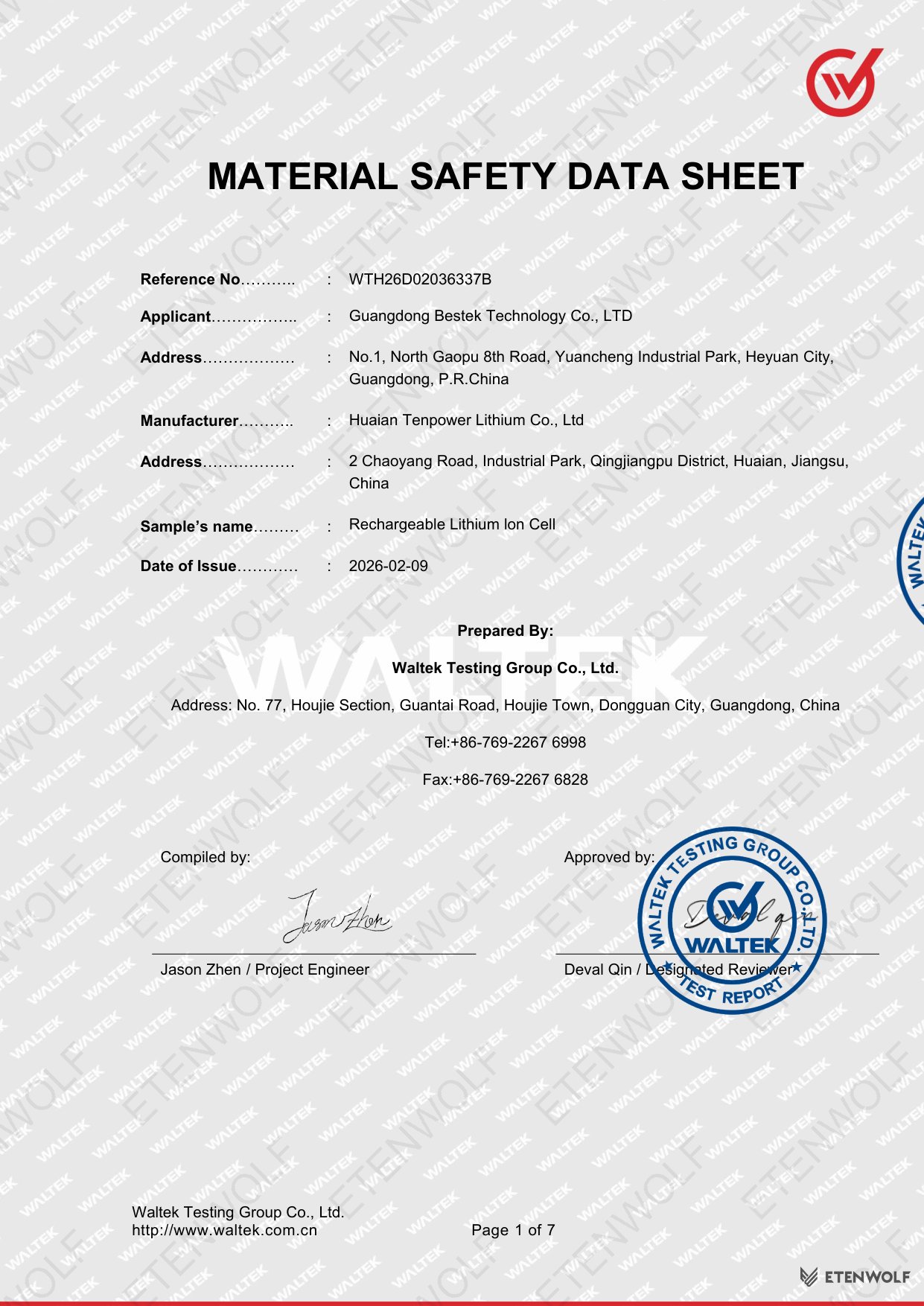
This page presents the Material Safety Data Sheet (MSDS) issued under reference number WTH26D02036337B, prepared by Waltek Testing Group Co., Ltd. in support of ETENWOLF CL5 compliance documentation. The document was issued on 2026-02-09 and covers the rechargeable lithium ion cell used inside the CL5 camping lantern. It is classified as a UN38.3-related safety disclosure, ensuring the battery cell meets international requirements for the safe transport and handling of lithium batteries. The sheet was compiled by Jason Zhen (Project Engineer) and approved by Deval Qin (Designated Reviewer) at Waltek Testing Group Co., Ltd., located at No. 77, Houjie Section, Guantai Road, Houjie Town, Dongguan City, Guangdong, China.
| Field | Detail |
|---|---|
| Document Type | Material Safety Data Sheet (MSDS) |
| Reference Number | WTH26D02036337B |
| Issuing Body | Waltek Testing Group Co., Ltd. |
| Date of Issue | 2026-02-09 |
| Applicant | Guangdong Bestek Technology Co., LTD |
| Scope | Rechargeable Lithium Ion Cell — safety, handling, transport |
Product Information
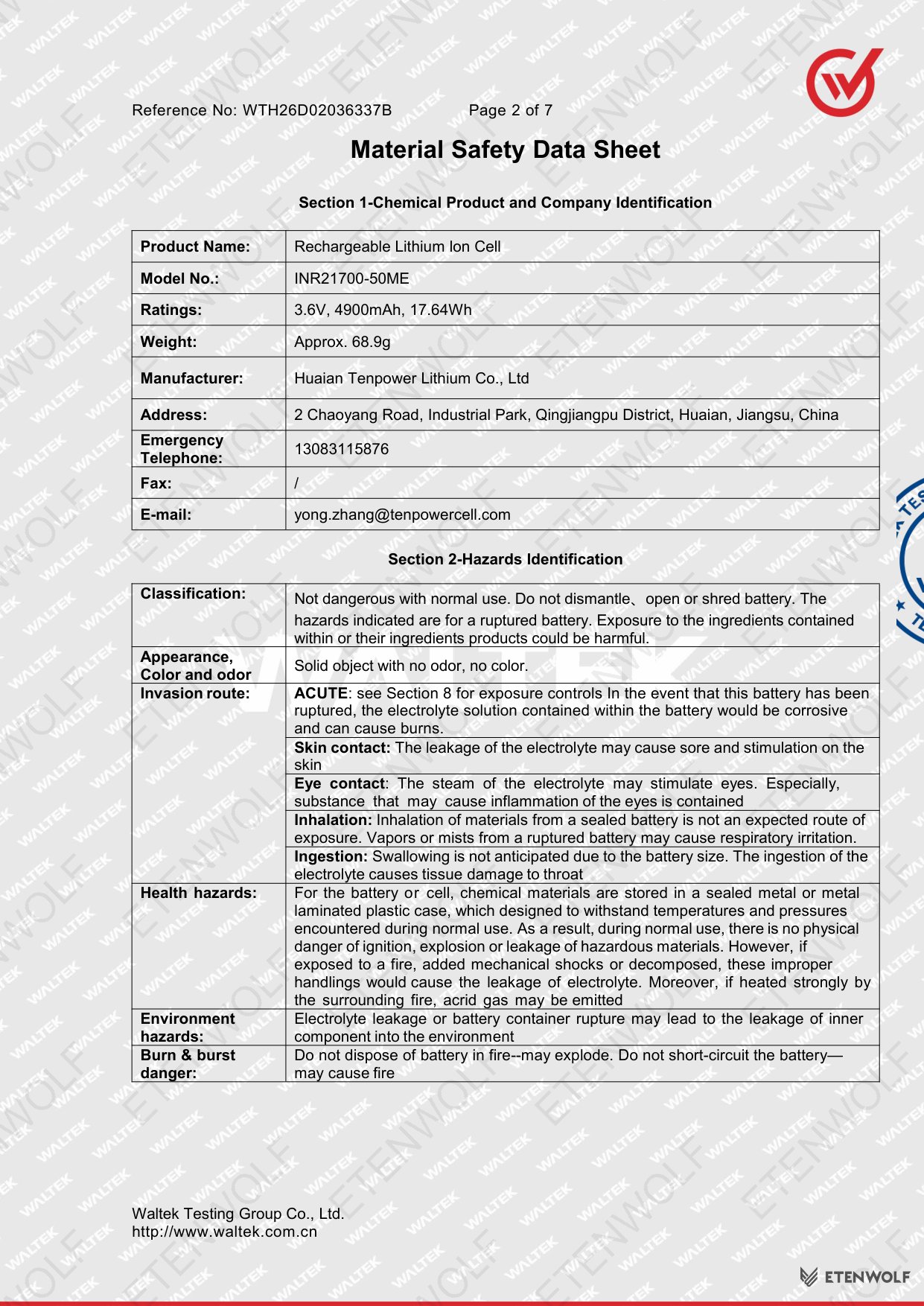
The cell covered by this MSDS is the INR21700-50ME rechargeable lithium ion cell, manufactured by Huaian Tenpower Lithium Co., Ltd, located at 2 Chaoyang Road, Industrial Park, Qingjiangpu District, Huaian, Jiangsu, China. This cell is integrated into the ETENWOLF CL5 Rechargeable Camping Lantern as its primary power source.
| Specification | Value |
|---|---|
| Product Name | Rechargeable Lithium Ion Cell |
| Model Number | INR21700-50ME |
| Nominal Voltage | 3.6 V |
| Capacity | 4900 mAh |
| Energy | 17.64 Wh |
| Weight | Approx. 68.9 g |
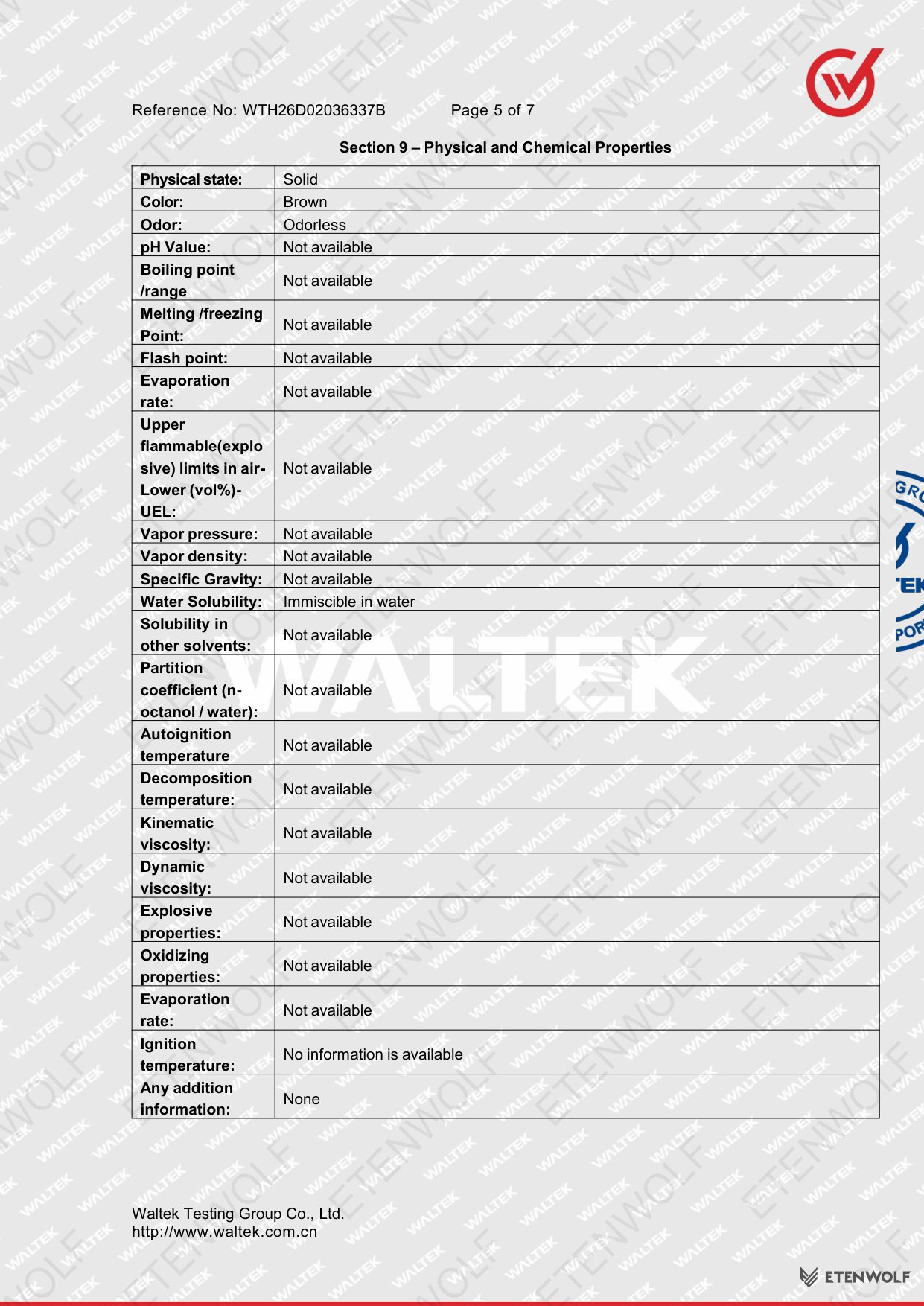
| Appearance | Solid object, no odor, no color |
| Manufacturer | Huaian Tenpower Lithium Co., Ltd |
| Emergency Contact | 13083115876 |
| [email protected] |
Key Details
The MSDS provides detailed chemical composition, hazard identification, first aid measures, fire-fighting procedures, accidental release measures, handling and storage guidelines, and personal protection requirements. Key sections are summarized below.
Chemical Composition (Section 3)
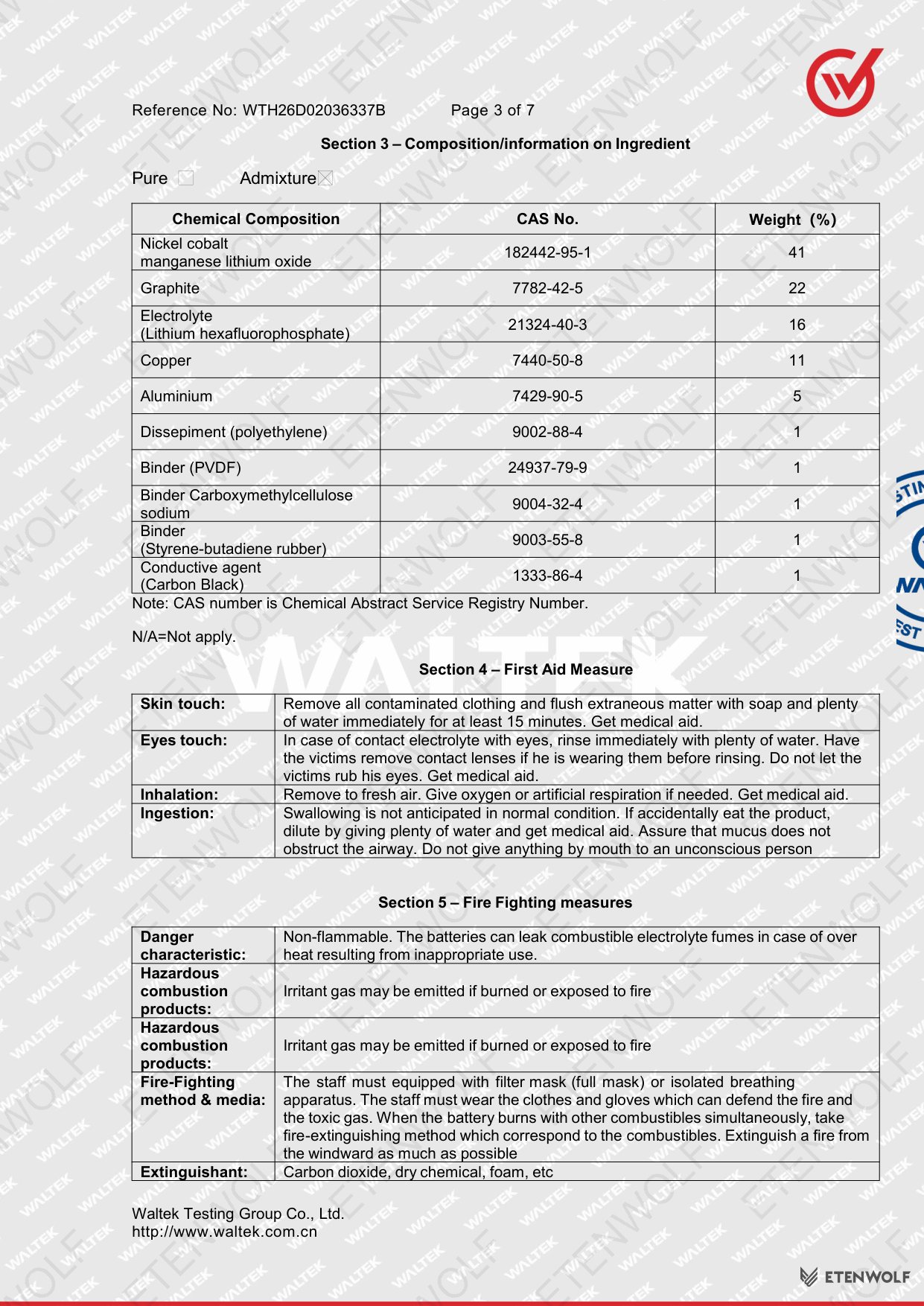
| Chemical Component | CAS Number | Weight (%) |
|---|---|---|
| Nickel Cobalt Manganese Lithium Oxide | 182442-95-1 | 41% |
| Graphite | 7782-42-5 | 22% |
| Electrolyte (Lithium Hexafluorophosphate) | 21324-40-3 | 16% |
| Copper | 7440-50-8 | 11% |
| Aluminium | 7429-90-5 | 5% |
| Dissepiment (Polyethylene) | 9002-88-4 | 1% |
| Binder (PVDF) | 24937-79-9 | 1% |
| Binder Carboxymethylcellulose Sodium | 9004-32-4 | 1% |
| Binder (Styrene-Butadiene Rubber) | 9003-55-8 | 1% |
| Conductive Agent (Carbon Black) | 1333-86-4 | 1% |
Hazards Identification (Section 2)
The cell is not dangerous under normal use conditions. The hazards described apply only in the event of a ruptured or misused battery:
- Skin contact: Electrolyte leakage may cause irritation and soreness.
- Eye contact: Electrolyte vapors may cause eye inflammation. Rinse immediately with water.
- Inhalation: Vapors from a ruptured cell may cause respiratory irritation.
- Ingestion: Electrolyte ingestion can cause tissue damage to the throat.
- Environmental: Electrolyte leakage may contaminate soil and water. Do not allow entry into drains.
- Fire/explosion: Do not dispose of in fire; do not short-circuit.
Handling and Storage (Section 7)
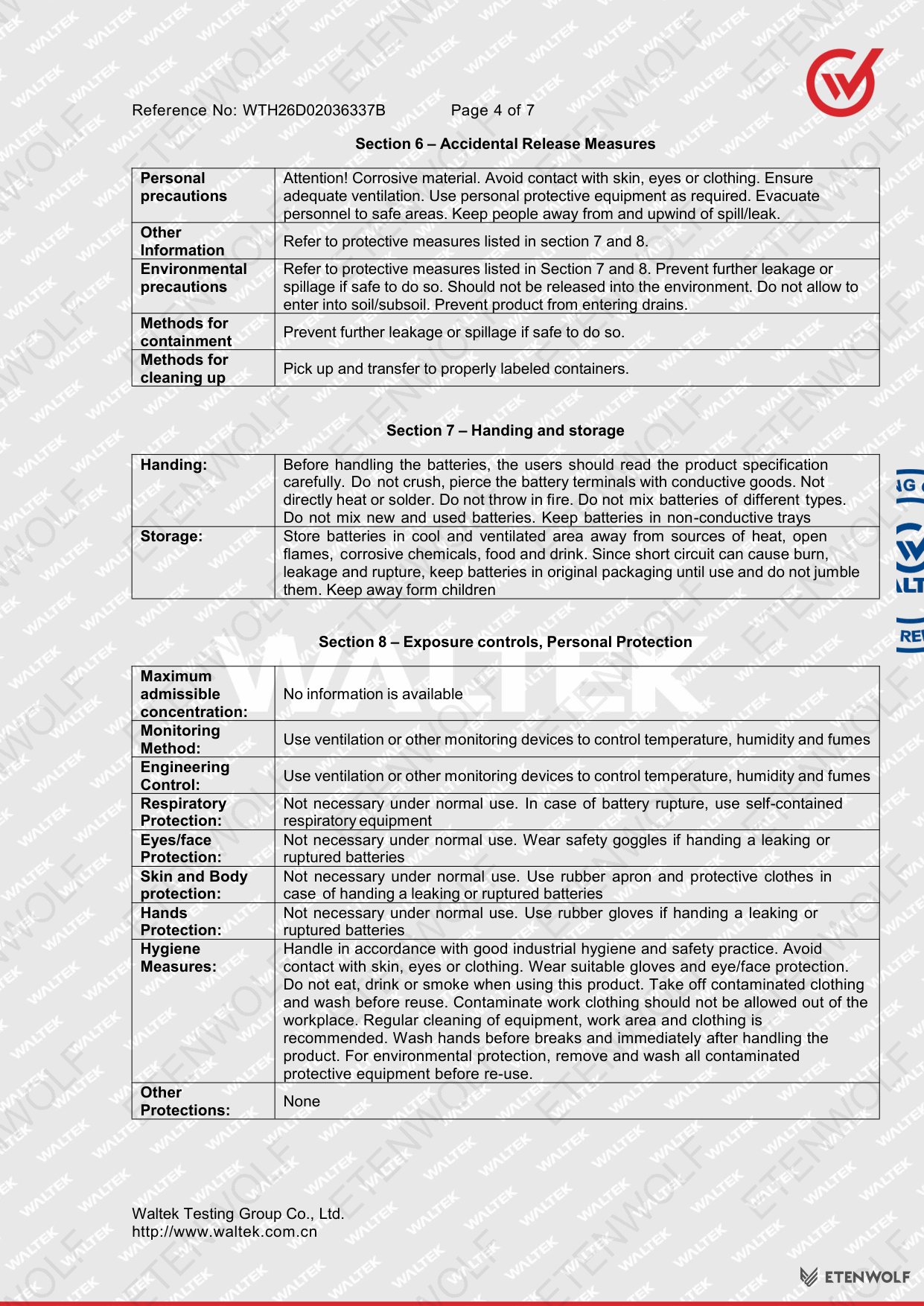
- Do not crush, pierce, directly heat, or solder the battery.
- Do not throw into fire or mix different battery types or new and used batteries.
- Store in a cool, ventilated area away from heat sources, open flames, and corrosive chemicals.
- Keep batteries in original packaging until use to prevent short circuits.
- Keep away from children.
First Aid Measures (Section 4)
- Skin: Remove contaminated clothing; flush with soap and water for at least 15 minutes. Seek medical aid.
- Eyes: Rinse immediately with plenty of water; remove contact lenses before rinsing. Do not rub eyes. Seek medical aid.
- Inhalation: Move to fresh air; administer oxygen or artificial respiration if needed. Seek medical aid.
- Ingestion: Dilute with plenty of water. Seek medical aid immediately. Do not give anything by mouth to an unconscious person.
Fire-Fighting Measures (Section 5)
The cell is non-flammable under normal conditions but may leak combustible electrolyte fumes if overheated. Suitable extinguishing agents include carbon dioxide, dry chemical, and foam. Firefighters must wear full-face filter masks or self-contained breathing apparatus and fire- and toxic-gas-resistant protective clothing and gloves. Extinguish fires from the windward side where possible.
Standards & Compliance
This Material Safety Data Sheet has been prepared in accordance with international standards governing the safety classification, documentation, and transport of lithium ion cells and batteries. The document supports compliance with the following frameworks:
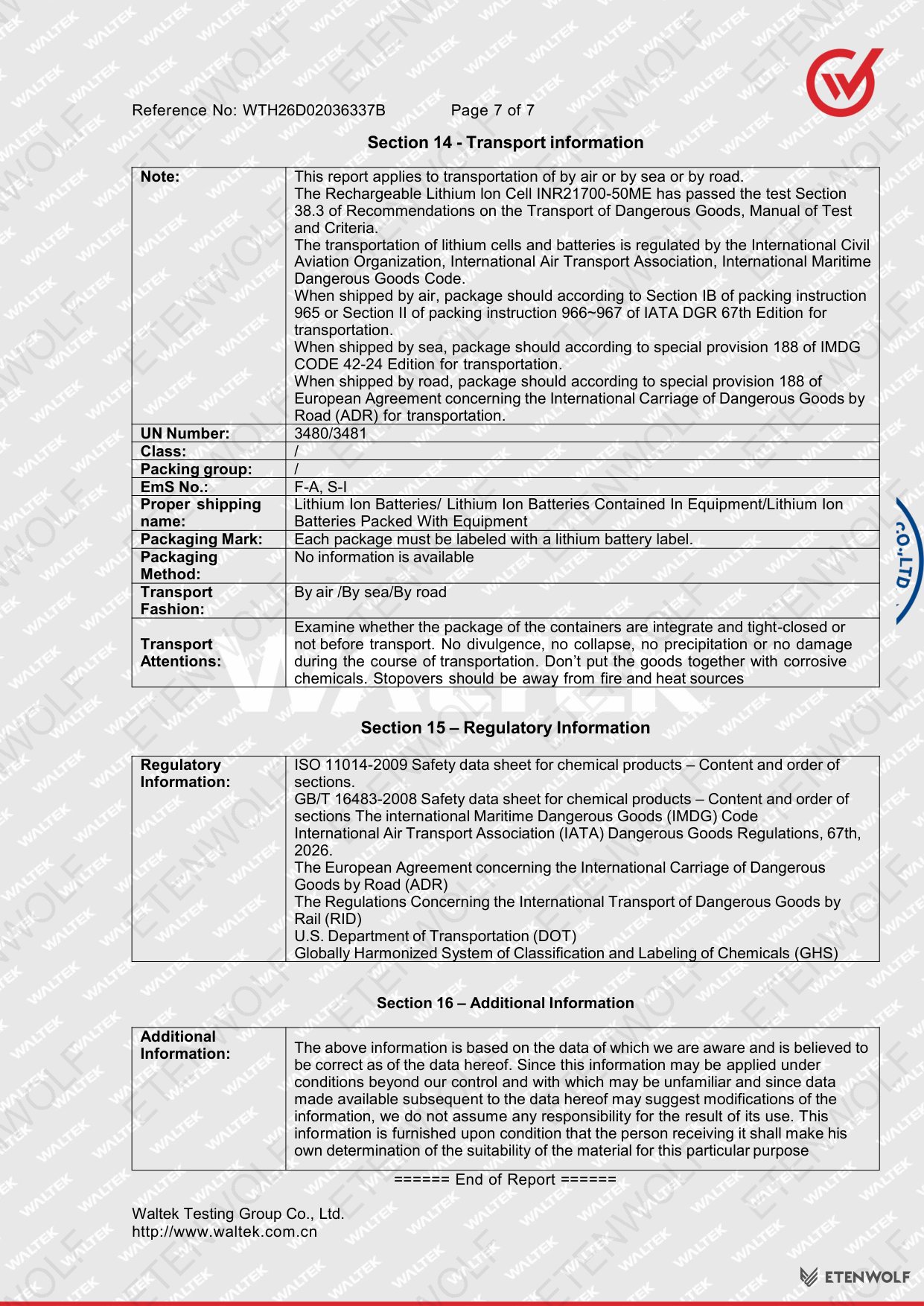
- UN38.3 — United Nations Recommendations on the Transport of Dangerous Goods, Manual of Tests and Criteria, Part III, Section 38.3: Test requirements for lithium metal and lithium ion batteries.
- IEC Standards — International Electrotechnical Commission standards applicable to rechargeable lithium cell safety and performance.
- ISO Guidelines — Relevant ISO safety data sheet preparation standards.
- REACH — Registration, Evaluation, Authorisation and Restriction of Chemicals regulation; chemical composition disclosures in Section 3 of this MSDS align with REACH substance identification requirements.
- RoHS — Restriction of Hazardous Substances directive considerations for the cell’s material composition.
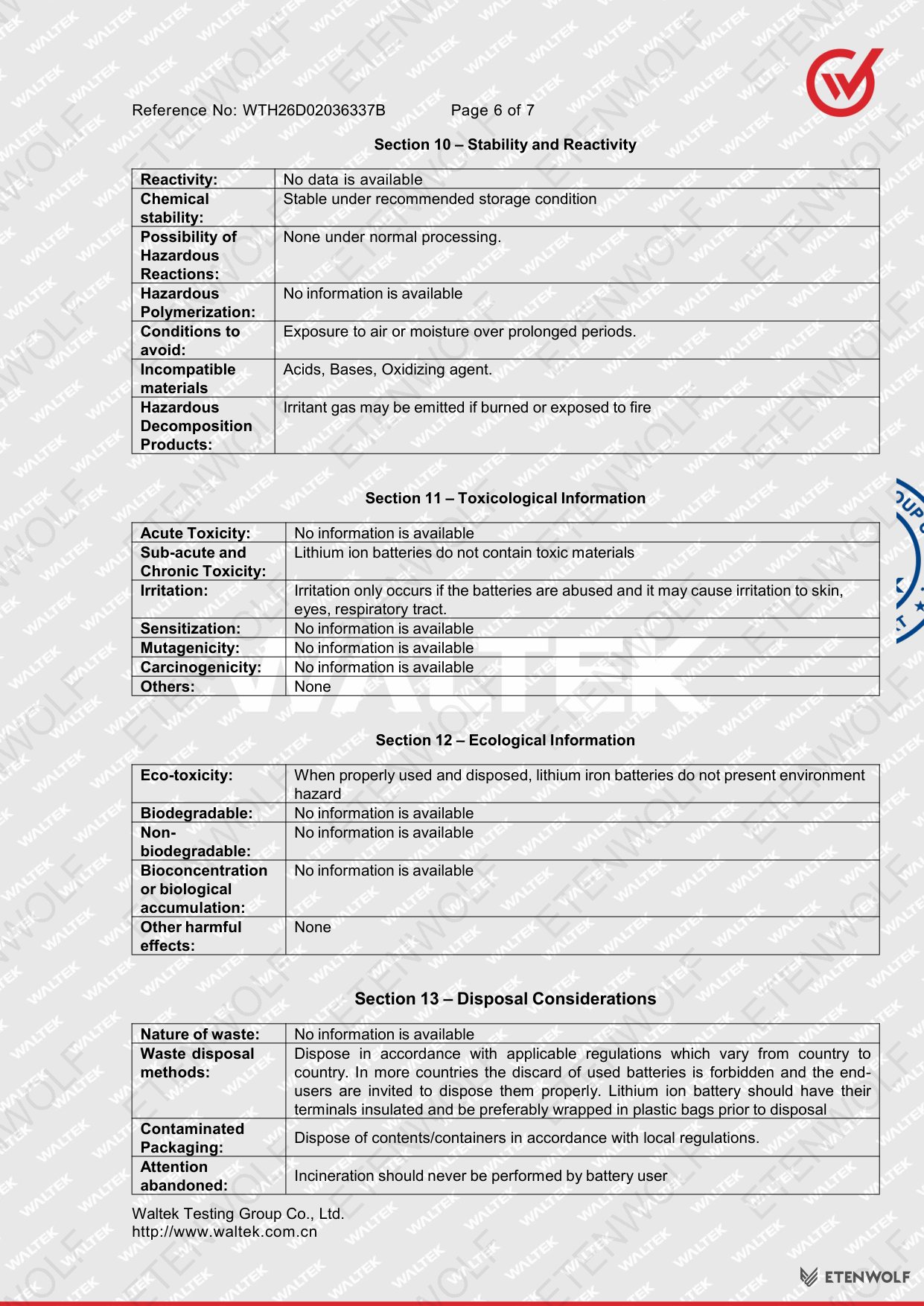
The MSDS itself follows the globally harmonized structure of 16 sections (GHS/SDS format), covering chemical identification, hazard classification, composition, first aid, fire-fighting, accidental release, handling, storage, exposure controls, physical and chemical properties, stability, toxicology, ecological information, disposal, transport, and regulatory information.
Validity & Certification Body
This document was issued on 2026-02-09 and remains valid subject to any changes in product formulation, applicable regulations, or re-evaluation by the issuing laboratory. Users should verify currency of this document with the issuing body before relying on it for transport or regulatory submissions.
| Field | Detail |
|---|---|
| Reference Number | WTH26D02036337B |
| Date of Issue | 2026-02-09 |
| Issuing Laboratory | Waltek Testing Group Co., Ltd. |
| Lab Address | No. 77, Houjie Section, Guantai Road, Houjie Town, Dongguan City, Guangdong, China |
| Lab Website | http://www.waltek.com.cn |
| Lab Telephone | +86-769-2267 6998 |
| Lab Fax | +86-769-2267 6828 |
| Compiled By | Jason Zhen, Project Engineer |
| Approved By | Deval Qin, Designated Reviewer |
| Applicant | Guangdong Bestek Technology Co., LTD |
| Applicant Address | No.1, North Gaopu 8th Road, Yuancheng Industrial Park, Heyuan City, Guangdong, P.R.China |
Waltek Testing Group Co., Ltd. is an accredited third-party testing and certification laboratory operating under international quality management standards. The MSDS was prepared by a qualified project engineer and independently reviewed by a designated reviewer, ensuring the accuracy and completeness of the safety information provided.
Frequently Asked Questions
- What is the UN38.3 MSDS reference number for the lithium cell used in the ETENWOLF CL5?
- The Material Safety Data Sheet reference number is WTH26D02036337B, issued by Waltek Testing Group Co., Ltd. on 2026-02-09. It covers the INR21700-50ME rechargeable lithium ion cell (3.6V, 4900mAh, 17.64Wh) used in the ETENWOLF CL5 Rechargeable Camping Lantern.
- Is the INR21700-50ME lithium cell in the CL5 lantern dangerous under normal use?
- No. The cell is classified as not dangerous under normal use conditions. The hazards described in the MSDS apply only if the cell is ruptured, dismantled, short-circuited, or improperly exposed to heat or fire. Under normal operating conditions the sealed metal casing is designed to withstand expected temperatures and pressures.
- What should I do if the battery cell in the CL5 leaks or ruptures?
- Avoid contact with skin, eyes, and clothing. If skin contact occurs, flush with soap and water for at least 15 minutes and seek medical attention. If electrolyte contacts eyes, rinse immediately with plenty of water and seek medical aid. Move to fresh air if vapors are inhaled. Do not allow leaked electrolyte to enter drains, soil, or waterways. Use rubber gloves, safety goggles, and protective clothing when handling a leaking cell.
- How should the lithium cell or the CL5 lantern be stored safely?
- Store the ETENWOLF CL5 and its lithium cell in a cool, well-ventilated area away from heat sources, open flames, and corrosive chemicals. Keep away from children. Do not mix with different battery types or used batteries. Keep in original packaging until use to prevent accidental short circuits.
Related Documents
The following certification and compliance document types are typically required or recommended for a rechargeable lithium-powered product such as the ETENWOLF CL5 Rechargeable Camping Lantern:
- UN38.3 Test Report — Formal test report confirming the lithium cell passed all eight UN38.3 abuse tests (altitude simulation, thermal test, vibration, shock, external short circuit, impact/crush, overcharge, forced discharge).
- CE Declaration of Conformity — Required for EU market access, covering applicable directives such as the Low Voltage Directive (LVD) and Radio Equipment Directive (RED) if applicable.
- IEC 62133 Battery Safety Test Report — Safety requirements for portable sealed secondary lithium cells and batteries for use in portable applications.
- RoHS Compliance Report — Confirming restriction of hazardous substances in the product’s electrical and electronic components.
- REACH SVHC Declaration — Disclosure of substances of very high concern in the product above 0.1% w/w threshold.
- FCC Declaration of Conformity — Required for the US market if the product contains any intentional or unintentional radiators or electronic circuitry subject to FCC Part 15.
- KC Certification — Required for the South Korean market under the KC safety mark framework for electrical products.
- MSDS / SDS for Finished Product — A product-level safety data sheet complementing this cell-level MSDS for shipping and retail compliance.
Document Pages